The Gospel of Matthew: The Indignity of the Disciples.

And when the disciples saw it, they were indignant, saying, “Why this waste? For this could have been sold for a large sum and given to the poor.”  (Matthew 26:8–9 (ESV)

There were some who said to themselves indignantly, “Why was the ointment wasted like that? For this ointment could have been sold for more than three hundred denarii and given to the poor.” And they scolded her.” (Mark 14:4–5 (ESV)

But Judas Iscariot, one of his disciples (he who was about to betray him), said, “Why was this ointment not sold for three hundred denarii and given to the poor?” He said this, not because he cared about the poor, but because he was a thief, and having charge of the moneybag he used to help himself to what was put into it.” (John 12:4–6 (ESV)

One of the principles of proper biblical interpretation is Scripture interprets Scripture. This means the Bible is its own interpreter and never contradicts itself. An example of this interpretative principle is found in the story of Jesus’ anointing at Bethany. Mark 14:4-5 and John 12:4-6 are a parallel accounts of Matthew’s text. All three Gospels chronicle the event occurred in the village of Bethany (Matt. 26:6; Mark 14:3; John 12:1).

Mary’s extravagant act of worship by anointing Jesus with expensive perfume (Matt. 26:6-7; Mark 14L3; John 12:1-3) was contrasted by the disciples’ indignant response. To be indignant (ἀγανακτέω; aganakteo) means to be angry and to judge something, or someone, as being wrong. It is to be irritated, provoked and upset towards someone or some situation. The disciples were indignant at Mary.

Some of the disciples expressed this anger only to themselves. Other spoke publically. They objected to such waste. They reasoned the nard, or expensive perfume, could have been sold and the proceeds given to the poor. They estimated the value to be in excess of three hundred denarius. A denarius was a day’s wage for a common laborer, it represented a year’s work.

Mark recorded the disciples scolded Mary (Mark 14:5). To scold (ἐμβριμάομαι; embrimaomai means to harshly denounce, and to exhibit irritation, or even anger, in expressing reproof. Mary was not shy in her worship towards the Lord. The disciples were not shy in their denouncement of Mary.

John adds this indignant response was not completely altruistic, unselfish and humane. He commented about Judas Iscariot’s true perspective towards Mary’s actions and the worth of the perfume. Judas was not concerned about the poor. He was concerned about himself. He was a thief, in charge of the moneybag and stole what was in it. This is a preview of Judas betrayal to come in the ensuing days.

“It is almost beyond belief that the disciples should, by implication, mark as lacking in sufficient sympathy for the poor a most generous hostess; in fact one who together with her sister was in the habit of showing hospitality to them and to their Master whenever these poor people (Matt. 8:20), in need of constant help (27:55, 56), were in the neighborhood. It is even more amazing when one considers that at this very hour these adverse critics, the disciples, were being entertained at the home of one of Mary’s friends,” explains Dr. William Hendriksen.

“He is ungrateful who denies that he has received a kindness which has been bestowed upon him; he is ungrateful who conceals it; he is ungrateful who makes no return for it; most ungrateful of all is he who forgets it.” — Seneca, De Beneficiis III.1.

What will be the response by the Lord to not only Mary, but also to His disciples? More to follow. May we quick to listen and slow to speak.

Soli deo Gloria!

The Gospel of Matthew: Jesus’ Anointing at Bethany.

Now when Jesus was at Bethany in the house of Simon the leper, a woman came up to him with an alabaster flask of very expensive ointment, and she poured it on his head as he reclined at table. Matthew 26:6–7 ESV)

And while he was at Bethany in the house of Simon the leper, as he was reclining at table, a woman came with an alabaster flask of ointment of pure nard, very costly, and she broke the flask and poured it over his head.” (Mark 14:3 ESV)

Six days before the Passover, Jesus therefore came to Bethany, where Lazarus was, whom Jesus had raised from the dead. So they gave a dinner for him there. Martha served, and Lazarus was one of those reclining with him at table. Mary therefore took a pound of expensive ointment made from pure nard, and anointed the feet of Jesus and wiped his feet with her hair. The house was filled with the fragrance of the perfume.” (John 12:1–3 ESV)

One of the principles of proper biblical interpretation is Scripture interprets Scripture. This means the Bible is its own interpreter and never contradicts itself. An example of this interpretative principle is found in the story of Jesus’ anointing at Bethany. Mark 14:3 and John 12:1-8 are a parallel account of Matthew’s text. All three Gospels chronicle the event occurred in the village of Bethany (Matt. 26:6; Mark 14:3; John 12:1).

“There is no conflict between this account (Matt. 26:6) and John 12:1, “Now six days before the Passover Jesus came to Bethany.…” The time indication in Matt. 26:2, “after two days” does not apply to the anointing at Bethany (verses 6–13). At verse 6 Matthew begins to tell a new story. To do so he must go back a few days, to the preceding Saturday evening, when a supper was given at Bethany in honor of Jesus,” explains Dr. William Hendriksen.

“Each night during the last week of His life Jesus is staying in Bethany, a village about an hour’s walk from Jerusalem (Matt. 21:17), probably because the Holy City, filled to the brim with Passover pilgrims, has few vacancies,” explains Dr. R. C. Sproul.

Matthew and Mark record Jesus’ anointing took place at the home of Simon the Leper (Matt. 26:6; Mark 14:3), during a dinner (John 12:1). Mary, Martha and Lazarus were also in attendance (John 12:2-3). Some commentators speculate Simon may have been the father of the three siblings, but we cannot say for certain.

Martha served while Lazarus reclined at table, presumably as an honored guest (John 12:2-3). This was because the dinner was given in Jesus’ honor following the events of John 11 when Jesus raised Lazarus from the dead. John reveals the woman who anointed Jesus was none other than Mary (Matt. 26:7; John 12:3).

“Present at this supper were at least fifteen men: Jesus, The Twelve, Lazarus (John 12:2), and a certain Simon, mentioned only here (Matt. 26:6) and in Mark 14:3. The idea readily suggests itself that the supper (or “dinner” if one prefers) was prompted by love for the Lord, specifically by gratitude for the raising of Lazarus and for the healing of Simon, the man who had been a leper, is still called “Simon the leper,” but had presumably been healed by Jesus. It was at the home of this Simon that the dinner was given,” states Dr. Hendriksen. .

Matthew and Mark indicate Mary had an alabaster flask containing expensive ointment (Matthew 26:7a; Mark 14:3). The flask was perhaps made from pure gypsum. John says the ointment was made from pure nard and measured a pound. Mary was extravagant, not only when she broke the beautiful flask but also when she poured its contents on Jesus’ head (Matt.26:7; Mark 14:3). There was so much ointment remaining that she also anointed the feet of Jesus and wiped His feet with her hair (John 12:3).

Mary’s act was one of unbounded devotion for the Lord. It will be contrasted by the indignity of the disciples. May we choose to live in such a way that our actions, speech and attitudes reflect an utmost devotion for the Lord Jesus Christ.

Soli deo Gloria!  

The Gospel of Matthew: God’s Providence and the Plot to Kill Jesus.

When Jesus had finished all these sayings, he said to his disciples, “You know that after two days the Passover is coming, and the Son of Man will be delivered up to be crucified.” Then the chief priests and the elders of the people gathered in the palace of the high priest, whose name was Caiaphas, and plotted together in order to arrest Jesus by stealth and kill him. But they said, “Not during the feast, lest there be an uproar among the people.” (Matthew 26:1–5 (ESV)

The phrase “When Jesus had finished all these sayings” immediately follows all the five discourses in Matthew’s Gospel (7:28; 11:1; 13:53; 19:1). This fifth and final statement transitions into the final days of the Lord Jesus’ Passion Week.  

“The Savior has already told His disciples three times that He will die and be raised (Matt.16:21; 17:22–23; 20:17–19), but in today’s passage He explains for the first time that this will take place during Passover. This provides a theological framework for understanding the significance of the Messiah’s death. Just as the angel of death passed over all of those who were covered by the blood of the lamb (Ex. 12), so too will the blood of the Lamb “slain from the foundation of the world” (Rev. 13:8, NKJV) shield those whom it covers from eternal destruction,” explains Dr. R. C. Sproul.

Two main perspectives dominate today’s text. They are God’s providence, or purposeful sovereignty, contrasted by the plot by sinful and fallen men. The former will always supersede the latter. The Lord used the latter in order to accomplish the former; His sovereign will (Acts 2:22-24). God’s control is always greater than man’s confident collusion.

Jesus’ statement to His disciples unveiled not only His omniscient knowledge of future circumstances, but also of the Old Testament Scriptures (Isaiah 52:13-53:12). By saying, ““You know that after two days the Passover is coming, and the Son of Man will be delivered up to be crucified,” Jesus acknowledged He, along with God the Father and the Holy Spirit, was in complete control of His circumstances.

Jesus would pray a few days later this prayer to the Father. “Father, the hour has come; glorify your Son that the Son may glorify you, since you have given him authority over all flesh, to give eternal life to all whom you have given him. And this is eternal life that they know you, the only true God, and Jesus Christ whom you have sent. I glorified you on earth, having accomplished the work that you gave me to do. And now, Father, glorify me in your own presence with the glory that I had with you before the world existed.” (John 17:2–5 (ESV)

The fallen world bristles at such sovereign control by God. Even some believers in Christ struggle relinquishing their presumed authority, even when we truly have very little control over our circumstances. The idea humanity does not determine their own destiny is repugnant to the culture. However, we are not the master of our fate and the captain of our souls.

Pastor Michael Reeves explains, “Perhaps this is why Christians have so little joy, are anemic in prayer and enslaved by their sins. This idea (God’s providence and sovereignty) is hard to stomach in a culture sauced in Hollywood goo.”

We witness in the crucifixion God causing all things to work together for good (Romans 8:28). In other words, what the chief priests and elders meant for evil, God meant for good (Genesis 50:20).  

“According to Matthew, Caiaphas is the high priest under whom this will happen (Matt. 26:3), but Luke tells us that Annas is also high priest at this time (Luke 3:1–2Acts 4:5–6). In AD 15, Rome deposed Annas from the high priesthood, later replacing him with his son-in-law, Caiaphas. Yet Annas continued to wield power behind the scenes, almost like a “co-high priest” with Caiaphas,” explains one commentator.

Caiaphas and the others want to kill Jesus because the messianic clamor His presence creates might draw the ire of Rome, but they want to postpone His execution lest it provoke the people to rebel against the priests for murdering God’s Messiah,” But the Almighty has other plans, and in His sovereignty He will bring about Jesus’ predicted death during the Passover,” explains Dr. Sproul.

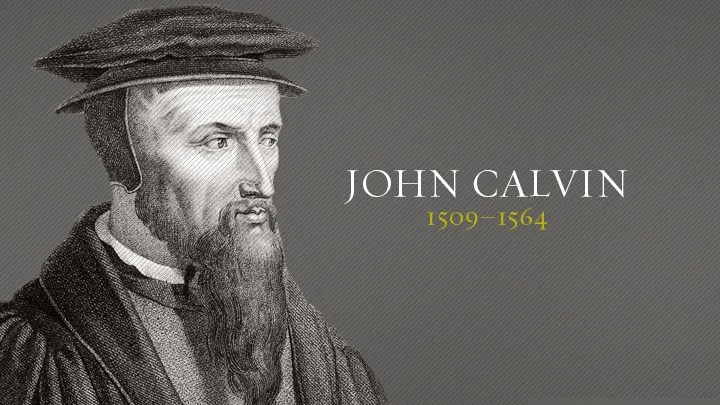
“The Creator’s providence,” John Calvin says, “will ensure that events turn out exactly as He has planned.”

Soli deo Gloria!

The Gospel of Matthew: The Judgment of the Goats.

41 “Then he will say to those on his left, ‘Depart from me, you cursed, into the eternal fire prepared for the devil and his angels. 42 For I was hungry and you gave me no food, I was thirsty and you gave me no drink, 43 I was a stranger and you did not welcome me, naked and you did not clothe me, sick and in prison and you did not visit me.’ 44 Then they also will answer, saying, ‘Lord, when did we see you hungry or thirsty or a stranger or naked or sick or in prison, and did not minister to you?’ 45 Then he will answer them, saying, ‘Truly, I say to you, as you did not do it to one of the least of these, you did not do it to me.’ 46 And these will go away into eternal punishment, but the righteous into eternal life.” (Matthew 25:41–46 ESV)

Jesus described hell in four distinct ways in today’s text. First, hell is separation; “Depart from me.” Second, hell judgment; “…you cursed.” Third, hell is association; “… into the eternal fire prepared for the devil and his angels.” Fourth, hell is “eternal punishment.”  

The Lord judges the goats, or the unrighteous, by the same judgment in which He judges the sheep, or the righteous (Matt. 31-40). The behavior of each reflect the heart and soul of each. The behavior of both is toward Jesus’ brothers, or His disciples. This does not refer to the Lord’s disciples at that time, but His disciples of all time.

The unrighteous hate the Lord’s disciples (John 15:18-25). They always have and they always will. This reflects their fallen condition. The Apostle expressed this in Colossians 1:24-26. The Apostle Peter stated the same (I Peter 1:3-7; 2:12; 18-25; 3:13-17; 4:1-6; 12-19) as did James (James 1:2-4).

The specific reasons for God’s judgment are stated. “42 For I was hungry and you gave me no food, I was thirsty and you gave me no drink, 43 I was a stranger and you did not welcome me, naked and you did not clothe me, sick and in prison and you did not visit me.’ 44 Then they also will answer, saying, ‘Lord, when did we see you hungry or thirsty or a stranger or naked or sick or in prison, and did not minister to you?’ 45 Then he will answer them, saying, ‘Truly, I say to you, as you did not do it to one of the least of these, you did not do it to me.”  

“It should be noted that all these sins are negative. Not a single sinful deed—such as idolatry, murder, adultery, theft, etc.—is mentioned. Only sins of omission are enumerated, sins of neglect. Cf. Heb. 2:3. This neglect proves that these people have not believed in the Son of man. For this unbelief, thus demonstrated, they are condemned,” states Dr. William Hendriksen.

“We actually serve the Lord when we do simple acts of service for one another. It does not take much effort to make a meal for new parents or a family who has recently lost a loved one. A call or visit to the lonely or shut-in takes mere moments but can reap lasting rewards. The donation of time, money, or supplies to your church’s mercy ministry is an act of love for Jesus. Our profession of faith is invalid if we are not engaged in these or other similar activities,” explains Dr. R. C. Sproul.    

Soli deo Gloria!                    

The Gospel of Matthew: The Least of These.

35 For I was hungry and you gave me food, I was thirsty and you gave me drink, I was a stranger and you welcomed me, 36 I was naked and you clothed me, I was sick and you visited me, I was in prison and you came to me.’ 37 Then the righteous will answer him, saying, ‘Lord, when did we see you hungry and feed you, or thirsty and give you drink? 38 And when did we see you a stranger and welcome you, or naked and clothe you? 39 And when did we see you sick or in prison and visit you?’ 40 And the King will answer them, ‘Truly, I say to you, as you did it to one of the least of these my brothers, you did it to me.’ (Matthew 25:35–40 (ESV)

Today’s text ranks as one of the most familiar, and often quoted, portions of Scripture. It may also be one of the most misunderstood and misinterpreted. For many churches and para-church ministries, Matthew 25:35-40 has become a clarion call for a social gospel or social justice.

The Social Gospel was/is “a religious social reform movement prominent in the United States from about 1870 to 1920. Advocates of the movement interpreted the kingdom of God as requiring social as well as individual salvation and sought the betterment of industrialized society through application of the biblical principles of charity and justice,” explains the Encyclopedia Britannica.

“The Social Gospel was especially promulgated among liberal Protestant ministers, including Washington Gladden and Lyman Abbott, and was shaped by the persuasive works of Charles Monroe Sheldon (In His Steps: What Would Jesus Do? [1896]) and Walter Rauschenbusch (Christianity and the Social Crisis [1907]). Labor reforms—including the abolition of child labor, a shorter workweek, a living wage, and factory regulation—constituted the Social Gospel’s most prominent concerns. During the 1930s many of these ideals were realized through the rise of organized labor and the legislation of the New Deal by U.S. Pres. Franklin D. Roosevelt.”

The Social Justice movement is similar in focus. It seeks to address current social desires. According to the Human Rights Careers website, social justice “is built on the pillars of human rights, equity, participation, and access. When a society is just, everyone is respected, supported, and protected.” No mention is made concerning an individual’s salvation by the One, True God the Scripture.

Some of the issues the social justice movement addresses include the gender pay gap, income inequality, climate change, food insecurity, the refugee crisis, universal healthcare, poverty, gender-based violence, state violence, threats to the trans-community, reproductive rights, and racism. The movement is an explicitly liberal, progressive and woke movement.  

In northeast Indiana, one ministry bases it mission, vision and values on today’s text. Its mission statement says they are “a gospel-inspired healthcare center that provides high-quality medical, dental, vision, and mental health services at no charge to low-income, uninsured adults in Northeast Indiana and Northwest Ohio. We are supported solely by donations, grants, and foundations. Inspired by the Bible verses for which we are named, we offer hope to the most vulnerable in our community—treating them with compassion and dignity, regardless of background or beliefs.”

What the social gospel and the social justice movement has forgotten, set aside or is unaware is the Gospel. The biblical Gospel is primarily concerned with the salvation of the sinner, which then impacts the individual’s various social needs. In other words, humanity’s social requirements, or desires, must not obscure, or violate, the real reason for those social needs; the reality of sin in a fallen world and salvation from the penalty, power and eventual presence of sin by grace alone, through faith alone, and in the person and work of Jesus Christ alone.

It should be noted what the culture calls social needs or justice is in several ways condoning sinful and unrighteous choices. The church must never compromise biblical ethics, which are based upon the biblical Gospel. .

“Christians have heard the account of the sheep and the goats used as an exhortation for the church to meet the needs of all the destitute. Certainly, we must care even for the needy who are not part of the covenant community. After all, the Mosaic Law encourages generosity toward strangers (Lev. 23:22), a principle not limited to the old covenant era (Luke 14:12–14). Not inappropriately, believers have served all mankind based on Matthew 25:31–46,” explains Dr. R. C. Sproul.

“However, Jesus in today’s passage is not dealing first and foremost with poor people in general. Instead, He is referring primarily to our care for other Christians. Since Christ identifies His disciples as His brothers elsewhere in Matthew (12:46–50), the story of the sheep and the goats concerns our treatment of other believers (see 25:40). John Calvin and other commentators recognize this point.”

“This does not mean that doing good to believers’ merits salvation. Jesus is merely teaching that “if anyone says, ‘I love God,’ and hates his brother, he is a liar” (1 John 4:20). True love for the Savior begets love for all those united to Him by faith. Even if only in simple deeds, the sheep are to serve one another, especially the needy. Goats, though they dwell among God’s flock today, disregard the sheep and overlook their needs. Thus, they manifest hatred for the One to whom the sheep are united and deserve only a dreadful fate (Matt. 25:41–46),” concludes Dr. Sproul.

How may we serve the Lord Jesus Christ today as we serve the least of these; believers and non-believers? Have a God-honoring day.

Soli deo Gloria!

The Gospel of Matthew: The Sheep and the Goats.

31 “When the Son of Man comes in his glory, and all the angels with him, then he will sit on his glorious throne. 32 Before him will be gathered all the nations, and he will separate people one from another as a shepherd separates the sheep from the goats. 33 And he will place the sheep on his right, but the goats on the left. 34 Then the King will say to those on his right, ‘Come, you who are blessed by my Father, inherit the kingdom prepared for you from the foundation of the world.” (Matthew 25:31–34 ESV)

Returning to our study of the Gospel of Matthew, today’s text continues the theme of the glorious return of the Lord Jesus Christ. The Lord does not present His return as a possibility (if), or even a probability, but rather a certainty (when). The Son of Man, Jesus’ most frequent reference of Himself, will come in His glory, splendor and majesty. This will be a fulfillment of Daniel 7:1-14.

Jesus will not return to earth alone. His angels will accompany Him. He will then reign in absolute and consummate glory, power and authority.

“What follows is not really a parable, though it does contain parabolic elements. It is a very dramatic, frequently symbolic, description of the last judgment,” explains Dr. William Hendriksen.

“In both cases the glorious coming of the Son of man, accompanied by angels, is described. The Son of man is here represented as seated upon “the throne of his glory.” The symbol indicates a most glorious throne, that is, a throne characterized by external splendor, brightness, brilliance, or radiance, corresponding with the internal and essential splendor of its Occupant’s attributes.”

Jesus does not tell us where His throne is located. Will it be in heaven? Will it be on earth? We do not know.

“One thing is certain. It will be a very glorious throne. God, through the Mediator Jesus Christ, will be Judge. Of course, in the outgoing divine works (such as creation, providence, redemption, and judgment) all three persons of the Holy Trinity co-operate. Nevertheless, from our present passage it is clear that the honor of judging was conferred on Jesus Christ as Mediator, that is, as a reward for his accomplished mediatorial work,” states Dr. Hendrikson. (See also Dan. 7:13; Joel 3:2 (Heb. 4:2); Matt. 13:41; 16:27; 26:64; 28:18; John 5:22, 27; Phil. 2:9, 10.)

The Lord’s judgment from His position of authority will also feature the angelic host. They are mentioned not only because they enhance His glory, but also because they assist the Lord in this great task. They will gather the wicked before the judgment throne and cast them into the furnace of fire (13:41, 42; 24:31; 2 Thess. 1:7, 8; Rev. 14:17–20). The angel’s involvement is stated in Matt. 24:31.

The metaphorical comparison of the Lord separating believers from the unbelievers is of a shepherd separating sheep from the goats. The Lord’s sheep (Ezekiel 34; John 10) will be on His right while the goats will be on His left. The Lord explains the positional distinction. “Then the King will say to those on his right, ‘Come, you who are blessed by my Father, inherit the kingdom prepared for you from the foundation of the world.’” Conversely, those on the left are those who are judged by God the Father who will are consigned for eternal judgment from the foundation of the world.

“According to Matthew’s gospel, only two kinds of people walk this earth: those who love Jesus and those who do not. There is no middle ground — either we are for the Savior or against Him (12:30). On one hand, Herod’s evil plans showed him to be one of the Lord’s enemies (2:16–18), and on the other, Matthew’s leaving all to follow Christ indicated what side he was on (9:9). Then there was the rich young ruler, whose seeming love of money placed him on the wrong side (19:16–22),” comments Dr. R. C. Sproul.

“The picture of final judgment in today’s passage is further evidence that all people will be grouped into two categories at the end of this age.”

The Lord’s judgment is coming. Are you ready?

Soli deo Gloria!

Hell: The Final Judgment.

30 The times of ignorance God overlooked, but now he commands all people everywhere to repent, 31 because he has fixed a day on which he will judge the world in righteousness by a man whom he has appointed; and of this he has given assurance to all by raising him from the dead.” (Acts 17:30–31 (ESV)

What do the Scriptures say regarding hell being the final judgment of, and from, God? Remember, salvation is not only deliverance by God, but also deliverance from God. God is not only love (John 3:16; I John 4:7-11), but He is also just (Romans 3:21-26; I John 1:9). He must punish sin.

The final judgment by the LORD is predicted in the Old Testament (1 Chron. 16:33Ps. 9:7; 96:13Eccles. 3:17), and is also a first principle of the gospel (Heb. 6:1-2). God has appointed a day for it (Acts 17:31Rom. 2:16), which is unknown to us (Mark 13:32).

Other names for the final judgment include Day of Calamity (Job 21:30), Day of Judgment and destruction of the ungodly (2 Pet. 3:7), Day of Wrath (Job 21:30Rom. 2:5Rev. 6:17), Judgment of the great day (Jude 6) and the Revelation of God’s righteous judgment (Rom. 2:1-5).

The final judgment involves the Lord Jesus Christ. It shall be administered by Christ (John 5:22, 27Acts 10:42Rom. 14:102 Cor. 5:10), will include believers in Christ (1 Cor. 6:2Rev. 20:4), and will take place at the coming of Christ (Matt. 25:312 Tim. 4:1).

The final judgment will be based on objective laws and standards. These will include the law of conscience (Rom. 2:12, 14–15), by the Law of Moses (Rom. 2:12) and the Gospel (James 2:12). The judgment will involve all nations (Matt. 25:32), all kinds of individuals (Heb. 9:27; 12:23; Rev. 20:12), the righteous and wicked (Eccles. 3:17), along with the living and the dead (2 Tim. 4:11 Pet. 4:5).

The final judgment shall be done in righteousness (Ps. 98:9Acts 17:31), and the books shall be opened (Dan. 7:10). This will encompass all acts (Eccles. 11:9; 12:14Rev. 20:13), words (Matt. 12:36–37Jude 15), thoughts (Eccles. 12:141 Cor. 4:5).

None, by their fallen nature, can stand in the judgment (Ps. 1:5-6; 103:3; 143:1-2; Rom. 3:19). Believers shall, through Christ, be enabled to stand in the judgment (Rom. 8:33–34). Christ will acknowledge believers at the judgment (Matt. 25:34–40Rev. 3:5), and God’s perfect love will give believers in Christ confidence in the judgment (1 John 4:17).

Believers shall be rewarded at the final judgment (2 Tim. 4:8Rev. 11:18), while the wicked will be condemned (Matt. 7:22–23; 13:40–42; 25:41, 46) by the word of Christ (John 12:48).

The certainty of the final judgment is a motive for repentance (Acts 17:30–31), faith (Isa. 28:16–17), holiness (2 Cor. 5:9–102 Pet. 3:11, 14), prayer and watchfulness (Mark 13:33). The wicked dread the final judgment (Acts 24:252 Cor. 5:11Heb. 10:27), neglected blessings will increase condemnation (Matt. 11:20–24Luke 11:31–32) and demons will also be condemned at the final judgment (2 Pet. 2:4Jude 6).

“One of the most important things we can do in our proclamation of the gospel is to remind people that a day of judgment is coming and that they will be condemned for all eternity on that day if they do not rest in Christ alone for salvation. God will not overlook sin forever, but many people are counting on Him to do so. Let us remind them of God’s righteousness and call them to trust in Christ alone,” concludes Dr. R. C. Sproul.

Soli deo Gloria!

Hell: The Wrath of God. Part 2.

18 For the wrath of God is revealed from heaven against all ungodliness and unrighteousness of men, who by their unrighteousness suppress the truth. 19 For what can be known about God is plain to them, because God has shown it to them. 20 For his invisible attributes, namely, his eternal power and divine nature, have been clearly perceived, ever since the creation of the world, in the things that have been made. So they are without excuse. 21 For although they knew God, they did not honor him as God or give thanks to him, but they became futile in their thinking, and their foolish hearts were darkened.” (Romans 1:18–21 (ESV)

In any study of Scripture, particularly the tudy of hell, we must understand to know God is to know His attributes, which are His personal characteristics. These are those qualities which make God, God. Some of God’s attributes He has chosen to share with His creation. Some of His attributes, He alone possesses. The Bibles reveals God is self-existent, He makes decisions, He is glorious, omniscient, omnipresent, sovereign and holy. However, of all of God’s attributes the one which often solicits the most controversy and debate is God’s wrath.

Notice the present tense verb phrase is being revealed. God’s wrath is not just a future event (Revelation 14 & 19) but a present reality. Theologian Charles Hodge explains that there are three manifestations of God’s present wrath: “the actual punishment of sin,” “the inherent tendency of moral evil to produce misery,” and “the voice of conscience”

The Apostle Paul also explains in Romans 1:18 that God’s wrath is revealed from heaven against all ungodliness and unrighteousness belonging to and originating from sinful mankind. Ungodliness is a “lack” of reverence for, devotion to and worship of the One, True God. Ungodliness reflects the sinner’s defective and adversarial relationship with God (Jude 14-15).

Unrighteousness is the result of ungodliness. It is a lack of conformity by thought, speech and behavior to the person and truth of and from God. It is a life lived in rebellion against God and His Word.

Unfortunately, rather than repent sinful mankind seeks to suppress God’s truth in their unrighteousness. As Dr. MacArthur explains, “Although the evidence from conscience (Romans 1:19; 2:14), creation (Romans 1:20), and God’s word is irrefutable, men choose to resist and oppose God’s truth by holding fast to their sin (cf. Psalm 14:1John 3:19–20).”

Commentator Robert Haldane states, “The wrath of God … was revealed when the sentence of death was first pronounced, the earth cursed and man driven out of the earthly paradise, and afterward by such examples of punishment as those of the deluge and the destruction of the cities of the plain by fire from heaven, but especially by the reign of death throughout the world. It was proclaimed by the curse of the law on every transgression and was intimated in the institution of sacrifice and in all the services of the Mosaic dispensation. In the eighth chapter of this epistle (Romans) the apostle calls the attention of believers to the fact that the whole creation has become subject to vanity and groaneth and travaileth together in pain. This same creation which declares that there is a God, and publishes his glory, also proves that he is the enemy of sin and the avenger of the crimes of men.… But above all, the wrath of God was revealed from heaven when the Son of God came down to manifest the divine character, and when that wrath was displayed in his sufferings and death in a manner more awful than by all the tokens God had before given of his displeasure against sin.”

To deny the wrath of God, as many Christians even do, is to attack and deny the very nature of Jesus Christ’s substitutionary atonement on the cross on the sinner’s behalf. The purpose of Christ’s death and resurrection was not only to provide redemption, justification and reconciliation on behalf of sinners, but also to satisfy the holy and righteous wrath of God toward sinners. There is one particular word which describes this truth and that is the biblical word propitiation.

Dr. John MacArthur comments that, “Crucial to the significance of Christ’s sacrifice, this word (propitiation) carries the idea of appeasement or satisfaction—in this case Christ’s violent death satisfied the offended holiness and wrath of God against those for whom Christ died (Isaiah 53:11Colossians. 2:11–14). The Hebrew equivalent of this word was used to describe the mercy seat—the cover to the ark of the covenant—where the high priest sprinkled the blood of the slaughtered animal on the Day of Atonement to make atonement for the sins of the people. In pagan religions, it is the worshiper not the god who is responsible to appease the wrath of the offended deity. But in reality, man is incapable of satisfying God’s justice apart from Christ, except by spending eternity in hell.” (Cf. Leviticus 16; Matthew 26:36-46; Mark 14:32-42; Luke 22:39-46; John 18:1; Romans 3:25; 1 John 2:1-2; 4:7-11).”

Therefore, even in this brief explanation regarding the wrath of God, we can see that the truth of God’s wrath is crucial in understanding the depth of God’s love for sinners. The wrath of God does not contradict God’s love but rather gives greater significance to His love in sending Jesus Christ.

Take time today to thank God for sending Jesus Christ to take your place and receive on your behalf the wrath of God. If you have not repented of your sin and trusted Jesus Christ to be your Lord and Savior, do so immediately in order to no longer face the wrath of God.

Soli deo Gloria!