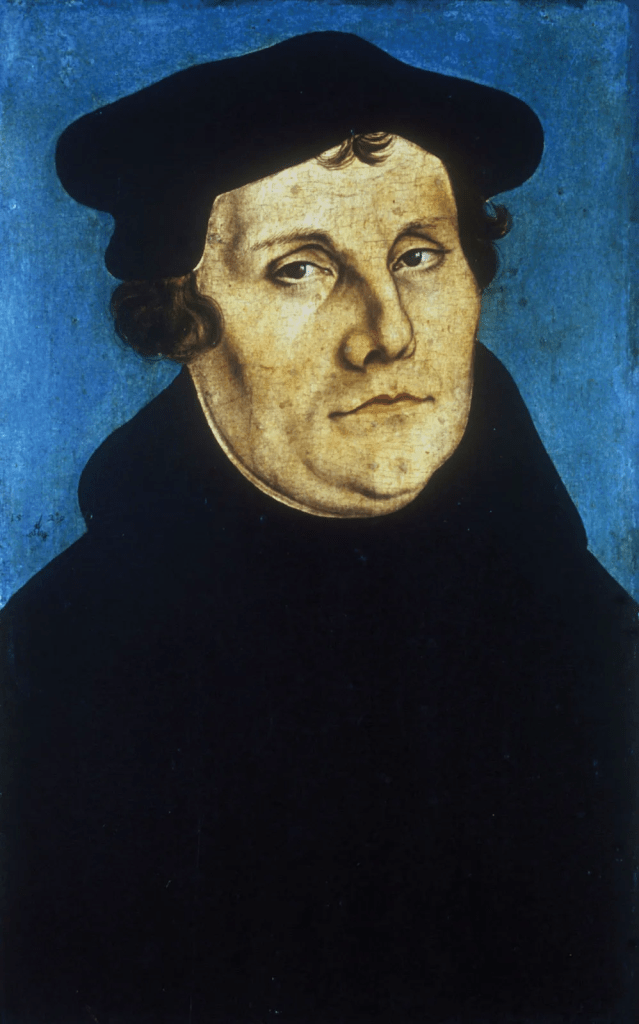
I Timothy: What the Church Should Be.

A SERMON DELIVERED ON LORD’S-DAY MORNING, SEPTEMBER 29, 1878, BY C. H. SPURGEON, AT THE METROPOLITAN TABERNACLE, NEWINGTON

“If I delay, you may know how one ought to behave in the household of God, which is the church of the living God, a pillar and buttress of the truth.”  (1 Timothy 3:15 (ESV)

PAUL’S design in this epistle was to instruct young Timothy how he should behave himself in the church of God, so as to discharge his office as minister, evangelist and pastor with honor to himself and profit to the people. He reminds him that the church is the house of God and in God’s own house a man ought to be upon his best behavior, for it is no light thing to draw near unto the Lord. A poor man who is called to visit a prince or king will anxiously inquire how he ought to act. We, poor creatures that we are, when we are admitted into the church which is the house of God, should inquire what conduct will be decorous and comely in those who are admitted into the presence of the great King, and permitted to dwell within His palace gates.

Especially should each of us, endeavor to behave himself aright in the house of God, if we know that we are looked up to and imitated. All who teach the young, all who are parents, all who are persons of age and experience, all who occupy influential positions and especially all deacons, elders and preachers, should pray the Lord that they may know how they may behave themselves in the house of God, lest inadvertently their misbehavior should be injurious to the weaker sort. Such need to learn how they should behave to their brethren, to the Elder Brother, and to the great Father of all. We need to learn the ways of the house, the customs of the palace. Part of the objective of the sermon this morning, will be that those of us who are in the house of God may learn how we should behave in it. But special prominence will be given to steadfastness in the faith which makes a man not only a dweller in the church but a pillar of it.

First, I shall at some length expound the text, and then try to enforce the lesson from it. In expounding it, I see three things to note, and the first is THE GLORIOUS NAME OF THE CHURCH—“The Church of the living God.” First, it is called the church. What is a church? It is an assembly. And a Christian church is an assembly of faithful men, of men who know the truth, believe it, affirm it, and adhere to it. The Greek word signifies an assembly summoned out of the whole population to exercise the right of citizenship. An ecclesia, or church, is not a mob, nor a disorderly gathering rushing together without end or purpose, but a regular assembly of persons called out by grace and gathered together by the Holy Spirit. Those persons make up the assembly of the living God.

In order to be a church, there must be a selection and a calling out, and that calling must come from God, who alone can call effectually. Touching all the members of this select assembly there is an eternal purpose which is the original reason of their being called, and to each of them there is an effectual calling whereby they actually gather into the church.

The church is not a number of unregenerate people coming together entirely of their own notion to defend such-and-such dogmas. Such persons may form a club, but they cannot make a church. There must be a coming together of renewed men, in the name of Jesus, by the power of the Holy Spirit, and these must meet for purposes which God Himself ordains, and be joined together after His own fashion. Jesus must be the uniting cornerstone, and His Spirit the indwelling power, as it is written, “In whom you also are built together for a habitation of God through the Spirit.”

Secondly we will consider HER DESIGN IN REFERENCE TO GOD. The Apostle speaks of the church of the living God as the house of God. This is a very beautiful and instructive figure. “The Most High dwells not in temples made with hands,” whether they are called cathedrals, churches, or meeting houses. Today there is no consecrated shrine, no appointed building where we must resort if we would meet with God, for behold the Lord is to be found everywhere by those who worship Him in spirit and in truth. True hearts view the entire universe as a temple wherein everyone speaks of the glory of God. Yet there is a shrine and a temple, but it is living and spiritual, the called-out assembly, the church of the living God is the special abode of Deity.

Thus, have we spoken upon the design of the church in reference to God—the tug of war comes in the third place, THE DESIGN OF THE CHURCH IN REFERENCE TO THE TRUTH. Paul compares it to a pillar and its pedestal or basement, for that, I think, would be a fair translation.

What does the expression mean—the pillar and basement? I think it means, first, that in the church, the truth should abide. In the church of the living God it always does abide, even as a pillar stirs not from its place. In the confession of the church made by each one of her members, in the teaching of her ministers, and in the witness of the whole body, truth will be found at all times. The church of God is not the quicksand of the truth, but the pillar and pedestal of it. She is not the floating island of the truth, but the eternal column of it. The church stands steadfast and unmovable as a pillar of truth fixed on its base.

If you find not the truth anywhere else, you will find it in the church of the living God, which is truth’s castle and stronghold. “In which church?” you ask. I said in the church of the living God. I did not say in the Church of England, or in the Church of Scotland, or in the Wesleyan church, or in the Baptist church, or even in the assembly of Exclusive Brethren. But I did say that the truth of God is as a treasure in the church of the living God, and it is never removed from her keeping.

Therefore, if the truth is not maintained by any so-called church, it is not the church of God. When the truth is given up, everything is given up. The very idea of a church involves the retaining of the truth with constant steadfastness, and if this is neglected, the so-called church has nothing left in it but the name. As a pillar and its base are always in one place, so must the church be a fixed, permanent and unalterable column of gospel truth, and woe to her if she is not. It means that in the true church the truth is lifted up as upon a pillar. Truth not only rests there as on a pedestal, but it stands upright as a pillar. It is the duty and the privilege of the church of God to exalt the truth into the open view of all mankind.

Once more, it is the Church’s business to maintain the truth with all her might. She is set as a bronze wall and an iron pillar against all error. However men may cringe or bow, there stands the column fast and firm, fixed on its pedestal, set on its base. So should the church in all ages stand fast to truth and yield to no error, nor concealment of doctrine, nor change of ordinance. The church of the apostles is the model of the church of today.

May the Lord’s truth and grace be found here. Have a blessed day in the Lord.

Soli deo Gloria!

I Timothy: The Behavior of Pastors and the Nature of the Church.

14 I hope to come to you soon, but I am writing these things to you so that, 15 if I delay, you may know how one ought to behave in the household of God, which is the church of the living God, a pillar and buttress of the truth.” (1 Timothy 3:14–15 (ESV)

Having provided Timothy with specific instructions on prayer, worship, and church officers, the Apostle Paul then stated his reason for writing to the young pastor in the first place. It was to set forth the nature of the church and the mediatorial ministry of Jesus Christ.

The historical context indicates Paul was confident he would soon come to see his young protégé. In anticipation of this reunion, he reminded Timothy of this letter’s purpose.

First, Paul wanted Timothy to know how to conduct himself as a church’s pastor. In other words, the apostle wanted Timothy to be a leader and to know how to be a leader. Paul set forth the character and behavior of church leaders in I Timothy 1:1-3:13.

To behave (ἀναστρέφεσθαι; anastrephesthai) refers to how believers in Christ are to conduct themselves in life and living. The emphasis is on an overt daily behavior. See 2 Cor. 1:12; Eph. 2:3; 1Tim. 3:15; Heb. 10:33; 13:18; 1 Peter 1:17; 2 Peter 2:18.

Second, Paul wanted Timothy to also know the nature of the church he pastored, and the nature of churches all other men pastor.

This overt, daily behavior by believers in Christ is to be seen within the fallen world (Rom. 12:1-2). However, it most importantly is to be seen in the household of God. Household (οἴκῳ; oiko) in the context refers to family. This is the family of God.

The text speaks of this household as the church of the living God. Church (ἐκκλησία; ekklesia) is the congregation, and not a building. The church is God’s called out ones. The church is God’s sole possession. Believers are to display godly, daily behavior among each other. This is to be the norm. Often times, it is not.

Paul also identified the church as the pillar (ζῶντος; stylos). A pillar is an upright shaft or structure used as a building support. “στῦλος is also used in speaking of the leaders of the Jerusalem church (Ga 2:9; see 36.7).

“In a number of languages pillars may be described as ‘those poles which support the house’ or ‘those logs which hold up the roof.’ Usually, however, there are rather specific terms to designate these important parts in the construction of houses or halls.” [1]

στῦλος is also used in speaking of the leaders of the Jerusalem church (Gal. 2:9). In Ga 2:9 the focus is upon the important role of such persons in supporting and maintaining the church. In a number of languages such a figurative meaning may be expressed as ‘very important persons in the church.”’[2]

The church, and its leaders, are also metaphorically identified as a buttress (ἑδραίωμα; hedraioma). “It is that which provides the basis or foundation for belief or practice— ‘support, foundation, basis.’ στῦλος καὶ ἑδραίωμα τῆς ἀληθείας ‘pillar and support of the truth’ 1 Tm 3:15.” [3]

“The church, which met in homes, was modeled on the household, just as pagan political theorists compared the household to society in general (3:4–5). Paul’s prior admonitions to Timothy, especially in 3:1–13, thus serve a function analogous to the household codes of many ancient writers: providing a specific framework of wisdom for administrating the family unit and society. “Pillars” were used to uphold structures, and support for the truth was needed given its challenge by false teachers” (1:3–7).[4]

“Believers are God’s house or sanctuary (1 Cor. 3:16; 6:19; 2 Cor. 6:16) because God dwells in them. Hence, Paul continues: which is the church of the living God (not the temple of dead idols! 1 Thess. 1:9, 10), the pillar and foundation of the truth. Having been called “God’s house,” we now note that the church is next compared to a pillar and foundation. As the pillar supports the roof, even better (note the climax!) as the foundation supports the entire super-structure, so the church supports the glorious truth of the gospel (2 Tim. 2:19; Matt. 16:18),” explains Dr. William Hendriksen

“It supports the truth by:

Hearing and Heeding it (Matt. 13:9)

Handling it rightly (2 Tim. 2:15)

Hiding it in the heart (Ps. 119:11), and

Holding it forth as the Word of Life (Phil. 2:16).

Or, if one prefers, by:

Digesting it (Rev. 10:9). That takes study and meditation.

Defending it (Phil. 1:16)

Disseminating it (Matt. 28:18–20)

Demonstrating its power in consecrated living (Col. 3:12–17).”[5]

Take the opportunity to evaluate your church, and yourself, by this biblical rubric. May the Lord’s truth and grace be found here. Have a blessed day in the Lord.

Soli deo Gloria!   


[1] Johannes P. Louw and Eugene Albert Nida, Greek-English Lexicon of the New Testament: Based on Semantic Domains (New York: United Bible Societies, 1996), 87.

[2] Ibid. 87.

[3] Ibid. 377.

[4] Craig S. Keener, The IVP Bible Background Commentary: New Testament (Downers Grove, IL: InterVarsity Press, 1993), 1 Ti 3:14–15.

[5] William Hendriksen and Simon J. Kistemaker, Exposition of the Pastoral Epistles, vol. 4, New Testament Commentary (Grand Rapids: Baker Book House, 1953–2001), 136–137.

I Timothy: The Deacon’s Home and Reward.     

12 Let deacons each be the husband of one wife, managing their children and their own households well. 13 For those who serve well as deacons gain a good standing for themselves and also great confidence in the faith that is in Christ Jesus.” (1 Timothy 3:12–13 (ESV)

 With the notable exception of not being required to teach the Scriptures, deacons must meet the same biblical character qualifications required for elders (I Timothy 3:1-7). Today’s text continues by setting forth the biblical standard of a deacon’s home and family along with God’s promise for those who serve well in this office.

The Apostle Paul wrote deacons must be a husband of one wife. As with elders, this does not mean a deacon must be married. However, if he is he must be a one-woman man. A deacon must guard his mind, emotions and will against any appearance of sexual evil. His relationships with women must be exemplary, whether he is married or not.

“Like the elder, the deacon must be a “one-woman man,” someone who is not a polygamist and who is faithful to his wife if he is married. Again, it is not that marriage itself is the standard for the diaconate but rather faithfulness and monogamy in the marital relationship. Single men are equally able to be ordained as deacons as long as they prove true to God’s command, which for them means chastity in singleness, anticipating the day in which they might be married,” explains Dr. R. C. Sproul.

A deacon must also manage his children and household well. The word managing (προϊστάμενοι; proistamenoi) is a present, middle participle. A deacon must continually and personally lead and guide his family. He must do so well (καλῶς; kalos). This means managing his own family in a biblically correct and praiseworthy manner. This includes his children and property.

“Additionally, we meet again the requirement that a church officer must manage his children and household well (see also vv. 4–5). In a real sense, the home is the training ground for men who would minister to the Lord’s people, whether they serve as elders or deacons. This makes perfect sense because only a few verses later Paul reminds us that the church is the “household of God”
(v. 15). Any man who can control his home and lead his own family in godliness can do the same for our Father’s family,”
continues Dr. Sproul.

God gives a promise to deacons who fulfill their biblical qualifications throughout their lifetime of service. For those deacons who serve well, in a biblically correct and praiseworthy manner, God affirms two blessings.

First, deacons who serve well gain a good standing for themselves. The word gain (περιποιοῦνται; peripoiountai) mean to presently, personally and collectively acquire and possess a good standing (βαθμὸν καλὸν; bathmon kalon). This means an advantageous reputation for themselves. They become men worthy of respect.

Second, they also gain great confidence in the faith. The word great (πολλὴν; pollen) means much or many. Confidence (παρρησίαν; parresian) means boldness and courage. This boldness and courage is in union with the faith (πίστει; pistei). Faith means trust in, dependence upon, commitment to and worship of an object. Such faith must be centered in one object and one object alone; Jesus Christ.

“It is entirely right and natural to regard the reward which is here promised as pertaining to the deacons and their helpers. The apostle has been speaking about them, and about no one else, in verses 8–12. The connection, moreover, is very close, being introduced by the word, “for.” It will hardly do, therefore, to say that Paul is still thinking about the overseers, introduced in verse 1, and that he includes these in the reward here promised. To be sure, to these overseers also an incentive has been given, namely, the incentive based on the glorious character of their task (see verse 1). We may even go farther and admit that the blessing described in verse 13 will actually be enjoyed by elders as well as by deacons and their assistants. And we must probably accept as correct the position that the first verb used in the original here in verse 13 (cf. verse 10) should not be rendered “have served (well) as deacons” but simply “have served (well),” explains Dr. William Hendriksen.

“But though all this be freely granted, it still remains true that in the present passage the apostle is in all probability speaking about the persons mentioned in the immediately preceding context (verses 8–12). In verse 1 the incentive for the elders was indicated: their task is glorious. Verse 13 now adds the incentive for the deacons: their reward is rich. Let no one, permitting himself to be misled by the fact that it is the deacons’ task to serve and not (like the elders) to rule, begin to think lightly of them and of their office. Let it be remembered that those deacons who have served well acquire for themselves a noble standing. The church will think highly of them because they have performed their tasks in a worthy manner. (Incidentally, the word rendered standing has the primary meaning a step, say of a staircase. Since such a staircase with its steps could be used to measure the sun’s shadow, see 2 Kings 20:9–11 in the LXX, the meaning degree—cf. the “degrees” on a sun-dial—is not strange. Hence, in some such way the figurative meaning degree, rank, standing is easily reached.).”

Moreover, the very consciousness of the fact that with the help of God he has done his best, so that he is not vexed by pangs of conscience, will give the deacon great confidence. He will not hold back, but will tell all (παρρησία is derived from πᾶς, all, and ῥῆσις telling, speech). This confidence has reference to the faith (subjective sense here) which centers in Christ Jesus. It is concerning him that the deacon will freely and gladly testify.”[1]

To be an elder, or a deacon and deaconess, is to serve in a sacred calling and office. It is not to be regarded as a status symbol within the church, but rather a humble and holy obligation and responsibility.

May the Lord’s truth and grace be found here. Have a blessed day in the Lord.

Soli deo Gloria!  


[1] William Hendriksen and Simon J. Kistemaker, Exposition of the Pastoral Epistles, vol. 4, New Testament Commentary (Grand Rapids: Baker Book House, 1953–2001), 134–135.

I Timothy: The Behavior of Deacon’s Wives.    

Their wives likewise must be dignified, not slanderers, but sober-minded, faithful in all things.” (1 Timothy 3:11 (ESV)

Today’s text ushers in the frequently debated subject regarding whether the Apostle Paul was speaking just of the wives of deacons, or the possibility of women serving as deaconesses. God calls all believers in Christ into service (I Peter 4:10-11), but does I Timothy 3:11 allow for service in the office of deaconesses?

A key component to this discussion is the word Paul used in referring to these women (γυναῖκας; gynaikas). This plural noun means an unmarried adult women or an adult female wife of an adult male in the immediate context of I Timothy 3:8-10.

“In the requirements for those who would serve on the diaconate, Paul in today’s passage comments on the deacons’ “wives,” as the English Standard Version translates the Greek word gynaikas in 1 Timothy 3:11. But this word can also be rendered as “women,” which would make this passage have a significantly different meaning. If the passage is to be read as talking about the wives of male deacons, then the office of deacon, like the office of elder, is limited to men alone. Yet if gynaikas means “women,” then Paul is talking about female servants or deaconesses, opening up the diaconate to women as well as men. Unfortunately, it is hard to determine the apostle’s meaning because the contextual details provide little help in choosing the most appropriate translation,” explains one commentator.

What are the arguments “for” the office of deaconess? The following positive opinions are offered for consideration.

First, Paul gave no qualifications for elders’ wives (I Tim. 3:1-7). As such, there is no parallel for deacons’ wives. This at least suggests the office of deaconess is in view.

Second, an argument for deaconesses are the requirements given in verse 11, which will be examined later on in this essay. These requirements are the same as those mandated of male deacons (see vv. 8–10).

Third, supporters of deaconesses cite Romans 16:1. The Apostle Paul called Phoebe a diakonon, a version of the Greek word often translated as “deacon” (diakonos). Since Scripture interprets Scripture, this lends credence for the existence of deaconesses in the early church.

Finally, there is no specific command for women not having authority. What Paul wrote preventing women serving as church elders (1 Tim. 2:12–15; 3:1-7), he does refer to in 1 Timothy 3:8–13 barring women from the diaconate.

“The Greek word gynē can mean either “wife” or “woman. Paul likely here refers not to deacons’ wives, but to the women who serve as deacons. The use of the word “likewise” (cf. v. 8) suggests a third group in addition to elders and deacons. Also, since Paul gave no requirements for elders’ wives, there is no reason to assume these would be qualifications for deacons’ wives,” explains Dr. John MacArthur.

What are the alternative arguments against women serving as deaconesses? Opponents of women serving as deaconesses give several reasons why Paul would give qualifications for deacons’ wives and not those of elders’ wives.

First, deacons serve in ministries of mercy. They often have close contact with people on occasions when a woman’s assistance is needed. It would be awkward for male deacons to aid sick women in many instances. However, their wives could help bathe, dress, or even care for women with such needs.

Second, those opposed to Paul allowing for female deacons do not think it is significant the apostle called Phoebe a diakonon. The term can simply mean “servant,” not an ordained office.

While the debate continues as to whether the Scriptures support deaconesses, the qualifications for these wives was clearly stated. There are four highlighted behavioral qualities these women were to possess.

First, they were to be dignified as their husbands (I Tim. 3:8). To be dignified (σεμνάς; semnas) means a woman who was serious and worthy of respect.

Second, they must not be slanderers (διαβόλους; diabolous). A slanderer is an individual who is malicious in their speech. It is a title frequently given to Satan (Matt. 4:5, 8, 11; 13:39Luke 4:3, 5–6, 13; 8:121 Peter 5:81 John 3:8Rev. 2:10; 12:9, 12; 20:2, 10). 

Third, they must be sober-minded (νηφαλίους; nephalious). To be sober-minded means temperate and not one associated with wine or alcohol.

Fourth, they must be faithful in all things. To be faithful (πιστὰς; pistas) means to be committed to, dependent upon, trusting in and honoring the Lord Jesus Christ. These women were to be trustworthy in their lives and ministries.

“Reformed Christians who affirm Scripture’s final authority continue to differ over whether women may be ordained as deacons. What is not up for debate is that the traits Paul lists in 1 Timothy 3:11 should be true of all Christian women, regardless of one’s position on deaconesses,” concludes Dr. R. C. Sproul.

If you are a Christian woman, are you making a concerted effort to be dignified, to avoid slander, to be seriously minded about godliness, and to be faithful? If you are a man, are you encouraging the women in your life in these qualities?

May the Lord’s truth and grace be found here. Have a blessed day in the Lord.

Soli deo Gloria!

I Timothy: The Behavior of Deacons.   

Deacons likewise must be dignified, not double-tongued, not addicted to much wine, not greedy for dishonest gain. They must hold the mystery of the faith with a clear conscience. 10 And let them also be tested first; then let them serve as deacons if they prove themselves blameless.” (1 Timothy 3:8–10 (ESV)

Today’s text strongly indicates deacons are to have the same character as elders (Acts 6:3; I Tim. 3:1-7). Deacons are also to evidence their godly character by their godly behavior. What is true for all believers in Christ (Gal. 5:22-23; Eph. 2:10) is especially so for these servant leaders. In carrying out their practical servant duties on behalf of believers in Christ, how are deacons to behave?

First, they must be dignified (σεμνούς; semnous). This means deacons are to be worthy of respect. In other words, they are to be honorable, gracious, and respectable men.  They are to view their lives in Christ, as well as their deaconship before Christ on behalf of believers in Christ, as an honorable calling.  

Second, deacons are not to be double-tongued (διλόγους; dilogous). To be double-tongued is to be insincere in what you say. It refers to saying one thing and meaning another. Or, it refers to saying something but not being truthful in what you said.

“To be dignified is to be serious in mind and character; not silly or flippant about important matters. To not be double-tongued means deacons must not say one thing to some people and something else to others; their speech must not be hypocritical, but honest and consistent,” explains Dr. John MacArthur.

Thirdly, deacons must not be addicted to much wine (οἴνῳ πολλῷ προσέχοντας; oino pollo prosechontas). This phrase refers to being presently and actively attentive to drinking alcohol.

Fourth, they are not to be greedy for dishonest gain (αἰσχροκερδεῖς; aischrokerdeis). The Authorized Version translation uses the phrase “guilty of filthy lucre.” This means deacons are not to be men who have an insatiable appetite for wealth and ready to procure it by disgraceful means.[1]

“Like elders (see I Tim. 3:3), deacons must not abuse their office to make money. Such a qualification was especially important in the early church, where deacons routinely handled money, distributing it to those in need,” continues Dr. MacArthur.

Fifth, Paul stated deacons must hold the mystery of the faith with a clear conscience.” In Paul’s epistles, mystery (μυστήριον; mysterion) refers to the mysteries of God, of his will, of Christ, of the gospel, of iniquity, the mystery kept secret or hidden away. To have a clear conscience (καθαρᾷ συνειδήσει; kithara syneidesei) means to have an ethically clean understanding and awareness of the Gospel. It is the Gospel for which the deacon must presently and actively hold (ἔχοντας; echontas). He can never depart from the truth of the Gospel of Christ.

“Although the deacon is tasked primarily not with teaching the people of God but with mercy ministries such as caring for widows and orphans (Acts 6:1–6), there are many occasions in which deacons will offer instruction. Assisting a family who is suffering a severe budget crisis involves the distribution of funds and advice in how to wisely use the family’s finances. In this case, the deacon will undoubtedly rely on the wisdom and principles of Scripture to help the family learn how to manage their money. When the opportunity comes to help non-Christians, the deacon may very well be called upon to explain the Christian faith and the motivation it provides for doing “good to everyone” (Gal. 6:10). These situations and many others that can possibly arise require deacons to be solidly grounded in the truths of the Bible,” explains Dr. R. C. Sproul.

“Deacons must hold the mystery of faith “with a clear conscience” (1 Tim. 3:9). In other words, their consciences should not accuse them of lying when they profess the Christian faith. A deacon’s confession must not be mere lip service but something that he embraces with both mind and heart. The deacon without a clear conscience lacks the integrity needed to do his job well. More importantly, he lacks saving knowledge of the One whom he claims to serve.”

Sixth, deacons must finally be tested (δοκιμαζέσθωσαν; dokimazesthosan). This means God commands elders to continually examine and approve active, and potential, deacons.  

It should be clearly evident men who serve as deacons must meet these qualifications. If they do not, they cannot serve in this office.

May the Lord’s truth and grace be found here. Have a blessed day in the Lord.

Soli deo Gloria!


[1] Marvin Richardson Vincent, Word Studies in the New Testament, vol. 4 (New York: Charles Scribner’s Sons, 1887), 234.

A Word Fitly Spoken: Biblical Terms.

The following article is by Rev. Kevin Dr. Gardner. He is associate editor of Tabletalk magazine, resident adjunct professor at Reformation Bible College in Sanford, Fla., and a teaching elder in the Presbyterian Church in America. This essay, entitled Defining our Terms, appeared in the March 2015 issue of Tabletalk.

The doctrine of Scripture is foundational to the Christian faith. But there is more to say about Scripture than simply, “The Bible says it. I believe it. That settles it.” If you don’t grasp what the Bible is and how it came to be, you’ll never fully grasp its meaning. Since the meaning of the Bible is vitally important to our faith and life, we will here briefly define a few key terms that relate to the doctrine of Scripture as the study of God’s Word written.

Authority: The power the Bible possesses, having been issued from God, for which it “ought to be believed and obeyed” (Westminster Confession 1:4). Because of its divine author, the Bible is “the source and norm for such elements as belief, conduct, and the experience of God” (Westminster Dictionary of Theological Terms).

Autographs: The original texts of the biblical books as they issued from the hands of the human authors.

Canon: The authoritative list of inspired biblical books. Within a short time after Jesus’ death, the New Testament canon was affirmed by evaluating the Apostolicity, reception, and teachings of books, but ultimately, the canon is self-authenticating, as the voice of Christ is heard in it (John 10:27; WCF 1:5).

Inerrancy: The position that the Bible affirms no falsehood of any sort; that is, “it is without fault or error in all that it teaches,” in matters of history and science as well as faith (Chicago Statement on Biblical Inerrancy). Inerrancy allows for literary devices, such as metaphors, hyperbole, round numbers, and colloquial expressions.

Infallibility: The position that the Bible cannot err or make mistakes, and that it “is completely trustworthy as a guide to salvation and the life of faith and will not fail to accomplish its purpose” (Westminster Dictionary). As the Christian church has traditionally taught, this doctrine is based on the perfection of the divine author, who cannot speak error.

Inspiration: The process by which God worked through the human authors of the Bible to communicate His revelation. The term derives from the Greek theopneustos, meaning “God-breathed” (2 Tim. 3:16), and refers to God as the ultimate source of the Scriptures.

Organic inspiration: The process by which God guided the human authors of Scripture, working in and through their particular styles and life experiences, so that what they produced was exactly what He wanted them to produce. The text is truly the work of the human authors—God did not typically dictate to them as to a stenographer—and yet the Lord stands behind it as the ultimate source.

Necessity: Refers to mankind’s need for God’s special revelation in the Scriptures in order to obtain knowledge of the gospel and the plan of salvation, which cannot be learned through the general revelation of nature and conscience.

Perspicuity: The clarity of the Bible; that is, that which is necessary to know and believe regarding life and salvation is “so clearly propounded, and opened in some place of Scripture or the other,” that anyone may understand them (WCF 1:7).

Scripture: From the Latin scriptura, meaning “writings”; refers to sacred texts, but more specifically, the Bible as the Word of God written.

Special revelation: The things that God makes known about Himself apart from nature and conscience (general revelation; cf. Rom. 1:19–21). These things, having to do with Christ and the plan of salvation, are found only in the Bible.

Sufficiency: All that is needed to know and believe regarding salvation and what pleases God is found in the Bible.

Verbal, plenary inspiration: The extending of God’s superintendence of the writing of Scripture down to the very choice of words, not merely to overarching themes or concepts; that is, “the whole of Scripture and all of its parts, down to the very words of the original,” were inspired (Chicago Statement).

May the Lord’s truth and grace be found here. Have a blessed Lord’s Day.

Soli deo Gloria!

I Timothy: The Quiet and Crucial Work of Deacons.   

Deacons likewise must be dignified, not double-tongued, not addicted to much wine, not greedy for dishonest gain. They must hold the mystery of the faith with a clear conscience. 10 And let them also be tested first; then let them serve as deacons if they prove themselves blameless.” (1 Timothy 3:8–10 (ESV)

The follow article is by Marshall Segal. He serves as President & CEO of Desiring God. He’s the author of Not Yet Married: The Pursuit of Joy in Singleness & Dating. He graduated from Bethlehem College and Seminary, and serves as an elder at Cities Church. He and his wife, Faye, have three children and live in Minneapolis.

As surprised as we might be by divisiveness in the church, and as uncomfortable and maddening as it may feel at times, such cracks in the walls have dogged us from the beginning.

The kinds of cracks have varied from age to age and culture to culture, but give any congregation enough time — even the best of them — and cracks will emerge. They’re side effects of making covenants with fellow sinners — as unpleasant as they are unavoidable. It’s just part of keeping a home in a fallen world.

Many have tried hard to diagnose and treat the current cracks in our walls — politics and elections, mask mandates and rebellions, racial disparity and superiority, men’s and women’s roles in the home and beyond, domestic abuse and other moral failures, and so on — but many of them have overlooked or marginalized a missing ingredient to harmony. In fact, I can’t help but wonder if the wildfires in some pews are as fierce and contagious as they are because this piece seems so small in many of our eyes.

When God planted the first churches, he knew the cracks he’d find. He wrote them into our stories, in fact, because he knew that cracked but loving churches served his purposes better than ones with brand-new walls and pristine floors. He had planned the cracks, and he had plans for the cracks, and one of those plans was called deacons.

Strong Enough to Help

We first encounter deacons during a meal (which, as any normal family knows, is when fights often break out). As the early church began to meet and grow, Greek-speaking Jews who had been scattered outside of Israel (“Hellenists”) returned to Jerusalem to join the church and follow Jesus. After a while, though, they came and complained to the Hebrew-speaking apostles because Greek widows were not receiving the food they needed (Acts 6:1).

Urgent needs like this, as any church knows, require time and attention, pastoral sensitivity, and careful follow-through. This meant the leaders would have less time and attention for teaching and prayer, and they knew the church would suffer even more if that were the case (Acts 6:2). So, the apostles called the church to appoint seven men to make sure all were fed well. And because they did, “the word of God continued to increase, and the number of the disciples multiplied greatly in Jerusalem” (Acts 6:7).

How much or little we think of diaconal ministry today rests, in significant measure, on what problem we think those first proto-deacons were solving. Was this merely a matter of entrées and sides for some lonely and vulnerable women, or was the church facing a deeper, more sensitive threat?

Matt Smethurst, in his introduction to deacons, draws our attention to the greater dangers hiding beneath the dining tables:

How our churches react to conflict can make all the difference in whether our gospel witness is obstructed or accelerated. Acts 6 is a story of church conflict handled well. The seven weren’t merely deployed to solve a food problem. Food was the occasion, sure, but it wasn’t the deepest problem. The deepest problem was a sudden threat to church unity. (Deacons, 44, 52)

“How could the church win the war for souls if there were wars within her walls?”

Cracks were suddenly surfacing and spreading. How could the church win the war for souls if there were wars within her walls? How could the word run if its people were mired in swamps of bitterness? The church didn’t merely need better waiters; it needed peace and healing. It needed men strong and wise enough to help mend fractures in the family.

Giants Bowing Low

Many might hear deacon and immediately think of dull or menial tasks that few people want to do — building maintaining, budget crunching, nursery cleaning, furnace repairing, meal serving. They might imagine a sort of junior-varsity team that relieves the pastors of lesser work. When the apostles saw those seven men, however, they saw something different in them — a stronger and more vibrant force for good, a noble and vital ministry.

We know how much they thought of diaconal work because of the kind of men they appointed: “Pick out from among you seven men of good repute, full of the Spirit and of wisdom, whom we will appoint to this duty” (Acts 6:3). They weren’t content with someone who was handy around the house or good with spreadsheets; they wanted men filled with the Spirit and abounding in wisdom. These were remarkable men doing difficult and precious work. “The apostles did not delegate this problem to others because it wasn’t important,” Smethurst observes, “but because it was” (53).

Because they knew how much food could poison fellowship, they set spiritual giants-in-the-making like Stephen over the tables. “And Stephen, full of grace and power, was doing great wonders and signs among the people” (Acts 6:8). The Jewish leaders “could not withstand the wisdom and the Spirit with which he was speaking” (Acts 6:10). And yet feeding widows was not beneath him. In fact, the faith and humility that freed him to quietly serve tables was the same faith and humility that freed him to boldly die for Jesus (Acts 7:58). Like Jesus, he knew that those who bow down lowest get to see more of God and his glory.

Diaconal ministry is not merely about checking boxes next to tasks, but about helping to maintain a home where a family not only lives but thrives.

Office of Tedious?

What do deacons do? In short, they assist the elders by meeting needs in the life of the church. They unleash the word of God by allowing the elders to focus on praying, teaching, and governing. And in doing so, the deacons guard and encourage the church’s love for one another. For the church of Acts 6, that meant making sure everyone was fed. In our day, it might still be feeding the hungry in our congregation, or it might be maintaining the church budget, or overseeing ministry to children, or taking care of the building, or leading a small group.

The tasks may seem tedious to the untrained eye, but imagine how much our churches would be crippled if no one stepped up to do them well. Imagine how horribly distracted and worn out our pastors would be, trying to cover all those bases themselves. Imagine how the preaching and teaching would inevitably suffer, leaving the church starving in far worse ways.

“The apostles recognize a fundamental truth,” Smethurst writes.

A church whose ministers are chained to the tyranny of the urgent — which so often shows up in “tangible problems” — is a church removing its heart to strengthen its arm. It’s a kind of slow-motion suicide. A church without deacons may lack health, but a church without biblical preaching cannot exist. There is, in fact, no such thing. (47)

Sent into the Cracks

What should churches look for in a deacon? I believe both men and women can serve as deacons (though I don’t have space to argue for that here). Scripture is not as clear on that question as we might like, so I understand why others come down differently. Whether we ordain women as deacons or not, though, Scripture does give us a clear picture of what marks a good deacon: dignity and honesty, self-control and generosity, conviction and faithfulness (1 Timothy 3:8–10). The men must also be devoted husbands and fathers, raising their families in the discipline and instruction of the Lord (1 Timothy 3:12Ephesians 6:4).

“When they see something that needs to be done, deacons love to help see that it gets done.”

Beyond the biblical qualifications, Smethurst shares some practical counsel for recognizing good deacons in the wild: “Pastor, when eyeing future deacons, look for godly saints who see and meet needs discreetly (they don’t need or want credit), at their own expense (they sacrifice), and without being asked (they take the initiative to solve problems)” (76). These qualities prepare a man (or woman) to anticipate and heal cracks in the church by meeting practical needs.

Sincere Humility

First, good deacons serve discreetly because of their deep-seated humility. The public nature of preaching and teaching means pastors get greater amounts of attention and encouragement (and criticism, with it). Doing diaconal work well requires a kind of humility, ready to forfeit the attention and affirmation others may receive. By all means, we should regularly encourage our deacons, but the very nature of their ministry means that many will not see or fully appreciate what they do.

Generous Sacrifice

Second, good deacons are strangely quick to sacrifice. I say strangely because all Christians should be quick to sacrifice. To follow Jesus Christ at all is to lay down our lives and pick up a cross (Matthew 16:24). Deacons, however, are examples in cross-bearing. Sacrifice is not an occasional blip on the radar of their decisions, but woven deeply into their lifestyle. They rejoice to spend and be spent for the sake of others (2 Corinthians 12:15), and especially for the church (Galatians 6:10).

Creative Initiative

Third, good deacons are creative problem-solvers. They’re solution-initiators. While others in the church might walk past problems (or even fail to notice them), deacons are drawn to these opportunities. How might that need be met? What might resolve this tension? What would it take to repair that wall or appliance? What is keeping my pastors from their most important work? When they see something that needs to be done, deacons love to help see that it gets done. When possible, they resist the impulse to leave a need at someone else’s feet, and they’re especially sensitive to how much pastors already have on their plates.

Durable Happiness

Good deacons are humble, and sacrificial, and creatively constructive — and they’re also deeply happy. Their humility is a happy humility. Their sacrifices are glad sacrifices. Their initiative is not just willing, but cheerful and eager. They have found, like the Servant they follow, that joy not only fuels ministry to others, but blossoms from that ministry. Jesus, after all, was betrayed, mocked, beaten, and slaughtered “for the joy set before him” (Hebrews 12:2). Likewise, as 1 Timothy 3:13 promises, “Those who serve well as deacons gain a good standing for themselves and also great confidence in the faith that is in Christ Jesus.”

May the Lord’s truth and grace be found here. Have a blessed day in the Lord.

Soli deo Gloria!

I Timothy: Likewise, Deacons.  

Deacons likewise must be dignified, not double-tongued, not addicted to much wine, not greedy for dishonest gain. They must hold the mystery of the faith with a clear conscience. 10 And let them also be tested first; then let them serve as deacons if they prove themselves blameless.” (1 Timothy 3:8–10 (ESV)

The Apostle Paul transitioned from the character and qualifications of elders/pastors (I Tim. 3:1-7) to the character and qualifications of deacons. The office of deacon is the second ministerial office of the church.

“Scripture actually says very little about the duties of a deacon, but the office finds its origin in Acts 6:1–7, even though none of the seven men chosen for service were ever officially called diakonos, which is the Greek term we translate as “deacon.” But it is appropriate to refer to these men as deacons since the Greek verb for service in verse 2 (diakone ō) is a cognate (a similar word) for diakonos. In any case, it is clear from Acts that the deacons are to focus mainly on mercy ministries, such as the assistance of widows, while elders are tasked primarily with “prayer” and “the ministry of the word” (vv. 2–4),” explains one commentator.

A widow, who is a member of the church where I serve as an elder, recently invited my wife and I to her home for dinner. It was a delightful time of good food and even better fellowship. During our delightful conversation, she mentioned the name of one of our church’s deacons. She also remarked this man was the deacon assigned to her by the church’s deacon board.

It was this one, of the church’s twenty deacons, who particularly ministered to her how and when necessary; regarding any practical needs she may have. Oner such recent need was the replacement of a dining room window of her home. While she purchased the window, it was this deacon who oversaw the replacement of it. Such is an example of God’s calling for a church’s deacons.

Paul began today’s text with the masculine, plural noun deacons (Διακόνους; diakonous). The word means a servant, minister or one who helps believers in Christ. It refers to men who serve, without necessarily having the office of deacon (Matt. 20:26; Rom. 16:1; Eph. 6:21; 1Thess. 3:2. It literally means a waiter of tables.

The apostle then used the word likewise (ὡσαύτως; hosautos), which means in like manner or in the same way. Within the immediate context, deacons are to serve and be like the church’s elders and pastors. In other words, the deacon’s character is to be just like the church’s pastor’s and elders.

“From the account of Stephen’s teaching in Acts 6:8–7:60 and the fact that even Jesus can be described as a diakonos (Mark 10:43–45), it is clear that deacons are not barred from teaching. But since an aptitude for teaching is the only qualification for eldership that does not overlap with the things to look for in deacons, we know that deacons do not direct their attention to the formal instruction of God’s people. Instead, they are to allocate wisely the church’s resources, feeding and sheltering the needy in the congregation, helping them to get back on their feet and making sure the local assembly never neglects the pure and undefiled religion of visiting widows and orphans (James 1:27).”

For the next several days, we will examine the qualifications set forth in Scripture concerning deacons. While they are to be like elders in character, there are also other behavioral qualities deacons must possess, distinguishing them from the church’s congregation. Therefore, men within a church are not qualified to be deacons just because they know how to use a cordless nail gun, replace a window, or mow a lawn and trim hedges. They are to be men of godly character and behavior as they live for the Lord and perform practical tasks benefiting those within the church congregation.

The “Son of Man came not to be served but to serve” (Matt. 20:28) and so to be called to serve the church as a deacon is one of the highest callings Christ can give to us. But even those of us who are not ordained as deacons must always be looking for ways we can serve the people of God and our neighbors if we are to imitate Jesus. What is one need in your church that you are uniquely equipped to meet? Are you seeking to meet this need?”

Are you such an individual? Does your church possess such qualified deacons? I am grateful to God the church where I serve has such men.

May the Lord’s truth and grace be found here. Have a blessed day in the Lord.

Soli deo Gloria!

I Timothy: The Special Duty of Pastors of Churches. Part 7.

The following excerpted essay was written by English Puritan theologian John Owen (1616-1683). It is entitled The Special Duty of Pastor of Churches. The concerns and challenges he observed in the 17th century apply to pastors of churches in the 21st century.

The following thoughts by Owen concludes this Top Ten List by the Puritan theologian and pastor.

Seventh, a pastor must have a compassionate suffering with all the members of the church in all their trials and troubles, whether internal or external, belongs to them in the discharge of their office; nothing renders them more like Jesus Christ, whom it is their principal duty to represent to the church.

The view and consideration, by faith, of the glory of Christ in his compassion with his suffering members, is the principal spring of consolation to the church in all its distresses. And the same spirit, the same mind in this, according to their measure, ought to be in all who have the pastoral office committed to them. So, the apostle expresses it in himself, “Who is weak, and I am not weak? who is offended, and I do not burn?” (2Cor 11:29).

Unless this compassion and goodness runs through the discharge of their whole office, men cannot be said to be evangelical shepherds; nor can the sheep be said in any sense to be their own. There are those who perhaps pretend to the pastoral office, to live in wealth and pleasure, regardless of the sufferings and temptations of their flock, or of the poor of it, or who are related to churches in which it is impossible for them to even be acquainted with the state of the greatest part of them; this does not correspond to the institution of their office, nor to Christ’s design in it.

Eighth, the pastor must take care of the poor and visitation of the sick. These are parts of this duty, commonly known, though commonly neglected.

Ninth, principal care of the rule of the church is incumbent on its pastors. This is the second general head of the power and duty of this office, to which many things in particular belong. But because I will treat the rule of the church by itself distinctly later, I will not insist upon it here.

Tenth, there is a communion to be observed among all the churches of the same faith and profession in any nation. What it consists in, and what is required for it, will be declared afterward. The principal care of this communion, for the edification of the churches, is incumbent on their pastors. Whether it is exercised by letters of mutual advice, of congratulation or consolation, or in testimony of communion with those called to office in those churches, or whether it is by convening in synods for consultation of their joint concerns (which things made up a great part of the primitive ecclesiastical polity), it is their duty to attend to it and to take care of it.

Pray for your pastor to be such a man of God and to faithfully continue in the work which God has called Him. May the Lord’s truth and grace be found here. Have a blessed day in the Lord.

Soli deo Gloria!

I Timothy: The Special Duty of Pastors of Churches. Part 6.

The following excerpted essay was written by English Puritan theologian John Owen (1616-1683). It is entitled The Special Duty of Pastor of Churches. The concerns and challenges he observed in the 17th century apply to pastors of churches in the 21st century.

The sixth task for pastors is to be ready, willing, and able, to comfort, relieve, and refresh, those that are tempted, tossed, wearied with fears and grounds of disconsolation, in times of trial and desertion. “The tongue of the learned” is required in them, “that they should know how to speak a word in season to him that is weary,” (Isa 50.4).

One excellent qualification of our Lord Jesus Christ, in the discharge of his priestly office now in heaven, is that he is touched with a sense of our infirmities, and he knows how to succor those that are tempted. His whole flock in this world is a company of tempted ones; his own life on the earth he calls “the time of his temptation;” and those who have charge of his flock under him ought to have a sense of their infirmities, and endeavor in a special way to succor those that are tempted.

But there are always some among them that are cast under darkness and disconsolations in a peculiar manner: some are at the entrance of their conversion to God, while they have a deep sense of the terror of the Lord, the sharpness of conviction, and the uncertainty of their condition; some are relapsed into sin or omissions of duties; some under great, sore, and lasting afflictions; some upon pressing, urgent, particular occurrences; some on sovereign, divine desertions; some through the buffetings of Satan and the injection of blasphemous thoughts into their minds, with many other occasions of a similar nature.

Now, the troubles, disconsolations, dejections, and fears, that arise in the minds of persons in these exercises and temptations are various, oftentimes urged and fortified with subtle arguments and fair pretenses, perplexing the souls of men almost to despair and death.

Therefore, it belongs to the office and duty of pastors:

First, to be able to rightly understand the various cases that will occur of this kind, from such principles and grounds of truth and experience as will bear a just confidence in their prudent application to relieve those concerned – to have “the tongue of the learned, to know how to speak a word in season to him that is weary,” (Isa 50.4).

It will not be done by a collection and determination of cases, which is still useful in its place; for we will hardly meet with two cases of this kind that can be exactly determined by the same rule, for all manner of circumstances give them variety. But what is required for this are skill, understanding, and experience in the whole nature of the work of the Spirit of God on the souls of men; of the conflict that exists between the flesh and the Spirit; of the methods and wiles of Satan; of the wiles of the principalities and powers or wicked spirits that are in high places; of the nature, effects, and ends of divine desertions – along with wisdom to apply such principles, or to make appropriate medicines and remedies for every sore and distemper.

These things are despised by some, neglected by some, and looked after by some only in cases of conscience where it is known that some have horribly debauched their own consciences and those of others, to the scandal and ruin of religion so far as they have prevailed. This is not to dispute how far helps such as books written on cases of conscience may be useful in this; they may be greatly useful to those who know how to use them rightly.

But the proper ways by which pastors and teachers must obtain this skill and understanding are by diligent study of the Scriptures, meditation on it, fervent prayer, experience of spiritual things, and temptations in their own souls – with a prudent observation of the way God has dealt with others, and the ways in which opposition is made to the work of his grace in them. Without these things, all pretenses to this ability and duty of the pastoral office are vain; which is why the whole work of it is much neglected.

Second, pastors are to be ready and willing to attend to the special cases that may be brought to them, and not to look at them as unnecessary diversions; rather, a due application to them is a principal part of their office and duty. To discountenance, to discourage anyone from seeking relief in perplexities of this nature, to bring it to them with a seeming moroseness and unconcern, is to turn away the lame, to push away the diseased, and not at all express the care of Christ for his flock, (Isaiah 40:11). Indeed, it is their duty to hearken after those who may be so troubled, to seek them out, and to give them their counsel and direction on all occasions.

Thirdly, pas tors are to bear patiently and tenderly with the weakness, ignorance, dullness, slowness to believe and to receive satisfaction, yes, maybe impertinence in those who are so tempted. These things will abound among them, partly from their natural infirmities, many being weak and perhaps forward, but especially from the nature of their temptations, which are suited to disorder and disquiet their minds, to fill them with perplexed thoughts, and to make them jealous of everything in which they are spiritually concerned. If much patience, meekness, and condescension is not exercised towards them, they are quickly turned out of the way.

In the discharge of the whole pastoral office, there is no duty of more importance, nor in which the Lord Jesus Christ is more concerned, nor more eminently suited to the nature of the office itself, than this. But it is a work or duty which, for the reasons mentioned, must be accompanied with the exercise of humility, patience, self-denial, and spiritual wisdom – having experience with the wearisome diversions on other occasions.

Pray for your pastor to be such a man of God and to faithfully continue in the work which God has called Him. May the Lord’s truth and grace be found here. Have a blessed day in the Lord.

Soli deo Gloria!