A Word Fitly Spoken: The Holiness of God.  

Our current weekly study from Scripture concerns the subject of holiness. This week’s essay begins to examine the holiness of God from Isaiah 6:1-7.

In the year that King Uzziah died I saw the Lord sitting upon a throne, high and lifted up; and the train of his robe filled the temple. Above him stood the seraphim. Each had six wings: with two he covered his face, and with two he covered his feet, and with two he flew. And one called to another and said: “Holy, holy, holy is the LORD of hosts; the whole earth is full of his glory!” (Isaiah 6:1-3).

To truly know God is to know His attributes, or His personal characteristics. They are those qualities which make God, God. Some of the LORD’s attributes He has chosen to share with His creation. Some of His attributes He alone possesses.  Isaiah 6:1-3 reveals one of God’s most significant attributes; holiness.

I Peter 1:15-16 says, “But as he who called you is holy, you also be holy in all your conduct, since it is written, “You shall be holy, for I am holy.” Peter quotes Leviticus 11:44.

What does it mean when the Bible says that God is holy? As previously noted, holy, or holiness, means to be set-apart. In Scripture, holiness refers to a variety of people, places and things. However, the word holy ultimately points to God as the one who is qualitatively different or set apart from creation. Holy may also be used to describe someone or something that God has “set apart” for special purposes. In the NT holiness takes on the sense of ethical purity or freedom from sin. Holiness is God’s “otherness” and “purity”, as well as to God’s prerogative to set people and things apart for God’s own purposes.

In Isaiah 6, we see one of the most striking accounts of not only the holiness of God but also the un-holiness of man. Isaiah 6 does not apply just to the Prophet Isaiah alone, but also to sinners and believers in Christ today.

Isaiah was a prophet during the kingly reigns of Uzziah, Jotham, Ahaz and Hezekiah in the Kingdom of Judah. He ministered for over 40 years. As Isaiah 6 opens, King Uzziah died approximately in the year 740 B.C. The king died of leprosy (2 Chronicles 26:16-21). This was a direct result of disobedience before God. His death signaled the conclusion of a long period (52 years) of peace and prosperity for the nation of Judah.

Following Uzziah’s death, Isaiah encountered a theophany, or a Christophany (John 12:41), which is a visible manifestation of God. Such instances are often accompanied by earthquakes, smoke, fire and lightening (Isaiah 29:1-6; 30:27-31; Exodus 19:18-19; Psalm 18:7-15; 50:1-3; 97:1-2; Micah 1:1-4; Nahum 1:3-8; Habakkuk 3:1-15).

Isaiah 6:1 says that the prophet saw the Lord. The word Lord is the Hebrew word Adonai which literally means Sovereign One or Master. Isaiah described the Lord sitting upon a throne. This symbolically means the Lord is consistently ruling over heaven and earth in power and authority. While the human king Uzziah was dead, the eternal King of kings was very much alive and reigning. 

The prophet said the Lord was “high and lifted up.” The Lord’s throne was greatly elevated illustrating that this was the One and only Most High God. No one is higher or greater. Additionally, the “train of his robe filled the temple.” The hem or fringe of God’s glorious robe filled the temple acknowledging supreme majesty. The Lord is the central and only object of worship.

Verse 2 focuses upon the reality, the rejoicing and the resulting effect of the praise given to God by the Seraphim angels. “Above him stood the seraphim. Each had six wings: with two he covered his face, and with two he covered his feet, and with two he flew.”

The Hebrew word Seraphim literally means burning ones. The Seraphim are specifically named angels whose task is to worship God before His heavenly throne. We do not know how many Seraphim angels there are before God’s throne, but we do know that there were/are more than one.

Dr. R.C. Sproul explains that, “Angels appear frequently throughout the Bible, particularly in the New Testament. In fact “angelos,” the Greek word that means “angel/messenger,” occurs more frequently than the term translated as “sin” (hamartia). Yet at the same time, Scripture does not give us much detailed information about these beings. They appear at key points in redemptive history to help God’s people, but the Bible says little about their appearance and origin. Still, the information we do have is sufficient for what we need to know about angels.”

However, God does give us information regarding the appearance of the Seraphim angels. To begin with, each one of these innumerable angels have six wings. Why six? The only reason given is what the Seraphim do with each set of wings.

With two wings, the Seraphim cover their face. Why do they do this? The reason is the Seraphim have no inherent glory of their own which compares with God’s glory. Therefore, as created beings they cannot directly look upon the glory of God.

The Seraphim cover their feet. Why do they do this? The reason is the Seraphim are created beings. They recognize their lowliness before God even as they engage in divine service. This is something which would be wise for humans to keep in mind regarding their own worship and service for God.

Finally, with two wings the Seraphim fly. Why do they do this? The reason is the Seraphim serve God in their flight. Fish swim, lions roar and snakes’ slither. Angels fly! That’s what God designed them to do.

The Seraphim have an all-important task to perform. They call to one another in antiphonal praise and cry out “holy, holy, holy is the LORD of hosts; the whole earth is full of his glory.” The threefold repetition indicates this attribute of God is superlative. It is unmatched, untouchable, and unparalleled. There is no greater attribute God possesses than holiness.

Holiness is the only attribute God possesses which is repeated to the third degree. God is never described as love, love, love. Neither is He mentioned as just, just, just. However, He is regarded as holy, holy, holy. This indicates a possible reference to the Trinity, but it also may mean all of God’s other attributes are shaped and influenced by His holiness. Therefore, His love is a holy love. His justice is a holy justice. And so on.

The name LORD of hosts refers to the most personal name for God: Yahweh. Yahweh, the self-existent One possesses divine control over the entire universe. He is the holy One. He is the self-existent One. He is I AM WHO I AM (Ex.3:13-14; John 8:58).

Because the LORD of hosts is holy, holy, holy, all of creation is full of His glory. The LORD is ruler over all, and His glory, truthfulness, righteousness and beauty of His character, fills creation.

To truly know God is to recognize and understand He is holy, holy, holy, and we are not. He is set apart from sin, while we belong and revel in sin. How then can sinful creatures ever hope to eternally be in the presence of this God who is holy, holy, holy? What hope then does any sinner have before the awesome holiness of God? What hope did the Prophet Isaiah have?

There is no hope in ourselves. Our only hope or confidence is in the gracious redemption by the LORD Jesus Christ. This biblical truth is illustrated in Isaiah’s response to the holiness of God and the LORD’s response to the sinful prophet.

Take the time today to meditate and consider the holiness of God.

Soli deo Gloria!

2 Thessalonians: Unconditional Election. Part Seven.  

13 But we ought always to give thanks to God for you, brothers beloved by the Lord, because God chose you as the firstfruits to be saved, through sanctification by the Spirit and belief in the truth. 14 To this he called you through our gospel, so that you may obtain the glory of our Lord Jesus Christ.” (2 Thessalonians 2:13–14 (ESV)

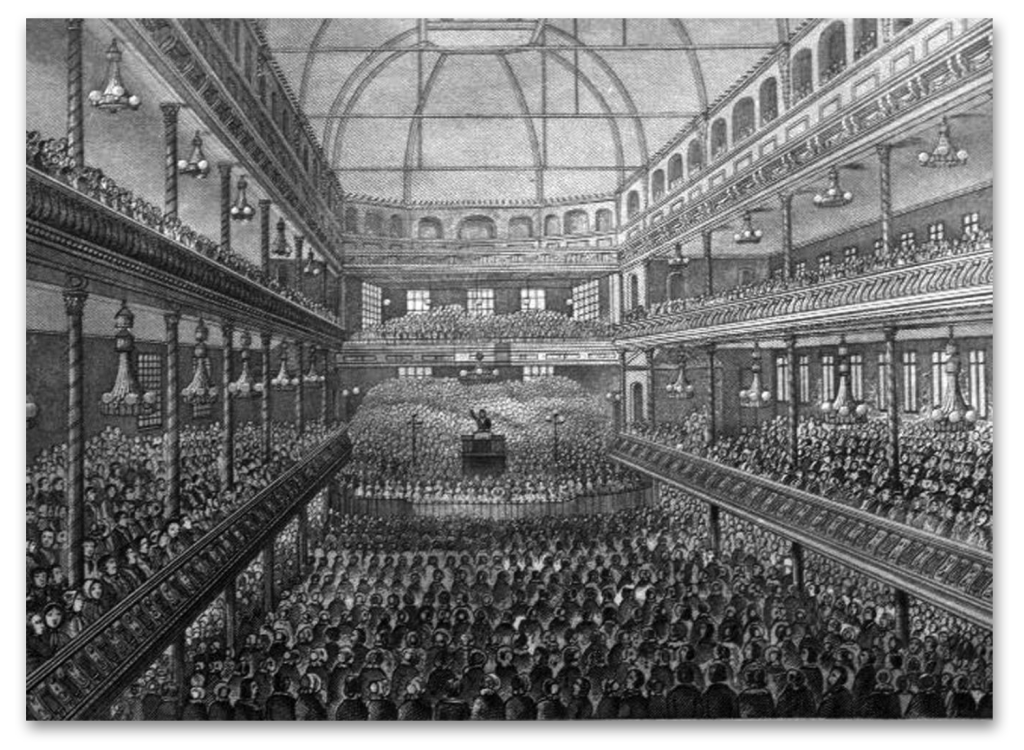
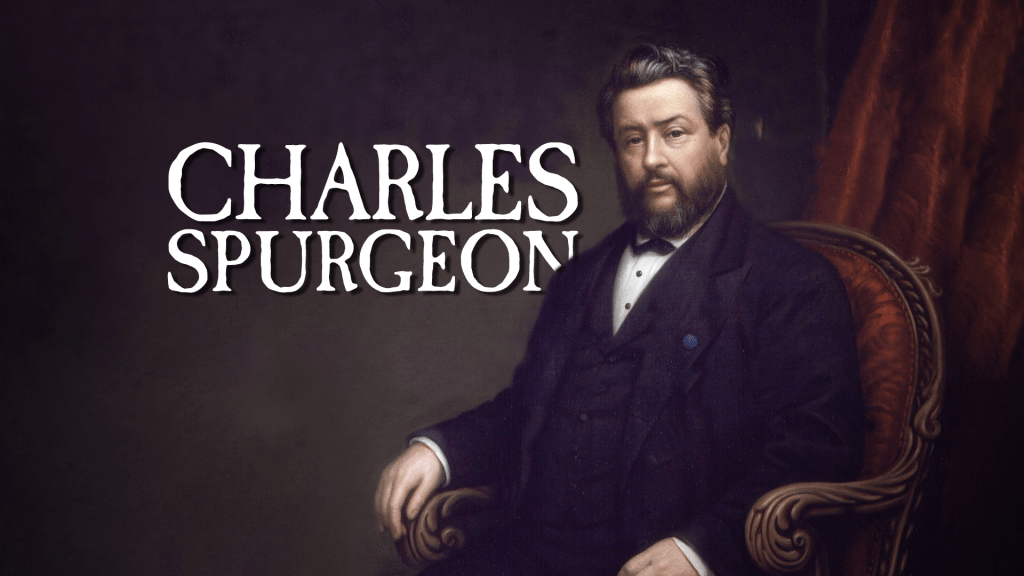
A SERMON DELIVERED ON SABBATH MORNING, SEPTEMBER 2, 1855, BY THE REV. C. H. SPURGEON, AT NEW PARK STREET CHAPEL, SOUTHWARK.

Now, lastly, what are the true and legitimate TENDENCIES of right conceptions concerning the doctrine of election? First, I will tell you what the doctrine of election will make saints do under the blessing of God. And secondly what it will do for sinners if God blesses it to them.

First, I think election, to a saint, is one of the most stripping doctrines in all the world—to take away all trust in the flesh or all reliance upon anything except Jesus Christ. How often do we wrap ourselves up in our own righteousness and array ourselves with the false pearls and gems of our own works and doings? We begin to say, “Now I shall be saved, because I have this and that evidence.” Instead of that, it is naked faith that saves, that faith and that alone unites to the Lamb irrespective of works, although it is productive of them.

How often do we lean on some work, other than that of our own Beloved, and trust in some might, other than that which comes from on High? Now if we would have this might taken from us, we must consider election. Pause, my soul, and consider this. God loved you before you had a being. He loved you when you were dead in trespasses and sins and sent His Son to die for you. He purchased you with His precious blood ere you could lisp His name. Can you then be proud?

I know nothing, nothing again, that is more humbling for us than this doctrine of election. I have sometimes fallen prostrate before it, when endeavoring to understand it. I have stretched my wings and eagle-like, I have soared towards the sun. Steady has been my eye and true my wing for a season, but when I came near it and the one thought possessed me—“God has from the beginning chosen you unto salvation,” I was lost in its luster, I was staggered with the mighty thought, and from the dizzy elevation down came my soul, prostrate and broken, saying, “Lord, I am nothing, I am less than nothing. Why me? Why me?”

Friends, if you want to be humbled, study election, for it will make you humble under the influence of God’s Spirit. He who is proud of his election is not elect, and he who is humbled under a sense of it, may believe that he is. He has every reason to believe that he is, for it is one of the most blessed effects of election that it helps us to humble ourselves before God.

Election in the Christian should make him very fearless and very bold. No man will be so bold as he who believes that he is elect of God. What cares he for man if he is chosen of his Maker? What will he care for the pitiful chirpings of some tiny sparrows when he knows that he is an eagle of a royal race? Will he care when the beggar points at him, when the blood royal of heaven runs in his veins? Will he fear if all the world stand against him? If earth is all in arms abroad, he dwells in perfect peace, for he is in the secret place of the tabernacle of the Most High, in the great pavilion of the Almighty. “I am God’s,” he says, “I am distinct from other men. They are of an inferior race.

Am I not noble? Am I not one of the aristocrats of heaven? Is not my name written in God’s Book?” Does he care for the world? Nay, like the lion that cares not for the barking of the dog. He smiles at all his enemies and when they come too near him, he moves himself and dashes them to pieces. What cares he for them? He walks about them like a colossus, while little men walk under him and understand him not. His brow is made of iron, his heart is of flint—what does he care for man? Nay, if one universal hiss came up from the wide world, he would smile at it, for he would say, “He that has made his refuge God, Shall find a most secure abode.”

I am one of His elect. I am chosen of God and precious, and though the world cast me out, I fear not. Ah! you time-serving professors, some of you will bend like the willows. There are few oaken-Christians nowadays, that can stand the storm and I will tell you the reason. It is because you do not believe yourselves to be elect. The man who knows he is elect will be too proud to sin, he will not humble himself to commit the acts of common people.

The believer in this truth will say, “I compromise my principles? I change my doctrines? I lay aside my views? I hide what I believe to be true? No. Since I know I am one of God’s elect, in the very teeth of all men I shall speak God’s truth, whatever man may say.” Nothing makes a man so truly bold as to feel that he is God’s elect. He shall not quiver, he shall not shake, who knows that God has chosen him.

Moreover, election will make us holy. Nothing under the gracious influence of the Holy Spirit can make a Christian more holy than the thought that he is chosen. “Shall I sin,” he says, “after God has chosen me? Shall I transgress after such love? Shall I go astray after so much loving kindness and tender mercy? Nay, my God, since You have chosen me, I will love You. I will live to You “Since You, the everlasting God, My Father have become.” I will give myself to You to be Yours forever, by election and by redemption, casting myself on You and solemnly consecrating myself to Your service.

May the Lord’s truth and grace be found here. Have a blessed day in the Lord.

Soli deo Gloria!

2 Thessalonians: Unconditional Election. Part Six.

13 But we ought always to give thanks to God for you, brothers beloved by the Lord, because God chose you as the firstfruits to be saved, through sanctification by the Spirit and belief in the truth. 14 To this he called you through our gospel, so that you may obtain the glory of our Lord Jesus Christ.” (2 Thessalonians 2:13–14 (ESV)

A SERMON DELIVERED ON SABBATH MORNING, SEPTEMBER 2, 1855, BY THE REV. C. H. SPURGEON, AT NEW PARK STREET CHAPEL, SOUTHWARK.

The other thought is—for my time flies too swiftly to enable me to dwell at length upon these points—that election produces GOOD RESULTS. “He has from the beginning chosen you unto sanctification of the Spirit and belief of the truth.” How many men mistake the doctrine of election altogether! And how my soul burns and boils at the recollection of the terrible evils that have accrued from the spoiling and the wresting of that glorious portion of God’s glorious truth! How many are there who have said to themselves, “I am elect,” and have sat down in sloth and worse than that! They have said, “I am the elect of God,” and with both hands they have done wickedness. They have swiftly run to every unclean thing, because they have said, “I am the chosen child of God, irrespective of my works, therefore I may live as I like and do what I like.”

O, beloved! Let me solemnly warn every one of you not to carry the truth too far—or rather not to turn the truth into error, for we cannot carry it too far. We may overstep the truth. We can make that which was meant to be sweet for our comfort, a terrible mixture for our destruction. I tell you there have been thousands of men who have been ruined by misunderstanding election, who have said, “God has elected me to heaven and to eternal life,” but they have forgotten that it is written, God has elected them, “through sanctification of the Spirit and belief of the truth.” This is God’s election—election to sanctification and to faith.

God chooses His people to be holy and to be believers. How many of you here then are believers? How many of my congregation can put their hands upon their hearts and say, “I trust in God that I am sanctified”? Is there one of you who says, “I am elect”? —I remind that you swore last week. One of you says, “I trust I am elect,” but I jog your memory about some vicious act that you committed during the last six days.

Another of you says, “I am elect,” but I would look you in the face and say, “Elect! you are a most cursed hypocrite and that is all you are.” Others would say, “I am elect,” but I would remind them that they neglect the mercy seat and do not pray. Oh, beloved! never think you are elect unless you are holy. You may come to Christ as a sinner, but you may not come to Christ as an elect person until you can see your holiness.

Do not misconstrue what I say—do not say, “I am elect,” and yet think you can be living in sin. That is impossible. The elect of God are holy. They are not pure, they are not perfect, they are not spotless, but taking their life as a whole, they are holy persons. They are marked and distinct from others, and no man has a right to conclude himself elect except in his holiness. He may be elect and yet lying in darkness, but he has no right to believe it. No one can say it, there is no evidence of it. The man may live one day, but he is dead at present. If you are walking in the fear of God, trying to please Him, and to obey His commandments, doubt not that your name has been written in the Lamb’s Book of Life from before the foundation of the world.

And lest this should be too high for you, note the other mark of election, which is faith, belief of the truth. Whoever believes God’s truth and believes on Jesus Christ, is elect. I frequently meet with poor souls who are fretting and worrying themselves about this thought, “What if I should not be elect.” “Oh, sir,” they say, “I know I put my trust in Jesus. I know I believe in His name and trust in His blood, but what if I should not be elect?”

Poor dear creature! You do not know much about the Gospel or you would never talk so, for he that believes is elect. Those who are elect, are elect unto sanctification and unto faith. And if you have faith, you are one of God’s elect. You may know it and ought to know it, for it is an absolute certainty. If you, as a sinner, look to Jesus Christ this morning and say— “Nothing in my hands I bring, Simply to Your cross I cling,” you are elect.

I am not afraid of election frightening poor saints or sinners. There are many divines who tell the inquirer, “Election has nothing to do with you.” That is very bad, because the poor soul is not to be silenced like that. If you could silence him so, it might be well, but he will think of it, he can’t help it. Say to him then, if you believe on the Lord Jesus Christ, you are elect. If you will cast yourself on Jesus, you are elect.

I tell you the chief of sinners—this morning, I tell you in His name, if you will come to God without any works of your own, cast yourself on the blood and righteousness of Jesus Christ, if you will come now and trust in Him, you are elect—you were loved of God from before the foundation of the world, for you could not do that unless God had given you the power and had chosen you to do it. Now you are safe and secure if you do, but come and cast yourself on Jesus Christ, and wish to be saved and to be loved by Him.

But think not that any man will be saved without faith and without holiness. Do not conceive, my hearers, that some decree, passed in the dark ages of eternity, will save your souls, unless you believe in Christ. Do not sit down and fancy that you are to be saved without faith and holiness. That is a most abominable and accursed heresy, and has ruined thousands. Lay not election as a pillow for you to sleep on or you may be ruined. God forbid that I should be sewing pillows under armholes that you may rest comfortably in your sins.

Sinner! there is nothing in the Bible to lighten your sins, but if you are condemned, O man! if you are lost, O woman! you will not find in this Bible one drop to cool your tongue, or one doctrine to lessen your guilt. Your damnation will be entirely your own fault and your sin will richly merit it, because you believe you are not condemned. “ You believe not because you are not of my sheep. You will not come to me that you might have life.” Do not fancy that election excuses sin—do not dream of it—do not rock yourself in sweet complacency in the thought of your irresponsibility. You are responsible. We must give you both things. We must have divine sovereignty and we must have man’s responsibility. We must have election, but we must ply your hearts, we must send God’s truth at you. We must speak to you and remind you of this, that while it is written, “In me is your help,” yet it is also written, “O Israel, you have destroyed yourself.”

More to come. May the Lord’s truth and grace be found here. Have a blessed day in the Lord.

Soli deo Gloria!

2 Thessalonians: Unconditional Election. Part Five.

13 But we ought always to give thanks to God for you, brothers beloved by the Lord, because God chose you as the firstfruits to be saved, through sanctification by the Spirit and belief in the truth. 14 To this he called you through our gospel, so that you may obtain the glory of our Lord Jesus Christ.” (2 Thessalonians 2:13–14 (ESV)

A SERMON DELIVERED ON SABBATH MORNING, SEPTEMBER 2, 1855, BY THE REV. C. H. SPURGEON, AT NEW PARK STREET CHAPEL, SOUTHWARK.

Then, thirdly, this election is ETERNAL. “God has from the beginning chosen you unto eternal life.” Can any man tell me when the beginning was? Years ago we thought the beginning of this world was when Adam came upon it, but we have discovered that thousands of years before that, God was preparing chaotic matter to make it a fit abode for man, putting races of creatures upon it, who might die and leave behind the marks of His handiwork and marvelous skill, before He tried His hand on man.

But that was not the beginning, for revelation points us to a period long ere this world was fashioned, to the days when the morning stars were begotten when, like drops of dew from the fingers of the morning, stars and constellations fell trickling from the hand of God. When, by His own lips, He launched forth ponderous orbs. When with His own hand, He sent comets, like thunderbolts, wandering through the sky, to find one day their proper sphere.

We go back to years gone by, when worlds were made and systems fashioned, but we have not even approached the beginning yet. Until we go to the time when all the universe slept in the mind of God as yet unborn, until we enter the eternity where God the Creator lived alone, everything sleeping within Him, all creation resting in His mighty gigantic thought, we have not guessed the beginning.

We may go back, back, back, ages upon ages. We may go back, if we might use such strange words, whole eternities and yet never arrive at the beginning. Our wing might be tired, our imagination would die away. Could it outstrip the lightnings flashing in majesty, power, and rapidity, it would soon weary itself ere it could get to the beginning. But God from the beginning chose His people.

When the unnavigated ether was yet unfanned by the wing of a single angel. When space was shoreless or else unborn. When universal silence reigned and not a voice or whisper shocked the solemnity of silence. When there was no being and no motion, no time and nought but God Himself, alone in His eternity. When without the song of an angel, without the attendance of even the cherubim, long ere the living creatures were born, or the wheels of the chariot of JEHOVAH were fashioned, even then, “In the beginning was the word,” and in the beginning God’s people were one with the Word and “In the beginning he chose them unto eternal life.” Our election then is eternal. I will not stop to prove it. I only just run over these thoughts for the benefit of young beginners, that they may understand what we mean by eternal, absolute election.

And, next, the election is PERSONAL. Here again, our opponents have tried to overthrow election by telling us that it is an election of nations and not of people. But here the apostle says, “God has from the beginning chosen you.” It is the most miserable shift on earth to make out that God has not chosen persons, but nations, because the very same objection that lies against the choice of persons, lies against the choice of a nation. If it were not just to choose a person, it would be far more unjust to choose a nation, since nations are but the union of multitudes of persons.

And to choose a nation seems to be a more gigantic crime—if election be a crime—than to choose one person. Surely to choose ten thousand would be reckoned to be worse than choosing one—to distinguish a whole nation from the rest of mankind does seem to be a greater extravaganza in the acts of divine sovereignty than the election of one poor mortal and leaving out another. But what are nations, but men? What are whole peoples, but combinations of different units?

A nation is made up of that individual, and that, and that. And if you tell me that God chose the Jews, I say then, He chose that Jew, and that Jew, and that Jew. And if you say He chooses Britain, then I say He chooses that British person, and that British person, and that British person. So that it is the same thing after all. Election then is personal. It must be so. Everyone who reads this text and others like it, will see that Scripture continually speaks of God’s people one by one and speaks of them as having been the special subjects of election. “Sons we are through God’s election, Who in Jesus Christ believe; By eternal destination Sovereign grace we here receive.” We know it is personal election

More to come. May the Lord’s truth and grace be found here. Have a blessed day in the Lord.

Soli deo Gloria!

2 Thessalonians: Unconditional Election. Part Four.

13 But we ought always to give thanks to God for you, brothers beloved by the Lord, because God chose you as the firstfruits to be saved, through sanctification by the Spirit and belief in the truth. 14 To this he called you through our gospel, so that you may obtain the glory of our Lord Jesus Christ.” (2 Thessalonians 2:13–14 (ESV)

A SERMON DELIVERED ON SABBATH MORNING, SEPTEMBER 2, 1855, BY THE REV. C. H. SPURGEON, AT NEW PARK STREET CHAPEL, SOUTHWARK.

And now, briefly, let me say that election is ABSOLUTE, that is, it does not depend upon what we are. The text says, “God has from the beginning chosen us unto salvation.” But our opponents say that God chooses people because they are good, that He chooses them on account of sundry works which they have done. Now, we ask in reply to this, what works are those on account of which God elects His people? Are they what we commonly call “works of law”? works of obedience which the creature can render? If so, we reply to you—If men cannot be justified by the works of the law, it seems to us pretty clear that they cannot be elected by the works of the law. If they cannot be justified by their good deeds, they cannot be saved by them. Then the decree of election could not have been formed upon good works.

“But,” say others, “God elected them on the foresight of their faith.” Now God gives faith, therefore He could not have elected them on account of faith, which He foresaw. There shall be twenty beggars in the street and I determine to give one of them a shilling—but will anyone say that I determined to give that one a shilling, that I elected him to have the shilling, because I foresaw that he would, have it? That would be talking nonsense. In like manner, to say that God elected men because He foresaw, they would have faith, which is salvation in the germ, would be too absurd for us to listen to for a moment. Faith is the gift of God. Every virtue comes from Him. Therefore, it cannot have caused Him to elect men, because it is His gift.

Election, we are sure, is absolute and altogether apart from the virtues which the saints have afterwards. What if a saint should be as holy and devout as Paul? What if he should be as bold as Peter or as loving as John? Yet he could claim nothing from his Maker. I never knew a saint, yet, of any denomination, who thought that God saved him because He foresaw that he would have these virtues and merits. Now, my brethren, the best jewels that the saint ever wears, if they be jewels of our own fashioning, are not of the first water. There is something of earth mixed with them. The highest grace we ever possess has something of earthliness about it. We feel this when we are most refined, when we are most sanctified, and our language must always be “I the chief of sinners am; Jesus died for me.”

Our only hope, our only plea, still hangs on grace as exhibited in the person of Jesus Christ. And I am sure we must utterly reject and disregard all thought that our graces, which are gifts of our Lord, which are His right-hand planting, could have ever caused His love. And we ever must sing “What was there in us that could merit esteem or give the Creator delight? It was even so, Father, we always must sing, because it seemed good in Your sight” “He will have mercy on whom He will have mercy.” He saves because He will save. And if you ask me why He saves me, I can only say, because He would do it.

Is there anything in me that should recommend me to God? No. I lay aside everything. I had nothing to recommend me. When God saved me, I was the most abject, lost, and ruined of the race. I lay before Him as an infant in my blood. Verily, I had no power to help myself. O how wretched did I feel and know myself to be! If you had something to recommend you to God, I never had. I will be content to be saved by grace, unalloyed, pure grace. I can boast of no merits. If you can do so, I cannot. I must sing “Free grace alone from the first to the last Has won my affection and held my soul fast.”

More to come. May the Lord’s truth and grace be found here. Have a blessed day in the Lord.

Soli deo Gloria!

2 Thessalonians: Unconditional Election. Part Three.

13 But we ought always to give thanks to God for you, brothers beloved by the Lord, because God chose you as the firstfruits to be saved, through sanctification by the Spirit and belief in the truth. 14 To this he called you through our gospel, so that you may obtain the glory of our Lord Jesus Christ.” (2 Thessalonians 2:13–14 (ESV)

A SERMON DELIVERED ON SABBATH MORNING, SEPTEMBER 2, 1855, BY THE REV. C. H. SPURGEON, AT NEW PARK STREET CHAPEL, SOUTHWARK.

The witnesses of truth stand by us. With these for us, we will not say that we stand alone, but we may exclaim, “Lo, God has reserved unto himself seven thousand that have not bowed the knee unto Baal.” But the best of all is God is with us. The great truth is always the Bible and the Bible alone. My hearers, you do not believe in any other book than the Bible, do you? If I could prove this from all the books in Christendom, if I could fetch back the Alexandrian library and prove it thence, you would not believe it anymore, but you surely will believe what is in God’s Word.

I have selected a few texts to read to you. I love to give you a whole volley of texts when I am afraid you will distrust a truth, so that you may be too astonished to doubt, if you do not in reality believe. Just let me run through a catalog of passages where the people of God are called elect. Of course if the people are called elect, there must be election. If Jesus Christ and His apostles were accustomed to style believers by the title of elect, we must certainly believe that they were so, otherwise the term does not mean anything.

Jesus Christ says, “Except that the Lord had shortened those days, no flesh should be saved; , but for the elect’s sake, whom he has chosen, he has shortened the days.” “False Christs and false prophets shall rise and shall show signs and wonders, to seduce, if it were possible, even the elect.” “Then shall he send his angels and shall gather together his elect from the four winds, from the uttermost parts of the earth to the uttermost part of heaven.” Mark 13:20, 22, 27. “Shall not God avenge his own elect who cry day and night unto him, though he bears long with them?” Luke 18:7.

Together with many other passages which might be selected, wherein either the word “elect,” or “chosen,” or “foreordained,” or “appointed,” is mentioned, or the phrase “my sheep,” or some similar designation, showing that Christ’s people are distinguished from the rest of mankind. But you have concordances and I will not trouble you with texts. Throughout the epistles, the saints are constantly called “the elect.” In Colossians, we find Paul saying, “Put on, therefore, as the elect of God, holy and beloved, bowels of mercies.”

When he writes to Titus, he calls himself, “Paul, a servant of God and an apostle of Jesus Christ, according to the faith of God’s elect.” Peter says, “Elect according to the foreknowledge of God the Father.” Then if you turn to John, you will find he is very fond of the word. He says, “The elder to the elect lady.” And he speaks of our “elect sister.” And we know where it is written, “The church that is at Babylon, elected together with you.”

They were not ashamed of the word in those days. They were not afraid to talk about it. Nowadays the word has been dressed up with diversities of meaning, and persons have mutilated and marred the doctrine so that they have made it a very doctrine of devils, I do confess. And many who call themselves believers have gone to rank Antinomianism. But not withstanding this, why should I be ashamed of it, if men do wrest it? We love God’s truth on the rack, as well as when it is walking upright.

If there were a martyr whom we loved before he went on the rack, we should love him more still when he was stretched there. When God’s truth is stretched on the rack, we do not call it falsehood. We love not to see it racked, but we love it even when racked, because we can discern what its proper proportions ought to have been if it had not been racked and tortured by the cruelty and inventions of men. If you will read many of the epistles of the ancient fathers, you will find them always writing to the people of God as the “elect.” Indeed the common conversational term used among many of the churches by the primitive Christians to one another was that of the “elect.” They would often use the term to one another, showing that it was generally believed that all God’s people were manifestly “elect.”

But now for the verses that will positively prove the doctrine. Open your Bibles and turn to John 15:16, and there you will see that Jesus Christ has chosen His people, for He says, “You have not chosen me, but I have chosen you and ordained you, that you should go and bring forth fruit, and that your fruit should remain: that whatever you shall ask of the Father in my name, he may give it you.” Then in the nineteenth verse, “If you were of the world, the world would love his own, but because you are not of the world, but I have chosen you out of the world, therefore the world hates you.”

Then in the seventeenth chapter and the eighth and nineth verses, “For I have given unto them the words which you gave me; and they have received them and have known surely that I came out from you, and they have believed that you did send me. I pray for them: I pray not for the world, but for them which you have given me for they are yours.”

Turn to Acts 13:48, “And when the Gentiles heard this, they were glad and glorified the word of the Lord; and as many as were ordained to eternal life believed.” They may try to split that passage into hairs if they like, but it says, “ordained to eternal life” in the original as plainly as it possibly can. And we do not care about all the different commentaries thereupon.

You scarcely need to be reminded of Romans 8, because I trust you are all well-acquainted with that chapter and understand it by this time. In the twenty-ninth and following verses, it says, “For whom he did foreknow, he also did predestinate to be conformed to the image of his Son, that he might be the first-born among many brethren. Moreover, whom he did predestinate, them he also called: and whom he called, them he also justified and whom he justified, them he also glorified. What shall we then say to these things? If God be for us, who can be against us? He that spared not his own Son, but delivered him up for us all, how shall he not with him also freely give us all things? Who shall lay anything to the charge of God’s elect?”

It would also be unnecessary to repeat the whole of the ninth chapter of Romans. As long as that remains in the Bible, no man shall be able to prove Arminianism. So long as that is written there, not the most violent contortions of the passage will ever be able to exterminate the doctrine of election from the Scriptures. Let us read such verses as these, “For the children being not yet born, neither having done any good or evil, that the purpose of God according to election might stand, not of works, but of him that calls; it was said unto her, The elder shall serve the younger.” Then read the twenty-second verse, “What if God, willing to show His wrath, and to make His power known, endured with much long-suffering the vessels of wrath fitted to destruction. And that he might make known the riches of his glory on the vessels of mercy, which he had afore prepared unto glory?”

Then go on to Romans 11:7, “What then? Israel has not obtained that which he seeks for, but the election has obtained it, and the rest were blinded.” In the sixth verse of the same chapter, we read, “Even so then at this present time also there is a remnant according to the election of grace.”

More to Come. May the Lord’s truth and grace be found here.

Soli deo Gloria!

2 Thessalonians: Unconditional Election. Part Two.

13 But we ought always to give thanks to God for you, brothers beloved by the Lord, because God chose you as the firstfruits to be saved, through sanctification by the Spirit and belief in the truth. 14 To this he called you through our gospel, so that you may obtain the glory of our Lord Jesus Christ.” (2 Thessalonians 2:13–14 (ESV)

A SERMON DELIVERED ON SABBATH MORNING, SEPTEMBER 2, 1855, BY THE REV. C. H. SPURGEON, AT NEW PARK STREET CHAPEL, SOUTHWARK.

First, I must try and prove that the doctrine is TRUE. And let me begin with an argumentum ad hominen—I will speak to you according to your different positions and stations. There are some of you who belong to the church of England and I am happy to see so many of you here. Though now and then I certainly say some very hard things about church and State, yet I love the old church, for she has in her communion many godly ministers and eminent saints.

Now I know you are great believers in what the Articles declare to be sound doctrine. I will give you a specimen of what they utter concerning election, so that if you believe them, you cannot avoid receiving election. I will read a portion of the 17th Article upon Predestination and Election— “Predestination to life is the everlasting purpose of God, whereby (before the foundations of the world were laid) He has continually decreed by His counsel, secret to us, to deliver from curse and damnation those whom He has chosen in Christ out of mankind, and to bring them by Christ to everlasting salvation, as vessels made to honor. Wherefore they which be endued with so excellent a benefit of God be called according to God’s purpose by His Spirit working in due season: They through grace obey the calling: they are justified freely: they are made sons of God by adoption: they be made like the image of His only-begotten Son Jesus Christ: they walk religiously in good works, and at length, by God’s mercy, they attain to everlasting felicity.”

Now, I think any Churchman, if he be a sincere and honest believer in Mother Church, must be a thorough believer in election. True, if he turns to certain other portions of the Prayer Book, he will find things contrary to the doctrines of free-grace and altogether apart from Scriptural teaching, but if he looks at the Articles, he must see that God has chosen His people unto eternal life. I am not so desperately enamored, however, of that book as you may be and I have only used this Article to show you that if you belong to the Establishment of England you should at least offer no objection to this doctrine of predestination.

Another human authority whereby I would confirm the doctrine of election is the old Waldensian Creed. If you read the creed of the old Waldenses, emanating from them in the midst of the burning heat of persecution, you will see that these renowned professors and confessors of the Christian faith did most firmly receive and embrace this doctrine as being a portion of the truth of God. I have copied from an old book, one of the Articles of their faith: “That God saves from corruption and damnation those whom He has chosen from the foundations of the world, not for any disposition, faith, or holiness that He before saw in them, but of His mere mercy in Christ Jesus, His Son, passing by all the rest according to the irreprehensible reason of His own free-will and justice.”

 It is no novelty, then, that I am preaching—no new doctrine. I love to proclaim these strong old doctrines, which are called by nickname Calvinism, but which are surely and verily the revealed truth of God as it is in Christ Jesus. By this truth, I make a pilgrimage into the past, and as I go, I see father after father, confessor after confessor, martyr after martyr, standing up to shake hands with me. Were I a Pelagian, or a believer in the doctrine of free-will, I would have to walk for centuries all alone. Here and Sermons #41, 42 Unconditional Election Volume 1 3 3 there a heretic of no very honorable character might rise up and call me brother, but taking these things to be the standard of my faith, I see the land of the ancients peopled with my brethren. I behold multitudes who confess the same as I do and acknowledge that this is the religion of God’s own church.

I also give you an extract from the old Baptist Confession. We are Baptists in this congregation—the greater part of us, at any rate—and we like to see what our own forefathers wrote. Some two hundred years ago, the Baptists assembled together and published their articles of faith, to put an end to certain reports against their orthodoxy which had gone forth to the world. I turn to this old book—which I have just published, the Baptist Confession of Faith, and I find the following as the third Article, “By the decree of God, for the manifestation of His glory, some men and angels are predestinated, or foreordained to eternal life through Jesus Christ to the praise of His glorious grace. Others being left to act in their sin to their just condemnation, to the praise of His glorious justice. These angels and men, thus predestinated and foreordained, are particularly and unchangeably designed, and their number so certain and definite that it cannot be either increased or diminished. Those of mankind who are predestinated to life, God, before the foundation of the world was laid, according to His eternal and immutable purpose, and the secret counsel and good pleasure of His will, has chosen in Christ unto everlasting glory out of His mere free grace and love, without any other thing in the creature as condition or cause moving Him hereunto.”

As for these human authorities, I care not one rush for all three of them. I care not what they say, pro or con, as to this doctrine. I have only used them as a kind of confirmation to your faith, to show you that while I may be railed upon as a heretic and as a hyper-Calvinist, after all I am backed up by antiquity. All the past stands by me. I do not care for the present. Give me the past and I will hope for the future. Let the present rise up in my teeth, I will not care. What though a host of the churches of London may have forsaken the great cardinal doctrines of God, it matters not. If a handful of us stand alone in an unflinching maintenance of the sovereignty of our God, if we are beset by enemies, ay, and even by our own brethren, who ought to be our friends and helpers, it matters not, if we can but count upon the past, the noble army of martyrs, the glorious host of confessors. They are our friends.

More to come. May the Lord’s truth and grace be found here.

Soli deo Gloria!

A Word Fitly Spoken: What is Holiness? Part 2.

Each Lord’s Day for the next several months, there will be a devotional entitled A Word Fitly Spoken. The title is taken from Proverbs 25:11 which says, “A word fitly spoken is like apples of gold in a setting of silver.” 

Our current study from Scripture concerns the subject of holiness. Today’s essay continues to ask the question, what is holiness? Holiness, or to be holy, is a doctrine found throughout the Scriptures; in both the Old and New Testaments. Therefore, an understanding of holiness is important for the converted, and unconverted, to know what holiness is, and what it is not.

In the Old Testament (OT), the Hebrew word for holy, or holiness, is kahdosh (קָד֧וֹשׁ׀). It means to be ceremonially and morally sacred, set apart, or uniquely consecrated. When referring to God, the term calls attention to the LORD’s unique and awesome splendor (Isaiah 1:4).

In the New Testament (NT), the Greek word for holy, or holiness, is (ἅγιος, hagios). As in the OT, hagios refers to separation from the common, unclean, profane. It is also a consecration unto God. The New Testament church borrowed heavily from the OT’s understanding of holiness. This should not surprise us. The Scriptures for the early church, prior to the writing of the NT, was the OT (Psalm 1; 19; 119; 2 Tim. 3:16-17; 2 Peter 1:20-21).  

“The New Testament’s terminology and meaning of holiness is directly dependent upon the Old Testament’s conception of holiness.”— Dr. M.C. Lyons 

“God’s holiness means He is separated from sin and devoted to seeking His own honor.” – Dr. Wayne Grudem

Who shall not fear Thee, O Lord, and glorify Thy name? for Thou only art holy” (Rev. 15:4). He only is independently, infinitely, immutably holy. In Scripture He is frequently styled “The Holy One”: He is so because the sum of all moral excellency is found in Him. He is absolute Purity, unsullied even by the shadow of sin. “God is light, and in Him is no darkness at all” (1 John 1:5). Holiness is the very excellency of the Divine nature: the great God is “glorious in holiness” (Ex. 15:11). Therefore, we read, “Thou art of purer eyes than to behold evil, and canst not look on iniquity” (Hab. 1:13). As God’s power is the opposite of the native weakness of the creature, as His wisdom is in complete contrast from the least defect of understanding or folly, so His holiness is the very antithesis of all moral blemish or defilement. Of old God appointed singers in Israel “that they should praise for the beauty of holiness” (2 Chron. 20:21). – A.W. Pink

God calls believers to holiness (I Thess. 4;7). Every believer is God’s holy temple (I Cor. 3:17; 6:19-20). Jesus Christ will present each Christian holy and blameless before Himself (Col. 1:22).  The converted are to continue in faith, love and holiness (I Tim. 2:15), along with being upright, holy and disciplined (Titus 1:8). Believers are to be holy, because God is holy (I Peter 1:16).

Christians are to strive for holiness (Heb. 12:14), to share in God’s holiness by His loving discipline (Heb. 12:10), to avoid close associations with the unconverted (2 Cor. 6:14-18), and to cleanse ourselves from any and all moral defilement (Rom. 12:1; 2 Cor. 7:1). The church is to grow in holiness (Eph. 2:21), in order to be holy and without blemish (Eph. 5:26-27).

Dr. Keith A. Mathison is professor of systematic theology at Reformation Bible College in Sanford, Fla. He comments on holiness are worth considering.

The early centuries of the church’s existence, Christian apologists would sometimes appeal to the distinctively holy lives of Christians as evidence for the truth of Christianity. Would such an appeal be of any use today? According to numerous surveys, the behavior of professing Christians is not discernibly different from the behavior of those who profess other religions or no religion at all. The phrase one often hears on the lips of pagans who observe contemporary Christian behavior is: “The church is full of hypocrites.” This should not be. We worship a holy God who calls His people to be holy and who has provided the means by which they may be holy.

The believer’s pursuit of holiness begins with a salvific encounter with the living God of the Bible who is holy, holy, holy (Isaiah 6:1-3). This encounter occurred in my life over 50 years ago. God justified, redeemed and reconciled me by grace alone, through faith alone in the person and work of Jesus Christ alone. The Lord also called me to live a holy life for His honor and glory (I Peter 1:13-16).

This pursuit has not always been easy (Rom 7:13-15). I often sensed I was moving one step forward in my pursuit of holiness, while simultaneously moving two steps backward.

God’s call to holiness for believers, referred to as sanctification, is as fundamental to the Christian life as justification. Justification results in sanctification and sanctification is the evidence of justification (James 2:14-26). True conversion, its initial occurrence and subsequent impact, results from an encounter with the holy God of Scripture. We will examine such an encounter, between the LORD and the Prophet Isaiah, next month.

Who else commands all the hosts of heaven?
Who else could make every king bow down?
Who else can whisper and darkness trembles?
Only a Holy God.

What other beauty demands such praises?
What other splendor outshines the sun?
What other majesty rules with justice?
Only a Holy God.

Come and behold Him
The One and the Only
Cry out, sing holy
Forever a Holy God
Come and worship the Holy God.

What other glory consumes like fire?
What other power can raise the dead?
What other name remains undefeated?
Only a Holy God.

Who else could rescue me from my failing?
Who else would offer His only Son?
Who else invites me to call Him Father?
Only a Holy God
Only my Holy God.

Come and behold Him
The One and the Only
Cry out, sing holy
Forever a Holy God
Come and worship the Holy God. —
Michael Farren, Rich Thompson, Dustin Smith, Jonny Robinson. 

Soli deo Gloria!

2 Thessalonians: Unconditional Election. Part One.

13 But we ought always to give thanks to God for you, brothers beloved by the Lord, because God chose you as the firstfruits to be saved, through sanctification by the Spirit and belief in the truth. 14 To this he called you through our gospel, so that you may obtain the glory of our Lord Jesus Christ.” (2 Thessalonians 2:13–14 (ESV)

A SERMON DELIVERED ON SABBATH MORNING, SEPTEMBER 2, 1855, BY THE REV. C. H. SPURGEON, AT NEW PARK STREET CHAPEL, SOUTHWARK.

IF there were no other text in the sacred Word except this one, I think we should all be bound to receive and acknowledge the truthfulness of the great and glorious doctrine of God’s ancient choice of His family. But there seems to be an inveterate prejudice in the human mind against this doctrine and although most other doctrines will be received by professing Christians, some with caution, others with pleasure, yet this one seems to be most frequently disregarded and discarded. In many of our pulpits it would be reckoned a high sin and treason to preach a sermon upon election, because they could not make it what they call a “practical” discourse.

I believe they have erred from the truth therein. Whatever God has revealed, He has revealed for a purpose. There is nothing in Scripture which may not, under the influence of God’s Spirit, be turned into a practical discourse, “For all Scripture is given by inspiration of God and is profitable” for some purpose of spiritual usefulness. It is true, it may not be turned into a free-will discourse, that we know right well, but it can be turned into a practical free-grace discourse. And free-grace practice is the best practice, when the true doctrines of God’s immutable love are brought to bear upon the hearts of saints and sinners.

Now I trust this morning some of you who are startled at the very sound of this word will say, “I will give it a fair hearing. I will lay aside my prejudices. I will hear what this man has to say.” Do not shut your ears and say at once, “It is high doctrine.” Who has authorized you to call it high or low? Why should you oppose yourself to God’s doctrine? Remember what became of the children who found fault with God’s prophet and exclaimed, “Go up, you bald-head. Go up, you bald-head.”

Say nothing against God’s doctrines, lest haply some evil beast should come out of the forest and devour you also. There are other woes beside the open judgment of heaven—take heed that these fall not on your head. Lay aside your prejudices—listen calmly, listen dispassionately. Hear what Scripture says. And when you receive the truth, if God should be pleased to reveal and manifest it to your souls, do not be ashamed to confess it. To confess you were wrong yesterday, is only to acknowledge that you are a little wiser today. And instead of being a reflection on yourself, it is an honor to your judgment, and shows that you are improving in the knowledge of the truth. Do not be ashamed to learn and to cast aside your old doctrines and views, but take up that which you may more plainly see to be in the Word of God.

But if you do not see it to be here in the Bible, whatever I may say, or whatever authorities I may plead, I beseech you, as you love your souls, reject it. And if from this pulpit you ever hear things contrary to this sacred Word, remember that the Bible must be first and God’s minister must lie underneath it. We must not stand on the Bible to preach, but we must preach with the Bible above our heads.

After all we have preached, we are well-aware that the mountain of truth is higher than our eyes can discern—clouds and darkness are round about its summit and we cannot discern its topmost pinnacle. Yet we will try to preach it as well as we can, but since we are mortal and liable to err, exercise your judgment, “Try the spirits, whether they are of God,” and if on mature reflection on your bended knees, you are led to disregard election—a thing which I consider to be utterly impossible—then forsake. Do not hear it preached, but believe and confess whatever you see to be God’s Word. I can say no more than that by way of introduction.

Now, first. I shall speak a little concerning the truthfulness of this doctrine, “God has from the beginning chosen you to salvation.” Secondly, I shall try to prove that this election is absolute, “He has from the beginning chosen you to salvation,” not for sanctification, but, “through sanctification of the Spirit and belief of the truth.” Thirdly, this election is eternal because the text says, “God has from the beginning chosen you.” Fourthly, it is personal, “He has chosen you.” Then we will look at the effects of the doctrine—see what it does. And lastly, as God may enable us, we will try and look at its tendencies and see whether it is indeed a terrible and licentious doctrine. We will take the flower, and like true bees, see whether there be any honey whatever in it, whether any good can come of it or whether it is an unmixed, undiluted evil.

More to come. May the Lord’s truth and grace be found here. Have a blessed day in the LORD.

Soli deo Gloria!

2 Thessalonians: Called by God.

13 But we ought always to give thanks to God for you, brothers beloved by the Lord, because God chose you as the firstfruits to be saved, through sanctification by the Spirit and belief in the truth. 14 To this he called you through our gospel, so that you may obtain the glory of our Lord Jesus Christ.” (2 Thessalonians 2:13–14 (ESV)

Reminding all of us the content of today’s text encompasses many themes and doctrines the Apostle Paul previously mentioned to the Thessalonian believers. Take note of the following outline and cross references.

For “we are obliged to give thanks to God always for you” (2 Thess. 1:3).                   For “brothers beloved by the Lord” (1 Thess. 1:4).                                         For “because God chose you” (1 Thess. 1:4).                                                     For “salvation” (1 Thess. 5:8, 9).                                                                      For “sanctification” (1 Thess. 4:3, 7).                                                                   For “belief” (2 Thess. 1:3, 4, 11; 1 Thess. 1:3).                                                     For “truth” (2 Thess. 2:10, 12).                                                                       For “calling” (1 Thess. 1:5; 2:12; 4:7; 5:24).                                                         For “with a view to obtaining” (1 Thess. 5:9).                                               For “glory” (1 Thess. 2:12).                                                                                    For “our Lord Jesus Christ” (1 Thess. 1:1).[1]

First, Paul was grateful for the Thessalonians. The Lord Jesus Christ loved them. Second, the apostle was grateful for God the Father’s choosing them to be saved. Third, the Lord’s love and the Father’s choosing would coincide with the sanctificationby the Holy Spirit. The Savior’s love, the Father’s choice, and the Spirit’s sanctification of each believer would be for the individual’s trust, commitment, dependence and honor of the truth of God.   

The Apostle Paul stated God the Father purposed of all this to call sinners to unto salvation. The word called (ἐκάλεσεν; ekalesen) is an aorist, active singular verb. At a particular point in real time, God actively and individually summons or invites a sinner into a covenant relationship of salvation. This deliverance is from the penalty, power and eventual presence of sin. It is an irrevocable, effectual and irresistible call (John 6:37, 44; Rom. 11:29). God’s call for sinners unto salvation is grounded and rooted in His immutable and unchanging nature.

The means by which God calls sinners is the gospel or the good news of the person and work of Jesus Christ. The ultimate purpose of God’s call is for sinners to “obtain the glory of our Lord Jesus Christ.” To obtain (περιποίησιν; peripoiesin) means to experience, possess and to acquire something. Glory (δόξης; doxes) refers to splendor and honor. Both glory and honor are sourced in the Lord Jesus Christ.

“We will obtain the glory of Christ in that we will share in His glorified body, bearing His image fully in perfected, glorified bodies (1 Cor. 15:49; I John 3:1-3). In turn, this will redound to the glory of God, for we are saved and glorified only because He has chosen us and has atoned for our sin in Christ. Salvation is in no way of ourselves, but God chooses us, sovereignly grants us faith, and guarantees that we will exercise trust in Him,” explains Dr. R. C. Sproul.

John Calvin writes, “For the sons of God are not called otherwise than to the belief of the truth. Paul, however, meant to shew here how competent a witness he is for confirming that thing of which he was a minister. He accordingly puts himself forward as a surety, that the Thessalonians may not doubt that the gospel, in which they had been instructed by him, is the safety-bringing voice of God, by which they are aroused from death, and are delivered from the tyranny of Satan. He calls it his gospel, not as though it had originated with him, but inasmuch as the preaching of it had been committed to him.”

“What he adds, to the acquisition or possession of the glory of Christ, may be taken either in an active or in a passive signification — either as meaning, that they are called in order that they may one day possess a glory in common with Christ, or that Christ acquired them with a view to his glory. And thus, it will be a second means of confirmation that he will defend them, as being nothing less than his own inheritance, and, in maintaining their salvation, will stand forward in defense of his own glory; which latter meaning, in my opinion, suits better.”

Believers in Christ are no longer destined for judgment, but for glory. The judgment for their sin occurred at the cross (Col. 2:13-15). May the Lord’s truth and grace be found here.

Soli deo Gloria!


[1] William Hendriksen and Simon J. Kistemaker, Exposition of I-II Thessalonians, vol. 3, New Testament Commentary (Grand Rapids: Baker Book House, 1953–2001), 187.