15 which he will display at the proper time—he who is the blessed and only Sovereign, the King of kings and Lord of lords, 16 who alone has immortality, who dwells in unapproachable light, whom no one has ever seen or can see. To him be honor and eternal dominion. Amen.” (1 Timothy 6:15–16 (ESV)
The following is John Calvin’s commentary concerning the statement “who dwells in unapproachable light, whom no one has ever seen or can see” concerning God the Father.
Who inhabiteth unapproachable light. He means two things, that God is concealed from us, and yet that the cause of obscurity is not in himself, as if be were hidden in darkness, but in ourselves, who, on account of the weak vision, or rather the dullness of our understanding, cannot approach to his light. We must understand that the light of God is unapproachable, if any one endeavor to approach to it in his own strength; for, if God did not open up the entrance to us by his grace, the prophet would not say:
“They who draw near to him are enlightened.” (Psalms 34:5.)
Yet it is true that, while we are surrounded by this mortal flesh, we never penetrate so far into the deepest secrets of God as to have nothing hidden from us; for
“…we know in part, and we see as by a mirror, and in a riddle.” (1 Corinthians 13:9.)
By faith, therefore, we enter into the light of God, but only in part. Still, it is true, that it is a “light unapproachable” by man.
Whom no man hath seen or can see. This is added for the sake of additional explanation, that men may learn to look by faith to him, whom they cannot see with the bodily eyes, or even with the powers of their understanding; for I view this as referring not only to the bodily eyes, but also to the faculties of the soul. We must always consider what is the Apostle’s design. It is difficult for us to overlook and disregard all those things of which we have immediate vision, that we may endeavor to come to God, who is nowhere to be seen. For this thought always comes into our mind: “How knowest thou if there is a God, seeing that thou only hearest that he is, and dost not see him?” The Apostle fortifies us against this danger, by affirming that it ought not to be judged according to our senses, because it exceeds our capacity; for the reason why we do not see is, that our sight is not so keen as to ascend to so great a height.
There is a long dispute in Augustine on this point, because it appears to contradict what is said, in the first Epistle,
“Then shall we see him as he is, because we shall be like him.” (1 John 3:2.)
While he reasons on this subject in many passages, there appears to me to be none in which he explains it more clearly than in the letter which he writes to the widow Paulina.
So far as relates to the meaning of the present passage, the answer is easy, that we cannot see God in this nature, as it is said elsewhere,
“Flesh and blood shall not possess the kingdom of God.” (1 Corinthians 15:50.)
We must be renewed, that we may be like God, before it be granted to us to see him. And that our curiosity may not be beyond measure, let us always remember, that the manner of living is of more importance in this inquiry than the manner of speaking. At the same time, let us remember the judicious caution which Augustine gives us, to be on our guard lest, while we are keenly disputing how God can be seen, we lose both peace and sanctification, without which no man can ever see God.
15 which he will display at the proper time—he who is the blessed and only Sovereign, the King of kings and Lord of lords, 16 who alone has immortality, who dwells in unapproachable light, whom no one has ever seen or can see. To him be honor and eternal dominion. Amen.” (1 Timothy 6:15–16 (ESV)
The names the Apostle Paul communicated to his young protégé Timothy concerning God the Father were, and are, not mere arbitrary labels. They are names and titles of attributes which reflect the very nature of the One True, God.
What names and titles did Paul use? It is not an exhaustive list. However, it is a glorious list pointing to the presence of God and the soon appearing of Jesus Christ (I Timothy 6:13). His appearing will occur at the proper time (καιροῖς ἰδίοις; kairois idiois). This refers to a unique occasion. This is the Lord’s second coming (2 Tim. 4:1-8; Titus 2:13). The attributes of God the Father coincide with the attributes of the Lord Jesus.
The One and Only God presently exists as the (1) bless and only Sovereign; (2) the King of kings; (3) the Lord of lords; (4) immortal; (5) unapproachable light; (6) unseen; (7) honorable; (8) and who possesses eternal dominion. Today we examine attributes five and six.
Who dwells in unapproachable light. The phrase who dwells in (οἰκῶν; oikon) is a present, active, masculine participle. It means a continual and active occupying, inhabiting, and residing by God the Father. In the context, this refers to God dwelling in unapproachable light. The word unapproachable (ἀπρόσιτον; aprositon) means not being capable to approach. This adjective modifies the noun light (φῶς; phos). In the context, light does refer to natural, physical light but rather to God’s personal and inherent greatness and holiness.
“The idea of life, implied in immortality, naturally leads to that of light. “In him was life, and that life was the light of men” (John 1:4). Now, this light is like the sun. We need it to see by, yet we cannot look into it, for it is too intensely brilliant. In that sense, God, too, dwells in light unapproachable. The metaphor is even stronger than that employed in Ps. 104:2 (“He covers himself with light as with a garment”). Like a dwelling conceals its occupants, and hides them even more when it is unapproachable, so God’s very essence, by virtue of what it is, conceals him. Hence, the term light as here used re-emphasizes his incomparable greatness. “Verily, thou art a God that hidest thyself, O God of Israel, the Savior” (Is. 45:15). “Behold, God is great.”[1]
Timothy lived in the godless city of Ephesus, but God dwells in glorious light. “And the sight of the glory of the Lord was like devouring fire” (Ex. 24:17). “Who coverest Thyself with light as with a garment” (Ps. 104:2). John’s description of heaven emphasized the glory of God that gives light to the city (Rev. 21:11, 23–24; 22:5). Of course, light is a symbol of holiness (1 John 1:5–7). God dwells apart from sin, and God is glorious in His holiness.[2]
“It is impossible for a sinful human to approach the holy God. It is only through Jesus Christ that we can be accepted into His presence. Jacob saw God in one of His Old Testament appearances on earth (Gen. 32:30); and God allowed Moses to see some of His glory (Ex. 33:18–23). “No man hath seen God at any time” (John 1:18) refers to seeing God in His essence, His spiritual nature. We can only see manifestations of this essence, as in the person of Jesus Christ.”
“Why did Paul write so much about the person and glory of God? Probably as a warning against the “emperor cult” that existed in the Roman Empire. It was customary to acknowledge regularly, “Caesar is Lord!” Of course, Christians would say “Jesus Christ is Lord!” Only God has “honor and power everlasting” (1 Tim. 6:16b). If Timothy was going to fight the good fight of faith, he had to decide that Jesus Christ alone was worthy of worship and complete devotion.[3][4]
Whom no one has ever seen or can see. Paul referred to this attribute earlier in I Timothy 1:17 when he identified God as invisible (John 1:18; Col. 1:15; Heb. 11:27; I John 4:12).
“He is invisible: Whom no man hath seen, nor can see. It is impossible that mortal eyes should bear the brightness of the divine glory. No man can see God and live.[5]
“God is invisible to our physical eyes (I Tim. 1:17). Yet God condescends to make His glory visible to sinful, human beings while at the same time shielding them from the full manifestation of His divine being, lest they be destroyed by His consuming holiness (Gen. 32:30; Ex. 24:10-11; 33:18-23; Num. 12:6-8; Isaiah 6:1-5). Paul refers here to the overpowering radiance of God’s divine being in Himself, which we His sinful creatures cannot perceive apart from mediation of Christ the divine Son (John 1:18; Rev. 22:1-5). In glory, however, we will see the Lord as He is and view Him face to face (I Cor. 13:12; I John 3:1-2),” explains Dr. R. C. Sproul.
May the Lord’ truth and grace be found here.
Soli deo Gloria!
[1] William Hendriksen and Simon J. Kistemaker, Exposition of the Pastoral Epistles, vol. 4, New Testament Commentary (Grand Rapids: Baker Book House, 1953–2001), 208.
15 which he will display at the proper time—he who is the blessed and only Sovereign, the King of kings and Lord of lords, 16 who alone has immortality, who dwells in unapproachable light, whom no one has ever seen or can see. To him be honor and eternal dominion. Amen.” (1 Timothy 6:15–16 (ESV)
The names the Apostle Paul communicated to his young protégé Timothy concerning God the Father were, and are, not mere arbitrary labels. They are names and titles of attributes which reflect the very nature of the One True, God.
What names and titles did Paul use? It is not an exhaustive list. However, it is a glorious list pointing to the presence of God and the soon appearing of Jesus Christ (I Timothy 6:13). His appearing will occur at the proper time (καιροῖς ἰδίοις; kairois idiois). This refers to a unique occasion. This is the Lord’s second coming (2 Tim. 4:1-8; Titus 2:13). The attributes of God the Father coincide with the attributes of the Lord Jesus.
The One and Only God presently exists as the (1) bless and only Sovereign; (2) the King of kings; (3) the Lord of lords; (4) immortal; (5) unapproachable light; (6) unseen; (7) honorable; (8) and who possesses eternal dominion.
The blessed and only Sovereign. The word blessed (μακάριος; makarios) means happy, and favored. God the Father is viewed as favored due to Him be the only Sovereign (μόνος δυνάστης; monos dynastes). God alone is ruler and holds the position of authority.
“The subject of 1 Timothy 6:16 is God, the God and Father of our Lord Jesus Christ. He is the only Ruler, though others may take the title. “Potentate” (1 Tim. 6:15) comes from a word that means “power.” The kings and rulers of the earth may think they have power and authority, but God is sovereign over all (see Ps. 2).”[1]
Concerning Christ and God the Father the apostle here speaks great things. (1.) That God is the only Potentate; the powers of earthly princes are all derived from him, and depend upon him. The powers that exist are ordained of God, Rom. 13:1. He is the only Potentate that is absolute and sovereign, and perfectly independent. (2.) He is the blessed and the only Potentate, infinitely happy, and nothing can in the least impair his happiness.” [2]
The King of kings. This phrase is also used for Christ (Rev. 19:16). It means God is the absolute authority over human kings who have delegated authority from Him (Dan. 2:2023; 4:34-35; Rom. 13:1).
The Lord of lords. God has the absolute right to command over those individuals who have the delegated right from God to command.
“He is King of kings, and Lord of lords. All the kings of the earth derive their power from him; he gave them their crowns, they hold them under him, and he has a sovereign dominion over them. This is Christ’s title (Rev. 19:16), upon his vesture and his thigh; for he has a name higher than the kings of the earth.”[3]
“King of kings, and Lord of lords” (1 Tim. 6:15) makes us think of Jesus Christ (Rev. 17:14; 19:16); but here the title is applied to God the Father. Jesus Christ, of course, reveals the Father to us; so He can justly claim this title.[4]
Who alone has immortality. Immortality (ἀθανασίαν; athanasian) refers to never experiencing death. To never be subjected to death.
“Immortality” (1 Tim. 6:16) means “not subject to death.” Man is subject to death, but God is not. Only God has immortality as an essential and inherent part of His being. He is “immortal, invisible, the only wise God” (1 Tim. 1:17). Because God is not subject to death, He is Life and the Giver of life. He is incorruptible and not subject to decay or change. In this life, believers are in mortal bodies; but when Jesus Christ returns, we shall share His immortality (1 Cor. 15:50–58). Keep in mind that Paul explained all these truths about God in order to encourage Timothy to “fight the good fight of faith” and not give up. We need not fear life because God is the Ruler of all; and we need not fear death because He shares immortality with us.[5]
“He alone possesses immortality. This must not be confused with “endless existence.” To be sure, that, too, is implied, but the concept immortality is far more exalted. It means that God is life’s never-failing Fountain. On the concept life as applied to God see N.T.C. on John 1:4. This immortality is the opposite of death, as is clear from the derivation of the word both in English and in Greek. Athanasia is deathlessness. It is fulness of life, imperishable (cf. 1 Tim. 1:17) blessedness, the inalienable enjoyment of all the divine attributes. The only human beings who, as far as it is possible for creatures to do so, share this immortality, and thereby become “partakers of the divine nature” (2 Peter 1:4), are believers, though also unbelievers exist endlessly. It is through the gospel that immortality or imperishability was brought to light (2 Tim. 1:10). For the believer immortality is therefore a redemptive concept. It is everlasting salvation. For God it is eternal blessedness. But while the believer has received immortality, as one receives a drink of water from a fountain, God has it. It belongs to his very being. He is himself the Fountain”.[6]
[6] William Hendriksen and Simon J. Kistemaker, Exposition of the Pastoral Epistles, vol. 4, New Testament Commentary (Grand Rapids: Baker Book House, 1953–2001), 207–208.
15 which he will display at the proper time—he who is the blessed and only Sovereign, the King of kings and Lord of lords, 16 who alone has immortality, who dwells in unapproachable light, whom no one has ever seen or can see. To him be honor and eternal dominion. Amen.” (1 Timothy 6:15–16 (ESV)
“What’s in a name?” The phrase “what’s in a name?” literally asks a question: what significance or intrinsic value does a name hold?
On author writes, “This can be applied to anything, from people’s names to the names of objects or concepts. It suggests that a thing’s true nature or value is independent of its name. A rose, for example, would smell just as sweet regardless of what we call it. This highlights the limitations of language and emphasizes the importance of looking beyond superficial labels.”
Where did the phrase “what’s in a name?” originate? The phrase originates from William Shakespeare’s play “Romeo and Juliet,” when Juliet exclaims, “What’s in a name? That which we call a rose by any other name would smell as sweet.”
These words were spoken by Juliet, with the feud between her family and Romeo’s family in mind. She expresses her love for Romeo and states his name—Montague—is insignificant to their love. Shakespeare used this phrase to express the idea that names are arbitrary labels and do not alter the intrinsic nature of things.
With all due respect of Shakespeare, his assertion that names are arbitrary labels and do not alter the intrinsic nature of things does not coincide with today’s biblical text. The names the Apostle Paul communicated to his young protégé Timothy concerning God the Father were, and are, not mere arbitrary labels. They are names and titles of attributes which reflect the very nature of the One True, God.
What names and titles did Paul use? It is not an exhaustive list. However, it is a glorious list pointing to the presence of God Christ (I Timothy 6:13). His appearing will occur at the proper time (καιροῖς ἰδίοις; kairois idiois). This refers to a unique occasion. This is the Lord’s second coming (2 Tim. 4:1-8; Titus 2:13).
The One and Only God presently exists as the (1) bless and only Sovereign; (2) the King of kings; (3) the Lord of lords; (4) immortal; (5) unapproachable light; (6) unseen; (7) honorable; (8) and who possesses eternal dominion.
“To the two reasons which have been given, indicating why Timothy should “keep the commission without spot and above reproach” a third is now added, but only by implication, namely, that he will receive his reward when Jesus returns in glory. However, the idea of reward for Timothy is pushed into the background by the rapturous contemplation and consequent exaltation of the majestic attributes of the One who, in due season (or: “in its—or his—own season”), the season designated by the Father from eternity (Acts 1:7; 3:20, 21; cf. Gal. 4:4), will exhibit that great event to which, in a sense, the entire universe looks forward (cf. Rom. 8:19): the epiphany or visible shining forth of Jesus Christ upon clouds of glory. Just as, in Paul’s thinking, it is God (1 Cor. 6:14; Eph. 1:20), or more particularly, God the Father (Rom. 6:4; Gal. 1:1; cf. 1 Peter 1:3) who raises the Son (though it is also true that Christ arose through his own power, John 10:18), so it is God who displays the Son’s epiphany. He displays it as proof (for the verb in this sense see John 2:18) to the world, for this is the public vindication of the Son and of his people.” [1]
“The doxology in praise of God is one of the finest in Scripture. For its origin one must not look to pagan philosophy. Though some of its phrases have parallels in extra-canonical Jewish literature, it should certainly be regarded as a spontaneous outburst coming from the heart of a devout believer in Jesus Christ, an apostle who, while he is writing or dictating, is thoroughly conscious of the loving presence of his Lord and who in his youth had made a thorough study of the Old Testament, so that its phraseology was embedded in his soul. The parallels from the Old Testament have already been indicated. It is possible to duplicate the sense—and in most cases the very words—of the doxology without departing from the text of the Old Testament.” [2]
May the Lord’s truth and grace be found here.
Soli deo Gloria!
[1] William Hendriksen and Simon J. Kistemaker, Exposition of the Pastoral Epistles, vol. 4, New Testament Commentary (Grand Rapids: Baker Book House, 1953–2001), 206.
13 I charge you in the presence of God, who gives life to all things, and of Christ Jesus, who in his testimony before Pontius Pilate made the good confession, 14 to keep the commandment unstained and free from reproach until the appearing of our Lord Jesus Christ,” (1 Timothy 6:13–14 (ESV)
What do other biblical scholars and commentators say regarding today’s featured text? The following quotes are but a brief sampling.
Repeatedly in this letter Paul directly addressed Timothy with personal charges, the second strongest of which is found in 5:21. But here is Paul’s strongest, most solemn charge of all (I charge you, parangellō; cf. 1:3; 4:11; 5:7; 6:14) conjuring up images of perhaps a familiar baptismal formula triggered by the reference in verse 12. While testifying before Pontius Pilate is translated by some, “who testified in the time of Pontius Pilate.” If translated this way, the qualifying clause is designed to fix the Crucifixion in time, as in the Apostles’ Creed. Both translations are possible.
6:14. The content of Paul’s charge is that Timothy keeps this commandment without spot or blame. The “commandment” is probably broader than any single law. It refers to the entire body of sound teaching Paul had been describing throughout the letter. Timothy, by his own godly life and by his faithful ministry, was to preserve this body of truth from stain or reproach until the appearing (cf. 2 Tim. 1:10; 4:1, 8; Titus 2:13) of our Lord Jesus Christ. Then and only then will the struggle (1 Tim. 6:12) be over.[1]
It is perhaps surprising to find a reference to Pontius Pilate in v 13, but the historic event of the trial of Jesus provides the best example of the kind of good confession which Paul wants to see in Timothy. The fact that he gives a charge shows how seriously he regards the matter of Timothy’s behavior. This command has given rise to various suggestions. Some see it as referring to some kind of baptismal or ordination charge, but this does not fit the context. It may refer to the advice of vs 11–12 or to the whole of Paul’s advice to Timothy in this letter. The reference here to the appearing of our Lord Jesus Christ (14) gives a future aspect to the preceding statement. The idea of being without spot or blame at that appearing can be paralleled elsewhere in Paul’s letters (cf. 1 Cor. 1:8; Phil. 2:15–16; 1 Thes. 3:13; 5:23).[2]
Another encouragement in our battle is the witness of Jesus Christ our Savior. He “witnessed a good confession” (1 Tim. 6:13) before Pontius Pilate and did not relent before the enemy. He knew that God the Father was with Him and watching over Him, and that He would be raised from the dead. It is “God who makes all things alive” (literal translation), who is caring for us, so we need not fear. Timothy’s natural timidity might want to make him shrink from the battle. But all he had to do was remember Jesus Christ and His bold confession, and this would encourage him.
Paul gave Timothy military orders: “I give thee charge” (1 Tim. 6:13, also 1:3). He was to guard the commandment and obey it. Why? Because one day the Commander would appear and he would have to report on his assignment! The only way he could be ready would be to obey orders “without spot or blame” (1 Tim. 6:14, Niv).
The Greek word translated “appearing” (1 Tim. 6:14) gives us our English word epiphany which means “a glorious manifestation.” In Paul’s day, the word was used in the myths to describe the appearing of a god, especially to deliver someone from trouble. Paul used it of the first coming of Jesus Christ (2 Tim. 1:10) and of His return (2 Tim. 4:1, 8). We do not know when Christ will come again, but it will be “in His own time” (1 Tim. 6:15, Niv) and He knows the schedule. Our task is to be faithful every day and abide in Him (1 John 2:28).[3]
He gives him a solemn charge: I give thee charge in the sight of God that thou do this. He charges him as he will answer it at the great day to that God whose eyes are upon us all, who sees what we are and what we do: —God, who quickens all things, who has life in himself and is the fountain of life. This should quicken us to the service of God that we serve a God who quickens all things. He charges him before Christ Jesus, to whom in a peculiar manner he stood related as a minister of his gospel: Who before Pontius Pilate witnessed a good confession. Observe, Christ died not only as a sacrifice, but as a martyr; and he witnessed a good confession when he was arraigned before Pilate, saying (Jn. 18:36, 37), My kingdom is not of this world: I am come to bear witness unto the truth. That good confession of his before Pilate, My kingdom is not of this world, should be effectual to draw off all his followers, both ministers and people, from the love of this world.
He reminds him of the confession that he himself had made: Thou hast professed a good profession before many witnesses (v. 12), namely, when he was ordained by the laying on of the hands of the presbytery. The obligation of that was still upon him, and he must live up to that, and be quickened by that, to do the work of his ministry.
He reminds him of Christ’s second coming: “Keep this commandment-until the appearing of our Lord Jesus Christ; keep it as long as thou live, till Christ come at death to give thee a discharge. Keep it with an eye to his second coming, when we must all give an account of the talents we have been entrusted with,” Lu. 16:2. Observe, The Lord Jesus Christ will appear, and it will be a glorious appearing, not like his first appearing in the days of his humiliation. Ministers should have an eye to this appearing of the Lord Jesus Christ in all their ministrations, and, till his appearing, they are to keep this commandment without spot, unrebukable. Mentioning the appearing of Christ, as one that loved it, Paul loves to speak of it, and loves to speak of him who shall then appear. The appearing of Christ is certain (he shall show it), but it is not for us to know the time and season of it, which the Father has kept in his own power: let this suffice us, that in time he will show it, in the time that he thinks fit for it.[4]
May the Lord’s truth and grace be found here.
Soli deo Gloria!
[1] A. Duane Litfin, “1 Timothy,” in The Bible Knowledge Commentary: An Exposition of the Scriptures, ed. J. F. Walvoord and R. B. Zuck, vol. 2 (Wheaton, IL: Victor Books, 1985), 747.
[2] Donald Guthrie, “1 Timothy,” in New Bible Commentary: 21st Century Edition, ed. D. A. Carson et al., 4th ed. (Leicester, England; Downers Grove, IL: Inter-Varsity Press, 1994), 1304.
13 I charge you in the presence of God, who gives life to all things, and of Christ Jesus, who in his testimony before Pontius Pilate made the good confession, 14 to keep the commandment unstained and free from reproach until the appearing of our Lord Jesus Christ,” (1 Timothy 6:13–14 (ESV)
The Apostle Paul issued five commandments to his young protégé Timothy in the immediate context of I Timothy 6:11-16. The first was to flee the temptations of earthly riches (vs.11a). The second was to pursue righteousness, godliness, faith, love, steadfastness and gentleness (vs. 11b). The third was to fight the good fight of faith (vs. 12a). The fourth was to take hold of the eternal life. The fifth command was for Timothy to keep all the pervious commands concerning personal discipline and pastoral duties.
The phrase I charge you in the presence of God meant Paul was issuing Timothy a order. So strong was this statement the apostle referred to the Lord’s presence or awareness of this command (2 Peter 1:20-21). Timothy was not only to perceive Paul’s authority as an apostle but also the Lord’s sovereign authority as creator. It is He alone who gives life to all things, including Timothy (Acts 17:28; Job 12:10; Dan. 5:23).
Second, Paul also referred to Christ Jesus. Timothy was to obey because Jesus set an example of obedience to God the Father. The example Paul provided was Jesus’ good confession before Pontius Pilate.
Paul says, “I charge,” or “I command,” that is, “I pass along an authoritative message” (see on 1 Tim. 1:3; 4:11; 5:7). He presents two reasons why Timothy should do as he has just been told:
(1) Let him not fear for his life, for the charge is given and received under the very eyes of that God who is the Bestower and Preserver of life, the “life-generating” God. Cf. Luke 17:33; Acts 7:19.
(2) Let him remember what Christ Jesus (see on 1 Tim. 1:1; especially footnote) did when he was testifying before an enemy of the truth. Before Pontius Pilate he stood firm, and, bearing witness before him by word and deed (Matt. 27:1, 2, 11–31; Mark 15:1–20; Luke 23:1–7, 13–25; John 18:28–19:16), thus made the beautiful confession, thereby proving himself to be “the faithful witness” (Rev. 1:5; 3:14).[1]
How was Timothy to keep God’s command for personal holiness and pastoral responsibility?
Frist, he was to keep it unstained. The word unstained (ἄσπιλον; aspilon) means without fault and morally spotless. Timothy was not to allow anything to mar his personal holiness and moral character. Second, the young pastor was also to be free from reproach (ἀνεπίλημπτον; anepilempton) meaning to be morally above criticism.
Hence, let Timothy keep—that is, stand guard over, protect, and preserve—his commission. That commission, precept, or mandate, comprises all that he has been ordered to do with respect to the ministry of the gospel and the government of the church. Cf. 1 Tim. 6:20; then Matt. 28:20. He must, moreover, take care that his attitude and conduct is such that this commission remains “without spot” (see James 1:27; 2 Peter 3:14; cf. Eph. 5:27) and “above reproach” (see on 1 Tim. 3:2; literally, “not to be laid hold of,” hence, “irreprehensible,” “unassailable”).[2]
Timothy’s due diligence to be a godly man and minister of the gospel was to be kept until the appearing of the Lord. Therefore, Paul was saying this command applied not only to Timothy but to all who serve the Lord. Until our death, or the Lord’s return, this solemn charge concerning personal discipline and pastoral responsibilities must be guarded. The word appearing (ἐπιφανείας; epiphaneias) is where we derive the English word epiphany.
A similar command comes to all those upon whom similar responsibility has been conferred. Everyone must keep his commission untainted and unsullied until the very day of his death, or, if the consummation of the ages should occur before that time—Paul never sets dates; see N.T.C. on 1 Thess. 5:1, 2—, then “until the appearing of our Lord Jesus Christ.” This appearing or manifestation is literally Christ’s epiphany, the first gleam of the dawn, namely, that dawn to which the believer looks forward with eager anticipation, the rising (never more to set!) of “the sun of righteousness with healing in its wings.” Cf. Mal. 1:11; 4:2; Is. 60:1–3; Luke 1:78, 79; Rev. 1:7; and for the word epiphany itself see N.T.C. on 2 Thess. 2:8; and cf. 2 Tim. 1:10; 4:1, 8; Titus 2:13.[3]
All believers in Christ must obey this solemn charge. May the Lord provide each of us the strength and resolve to obey (Phil. 2:12-13). May the Lord’s truth and grace be found here.
Soli deo Gloria!
[1] William Hendriksen and Simon J. Kistemaker, Exposition of the Pastoral Epistles, vol. 4, New Testament Commentary (Grand Rapids: Baker Book House, 1953–2001), 204–205.
Deuteronomy 6:4–5 (ESV) – “4 “Hear, O Israel: The Lord our God, the Lord is one. 5 You shall love the Lord your God with all your heart and with all your soul and with all your might.”
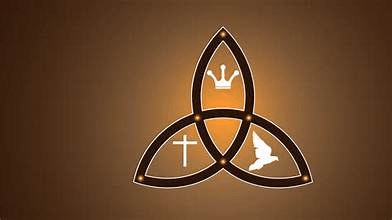
The Bible teaches there is One God who exists in three persons: Father, Son and Holy Spirit. Each person possesses the divine essence.
In church history, there were two distinct viewpoints concerning the nature of God. The first was Homoiousia. This Greek word means “of a similar nature,” which was used by Arius in the fourth century to affirm that Jesus Christ was a supernatural heavenly being but not of the same nature as God the Father. The second was Homoousias. This Greek word means “of the same nature.” This was word used in the Nicene Creed to teach Jesus Christ was of the exact same nature as God the Father and therefore was fully divine as well as fully human.
There have been several errors throughout the church’s existence concerning the Trinity. The se erroneous views are as follows.
Modalism. The heretical teaching that holds that God is not really three distinct persons, but only one person who appears to people in different “modes” at different times. Also called Sabellianism. [1]
Arianism. The erroneous doctrine that denies the full deity of Jesus Christ and the Holy Spirit.[2]
Tritheism. The belief that there are three gods.[3]
Subordinationism. The heretical teaching that the Son was inferior or subordinate in being to God the Father. Also called ontological subordination, but different from economic subordination, which has been the historic view of the church.[4]
What then is the biblical View of the Trinity?
God the Father. He is the Creator of all things (I Cor. 8:6; Heb. 12:9; James 1:17), the Father of Israel (Deut. 32:6; Isaiah 63:16), and the Father of all believers in Christ (Matt. 5:45; 6:6, 9, 14; Rom. 8:15; Gal. 4:4-7). God the Father is the First Person of the Trinity. John 1:14, 18; 8:54; 14:12-13), and who planned the word of redemption, creation, and providence (Eph. 1:3-6).
God the Son. He is the second person in the Trinity (John 1:1-18; Col.1:15-21; Heb. 1:1-3), the only begotten of the Father (John 1:14, 18; 3:16-18; Gal. 4:4). He is the Messiah chosen of the Father (Matt. 8:29; 26:63; John 1:49; 11:27; 17:1-5). He is eternally begotten of the Father (Psalm 2:1-7; Acts 13:33; Heb. 1:1-5), and who mediated the work of creation (John 1:1-3, 10; Heb. 1:1-3). The Son mediates the work of redemption. (Eph. 1:3-12; I Tim. 2:5).
God the Holy Spirit. He is the third person in the Trinity (John 14:16-17, 26; 15:26; 16:1-15; Rom. 8:26). He possesses intelligence (John 14:26), possesses emotion. (Isaiah 68:10; Eph. 4:30), possesses a will (Acts 16:7; I Cor. 12:11), proceeds from the Father and the Son (John 15:26; 16:7; Rom. 8:9l Gal. 4:6), and applies creation and redemption (Gen. 1:3; Job 26:13; Luke 1:35; John 3:34; I Cor. 12:4-11; Eph. 2:22).
Biblical Passages for the Trinity.
Isaiah 61:1 (ESV) – “The Spirit of the Lord God is upon me, because the Lord has anointed me to bring good news to the poor; he has sent me to bind up the brokenhearted, to proclaim liberty to the captives, and the opening of the prison to those who are bound; See Luke 4:17-18.
Matthew 28:19–20 (ESV) – “19 Go therefore and make disciples of all nations, baptizing them in the name of the Father and of the Son and of the Holy Spirit, 20 teaching them to observe all that I have commanded you. And behold, I am with you always, to the end of the age.”
2 Corinthians 13:14 (ESV) – “The grace of the Lord Jesus Christ and the love of God and the fellowship of the Holy Spirit be with you all.”
Revelation 1:4–6 (ESV) – “4 John to the seven churches that are in Asia: Grace to you and peace from him who is and who was and who is to come, and from the seven spirits who are before his throne, 5 and from Jesus Christ the faithful witness, the firstborn of the dead, and the ruler of kings on earth. To him who loves us and has freed us from our sins by his blood 6 and made us a kingdom, priests to his God and Father, to him be glory and dominion forever and ever. Amen.”
One author writes, “The doctrine of the Trinity is foundational to the Christian faith and to Christian living, since knowing God is at the heart of biblical religion and God is fully revealed as Father, Son, and Holy Spirit in the unfolding of the divine mystery. The one true and living God eternally exists in three distinct yet inseparable persons. The creeds and confession of the church summarize the essential biblical truths about the triunity of God, providing theological nuance and support for this foundational doctrine. Nevertheless, the doctrine of the Trinity has also been frequently misunderstood, misrepresented and perverted. Considering biblical support for the doctrine of the Trinity and its historical development will help us more accurately comprehend this precious truth.”
12 Fight the good fight of the faith. Take hold of the eternal life to which you were called and about which you made the good confession in the presence of many witnesses.” (1 Timothy 6:12 (ESV)
The following message is by Dr. John Piper. He preached this sermon September 9, 1984. He entitled it Camaraderie in the Fight of Faith. This is the second and final installment.
Why Does the Apostle Paul Call It a Good Fight?
Let me suggest five reasons why the fight of faith is a good fight and not a bad one.
Because the Enemy Is Evil
First, it is a good fight because the enemy is evil. The enemy is unbelief and the Satanic forces behind it and the sins which come from it. When you set yourself to combat the forces that try to get you to trust in yourself instead of God, you oppose a very evil enemy. Therefore, it is a good fight.
2. Because We Are Not Left to Our Own Strength
Second, it is a good fight because we are not left to our own strength to fight. If we were, as Martin Luther says, “All our striving would be losing.” Philippians 2:12 says, “Work out your salvation with fear and trembling.” That’s the same as saying, “Fight the good fight of faith, and lay hold on eternal life.” But the next verse says, “For God is at work in you both to will and to do his good pleasure.” In other words, when a child of God fights the fight of faith, God is really the one who is behind that struggle giving the will and the power to defeat the enemy of unbelief. We are not left to ourselves to sustain faith. God fights for us and in us. Therefore, the fight of faith is a good fight.
3. Because It’s a Struggle to Let a Burden Be Carried for Us
Third, it is a good fight because it is not a struggle to carry a burden, but a struggle to let a burden be carried for us. The life of faith is not a burdened life! It is an unburdened life! The fight of faith is the struggle to trust God with the burdens of life. It’s a fight for freedom from worry. It’s a fight for hope, and peace, and joy which are all threatened by unbelief and doubt about God’s promises. And since freedom and hope and peace and joy are good, the fight to preserve them is a good fight.
4. Because It Involves Self-Humbling Not Self-Exaltation
Fourth, the fight of faith is good because, unlike most fights, it does not involve self-exaltation but self-humbling. Most fighting is not good because it is a proud attempt to prove our own strength at someone else’s expense. But the fight of faith is just the opposite. It’s a way of saying that we are weak and desperately need the mercy of God. By nature, we do not like to admit our helplessness. We do not like to say, “Apart from Christ I can do nothing” (John 15:5). But the very essence of faith is the admission of our sinful helplessness and the looking away from ourselves to God for mercy. This kind of humility is good. Therefore, the fight of faith is a good fight.
5. Because by It God Is Greatly Glorified
Fifth, the fight of faith is good because by it God is greatly glorified. When we devote ourselves to self-abasement with the purpose of casting all our hope on God, he is exalted in the world. Trusting in ourselves gets us glory. Trusting in the power of God gets him glory. And nothing in all the world is as good as the glory of God. Therefore, the fight of faith is a good fight.
In sum, then, the fight to maintain faith and lay hold on eternal life is a good fight because the enemy is evil; the strength to fight is given by God; the faith we pursue is not a burden but an unburdening; the fight involves self-humbling not self-exaltation; and God is glorified as we learn to trust him with all our cares and hopes.
How Do We Engage in This Fight Successfully?
Here we could talk for hours about the proper use of the Word of God in personal devotion and in preaching and teaching, remembering that, “Faith comes by hearing and hearing by the word of God” (Romans 10:17).
We could talk about prayer and the constant cry of the true saint, “I believe, Lord, help my unbelief” (Mark 9:24).
We could talk about the very ordinary disciplines of eating and sleeping and exercising which have far more effect on the perseverance of our faith than many realize.
Fighting the Fight Together Is Necessary Not Optional
But instead, we want to close by focusing on the foundation of the 20:20 Vision. The 20:20 Vision is a network of home cell-groups at Bethlehem. Pastor Steve will be saying more about the details in just a few moments. What I want you to see is that the foundation of this movement at Bethlehem is the doctrine that ALL CHRISTIANS MUST LAY HOLD ON ETERNAL LIFE BY FIGHTING THE GOOD FIGHT OF FAITH, and the truth that we must fight this fight together and not just in the privacy of our own lives.
Camaraderie in the fight of faith is not an optional fringe benefit of being a Christian. It is one of the God-ordained, essential ways of fighting the fight of faith and laying hold on eternal life.
Two passages in Hebrews make this very clear. Hebrews 3:12–13 says:
Take care, brethren, lest there be in any of you an evil, unbelieving heart, leading you to fall away from the living God. But exhort one another every day, as long as it is called “today,” that none of you may be hardened by the deceitfulness of sin. For we share in Christ, if only we hold our first confidence firm to the end.
According to this text fighting the good fight of faith means doing whatever God tells us to do to guard ourselves against an unbelieving heart and against becoming hardened by the deceitfulness of sin. So, the way that this text tells us to fight the fight faith is by exhorting one another.
“Exhort one another every day, as long as it is called ‘today,’ that none of you may be hardened by the deceitfulness of sin” (verse 13). This is what I mean by camaraderie in the fight of faith. The perseverance of my faith under God depends on the regular exhortations of Steve Roy and Tom Steller and Dean Palermo and Char Ransom. These are my comrades in the good fight of faith. Our fellowship in the Word together is not optional to me. Without the encouragement of this group of comrades, the faith I need to lead and serve Bethlehem would not survive.
The other text in Hebrews is 10:23–25.
Let us hold fast the confession of our hope without wavering, for he who promised is faithful; and let us consider how to stir up one another to love and good works, not neglecting to meet together, as is the habit of some, but encouraging one another, and all the more as you see the Day drawing near.
According to this text the fight of faith is the struggle to hold fast the confession of our hope without wavering and keep on loving each other. And the way this text tells us to do this is not to neglect to meet together to stir each other up. The Christian life of faith and love cannot be lived successfully in isolation. God intends for us to gather in groups small enough to exhort each other and stir each other up. All the exhorting and all the stirring is not supposed to come from the pastor. The phrase “each other” means every believer can and should encourage and exhort and admonish and rebuke others in a small group of comrades. And all the more as we see the Last Day drawing near!
So, the answer to our final question is plain. How do we go about engaging in the fight of faith successfully? We must rediscover the age-old gift of camaraderie in the fight of faith. We must commit ourselves to some group of believers small enough to know each other’s needs and to exhort each other in the fight of faith. If you haven’t done this already, I urge you with all my heart not to rest until you have made this commitment.
And when you discover camaraderie in the fight of faith, you’ll experience another reason why Paul called it a good fight. Very few things in this life are sweeter than like-minded camaraderie in the greatest cause in the world.
12 Fight the good fight of the faith. Take hold of the eternal life to which you were called and about which you made the good confession in the presence of many witnesses.” (1 Timothy 6:12 (ESV)
The following message is by Dr. John Piper. He preached this sermon September 9, 1984. He entitled it Camaraderie in the Fight of Faith.
Paul’s Words to Everybody in the Church
Some things in Paul’s letters to Timothy are designed for pastors in particular rather than for all Christians. But not verse 12 of 1 Timothy 6. When Paul says, “Fight the good fight of faith,” we can be sure he is not giving counsel that only pastors must follow.
This applies to everybody in the church. We know it does because every Christian needs faith, not just pastors. And we know it does because the next phrase is the goal not just of pastors but of all Christians: “Fight the good fight of faith; take hold of the eternal life to which you were called.” By fighting the good fight of faith, Timothy must lay hold on eternal life. But there are not two different ways to eternal life—one for pastors and one for the rest of the church. Therefore, we can know that what Paul commands in this verse is for all of us not just for Timothy or just for pastors.
So, the doctrine that I want to draw out of this portion of God’s word and press home to your hearts today is this: All Christians Must Lay Hold on Eternal Life by Fighting the Good Fight of Faith
Three Questions
In handling the text, I will try to answer three questions:
In what sense is our fight a fight of faith?
Why does the apostle Paul call it a good fight?
How do we go about engaging in this fight successfully?
1. In What Sense Is Our Fight a Fight of Faith?
As I look at the context of Paul’s command to fight the good fight of faith, I see two ways to understand the term “fight of faith.”
Two Ways to Understand “Fight of Faith”
One would be this: since our faith is often threatened by doubt and unbelief, we must fight to maintain faith. So, the phrase “fight of faith” would mean: the struggle to keep on believing God, the fight to keep on trusting his promises.
The other way to understand the phrase “fight of faith” would be this: we must fight the fight of faith in the sense that faith is used as the weapon to attain some other victory beyond faith itself. The idea is not merely that we are fighting to maintain our faith, but that we are maintaining faith in order to attain some victory by means of faith.
I think both of these are in Paul’s mind and that the two always go together. The only reason I distinguish them is that there are people who try to deny that both are true or try to live as though both were not true. Let me try to illustrate both meanings of the phrase “fight of faith” from the context and from some other Scriptures.
The Fight to Maintain Faith
In the verse just before our text (v. 11), Paul commanded Timothy to aim at, or pursue, “righteousness, godliness and faith.” But since Timothy is already a believer, this command to pursue faith must mean that Paul is admonishing him to attain more faith or to hold on to the faith he has. This is what Paul means by the fight of faith (in the first sense). The goal of Timothy’s pursuit is faith itself.
So, there is a sense in which every one of us must keep on pursuing faith. We must not rest content as though the faith we have is all we need, or as though the faith we have will remain in our hearts without a fight against the forces of unbelief. If you begin to coast in your Christian life, or if you begin to let down your guard, thinking that some past act of faith will save you without any struggle to persevere, you may be rudely shocked on the judgment day.
In 2 Timothy 4:7 Paul says at the very end of his life, “I have fought the good fight, I have finished the race, I have kept the faith.” Fighting the fight of faith, finishing the race, and keeping faith all mean the same thing. Fighting the fight of faith is the struggle to keep the faith. And it’s a struggle that a true Christian never finally abandons until he attains the crown of righteousness from the Lord. So, the first meaning of the term “fight of faith,” is the fight to maintain faith, and it comes from the context of verse 11 and from 2 Timothy 4:7.
Fighting with Faith as a Weapon for a Further Victory
The other meaning of the term “fight of faith” is illustrated in verse 12 in the very next phrase: “take hold of eternal life.” The reason Paul adds this command right after the command to fight the good fight of faith is that eternal life is the goal to be attained by a successful fight of faith. Paul is saying, “Fight the good fight of faith, and in that way lay hold on eternal life.” So, the fight of faith is not just a fight to maintain faith (the first meaning); it is a fight to use faith as a weapon for attaining a victory beyond faith itself, namely, eternal life.
It’s just as if one of our coaches of the Olympic boxing team would have said to a fighter just as the third and decisive round started, “Fight the good fight, brother, and lay hold on the gold!” So, the term “fight of faith” means, in this second sense, fighting to win the (gold!) crown of eternal life by means of persevering in our faith.
From Pilgrim’s Progress to the American Church
One of the reasons there is so little deep, earnest, passionate concern for godliness in the contemporary church is that this truth is so little understood—the truth, namely, that eternal life is laid hold of only by a persevering fight of faith. There is today, by and large, a devil-may-care, cavalier, superficial attitude toward the on-going, daily intensity of personal faith because people do not believe that their eternal life depends on it. The last 200 years has seen an almost incredible devaluation of the fight of faith. We have moved a hundred miles from Pilgrim’s Progress where Christian labors and struggles and fights all his life until he is safe in the Celestial City. O, how different is the biblical view of the Christian life than the one prevalent in the American church.
James 1:12 says, “Blessed is the man who endures trial, for when he has stood the test, he will receive the crown of life which God has promised to those who love him.” The person who will receive the crown of eternal life is the person who successfully endures trial, that is, the person who fights the fight of faith and gets the victory over the temptation of unbelief.
Revelation 2:10 says to those who are being thrown in prison for their faith, “Be faithful unto death, and I will give you the crown of life.” This is very different from the mood of American Christianity. Here something infinite and eternal hangs on whether these Christians keep their faith in prison. But today worship services, Bible studies, prayer meetings, and fellowship gatherings in most churches do not have a spirit of earnestness and intensity and fervor and depth because people do not believe in their heart that anything significant is at stake—least of all their eternal life.
We have been poorly taught. And so, I urge each of you to return to the Scripture with eyes opened afresh to learn the doctrine of our text—that:
All Christians Must Lay Hold on Eternal Life by Fighting the Good Fight of Faith.
12 Fight the good fight of the faith. Take hold of the eternal life to which you were called and about which you made the good confession in the presence of many witnesses.” (1 Timothy 6:12 (ESV)
The Apostle Paul issued five commandments to his young protégé Timothy in the immediate context of I Timothy 6:11-16. The first was to flee the temptations of earthly riches (vs.11a). The second was to pursue righteousness, godliness, faith, love, steadfastness and gentleness (vs. 11b). The third was to fight the good fight of faith (vs. 12a). The fourth was to take hold of the eternal life.
To take hold of eternal life means to passionately, personally, and obediently seize the goal of pursuing holiness (I Peter 1:13-16). Paul described this pursuit in Romans 6:9-14, 8:1-8, 12:1-2, Philippians 3:12-16, and Colossians 3:1-17.
Dr. John MacArthur writes, “Paul is here admonishing Timothy to “get a grip” on the reality of the matters at hand associated with eternal life, so that he would live and minister with a heavenly and eternal perspective” (Phil. 3:20; Col. 3:1-2).”
It is holiness God called Timothy to pursue. The phrase you were called (ἐκλήθης; eklethes) is an aorist, passive indicative verb. It means God decisively and at a particular point in time summoned Timothy to the task of pursuing holiness. It was this sovereign call unto salvation and sanctification which Timothy made the good confession. The word Paul used was ὡμολόγησας (homolegasas). It means at a particular point in time to acknowledge, admit, and declare one’s faith in Jesus Christ as Savior and Lord. This was done publicly, perhaps at Timothy’s baptism. Regardless, there were many witnesses.
At the evening of my public confession of faith in Jesus Christ in the waters of baptism there were many witnesses. Most of them remain dear friends over the past five decades. More than that, they are precious brothers and sisters in Christ.
“One of the reasons there is so little deep, earnest, passionate concern for godliness in the contemporary church is that this truth is so little understood—the truth, namely, that eternal life is laid hold of only by a persevering fight of faith. There is today, by and large, a devil-may-care, cavalier, superficial attitude toward the on-going, daily intensity of personal faith because people do not believe that their eternal life depends on it. The last 200 years has seen an almost incredible devaluation of the fight of faith. We have moved a hundred miles from Pilgrim’s Progress where Christian labors and struggles and fights all his life until he is safe in the Celestial City. O, how different is the biblical view of the Christian life than the one prevalent in the American church,” explains Dr. John Piper.
Are you serious about living a godly life? God created us to be holy as He is holy (I Peter 1:13-16). Let us strive for such a lifestyle in practice which evidences our eternal life position, which again is only by grace alone, through God given faith alone, in Christ alone.