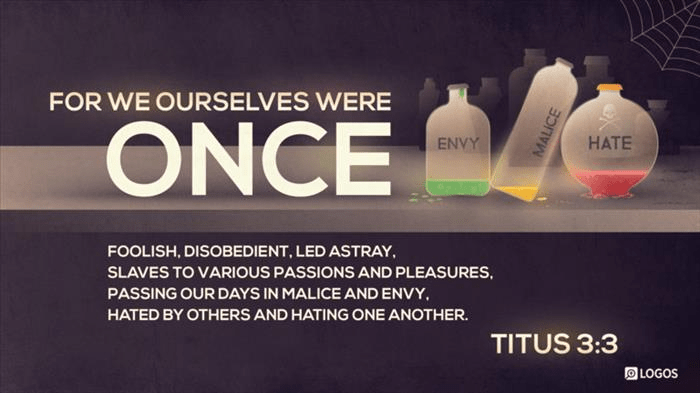
I Timothy: The Love of Money.  

But those who desire to be rich fall into temptation, into a snare, into many senseless and harmful desires that plunge people into ruin and destruction. 10 For the love of money is a root of all kinds of evils. It is through this craving that some have wandered away from the faith and pierced themselves with many pangs.” (1 Timothy 6:9–10 (ESV)

The following excerpt is by Dr. J. Ligon Duncan. His message is entitled The Love of Money. He preached this sermon Sunday, October 17, 2004.

Guard your heart against the pernicious love of money. The Apostle Paul goes on to say this: in verses seven through ten. He calls us to guard our hearts against the pernicious love of money. He says we brought nothing into this world, we cannot take anything out of it, either; if we have food and covering, with these we shall be content.

Now, my friends, no Christian is immune from an inordinate love of
money. You can be poverty stricken and living in the slums of San Paulo,
Brazil, and struggle with the love of money. When you are poverty stricken,
your temptation is to want something that you don’t’ have, and to think what you
don’t have will give you the satisfaction you’re looking for.

We have a different struggle. All of us have this struggle: we have so much we are both inclined to forget the One who has given us what we have; and we are inclined to enjoy the things we have received from His gracious hand more than we enjoy Him. 

We are tempted to view Him as a means to get what we really want, which are things which we think will give us satisfaction and fulfillment. In other words, instead of loving God and using the world, we use God to get the world which we love more than God. That is the challenge of affluence, and we are awash in the
wealthiest culture in the history of the world. We are Christians in the midst
of that affluent culture, and so we ourselves must be on guard against the
pernicious love of money.

Notice two things: Paul does not say that money is the root of all evil. This is not a proto-Marxist speech here. This is not a rant against capitalism. But he says “the love of money is the root of all sorts of evil.” When your desires are centered upon things and material blessing, when that is where your satisfaction and your
delight and your security come from, ah! then you’re in trouble, because God
wants us to depend upon Him. He wants us to love Him and use the world, not use
Him and love the world.

Paul also doesn’t say that the love of money is the root of all evil. That’s how the King James translated this passage, and that’s a perfectly good literal translation, but this is one of those passages where Paul clearly uses “all” to mean not “every
last one,” but “every category, all sorts, all kinds of evil.” Paul in this
very book will show several roots of other sins, but here he is saying that the
love of money is the root of all kinds of sins. The New Testament bears that
out, doesn’t it? I’m haunted by the last phrase of verse ten, aren’t you?

“Some by longing for it have wandered away from the faith, and pierced themselves with many griefs.” You can think about that very thing in the New Testament.

Ananias and Sapphira; Simon Magus, who wanted to buy the extraordinary gifts of
the Spirit so that he could make money; Judas, who sold our Savior for thirty
pieces of silver; and even more heartbreaking than that, the rich young elder
who came to Jesus to ask Him how he could have eternal life–and he went away
sorrowing, we’re told in the gospels, when Jesus told him to sell everything
that he had and follow Him, “because he had many things.” And his contentment,
his fulfillment, his satisfaction was in those things.

We think of him wandering away from the faith. There he was, standing in front of his God and Savior, and he left Him because he had chosen to serve mammon rather than God. This is why Jesus is so concerned that we are determined to use the material blessings that God gives us: not to worship them, not to love them, not to find our ultimate delight in them, not to find our fulfillment or our security in
them.

By the way, that’s one way that stewardship to the church works. When you give for the building of Christ’s kingdom, one of the things that it does is it teaches you to trust that the Lord will provide for you in that you have given away for His work. It’s a blessing to give that away, and then to depend on, “Lord, you’re going to have to bring in what I need. I’m committing to support Your work, trusting that You will support my family’s needs.”

No, guard your heart against the pernicious love of money, Paul says. In this passage, Paul not only gives us words whereby we can detect false teaching, but he searches our own hearts to see if we love God more than we love things. I don’t know of a greater challenge for us as a congregation than that. Many sins and temptations we grapple with and wrestle against, but that one is one whereby we will be measured, friends. Let us pray that God, by His Spirit, would help us to love Christ, to love His kingdom, and to seek Him first and then let God add the other things.

May the Lord’s truth and grace be found here.

Soli deo Gloria!

I Timothy: Love of Money.  

But those who desire to be rich fall into temptation, into a snare, into many senseless and harmful desires that plunge people into ruin and destruction. 10 For the love of money is a root of all kinds of evils. It is through this craving that some have wandered away from the faith and pierced themselves with many pangs.” (1 Timothy 6:9–10 (ESV)

Money (That’s What I Want)!

Verse 1: [John Lennon]

The best things in life are free
But you can keep ’em for the birds and bees

[Chorus: John Lennon, Paul McCartney & George Harrison]
Now, give me money (That’s what I want)
That’s what I want (That’s what I want)
That’s what I want, oh yeah (That’s what I want)
That’s what I want
.

Money (That’s What I Want) was written by Berry Gordy, Janie Bradford. Released in 1963 as part of the album With the Beatles. A musicologist writes, “Money the song’s title and chorus make it clear: the narrator wants money above all else. The lyrics repeat the line “that’s what I want” with a near-religious fervor, emphasizing a deep, almost desperate need for financial security.”

Money!

[Verse 1]

Money, get away
Go get a good job with more pay, and you’re okay
Money, it’s a gas
Grab that cash with both hands and make a stash


[Refrain]
A new car, caviar, four-star daydream
Think I’ll buy me a football team
.

[Verse 3]
Money, it’s a crime
Share it fairly, but don’t take a slice of my pie

Money, so they say
Is the root of all evil today


[Refrain]
But if you ask for a rise
It’s no surprise that they’re giving none away
.

Money was written by Roger Waters, bassist for the progressive rock band Pink Floyd’s 1973 album Dark Side of the Moon. Roger Waters has spoken about this song and its lyrical content. In a 1993 interview with magazine Observer to celebrate the 20th anniversary of Dark Side of the Moon,

Waters stated, “Money interested me enormously. I remember thinking, ‘Well, this is it and I have to decide whether I’m really a socialist or not.’ I’m still keen on a general welfare society, but I became a capitalist. You have to accept it. I remember coveting a Bentley like crazy. The only way to get something like that was through rock or the football pools. I very much wanted all that material stuff.”

Puritan biblical commentator Matthew Henry writes, “People may have money, and yet not love it; but, if they love it inordinately, it will push them on to all evil.”

Many individuals, including believers in Christ, say “money is the root of all evil.” They will cite I Timothy 6:10 as a proof text for their claim and perspective. However, that is not what the Apostle Paul wrote or what the biblical text says.

Continuing to speak on spiritual discontentedness (vs. 9), Paul stated to his young protégé Timothy, “For the love of money is a root of all kinds of evils.” It was not money itself that was evil, but rather the love of money.  The phrase love of money (φιλαργυρία; philargyria) refers to avarice, greed, materialism, and covetousness. The Pharisees were lovers of wealth (Luke 16:14). The love Paul refers to is a self-centered or an excessive love for oneself (2 Tim. 3:2).

Such a love for wealth is a root for all kinds of evil. Root (ῥίζα; rhiza) means source, cause or reason. The phrase all kinds of (πάντων; panton) means collective, a mass, or everything. Evil (κακῶν; kakon) refers to what is harmful, bad, and incorrect.

The word craving (ὀρεγόμενοι; oregomenoi) is a present and personal desire and striving to attain an object; whatever the object may be and no matter what the consequences. It is because of such a craving for money, Paul stated this resulted in two particular consequences.

First, “some have wandered away from the faith.”  The phrase have wandered away (ἀπεπλανήθησαν; apeplanethesan) is an aorist passive verb. It means certain individuals have been misled and strayed from the truth. The faith they have strayed from is their trust in, commitment to, dependence upon and worship of Jesus Christ as Savior and Lord.

People who thus reach out after (or “aspire after,” see on 1 Tim. 3:1) money are like the planets. They have wandered away from, literally “planeted away from” (ἀπεπλανήθησαν) the faith. The word planet means wanderer, for that is exactly what a planet is. Not in the sense that the earth or the other planets are “thrown out of their appointed orbits.” Their orbits have been fixed, so that it is possible by means of six or seven “elements of a planetary orbit” to predict exactly where in the sky each planet will be. But in relation to the “fixed” stars, the planets, revolving around the sun, seem to wander about. This accounts for their name.” [1]

“Eager for money, they wandered from the faith. This may mean that they had fallen into heretical teaching (cf. 2 Tim. 2:17–18) or simply that their spiritual fruitfulness had been choked off (cf. Luke 8:14) by their concern for riches.”[2]

Additionally, the apostle wrote, “and pierced themselves with many pangs.” Pierced (περιέπειραν; periepeiran) means to actively and decisively experience severe grief. It literally means to be impaled on a spit. The word pangs (ὀδύναις; odynais) refers to great distress and anxiety. A love for money can, and does, lead to such tragic results.

Dr. R C. Sproul writes, “Knowing that each estate of life has its own temptations helps us remember that Paul singles out love of money as a root of all kinds of evils, not the root of evil (1 Tim. 6:10). Other idols can take root in our hearts and bear sin. The abundance of resources available to us should make us beware lest we make wealth our god, but let us be on guard against the false deities of relativism, lust, narcissism, and so on that are also rampant in our culture.”

May the Lord’s truth and grace be found here.

Soli deo Gloria!


[1] William Hendriksen and Simon J. Kistemaker, Exposition of the Pastoral Epistles, vol. 4, New Testament Commentary (Grand Rapids: Baker Book House, 1953–2001), 201.

[2] A. Duane Litfin, “1 Timothy,” in The Bible Knowledge Commentary: An Exposition of the Scriptures, ed. J. F. Walvoord and R. B. Zuck, vol. 2 (Wheaton, IL: Victor Books, 1985), 746.

I Timothy: Discontentedness.

But those who desire to be rich fall into temptation, into a snare, into many senseless and harmful desires that plunge people into ruin and destruction.” (1 Timothy 6:9 (ESV)

The phrase “deceitfulness of riches” appears in Mark 4:18-19. Jesus used it in His Parable of the Sower: 18 And others are the ones sown among thorns. They are those who hear the word, 19 but the cares of the world and the deceitfulness of riches and the desires for other things enter in and choke the word, and it proves unfruitful.” (Mark 4:18–19 (ESV)

In the parable, Jesus described wealth as deceiving because it can dominate an individual’s attention. It can motivate a person to pursue financial gain instead of spiritual growth in the Lord and a love for one’s fellow humans. E.g. Ebenezer Scrooge.

The Apostle Paul instructed Timothy there was great gain in godliness with contentment (I Tim. 6:6). He also stated people cannot take anything with them when they die (vs. 7). Therefore, we should be content with food and clothing (vs.8). Otherwise, a discontentedness may creep into our thinking.

“Discontent is one of the most powerful shaping influences in our society. Advertisers regularly attempt to dissuade us from the things we use every day in order to sell us their products. Political parties thrive on discontent, stirring up voters to covet things they do not have in order to elect a candidate who will take from one group of people and give to another. Truly, contentment is rare today,” explains Dr. R. C. Sproul.

Paul stated, “those who desire to be rich fall into temptation.” The phrase who desire (βουλόμενοι; boulomenoi) is a present, middle, plural verb. This refers to present, personal, and collective thinking, feeling and choosing by people. What these individual desire in their minds, emotions, and wills is to be rich (πλουτεῖν; ploutein). This is a present, infinitive verb meaning to be materially wealthy.

Those who pursue such a worldview of wealth fall into temptation (ἐμπίπτουσιν; πειρασμὸν; empiptousin peirasmon). This means to collapse into an enticement for evil and sin.

Paul used other words to explain this deceitful condition. He called it a snare (παγίδα; pagida) or a trap. He then used another word for desire (ἐπιθυμίας; epithumias) referring to a lust or craving. Such lusts and cravings for wealth Paul referred to as senseless (ἀνοήτους; anoetous) meaning unintelligent or foolish and harmful (βλαβεράς; blaberas) producing hurt and injury. It plunges people (βυθίζουσι ἀνθρώπους; bythizousi anthropous) or drowns them intellectually, emotionally and volitionally into ruin (ὄλεθρον; olethron) or devastation and destruction (ἀπώλειαν; apoleian) which is disaster, waste and death.

“When discontentment is the driving force in a person’s life, all sorts of problems can result. Spouses can rush headlong into extramarital affairs. Households can pile on loads of debt as they try to keep up with the lifestyles of their neighbors. Biblical truth can be distorted in an effort to make the message easier to sell. Timothy faced some kind of doctrinal aberration resulting from teachers who made monetary gain their chief end in life, and that is why Paul urges contentment with one’s own estate (1 Tim. 6:6–8). He expands upon this principle in today’s passage, reminding us that a desire to be rich fueled by discontentment can create senseless desires and result in destruction (v. 9),” continues Dr. Sproul.

Wealth is not wrong. However, it can become sin when the acquiring of gain consumes a person and it becomes all they desire. John Calvin explains, having luxuries is not “to be condemned on its own account, but lusting after them is always sinful.”

“Greedy people are compulsive—they are continually trapped in sins by their consuming desire to acquire more. ruin and destruction. Such greed may lead these people to suffer the tragic end of destruction and hell. These terms refer to the eternal punishment of the wicked,” states Dr. John MacArthur.

Are we content with what God has given us? Or, are we coveting and lusting for something more? Something more could be money, a relationship, a job, recognition, or anything else considered good. When we think we need such things, we begin to distrust God’s provision. We no longer depend upon Him and become lazy in our commitment to Him. Do our life goals evidence a discontentment?

May the Lord’s truth and grace be found here.

Soli deo Gloria!

I Timothy: An Eternal Perspective to Life.

But godliness with contentment is great gain, for we brought nothing into the world, and we cannot take anything out of the world. But if we have food and clothing, with these we will be content.” (1 Timothy 6:6–8 (ESV)

A friend of mine once contributed to a television evangelist’s ministry. The popular preacher’s promise was if he contributed to their television ministry my friend would receive a financial blessing from the Lord. He never did. The incident deeply affected this young man so much he not only renounced his Christian faith but also his Christian friends, including me.

I realize my friend was responsible for his own choices. No one forced him to financially give to a so-called evangelical ministry, which preyed upon the gullible and naive. However, the charlatan manipulation of people by false teachers greedy for gain continues to this day. Seeking to enrich themselves with private planes, luxurious mansions, and all manner of financial power and influence, they leave in their wake a boulevard of broken trust. commitment, dependence and worship of on the one, true God.

“A few passages in the New Testament imply that the early church dealt with the problem of false teachers aiming to enrich themselves. Peter’s instructions to the elders warn against using the ministry “for shameful gain” (1 Peter 5:1–2). Acts 8:9–25 records the story of one Simon Magus who sought to buy the power of the Holy Spirit, presumably to get people to pay to see his own wonderworking abilities. The church fathers say that Simon was one of the founders of the Gnosticism that threatened God’s people in the second century AD,” explains Dr. R. C. Sproul.

The reaction to such manipulation can also be anger and resentment. This emotional response is then directed towards all churches, congregations and pastors who sincerely seek to worship, preach and teach, disciple, minister, fellowship with believers while also evangelizing the lost without Christ.

Both believers in Christ, and those who are not and others who pretend to be must realize the truth of what the Apostle Paul wrote to Timothy 2,000 years ago. The biblical truth then certainly applies today. What is this truth?

In vs. 7 of today’s text, Paul wrote, “for we brought nothing into the world, and we cannot take anything out of the world.” This is why godliness with contentment is great gain. The old adage is, “there are no Brinks trucks in a funeral procession.” Whatever you gain on earth, whoever you may be and whatever riches you acquired on earth, do not accompany you when you die. It is left for the living (Ecclesiastes. 2:1-11).  

Therefore, what is the proper attitude a believer in Christ should have concerning possessions and wealth? The apostle answers the question in vs. 8. “But if we have food and clothing, with these we will be content.”

“For “nourishment and shelter” the original has the plural (cf. “victuals and coverings”). Our word “nourishment” is sufficiently comprehensive to include all the articles of food that are necessary to support physical life, just as our word “shelter” indicates whatever is necessary for the outward protection of the body. The rendering “food and clothing” is less exact. The original (“shelter” or “coverings”) in all probability, includes the dwelling in which a man resides as well as the garment which he wears. The Lord does not demand of us that, having clothing, we do not even look for a tent or a house in which to live. The desire to meet the needs of the body is not criticized. It is the yearning for material riches, as if these could satisfy the soul, that is here condemned,”[1]

May we loosely hold on to what temporary and hang tight onto what is eternal. May the Lord’s truth and grace be found here.

Soli deo Gloria!


[1] William Hendriksen and Simon J. Kistemaker, Exposition of the Pastoral Epistles, vol. 4, New Testament Commentary (Grand Rapids: Baker Book House, 1953–2001), 199.

I Timothy: Godliness with Contentment.

But godliness with contentment is great gain, for we brought nothing into the world, and we cannot take anything out of the world. But if we have food and clothing, with these we will be content.” (1 Timothy 6:6–8 (ESV)

As previously stated in this webpage, a fundamental principle of correct biblical interpretation is Scripture interprets Scripture. Consequently, Scripture does not contradict itself because the author of Scripture, the Holy Spirit, does not contradict Himself (2 Tim. 3:16-17; 2 Peter 1:20-21). In other words, what Scripture says in one passage or portion will be consistent with another passage or portion. Such is the case with today’s featured biblical text.

The Apostle Paul, who the Holy Spirit used to produce inerrant Scripture, wrote these words to his young protégé Timothy, who was pastoring the church in Ephesus. Paul’s words were written perhaps thirty years after Jesus Christ spoke similar words in His Sermon on the Mount. Consider the spoken words from our Lord found in Matthew 6:25-34.

25 “Therefore, I tell you, do not be anxious about your life, what you will eat or what you will drink, nor about your body, what you will put on. Is not life more than food, and the body more than clothing? 26 Look at the birds of the air: they neither sow nor reap nor gather into barns, and yet your heavenly Father feeds them. Are you not of more value than they? 27 And which of you by being anxious can add a single hour to his span of life? 28 And why are you anxious about clothing? Consider the lilies of the field, how they grow: they neither toil nor spin, 29 yet I tell you, even Solomon in all his glory was not arrayed like one of these. 30 But if God so clothes the grass of the field, which today is alive and tomorrow is thrown into the oven, will he not much more clothe you, O you of little faith? 31 Therefore do not be anxious, saying, ‘What shall we eat?’ or ‘What shall we drink?’ or ‘What shall we wear?’ 32 For the Gentiles seek after all these things, and your heavenly Father knows that you need them all. 33 But seek first the kingdom of God and his righteousness, and all these things will be added to you. 34 “Therefore, do not be anxious about tomorrow, for tomorrow will be anxious for itself. Sufficient for the day is its own trouble.” (Matthew 6:25–34 (ESV)

Paul began this portion of his epistle with seven words, “But godliness with contentment is great gain.” Let’s examine each word individually.

But. The word but (δὲ; de) is a conjunction of contrast. It means on the other hand or and now. This conjunction of contrast is in relationship to what Paul just stated in I Tim. 6:3-5.

Godliness. Godliness (εὐσέβεια; eusebeia) refers to personal piety, holiness, and Christlikeness. It is a word Paul previously used in this epistle (I Tim. 3:16; 4:6-10).

With contentment. The phrase with contentment (μετὰ αὐταρκείας; meta autarkeias) means to be in association or in a relationship. The relationship the believer in Christ has with godliness is contentment. It means to be at peace with one’s circumstances in life.

Is. The word is (ἔστιν; estin) is a present, active, indicative state of being verb. It means to be or being.

Great. The adjective great (μέγας; megas) means extensive. It also refers to something being large or important.

The final word is gain (πορισμὸς; porismos). This is wealth. Within the context, Paul does not refer to material wealth as something of great gain, in contrast to false teachers (I Tim. 6:5). Rather, it is the spiritual wealth of a godly character.

“Picking up on the words “godliness” and “gain,” Paul shifted their meaning in a characteristically Pauline fashion (cf. 1 Cor. 2:5–6 for a similar shift) from the erroneous to the truthful. Godliness does not give financial gain (1 Tim. 6:5); it itself is gain when accompanied with contentment. Autarkeias literally means “self-sufficiency.” Yet the sufficiency of oneself is due to the sufficiency of God (cf. 2 Cor. 9:8; Phil. 4:11, 13 for other uses of the same word). Godliness combined with that inner God-given sufficiency which does not depend on material circumstances (the opposite of the false teachers’ greed) is indeed of great gain.”[1]

The truly godly person is not interested in becoming rich. He possesses inner resources which furnish riches far beyond that which earth can offer. Hence, with respect to this genuine godly life Paul continues: And it is great gain, namely, the (practice of) godliness with soul-sufficiency. This is the life of true devotion to God. It is “of benefit in every way,” (see on 1 Tim. 4:8). Such Christian living springs from the source of—and is accompanied by—soul-sufficiency.[2]

Where is your heart regarding the transitory nature of earthly wealth in contrast to heavenly and eternal wealth? The former will perish.  The latter is unperishable and undefiled (I Peter 1:4).

May the Lord’s truth and grace be found here. Have a blessed day in the Lord.

Soli deo Gloria!

.


[1] A. Duane Litfin, “1 Timothy,” in The Bible Knowledge Commentary: An Exposition of the Scriptures, ed. J. F. Walvoord and R. B. Zuck, vol. 2 (Wheaton, IL: Victor Books, 1985), 746.

[2] William Hendriksen and Simon J. Kistemaker, Exposition of the Pastoral Epistles, vol. 4, New Testament Commentary (Grand Rapids: Baker Book House, 1953–2001), 198.

I Timothy: Depraved and Deprived.

If anyone teaches a different doctrine and does not agree with the sound words of our Lord Jesus Christ and the teaching that accords with godliness, he is puffed up with conceit and understands nothing. He has an unhealthy craving for controversy and for quarrels about words, which produce envy, dissension, slander, evil suspicions, and constant friction among people who are depraved in mind and deprived of the truth, imagining that godliness is a means of gain.” (1 Timothy 6:3–5 (ESV)

What does it mean to be depraved and deprived? In essence, these two words describe false teachers. These words not only describe what false teachers do, but also what they are.

The Apostle Paul warned his young protégé Timothy about false teachers within the church. These were individuals who (1) teach a different doctrine; (2) do not agree with Jesus’ teachings; (3) do not teach godliness; (4) are conceited; (4) lack understanding; (5) crave controversy; (6) love to quarrel; and (7) produce envy, dissensions, slander, and evil suspicions.

However, Paul was not done. He had more to say about false teachers. These were they who produce constant friction among people. The phrase constant friction (διαπαρατριβαὶ; diaparatribai) refers to constant arguing and the mutual irritation false teachers foster within the church. These individuals are only content when they create discontentedness. They are most tranquil when creating agitation. It follows them wherever, and whenever, they participate in a local church. After a period of time, and numerous church affiliations, their reputation precedes them.

Paul did not mince words regarding the character and intentions of false teachers. He used two intense terms to describe them: depraved and deprived.

Depraved (διεφθαρμένων; diephtharmenon) means to receive a moral ruin and perversion. This condition began in their past and continues in their present. This depravity exists in their mind (νοῦν; noun) referring to their way of unbiblical thinking and their attitude.

Deprived (ἀπεστερημένων; apesteremenon) means to receive and possess a deprivation or a lack of something. This condition also began in their past and continues in their present. This condition of deprival characterizing false teachers is their lack of biblical truth. They do not speak it, they do not live it, and they do not believe it.

Rather, any affiliation false teachers may have to biblical truth is not an end in and of itself. Rather, they use biblical truth as a means to an end. What is the end or their goal? It is the acquisition of gain. The phrase means of gain (πορισμὸν; porismon) refers to financial profit and the procuring of wealth. In their depraved thinking and their deprivation of biblical truth, they use a veneer of godliness as a means to an end.

“Such conduct and its bitter fruits mark the men who are “depraved in mind and deprived of the truth.” It is God himself who endowed man with intelligence, so that he is able to reflect on the higher things of life. Yet, with respect to this precious gift, namely, the intelligence, the errorists at Ephesus and vicinity have corrupted themselves, so that they have now entered the abiding state of being “depraved in mind.” The depraved mind opposes the truth and welcomes the lie, until at last those who possess such a mind become completely and permanently separated from the truth: God’s objective revelation as revealed in his Word. Envy, wrangling, reviling, base suspicions, and mutual altercations lead to mental, moral, and spiritual sterility. Those who practice such things are so completely occupied with themselves and their own interests that in their hearts there is neither time nor room for God and his revealed truth.” [1]

“Such evil fruits seem the inevitable external products of false teachers once one understands their true inner motives (Matt. 7:13–23). They are men: (1) whose minds have been corrupted (cf. 2 Tim. 3:8); (2) who have been robbed of the truth by Satan (cf. Luke 8:5, 12, and the culpability of being “hard ground” rather than “good ground”); (3) who think that godliness is a means to financial gain. Greed was their core motivation (cf. Titus 1:11; Jude 12). In that day the stipends associated with ministry were attractive, so that even the best men had to be warned against letting personal gain creep into their motivation (cf. 1 Peter 5:2). Congregational leaders were to be chosen from those known for their “freedom from the love of money” (cf. 1 Tim. 3:3, 8; Titus 1:7). By contrast the moral corruption so often associated with false teaching (cf. Jude 4–16 for the most graphic description in the NT) produced just the opposite.”[2]

What was true in the first century church is also true in the 21st century church. True believers in Christ must be on their guard (Prov. 4:23-27) and test the spirits to see if they are from God (I John 4:1-6).

May the Lord’s truth and grace be found here.

Soli deo Gloria!  


[1] William Hendriksen and Simon J. Kistemaker, Exposition of the Pastoral Epistles, vol. 4, New Testament Commentary (Grand Rapids: Baker Book House, 1953–2001), 197.

[2] A. Duane Litfin, “1 Timothy,” in The Bible Knowledge Commentary: An Exposition of the Scriptures, ed. J. F. Walvoord and R. B. Zuck, vol. 2 (Wheaton, IL: Victor Books, 1985), 746.

A Word Fitly Spoken: God’s Self Disclosure.

Jeremiah 9:23–24 (ESV) – 23 Thus says the Lord: “Let not the wise man boast in his wisdom, let not the mighty man boast in his might, let not the rich man boast in his riches, 24 but let him who boasts boast in this, that he understands and knows me, that I am the Lord who practices steadfast love, justice, and righteousness in the earth. For in these things I delight, declares the Lord.”

John 17:1–3 (ESV) – “When Jesus had spoken these words, he lifted up his eyes to heaven, and said, “Father, the hour has come; glorify your Son that the Son may glorify you, since you have given him authority over all flesh, to give eternal life to all whom you have given him. And this is eternal life, that they know you, the only true God, and Jesus Christ whom you have sent.”

1 John 5:20 (ESV) – “And we know that the Son of God has come and has given us understanding, so that we may know him who is true; and we are in him who is true, in his Son Jesus Christ. He is the true God and eternal life.”

“Our wisdom, in so far as it ought to be deemed true and solid Wisdom, consists almost entirely of two parts: the knowledge of God and of ourselves.” – John Calvin

How has God has chosen to reveal Himself? He has chosen to reveal Himself in two distinct ways.

The first is referred to as General Revelation. All humankind possesses an inborn knowledge of God’s existence (Rom. 1:18-19). This innate comprehension of God’s existence God’s is because God reveals Himself through His creation (Ps. 8; 19:1-6; Rom. 1:20-23). While General Revelation is sufficient to condemn the sinner before God, it is unable to deliver a sinner from the holy wrath of God.    

The second way God has chosen to reveal Himself is called Special Revelation. The personal knowledge of God occurs in salvation (Matt. 11:27). Special Revelation refers to God’s direct self-communication in verbal messages and miraculous facts (Psalm 1; 119).

“There is nothing more foundational to knowing God than the His self-revelation to His creatures. Though He is incomprehensible, the true and living God reveals aspects of Himself in both creation and in Scripture. Theologians refer to these two ways of God’s self-revelation as general or natural revelation and special or supernatural revelation. In creation, God reveals aspects of His being, attributes, and power. In Scripture, He gives further revelation of His being, names, attributes, works, and will for the salvation of His people,” states Dr. R. C. Sproul.

“All special revelation centers on the person and saving work of Jesus Christ. Jesus is Himself the full revelation of God to mankind. He is the eternal Logos who, in the fullness of time, entered the world He created to redeem a people for Himself. The Holy Spirit is both the divine agent of God’s special revelation as well as the One who illumines the hearts of believers to give them a saving understanding of that revelation.”

The Bible declares there is but one living and true God (Deuteronomy 6:1-4; Isaiah 45:5-7; 1 Corinthians 8:1-4), an infinite, all knowing Spirit (John 4:24), perfect in all His attributes, one in essence, eternally existing in three Persons—Father, Son, and Holy Spirit (Matthew 28:19; 2 Corinthians 13:14)—each equally deserving worship and obedience.

God the Father, the first Person of the Trinity, orders and disposes all things according to His own purpose and grace (Psalm 145:8 9; 1 Corinthians 8:6; Ephesians 1:3-14). He is the Creator of all things (Genesis 1:1-31; Ephesians 3:9). As the only absolute and omnipotent Ruler in the universe, He is sovereign in creation, providence, and redemption (Psalm 103:19; Romans 11:33-36).

His fatherhood involves both designation within the Trinity and His relationship with redeemed mankind (John 17:1-5; Matthew 6:5-9). As Creator, He is Father to all men (Ephesians 4:6), but He is the spiritual Father only to believers (Romans 8:14; 2 Corinthians 6:18). He has decreed for His own glory all things that come to pass (Ephesians 1:11). He continually upholds, directs, and governs all creatures and events (1 Chronicles 29:11). In His sovereignty, He is neither the author nor approver of sin (Habakkuk 1:13; John 8:38, 47), nor does He restrain the accountability of moral, intelligent creatures (1 Peter 1:17).

He has graciously chosen from eternity past those to whom He would have as His own (Galatians 1:15; Ephesians 1:4-6; 2 Timothy 1:8-9). He saves from sin all who the Holy Spirit enables come to Him through Jesus Christ alone (John 3:1-8; 6:35-66; 14:1-6; Acts 4:12). He adopts as his own all those who come to Him and He becomes, upon adoption, Father to His own (John 1:12-13; Romans 8:15; Galatians 4:5; Hebrews 12:5-9).

The ultimate revelation of God is in the person of Jesus Christ (Heb. 1:1-3). A salvific knowledge of God is by grace alone, through faith alone, in the person and work of Jesus Christ alone (John 1:1-18; I Cor. 1:18-25; 2:14; 2 Cor. 4:1-4) as revealed in Scripture alone (Psalm 19:7-11; Rom. 10:14-17).                                                                                                                                                                                                           Have a blessed Lord’s Day.

Soli deo Gloria!

I Timothy: Novelty-teachers and Hair-splitters!

If anyone teaches a different doctrine and does not agree with the sound words of our Lord Jesus Christ and the teaching that accords with godliness, he is puffed up with conceit and understands nothing. He has an unhealthy craving for controversy and for quarrels about words, which produce envy, dissension, slander, evil suspicions.”  (1 Timothy 6:3–4 (ESV)

The following commentary is be Dr. William Hendriksen. Dr. Hendriksen (18 November 1900 – 12 January 1982) was a Dutch-born American minister, New Testament scholar, and writer of Bible commentaries. He served as Professor of New Testament at Calvin Theological Seminary. He also was pastor of the Frist Christian Reformed Church, Byron Center, MI.  

Novelty-teachers and hair-splitters! The apostle was fully acquainted with them. He emphasizes that any peddler of ponderous platitudes about the law of Moses, any specialist in specious speculations about ancestors, is “blinded with conceit.” Such a person is “full of smoke,” be-smoked, befogged, beclouded (see 1 Tim. 3:6). Two ideas are combined here: moral-spiritual denseness and conceit. The first is the result of the second.

This description is true with respect to every dissenter who “does not come over to the sound words of our Lord Jesus Christ.” The verb used in the original (προσέρχεται which is favored by textual evidence both internal and external) has here a meaning not far removed from its primary sense: come to, approach. Here it seems to mean come over to, that is, join, fall in with. This is a little stronger than consent to or agree with.

A mere listener may mentally agree with the words of a speaker. An enthusiastic listener will come over to or join the speaker. He will not only agree, but he will express that agreement. He will “chime in.” He will eagerly come to the same fountain and will drink the same water. He will take to heart and will begin to proclaim “the sound words of our Lord Jesus Christ,” the pure and perfect “unimpaired,” “uninfected,” and in that sense “healthy,” “sound” truths which issued from Christ’s mouth and were exemplified in his life and death.

Viewed as a whole, these “words” constitute “the doctrine that harmonizes with godliness.” This doctrine is the expression of the inner attitude of “complete devotion to God,” that is, of godliness (for this noun see on 1 Tim. 2:2; 3:16; 4:7, 8; 6:5, 6, 11; 2 Tim. 3:5; Titus 1:1. Cf. the verb, 1 Tim. 5:4; and the adverb, 2 Tim. 3:12; Titus 2:12).[1]

Now the person who, in his blind conceit and obstinate dissent refuses to come over to such doctrine which tallies with godliness, is prevented from knowing anything. Living in a mental, moral, and spiritual world of his own making, he is now completely out of touch with reality.[2]

More to come. May the Lord’s truth and grace be found here.

Soli deo Gloria!


[1] William Hendriksen and Simon J. Kistemaker, Exposition of the Pastoral Epistles, vol. 4, New Testament Commentary (Grand Rapids: Baker Book House, 1953–2001), 195.

[2] Ibid., 195.

I Timothy: Puffed Up with Conceit.

If anyone teaches a different doctrine and does not agree with the sound words of our Lord Jesus Christ and the teaching that accords with godliness, he is puffed up with conceit and understands nothing. He has an unhealthy craving for controversy and for quarrels about words, which produce envy, dissension, slander, evil suspicions.” (1 Timothy 6:3–4 (ESV)

When interpreting a portion of Scripture, it is essential, not optional, to examine the immediately preceding context. The Apostle Paul began today’s featured text with the following words, “If anyone teaches a different doctrine and does not agree with the sound words of our Lord Jesus Christ and the teaching that accords with godliness.”

Paul did not write this verse with a casual disregard of what he previous wrote. Rather, he made this statement in full awareness of all he previously communicated to Timothy in chapters 5:1-6:2. This point of view must also be kept in mind when examining vs. 4 of today’s text.

“Sound doctrine is one of Paul’s main concerns in 1 Timothy, for it alone cures the relational and doctrinal disease spawned by false teaching (Rom. 12:2). As we saw in 1 Timothy 1:10, the Greek words rendered as “sound doctrine” mean “health-giving doctrine.” Thus, “sound words” in 6:3 can likewise be represented in English as “health-giving words,” explains Dr. R. C. Sproul.

“This life-producing teaching is given throughout the Bible, but the contents of 1 Timothy are specifically in view here; so, the apostle refers to things like the right use of the Law (1:8–11), proper sex roles (2:8–15), church officer qualifications (3:1–13), the incarnation and exaltation of Christ (vv. 14–16), personal holiness (4:11–16), and the correct behavior of widows and slaves (5:1–6:2a). When such things are practiced and taught, the church is at peace with itself and is a powerful witness to the truth.”

The underlying reason anyone teaches a different doctrine, or does not agree with the words of the Lord Jesus Christ, and rejects biblical teaching towards godliness is because such an individual “is puffed up with conceit and understands nothing.” To be puffed up with conceit (τετύφωται; tetyphotai) means to be insanely arrogant, extremely proud, and vain. Such an attitude, and corresponding behavior, begins in the past and continues in the present and future. Such an individual personally and presently lacks understanding (ἐπιστάμενος; epistamenos), which is the ability to really comprehend truth and to possess knowledge.

The Apostle Paul stated the insanely arrogant, extremely proud, and vain individual has an unhealthy craving (νοσῶν; noson). This refers to a present, active, and singular sick and morbid desire. This unhealthy craving is for controversy and for quarrels about words,” Controversy (ζητήσεις; zeteseis) means to love debates and disputes. Quarrels about words (λογομαχίας; logomachias) means a love for arguing.

What does such an attitude and actions produce within the church? The list Paul gave was not good but all to commonly found among believers in Christ. The list includes, but is not limited to, “envy, dissension, slander, evil suspicions.”

Envy (φθόνος; phthonos) means jealousy. Dissension (ἔρις; eris) refers to contention, strife, discord and quarreling. Slander (βλασφημίαι; blasphemiai) defaming the character of someone, especially the Lord. Evil suspicions (πονηραί ὑπόνοιαι; ponerai hyponoiai) are wicked imaginations.

“If health-giving doctrine is not the church’s concern, the diseases of envy, dissension, and the like result (vv. 3–5). These vices violate the Savior’s command to love one another and make it impossible for the world to recognize us as the disciples of Jesus who serve the one, true creator God (John 13:35),” states Dr. Sproul.

Matthew Henry comments, “When men are not content with the instruction of the Lord Jesus Christ, but will frame notions of their own and impose them, they sow the seeds of all harm in the church.”

“In recent years, some of the most disturbing attacks on biblical doctrine have come from supposedly Protestant writers who approach biblical scholarship as if the goal were to invent new perspectives on time-honored doctrines, find novel interpretations of core biblical passages, or even devise a whole new kind of Christianity. None of their ideas are really novel. Every essential point of the gospel truth has been continuously under attack on one front or another since apostolic times,” explains Dr. John MacArthur.

I encourage you to consider the words of Paul in his epistle to the Galatians. Yet because of false brothers secretly brought in—who slipped in to spy out our freedom that we have in Christ Jesus, so that they might bring us into slavery— to them we did not yield in submission even for a moment, so that the truth of the gospel might be preserved for you.” (Galatians 2:4–5 (ESV)

Do not yield, even for a moment, from the truth of the gospel. May gospel truth be preserved.

Soli deo Gloria!

I Timothy: Different Doctrines.

If anyone teaches a different doctrine and does not agree with the sound words of our Lord Jesus Christ and the teaching that accords with godliness, he is puffed up with conceit and understands nothing. He has an unhealthy craving for controversy and for quarrels about words, which produce envy, dissension, slander, evil suspicions.” (1 Timothy 6:3–4 (ESV)

When interpreting a portion of Scripture, it is essential, not optional, to examine the immediately preceding context. The Apostle Paul began today’s featured text with the following words, “If anyone teaches a different doctrine and does not agree with the sound words of our Lord Jesus Christ and the teaching that accords with godliness.”

Paul did not write this verse with a casual disregard of what he previous wrote. Rather, he made this statement in full awareness of all he previously communicated to Timothy in chapters 5:1-6:2. He was warning Timothy about false teachers and false teaching. Let us examine the Lord’s thoughts through the apostle phrase by phrase.

“If anyone teaches a different doctrine” refers the reader to the subjects of (1) the proper church relationships between men and women (5:1-2); (2) honoring widows (5:3-16); (3) church elders (5:17-25); and (4) bondservants and their masters (6:1-2). The phrase teaches a different doctrine (ἑτεροδιδασκαλεῖ; heterodidaskalei) means to presently, actively and deliberately teach what is in opposition to the Word of God. This applies to not only the immediate context but also the entire overall context of Scripture.

John Calvin explains, The word ἑτεροδιδασκαλεῖ, being a compound, may also, not improperly, be translated, teacheth other things Yet there is no ambiguity as to the meaning; for he condemns all those who do not agree with this manner of teaching, although they do not openly and avowedly oppose sound doctrine. It is possible that he who does not profess any wicked or open error may yet, by endeavoring to insinuate himself by means of silly babbling, corrupt the doctrine of godliness; for, when there is no progress, and no edification in the doctrine itself, there is already a departure from the ordinance of Christ.”

“… and does not agree with the sound words of our Lord Jesus Christ.” Paul then used a second scenario. To not agree with (προσέρχεται; proserchetai) means to presently, personally and deliberately disagree with someone about something. In this case, the individual is disagreeing with the sound (ὑγιαίνουσι; hygiainousi) or healthy words (λόγοις; logois) or statements solely originating from the Lord Jesus Christ. In other words, the person is objecting to the very words of God.

“This clause is intended to explain the former. It frequently happens that such men as are here described, carried away by foolish curiosity, despise everything that is useful and solid, and thus indulge in wanton freaks, like unruly horses. And what is this but to reject the sound words of Christ? for they are called “sound” or “healthful,” because they give health to us, or are fitted to promote it,” continues Calvin.

“…and the teaching that accords with godliness.”  This third phrase refers to God’s revelation regarding personal godliness. Teaching (διδασκαλίᾳ; didaskalia) refers to instruction and education. Godliness (εὐσέβειαν; eusebeian) is personal piety and holiness.

“This has the same meaning with the former clause; for the “doctrine” will not be consistent with “godliness,” if it does not instruct us in the fear and worship of God, if it does not edify our faith, if it does not train us to patience, humility, and all the duties of that love which we owe to our fellowmen. Whoever, therefore, does not strive to teach usefully, does not teach as he ought to do; and not only so, but that doctrine is neither godly nor sound, whatever may be the brilliancy of its display, that does not tend to the profit of the hearers,” concludes Calvin.

“Paul identifies three characteristics of false teachers: 1) they teach “a different doctrine”—a different teaching that contradicts God’s revelation in Scripture (Gal. 1:6–9); 2) they do “not agree with the sound words”—they do not accept sound, healthy teaching, specifically the teaching contained in Scripture (2 Pet. 3:16); and 3) they reject “teaching that accords with godliness”—teaching not based on Scripture will always result in an unholy life. Instead of godliness, false teachers will be marked by sin (2 Pet. 2:10–22; cf. Jude 4, 8–16),” explains Dr. John MacArthur.

Notice the comparison between I Timothy 1:3-4, 10 and I Timothy 6:3-4)

Chapter One:                                               Chapter Six.

Certain individuals (vs. 3).                            Anyone (vs. 3).

Teaching differently (vs. 3)                         Teaching differently (vs. 3).

Disputes (vs. 4).                                          Controversies (vs. 4).

Sound doctrine (vs. 10)                                Sound words (vs. 3).

As Calvin noted, false teachers provide “the brilliancy of its display, that does not tend to the profit of the hearers.” False teachers are creative and entertaining, but have no substance or lasting value.

What about their character? When next we meet, we will see a consistency of character all false teachers possess.

May the Lord’s truth and grace be found here.

Soli deo Gloria!