
3 Share in suffering as a good soldier of Christ Jesus. 4 No soldier gets entangled in civilian pursuits, since his aim is to please the one who enlisted him. 5 An athlete is not crowned unless he competes according to the rules. 6 It is the hard-working farmer who ought to have the first share of the crops. 7 Think over what I say, for the Lord will give you understanding in everything.” (2 Timothy 2:3–7 (ESV)
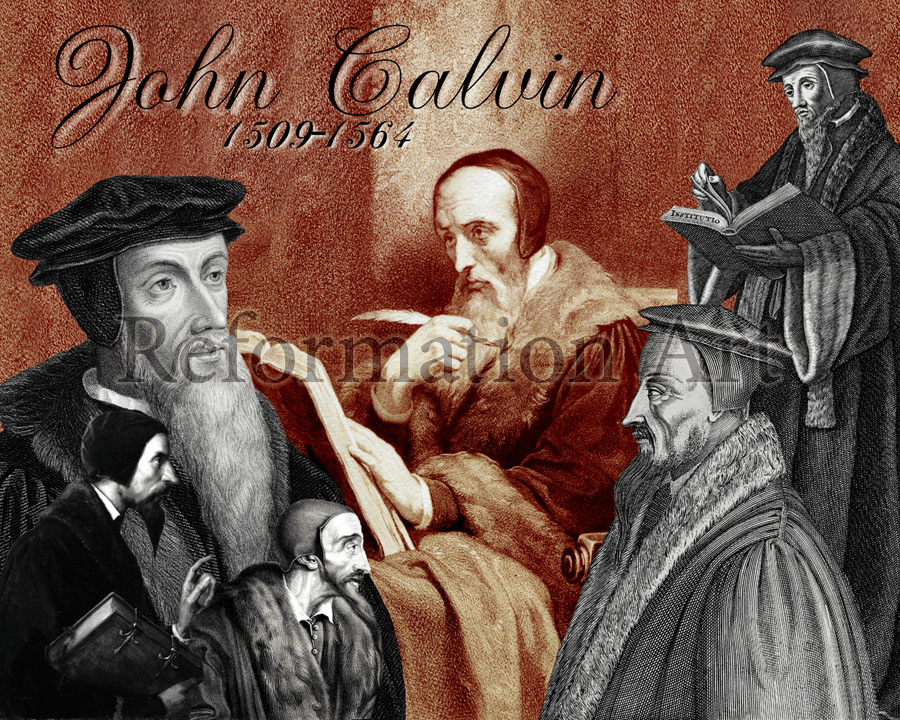
Throughout this study of 2 Timothy, I will extensively refer to John Calvin’s commentary on particular verses. I trust you will find them helpful, as I do, in understanding the biblical text.
Do thou therefore endure afflictions. Not without strong necessity has he added this second exhortation; for they who offer their obedience to Christ must be prepared for “enduring afflictions;” and thus, without patient endurance of evils, there will never be perseverance. Accordingly, he adds, “as becomes a good soldier of Jesus Christ.” By this term he means that all who serve Christ are warriors, and that their condition as warriors consists, not in inflicting evils, but rather in patience.
These are matters on which it is highly necessary for us to meditate. We see how many there are every day, that throw away their spears, who formerly made a great show of valor. Whence does this arise? Because they cannot become inured to the cross. First, they are so effeminate that they shrink from warfare. Next, they do not know any other way of fighting than to contend haughtily and fiercely with their adversaries; and they cannot bear to learn what it is to “possess their souls in patience” (Luke 21:19).
No man who warreth. He continues to make use of the metaphor which he had borrowed from warfare. Yet, strictly speaking, he formerly called Timothy “a soldier of Christ” metaphorically; but now he compares profane warfare with spiritual and Christian warfare in this sense. “The condition of military discipline is such, that as soon as a soldier has enrolled himself under a general, he leaves his house and all his affairs, and thinks of nothing but war; and in like manner, in order that we may be wholly devoted to Christ, we must be free from all the entanglements of this world.”
With the affairs of life. By “the affairs of life”, he means the care of governing his family, and ordinary occupations; as farmers leave their agriculture, and merchants their ships and merchandise, till they have completed the time that they agreed to serve in war. We must now apply the comparison to the present subject, that every one who wishes to fight under Christ must relinquish all the hindrances and employments of the world, and devote himself unreservedly to the warfare. In short, let us remember the old proverb, Hoc age , which means, that in the worship of God, we ought to give such earnestness of attention that nothing else should occupy our thoughts and feelings. The old translation has, “No man that fights for God,” etc. But this utterly destroys Paul’s meaning.
Here Paul speaks to the pastors of the Church in the person of Timothy. The statement is general, but is specially adapted to the ministers of the word. First, let them see what things are inconsistent within their office, that, freed from those things, they may follow Christ. Next, let them see, each for himself, what it is that draws them away from Christ; that this heavenly General may not have less authority over us than that which a mortal man claims for himself over heathen soldiers who have enrolled under him.
And if any one strive. He now speaks of perseverance, that no man may think that he has done enough when he has been engaged in one or two conflicts. He borrows a comparison from wrestlers, not one of whom obtains the prize till he has been victorious in the end. Thus he says: “In a race all run, but one obtaineth the prize;
run so that ye may obtain.” (1 Corinthians 9:24.)
If any man, therefore, wearied with the conflict, immediately withdraw from the arena to enjoy repose, he will be condemned for indolence instead of being crowned. Thus, because Christ wishes us to strive during our whole life, he who gives way in the middle of the course deprives himself of honor, even though he may have begun valiantly. To strive lawfully is to pursue the contest in such a manner and to such an extent as the law requires, that none may leave off before the time appointed.
The husbandman must labor before he receive the fruits. I am well aware that others render this passage differently; and I acknowledge that they translate, word for word, what Paul has written in Greek; but he who shall carefully examine the context will assent to my view. Besides, the use of (κοπιῶντα) to labor instead of (κοπιᾷν)to labor, is a well-known Greek idiom; for Greek writers often make use of the participle in place of the infinitive.
The meaning therefore, is, that husbandmen do not gather the fruit, till they have first toiled hard in the cultivation of the soil, by sowing and by other labors. And if husbandmen do not spare their toils, that one day they may obtain fruit, and if they patiently wait for the season of harvest; how much more unreasonable will it be for us to refuse the labors which Christ enjoins upon us, while he holds out so great a reward?
Understand what I say. He added this, not on account of the obscurity of the comparisons which he has set forth, but that Timothy himself might ponder, how much more excellent is the warfare under the direction of Christ, and how much more abundant the reward; for, when we have studied it incessantly, we scarcely arrive at a full knowledge of it.
The Lord give thee understanding in all things. The prayer, which now follows, is added by way of correction. Because our minds do not easily rise to that “incorruptible crown” (1 Corinthians 9:25) of the life to come, Paul betakes himself to God, to “give understanding” to Timothy. And hence we infer, that not less are we taught in vain, if the Lord do not open our understandings, than the commandments would be given in vain, if he did not impart strength to perform them. For who could have taught better than Paul? And yet, in order that he may teach with any advantage, he prays that God may train his disciple.
May the Lord’s truth and grace be found here.
Soli deo Gloria!

