I Timothy: Training Pastors in Church.  

22 Do not be hasty in the laying on of hands, nor take part in the sins of others; keep yourself pure.” (1 Timothy 5:22 (ESV)

How may young and older men God calls into ministry begin their training and maturing to become godly pastors and elders? In the following essay. Dr. R. Albert Mohler shares insights. Dr. Mohler is president and Centennial Professor of Christian Theology at The Southern Baptist Theological Seminary in Louisville, Ky. His article is entitled Training Pastors in Church. It originally appeared in the January, 2008 issue of Tabletalk Magazine.

The Bible consistently affirms education as a central responsibility of God’s people. In the Old Testament, the Jewish people were reminded that the education of their own children was an essential part of their responsibility as God’s covenant people. In Israel, a father was to teach his son diligently, and to point his son toward the only true wisdom — the wisdom established in the fear of God.

The New Testament also dignifies and elevates education to a matter of essential importance for the church. Great attention is given to the teaching office of the church — to those men who are called to the ministry of the Word. The apostle James reminds the church that those who teach the Word “will be judged with greater strictness” (James 3:1).

In the apostle Paul’s two letters to Timothy, his young protégé in ministry, we find Paul instructing Timothy about the priority of the teaching office and of the preacher’s responsibility to be found “rightly handling the word of truth” (2 Tim. 2:15). Timothy is to practice and to immerse himself in the tasks and responsibilities of the ministry “so that all may see your progress” (1 Tim. 4:15).

Driven by the Bible’s emphasis on teaching the faith and by the responsibility to ground new believers in the truth and practices of the Christian life, the early church borrowed heavily from the Jewish experience in the synagogue and went on to develop catechetical models that were distinctively Christian — the earliest Christian schools.

During this era, senior teachers, following the example of Paul teaching Timothy, taught pastors of the church. Younger men would attach themselves to older men who would nurture them in the knowledge of the Bible and the tasks of ministry. This early model of theological education was congregational — located in the church itself.

In later centuries, pastors were taught by means of priestly orders and monastic communities. The rise of more institutionalized forms of theological education came with the emergence of the university. The development of the medieval university, organized with theology as the highest science, gave shape to the theological curriculum that is still recognizable in seminaries today.

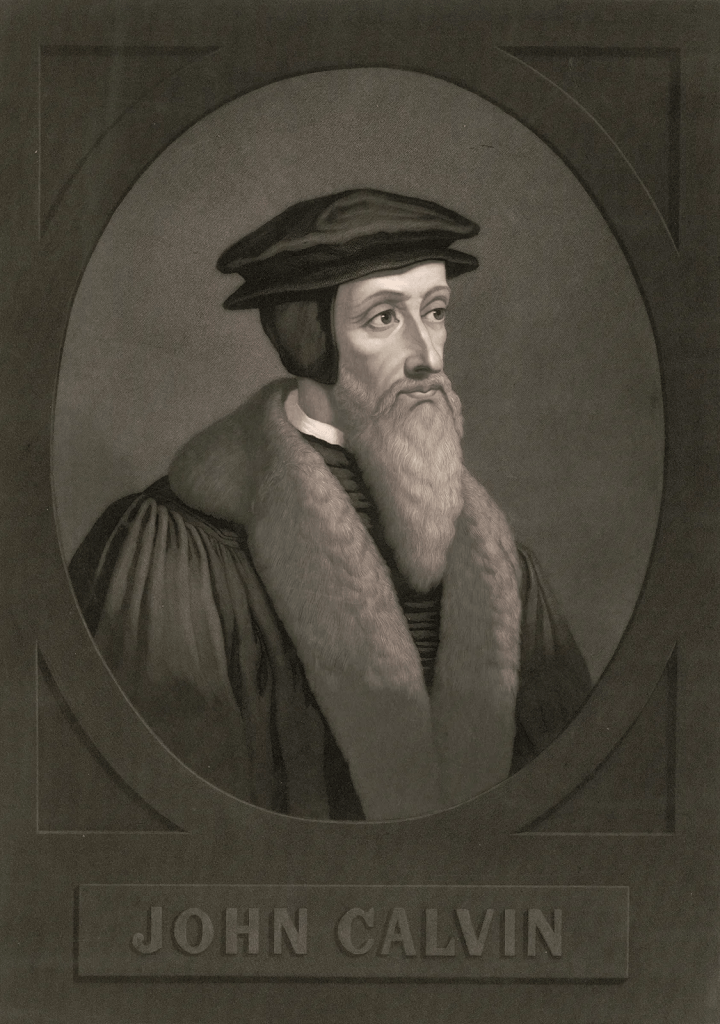
The Reformation was a movement largely led by university-trained men like Martin Luther and John Calvin. Both held university degrees and were very much at home in the university environment. The Lutheran reformation was based in Luther’s own university in Wittenberg. Calvin’s influence was vastly expanded through the academy for preachers he established in Geneva.

The development of the theological seminary represents an American adaptation of the older British and European models. Even as the early American universities were established explicitly for the training of Christian ministers, secularization and specialization in the universities led to the development of schools specifically designed for the training of pastors.

By the time America entered the twentieth century, the theological seminary was where most young ministers received their theological educations. Sadly, many of these same seminaries also allowed theological liberalism to gain a foothold, demonstrating that a seminary — just as a college or university — can quickly compromise or even repudiate the truths upon which it was established.

All this points to the fact that a theological seminary, if it is to remain faithful, must be directly accountable to its churches. Lacking this accountability, the institution will inevitably drift toward heterodox teachings. A robust confessionalism is necessary, but the constant oversight of churches is of equal importance.

The role of theological seminaries remains crucial for the education and training of Christian ministers. At its best, the seminary is an intentional gathering of Christian scholars who are dedicated to the preparation of ministers, committed to biblical truth, gifted in modeling and teaching the tasks of ministry, and passionate about the Gospel.

No other educational institution exists to serve the needs of the churches in this way. In that sense, a theological seminary is as crucial to the training of ministers as the medical school is essential to the preparation of physicians.

Nevertheless, count me as one seminary president who believes that the local church is even more important to the education of the pastor. The local church should see theological education as its own responsibility before it partners with a theological seminary for concentrated studies. The seminary can provide a depth and breadth of formal studies — all needed by the minister — but it cannot replace the local church as the context where ministry is learned most directly.

In this day, we need to encourage more pastors to follow the example of the apostle Paul in mentoring Timothy as a young minister, preacher, and pastor. As a seminary president, I want to partner with pastors like that in order to raise up a generation of faithful pastors who will, as Paul instructed Timothy, “fulfill your ministry.”

May the Lord’s truth and grace be found here.

Soli deo Gloria!

I Timothy: Godly Commands from a Godly Mentor.

22 Do not be hasty in the laying on of hands, nor take part in the sins of others; keep yourself pure.” (1 Timothy 5:22 (ESV)

The Apostle Paul continued giving directives to Timothy, the pastor of the church in Ephesus and his young protégé. Today’s featured text contains three more commands of godly counsel. What did Paul mean by these three gujidelines?

The first command was “Do not be hasty in the laying on of hands.” The phrase in the laying on of (ἐπιτίθει; epitithei) is a present, active, imperative verb. It means to put on, place on, or to give. What was placed on someone were hands (χεῖρας; cheiras). This placement of hands upon someone was not to be done is haste. Hasty (ταχέως; tacheos) means quickly or hurriedly. Out English word tachometer comes from this Greek term. See I Timothy 4:14.

“Jewish teachers would “lay their hands” on their disciples to “ordain” them, and that is what Paul has in view here: ordaining an elder who had not first been tested made one responsible for his subsequent exposure if he turned out to be ungodly.”[1]

Pastor J. Ligon Duncan writes, “He (Paul) goes on to say don’t ordain a man too quickly. It’s a directive against premature ordination of a person to the office of elder. Ministers and elders are to be appointed in a measured and deliberate fashion, not installed and appointed too quickly. This is the second time that Paul has said this in the letter. Remember back in I Timothy 3 he said don’t make a novice an elder. Don’t have someone convert to the Lord Jesus Christ, embrace Him by faith, and then three weeks later start him in the elder training program.”

“Paul doesn’t say exactly how long, but the idea is, of course, that you’re able to observe a man’s steady commitment to Christ, his shepherding of his family, his growth in grace, his understanding of biblical truth, his practice of the Christian life. You’re to see enough of a consistency in pattern there that you recognize that
you’ve got a mature believer before he’s appointed to be an elder–a shepherd, a
pastor of the flock.”

Second, Timothy was not to “nor take part in the sins of others.” To take part (κοινώνει; koinonei) is also a present, active imperative. It refers to fellowship. It means to share in something or with someone. What did Paul command Timothy to not share or to be in fellowship? It was in the sins (ἁμαρτίαις; hamartiais) or wrongdoing, evil and guilt of others (ἀλλοτρίαις; allotriais). In the context, the word others refer to other elders.

“The words do not share in the sins of others may be merely advice for Timothy to guard his own conduct generally (cf. 1 Tim. 4:16; Acts 20:28). But more likely, in light of the context, this is a warning about the implications of hasty ordinations. Those who take part in the premature ordination of an errant elder share some of the blame for the negative consequences to their church.”[2]

Thirdly, Paul commanded Timothy to “keep yourself pure.” The word pure (ἁγνὸν; hagnon) means innocent and without defect. To keep (τήρει; terei) is a present, active imperative verb. It means to guard and obey. A pastor cannot keep others from sin if they are not keeping themselves from evil and wrongdoing.

“The symbolical indication of the impartation of gifts which one will need in discharging the duties of his office has been mentioned before (see on 1 Tim. 4:14), and will be mentioned again (2 Tim. 1:6). This work must not be done “in a hurry.” The qualifications of the men who are being considered must be fully examined before they can be nominated for office. This is in harmony with what the apostle has been saying in 1 Tim. 3:2, 7, 10. Ordination without preceding thorough investigation would render Timothy co-responsible for the wrongs which such elders might subsequently commit. This, in turn, would add to the difficulty of disciplining them. Timothy must strive to “keep himself pure” (in full conformity with God’s moral law) with respect to this and all other matters.”[3]

Ordaining a man to serve as a pastor or lay elder is a serious and solemn act. It is not to be done quickly or thoughtlessly. “To participate in the ordination of an elder known to be unqualified is to approve of his sins and to risk sharing the guilt for them,” explains Dr. R. C. Sproul.

May the Lord’s truth and grace be found here. Have a blessed day in the Lord.

Soli deo Gloria!


[1] Craig S. Keener, The IVP Bible Background Commentary: New Testament (Downers Grove, IL: InterVarsity Press, 1993), 1 Ti 5:22.

[2] A. Duane Litfin, “1 Timothy,” in The Bible Knowledge Commentary: An Exposition of the Scriptures, ed. J. F. Walvoord and R. B. Zuck, vol. 2 (Wheaton, IL: Victor Books, 1985), 744.

[3] William Hendriksen and Simon J. Kistemaker, Exposition of the Pastoral Epistles, vol. 4, New Testament Commentary (Grand Rapids: Baker Book House, 1953–2001), 185.

I Timothy: The Surprising Role of Guardian Angels. Part 2.

21 In the presence of God and of Christ Jesus and of the elect angels I charge you to keep these rules without prejudging, doing nothing from partiality.” (1 Timothy 5:21 (ESV)

Our study of I Timothy is focusing primarily on the subject of angels for the next few days.  Since the Apostle Paul referred to elect angels in today’s featured text, it is wise for us to briefly examine what the Bible says about these created, heavenly beings.

Today’s concluding essay concerning angels is by John Piper. He is founder and teacher of Desiring God and chancellor of Bethlehem College and Seminary. For 33 years, he served as pastor of Bethlehem Baptist Church, Minneapolis, Minnesota. The essay is entitled The Surprising Role of Guardian Angels. He wrote this devotional in April, 2017.

Old-Covenant Ministry of Angels

“The care of the whole Church is committed to angels.” This is not a new idea. Angels are active throughout the Old Testament for the sake of God’s people. For example,

  • He [Jacob] dreamed, and behold, there was a ladder set up on the earth, and the top of it reached to heaven. And behold, the angels of God were ascending and descending on it! (Genesis 28:12)
  • The angel of the Lord appeared to the woman and said to her, “Behold, you are barren and have not borne children, but you shall conceive and bear a son.” (Judges 13:3)
  • The angel of the Lord encamps around those who fear him, and delivers them. (Psalm 34:7)
  • He will command his angels concerning you to guard you in all your ways. (Psalm 91:11)
  • Bless the Lord, O you his angels, you mighty ones who do his word, obeying the voice of his word! Bless the Lord, all his hosts, his ministers, who do his will! (Psalm 103:20–21)
  • “My God sent his angel and shut the lions’ mouths, and they have not harmed me, because I was found blameless before him; and also before you, O king, I have done no harm.” (Daniel 6:22)

All Angels, All Christians, All the Time

And more important than these Old Testament references to angels, Hebrews 1:14 makes it clear that God sends angels to minister for the sake of the people of Christ. In the context of Hebrews 1, the writer is arguing that the Son of God is infinitely greater than angels. One of his arguments is that God never said to any angel, “Sit at my right hand” as he did to Jesus Christ (Hebrews 1:13). Instead, angels are simply God’s servants who do his bidding for the sake of those who are on their way to heaven.

To which of the angels has he ever said, “Sit at my right hand until I make your enemies a footstool for your feet”? Are they not all ministering spirits sent out to serve for the sake of those who are to inherit salvation? (Hebrews 1:13–14)

The promise here is better than the tradition that every saint has one personal guardian angel. What Hebrews 1:14 says is that all the angels — all of them — are specifically sent “for ministry” (Greek eis diakonian) — not ministry “to” Christians, but ministry “for the sake of” Christians (Greek dia tous mellontas kleronomein soterian).

This means that everything angels do, everywhere in the world, at all times, is for the good of Christians. An angel who does something by God’s assignment anywhere in the world is fulfilling the promise that God will work all things for the good of all Christians — everywhere. This is a sweeping and stunning promise. All angels serve for the good of all Christians all the time. They are agents of Romans 8:28.

The Wonder That Eminent Angels Serve Others

But as amazing as that is, it’s not the point of Matthew 18:10. The jolting point of Matthew 18:10 is not the wonder that angels serve us, but the wonder that angels serve others. Remember, the context is about how we treat other believers: “these little ones.” “See that you do not despise one of these little ones” (Matthew 18:10).

The argument Jesus gives for why we should not treat other believers in belittling ways is because “in heaven their angels always see the face of my Father who is in heaven.” The point of saying that these angels “see the face of my Father” is that they have the immeasurable rank and privilege to be in the immediate presence of God. You can see that meaning in Esther 1:14 and Revelation 22:4.

Having Angels Does Not Increase Our Safety or Dignity

So, how are we to be motivated to honor the lowliest Christian (Matthew 11:11) because the angels who attend them have immeasurably high rank and privilege?

I would suggest this: Ponder first that every Christian has the Creator of the universe as his Father (Romans 8:16–17), and has the Lord of the universe as his elder brother (Romans 8:29). You cannot have a safer, more exalted position as a human being than to have God as your all-caring, all-providing Father (Matthew 6:32–33Luke 12:30–32), and Jesus as your all-authoritative Lord (Matthew 28:18).

Having a hundred or a thousand of the highest ranking angels serving you does not increase your safety or your dignity. How, then, does the argument work? How are we motivated to treat all ordinary Christians with deep respect “because” they are served by many high-ranking angels?

The Entourage of Titans Reminds You Whom You Are Dealing With

Suppose you were going to receive the son of the greatest king this afternoon. You know that he is the son of a king. He might arrive at your estate walking with two guards. In that case, he would be worthy of the greatest respect — simply because he is a king’s son. But in fact, he is going to arrive with one hundred terrifying titans of greatest strength and beauty surrounding him on every side. These beings are the elite guard and agents of the king.

When you see this entourage, the point is not that this entourage gives the king’s son a greater glory than he already had simply by being the king’s son. Rather this is a reminder of what it is like to be the king’s son.

I think this is what Jesus wants us to think when the least impressive disciple of Jesus walks into a room. “The angels of this disciple always see the face of my Father who is in heaven.” There is no counting these angels, since more or less every angel in the world serves “for the sake of” this disciple (Hebrews 1:14). And these angels always see God’s face — they have a rank and dignity corresponding to direct access to God.

Hold Every Christian in Highest Esteem

Therefore (!), don’t despise this simple, unimpressive disciple of Jesus! Let his angelic entourage remind you whose son he is. Let this angelic entourage remind you who his older brother is. Put your hand over your critical mouth, and show great esteem (Philippians 2:3) to all ordinary, childlike disciples. If having God as their Father, and Jesus as their Lord does not cause you to exchange your derision for deference, then let the terrifying advocacy and rank of their magnificent angels wake you from your stupor.

Or as Jesus says, “See that you do not despise one of these little ones. For I tell you that in heaven their angels always see the face of my Father who is in heaven.”

May the Lord’s truth and grace be found here.

Soli deo Gloria!

A Word Fitly Spoken. The Philosophical Arguments for God’s Existence. Part Four.

Not only is there evidence for God’s existence from biblical revelation but there are also the philosophical arguments supporting the concept of God’s existence. Admittedly, these arguments may not convince those antagonistic to the Christian faith of its validity. However, they do provide a thought provoking response to those who contend that Christianity does not contain any assemblage of reasoning or logical thought. 

1 Peter 3:14–15 (ESV) says, 14 But even if you should suffer for righteousness’ sake, you will be blessed. Have no fear of them, nor be troubled, 15 but in your hearts honor Christ the Lord as holy, always being prepared to make a defense to anyone who asks you for a reason for the hope that is in you; yet do it with gentleness and respect.”  

What then are the philosophical arguments for God’s existence? They include the ontological argument, the cosmological argument, the teleological argument, the moral argument, the anthropological argument, the religious experience argument and the argument from the existence of miracles: most notably Jesus Christ’s resurrection from the dead.

The Anthropological Argument indicates that man is a unique creation by God. The Scriptures claim that man was created in the image of God.

Genesis 1:26–27 (ESV) says, 26 Then God said, “Let us make man in our image, after our likeness. And let them have dominion over the fish of the sea and over the birds of the heavens and over the livestock and over all the earth and over every creeping thing that creeps on the earth.” 2So God created man in his own image, in the image of God he created him; male and female he created them.”  

Genesis 2:7 (ESV) says, “Then the Lord God formed the man of dust from the ground and breathed into his nostrils the breath of life, and the man became a living creature.”

The doctrine of God’s image in man is interpreted in the Scriptures as the spiritual image, not the physical image. Most interpret this as referring to man’s ability to think, feel, and make conscious and rational decisions. David speaks eloquently of his own creation in Psalm 139:13-16:

“For you formed my inward parts; you knitted me together in my mother’s womb. I praise you, for I am fearfully and wonderfully made. Wonderful are your works; my soul knows it very well. My frame was not hidden from you, when I was being made in secret, intricately woven in the depths of the earth. Your eyes saw my unformed substance; in your book were written, every one of them, the days that were formed for me, when as yet there was none of them” (Psalm 139:13-16, ESV).

To a great extent, man’s behavior is learned while animals are bound by instinct. Characteristic of man alone is that he is a creature of reasoning intelligence who has the capacity of adapting means to an end, along with having a moral and spiritual consciousness.

The implications of this argument for God’s existence is that mankind as a whole, and individuals in particular, possess intrinsic value. However, it should be noted that man’s value is not self-existent. It comes from outside of him. Man’s intrinsic value comes from the self-existent God.

One author explains, From a Biblical perspective, human beings do not have inherent or intrinsic dignity. In other words, our dignity (which is real) is not eternal or self-existent. Rather, we have dignity that is extrinsic—it comes to us from without. We have dignity because God assigns dignity to us. He has taken the initiative to stamp His image upon us.”

Humans bear the image of the God of glory. This is an unspeakable blessing. It also is a weighty responsibility. We were made to glorify God—to reflect the character of God. That duty comes in the divine mandate: “You shall by holy, for I the Lord your God am holy” (Lev. 19:2; I Peter 1:16).

What are the implications when the God of the Scriptures existence is denied, especially in the realm of man’s significance or value? This significant question is examined in our next post.

Have a blessed day in the Lord. May each of us reflect God’s image, for His glory.

Soli deo Gloria!

I Timothy: The Surprising Role of Guardian Angels.

21 In the presence of God and of Christ Jesus and of the elect angels I charge you to keep these rules without prejudging, doing nothing from partiality.” (1 Timothy 5:21 (ESV)

Our study of I Timothy is focusing primarily on the subject of angels for the next few days.  Since the Apostle Paul referred to elect angels in today’s featured text, it is wise for us to briefly examine what the Bible says about these created, heavenly beings.

Today’s concluding essay concerning angels is by John Piper. He is founder and teacher of Desiring God and chancellor of Bethlehem College and Seminary. For 33 years, he served as pastor of Bethlehem Baptist Church, Minneapolis, Minnesota. The essay is entitled The Surprising Role of Guardian Angels. He wrote this devotional in April, 2017.

What did Jesus mean in Matthew 18:10 when he said, “See that you do not despise one of these little ones. For I tell you that in heaven their angels always see the face of my Father who is in heaven”? He meant: Let the magnificence of every unimpressive Christian’s entourage of angels silence our scorn and awaken awe at the simplest children of God.

To see this, let’s clarify, first, who “these little ones” are.

Who Are “These Little Ones”?

“See that you do not despise one of these little ones.” They are true believers in Jesus, viewed from the standpoint of their childlike trust in God. They are the heaven-bound children of God. We know this because of the immediate and wider context of the Gospel of Matthew.

This section in Matthew 18 began with the disciples asking, “Who is the greatest in the kingdom of heaven?” (Matthew 18:1). Jesus answers, “Truly, I say to you, unless you turn and become like children, you will never enter the kingdom of heaven. Whoever humbles himself like this child is the greatest in the kingdom of heaven” (Matthew 18:3–4). In other words, the text is not about children. It is about those who become like children, and thus enter the kingdom of heaven. It’s about true disciples of Jesus.

This is confirmed in Matthew 18:6 where Jesus says, “Whoever causes one of these little ones who believe in me to sin, it would be better for him to have a great millstone fastened around his neck and to be drowned in the depth of the sea.” The “little ones” are those “who believe” in Jesus.

In the wider context, we see the same language with the same meaning. For example, in Matthew 10:42, Jesus says, “Whoever gives one of these little ones even a cup of cold water because he is a disciple, truly, I say to you, he will by no means lose his reward.” The “little ones” are “disciples.”

Similarly, in the famous, and often misquoted, picture of the final judgment in Matthew 25, Jesus says, “The King will answer them, ‘Truly, I say to you, as you did it to one of the least of these my brothers, you did it to me’” (Matthew 25:40; compare with Matthew 11:11). The “least of these” are the “brothers” of Jesus. The “brothers” of Jesus are those who do the will of God (Matthew 12:50), and those who do the will of God are those who “enter the kingdom of heaven” (Matthew 7:21).

Therefore, in Matthew 18:10, when Jesus refers to “these little ones” whose angels see the face of God, he is talking about his disciples — those who will enter the kingdom of heaven — not people in general. Whether humans in general have good or evil angels assigned to them (by God or the devil) is not addressed in the Bible as far as I can see. We would do well not to speculate about it. Such speculations appeal to untethered curiosities and can create distractions from vastly more sure and more important realities.

One Angel for Each Christian?

So, our question now is this: What does Jesus mean when he says that we should not despise his childlike followers? And how is it an argument for this, when he refers to “their angels” seeing God? “See that you do not despise one of these little ones. For (= because) I tell you that in heaven their angels always see the face of my Father who is in heaven.”

It is possible that “their angels” refers to a specific angel assigned to each disciple. There is one other text that some think points in this direction. When the praying believers in Acts 12 could not believe that Peter was knocking at the gate, since he was supposed to be in prison, they said, “It is his angel!” (Acts 12:15). That may or may not imply that all believers have an angel assigned to them. It may only imply that in that situation God had commissioned an angel to use Peter’s voice (Acts 12:14), and perhaps awaken even more urgent prayer for him.

It is even more difficult here in Matthew 18:10 to infer that each believer has an angel assigned to him. What it says is, “In heaven their angels always see the face of my Father who is in heaven.” The word “their” certainly implies that these angels have a special personal role to play in relation to Jesus’s disciples. But the plural “angels” may simply mean that all believers have numerous angels assigned to serve them, not just one.

Calvin’s Careful Observation

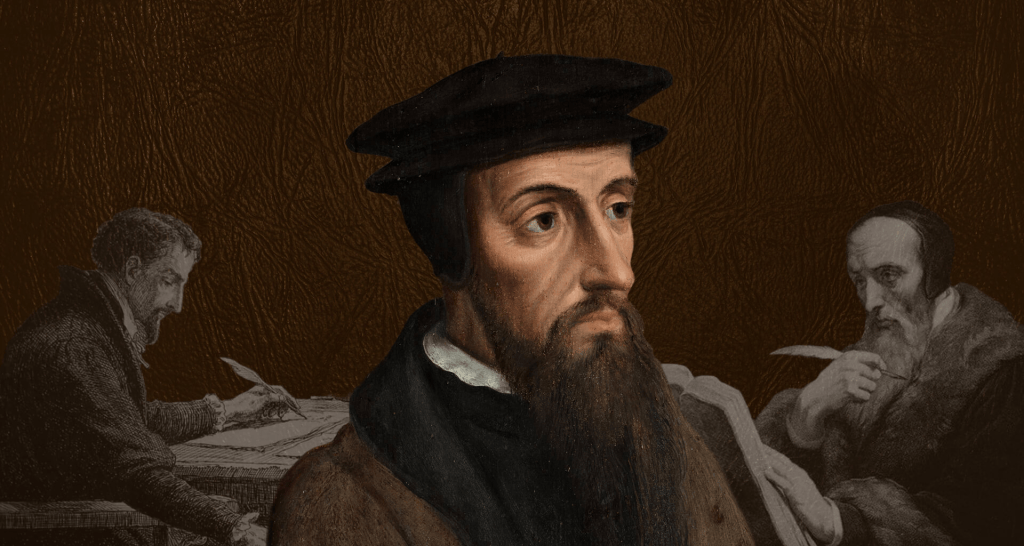
I think John Calvin’s careful observation about this text is exactly right:

The interpretation given to this passage by some commentators, as if God assigned to each believer his own angel, does not rest on solid grounds. For the words of Christ do not mean that a single angel is continually occupied with this or the other person; and such an idea is inconsistent with the whole doctrine of Scripture, which declares that the angels encamp around (Psalm 34:7) the godly, and that not one angel only, but many, have been commissioned to guard every one of the faithful. Away, then, with the fanciful notion of a good and evil angel, and let us rest satisfied with holding that the care of the whole Church is committed to angels, to assist each member as his necessities shall require. (Commentary on a Harmony of the Evangelists Matthew, Mark, and Luke, on Matthew 18:10)

More to come. Have a blessed day in the Lord.

Soli deo Gloria!
I Timothy: What do we Know about Angels? Part 2.

21 In the presence of God and of Christ Jesus and of the elect angels I charge you to keep these rules without prejudging, doing nothing from partiality.” (1 Timothy 5:21 (ESV)

Scripture reveals to us a real but invisible world inhabited by angels and demons. All we can say about this mysterious realm is what is revealed to us in Scripture, which is why speculation beyond the biblical data can be positively dangerous.

Our study of I Timothy is focusing primarily on the subject of angels for the next few days.  Since the Apostle Paul referred to elect angels in today’s featured text, it is wise for us to briefly examine what the Bible says about these created, heavenly beings.

Today’s essay is by Dr. Kim Riddlebarger. He is visiting professor of systematic theology at Westminster Seminary California and pastor emeritus of Christ Reformed Church in Anaheim, Calif. His article is entitled What Do We Know about Angels? It appeared in the April 2022 issue of Tabletalk Magazine.

Angels also have names and ranks. Two angels are mentioned by name in Scripture. Michael, who appears in Daniel 10Jude 9, and Revelation 12, is described as an “archangel” and a warrior. A second angel named Gabriel serves as a messenger/mediator of revelation. Gabriel appears in Daniel 8 and 9 and Luke 1.

Scripture speaks of an order of angels known as the cherubim, who are creatures with four wings and four faces (Ezek. 10) and who are depicted in Genesis 3:24 as guardians of holy places (such as Eden). The seraphim are mysterious creatures who appear only in Isaiah 6:2, 6. They are said to have six wings: two cover their eyes in the Lord’s presence, two cover their feet, and two are used to fly.

Angels are not the only inhabitants of the invisible world, since the Bible speaks of other invisible spiritual beings that possess an evil, malevolent orientation toward us. Scripture identifies them as “demons.” These beings are closely associated with magic and the occult. They seek the destruction of humanity, yet they are aware of their ultimate doom, for they ask Jesus: “What have you to do with us, Jesus of Nazareth? Have you come to destroy us? I know who you are—the Holy One of God” (Luke 4:34). They are commonly identified as “fallen angels,” who, under certain conditions, can possess (control) unbelievers. We do know that Jesus engaged regularly with these “evil spirits,” as in Matthew 8:16: “They brought to him many who were oppressed by demons, and [Jesus] cast out the spirits with a word and healed all who were sick.” 

Matthew 9:32 gives us another example: “As they were going away, behold, a demon-oppressed man who was mute was brought to him.” Because deep mystery surrounds them, and since they are malevolent toward humans, they too are the source of much speculation and have given countless authors, musicians, and Hollywood filmmakers much material with which to thrill and terrify.

Like all other created things, angels are included in the declaration made in Genesis 1:31 that all that God had created was created “good.” Since these spiritual beings were created “good,” certain angels must have followed Satan, as recounted in 2 Peter 2:4: “God did not spare angels when they sinned, but cast them into hell and committed them to chains of gloomy darkness to be kept until the judgment”; and in Jude 6, where we read of “the angels who did not stay within their own position of authority, but left their proper dwelling, [whom] he has kept in eternal chains under gloomy darkness until the judgment of the great day.” “Good” angels became “fallen” angels, which we speak of as demons.

The more difficult matter is, how do demons relate to Satan (the adversary)? Thought to be an angelic being of the highest standing, now fallen and expelled from heaven, Satan is the archenemy of Jesus and His saints. Satan (or the devil) appears to be the head of the ranks of fallen angels.

There are some indications in Scripture that he, like Michael and Gabriel, was a majestic prince of the spiritual world (Job 1:6–12). It is he who tempts Eve (Gen. 3:1) and accuses God’s people (Zech. 3:1–2). His very name means “adversary,” and we see him at work in opposing God’s purposes by appearing in Eden, ultimately leading to Adam’s act of rebellion and to the fall of the human race (Gen. 3).

After Adam’s fall, Satan is said to be the accuser of God’s people (Rev. 12:10). He is called “the god of this world” (2 Cor. 4:4) and “the prince of the power of the air” (Eph. 2:2). Although currently bound and confined to the abyss (Rev. 20:1–3), Satan behaves like a roaring lion looking to devour (1 Peter 5:8). He is angered by the limits on his deceptive activity and the knowledge that his eventual destruction is certain. He fears what is foretold in Revelation 20:10: “And the devil who had deceived them was thrown into the lake of fire and sulfur where the beast and the false prophet were, and they will be tormented day and night forever and ever.” As Martin Luther aptly put it in “A Mighty Fortress Is Our God,” “One little word shall fell him.”

Although regular access to the spiritual realm is barred to us until Jesus returns, Scripture reveals to us a real but invisible world inhabited by angels and demons. All we can say about this mysterious realm is what is revealed to us in Scripture, which is why speculation beyond the biblical data not only is foolish but can be dangerous.

May the Lord’s truth and grace be found here. Have a God-honoring day.

Soli deo Gloria!

I Timothy: What do we Know about Angels?   

21 In the presence of God and of Christ Jesus and of the elect angels I charge you to keep these rules without prejudging, doing nothing from partiality.” (1 Timothy 5:21 (ESV)

Our study of I Timothy is focusing primarily on the subject of angels for the next few days.  Since the Apostle Paul referred to elect angels in today’s featured text, it is wise for us to briefly examine what the Bible says about these created, heavenly beings.

Today’s essay is by Dr. Kim Riddlebarger. He is visiting professor of systematic theology at Westminster Seminary California and pastor emeritus of Christ Reformed Church in Anaheim, Calif. His article is entitled What Do We Know about Angels? It appeared in the April 2022 issue of Tabletalk Magazine.

God created humanity to inhabit a material world of things we can see and things we can touch. We pass through time, which we can remember and record (history). Created in God’s image, we are designed to inhabit the created order in which God has placed us. In our original creation, we were upright and innocent, but after our first father Adam’s sin in Eden, ours is a fallen race. Still, we are capable of great things and great ideas, and we experience powerful emotions. The psalmist tells us that we are fearfully and wonderfully made, knit together in the womb by our Creator (Ps. 139). As divine image bearers, we are like God in every way that a creature can be like God. Yet because we are creatures, we are not and cannot become divine in any sense.

Despite the wonders of human nature, we do not possess the capacity to experience on a daily basis the very real but invisible spiritual world also created by God and inhabited by creatures that we commonly call “angels.” Although this invisible reality is as real as the material world we inhabit, our access to the spiritual world is severely limited because of our creaturely and physical existence. We are not designed to fully comprehend what transpires in the spiritual world, even though we know that such a world exists and that what takes place in it is consequential in ours.

From the earliest days of the Christian church, discussion about angels has produced much controversy. Much of this discussion took place in dialogue with Jewish, gnostic, and pagan thought about the nature of the invisible world, leading to all sorts of unbiblical notions. Our limited knowledge regarding spiritual beings has led to speculative questions such as these: “What form do angels possess?” “What is a ‘spiritual body’ like?” “What role do angels play in our lives, if any?”

There are hints in Scripture that angels are involved in human affairs, even if we cannot witness them directly. Because we cannot see the angels who inhabit this invisible reality, they often become a source of speculation and superstition. But this is also why we need to pump the speculative brakes, for all we can truly know about angels is revealed to us by their Creator and ours in His Word.

Since we do not have full access to the invisible world, we are dependent on Scripture for reliable information about this realm and its immaterial creatures. Thankfully, the Bible gives important information about both—although not in the detail we may wish for.

All we can truly know about angels is revealed to us by their Creator and ours in His Word.

We start with the angels who are best understood as messengers sent by God (Hebrew malach, Greek angelos). In Hebrews 1:14, angels are described as “ministering spirits sent out to serve for the sake of those who are to inherit salvation.”

The psalmist tells us, “Yet you have made [humans] a little lower than the heavenly beings [angels] and crowned [them] with glory and honor” (Ps. 8:5). Angels are of a different created order from humanity, so our deceased loved ones do not “get their wings” in the afterlife—a common but erroneous opinion. We read that angels rejoice when a sinner repents (Luke 15:10), and at times, angels, in their role as messengers, are depicted in Scripture as mediators of divine revelation (e.g., Dan. 9Luke 1–2Gal. 3:19).

Psalm 148:2–5 tells us that angels as created beings are included in the ranks of the heavenly court:

Praise him, all his angels;

praise him, all his hosts!

Praise him, sun and moon,

praise him, all you shining stars!

Praise him, you highest heavens,

and you waters above the heavens!

Let them praise the name of the Lord!

For he commanded and they were created.

Scripture ascribes to angels a certain preeminence, since they rejoice in God’s creation of the material world as recounted in Job 38:7: “The morning stars sang together and all the sons of God shouted for joy.” Angels do not have physical bodies as we do, but Scripture reveals that they can appear visibly in various ways to human beings (Luke 2:9) or to animals (Num. 22:21–39).

Scripture informs us that God does not provide redemption for the angels: “For surely it is not angels that he helps, but he helps the offspring of Abraham” (Heb. 2:16). Those described as “good angels” are likely the “elect angels” in 1 Timothy 5:21. Furthermore, angels are said to be immortal in Luke 20:36: “For they cannot die anymore, because [the redeemed] are equal to angels and are sons of God, being sons of the resurrection.”

Some angels participate in the glory and praise of God around His heavenly throne (Ps. 103:20–21Isa. 6:2, 6Rev. 4), while others have special care of the “little ones” (Matt. 18:10). This has led to much speculation about the existence of “guardian angels” who protect Christian children, yet Matthew does not go beyond this brief declaration.

More to come. May the Lord’s truth and grace be found here.

Soli deo Gloria!

I Timothy: Elect Angels.

“In the presence of God and of Christ Jesus and of the elect angels I charge you to keep these rules without prejudging, doing nothing from partiality.” (1 Timothy 5:21 (ESV)

Who are the elect angels of whom the Apostle Paul involved in his command to Timothy to keep the apostle’s instructions concerning elders without prejudging or partiality? It is wise for us to not overlook these important heavenly ministers.

The word angels (ἀγγέλων; angelon) means messenger. Angels are supernatural crated beings. The word elect (ἐκλεκτῶν; eklekton) refers to

“In many languages a term for ‘angels’ is borrowed from another dominant language, but in other instances a somewhat descriptive phrase may be employed. The most common expressions for the ‘angels of God’ are ‘messengers’ and ‘messengers from heaven.’ Sometimes these angels are called ‘spirit messengers’ and even ‘flying messengers.’ In some instances, they have been called ‘the holy servants of God,’ but an expression such as ‘servants of God’ or even ‘messengers of God’ tends to overlap in meaning with expressions used to characterize the role and function of the prophets who were sent as messengers from God. In some languages a term for ‘angels’ is contrasted with that for ‘prophets’ by calling angels ‘messengers from heaven’ and prophets ‘messengers from God.’ The ‘angels of the Devil’ are often called ‘the Devil’s servants.’[1]

Angels are:

  • Attendants of Christ (2 Thess. 1:7), their exalted Head (Eph. 1:21, 22; Col. 2:10)
  • Bringers of good tidings concerning our salvation, having seen the Lord not only in his birth but also in his resurrection and post-resurrection glory (see on 1 Tim. 3:16; cf. Luke 2:14; 24:4; Acts 1:11)
  • Choir of heaven (1 Cor. 13:1; cf. Luke 15:10; Rev. 5:11, 12)
  • Defenders of God’s children (2 Thess. 1:7–10; cf. Ps. 91:11; Dan. 6:22; 10:10, 13, 20; Matt. 18:10; Acts 5:19; Rev. 12:7), though the latter outrank them and will judge them (1 Cor. 6:3; cf. Heb. 1:14)
  • Examples in obedience (1 Cor. 11:10; cf. Matt. 6:10)
  • Friends of the redeemed, constantly watching them, deeply interested in their salvation, and rendering service to them in every way, also in executing the judgment of God upon the enemy (Gal. 3:19; 1 Cor. 4:9; 2 Thess. 1:7; cf. Matt. 13:41; 25:31, 32; Luke 16:22; 1 Peter 1:12; Heb. 1:14; Rev. 20:1–3).[2]

Dr. William Hendriksen explains, “Accordingly, since Timothy’s actions are scrutinized by God, by Christ Jesus (both divine, note the one article in the original) and by the angels (creatures, note repetition of the article), and this with a view to the final judgment, let him observe (stand guard over) the given instructions “without prejudice,” that is, uninfluenced by any sinful subjective considerations, guided only by the objective standard of the truth as revealed by God, and “doing nothing from partiality (or favoritism),” leaning neither toward this nor toward that side, neither toward the accuser nor toward the accused, until all the important facts in each concrete case have been fully established.”[3]

May the Lord’s truth and grace be found here. Have a blessed day in the Lord.

Soli deo Gloria!

[1] Johannes P. Louw and Eugene Albert Nida, Greek-English Lexicon of the New Testament: Based on Semantic Domains (New York: United Bible Societies, 1996), 143.

[2] William Hendriksen and Simon J. Kistemaker, Exposition of the Pastoral Epistles, vol. 4, New Testament Commentary (Grand Rapids: Baker Book House, 1953–2001), 184–185.

[3] Ibid., 185.

I Timothy: No Prejudging or Partiality.

“In the presence of God and of Christ Jesus and of the elect angels I charge you to keep these rules without prejudging, doing nothing from partiality.” (1 Timothy 5:21 (ESV)

Today’s text must be understood and applied in light of the immediately preceding context (I Tim. 5:17-20). The Apostle Paul counseled his young protégé Timothy about the proper conduct of the church towards its elders, and the proper conduct of the elders towards the Lord and His church. In light of what he previously stated, Paul instructed Timothy to “keep these rules without prejudging, doing nothing from partiality.”  

Dr. William Hendriksen writes, “Now in the matters discussed in verses 19 and 20, and, in fact, in any matter touching the discipline of church-leaders, one is easily influenced by purely subjective considerations. But this can spell ruin for the church and for all those concerned. Timothy, as apostolic delegate in the churches of Ephesus and vicinity, must not allow this to happen to him. Even today biased judges, ecclesiastical “machines,” so-called “investigating-committees” manned by job-hunters, “buddy-ism,” and the like can easily destroy a denomination. Corruption generally begins “at the summit.” Church History furnishes many examples. The man in the pew does not know what happened “while he slept.” When he wakes up—if he ever does!—it is generally too late.”[1]

“Hence, absolute impartiality and unimpeachable honesty in all such matters are essential. It is for that reason that the charge which the apostle now lays on Timothy is so very grave. Everything is at stake! The church of the twenty-first century may well take to heart these solemn words: I charge (you) in the sight of God and of Christ Jesus and of the elect angels that you observe these instructions without prejudice, doing nothing from partiality.”[2]

To keep (φυλάξῃς; phylaxis) means to decisively, actively and potentially guard, watch and obey. What Timothy was to guard, watch and obey were the rules Paul had set forth. Timothy was to do so without prejudging (προκρίματος; prokrimatos) or partiality (πρόσκλισιν; prosklisin). Respectively, these two nouns refer to making decision unfairly and prejudicially.

“Why Paul punctuated his instructions with this strong charge can only be guessed. Had Timothy passively avoided unpleasant confrontations, or had he taken a strong stand in some cases but not others? For whatever reasons, Paul strongly adjured the young minister to follow through on (keep is lit., “guard”) these instructions without partiality (lit., “prejudging,” used only here in the NT) or favoritism (prosklisin, lit., “inclination toward someone,” used only here in the NT).” [3]

This was not merely a suggestion from Paul. Rather, this was a solemn charge (διαμαρτύρομαι; diamartyromai). Paul was personally insisting and strongly warning Timothy to obey these edicts. The apostle was not invoking his own presence and authority, but rather the presence and authority of God the Father, the Lord Jesus Christ, the elect angels, by the person and work of the Holy Spirit (2 Tim. 3:16-17; 2Peter 1:20-21).

“Paul emphasizes that it is under the very eye and with the full approval of God that these directives (verses 19 and 20) have been issued. This is the very God who through Christ Jesus will one day judge all men. And these are the angels who will be associated with Christ in the final judgment. Hence, the apostle is, as it were, putting Timothy under oath to comply with the mandate which he has received (in the spirit of Gen. 24:3, 9). One who breaks the oath will be judged. That, in giving this charge, Paul is actually thinking of the final judgment is clear from a comparison with the similar language of 2 Tim. 4:1.[4]

Note the particulars that are mentioned here in 1 Tim. 5:21:

The Judge is God (Gen. 18:25; Heb. 12:23). The addressed must be deeply conscious of the fact that Paul in issuing and Timothy in dealing with this charge are acting in the sight of God, the Judge!”[5]

“Yet, God judges not directly but through Christ Jesus. It is upon the Mediator that the honor of judging was conferred as a reward for the atonement which he rendered (Matt. 25:31–46; John 5:22, 23, 27; Acts 19:41; 17:31; 2 Cor. 5:10; Phil. 2:10, 11; 2 Tim. 4:1; Rev. 14:14–16).”[6]

“Associated with Christ in this work of judging will be the angels, as is taught everywhere in Holy Writ (Dan. 7:10; Matt. 13:27, 41, 42; 16:27; 24:31–33; 25:31; 2 Thess. 1:7; Heb. 12:22; Rev. 14:15, 17–20). They will gather the redeemed and will drive the wicked before the judgment-seat.”[7]

Today’s text reminds all who serve the Lord they are doing so in the presence of the heavenly throne and the angelic host. We must never forget this truth. May the Lord’s truth and grace be found here.

Soli deo Gloria!


[1] William Hendriksen and Simon J. Kistemaker, Exposition of the Pastoral Epistles, vol. 4, New Testament Commentary (Grand Rapids: Baker Book House, 1953–2001), 183.

[2] William Hendriksen and Simon J. Kistemaker, Exposition of the Pastoral Epistles, vol. 4, New Testament Commentary (Grand Rapids: Baker Book House, 1953–2001), 183.

[3] A. Duane Litfin, “1 Timothy,” in The Bible Knowledge Commentary: An Exposition of the Scriptures, ed. J. F. Walvoord and R. B. Zuck, vol. 2 (Wheaton, IL: Victor Books, 1985), 744.

[4] William Hendriksen and Simon J. Kistemaker, Exposition of the Pastoral Epistles, vol. 4, New Testament Commentary (Grand Rapids: Baker Book House, 1953–2001), 183.

[5] Ibid.,183–184.

[6] Ibid., 184.

[7] Ibid., 184.

I Timothy: Rebuke Those Who Fall so the Rest May Stand.

19 Do not admit a charge against an elder except on the evidence of two or three witnesses. 20 As for those who persist in sin, rebuke them in the presence of all, so that the rest may stand in fear.” (1 Timothy 5:19–20 (ESV)

Recently, I was involved in the installation of an elder at my local church. As an elder myself, it was an important moment when the current elder board laid hands on and publicly prayed for our brother in Christ during a Sunday morning worship service.

I briefly explained to the congregation the primary responsibilities of the church’s elder board were to spiritually lead, teach and preach, and protect the congregation. The elders’ source for properly serving, leading, teaching, preaching and protecting the congregation is the Word of God. The elders’ biblical qualifications are all about their godly character (I Tim. 3:1-7).

The Apostle Paul provided his young protégé Timothy, who pastored the church in Ephesus, a series of directives in leading, teaching, preaching and protecting the church, and its elders, from unwarranted criticism. In I Timothy 5:19, Paul commanded Timothy to “not admit a charge against an elder except on the evidence of two or three witnesses.” This was to guard a fellow elder from unsubstantiated accusations.

In I Tim. 5:20, Paul also directed Timothy about what to do whenever accusations against an elder proved to be true regarding their persistent, unrepentant and ungodly behavior. The resulting actions by the elder board taken toward this wayward leader was to protect the church.

Paul prefaced his directives by writing, “As for those who persist in sin.” Within the immediate context, those to whom the apostle referred who were persisting in sin were elders. To persist in sin (ἁμαρτάνοντας; hamartanontas) is to presently, actively and continuously engage in wrongdoing. It is an ongoing disobedience.

When this occurs, the other elders are to rebuke their brother elder. To rebuke (ἔλεγχε; elenche) means to presently, actively and obediently “state that someone has done wrong, with the implication that there is adequate proof of such wrongdoing.”[1] This should be done within the of process of biblical church discipline (Matthew 18:15-20), and with the appropriate biblical attitude (Gal. 6:1-2).

Paul further stated this discipline was to be done “in the presence of all, so that the rest may stand in fear.” The adjectives “all” and “rest” refer to the remaining elders. The influence of a sinful elder’s example sometimes requires a public rebuke among the elders in order to protect and guard the faithful elders.

The purpose of such a public rebuke was so the rest of the elders would stand in fear (ἔχωσιν φόβον; echosin phobon). This means to presently and actively experience in this particular occasion a reverence for God and revulsion towards sin. However, the elders who rebuke their brother must always guard their own heart lest they fall into similar circumstances (Prov. 4:20-27; I Cor. 10:9-13).

Dr. William Hendriksen writes, “Elders who walk in sinful ways must not be spared. In fact, their sin must be punished even more severely than that of others. The law made the same distinction (Lev. 4:22, 27). Timothy must not only bring their sin home to their conscience, but in their case he must do this not privately or in the presence of just a few (Matt. 18:15–17), but publicly, that is, in the presence of the entire consistory (elder board), so that the remaining elders may also become filled with godly fear of wrong-doing (cf. Gen. 39:9; Ps. 19:13).[2]

Such a rebuke must be done with love and wisdom for all concerned. Proverbs 17:10 (ESV) says, “A rebuke goes deeper into a man of understanding than a hundred blows into a fool.”

“Proverbs 17:10 speaks of the rebuke that a wise man will receive. Individuals who are wise can discern whether the rebuke spoken to them is appropriate, and they will hear and heed it. Unlike the stubborn fool who will not learn even after being punished one hundred times, the wise man can be trusted to receive a rightly timed rebuke,” explains Dr. R. C. Sproul.

“Love and wisdom must govern our speech and how we hear the words of others. We are to speak the truth in love, not seeking to crush sensitive souls but to build them up in Christ. This requires discernment. Understanding a rebuke given to us takes discernment as well, for sometimes rebuke comes to us from a fool. Pursuing wisdom involves discerning whether the words spoken to us are appropriate. Seeking counsel from many wise people is one way to gain this discernment.”

May the Lord’s truth and grace be found here. Have a God-honoring day.

Soli deo Gloria!  

.


[1] Johannes P. Louw and Eugene Albert Nida, Greek-English Lexicon of the New Testament: Based on Semantic Domains (New York: United Bible Societies, 1996), 435.

[2] William Hendriksen and Simon J. Kistemaker, Exposition of the Pastoral Epistles, vol. 4, New Testament Commentary (Grand Rapids: Baker Book House, 1953–2001), 183.