
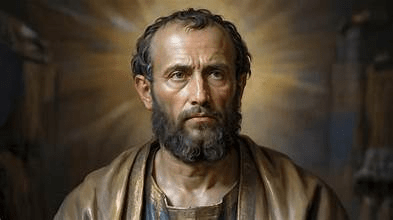
“Paul, a servant of God and an apostle of Jesus Christ, for the sake of the faith of God’s elect and their knowledge of the truth, which accords with godliness,” (Titus 1:1 (ESV)
“When we think back to the first few decades after Pentecost, we are often tempted to think that the early church functioned as an ideal community in which everything was done properly and in order. By this point, however, our study of Paul’s career should have disabused us of this notion. From the first of his epistles, Galatians, to the final letters he wrote, the Pastorals (1 and 2 Timothy, Titus), we see that the church had problems from the start, problems the apostle addresses in nearly all of his writings,” explains Dr. R. C. Sproul.
Biblically, there are three aspects to justification by faith alone. In the Latin, they are Notitia, Assensus, and Fiducia.
Notitia. Notitia refers to the content of faith, or those things that we believe. We place our faith in something, or more appropriately, someone. In order to believe, we must know something about that someone, who is the Lord Jesus Christ.
Assensus. Assensus is our conviction that the content of our faith is true. You can know about the Christian faith and yet believe that it is not true. Genuine faith says that the content — the notitia taught by Holy Scripture — is true.
Fiducia. Fiducia refers to personal trust and reliance. Knowing and believing the content of the Christian faith is not enough, for even demons can do that (James 2:19). Faith is only effectual if, knowing about and assenting to the claims of Jesus, one personally trusts in Him alone for salvation.
When God enables the sinner to exercise faith, it involves all three aspects (Eph. 2:1-10). This justifying trust, commitment, dependence worship of the person and work of Jesus Christ delivers the sinner from the penalty of sin, the power of sin and eventually the presence of sin. The result of God’s deliverance, or salvation, of the sinner results in a changed life in the here and now which foreshadows the eternal change of life in heaven. It was this three-fold aspect of justifying faith the Apostle Paul had in mind when he began his letter to his young protégé Titus.
Paul began this letter as he began his other epistles. He identified himself; not only by his given name but also by his God-give position and resp0onjsbilites.” “Paul, a servant of God and an apostle of Jesus Christ.”
A servant (δοῦλος; doulos) means a slave who is the property of an owner. Paul was the sole property of God (θεοῦ; theou). The Greek noun for God is in the genitive case. It is a genitive of possession. Paul was the sole possession of God.
“Letters customarily opened with the name of the sender. It could be prestigious to be the slave in a high-status household, and the Old Testament prophets were often called “servants of God.” Judaism believed that Jewish people were chosen for salvation by virtue of their corporate participation in Israel; perhaps especially to counter false teachers in Crete (1:10), Paul applies the term to all believers in Jesus (though he usually does so anyway).”[1]
Paul was also an apostle (ἀπόστολος; apostolos). This refers to one who was a special messenger. In the first century of the church, it was a title reserved for the immediate twelve disciples of Jesus Christ and also those who communicated the Gospel. As with being God the Father’s servant, Paul was an apostle solely belonging to and the possession of Jesus Christ.
“This is a considerably longer greeting than in either 1 or 2 Timothy. It is in fact more theological. Only here does Paul specifically describe himself as servant of God, although he does elsewhere call himself ‘servant of Jesus Christ’. The more usual apostle of Jesus Christ is nevertheless added and then developed.”[2]
“Paul is God’s servant (“servant” also in Rom. 1:1; Phil. 1:1; cf. James 1:1; 2 Peter 1:1, but note variation in modifiers), and has received his authoritative commission directly from Jesus Christ, being therefore his apostle.”[3]
Are you God’s sole possession? This occurs only by grace alone, through faith alone in the person and work of Jesus Christ alone. When you repent of sin and place faith in Christ, you not only began possessing justification, redemption and reconciliation with God, you also became the possession of God. Hallelujah!
May the Lord’s truth and grace be found here.
Soli deo Gloria!
[1] Craig S. Keener, The IVP Bible Background Commentary: New Testament (Downers Grove, IL: InterVarsity Press, 1993), Tt 1:1.
[2] Donald Guthrie, “Titus,” in New Bible Commentary: 21st Century Edition, ed. D. A. Carson et al., 4th ed. (Leicester, England; Downers Grove, IL: Inter-Varsity Press, 1994), 1311.
[3] William Hendriksen and Simon J. Kistemaker, Exposition of the Pastoral Epistles, vol. 4, New Testament Commentary (Grand Rapids: Baker Book House, 1953–2001), 340.

