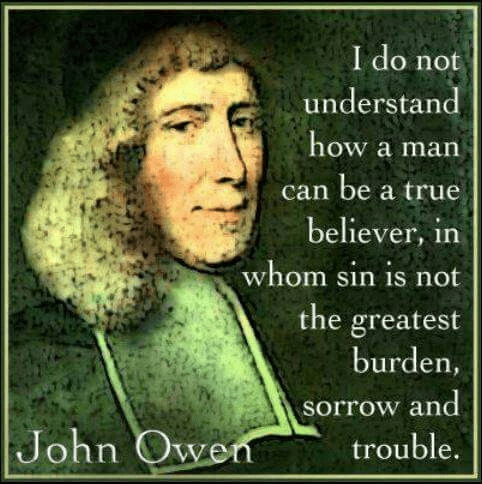
The following excerpted essay was written by English Puritan theologian John Owen (1616-1683). It is entitled The Special Duty of Pastor of Churches. The concerns and challenges he observed in the 17th century apply to pastors of churches in the 21st century.
The third task of the pastor is the administration of the seals of the covenant committed to them as stewards of the house of Christ; for the authoritative dispensation of the word, to which the administration of the seals is annexed. Their principal end is the special confirmation and application of the preached word. And in this there are three things that they are to attend to:
The times and seasons of their administration for the church’s edification, especially that of the Lord’s Supper whose frequency is enjoined. It is the duty of pastors to consider all the necessary circumstances of their administration as to time, place, frequency, order, and decency.
To keep severely to Christ’s institution, as to the way and manner of their administration. The gradual introduction of un-instituted rites and ceremonies into the church celebration of the ordinance of the Lord’s Supper ended at length in the idolatry of the mass. In this then, alone, and not in bowing, cringing, and vestments, lies the glory and beauty of these administrations: namely, that they are compliant with and expressive of the institution of Christ, nor is anything done in them except in express obedience to his authority. “I have received from the Lord what I also delivered to you,” says the apostle in this case (1Cor 11:23).
To take care that these holy things are administered only to those who are fit and worthy, according to the rule of the gospel. Those who impose on pastors the promiscuous administration of these divine ordinances, or the application of the seals to all without difference, deprive them of one-half of their ministerial office and duty.
These duties of the pastor include…
The preaching of the word: its first object is the world, for conversion; its next object is those who profess Christ, for their edification.
Baptism: its object is neither the world nor the members of a particular church, but only those who profess Christ, along with those who are reckoned to them by God’s appointment – that is, their infant seed.
The supper: its object is a particular church only, which is acknowledged, and it may be approved by the institution, one special end of it; the necessity of discipline depends on it.
Pray for your pastor to be such a man of God and to faithfully continue in the work which God has called Him. May the Lord’s truth and grace be found here. Have a blessed day in the Lord.
The following excerpted essay was written by English Puritan theologian John Owen (1616-1683). It is entitled The Special Duty of Pastor of Churches. The concerns and challenges he observed in the 17th century apply to pastors of churches in the 21st century.
The second duty of a pastor towards his flock is continual fervent prayer for them (1 James 5:16; John 17:20; Ex. 32:11; Deut. 9:18; Lev. 16:24; 1 Sam. 12:23; 2 Cor. 13:7, 9; Eph. 1:15-19; 3:14; Phil. 1:4; Col. 1:3; and 2 Thess. 1:11). “We will give ourselves continually to prayer” (Acts 6:4). Without this, no man can or does preach to the flock as he should, nor does he perform any other duty of his pastoral office. From this, any man may take the best measure of the discharge of his duty towards his flock.
The one who constantly, diligently, and fervently prays for them, will have a testimony in himself of his own sincerity in the discharge of all his other pastoral duties; nor can he voluntarily omit or neglect any of them. As for those who are negligent in this, no matter how great their pains, labor, and travail in other duties, they may be influenced by other reasons; and so, they give no evidence of sincerity in the discharge of their office. This constant prayer for the church is so incumbent on all pastors, that whatever is done without prayer has no value in the sight of Jesus Christ.
So, respect is to be paid,
(1.) to the success of the word, to all its blessed ends among them. These are no less than the improvement and strengthening of all their graces, the direction of all their duties, their edification in faith and love, along with the entire conduct of their souls in the life of God, for the enjoyment of him. To preach the word, therefore, and not follow it with constant and fervent prayer for its success, is to disbelieve its use, neglect its end, and throw away the seed of the gospel at random.
(2.) to the temptations that the church is generally exposed to. These greatly vary according to the outward circumstances of things. The temptations in general that accompany a state of outward peace and tranquility have another nature than those that attend a time of trouble, persecution, distress, and poverty, and also with regard to other occasions and circumstances. The pastors of churches ought to diligently consider these, looking at them as the means and ways by which churches have been ruined, and the souls of many lost forever. With respect to them, therefore, their prayers for the church ought to be fervent.
(3.) to the specific state and condition of all the members, as far as it is known to them. There may be those who are spiritually sick and diseased, tempted, afflicted, out of sight, wandering out of the way, surprised in sins and miscarriages, disconsolate and troubled in spirit in a special manner. The remembrance of them all ought to abide with the pastor, and be continually called over in their daily pastoral supplications.
(4.) to the presence of Christ in the assembly of the church, with all the blessed evidences and testimonies of it. This alone is what gives life and power to all church assemblies, without which all outward order and forms of divine worship in them are but a dead carcass. Now, this presence of Christ in the assemblies of his church is by his Spirit, accompanying all ordinances of worship with a gracious, divine efficacy, evidencing itself by blessed operations on the minds and hearts of the congregation. Pastors of churches are to continually to pray for this. Those who do so, understand that all the success of their labors, and all the acceptance of the church with God in their duties, depend on it.
(5.) to their preservation in faith, love, and fruitfulness, with all the duties that belong to them, etc.
It should be greatly desired that all those who take upon themselves this pastoral office well consider and understand how great and necessary a part of their work and duty consists in their continual fervent prayer for their flocks. It is the only instituted way by which they may, by virtue of their office, bless their congregations. But in and by the discharge of their duty to pray, they will also find their hearts and minds more and more filled with love, and engaged with diligence toward all other duties of their office. And they will be motivated to the exercise of all grace towards the whole church on all occasions. Where any are negligent in this duty, every other duty which they perform towards the church will be influenced by false considerations, and it will not hold weight in the balance of the sanctuary.
Pray for your pastor to be such a man of God and to faithfully continue in the work which God has called Him. May the Lord’s truth and grace be found here. Have a blessed day in the Lord.
The following excerpted essay was written by English Puritan theologian John Owen (1616-1683). It is entitled The Special Duty of Pastor of Churches. The concerns and challenges he observed in the 17th century apply to pastors of churches in the 21st century.
WE have declared the way by which pastors are given to and instated in the church. What should ensue is an accounting of their work and duty in the discharge of their office. But this has been the subject of many long discourses, both among the ancient writers of the church and as of late; I shall therefore only touch on some things that are most necessary to consider:
The first and principal duty of a pastor is to feed the flock by diligent preaching of the word. It is a promise relating to the New Testament that God would give to his church “pastors according to his own heart, who would feed them with knowledge and understanding.” (Jer. 3:15). This is by teaching or preaching the word, and not otherwise. This feeding is the essence of the office of a pastor, as to its exercise; so that he who does not, or cannot, or will not feed the flock is no pastor, whatever outward call or work he may have in the church.
The care of preaching the gospel was committed to Peter, and through him to all true pastors of the church, under the name of “feeding.” See John 21:15-19. According to the example of the apostles, they are to free themselves from all encumbrances, so that they may give themselves wholly to the word and prayer. Acts 6:1-4. Their work is “to labor in the word and doctrine,” 1Tim 5:17; and thereby to “feed the flock over which the Holy Ghost has made them overseers,” (Acts 20:28) and it is what is given everywhere to those in charge.
This work and duty, therefore, as was said, is essential to the office of a pastor. A man is a pastor to those whom he leads by pastoral teaching, and to no others; the one who does not feed in this way is no pastor. Nor is it required only that he preach now and then at his leisure, but that he lay aside all other employments, though lawful, and all other duties in the church, if his constant attention to them would divert him from this work – so that he is laboring to the utmost of his ability in these things. Without this, no man will be able to give a comfortable account of the pastoral office at the Last Day.
We have lived to see and hear of reproachful scorn and contempt thrown upon “laboring in the word and doctrine” (1Tim 5.17). All manner of discouragements is given, endeavoring to suppress it in a number of instances. Indeed, some have gone so far as to declare that the work of preaching is unnecessary in the church. That would reduce religion to the reading and rule of the liturgy. The next attempt, I suspect, might be to exclude Christ himself from their religion. That is what denying the necessity of preaching the gospel leads to; indeed, it makes good progress toward it.
A number of things are required for this work and duty of pastoral preaching, such as…
Spiritual wisdom and understanding in the mysteries of the gospel, so that they may declare to the church “all the counsel of God” and “the unsearchable riches of Christ” (Acts 20:27). The majority of the church, especially those who are grown in knowledge and experience, have a spiritual insight into these things. The apostle prays that all believers might have it (Eph. 1:15). But if those who instruct them, or were to do so, do not have some degree of eminence in it, they cannot be useful to lead others on to perfection. The little care or concern for this, has rendered the ministry of many a preacher both fruitless and useless in our days.
Experience of the power of the truth which they preach, in and upon their own souls. Without this, they will be lifeless and heartless in their own work; and their labor for the most part will be unprofitable to others. But a man preaches only that sermon well to others which preaches itself in his own soul. The man who does not feed on and thrive by digesting the food which he provides for others, will hardly make it savory to them. Indeed, he does not know if the food he has provided may be poison, unless he has really tasted it himself. If the word does not dwell with power in us, it will not pass with power from us. No man lives in a more woeful condition than those who do not really believe themselves what they persuade others to believe continually. The lack of this experience of the power of gospel truth on their own souls is what gives us so many lifeless, sapless orations, quaint in words, and dead in power – instead of preaching the gospel in the demonstration of the Spirit. Let anyone say what they please, it is evident that some men’s preaching, as well as others’ not-preaching, has lost the credit of their ministry.
Skill to divide the word rightly d(2Tim 2:15). This consists in a practical wisdom, by diligent attendance to the word of truth, to discover what is real, substantial, and fit food for the souls of the hearers – to give to all sorts of persons in the church their proper portion.
A prudent and diligent consideration of the state of the flock over which any man is set, as to their strength or weakness, their growth or defect in knowledge (the measure of their attainments requiring either milk or strong meat), their temptations and duties, their spiritual decay or thriving – not only generally but, as near as possible, with respect to all the individual members of the church. Without a due regard for these things, men preach randomly, fighting uncertainly, like those who beat the air (1Cor 9.26). Preaching sermons that are not designed to benefit those to whom they are preached; insisting on general doctrines that are not adjusted to the condition of the hearers; speaking words without considering whether those words ought to be said – are all things that will make those whose minds do not have obvious advantages, weary of preaching; and they will make others weary simply by hearing them.
All of these, in the whole discharge of their duty, are to be constantly accompanied with the evidence of their zeal for the glory of God and compassion for the souls of men. If these are not vigorously exercised in the minds and souls of those who preach the word, demonstrating themselves to the consciences of those who hear them, then the quickening form, the life and soul of preaching, is lost.
Pray for your pastor to be such a man of God and to faithfully continue in the work which God has called Him. May the Lord’s truth and grace be found here. Have a blessed day in the Lord.
7 Moreover, he must be well thought of by outsiders, so that he may not fall into disgrace, into a snare of the devil.” (1 Timothy 3:7 (ESV)
The following essay is by Dr. Mike Riccardi a pastor of local outreach ministries at Grace Community Church and assistant professor of theology at The Master’s Seminary in Los Angeles, Calif. His article, entitled Above Reproach: Inside and Out, appeared in the July, 2022 issue of TableTalk Magazine, published by Ligonier Ministries.
Before moving on from his discussion in 1 Timothy 3:1–7 of the qualifications for the elders of Christ’s church, the Apostle Paul concludes in verse 7 by requiring elders to enjoy a good reputation with unbelievers.
Such a requirement seems to go without saying. The Great Commission is central to a pastor’s life and calling. Yes, he must equip the saints for the work of the ministry (Eph. 4:12) by working hard in preaching and teaching (1 Tim. 5:17), endeavoring to present every member complete in Christ (Col. 1:28). But the commission to make disciples begins with doing the work of an evangelist (2 Tim. 4:5), proclaiming the gospel to those who are outside in the hope that, by God’s grace, they may be converted and be joined to the body of Christ.
A pastor constantly prays that “outsiders” would become “insiders”—that unbelievers would be transformed into disciples of Christ, who are then gathered into the church to be baptized and taught to observe all that Christ has commanded (Matt. 28:19–20). Surely it follows, then, that an elder ought to pursue a good reputation with unbelievers.
All believers are called to give no offense (1 Cor. 10:32), to walk in wisdom (Col. 4:5), to “be blameless and innocent, children of God without blemish in the midst of a crooked and twisted generation, among whom you shine as lights in the world” (Phil. 2:15).
Yet upon a moment’s reflection, such a requirement can seem quite counterintuitive. Unbelievers are spiritually dead (Eph. 2:1–3), hostile to God (Rom. 8:7), and unable to accept or understand the things of the Spirit of God (1 Cor. 2:14). Can we really expect them to approve of elders of Christ’s church, those who stake their lives on the very Bible whose authority unbelievers reject? Jesus Himself reminded His disciples that the unbelieving world that hated Him would hate His followers (John 15:18–21).
Our Great Prophet pronounced woe on us when all men speak well of us, for that is how the false prophets were received (Luke 6:26). Indeed, one of the greatest hindrances to faithful ministry in our day has been an uncrucified lust for the world’s praise. An entire generation of pastors has sold out to the pragmatist’s philosophy of ministry: If we can get unbelievers to like us, then they’ll accept Jesus. Perhaps no other principle has done more to weaken the church in the past thirty years. But Paul says, “What we proclaim is not ourselves” (2 Cor. 4:5). How, then, can he demand that pastors “must be well thought of by outsiders”?
The answer requires that we understand first what Paul is not calling for. He is not setting aspiring elders on a course to court the esteem and admiration of the enemies of righteousness. This qualification does not require the man of God to escape all criticism of those who are blind to the glory of the gospel.
John Calvin observed: “How stupid we would be to want to be liked by those who despise God and who trample our Lord Jesus Christ underfoot! We should instead expect the wicked to mock and reject us, seeing that we cannot persuade them to honor God as they should and to submit reverently to his word.”
One of the greatest hindrances to faithful ministry in our day has been an uncrucified lust for the world’s praise. Pastors and elders must never forget that “the wisdom of this world is folly with God” (1 Cor. 3:19), and that we His servants are, as Paul says, “the scum of the world, the refuse of all things” (1 Cor. 4:13).
Instead, the Apostle is calling for elders to live lives above reproach—not only above the reproach of those inside the church, as he called for in 1 Timothy 3:2, but also above the reproach of those outside the church. Sometimes a prospective elder’s unbelieving relatives, coworkers, or neighbors may know more about his character than his fellow church members. If unbelievers know him to be marked by immorality or drunkenness, or by a lack of discipline or integrity, while at the same time he is serving as an elder in Christ’s church, they will ridicule him as a hypocrite, and the name of Christ will be blasphemed because of it (Rom. 2:24). Paul requires that this not be so.
Though the enemies of the truth will seek to discredit the character of God’s servants, elders must “keep [their] conduct among the Gentiles honorable” (1 Peter 2:12), “so that, when [they] are slandered, those who revile [their] good behavior in Christ may be put to shame” (1 Peter 3:16). If charges are brought, they must never stick, and they must be shown to be illegitimate by a clear appeal to the man’s life. Under the examination of insiders and outsiders, the man of God must live a life above reproach. May God give grace to His servants, that we might walk worthy of such a high calling.
May the Lord’s truth and grace be found here. Have a blessed day in the Lord.
7 Moreover, he must be well thought of by outsiders, so that he may not fall into disgrace, into a snare of the devil.” (1 Timothy 3:7 (ESV)
A suburban church’s elders in a major metropolitan Midwest city sensed God’s call to relocate the congregation closer to the city’s downtown. This was due in large measure because the church outgrew its facilities and for a desire to a visible presence for Christ in a populated area often overlooked. When a property with several existing buildings became available, the congregation sensed it was God’s will to purchase it with the purpose of renovating all the structures and using them for worship and ministry.
One of the experiences in the process was the pastor met with the families of the neighboring community located across the street of the church’s newly purchased property. Initially, the church’s new neighbors were less than excited about having a congregation of Christians as their new neighbors. They expressed their opposition to, if not disdain towards, the pastor and the church in no uncertain terms at a community meeting. It was not an optimistic beginning.
However, something marvelous occurred as the congregation cleaned, renovated and relocated into and onto the new church campus. The neighborhood began to see Christian people who were friendly, helpful and caring. What began as opposition soon turned into affirmation by the local residents. When once they groaned about a church across the street from their homes, they now were glad to have such a presence. They began to respect, and even like, the pastor, the church’s leadership and congregation.
It cannot be overstated the importance of a pastor’s, and elders’, reputation with those who do not belong to the church. What was true for Timothy as the pastor of the church in Ephesus, remains true for local pastors, and elders today. How unconverted and unchurched people feel about a church’s leadership is huge. The church’s leadership must do everything they can to have a good and positive reputation with outsiders, without changing the message of the Gospel of Jesus Christ.
The Apostle Paul wrote regarding an elder, pastor, or overseer they “must be well thought of by outsiders,” This in addition to all the other characteristics previously mentioned in the context of I Timothy 3:1-6. The phrase must be (δεῖ; dei) refers to what is presently and actively necessary and ought to be.
What is necessary is for overseers to be well thought of. To be (ἔχειν; echein) means to presently, actively and infinitely possess and hold onto something. In the context, what the elder is to presently, actively and infinitely possess is to be well thought of (καλὴν μαρτυρίαν; kalen martyrian). This refers to a good reputation and testimony. This good reputation and testimony are the elder’s responsibility to foster and cultivate. He must do everything he biblically can to pursue this purpose and goal. This good reputation the elder pursues results in outsiders (ἔξωθεν; exothen), or the unconverted, agreeing the pastor possesses a good testimony of faith in Jesus Christ.
The pastor must be ethical, faithful, and biblical before a watching and ungodly world. He must refrain from any and all behavior, speech, or thinking which in any way compromises his reputation and ultimately the reputation of Jesus Christ who represents. He must guard his heart (Prov.4:23-27).
Otherwise, he may fall into disgrace. To fall (ἐμπέσῃ; empese). This means to actively experience at a particular point in time disgrace (ὀνειδισμὸν; oneidismon). This refers to public reproach (Rom. 15:3; 1Ti 3:7; Heb. 10:33; 11:26; 13:13).[1] This disgrace Paul referred to as “a snare of the devil.” A snare (παγίδα; pagida) means a trap and danger solely originating from the devil.
“A leader in the church must have an unimpeachable reputation in the unbelieving community, even though people there may disagree with his moral and theological stands. How can he make a spiritual impact on those who do not respect him? (Matt. 5:48; Phil. 2:15),” explains Dr. John MacArthur.
In his book The Pastor as Leader, Dr. John Currie, professor of pastoral theology at Westminster Theological Seminary in Philadelphia writes the following concerning the pastor’s character and the tragedy of failing to pursue a good reputation.
“While this book was being written, the church was rocked again and again by dramatic and devastating news of corrupt pastoral leaders. One popular preacher-leader abandoned his faith and his marriage. A respected apologist was discovered to have lived a secret life of immorality, financial corruption, and wicked manipulation of those who had trusted him for spiritual care. A pastor who had reached the heights of celebrity was dethroned from his ministry empire because of angry, unaccountable, brutal leadership of colleagues and blatant dishonesty for financial gain. Denominational leaders were being investigated and called to account for covering up vile sins perpetrated by false shepherds.”
“These are merely a sampling of the cases of corrupted character and their ruinous consequences exposed publicly. By the time wickedness like these examples makes headlines, there have typically been repeated episodes of less known compromises in the offending leader’s life, incremental concessions that C. S. Lewis called “those little marks or twists on the central inside part of the soul which are going to turn it, in the long run, into . . . a hellish creature.” The most scandalous hypocrisies are often rooted in seemingly less significant character issues that have gone unaddressed in the life of a pastor.”
“Because pastoral leadership is the process where a man of God leads the people of God by preaching the word of God, the pastor’s example is essential to the process of leadership. The walk of a man of God must be integrated with the word he has been sent to preach. He must pursue conformity to Christ as he leads for Christ, because his stewardship includes the duty to serve as an example for those to whom he preaches (1 Tim. 4:12; cf. Titus 2:7; 1 Pet. 5:3),” explains Dr. Currie.
Dr. R. C. Sproul writes, “Non-Christians should be able to look at a Christian leader and say that he lives according to his profession and is quick to repent when he fails to do so. Yet all believers should be known by their exemplary lives, their living of “a peaceful and quiet life, godly and dignified in every way” (1 Tim. 2:2). What is the testimony your non-Christian friends, neighbors, and co-workers would give about you? If accused of being a Christian, would you be found guilty?”
May the Lord’s truth and grace be found here. Have a blessed day in Christ.
“He must not be a recent convert, or he may become puffed up with conceit and fall into the condemnation of the devil.” (1 Timothy 3:6 (ESV)
Puritan and biblical commentator Matthew Henry writes, “The more ignorant men are the prouder they are.”
There is a difference between a new convert, and a mature believer. The mature believer knows what he doesn’t know and where to find the answers, while the new believer doesn’t even know the questions. Therefore, it is imperative a new believer in Christ should not serve as an overseer, elder or pastor.
The Apostle Paul clearly stated an elder must not be a recent convert (νεόφυτον; neophyton). The phrase literally refers to a new or young plant. The English word neophyte, meaning a novice, beginner, recruit, and trainee, comes from this Greek word.
If such an individual assumes the office of overseer, he may become puffed up with conceit (τυφωθεὶς; typhotheis). This metaphorically means to be wrapped up in the smoke of pride and his own self-importance. When young converts are in positions of church leadership, their immaturity becomes apparent to everyone but themselves.
“Do you see a man who is wise in his own eyes? There is more hope for a fool than for him.” (Proverbs 26:12 (ESV)
“The sluggard is wiser in his own eyes than seven men who can answer sensibly.” (Proverbs 26:16 (ESV)
“Live in harmony with one another. Do not be haughty, but associate with the lowly. Never be wise in your own sight.” (Romans 12:16 (ESV)
“Do nothing from selfish ambition or conceit, but in humility count others more significant than yourselves.” (Philippians 2:3 (ESV)
Putting a new convert into a leadership role would tempt him to pride. Elders, therefore, are to be drawn from the spiritually mature men of the congregation,” explains Dr. John MacArthur.
Paul explains such conceit could cause the young believer to “fall into the condemnation of the devil.” One commentator writes, “Lest being proud of his degree he be likewise condemned as the devil was for lifting up himself by pride.[1]
In his book Biblical Eldership, author Alexander Strauch writes, “Scripture prohibits a ‘new convert’ from serving as an elder. A new convert is a beginner in the faith, a baby Christian, a recent convert. No matter how spiritual, zealous, knowledgeable, or talented a new convert may be, he is not spiritually mature. Maturity requires time and experience for which there is no substitute, so a new convert is simply not ready for the arduous task of shepherding God’s flock.”
“The position of elder (especially in a large, well-established church such as the one in Ephesus) carries considerable honor and authority. For a recent convert, the temptation of pride would be too great. Pride would destroy the man, causing personal disgrace, loss, exposure, divine chastisement, and possibly wrecking his faith. It would also hurt the church. So, Paul warns against appointing a new convert as an elder.”
“Today’s passage warns the church not to ordain new converts as elders (1 Tim. 3:6). Without seasoning and maturation, men are ill-equipped to deal with the complexities that confront the church and the discipline of its members. Overestimating their own wisdom, they may deal poorly with people, lording their authority over God’s flock instead of shepherding with lovingkindness (1 Peter 5:1–5),” explains Dr. R. C. Sproul.
“Not having faced the Christian’s unique trials and temptations, they can split churches when they value their way over “the unity of the Spirit in the bond of peace” (Eph. 4:3), refusing to compromise when Scripture permits it. Lacking knowledge of the church’s history and confessions, they can in their pride wander after heresies long ago refuted. New converts may exalt themselves and if so, may also endure the casting down that the Devil experienced, revealing their profession of faith to be false (1 Tim. 3:6).”
Much care is to be taken when a church calls a man to be an overseer, elder, and/or pastor. Popularity, presence, and persuasiveness must not be the characteristics the church looks for in the man who ministers from the pulpit.
“He has told you, O man, what is good; and what does the Lord require of you but to do justice, and to love kindness, and to walk humbly with your God?” (Micah 6:8 (ESV)
May the Lord’s truth and grace be found here. Have a blessed day in the Lord.
16 All Scripture is breathed out by God and profitable for teaching, for reproof, for correction, and for training in righteousness, 17 that the man of God may be complete, equipped for every good work.” (2 Timothy 3:16–17 (ESV)
Previously, we explained what the Apostle Paul meant when he wrote “All Scripture.”Scripture (γραφὴ; graphe) refers to writing or to a written document. Within the context of the Bible, Scripture refers to the sacred writings of God’s written revelation or self-disclosure. In the immediate context of 2 Timothy, Paul referred to the Old Testament. In the overall context of the Old and New Testaments, Scripture refers to the entire Word of God or the entire biblical canon.
The phrase “All Scripture is breathed out by God.” The phase “breathed out by God” and “given by inspiration of God” is from one Greek word θεόπνευστος (theopneustos). This is compound adjective which modifies the noun Scripture. Theo refers to God. Pneustos is the Greek word for breath or spirit. Theologically, theopneustos established what is known as verbal, plenary inspiration. Verbal refers to Bible’s words. Plenary is the word meaning all. The concise meaning of this phrase is “All Words, God-breathed.”
This God centered origination of God’s Word makes it profitable. Profitable (ὠφέλιμος; ophelimos) means useful and beneficial. Aside from a list of resulting benefits the Apostle Paul listed in the latter portion of today’s text, the Scriptures are profitable in an of itself. By its very nature, as the revelation of God, it is useful and beneficial.
“Scripture is not merely a witness to the Word of God. Scripture does not simply contain the Word of God. Scripture needs nothing added to it to become the Word of God. No, Scripture is itself the Word of God, breathed out by Him and belonging to Him no less than our words are breathed out by us and belong to us,” explains Dr. R. c. Sproul.
“As the very breath of God, Scripture carries with it the full truth and authority of our Creator. It “cannot be broken” (John 10:35). What God gave the Apostles and prophets to write down cannot be viewed as anything other than fully true in all that it teaches, and it is incapable of leading people astray. This follows necessarily from the nature of God, who is holy and true (Isa. 6:1–3; Rom. 3:4). Because it is the Word of God, Scripture cannot fail to accomplish God’s will, for God is able to accomplish all His holy will. No purpose of His can be thwarted (Job 42:2).”
Aside from the profitable, and beneficial nature of God’s Word, there are several resulting and practical benefits. These include teaching, reproof, correction, and training in righteousness.
Teaching (διδασκαλίαν; didaskalian) means instruction, education, and doctrine. “The divine instruction or doctrinal content of both the OT and the NT (cf. 2 Tim. 2:15; Acts 20:18, 20–21, 27; 1 Cor. 2:14–16; Col. 3:16; 1 John 2:20, 24, 27). The Scripture provides the comprehensive and complete body of divine truth necessary for life and godliness. Cf. Ps. 119:97–105,” states Dr. John MacArthur.
Reproof (ἐλεγμόν; elegmon) refers to conviction, discipline and refutation of error. “Rebuke for wrong behavior or wrong belief. The Scripture exposes sin (Heb. 4:12–13) that can then be dealt with through confession and repentance.”
Correction (ἐπανόρθωσιν; epanorthosin) means restoration and revival. “The restoration of something to its proper condition. The word appears only here in the NT, but was used in extrabiblical Greek of righting a fallen object, or helping back to their feet those who had stumbled. Scripture not only rebukes wrong behavior, but also points the way back to godly living. Cf. Ps. 119:9–11; John 15:1–2.”
Training ( παιδείαν; paideian) in righteousness (δικαιοσύνῃ; dikaiosyne) refers to honest and truthful discipline resulting in righteousness and godliness. “Scripture provides positive training (originally used in reference to training a child) in godly behavior, not merely rebuke and correction of wrong behavior (Acts 20:32; 1 Tim. 4:6; 1 Pet. 2:1–2),” concludes Dr. MacArthur.
John Calvin says, “It would be too long to explain what we are to learn from the Scriptures; and, in the preceding verse, he has given a brief summary of them under the word faith. The most valuable knowledge, therefore, is “faith in Christ.” Next follows instruction for regulating the life, to which are added the excitements of exhortations and reproofs. Thus, he who knows how to use the Scriptures properly, is in want of nothing for salvation, or for a Holy life. Reproof and correction differ little from each other, except that the latter proceeds from the former; for the beginning of repentance is the knowledge of our sinfulness, and a conviction of the judgment of God. Instruction in righteousness means the rule of a good and holy life.”
When next we meet, we’ll define other significant terms related to the Bible’s verbal, plenary inspiration. May the Lord’s truth and grace be found here.
4 He must manage his own household well, with all dignity keeping his children submissive, 5 for if someone does not know how to manage his own household, how will he care for God’s church?” (1 Timothy 3:4–5 (ESV)
“Eli was a priest when the judges governed Israel, and as such he was supposed to be an example to the people as their worship leader. Yet his homelife made it impossible for him to be a model for those under his care. Scripture minces no words in describing his sons as “worthless,” men who “did not know the Lord” (1 Sam. 2:12). We would not ordinarily blame Eli for his sons’ adult transgressions, especially since Eli did rebuke them for their sins (vv. 22–26). Apparently, however, Eli’s admonitions were half-hearted because God charged the priest with exalting his sons above the Almighty (vv. 27–29), something that Eli likely did from their youth. Eli’s disordered, undisciplined, sinful family revealed that his heart was not wholly devoted to the Lord. Being unfit for leadership, Eli was finally removed from his position (vv. 30–36; 4:12–18),” explains Dr. R. C. Sproul.
“Ancient peoples believed that private behavior was indicative of effective leadership and, consequently, that a family’s conduct determined whether the father would be a skilled leader. Well-behaved kids revealed consistent, caring discipline at home, which proved that a man could govern a group larger than his family. Many people today reject this premise, but Scripture sides with the ancients on this matter, telling the church to choose for elders only those men who manage their homes in dignity, with submissive children (1 Tim. 3:4).”
The Apostle Paul emphasized to Timothy the importance of an elder’s family life. Since leadership is all about character, the elder’s true character is most often displayed in his home and among his family. A man who is ungodly at home, while pretending to be godly at church gatherings, is not fit for the office of overseer. Much too often an individual is selected to be an elder because of his status in the community, his wealth and/or influence.
Paul said an elder must manage his own household well with all dignity. The phrase He must manage (προϊστάμενον; proistamenon) means to presently and personally lead, help and guide his own household. Household (οἴκου; oikou) refers to his family. This household management must be done well (καλῶς; kalos), meaning to be done rightly, correct, and in excellence. All dignity (πάσης σεμνότητος; pases semnotetos) refers to personally possessing every kind of proper and respectful behavior.
The apostle continued by stating keeping his children submissive. Keeping (ἔχοντα; echonta) means to presently and actively possess submissive children. Submissive (ὑποταγῇ; hypotage) not only means obedient but also responsible to and responsible for one’s family. This is what the elder’s children (τέκνα; tekna), offspring or underage son or daughter must demonstrate.
The logical reason for such a requirement is explained in vs. 5. “For if someone does not know how to manage his own household, how will he care for God’s church?” Leadership in the home must precede leadership in the church. In other words, leadership in a public forum of one’s church must be based upon a prior leadership in the private setting of one’s home.
“The submission that qualifies a man to be an elder is not instilled through a harshness or legalism that requires perfection or that the children be something other than what they are, both of which will provoke the child to anger. Instead, it results when a father raises his kids in “the discipline and instruction of the Lord” (Eph. 6:4), which, one commentator says, manifests itself in a firmness that makes it advisable for children to obey, a wisdom that makes it natural for them to obey, and a love that makes it a pleasure for them to obey,” continues Dr. Sproul.
“Ruling the church well requires the same sort of nurture, courage, and thoughtfulness that make discipline effective. This is a common-sense observation that the Lord Himself approves in today’s passage. If a man cannot lead his own family, how can we expect him to lead the family of God (1 Tim. 3:5)?”
John Calvin states an elder is an individual “who has learned to govern a family by wholesome discipline.” For those who read this essay and who serve as an elder in a local church, may this be true of each of us.
May the Lord’s truth and grace be found here. Have a blessed day in the Lord.
…3 not a drunkard, not violent but gentle, not quarrelsome, not a lover of money.” (1 Timothy 3:3 (ESV)
“In the first set of seven requirements the subdivision is as follows: under the caption “above reproach” we find first a set of four requirements having to do with the man’s attitude to Christian morality in general: he must be maritally pure, temperate, sensible, virtuous. Then, two requirements describing the man’s attitude toward (and influence upon) people who stand in some definite relation to the church. How does he treat guests from other churches, etc.? Is he hospitable? What influence for good does he exert on those who require guidance or instruction? Is he qualified to teach? In the second set of seven requirements, we see the man in his daily life, rubbing elbows with his fellow-men at work and everywhere.”[1]
In this article, we examine the first four of seven requirements regarding the elder and his daily life and living. These initial four characteristics are found in today’s featured text.
First, the elder is not to be a drunkard. A drunkard (πάροινον; paroinon) is a heavy drinker and addicted to wine. In other words, he is an alcoholic. See I Cor. 6:10; Titus 1:7. A parallel word is μέθαι (methai), which is also translated drunkenness in Galatians 5:21. Drunkenness is identified as a work of the flesh.
Any man who senses God’s call to the office of a pastor/elder must not overlook this qualification. Too many aspiring pastors and overseers do not give a second thought to this admonition. Neither do congregations who approve their position.
Second, and elder is not to be violent but gentle. Not violent (μὴ πλήκτην; me plekten) means a brawler, striker, or a bully. An elder cannot be a pugnacious person. He cannot be an individual who is aggressive, confrontational, argumentative, and belligerent.
Pastors who publicly state from the pulpit that if anyone disagrees with them to meet them in the church parking lot and to settle their disagreement with their fists violate this qualification. Such an attitude must not be tolerated.
On the contrary, an elder is to be gentle (ἐπιεικῆ; epieke). This means a tolerant, kind and forgiving individual. He is one who is moderate in personality and fair in dealing with people. He is mild, calm, placid, and peaceful.
Third, an elder is not to be quarrelsome. The phrase notquarrelsome (ἄμαχον; amachon) means to be peaceable, to abstain from fighting, and to be a non-combatant. Perhaps, this was a problem within the Ephesian church which warranted Paul to mention it twice.
Fourth, an elder is not to be lover of money. The phrase not a lover of money (ἀφιλάργυρον; aphilargyron) refers to not being avaricious, greedy, grasping and materialistic.
The behavior of many in ministry who stress their need for vast amounts of money is in conflict with the previous admonition. When big houses, private planes, expensive clothing, and brand new cars, among other items, are viewed as necessities of service, it is evidence of violating this command from the Lord.
“Such an office needs the right kind of people to fit it. It must be remembered that the early Christians came from numerous different backgrounds, and this accounts for the seemingly elementary character of some of the requirements, especially the negative ones in v 3. There are conditions about the personal life of prospective candidates. They must be temperate, self-controlled, respectable. They must be above reproach. All these qualities are to be expected in any serious Christian person but especially so in Christian leaders, for anyone whose moral and spiritual qualities do not commend them to their contemporaries are not going to have much influence as Christian ministers, and if they do, it is likely to be destructive.”[2]
May the Lord’s truth and grace be found here. Have a blessed day in the Lord.
Soli deo Gloria!
[1] William Hendriksen and Simon J. Kistemaker, Exposition of the Pastoral Epistles, vol. 4, New Testament Commentary (Grand Rapids: Baker Book House, 1953–2001), 120.
[2] Donald Guthrie, “1 Timothy,” in New Bible Commentary: 21st Century Edition, ed. D. A. Carson et al., 4th ed. (Leicester, England; Downers Grove, IL: Inter-Varsity Press, 1994), 1298.
“The saying is trustworthy: If anyone aspires to the office of overseer, he desires a noble task. 2 Therefore an overseer must be above reproach, the husband of one wife, sober-minded, self-controlled, respectable, hospitable, able to teach,” (1 Timothy 3:1–2 (ESV)
The following excerpt is by Rev. E.J. Alexander of an address given at a Rutherford House conference in 2009. The entire essay is available at monergism.com under the topic of Leaders and Elders.
The clear implication (from I Timothy 3) is that elders are called to take care of the church of God. Not, you will notice, their church but God’s church. They are to be caretakers. We use the word of someone who is taking care of another’s property and in that sense the caretaker is self-evidently not the owner; the place he is looking after doesn’t belong to him. It is God’s church in that he has a particular love for it having purchased it with the blood of His Son.
We are to understand that he has ordained and appointed elders in order to express through them the profound care he has for the church. It is as though God is taking this extraordinarily precious possession of his and saying, “Care for this for me.” Can you imagine the Crown Jewels being entrusted to you and some high officer of state saying, “Will you look after these for me?” Imagine it – you would drop everything you were doing and you would do all you possibly could in order to discharge such a commission faithfully. Do we not realise that the living God has presented to us what are going to be the jewels in his crown on the Last Day? For the church of his only begotten Son is nothing less than his “crown jewels”. And he says to you and me, “Care for that for me!”
We should not therefore be surprised that God gives to us extraordinary qualifications for the eldership. We would expect him to be exceedingly careful about this when he has bought this church with the blood of Christ. He is continuing to build his church through the work of Christ in our generation and he is beautifying it by the work of the Holy Spirit so that one day it may appear in all its glory. Can you understand why the qualifications of the church’s “caretakers” are of such a profoundly challenging nature? Qualifications I want to consider these qualifications under six areas of living. Please don’t think I am trying to compartmentalize them; simply identifying them under six headings for the sake of clarity
The Elder’s Personal Life
Paul comes to the elder’s personal life as the first priority in v 2 where he says, “Now the overseer must be above reproach”. That simply means that the primary qualification for Christian leadership in the church is not that we are greatly gifted or well educated but that we have a consistent personal character. That is the first and the last thing that Paul writes about. Notice in v 7, “He must also have a good reputation with outsiders, so that he will not fall into disgrace and into the devil’s trap”. So the primary emphasis is on the elder’s personal life, “above reproach” amongst those who are around him within the fellowship and of “good reputation” amongst those who are outside the church of Christ, that is in the world.
Paul spells that out in a little more detail in v 2, for example, where he speaks about the need to be “temperate, self-controlled, respectable” or (orderly) and so on. And one of the places where that self-control will reveal itself, says Paul (v 3), is in the use of alcohol – “…not given to drunkenness”. (Cf v 8 where the same standard is set forth for deacons).
The whole of this interest in the Christian character is quite fundamental. It is for this reason that the general testimony of Scripture is that my usefulness in the service of God is closely tied with my personal character, so that what I am matters more to God than what I do. Inner consistency in my own life is therefore going to be the crucial thing in my usefulness.
That is why when Peter is speaking about the task of the shepherd, he says elders must be examples to the flock of God (1 Peter 5.3). That is why when writing to young Timothy, Paul tells him not to mind about his age but to be an example: “Don’t let anyone look down on you because you are young, but set an example for the believers in speech, in life, in love, in faith and in purity” (1 Tim. 4.12). The point is that men and women are going to be far more impressed by what we are than by what we say or do. That is why the primary area in this study must be our personal lives.
The Elder’s Domestic World
“The overseer must be … the husband of but one wife” (v 2). Much discussion has arisen about what is intended by this requirement. However, I think the most obvious meaning is likely to be the most accurate, namely, that the one who is being called to the eldership will need to be an example in the realm of the biblical norm of absolute faithfulness within the marriage bond. I believe that is what Paul has in mind here. He is referring to an exclusive, permanent, loving relationship between one man and one woman.
Paul goes on to elaborate on this domestic issue. A leader in the church of God must first prove himself to be a leader in his home who has gained the respect of his own family. “He must manage his own family well and see that his children obey him with proper respect. If anyone does not know how to manage his own family, how can he take care of God’s church?” (vv 4-5).
Quite simply, Paul is saying that our family life ought to be a microcosm of the church of Jesus Christ. The children of such an elder should obey him because they respect his wisdom, his selfless care for his family and the quality of leadership and example which he is providing. This is a qualification for the eldership because that ought to be how he will act within the church of God. Paul’s point is that if he is not living like that within his own home there is very little likelihood that he will suddenly start to live like that within the church.
May the Lord’s Truth and grace be found here. Have a blessed day in the Lord.







 His Word Today