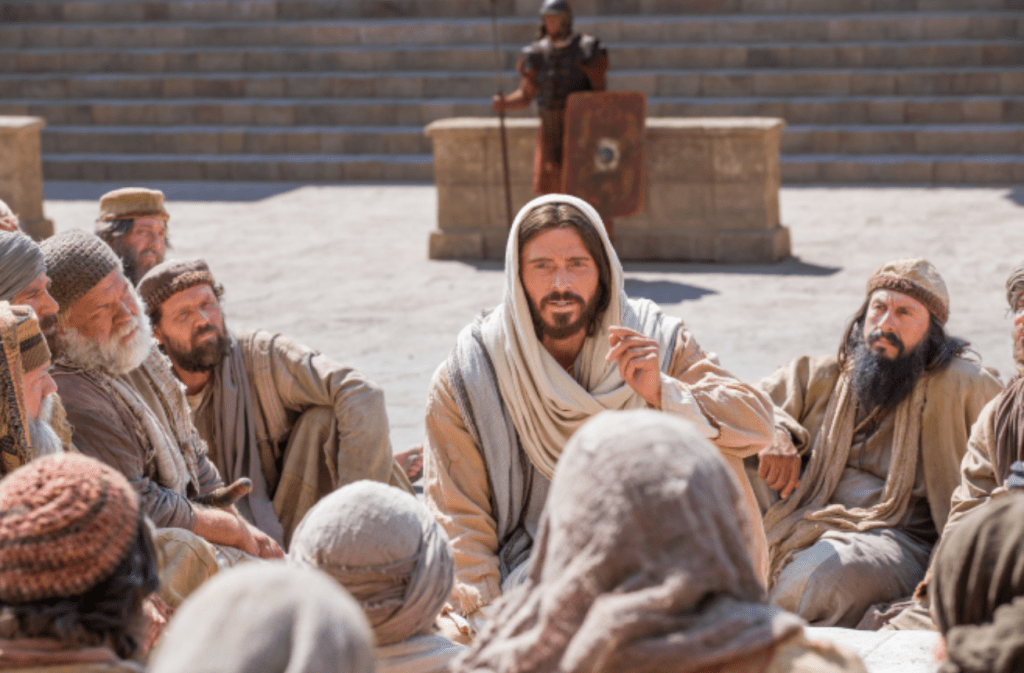
The Mortification of Sin: The Fruit of the Spirit; Peace.

“But the fruit of the Spirit is love, joy, peace, patience, kindness, goodness, faithfulness, gentleness, self-control; against such things there is no law.” (Galatians 5:22-23)

A favorite biblical passage of mine is Romans 5:1: “Therefore, since we have been justified by faith, we have peace with God through our Lord Jesus Christ.”

Peace (εἰρήνην; eirenen) is tranquility and a freedom from worry. This freedom regards our status with the One, True, and Holy God of the universe. There is no more enmity or strife between the believer and God. Why?  It is because God has justified the believer in Christ by grace alone, through faith in the person and work of Jesus Christ alone. The phrase “justified by faith” is a shorthand statement including both grace and Jesus Christ.

To be justified (Δικαιωθέντες; dikaiothentes) means that God has declared the sinner righteous before Him. The sinner’s guilt has been removed and God has set him free from the penalty of sin: hell. This justification is through the God-given instrument of faith. Faith is trust in, dependence upon, commitment to and honor and worship of the Lord Jesus Christ.

What does Romans 5:1 have to do with Galatians 5:22 and the Fruit of the Spirit of peace? Plenty! The peace the Apostle Paul speaks of regarding our peace with God is also related to the peace from God; the Holy Spirit.

The spiritual fruit of peace (εἰρήνη; eirene) refers to how the believer in Christ, who has peace with God by virtue of their justification by faith, is able to have peace while navigating through the storms of living in a sinful and fallen world. Peace comes from Christ (John 14:27). It is a blessed quietness even in the face of the harshest circumstances. God’s peace defies human understanding (Philippians 4:7).  

Dr. John MacArthur writes that peace is, “The inner calm that results from confidence in one’s saving relationship with Christ. The verb form denotes binding together and is reflected in the expression “having it all together.” Like joy, peace is not related to one’s circumstances (John 14:27Rom. 8:28Phil. 4:6–7, 9).”

Dr. R. C. Sproul explains that, In defeating the world, Jesus has also granted us true peace. We are on God’s side in Christ, for He has reconciled us to the Father, and the defeat of God’s enemies on the cross is the defeat of our enemies. Furthermore, since our war with God has ended, we can live at peace with others as far as it depends on us (Rom. 12:18). We can rest peacefully in this evil world because we have already won the victory.”

What areas of your life are the most peaceful? Home? Church? Work? Where do find the greatest adversaries of peace? Home? Church? Work? Remember that peace, true and lasting peace, is rooted and grounded in the love that God has shown you in the Lord Jesus Christ. Be truly at peace today.

May the Lord’s truth and grace be found here.

Soli deo Gloria!

The Mortification of Sin: The Fruit of the Spirit: Joy.

“But the fruit of the Spirit is love, joy, peace, patience, kindness, goodness, faithfulness, gentleness, self-control; against such things there is no law.” (Galatians 5:22-23)

What exactly is joy? Joy is often used as a synonym for happiness. Happiness is a spirit of delight and glee which is determined by favorable circumstances and situations. As a feeling, joy is experienced when a person has success, good fortune and well-being.

For example, the Bible sets forth the example of joy when the shepherd found his lost sheep (Matt. 18:13). The multitude felt joy when Jesus healed a Jewish woman who Satan had bound for eighteen years (Luke 13:17). The disciples returned to Jerusalem rejoicing after Jesus’ ascension (Luke 24:52). The church at Antioch were joyful when its members heard the Jerusalem Council’s decision that they did not have to be circumcised to keep God’s law (Acts 15:31). The Apostle Paul mentioned his joy in hearing about the obedience of the Roman Christians (Rom. 16:19). He also wrote to the Corinthians that love does not rejoice in wrong but rejoices in the right (I Corinthians 13:6). See also 1 Samuel 2:1; 11:9; 18:6; 2 Samuel 6:12; 1 Kings 1:40; Esther 9:17–22).

However, joy (χαρά; chara) is also an action or a behavior, regardless of one’s circumstances. Joy is a contentment in spirit regardless of whatever situations we encounter. There is a joy that Scripture commands. This is a gladness that can be displayed regardless of how the Christian feels. Joy is divinely provided contentment in the midst of the storms of life.

Proverbs 5:18 tells the reader to rejoice in the wife of his youth, without reference to what she may be like. Christ instructed his disciples to rejoice when they were persecuted, reviled, and slandered (Matthew 5:11–12). The apostle Paul commanded continuous rejoicing (Phil. 4:4; 1 Thessalonians 5:16). James said Christians are to count it all joy when they fall into various testings because such testings’ produce endurance (James 1:2). Joy in adverse circumstances is possible only as a fruit of the Holy Spirit, who is present in every Christian (Romans 8:9).

One of the great thieves of joy is anxiety or worry. This is an apprehension and fear of one’s circumstances. It is also sin.

Philippians 4:4 says, “Rejoice in the Lord always; again I will say, rejoice.” This is God’s command. Believers are to continually demonstrate joy and gladness in their lives. However, this joy is not rooted in one’s circumstances, but rather in the Lord. He and He alone is the source of the believer’s joy.

Dr. John MacArthur writes that joy is, “A happiness based on unchanging divine promises and eternal spiritual realities. It is the sense of well-being experienced by one who knows all is well between himself and the Lord (1 Pet. 1:8). Joy is not the result of favorable circumstances, and even occurs when those circumstances are the most painful and severe (John 16:20–22). Joy is a gift from God, and as such, believers are not to manufacture it but to delight in the blessing they already possess (Rom. 14:17).”  

One of the ways believers in Christ can rejoice in the Lord is to recall and remember all the ways the Lord has been faithful in their lives. In other words, to count their many blessings. In what ways has the Lord brought joy into your life? 

May the Lord’s truth and grace be found here.

Soli deo Gloria!

The Mortification of Sin: The Fruit of the Spirit; Love.

“But the fruit of the Spirit is love, joy, peace, patience, kindness, goodness, faithfulness, gentleness, self-control; against such things there is no law.” (Galatians 5:22-23)

In contrast to the works of the flesh are the Fruit of the Holy Spirit. The word fruit (καρπὸς; karpos) means in this context a spiritual harvest or obedient deeds. It is important to note that the word fruit is singular, meaning that the fruit of the Holy Spirit should be viewed as a collective whole. These nine spiritual qualities are a unity which should be found in each believer in Christ.  

The nine qualities listed are also sourced and originated solely by the Holy Spirit. This fruit is not produced by the believer, but rather by the Holy Spirit working in and through the believer who is in union with Christ (John 15:1-8).

Dr. John MacArthur writes that the fruit of the Spirit are, “Godly attitudes that characterize the lives of only those who belong to God by faith in Christ and possess the Spirit of God. The Spirit produces fruit, which consists of nine characteristics or attitudes that are inextricably linked with each and are commanded of believers throughout the NT.

The mortification of sin is not just about abolishing the works of the flesh, but also manifesting the fruit of the Spirit. Both disciplines are necessary. A believer who just eliminates the negative, without pursuing the positive, fails to understand what true spirituality is in Christ.

The list may be divided into three specific categories. The first three virtues address habits of the mind, or one’s thinking, rooted and grounded in the Lord and His Word.

Please notice that the fruit are all in total prefaced by the present, active state of being verb “is.” This is what the believer in Christ is to be along what he/she are to do.

The first fruit is love (ἀγάπη; agape). This is a self-sacrificial love of the will. It is willful kindness. This is the same type of love God has for fallen sinners (John 3:16) and that believers are to have towards one another (I John 4:7-11).

The character of agape love is found in the I Corinthians 13:1-8a. “If I speak in the tongues of men and of angels, but have not love, I am a noisy gong or a clanging cymbal. And if I have prophetic powers, and understand all mysteries and all knowledge, and if I have all faith, so as to remove mountains, but have not love, I am nothing. If I give away all I have, and if I deliver up my body to be burned, but have not love, I gain nothing. Love is patient and kind; love does not envy or boast; it is not arrogant or rude. It does not insist on its own way; it is not irritable or resentful; it does not rejoice at wrongdoing, but rejoices with the truth. Love bears all things, believes all things, hopes all things, endures all things. Love never ends.”

Dr. MacArthur adds that, “One of several Greek words for love, agape is the love of choice, referring not to an emotional affection, physical attraction, or a familial bond, but to respect, devotion, and affection that leads to willing, self-sacrificial service (John 15:13Rom. 5:81 John 3:16–17).

 Self-sacrificial agape love is the foundation for all the remaining fruit. If agape love is absent from the believer’s life, there is no possible way the other eight fruit will be evidenced by the believer. In fact, the absence of agape love may be an indication the individual in question is not a believer in Christ at all.

Is agape love evident in your life as a believer in union with Christ? Can you think of any circumstances, or people, of which you find it difficult to demonstrate self-sacrificial love of the will? If so, ask God to give you the discipline and determination to demonstrate such a love in the places, and toward the people, who need it most.

May the Lord’s truth and grace be found here.

Soli deo Gloria!

The Mortification of Sin: The Works of the Flesh, Part 4.

“Now the works of the flesh are evident: sexual immorality, impurity, sensuality, idolatry, sorcery, enmity, strife, jealousy, fits of anger, rivalries, dissensions, divisions, envy, drunkenness, orgies, and things like these. I warn you, as I warned you before, that those who do such things will not inherit the kingdom of God.” (Galatians 5:19-21)

When you are faced with temptation, when lusts rise up within to attack you, consider yourself dead to sin (Romans 6:11). When you grieve over your lack of love for God and growth in grace, remind yourself, I am alive in Christ; I can grow in holiness. Practice the power of spiritual thinking. Second, practice the duty of spiritual enlistment. Paul uses a military concept in Romans 6:12–13. Since sin is no longer our master, we must not let it reign in our bodies to obey its lusts. He uses the term body, since the perversions of sin in the soul often manifests themselves in the bodily appetites and the body becomes an instrument of sin — our eyes, our speech, our hands, and our feet.” — Dr. Joseph A. Pipa, president and professor of systematic and historical theology at Greenville Presbyterian Theological Seminary in Greenville, South Carolina,

The Apostle Paul lists the various, personal sins which the Christian must seek to continually mortify or kill. Paul divides these works into three categories. The first category regards sexual immorality. The second category deals with false worship. The third category concerns human relationships within society and even within the church. This third category of sins include, “enmity, strife, jealousy, fits of anger, rivalries, dissensions, divisions, envy, drunkenness, orgies, and things like these.” Let’s examine the last six listed.

Dissensions (διχοστασίαι; dichostasia) is division and discord. The word literally means to cut in two what was once one. The word for dissension is found in one other Pauline passage. Romans 16:17 says, “I appeal to you, brothers, to watch out for those who cause divisions and create obstacles contrary to the doctrine that you have been taught; avoid them.”

Divisions (αἱρέσεις; haireseis), like dissensions, means to separate or divide people into two opposing groups. Our English word “heresy” comes from this word for division. 2 Peter 2:1 says, “But false prophets also arose among the people, just as there will be false teachers among you, who will secretly bring in destructive heresies, even denying the Master who bought them, bringing upon themselves swift destruction.”

Envy (φθόνοι; phthonoi) means ill will toward someone because of some real or presumed advantage you believe they possess. It literally means to have a heart which is hot or a stomach which burns.

Drunkenness (μέθαι; methai) means inebriation by alcoholic beverages. Ephesians 5:18 says, “And do not get drunk with wine, for that is debauchery, but be filled with the Spirit,”

Orgies (κῶμοι; komoi) means to carouse and to revel in drunkenness. The word refers to drinking parties in which immoral behavior occurs.

The Apostle Paul initially concludes with the phrase “and things like these” to refer to similar types of behavior and works of the flesh. These are the works believers in Christ must mortify.

The apostle then issues a stern and serious warning to his readers: “I warn you, as I warned you before, that those who do such things will not inherit the kingdom of God.” Does this mean that a believer, who may engage in any of these sins, are in danger of losing their salvation? Some Christians believe this is true. However, the issue is not an occasional lapse into sin but rather an ongoing lifestyle.

Dr. John Walvoord explains that, “The apostle then solemnly warned the Galatians, as he had done when he was in their midst, that those who live like this, who habitually indulge in these fleshly sins will not inherit the future kingdom of God. This does not say that a Christian loses his salvation if he lapses into a sin of the flesh, but that a person who lives continually on such a level of moral corruption gives evidence of not being a child of God.”

The true believer may rest assured that God has given them eternal life based upon the person and work of Jesus Christ, He alone is our advocate (I John 2:1-2; I Timothy 2:5). However, we should never have the perspective that we can willfully sin and get away with it. Sin causes real damage to our fellowship with God and with other believers. Put sin to death.

May the LORD’s truth and grace be found here.

Soli deo Gloria!

The Mortification of Sin: The Works of the Flesh, Part 3.

“Now the works of the flesh are evident: sexual immorality, impurity, sensuality, idolatry, sorcery, enmity, strife, jealousy, fits of anger, rivalries, dissensions, divisions, envy, drunkenness, orgies, and things like these. I warn you, as I warned you before, that those who do such things will not inherit the kingdom of God.” (Galatians 5:19-21)

Dr. Joseph A. Pipa, president and professor of systematic and historical theology at Greenville Presbyterian Theological Seminary in Greenville, South Carolina, writes, “Central to the practice of mortification is the believer’s union with Christ Jesus. In Romans 6:1–13, Paul shows the relationship of union with Christ to mortification. In Romans 6, the apostle is answering the objection that justification promotes sin. He teaches that the work of Christ on the cross, which is the basis for justification, is also the basis of sanctification. Paul bases his argument on the believer’s union with Christ in His death and resurrection. He says, “For if we have become united with Him in the likeness of His death, certainly we shall be also in the likeness of His resurrection” (Rom. 6:5 NASB).”

These are various personal sins the Christian seeks to continually mortify or kill. The Apostle Paul divides these trespasses into three categories. The first category regards sexual immorality. The second category deals with false worship. The third category concerns human relationships. These include, “enmity, strife, jealousy, fits of anger, rivalries, dissensions, divisions, envy, drunkenness, orgies, and things like these.” Let’s examine the first five.

Enmity (ἔχθραι; echthra) means to be an enemy of someone. This includes having feelings of hostility and antagonism. This word not only describes sinful relationships with other humans but also our enmity with God prior to our salvation.

Romans 5:10 says, “For if while we were enemies we were reconciled to God by the death of his Son, much more, now that we are reconciled, shall we be saved by his life.”

James 4:4 says, “You adulterous people! Do you not know that friendship with the world is enmity with God? Therefore whoever wishes to be a friend of the world makes himself an enemy of God.”

Mortification of sin is important because God has not only saved us from the penalty of sin but also from the power of sin. If believers in Christ are not mortifying the power of sin in their lives than it stands to reason that God has yet to deliver them from the penalty of sin. In other words, an individual may think and believe they are a Christian, but in reality they are not. This was Jesus’ point in Matthew 7:21-23.

Strife (ἔρις; eris) is discord, contentiousness and quarreling. It is possessing an argumentative spirit. Strife is the natural result of possessing hate or a spirit of enmity.

Jealousy (ζῆλος; zelos) is resentment. In this context, it is self-centeredness which resents what you do not have and also resents those who have what you do not have. See Romans 13:13.

Fits of anger (θυμοί; thymoi) is fury, wrath and rage. It is an outburst of temper as a result of jealousy and resentment.

Rivalries (ἐριθεῖαι; eritheiai) involves resentment and hostility because of selfish ambition. As one author explains, “It (eritheiai) is a self-aggrandizing attitude which shows itself in working to get ahead at other’s expense (cf. Phil. 2:3).”

All of these five works of the flesh are evident in everyday life and living. This is unfortunate but all too characteristic of living in a fallen world.  

Which of these works of the flesh are a part of your own life? Are all of them evident? If so, whether some or all, repent of them today and resolve to mortify them from your mind, emotions and will.

May the LORD’s truth and grace be found here.

Soli deo Gloria!

The Mortification of Sin: The Works of the Flesh, Part 2.

“Now the works of the flesh are evident: sexual immorality, impurity, sensuality, idolatry, sorcery, enmity, strife, jealousy, fits of anger, rivalries, dissensions, divisions, envy, drunkenness, orgies, and things like these. I warn you, as I warned you before, that those who do such things will not inherit the kingdom of God.” (Galatians 5:19-21)

“The only righteousness that meets the requirements of the Law is the righteousness of Christ. It is only by imputation of that righteousness that the sinner can ever possess the righteousness of the Law. This is critical for our understanding in this day where the imputation of the righteousness of Christ is so widely under attack. If we abandon the notion of the righteousness of Christ, we have no hope, because the Law is never negotiated by God. As long as the Law exists, we are exposed to its judgment unless our sin is covered by the righteousness of the Law. The only covering that we can possess of that righteousness is that which comes to us from the active obedience of Christ, who Himself fulfilled every jot and tittle of the Law. His fulfilling of the Law in Himself is a vicarious activity by which He achieves the reward that comes with such obedience. He does this not for Himself but for His people. It is the background of this imputed righteousness, this rescue from the condemnation of the Law, this salvation from the ravages of sin that is the backdrop for the Christian’s sanctification, in which we are to mortify that sin that remains in us, since Christ has died for our sin.Dr. R. C. Sproul

We continue our study of the works of the flesh from Galatians 5:19-21. The Apostle Paul divides these mentioned works into three categories. The first category concerns sexual immorality. The second category addresses false worship. Paul mentions two specific examples: idolatry and sorcery.

Idolatry (εἰδωλολατρία; eidoloatria) is worship offered to anything or anyone other than the One, True God of the Bible. Idolatry is synonymous with adoration, adulation, devotion and obsession. The Greek word refers to a copy whether artificially made, self-reproduced or simply present.

Idolatry can be offered to a person, place or thing, such as an inanimate object. The LORD specifically prohibits the worship of anything, or anyone, other than Himself (Exodus 20:3-6). The Word of God expresses the futility and idiocy of worship of objects other than God (Isaiah 46). The depravity of a nation, or its people, originates with idolatry (Romans 1:18-23).

The second word Paul uses is the word sorcery (φαρμακεία; pharmakeia). It means to practice magic and to cast spells upon people. How many of my generation can recall watching the weekly network television comedies featuring Elizabeth Montgomery in Bewitched and Barbara Eden in I Dream of Jeannie. These two programs featured, respectively, a modern day witch and genie who routinely cast spells upon people by their magical powers. What television lauded as entertainment the Bible condemns as sin.

Revelation 9:20-21 says, “The rest of mankind, who were not killed by these plagues, did not repent of the works of their hands nor give up worshiping demons and idols of gold and silver and bronze and stone and wood, which cannot see or hear or walk, nor did they repent of their murders or their sorceries or their sexual immorality or their thefts.”

Revelation 18:23 says, “and the light of a lamp will shine in you no more, and the voice of bridegroom and bride will be heard in you no more, for your merchants were the great ones of the earth, and all nations were deceived by your sorcery.”

Dr. John MacArthur writes, “The Greek word pharmakeia, from which the English word “pharmacy” comes, originally referred to medicines in general, but eventually only to mood- and mind-altering drugs, as well as the occult, witchcraft, and magic. Many pagan religious practices required the use of these drugs to aid in the communication with deities.”

Idolatry not only is replacing God as the sole object of worship but also to worship other objects at the same time God is worshipped. The LORD will not share the honor of worship with anything or anyone else. We must worship Him alone.

Do you find yourself tempted to honor other objects other than just the LORD? I’m sure you do because we all do. We must continually repent of this sin in order to be obedient to the command to mortify our sin (Romans 8:13-14). Idolatry included.

We must also be on our guard to not allow items intended as forms of entertainment to capture our attention and affection. This is especially true when those items feature the casting of spells, sorcery and magic.

May the LORD’s truth and grace be found here.

Soli deo Gloria!

The Mortification of Sin: The Works of the Flesh.

“Now the works of the flesh are evident: sexual immorality, impurity, sensuality, idolatry, sorcery, enmity, strife, jealousy, fits of anger, rivalries, dissensions, divisions, envy, drunkenness, orgies, and things like these. I warn you, as I warned you before, that those who do such things will not inherit the kingdom of God.” (Galatians 5:19-21)

What exactly are the works of the flesh? While not a complete or comprehensive list, the Apostle Paul does provide a pretty thorough list and reflecting several categories of sin.

What is sin? The question is raised in the Westminster Shorter Catechism. The answer provided to this catechetical question is simply this: “Sin is any want of conformity to or transgression of the law of God.”

Dr. R. C. Sproul explains that, “To gain a complete view of sin, we have to see that it involves more than a negation of the good, or more than a simple lack of virtue. We may be inclined to think that sin, if defined exclusively in negative terms, is merely an illusion. But the ravages of sin point dramatically to the reality of its power, which reality can never be explained away by appeals to illusion. The reformers added to the idea of privatio” the notion of actuality or activity, so that evil is therefore seen in the phrase, privatio actuosa.” This stresses the active character of sin. In the catechism, sin is defined not only as a want of conformity but an act of transgression, an action that involves an overstepping or violation of a standard.”

This is why believers in Christ must set about to mortify their sin. What are some examples of sinful behavior? Galatians 5:19-21 gives us a sampling. They may be divided into three distinct categories.

The first category concerns sexual sin. These are sins which violate God’s standard for sexual intimacy, which He restricts to a man and his wife covenanted in a heterosexual marriage. The violations include sexual immorality, impurity, sensuality (Galatians 5:19).

The term sexual immorality comes from the Greek word πορνεία (pornia) from which we derive our English word pornography and pornographic. It means to engage in illicit sex or fornication. It is a general term referring to any and all sexual immorality, including prostitution and homosexuality.

Impurity (ἀκαθαρσία; akatharsia) means moral impurity. It refers to immorality and sexual filthiness.

Sensuality (ἀσέλγεια; aselgeia) refers to extreme immorality. It is often translated licentiousness. One Greek dictionary says the equivalent of “‘licentious behavior’ would be ‘to live like a dog’ or ‘to act like a goat’ or ‘to be a rooster,’ in each instance pertaining to promiscuous sexual behavior.”

Dr. John Walvoord writes, “Sexual immorality (porneia) is often translated “fornication.” From this word comes the term “pornography.” Porneia refers to any and all forms of illicit sexual relationships. Impurity (akatharsia) is a broad term referring to moral uncleanness in thought, word, and deed (cf. Eph. 5:3–4). Debauchery (aselgeia) connotes an open, shameless, brazen display of these evils (cf. 2 Cor. 12:21 where the same words occur; aselgeia is included in Rom. 13:13).”

These words and phrases reflect the content of many scripted and reality cable television programs. Quite frankly, it is the content of much of the prime-time fare on network television, movies, music and magazines. All of these categories of sexual sin are presented by the culture as normal and liberating. The reality is that these sins are abnormal and enslaving.

Do you struggle with these sins? I know, this is a really personal question but answer it in the inner confines of your soul between you and the LORD. Repent of these desires and continually ask God to give you the strength to guard your heart (Proverbs 4:23-27).

Next time, we will look at the second category of sins found in Galatians 5:20.

May the LORD’s truth and grace be found here.

Soli deo Gloria!

The Mortification of Sin: The Desires and Works of the Flesh.

“But I say, walk by the Spirit, and you will not gratify the desires of the flesh. For the desires of the flesh are against the Spirit, and the desires of the Spirit are against the flesh, for these are opposed to each other, to keep you from doing the things you want to do. But if you are led by the Spirit, you are not under the law. Now the works of the flesh are evident: sexual immorality, impurity, sensuality, idolatry, sorcery, enmity, strife, jealousy, fits of anger, rivalries, dissensions, divisions, envy, drunkenness, orgies, and things like these. I warn you, as I warned you before, that those who do such things will not inherit the kingdom of God.”

What exactly are the desires and works of the flesh? To begin with, what is the distinction between the words desires and works?

The word “desires” (ἐπιθυμίαν; epithymian) means to covet, to lust and to have evil desires. The word “works” (ἔργα; erga) refers to acts or deeds. In other words, behavior. It is a coincidence or an accident by the Holy Spirit, and the Apostle Paul, that the word desires precedes the word works. How we behave, especially in regards to sin, is preceded by how we think and feel.

James says much the same thing in James 1:12-15. “Blessed is the man who remains steadfast under trial, for when he has stood the test he will receive the crown of life, which God has promised to those who love him. Let no one say when he is tempted, “I am being tempted by God,” for God cannot be tempted with evil, and he himself tempts no one. But each person is tempted when he is lured and enticed by his own desire. Then desire when it has conceived gives birth to sin, and sin when it is fully grown brings forth death.”

Notice what James says about desire and sin. Each and every person is tempted when he/she is lured and enticed by their own desire. This is the same word Paul used in Galatians 5:16. It is when an individual gives in to such a desire that it gives birth to sin.

Notice the phrase “has conceived gives birth to sin.” Dr. John MacArthur writes, “Sin is not merely a spontaneous act, but the result of a process. The Greek words for “has conceived” and “gives birth” liken the process to physical conception and birth. Thus James personifies temptation and shows that it can follow a similar sequence and produce sin with all its deadly results.”

What sinful desires are you currently battling within your mind, emotions and will? Remember, God is the only One who determines what is sinful and what is not sinful. The definition of sin does not belong to the culture, a political party or candidate for political office or even a religious denomination or religious leader. Ask God to help you to meditate upon the Word of God in order to battle sinful desires (Psalm 1; Colossians 3).

We all battle with our remaining sinful flesh. The question is whether or not we give in to those desires. If we do, then it becomes sin.

We will look at some specific examples of the works of the flesh from Galatians 5 when next we meet. Ask God to give you the frame of mind to never accommodate sinful desires. Ask Him to give you the resolve to never act upon a sinful desire (I Peter 2:11-12). .

May the Lord’s truth and grace be found here.

Soli deo Gloria!