11 “The saying is trustworthy, for: If we have died with him, we will also live with him; 12 if we endure, we will also reign with him; if we deny him, he also will deny us; 13 if we are faithless, he remains faithful— for he cannot deny himself.” (2 Timothy 2:11–13 (ESV)
In 2 Timothy 2:8-13, the Apostle Paul wrote to his young protégé Timothy about the challenges of ministry. Ministry is difficult. Serving the Lord can be tough. What sustains the believer in Christ and the disciple of the Lord is the preeminence of Christ (2:8-9a) and the power of the Word of God (2:9b). Both of these biblical truths enable the servant of the Lord to endure.
Paul called Timothy to endure like a teacher, a soldier, and athlete, and a farmer (vs. 1-7). A teacher does not remain in the study or office but rather teaches in the classroom and from the pulpit. A soldier does not remain in the barracks but engages the enemy on the battlefield. An athlete does not compete sitting on the bleachers but rather on the field, track, diamond or court. A farmer does not remain in the farmhouse but spends his working hours in the field.
What does it mean to endure? What is endurance? Endurance is the capacity to withstand hardship or adversity, especially with faith and patience. Strength is needed to endure, whether the work demands the physical strength of the body or the spiritual strength of the soul.
It was at this moment in his letter to Timothy, Paul quoted what may have been part of an early Christian hymn. As is the truth today, the hymns of the church not only inspire but encourage the saints to endure for the gospel of Christ.
Paul introduced the hymn with the statement “The saying is trustworthy.” The word saying (λόγος; logos) means statement, message and word. What Paul is saying is trustworthy (πιστὸς; pistos) referring to its dependability faithfulness and honor. The trustworthy sayings Paul quoted comprise four stanzas. The personal pronouns him, himself and he all refer to Jesus Christ (vs. 10).
An examination of each stanza is appropriate. All four stanzas are conditional clauses. Each describe an attitude and a consequential action by individuals following, or rejecting, Jesus Christ. The first two stanzas display loyalty to Christ. The last two lines illustrate disloyalty to Christ.
“If we have died with him, we will also live with him;” The phrase we have died with (συναπεθάνομεν; synapethanomen) is an aorist active indicative plural verb. It means at a particular point in time, believers in Christ may experience physical death because of their loyalty to Christ. If so, the promise is we will also live with him. The phrase we will also live with (καὶ συζήσομεν; kai syzesomen) means believers will live eternally with Christ in glory. Included in this interpretation is the sense believers in Christ have already died to the world’s values, desires and lifestyles. Therefore, in this sense followers of Christ are already living with Him in a glorious state of commitment and contentment. This is a foretaste of glory, if you please.
In favor of this interpretation are the following considerations:
(1) This also is not in conflict with the context which, as was noted, describes deprivation to which believers are exposed.
(2) It is in complete harmony with the line which immediately follows, for the person who has given up earthly ambition and has resigned himself for Christ’s sake to reproach, suffering, and if need be to violent death, is the very man who “endures,” that is, who “remains steadfast to the end.”
(3) It is in agreement with Paul’s thought as expressed elsewhere. See especially 2 Cor. 4:10: “always bearing about in the body the dying of Jesus, so that the life of Jesus may also be manifested in our bodies.” With this compare 1 Cor. 15:31, “I die daily” (explained by verse 30: “we stand in jeopardy every hour”), explains Dr. William Hendriksen.[1]
Dr. Hendriksen concludes, “If this be the correct interpretation—and I believe that it has much in its favor—, the thought which Paul, in quoting from the hymn, is conveying, is the one with which we ourselves are familiar. It has been expressed poetically in the beautiful lines:”
(1) “Hence with earthly treasure!
Thou art all my pleasure,
Jesus, all my choice.
Hence, thou empty glory!
Naught to me thy story,
Told with tempting voice.
Pain or loss or shame or cross
Shall not from my Savior move me,
(2) Since he deigns to love me.
Hence, all fear and sadness!
For the Lord of gladness,
Jesus enters in.
Those who love the Father,
Though the storms may gather,
Still have peace within.
Yea, whate’er I here must bear,
Thou art still my purest pleasure,
Jesus, priceless treasure.” — Johann Frenck, 1653; translated by Catherine Winkworth, 1863[2]
Are you willing to endure suffering for the priceless treasure which is Jesus Christ? May the Lord’s truth and grace be found here. Have an enduring day in the Lord.
Soli deo Gloria!
[1] William Hendriksen and Simon J. Kistemaker, Exposition of the Pastoral Epistles, vol. 4, New Testament Commentary (Grand Rapids: Baker Book House, 1953–2001), 257.
“Therefore I endure everything for the sake of the elect, that they also may obtain the salvation that is in Christ Jesus with eternal glory.” (2 Timothy 2:10 (ESV)
In 2 Timothy 2:8-13, the Apostle Paul wrote to his young protégé Timothy about the challenges of ministry. Ministry is difficult. Serving the Lord can be tough. What sustains the believer in Christ and the disciple of the Lord is the preeminence of Christ (2:8-9a) and the power of the Word of God (2:9b). Both of these biblical truths enable the servant of the Lord to endure.
Paul called Timothy to endure like a teacher, a soldier, and athlete, and a farmer (vs. 1-7). A teacher does not remain in the study or office but rather teaches in the classroom and from the pulpit. A soldier does not remain in the barracks but engages the enemy on the battlefield. An athlete does not compete sitting on the bleachers but rather on the field, track, diamond or court. A farmer does not remain in the farmhouse but spends his working hours in the field.
What does it mean to endure? What is endurance? Endurance is the capacity to withstand hardship or adversity, especially with faith and patience. Strength is need to endure, whether the work demands the physical strength of the body or the spiritual strength of the soul.
“Timothy has reached a low point, apparently, in his spiritual life and ministry. He is in danger of being ashamed of the Lord and ashamed of Paul. He is failing to use his gift as He ought to. He’s feeling the pressure of persecution from the elders of the church at Ephesus who have defected from the faith and whom he is trying to correct. He is also feeling some animosity and rejection from the congregation at the church at Ephesus because they’re living in ungodliness, and he must set them right,” explains Dr. John MacArthur.
“He definitely feels the heat of the Roman Empire as it moves to persecute Christians. Paul who writes him is in prison at the time of his writing and awaiting his own execution. And Timothy knows that could come to him. The ministry has not been easy. Timothy is young. He is naturally timid. He has his own sins to deal with. He tends to be a little bit weak in some areas of defending the faith against some high-powered philosophy. And so, he’s really struggling.”
“It would be a time in his life when he’s looking for sympathy, a time when he’s crawling into a corner and expecting somebody to come in the corner and soothe his brow, and give him a cold drink, and pat him a little bit, and endeavor to sort of raise his sense of worth. It’s a time in his life when he’s licking his wounds. There may be a little bit of a “poor me” mentality. Even self-pity may have sort of overwhelmed him because of the difficulty. In that situation, he is confronted by the apostle Paul, who doesn’t give him sympathy at all, but rather gives him strength. He says, in effect, “What you need, Timothy, is not sympathy for the difficulty of your situation, what you need is strength for the difficulty of your situation,” concludes Dr. MacArthur.
How is your endurance? Have your weeks been filled with difficult and long days. Do you go to sleep exhausted and wake up tired? Make sure you take a weekly sabbath day for rest, and guard it tenaciously. Learn to say no to good things when they interfere and conflict with the best thing. Make sure to delegate (Eph. 4:11-12). Also realize you cannot do everything, but you can endure by doing the one thing the Lord called you to do; preach and proclaim the glorious gospel.
Scottish preacher High Black understood the church has always endured while in the midst of suffering.
“Christ’s Church has survived through her power to endure. She was willing to give up anything to hold her ground, willing to pour out blood like water in order to take root. The mustard seed, planted with ears and watered with blood, stood the hazard of every storm, gripped tenaciously the soil, twining its roots around the rocks, reared its head a little higher and spread out its branches a little fuller, and when the tempest came, held on for very life. And then, never hastening, never resting, went on in the divine task of growing, and at last became the greatest of trees, giving shelter to the birds of the air in its wide-spreading branches. So is the kingdom of heaven,” says Black.
“It is a true parable of the Church. She conquered violence not by violence, but by virtue. She overcame force not by force, but by patience. Her sons were ready to die, to die daily. ‘It was given unto them not only to believe in Christ, but also to suffer for his sake,’ Philippians 1:29. They would not be stamped out. When their persecutors thought they were scattered like chaff, it turned out they were scattered like seed. The omnipotent power of Rome was impotent before such resolution. The battle, not the barracks is the place to make soldiers. The Church met the empire and broke it through the sheer power to endure. She was willing to suffer and to suffer and to suffer, and afterward to conquer,” concludes Black
“Therefore, since we have been justified by faith, we have peace with God through our Lord Jesus Christ. 2 Through him we have also obtained access by faith into this grace in which we stand, and we rejoice in hope of the glory of God. 3 Not only that, but we rejoice in our sufferings, knowing that suffering produces endurance, 4 and endurance produces character, and character produces hope, 5 and hope does not put us to shame, because God’s love has been poured into our hearts through the Holy Spirit who has been given to us.” (Romans 5:1–5 (ESV)
May the Lord’s truth and grace be found here. Have an enduring day in the Lord.
“Therefore, I endure everything for the sake of the elect, that they also may obtain the salvation that is in Christ Jesus with eternal glory.” (2 Timothy 2:10 (ESV)
In 2 Timothy 2:8-13, the Apostle Paul wrote to his young protégé Timothy about the challenges of ministry. Ministry is difficult. Serving the Lord can be tough. What sustains the believer in Christ and the disciple of the Lord is the preeminence of Christ (2:8-9a) and the power of the Word of God (2:9b). Both of these biblical truths enable the servant of the Lord to endure.
What does it mean to endure? What is endurance? Endurance is the capacity to withstand hardship or adversity, especially with faith and patience. The New Testament often presents the subject of endurance. Here are some selected passages.
Matt. 10:22 – …”and you will be hated by all for my name’s sake. But the one who endures to the end will be saved.”
Rom. 5:3–4 – “Not only that, but we rejoice in our sufferings, knowing that suffering produces endurance, and endurance produces character, and character produces hope.”
Heb. 12:1–7– “Therefore, since we are surrounded by so great a cloud of witnesses, let us also lay aside every weight, and sin which clings so closely, and let us run with endurance the race that is set before us, looking to Jesus, the founder and perfecter of our faith, who for the joy that was set before him endured the cross, despising the shame, and is seated at the right hand of the throne of God.…”
Jas. 1:12 – “Blessed is the man who remains steadfast under trial, for when he has stood the test he will receive the crown of life, which God has promised to those who love him.”
Jas. 5:11 – “Behold, we consider those blessed who remained steadfast. You have heard of the steadfastness of Job, and you have seen the purpose of the Lord, how the Lord is compassionate and merciful.”
The Apostle Paul personally experienced hardship and adversity as a believer in Christ and a minister of the gospel. He personally knew the great cost for being a disciple of Jesus. He highlighted some of his experiences in his second letter to the Corinthian church.
22 “Are they Hebrews? So am I. Are they Israelites? So am I. Are they offspring of Abraham? So am I. 23 Are they servants of Christ? I am a better one—I am talking like a madman—with far greater labors, far more imprisonments, with countless beatings, and often near death. 24 Five times I received at the hands of the Jews the forty lashes less one. 25 Three times I was beaten with rods. Once I was stoned. Three times I was shipwrecked; a night and a day I was adrift at sea; 26 on frequent journeys, in danger from rivers, danger from robbers, danger from my own people, danger from Gentiles, danger in the city, danger in the wilderness, danger at sea, danger from false brothers; 27 in toil and hardship, through many a sleepless night, in hunger and thirst, often without food, in cold and exposure. 28 And, apart from other things, there is the daily pressure on me of my anxiety for all the churches.” (2 Corinthians 11:22–28 (ESV)
While Paul’s testimony may not exactly mirror you own, you know what it is like to experience difficulties in ministry. There are unspoken expectations, unreasonable demands and difficult people. Most likely, this is what Timothy was experiencing. It is why Paul placed such great importance on endurance. He shared his perspective to Timothy in today’s featured text.
Therefore, I endure everything. The word therefore (τοῦτο; touto) refers us back to vs. 8-9 concerning the preeminence of Christ and the power of God’s Word. It is because of the person and work of Jesus, and the effectiveness of God’s Word, believers in Christ can endure hardship when serving the Lord and preaching the Word of God.
The word endure (ὑπομένω; hypomeno) is a present active indicative verb meaning to bear patiently. It also means to stand one’s ground and to bear up under persecution. In this context, Paul stated he was presently, actively and realistically standing his ground and bearing up under every kind and all persecution. This included his current situation of Roman imprisonment and impending execution.
The Roman government imprisoned Paul in a Tullianum. Prisoners were lowered into a holding space through a hole in the floor. The door led to an underground sewer. It was dark, damp and cold. It originally was a cistern or underground water tank. The Romans did not consider imprisonment itself a form of punishment—prisons were used to hold those awaiting trial or the death penalty and often served as places of execution. Prisons were filthy and crowded, and prisoners were treated as little better than dead. According to tradition, Peter and Paul were both imprisoned here.
The reason Paul gave for his endurance was contained in the phrase for the sake of the elect. For the sake of (διὰ dia) means on account of or because of. The word elect (ἐκλεκτούς; eklektous) is a plural adjective referring to those God chose unto salvation (Eph. 1:3-4; I Peter 1:1). Paul endured his hardships for the sake of future believers in Christ who God would justify, redeem and reconcile by grace alone, through faith alone, in the Christ alone.
Paul continued to emphasize God’s sovereign grace when he wrote that they also may obtain the salvation. To obtain (τύχωσιν; tychosin) is to experience and attain an object at a particular point in time. The object in question is salvation (σωτηρίας; soterias) referring to the possession of deliverance and safety. In this context, salvation is from the penalty, power and eventual presence of sin (I Thess. 5:9).
This salvation is found exclusively in the person and work of Christ Jesus. It ultimately results in eternal glory (δόξης αἰωνίου; doxes aioniou). This refers to each believer in Christ sharing in a sinless existence for eternity. “Glory here is the eternal reward of Christians in heaven.” See 2 Cor. 4:17.
“Even more literally one might translate: “On account of (διά) this I endure all things on account of (againδιά) the elect.” On account of the fact that the word is not bound, Paul does not lose courage but perseveres in faith and witness-bearing even in the midst of bitter trial. And this all the more on account of the elect, that they may obtain salvation. The two considerations which cause him to continue steadfastly in the course which he is pursuing are really one: the glorious and deeply-rooted conviction that the word of God will certainly triumph in the lives and destinies of the elect! Though Paul is in this dungeon, he does not despair. Victory is written on his banner.”[1]
“These elect are those on whom God has set his peculiar love from eternity. Cf. Col. 3:12. They are the objects of his sovereign good pleasure, chosen not because of their foreseen goodness or faith but because God so willed. It was not man’s faith which caused election; but election, which caused man’s faith. If anyone wishes to see this for himself he should read such passages as the following: Deut. 7:7, 8; Is. 48:11; Dan. 9:19; Hos. 14:4; John 6:37, 39, 44; 10:29; 12:32; 17:2; Rom. 5:8; 9:11–13; 1 Cor. 1:27, 28; 4:7; Eph. 1:4; 2:8; 1 John 4:10, 19.[2]
How is your endurance? Have your weeks been filled with difficult and long days. Do you go to sleep exhausted and wake up tired? Make sure you take a weekly sabbath day for rest, and guard it tenaciously. Learn to say no to good things when they interfere and conflict with the best thing. Make sure to delegate (Eph. 4:11-12). Also realize you cannot do everything, but you can endure by doing the one thing the Lord called you to do; preach and proclaim the glorious gospel.
May the Lord’s truth and grace be found here. Have an enduring day in the Lord.
Soli deo Gloria!
[1] William Hendriksen and Simon J. Kistemaker, Exposition of the Pastoral Epistles, vol. 4, New Testament Commentary (Grand Rapids: Baker Book House, 1953–2001), 252.
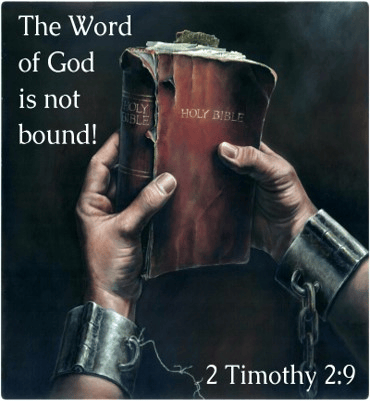
8 “Remember Jesus Christ, risen from the dead, the offspring of David, as preached in my gospel, 9 for which I am suffering, bound with chains as a criminal. But the word of God is not bound!” (2 Timothy 2:8–9 (ESV)
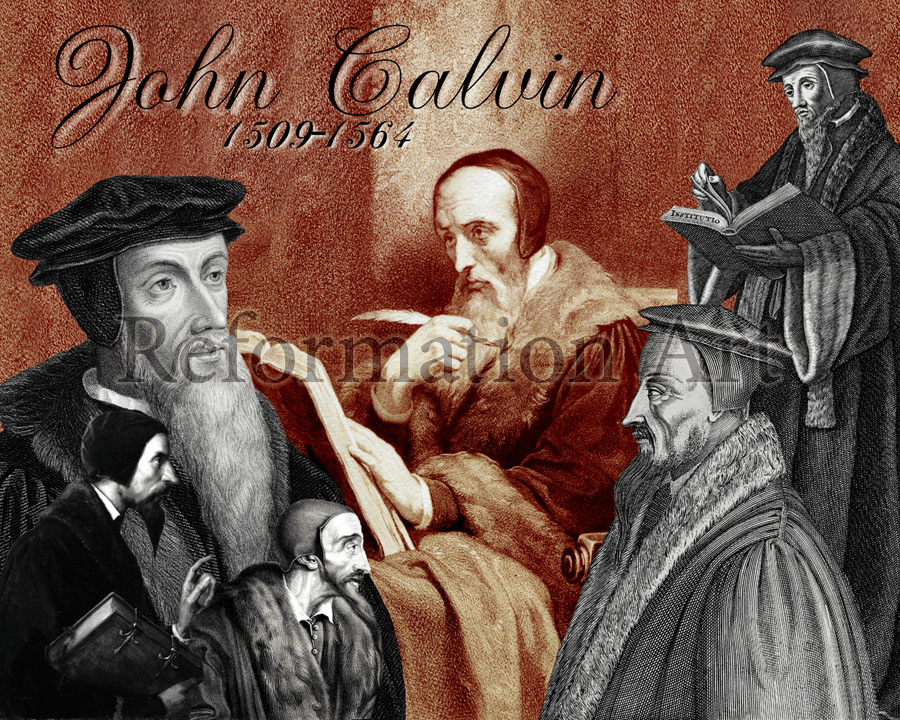
Throughout this study of 2 Timothy, I will extensively refer to John Calvin’s commentary on particular verses. I trust you will find them helpful, as I do, in understanding the biblical text.
Remember that Jesus Christ, being raised from the dead. He expressly mentions some part of his doctrine, which he wished to go down to posterity, entire and uncorrupted. It is probable that he glances chiefly at that part about which he was most afraid; as will also appear clearly from what follows, when he comes to speak about the error of “Hymenaeus and Philetus,” (2 Timothy 2:17😉 for they denied the resurrection, of which we have a sure pledge in this confession, when they falsely said that it was already past.
How necessary this admonition of Paul was, the ancient histories show; for Satan put forth all his strength, in order to destroy this article of our faith. There being two parts of it, that Christ was born “of the seed of David,” and that he rose from the dead; immediately after the time of the Apostles, arose Marcion, who labored to destroy the truth of the human nature in Christ; and afterwards he was followed by the Manichaeans; and even, in the present day, this plague is still spreading.
So far as relates to the resurrection, how many have been employed, and with what diversified schemes, in laboring to overthrow the hope of it! This attestation, therefore, means as much as if Paul had said, “Let no one corrupt or falsify my gospel by slanders; I have thus taught, I have thus preached, that Christ, who was born a man of the seed of David, rose from the dead.”
According to my gospel. He calls it “his gospel,” not that he professes to be the author but the minister of it. Now, in the resurrection of Christ we all have a sure pledge of our own resurrection. Accordingly, he who acknowledges that Christ has risen affirms that the same thing will take place with us also; for Christ did not rise for himself, but for us. The head must not be separated from his members. Besides, in the resurrection of Christ is contained the fulfillment of our redemption and salvation; for it is added, from the dead. Thus Christ, who was dead, arose. Why? and for what purpose? Here we must come to ourselves, and here too is manifested the power and fruit of both, namely, of his resurrection and of his death; for we must always hold by this principle, that Scripture is not wont to speak of these things coldly, and as matters of history, but makes indirect reference to the fruit.
Of the seed of David. This clause not only asserts the reality of human nature in Christ, but also claims for him the honor and name of the Messiah. Heretics deny that Christ was a real man, others imagine that his human nature descended from heaven, and others think that there was in him nothing more than the appearance of a man. Paul exclaims, on the contrary, that he was “of the seed of David;” by which he undoubtedly declares that he was a real man, the son of a human being, that is, of Mary. This testimony is so express, that the more heretics labor to get rid of it, the more do they discover their own impudence. The Jews and other enemies of Christ deny that he is the person who was formerly promised; but Paul affirms that he is the son of David, and that he is descended from that family from which the Messiah ought to descend.
In which I am a sufferer. This is an anticipation, for his imprisonment lessened the credit due to his gospel in the eyes of ignorant people. He, therefore, acknowledges that, as to outward appearance, he was imprisoned like a criminal; but adds, that his imprisonment did not hinder the gospel from having free course; and not only so, but that what he suffers is advantageous to the elect, because it tends to confirm them. Such is the unshaken courage of the martyrs of Christ, when the consciousness of being engaged in a good cause lifts them up above the world; so that, from a lofty position, they look down with contempt, not only on bodily pains and agonies, but on every kind of disgrace.
Moreover, all godly persons ought to strengthen themselves with this consideration, when they see the ministers of the gospel attacked and outraged by adversaries, that they may not, on that account, cherish less reverence for doctrine, but may give glory to God, by whose power they see it burst through all the hindrances of the world. And, indeed, if we were not excessively devoted to the flesh, this consolation alone must have been sufficient for us in the midst of persecutions, that, if we are oppressed by the cruelty of the wicked, the gospel is nevertheless extended and more widely diffused; for, whatever they may attempt, so far are they from obscuring or extinguishing the light of the gospel, that it burns the more brightly. Let us therefore bear cheerfully, or at least patiently, to have both our body and our reputation shut up in prison, provided that the truth of God breaks through those fetters, and is spread far and wide.
May the Lord’s truth and grace be found here. Have a blessed day in the Lord.
“Remember Jesus Christ, risen from the dead, the offspring of David, as preached in my gospel, 9 for which I am suffering, bound with chains as a criminal. But the word of God is not bound!” (2 Timothy 2:8–9 (ESV)
The Apostle Paul experienced several imprisonments as a disciple of Jesus Christ (Acts 16:16-24; 21-28). In fact, Paul wrote four epistles, Ephesians, Philippians, Colossians and Philemon, from prison. Biblical scholars refer to these letters as the Prison Epistles.
Paul wrote 2 Timothy during his second Roman imprisonment (2 Tim.1:8; 2:9). The reason for his incarceration is unknown. Perhaps it was because Rome’s persecution of Christians following the city’s great fire which the Roman Emperor Nero caused.
Paul wrote he experienced suffering (κακοπαθῶ; kakopatho). For Paul, this was a present, active and real period of distress, physical pain and hardship. It was an indefinite period of great affliction for him.
Paul also wrote he was bound with chains as a criminal. To be boundwith chains (δεσμῶν; desmon) means he personally possessed fetters and bonds restricting his movement. These chains could have been either made of rope or metal. The phrase as a criminal (ὡς κακοῦργος; hos kakourgos) is a simile which is an indirect compassion. Although Paul was not a criminal, Rome treated him as such.
In spite of Paul’s bondage, he wanted Timothy to know the word of God is not bound. The phrase the word of God (λόγος θεοῦ; logos theou) is a message directly and solely originating and sourced by God alone. As such, the word of God is not bound (δέδεται; dedetai) by human efforts or behavior. No one can restrict or imprison God’s Word in general, or the gospel in particular.
Why is the Word of God not bound? What is so unique about the Scriptures? The following outline is by Dr. Norman Geisler from his book How History Views the Bible – Decide For Yourself. Grand Rapids: MI.: Zondervan, 1982.
I. The Origin of Scripture
A. The Words from God
Aaron spoke all the words that the LORD had spoken to Moses and did the signs in the sight of the people. – Exodus 4:30
You shall not add to the word that I command you, nor take from it, that you may keep the commandments of the LORD your God that I command you. – Deuteronomy 4:2
“And as for me, this is my covenant with them,” says the LORD: “My Spirit that is upon you, and my words that I have put in your mouth, shall not depart out of your mouth, or out of the mouth of your offspring, or out of the mouth of your children’s offspring,” says the LORD, “from this time forth and forevermore. “– Isaiah 59:21
“Thus says the LORD: Stand in the court of the LORD’s house, and speak to all the cities of Judah that come to worship in the house of the LORD all the words that I command you to speak to them; do not hold back a word.” – Jeremiah 26:2
The lion has roared; who will not fear? The Lord GOD has spoken; who can but prophesy?” – Amos 3:8
B. Conveyed Through Humans
I will raise up for them a prophet like you from among brothers. And I will put my words in his mouth, and he shall speak to them all that I command him. – Deuteronomy 18:18
“The Spirit of the LORD speaks by me; his word is on my tongue.” – 2 Samuel 23:2
While they were bringing out the money that had been brought into the house of the LORD, Hilkiah the priest found the Book of the Law of the LORD given through Moses. – 2 Chronicles 34:14
They made their hearts diamond-hard lest they should hear the law and the words that the LORD of hosts had sent by his Spirit through the former prophets. Therefore, great anger came from the LORD of hosts. – Zechariah 7:12
II The Nature of Scripture
A. Effectual
so shall my word be that goes out from my mouth; it shall not return to me empty, but it shall accomplish that which I purpose, and shall succeed in the thing for which I sent it. – Isaiah 55:11
B. Eternal
The grass withers, the flower fades, but the word of God will stand forever. – Isaiah 40:8
C. The Guide for Life
Your word is lamp to my feet and a light to my path. – Psalm 119:105
D. Infallible
God is not man, that he should lie, or a son of man, that he should change his mind. Has he said, and will he not do it? Or has he spoken, and will he not fulfill it? – Numbers 23:19
the fear of the LORD is clean, enduring forever; the rules of the LORD are true, and righteous altogether. – Psalm 19:9
E. True
Your righteousness is righteous forever, and your law is true. – Psalm 119:142
The insolent utterly deride me, but I do not turn away from your law. – Psalm 119:51
The sum of your word is truth, and every one of your righteous rules endures forever. – Psalm 119:160
And we impart this in words not taught by human wisdom but taught by the Spirit, interpreting spiritual truths to those who are spiritual. – 1 Cor. 2:13
F. Authoritative
1. Absolute
Then Jesus said to him, “Be gone, Satan! For it is written, “‘You shall worship the Lord your God and him only shall you serve.’” – Matthew 4:10
If anyone thinks that he is a prophet, or spiritual, he should acknowledge that the things I am writing to you are a command of the Lord. – 1 Corinthians 14:37
But even if we or an angel from heaven should preach to you a gospel contrary to the one we preached to you, let him be accursed. As we have said before, so now I say again: If anyone is preaching to you a gospel contrary to the one you received, let him be accursed. For am I now seeking the approval of man, or of God? Or am I trying to please man? If I were still trying to please man, I would not be a servant of Christ. For I would have you know, brothers, that the gospel that was preached by me is not man’s gospel. For I did not receive it from any man, nor was I taught it, but I received it through a revelation of Jesus Christ. – Galatians 1:8-12
For you know what instructions we gave you through the Lord Jesus. – 1 Thessalonians 4:2
2. Prophetic and apostolic
Long ago, at many times and in many ways, God spoke to our fathers by the prophets,but in these last days he has spoken to us by his Son, whom he appointed the heir of all things, through whom also he created the world. – Hebrews 1:1-2
For since the message declared by angels proved to be reliable, and every transgression or disobedience received a just retribution, how shall we escape if we neglect such a great salvation? It was declared at first by the Lord, and it was attested to us by those who heard, – Hebrews 2:2-3
3. Timeless
Heaven and earth will pass away, but my words will not pass away. – Matthew 24:35
G. Complete
I warn everyone who hears the words of the prophecy of this book: if anyone adds to them, God will add to him the plagues described in this book, and if anyone takes away from the words of the book of this prophecy, God will take away his share in the tree of life and in the holy city, which are described in this book. – Revelation 22:18-19
H. Effectual
But Jesus answered them, “You are wrong, because you know neither the Scriptures nor the power of God. – Matthew 22:29
“But how then should the Scriptures be fulfilled, that it must be so?” – Matthew 26:54
I. The Foundation of Faith
built on the foundation of the apostles and prophets, Christ Jesus himself being the cornerstone, – Ephesians 2:20
J. The Guide of Faith
When the Spirit of truth comes, he will guide you into all the truth, for he will not speak on his own authority, but whatever he hears he will speak, and he will declare to you the things that are to come. – John 16:13
K. Historically True
For just as Jonah was three days and three nights in the belly of the great fish, so will the Son of Man be three days and three nights in the heart of the earth. – Matthew 12:40
He answered, “Have you not read that he who created them from the beginning made them male and female, – Matthew 19:4
For as were the days of Noah, so will be the coming of the Son of Man. For as in those days before the flood they were eating and drinking, marrying and giving in marriage, until the day when Noah entered the ark, and they were unaware until the flood came and swept them all away, so will be the coming of the Son of Man.– Matthew 24:37-39
For man was not made from woman, but woman from man. Neither was man created for woman, but woman for man. – 1 Corinthians 11:8-9
For Adam was formed first, then Eve; – 1 Timothy 2:13
L. Indestructible
“Do not think that I have come to abolish the Law or the Prophets; I have not come to abolish them but to fulfill them. For truly, I say to you, until heaven and earth pass away, not an iota, not a dot, will pass from the Law until all is accomplished.” – Matthew 5:17-18
Jesus answered them, “Is it not written in your Law, ‘I said, you are gods’? If he called them gods to whom the word of God came—and Scripture cannot be broken— – John 10:34-35
M. Absolute Truth
Sanctify them in the truth; your word is truth. – John 17:17
III. The Extent of Biblical Authority
A. To All That Is Written
All Scripture is breathed out by God and profitable for teaching, for reproof, for correction, and for training in righteousness, – 2 Timothy 3:16
B. To the Very Words
But he [Jesus] answered, “It is written, “‘Man shall not live by bread alone, but by every word that comes from the mouth of God.’” – Matthew 4:4
And we impart this in words not taught by human wisdom but taught by the Spirit, interpreting spiritual truths to those who are spiritual. – 1 Corinthians 2:13
C. To the Smallest Parts of Words
“Do not think that I have come to abolish the Law or the Prophets; I have not come to abolish them but to fulfill them. For truly, I say to you, until heaven and earth pass away, not an iota, not a dot, will pass from the Law until all is accomplished. – Matthew 5:17-18
D. To Verb Tenses
But Jesus answered them, “You are wrong, because you know neither the Scriptures nor the power of God. For in the resurrection they neither marry nor are given in marriage, but are like angels in heaven. And as for the resurrection of the dead, have you not read what was said to you by God:‘I am the God of Abraham, and the God of Isaac, and the God of Jacob’? He is not God of the dead, but of the living.” – Matthew 22:29-32
E. To Number (singular or plural)
Now the promises were made to Abraham and to his offspring. It does not say, “And to offsprings,” referring to many, but referring to one, “And to your offspring,” who is Christ. – Galatians 3:16
“The Bible claims for itself that every word or part of a word, with tenses and number, is absolutely true since it is given by the Holy Spirit from the mouth of God, who cannot lie (Titus 1:2; Hebrews 6:18). Therefore, it has final divine authority in whatever it teaches, whether it be historical, scientific, or spiritual matters. This applies to both the Old Testament and the New Testament.
May the Lord’s truth and grace be found here. Have a blessed day in the Lord,” concludes Dr. Geisler.
8 “Remember Jesus Christ, risen from the dead, the offspring of David, as preached in my gospel, 9 for which I am suffering, bound with chains as a criminal. But the word of God is not bound!” (2 Timothy 2:8–9 (ESV)
The Apostle Paul experienced several imprisonments as a disciple of Jesus Christ (Acts 16:16-24; 21-28). In fact, Paul wrote four epistles, Ephesians, Philippians, Colossians and Philemon, from prison. Biblical scholars refer to these letters as the Prison Epistles.
“Four New Testament letters (sometimes called the “Captivity Letters”) attributed to the Apostle Paul: Ephesians, Philippians, Colossians, and Philemon. In each of these letters, Paul mentions that he is a prisoner (Eph 3:1, 4:1; Phil 1:7, 12–14, 17; Col 4:3, 10; Phlm 1, 9, 13, 23). (The Pastoral Letters also might have been written from prison, but these are grouped separately.) The Prison Letters could have been sent from Caesarea, where Paul was imprisoned for two years (Acts 24:27), or from Rome, where he spent two years under house arrest (Acts 28:16, 30).[1]
Paul wrote 2 Timothy during his second Roman imprisonment (2 Tim.1:8; 2:9). The reason for his incarceration is unknown. What is known is no one supported him during his preliminary hearing (4:16) and he was certain Rome would execute him (4:6). He was also alone (4:10-11) with Phygelus and Hermogenes turning away from him (1:15-16) and Alexander the coppersmith having done him great harm (4:14). However, Paul mentioned Onesiphorus had been a great encouragement to him (1:16-17).
Paul wrote he experienced suffering (κακοπαθῶ; kakopatho). For Paul, this was a present, active and real period of distress, physical pain and hardship. It was an indefinite period of great affliction for him.
Paul also wrote he was bound with chains as a criminal. To be boundwith chains (δεσμῶν; desmon) means he personally possessed fetters and bonds restricting his movement. These chains could have been either made of rope or metal. The phrase as a criminal (ὡς κακοῦργος; hos kakourgos) is a simile which is an indirect compassion. Although Paul was not a criminal, Rome treated him as such.
In spite of Paul’s bondage, he wanted Timothy to know the word of God is not bound. The phrase the word of God (λόγος θεοῦ; logos theou) is a message directly and solely originating and sourced by God alone. As such, the word of God is not bound (δέδεται; dedetai) by human efforts or behavior. No one can restrict or imprison God’s Word in general, or the gospel in particular.
“Preaching the good news about the crucified but resurrected Son of David was what had landed Paul in a Roman jail. Much of the Book of Acts catalogs Paul’s suffering for the cause of Christ (cf. 2 Cor. 11:23–33). With every move as he wrote or dictated this letter, the clinking iron reminded him that he was chained like a criminal (kakourgos, lit., “evildoer”). But though he was chained, God’s Word is not chained (Paul equated “my gospel” with “God’s Word”; cf. 1 Thes. 2:13; 2 Thes. 3:1). God would continue to use it through Timothy, and those to whom Timothy entrusted it. Paul’s apparent shame and impotence should be no cause for alarm, discouragement, or faintheartedness.”[2]
“In the midst of all his suffering and shame, there were two considerations which afforded him much comfort: First, “The way of the cross leads home,” for the watchful eye of Jesus Christ who lives and leads is constantly upon me. He is able to guard my deposit with a view to that day (2 Tim. 1:12). Secondly, Though I am bound, the word of God is not bound. Others will carry on when I leave this earthly scene. The authorities have put me in this dungeon, but they cannot imprison the gospel. It will triumph. It will perform its pre-ordained mission on earth. No enemy can thwart it. See the beautiful commentary which Scripture itself supplies in such well-known passages as Is. 40:8; 55:11; Phil. 1:12–14; and 2 Tim. 4:17.”[3]
As we close today’s devotional, pay particular attention to the final two stanzas of Martin Luther’s hymn A Mighty Fortress is our God.
1 A mighty fortress is our God, a bulwark never failing; our helper he, amid the flood of mortal ills prevailing. For still our ancient foe does seek to work us woe; his craft and power are great, and armed with cruel hate, on earth is not his equal.
2 Did we in our own strength confide, our striving would be losing, were not the right Man on our side, the Man of God’s own choosing. You ask who that may be? Christ Jesus, it is he; Lord Sabaoth his name, from age to age the same; and he must win the battle.
3 And though this world, with devils filled, should threaten to undo us, we will not fear, for God has willed his truth to triumph through us. The prince of darkness grim, we tremble not for him; his rage we can endure, for lo! his doom is sure; one little word shall fell him.
4 That Word above all earthly powers no thanks to them abideth; the Spirit and the gifts are ours through him who with us sideth. Let goods and kindred go, this mortal life also; the body they may kill: God’s truth abideth still; his kingdom is forever!
May the Lord’s truth and grace be found here. Have a blessed day in the Lord.
Soli deo Gloria!
[1] Jason C. Kuo, “Prison Letters,” in The Lexham Bible Dictionary, ed. John D. Barry et al. (Bellingham, WA: Lexham Press, 2016).
[2] A. Duane Litfin, “2 Timothy,” in The Bible Knowledge Commentary: An Exposition of the Scriptures, ed. J. F. Walvoord and R. B. Zuck, vol. 2 (Wheaton, IL: Victor Books, 1985), 753.
[3] William Hendriksen and Simon J. Kistemaker, Exposition of the Pastoral Epistles, vol. 4, New Testament Commentary (Grand Rapids: Baker Book House, 1953–2001), 251–252.
8 “Remember Jesus Christ, risen from the dead, the offspring of David, as preached in my gospel, 9 for which I am suffering, bound with chains as a criminal. But the word of God is not bound!” (2 Timothy 2:8–9 (ESV)
“I always have trouble remembering three things: faces, names, and – I can’t remember what the third thing is.” — Fred Allen
“When we tell the story of our own conversion, I would have it done with great sorrow, remembering what we used to be, and with great joy and gratitude, remembering how little we deserve these things.” — Charles Spurgeon
“We must remember that God is always present, even in our darkest moments.” — Elisabeth Elliot
In his encouragement to Timothy to persevere in the ministry (2 Timothy 2:3-7), the Apostle Paul wanted his young protégé to remember the single most important truth of the gospel; the risen Christ. Jesus is the only one “who abolished death and brought life and immortality to light through the gospel” (2 Tim. 1:10).
“In view of raging persecution, comfort was certainly needed. Faithful adherence to duty meant hardship (verses 3–6). Let Timothy not lose courage. Let him not even fear death. Let him rest his confidence on One who “utterly defeated” this terrible enemy (2 Tim. 1:10).”[1]
Remember Jesus Christ. To remember (Μνημόνευε; Mnemoneue) is a present active imperative verb. It means to presently, actively and obediently recall and think about something again. In this case, Paul commanded Timothy to remember Jesus Christ; the Savior and Anointed Lord.
It is interesting to observe thus far in this epistle, this is the first time Paul referred to the Lord as Jesus Christ and not Christ Jesus (1:1, 2, 9, 10, 13; 2:1, 3). Why?
“Note here “Jesus Christ,” instead of “Christ Jesus” as elsewhere in 2 Timothy. If this be more than a stylistic variation, the possible reason for it may well have been this, that the apostle wished to turn Timothy’s attention first of all to the historical, curse-laden Jesus (Gal. 3:13; 4:4, 5), in order that next he may remind him of the fact that this Jesus “was made” (was openly revealed as) Christ as a reward for his obedience unto death, yea the death of the cross (Acts 2:36; Phil. 2:5–11). Let Timothy then rivet his attention upon the resurrection; nay rather, let him keep his thought concentrated on the resurrected Lord himself. “[2]
Paul described Jesus Christ as risen from the dead. The word risen (ἐγηγερμένον; egegermenon) is a perfect passive singular participle. The perfect tense describes a past completed action with continuing results. Risen means to make alive again or to raise to life. “The perfect marks the permanent condition—raised and still living.”[3]
“These words form rather the conclusion of the preceding paragraph than the beginning of a new one. St. Paul in pressing home his lesson, passes from the figure of speech to the concrete example of suffering followed by glory. And as he has, immediately before, been laying stress on the certainty of reward, he gives a prominent place ‘the having been raised from the dead.’ Jesus Christ, of the seed of David, ‘Himself Man’ (I Tim. 2:5), is the ideal soldier, athlete, and field-laborer; yet One who can be an example to us. It is not the resurrection as a doctrinal fact (a.v.) that St. Paul has in mind, but the resurrection as a personal experience of Jesus Christ, the reward He received, His being ‘crowned with glory and honor, because of the suffering of death’ (Heb. 2:9).”[4]
Jesus Christ is also the offspring of David. Offspring (σπέρματος; spermatos) means Jesus is solely and humanly the descendant of King David. Jesus Christ is “of the seed of David” (2 Sam. 7:12, 13; Ps. 89:28; 132:17; Acts 2:30; Rom. 1:3; Rev. 5:5; and cf. Matt. 1:20; Luke 1:27, 32, 33; 2:4, 5; John 7:42). He is “the Son of David” (Matt. 1:1; 9:27; 12:23; 15:22; 20:30, 31; 21:9, 15; 22:42–45; Mark 10:47, 48; 12:35; Luke 18:38, 39; 20:41).
“It is as the rightful, spiritual heir of David, David’s glorious Antitype, that he (Jesus Christ) sits enthroned at the Father’s right hand.”[5]
Paul preached the gospel of Jesus Christ (Rom. 3:21-26; I Cor. 1:18-25; 15:1-2; Phil. 3:1-9). Paul was not ashamed of the gospel of Jesus Christ (Rom. 1:16-17). Paul commanded believers Jesus Christ; the central figure of the gospel.
“Man of Sorrows!” what a name For the Son of God, who came Ruined sinners to reclaim. Hallelujah! What a Savior!
Bearing shame and scoffing rude, In my place condemned He stood; Sealed my pardon with His blood. Hallelujah! What a Savior!
Guilty, vile, and helpless we; Spotless Lamb of God was He; “Full atonement!” can it be? Hallelujah! What a Savior!
Lifted up was He to die; “It is finished!” was His cry; Now in Heav’n exalted high. Hallelujah! What a Savior!
When He comes, our glorious King, All His ransomed home to bring, Then anew His song we’ll sing: Hallelujah! What a Savior!
Remember! May the Lord’s truth and grace be found here.
Soli deo Gloria!
[1] William Hendriksen and Simon J. Kistemaker, Exposition of the Pastoral Epistles, vol. 4, New Testament Commentary (Grand Rapids: Baker Book House, 1953–2001), 250.
[5] William Hendriksen and Simon J. Kistemaker, Exposition of the Pastoral Epistles, vol. 4, New Testament Commentary (Grand Rapids: Baker Book House, 1953–2001), 250.
3 Share in suffering as a good soldier of Christ Jesus. 4 No soldier gets entangled in civilian pursuits, since his aim is to please the one who enlisted him. 5 An athlete is not crowned unless he competes according to the rules. 6 It is the hard-working farmer who ought to have the first share of the crops. 7 Think over what I say, for the Lord will give you understanding in everything.” (2 Timothy 2:3–7 (ESV)
In 2 Timothy 2:3-7, the Apostle Paul provided three analogies illustrating important truths concerning gospel ministry. An analogy is a comparison from life It is a figure of speech comparing two different things to show how they are alike in order to explain a larger point.
“Paul draws analogies to Timothy’s ministry in Christ from three spheres of vocation: military life (vs. 3-4), athletics (vs. 5), and farming (vs. 6). Then he summons Timothy to meditate on the implications of these illustrations (vs. 7),” explains Dr. R. C. Sproul.
The following essay is by Rev. Terry L. Johnson, senior minister of Independent Presbyterian Church in Savannah, Ga. He is author of many books, including The Identity and Attributes of God. He entitled his article Theological Cruelty.
It is “cruel,” said J. I. Packer. The teaching that says the Christian life is easy, that it can be lived without stress, that if one would only trust God for sanctification as one has trusted Him for justification, then all would be well, is just that: cruel. It gives rise to unreasonable and unachievable expectations among the people of God. This theology has been known by several names: the higher life, the victorious life, the abundant life, and so on. Its common theme is that while we can’t live the Christian life, Christ can live it through us.
Our problem, it says, is that we are trying to live the Christian life ourselves. We need to stop. We need to quit our futile efforts. Instead, we need to yield ourselves to the love of Christ. Let Him live through us. Get out of the way. Quit striving. In the words of its old motto: “Let go and let God.” Do so, it says, and peace will flood your soul. Victory over sin will be ensured. Why? Because Christ Himself will be fighting our battles. So just step aside.
Sounds wonderful, doesn’t it? Is there a problem? Yes, indeed. We need go no further than the metaphors employed by the apostle Paul in 2 Timothy 2:1–13. He likens the Christian life to the labors of the soldier, the athlete, the farmer, and in verse 15, the workman (NASB). Among the many things that might be said about each of these vocations, we note that each requires vigorous exertions. The soldier fights, the athlete competes, the “hard-working farmer,” labors long, and the workman builds. Success in these endeavors requires aggressive, focused, energetic involvement. Each may, and should, pray to God for help, for wisdom, and for strength. God’s strength is necessary for these activities. But the soldier finally must pick up his sword and fight; the athlete must step into the arena and compete; the farmer must work the soil, plant, water, weed, and harvest; and the workman must lay each brick. Dependence upon God never means passivity; reliance upon God never means inactivity. Fail to grasp the human contribution to Christian service and personal sanctification and one is doomed to experience continual frustration and defeat.
Imagine you are invited on a two-night, forty-hour, 160-mile bike ride from Paseo Robles to San Ynez, California. You’re told by the organizers that it’s “downhill all the way.” “My grandmother could do it,” one of them laughs. You know what a downhill bike ride is like. Sounds fun!
Off you go. Fifteen minutes into it and you’re winded. Thirty minutes and your thighs are burning with fatigue. You check your watch. You’ve got three more hours tonight, all day tomorrow, and another half-day after that. Despair sweeps over you. You begin to question yourself. What’s wrong with me? Maybe I’m sick. Maybe I’m in terrible shape. Or maybe my bike is defective. Self-doubt floods your soul. Something is very, very wrong, you conclude.
At your first rest stop you confide in your best friend: “I think something is wrong with me.” Your friend shakes his head. “This is one of the toughest rides in all of the continental United States. Neophytes are always given the grandmother talk. You wouldn’t attempt it otherwise. This is an exhausting, painful, rigorous course. Relax. We’re all winded. We’re all aching. We’re all tired. You’re supposed to be by the time you get to the rest stop. That’s why it’s there.”
What psychological impact will the truth have upon our rider? His out-look will dramatically change. As he becomes winded, aching, and exhausted, he will know that this is normal, not abnormal. He won’t be flooded with despair. He won’t be looking for explanations for his exhaustion, such as defective conditioning or equipment. No, he now understands that he is on a difficult course, experiencing what all who tackle it experience, and may, with confidence, attack it with all his might.
The Christian life is difficult. It helps to know that up front. We can expect not to arrive in heaven on “flowery beds of ease,” as Isaac Watts once wrote. Scripture abounds with military (Eph. 6:10–20; Rom. 13:12; 2 Cor. 10:3–4; 1 Tim. 6:12; James 4:1; 1 Peter 2:11), athletic (1 Cor. 9:24–27; Gal. 2:2; Phil. 3:14; 2 Tim. 4:7), agricultural (Matt 13:1–43), and laboring (see slave, bond-slave, servant) metaphors. Teach a formula of ease and it will give rise to expectations that are utterly divorced from reality. Sooner or later unmet expectations will greet the reality of struggle, spiritual warfare, and hard discipline. Disillusionment with a faith that “doesn’t work” may be considerable if well-meaning fantasy is not quickly replaced with biblical realism.
“Who does the fighting?” Lloyd-Jones asked in a sermon by that title, preached in his famous Ephesians series. His answer: We do. Yes, we are strong “in the Lord” and we fight “in the strength of His might” (Eph. 6:10). But we do the fighting. Victory is assured, but only as we enter the fray with the combative energy of the solider, the competitive spirit of the athlete, and the hard-working ethos of the farmer and the workman.
3 Share in suffering as a good soldier of Christ Jesus. 4 No soldier gets entangled in civilian pursuits, since his aim is to please the one who enlisted him. 5 An athlete is not crowned unless he competes according to the rules. 6 It is the hard-working farmer who ought to have the first share of the crops. 7 Think over what I say, for the Lord will give you understanding in everything.” (2 Timothy 2:3–7 (ESV)
Throughout this study of 2 Timothy, I will extensively refer to John Calvin’s commentary on particular verses. I trust you will find them helpful, as I do, in understanding the biblical text.
Do thou therefore endure afflictions. Not without strong necessity has he added this second exhortation; for they who offer their obedience to Christ must be prepared for “enduring afflictions;” and thus, without patient endurance of evils, there will never be perseverance. Accordingly, he adds, “as becomes a good soldier of Jesus Christ.” By this term he means that all who serve Christ are warriors, and that their condition as warriors consists, not in inflicting evils, but rather in patience.
These are matters on which it is highly necessary for us to meditate. We see how many there are every day, that throw away their spears, who formerly made a great show of valor. Whence does this arise? Because they cannot become inured to the cross. First, they are so effeminate that they shrink from warfare. Next, they do not know any other way of fighting than to contend haughtily and fiercely with their adversaries; and they cannot bear to learn what it is to “possess their souls in patience” (Luke 21:19).
No man who warreth. He continues to make use of the metaphor which he had borrowed from warfare. Yet, strictly speaking, he formerly called Timothy “a soldier of Christ” metaphorically; but now he compares profane warfare with spiritual and Christian warfare in this sense. “The condition of military discipline is such, that as soon as a soldier has enrolled himself under a general, he leaves his house and all his affairs, and thinks of nothing but war; and in like manner, in order that we may be wholly devoted to Christ, we must be free from all the entanglements of this world.”
With the affairs of life. By “the affairs of life”, he means the care of governing his family, and ordinary occupations; as farmers leave their agriculture, and merchants their ships and merchandise, till they have completed the time that they agreed to serve in war. We must now apply the comparison to the present subject, that every one who wishes to fight under Christ must relinquish all the hindrances and employments of the world, and devote himself unreservedly to the warfare. In short, let us remember the old proverb, Hoc age , which means, that in the worship of God, we ought to give such earnestness of attention that nothing else should occupy our thoughts and feelings. The old translation has, “No man that fights for God,” etc. But this utterly destroys Paul’s meaning.
Here Paul speaks to the pastors of the Church in the person of Timothy. The statement is general, but is specially adapted to the ministers of the word. First, let them see what things are inconsistent within their office, that, freed from those things, they may follow Christ. Next, let them see, each for himself, what it is that draws them away from Christ; that this heavenly General may not have less authority over us than that which a mortal man claims for himself over heathen soldiers who have enrolled under him.
And if any one strive.He now speaks of perseverance, that no man may think that he has done enough when he has been engaged in one or two conflicts. He borrows a comparison from wrestlers, not one of whom obtains the prize till he has been victorious in the end. Thus he says: “In a race all run, but one obtaineth the prize; run so that ye may obtain.” (1 Corinthians 9:24.)
If any man, therefore, wearied with the conflict, immediately withdraw from the arena to enjoy repose, he will be condemned for indolence instead of being crowned. Thus, because Christ wishes us to strive during our whole life, he who gives way in the middle of the course deprives himself of honor, even though he may have begun valiantly. To strive lawfully is to pursue the contest in such a manner and to such an extent as the law requires, that none may leave off before the time appointed.
The husbandman must labor before he receive the fruits. I am well aware that others render this passage differently; and I acknowledge that they translate, word for word, what Paul has written in Greek; but he who shall carefully examine the context will assent to my view. Besides, the use of (κοπιῶντα) to labor instead of (κοπιᾷν)to labor, is a well-known Greek idiom; for Greek writers often make use of the participle in place of the infinitive.
The meaning therefore, is, that husbandmen do not gather the fruit, till they have first toiled hard in the cultivation of the soil, by sowing and by other labors. And if husbandmen do not spare their toils, that one day they may obtain fruit, and if they patiently wait for the season of harvest; how much more unreasonable will it be for us to refuse the labors which Christ enjoins upon us, while he holds out so great a reward?
Understand what I say.He added this, not on account of the obscurity of the comparisons which he has set forth, but that Timothy himself might ponder, how much more excellent is the warfare under the direction of Christ, and how much more abundant the reward; for, when we have studied it incessantly, we scarcely arrive at a full knowledge of it.
The Lord give thee understanding in all things. The prayer, which now follows, is added by way of correction. Because our minds do not easily rise to that “incorruptible crown” (1 Corinthians 9:25) of the life to come, Paul betakes himself to God, to “give understanding” to Timothy. And hence we infer, that not less are we taught in vain, if the Lord do not open our understandings, than the commandments would be given in vain, if he did not impart strength to perform them. For who could have taught better than Paul? And yet, in order that he may teach with any advantage, he prays that God may train his disciple.
3 Share in suffering as a good soldier of Christ Jesus. 4 No soldier gets entangled in civilian pursuits, since his aim is to please the one who enlisted him. 5 An athlete is not crowned unless he competes according to the rules. 6 It is the hard-working farmer who ought to have the first share of the crops. 7 Think over what I say, for the Lord will give you understanding in everything.” (2 Timothy 2:3–7 (ESV)
In 2 Timothy 2:3-7, the Apostle Paul provided three analogies illustrating important truths concerning gospel ministry. An analogy is a comparison from life It is a figure of speech comparing two different things to show how they are alike in order to explain a larger point.
“Paul draws analogies to Timothy’s ministry in Christ from three spheres of vocation: military life (vs. 3-4), athletics (vs. 5), and farming (vs. 6). Then he summons Timothy to meditate on the implications of these illustrations (vs. 7),” explains Dr. R. C. Sproul.
After providing Timothy insights into ministry, the Apostle Paul issued a command to his young protégé. It is a command all those who minister the gospel of Jesus Christ are to obediently follow. The command is contained in one phrase; think over. To think over (νόει; noei) is a present active imperative. The believer in Christ is to presently, actively and obediently think carefully about, consider and understand what Paul presently, actively and realistically said (λέγω; lego).
God’s command to the believer in Christ to obey is followed by an equally important promise to be believed; “for the Lord will give you understanding in everything.” The Lord (κύριος; kurios) is the self-existent and sovereign God who rules and commands.
Paul wrote the Lord will give (δώσει; dosei). In the future, God will personally and actively grant and permit a believer to experience something. What God promises the believer in Christ to experience is understanding (σύνεσιν; synesin). This refers to God-given comprehension and insight in everything (πᾶσιν; pasin).
“Paul appealed to Timothy to reflect on what I am saying, confident that with meditation and contemplation the Lord would grant the young man the insight (synesin, lit., “understanding”) into the wisdom of Paul’s instructions (cf. James 1:5).”[1]
“Since several beautiful thoughts had been compressed into a terse three-fold figure, and no explanation had been furnished, Timothy is told to put his mind on (νόειpresent, active imperative ofνοέω; cf.νοῦςmind) that which Paul has just said (in verses 4, 5, 6). Mere reading is not enough. What has been written must be pondered. What has been spoken must be digested (cf. Matt. 11:29; 13:51; 15:17; 16:9, 11; 1 Cor. 10:15; and especially Rev. 10:9, 10). Timothy need not fear that such mental activity will be fruitless. Has not the Lord given his definite promise? See Luke 19:26; John 14:26; 16:13. Surely in all matters with respect to which Timothy is in need of understanding (σύνεσις, comprehension, insight), it will be given to him if he will but apply himself. Let Timothy then compare a scripture with scripture. Let him pray for wisdom (James 1:5). Let him reflect on his own past experience and the experience of other children of God. Let him listen to what these others have to say. By such means as these the Holy Spirit will give him all the guidance he will need in the performance of his task. He will be able to apply to himself and his office the rich meaning of the threefold figure, and he will derive from it the comfort which it affords.”[2]
May the Lord’s truth and grace be found here.
Soli deo Gloria!
[1] A. Duane Litfin, “2 Timothy,” in The Bible Knowledge Commentary: An Exposition of the Scriptures, ed. J. F. Walvoord and R. B. Zuck, vol. 2 (Wheaton, IL: Victor Books, 1985), 753.
[2] William Hendriksen and Simon J. Kistemaker, Exposition of the Pastoral Epistles, vol. 4, New Testament Commentary (Grand Rapids: Baker Book House, 1953–2001), 249–250.