
Colossians 2:14-15: In Christ Alone. (Podcast #21).

Growing in the Grace & Knowledge of Jesus Christ

33 So Pilate entered his headquarters again and called Jesus and said to him, “Are you the King of the Jews?” 34 Jesus answered, “Do you say this of your own accord, or did others say it to you about me?” 35 Pilate answered, “Am I a Jew? Your own nation and the chief priests have delivered you over to me. What have you done?” 36 Jesus answered, “My kingdom is not of this world. If my kingdom were of this world, my servants would have been fighting, that I might not be delivered over to the Jews. But my kingdom is not from the world.” 37 Then Pilate said to him, “So you are a king?” Jesus answered, “You say that I am a king. For this purpose I was born and for this purpose I have come into the world—to bear witness to the truth. Everyone who is of the truth listens to my voice.” 38 Pilate said to him, “What is truth?” (John 18:33-38 ESV).
In our study of the Gospel of Matthew’s record of the Passion Week of the Lord Jesus Christ, it has been necessary, and insightful, to examine all four Gospel accounts. This discipline provides us understanding of all the events and encounters which took place during those hours and days.
With this in mind, the Apostle John’s narrative of Pontius Pilate’s second encounter with Jesus is important to examine. Therefore, we deviate from Matthew’s Gospel at this time to exclusively focus on John’s.
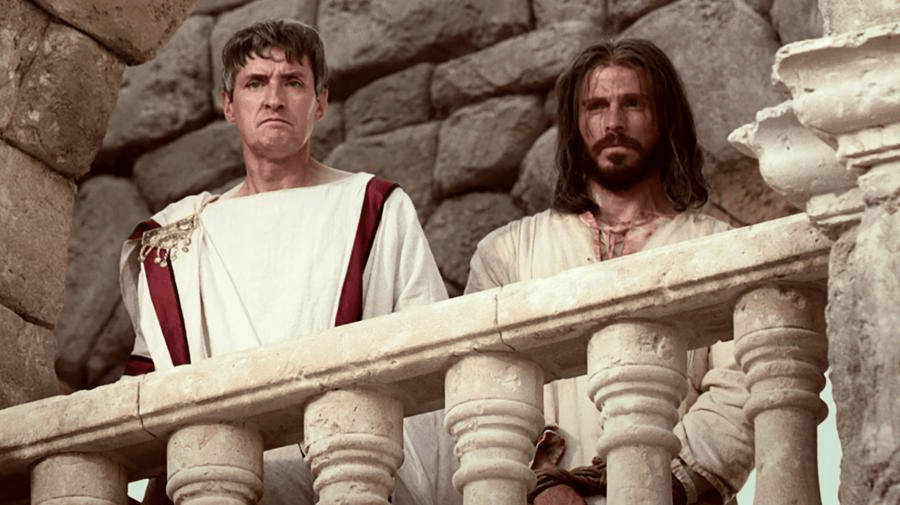
When Herod Antipas sent Jesus back to Pilate, he reentered his headquarters and began his second interrogation of the Lord. Pilate asked Jesus, “Are you the King of the Jews?”
It was not a simple yes or no question by Pilate. Neither would it require a simple yes or no answer by Jesus. At issue was whether Jesus was a political, earthly king or someone greater. Pilate, and Rome, would view an earthly political rival as a threat to their empire, authority and power. If Jesus was not a political king, then what kind of King was He? This is what Pilate wanted to know. The Lord’s initial response, and the dialogue which followed, revealed two significantly different worldviews. These two worldviews continue today. One’s allegiance to one or the other determines whether an individual is a believer in Jesus Christ, or not.
34 Jesus answered, “Do you say this of your own accord, or did others say it to you about me?” 35 Pilate answered, “Am I a Jew? Your own nation and the chief priests have delivered you over to me. What have you done?” Pilate wanted to know what practical and political crime Jesus committed warranting the Jews desire for the Roman government to execute Him.
Pilate’s response revealed his earthly perspective of Jesus’ supposed kingship. The Roman governor was a secular man with a secular mindset and thought process. Secular is defined as “attitudes, activities, or other things that have no religious or spiritual basis.” It is a worldview focused exclusively on the temporal present and not upon any spiritual or future afterlife. Secularism denies transcendent reality and intrinsic meaning. For the secularist, ultimate reality exists in what can be experienced with the physical senses.
However, Jesus was not a secularist. How could He be? He was and is the eternal, transcendent and immanent God. He not only created the world, but sustains it by the word of His Power (Hebrews 1:1-3). With this mindset and worldview, Jesus answered, ““My kingdom is not of this world. If my kingdom were of this world, my servants would have been fighting, that I might not be delivered over to the Jews. But my kingdom is not from the world.”
Jesus stated His kingdom, or His rule and reign, was not a secular one of the temporal world and earthly kingdoms which come and go (Dan. 2:20-22). Three times He used the phrase “my kingdom.” If His kingdom was of this world, Jesus reasoned His disciples would fight like others who follow their earthly kings in battle. Rather, He ruled an eternal kingdom not of this temporal world or existence. He also stated this three times.
“We are dealing, therefore, with a spiritual-dominion concept. John 18:36 does not have reference to God’s dominion (hence, also the dominion of the second person of the Trinity) over all his creatures, but distinctly to Christ’s spiritual kingship in the hearts and lives of his followers,” explains Dr. William Hendriksen.
“Secondly, then, the kingship of Jesus is not like an earthly kingship. It does not spring from the earth: it was not given to him by any earthly power, and it is totally different in character. Thus, for example, it does not employ earthly means. If Christ’s kingship had been earthly in origin and character, he would have had officers (“underlings”)—just like the Sanhedrin, for instance, which had its police-force, and just like Pilate, who had his Roman guards—, and these would have been fighting, so that he would not have been handed over to … here we probably expect “the Romans,” but Jesus says, “the Jews!”
“Far from trying to lead the Jews in a revolt against the Romans, Jesus considers these Jews his opponents. Have they not delivered him up to Pilate? Had Christ’s kingship been of an earthly kind, his attendants would have been fighting, under his own command, so that in Gethsemane he would not have been handed over to the Jews and their wicked Sanhedrin! But instead of ordering them to fight in his defense, he had done the exact opposite,” concludes Dr. Hendriksen.
Jesus’ biblical worldview confused the secular Roman governor. It confuses secularists today (I Cor. 1:18-25). However, it is the power of God to whom God justifies, redeems and reconciles (Rom. 1:16-17; 3:21-26).
Soli deo Gloria!

33 So Pilate entered his headquarters again and called Jesus and said to him, “Are you the King of the Jews?” 34 Jesus answered, “Do you say this of your own accord, or did others say it to you about me?” 35 Pilate answered, “Am I a Jew? Your own nation and the chief priests have delivered you over to me. What have you done?” 36 Jesus answered, “My kingdom is not of this world. If my kingdom were of this world, my servants would have been fighting, that I might not be delivered over to the Jews. But my kingdom is not from the world.” 37 Then Pilate said to him, “So you are a king?” Jesus answered, “You say that I am a king. For this purpose I was born and for this purpose I have come into the world—to bear witness to the truth. Everyone who is of the truth listens to my voice.” 38 Pilate said to him, “What is truth?” (John 18:33-38 ESV).
In our study of the Gospel of Matthew’s record of the Passion Week of the Lord Jesus Christ, it has been necessary, and insightful, to examine all four Gospel accounts. This discipline provides us understanding of all the events and encounters which took place during those hours and days.
With this in mind, the Apostle John’s narrative of Pontius Pilate’s second encounter with Jesus is important to examine. Therefore, we deviate from Matthew’s Gospel today to exclusively focus on John’s.
When Herod Antipas sent Jesus back to Pilate, he reentered his headquarters and began his second interrogation of the Lord. Pilate asked Jesus, “Are you the King of the Jews?”
Luke 23:1-2 records the three charges the Sanhedrin brought against Jesus and before Pilate. They were (1) He perverts our nation; (2) He forbids us to pay tribute to the emperor; and (3) He says that he himself is Christ, a king. It was this regarding this third charge Pilate was most concerned. However, Pilate was no one’s fool. He knew the real reason for Jesus’ arrest; the Jewish religious leaders envy of the Lord (Matt. 27:18).
“But, of course, the governor simply could not afford to ignore such charges, not with suspicious Tiberius in the saddle at Rome! So, re-entering the residence (that is, going back to the place from which he had come when the soldiers on guard had reported to him the arrival of the Jews and of their prisoner), he now summoned Jesus—ordering his soldiers to take him out of the hands of the Jewish officers and to bring him inside—, and said to him, “Are you the king of the Jews” (with all the emphasis on the pronoun),” explains Dr. William Hendriksen.
“There may have been a touch of ridicule in this question, ridicule not directed at Jesus but at those who had brought such charges against such a prisoner. It is as if Pilate is saying, as he looks intently upon this prisoner: “Are you the king of the Jews? How utterly ridiculous such a charge!” But at the same time, he asked the question, and it required an answer. However, before it could be answered, it would have to be explained.”
It was not a simple yes or no question by Pilate. Neither would it require a simple yes or no answer by Jesus. At issue was whether Jesus was a political, earthly king or someone greater. Pilate, and Rome, would view an earthly political rival as a threat to their empire, authority and power. If Jesus was not a political king, then what kind of King was He? This is what Pilate wanted to know.
The Lord’s initial response, and the dialogue which followed, reveal two significantly different worldviews. These two worldviews continue today. One’s allegiance to one or the other determines whether an individual is a believer in Jesus Christ, or not.
Soli deo Gloria!

15 Now at the feast the governor was accustomed to release for the crowd any one prisoner whom they wanted. 16 And they had then a notorious prisoner called Barabbas. 17 So when they had gathered, Pilate said to them, “Whom do you want me to release for you: Barabbas, or Jesus who is called Christ?” 18 For he knew that it was out of envy that they had delivered him up. 19 Besides, while he was sitting on the judgment seat, his wife sent word to him, “Have nothing to do with that righteous man, for I have suffered much because of him today in a dream.” (Matthew 27:15-19).
The historical and culture context looms large in today’s text. Unless we understand these two contexts, we will not appreciate why the Holy Spirit inspired Matthew to record this setting and scene. Ultimately, the contexts reveal a true historical event which occurred in space and time. It is fact and not fiction.
First, there was the custom of releasing a prisoner at the Feast of the Passover and Unleavened Bread. The text says, “The governor was accustomed to release for the crowd any one prisoner whom they wanted. 16 And they had then a notorious prisoner called Barabbas. 17 So when they had gathered, Pilate said to them, “Whom do you want me to release for you: Barabbas, or Jesus who is called Christ?”
“Customs like this release of a prisoner varied locally. Roman law recognized two kinds of amnesty: acquittal before the trial and pardon of the condemned; this is the latter. Pilate was not required by law to cooperate, but he had severely irritated the priestly aristocracy and Jerusalemites at the beginning of his tenure and may have wished to avoid further problems,” explains commentator Craig Keener.
“Whether the reference here is to any of the great religious festivals or exclusively to the Passover is not clear, though the idea of setting a prisoner free would seem to be most appropriate in connection with Passover, the commemoration of the deliverance of the Israelites from the house of bondage. One thing is clear: Pilate at this particular moment is most willing to grant the request of the people (Mark 15:8) that, according to custom, a prisoner be released; for, as he sees it, this may be the way he can get Jesus off his hands,” states Dr. William Hendriksen.
Second, there was the Roman governor’s judgment seat. What is the significance of Pilate sitting on this seat? “Besides, while he was sitting on the judgment seat, his wife sent word to him.”
The judgment seat (βῆμα; bema) was a judicial bench on a raised platform mounted by steps and furnished with a seat. It was used by officials in addressing a crowd.
“The association of a βῆμα with judicial procedures means that there is almost always an important component of judicial function associated with this term. Therefore in translating βῆμα, it is often best to use a phrase such as ‘a place where a judge decides’ or ‘a place where decisions are made’ or ‘a judge’s seat.’ The focus upon judgment is particularly important in those passages which refer to the judgment seat of God (Rom. 14:10) and of Christ (2 Cor. 5:10),” comments Keener.
Thirdly, there is incident of Pilate’s wife and her nightmare. She said to him, “Have nothing to do with that righteous man, for I have suffered much because of him today in a dream.”
She did not want Pilate to have anything to do with Jesus. She identified Jesus as a righteous man. She also suffered (πάσχω; pascho) or underwent an experience of a dream. Whether this dream was a vision from God, or something else entirely, is hard to determine. However, it was within the providence, or purposeful sovereignty, of God.
“Pilate was sitting on his official chair on the platform, reached by steps, in front of the praetorium. His wife Claudia Procula, or simply Procla—was that her real name?—has had a dream, a kind of nightmare. That she dreamt about Jesus is not strange. Did not everybody in Jerusalem know about Jesus, and is it not even possible that she had been awakened by the procession which, so early in the morning, had brought a prisoner to the praetorium? Besides, though neither she nor her husband were regularly living in Jerusalem, nevertheless it seems rather natural that the procurator, who already knew certain facts about the attitude of the Jewish leaders toward Jesus (see verse 18), had conveyed some of this information to her. Perhaps after the early morning disturbance she had fallen asleep again (note “this very day,” states Dr. Hendriksen.
“Was she really giving good advice to her husband? In a certain sense she certainly was doing exactly that, for by means of her message she was urging her husband not to condemn Jesus, whom she called “that righteous man.” The inclusion of this story in the Gospel of Matthew is therefore one more piece of evidence attesting the righteousness of our Lord, which makes it possible for him to be the Savior. As far as this woman’s advice was good, it can also be considered a divinely directed warning addressed to Pilate.”
Historical tradition says Pilate’s wife became a believer in Christ. The Coptic Church honors her memory. The Greek Orthodox Church includes her name in the calendar of saints. But such honors and traditions are not substantial evidence of her conversion.
All three observations reveal a historical event. The trials and subsequent crucifixion of Jesus Christ was/is not fiction.
Soli deo Gloria!

15 Now at the feast the governor was accustomed to release for the crowd any one prisoner whom they wanted. 16 And they had then a notorious prisoner called Barabbas. 17 So when they had gathered, Pilate said to them, “Whom do you want me to release for you: Barabbas, or Jesus who is called Christ?” 18 For he knew that it was out of envy that they had delivered him up. 19 Besides, while he was sitting on the judgment seat, his wife sent word to him, “Have nothing to do with that righteous man, for I have suffered much because of him today in a dream.” 20 Now the chief priests and the elders persuaded the crowd to ask for Barabbas and destroy Jesus. 21 The governor again said to them, “Which of the two do you want me to release for you?” And they said, “Barabbas.” 22 Pilate said to them, “Then what shall I do with Jesus who is called Christ?” They all said, “Let him be crucified!” 23 And he said, “Why? What evil has he done?” But they shouted all the more, “Let him be crucified!” (Matthew 27:15–23 (ESV)
6 Now at the feast he used to release for them one prisoner for whom they asked. 7 And among the rebels in prison, who had committed murder in the insurrection, there was a man called Barabbas. 8 And the crowd came up and began to ask Pilate to do as he usually did for them. 9 And he answered them, saying, “Do you want me to release for you the King of the Jews?” 10 For he perceived that it was out of envy that the chief priests had delivered him up. 11 But the chief priests stirred up the crowd to have him release for them Barabbas instead. 12 And Pilate again said to them, “Then what shall I do with the man you call the King of the Jews?” 13 And they cried out again, “Crucify him.” 14 And Pilate said to them, “Why? What evil has he done?” But they shouted all the more, “Crucify him.” Mark 15:6–14 (ESV)
18 But they all cried out together, “Away with this man, and release to us Barabbas”— 19 a man who had been thrown into prison for an insurrection started in the city and for murder. 20 Pilate addressed them once more, desiring to release Jesus, 21 but they kept shouting, “Crucify, crucify him!” 22 A third time he said to them, “Why? What evil has he done? I have found in him no guilt deserving death. I will therefore punish and release him.” 23 But they were urgent, demanding with loud cries that he should be crucified. And their voices prevailed. 24 So Pilate decided that their demand should be granted. 25 He released the man who had been thrown into prison for insurrection and murder, for whom they asked, but he delivered Jesus over to their will.” (Luke 23:18–25 (ESV)
39 But you have a custom that I should release one man for you at the Passover. So do you want me to release to you the King of the Jews?” 40 They cried out again, “Not this man, but Barabbas!” Now Barabbas was a robber.” (John 18:39–40 (ESV)
“You stand before God as if you were Christ, because Christ stood before God as if He were you.” Charles H. Spurgeon
All four Gospels relate the exchange and release of Barabbas, a notorious criminal against Rome instead of Jesus. Pontius Pilate knew Jesus was innocent of the charges the chief priests, the elders and the people brought against Him. He knew they did so out of envy towards the Lord (Mark 15:10). He also knew Barabbas was guilty of crimes against the state. Yet, because of the pressure of the people, and political expediency, Pilate released Barabbas and condemned Jesus to death.
Barabbas experienced unexpected release and freedom, when he deserved condemnation. The Lord Jesus Christ, a sinless Savior, experienced undeserved condemnation in order to bring sinners unexpected release and freedom. The release of Barabbas illustrates the sinner’s salvation by grace alone, through faith alone in the person and work of Jesus Christ alone. Theologians refer to this as the Great Exchange.
Much like Barabbas, sinners are guilty, vile and helpless in their sins. Jesus Christ alone provides an imputed righteousness on behalf of sinners because on the cross He received an imputed sinfulness on behalf of sinners. What a Great Exchange.
Soli deo Gloria!
13 Pilate then called together the chief priests and the rulers and the people, 14 and said to them, “You brought me this man as one who was misleading the people. And after examining him before you, behold, I did not find this man guilty of any of your charges against him. 15 Neither did Herod, for he sent him back to us. Look, nothing deserving death has been done by him. 16 I will therefore punish and release him.” (Luke 23:13–16 (ESV)
As in our previous blog, our study of Jesus’ last week, culminating in His death, burial and resurrection, from the Gospel of Matthew chronologically takes us to Luke’s Gospel account. Today’s text from the beloved physician (Col. 4:14) places Jesus back before Pontius Pilate, after the Lord faced Herod Antipas (Luke 23:6-12).
After Herod sent Jesus back to Pilate (Luke 23:12), the Roman governor called to himself the chief priests, the rulers of the Jewish people and an untold number of Jewish citizens. He said, ““You brought me this man as one who was misleading the people. And after examining him before you, behold, I did not find this man guilty of any of your charges against him.” The false charges the Jewish leaders leveled against Jesus are found in Luke 23:1-2.
Pilate then said, “Neither did Herod, for he sent him back to us. Look, nothing deserving death has been done by him. 16 I will therefore punish and release him.” Pilate thus far displayed political savvy by not giving into the demands of the Sanhedrin to execute Jesus. However, he offered an expedient compromise. He proposed to punish Jesus, but then release Him. Presumably, Pilate hoped this would satisfy the blood lust of the Jewish leaders and the people.
“Ultimately, Pontius Pilate does not believe that Jesus wants to supplant the Caesar and destroy the Roman Empire as an Israelite king. Several factors explain why he finds no fault in Jesus (Matt. 27:11–23),” explains Dr. R. C. Sproul.
“First, whether through outside sources or his own intuition, Pilate sees that Caiaphas and the other leaders seek Jesus’ death out of envy, not the truth (v. 18). Secondly, his wife has had a nightmare about the events transpiring (v. 19) and sees involvement in the death of Jesus as disastrous for Pilate. Finally, the response of Jesus Himself to His accusers strongly refutes their accusations. John’s gospel tells us that at one point in the trial our Savior assures Pilate that His kingdom is “not of this world” (John 18:36) and therefore not interested in the violent overthrow of the Caesar. Coupled with this is Jesus’ appearance before Pilate bound and beaten, which likely convinces him that the Nazarene is no real threat to the Empire.”
“When Jesus had been returned to Pilate, the latter summoned not only the members of the Sanhedrin but also the people in general, for he wished to make a public announcement. The suggestion that “he included the people because he thought that in their presence the Sanhedrin would not have the courage to insist on crucifixion” is hard to prove or disprove,” states Dr. William Hendriksen.
“In connection with the charge that Jesus was a revolutionary, Pilate declares, “I have examined him in your presence.” This would indicate that Luke has been giving us only a summary of what had taken place, for in his account we read little (at the most verse 3) about such a public examination. Even Matt. 27:11–14; Mark 15:2–5 are probably mere summaries of that which had already occurred.”
However, the Jews would not be dissuaded. They wanted Jesus executed. This led to a unique exchange. It would be one particularly parallel to our own.
Soli deo Gloria!
6 When Pilate heard this, he asked whether the man was a Galilean. 7 And when he learned that he belonged to Herod’s jurisdiction, he sent him over to Herod, who was himself in Jerusalem at that time. 8 When Herod saw Jesus, he was very glad, for he had long desired to see him, because he had heard about him, and he was hoping to see some sign done by him. 9 So he questioned him at some length, but he made no answer. 10 The chief priests and the scribes stood by, vehemently accusing him. 11 And Herod with his soldiers treated him with contempt and mocked him. Then, arraying him in splendid clothing, he sent him back to Pilate. 12 And Herod and Pilate became friends with each other that very day, for before this they had been at enmity with each other.” (Luke 23:6–12 (ESV)
Our study of Jesus’ life and ministry from the Gospel of Matthew shifts today to the Gospel of Luke. This is because only Luke recorded Jesus’ appearance before Herod Antipas during the hours preceding the Lord’s crucifixion. Pontius Pilate sent Jesus to Herod to perhaps free himself of the responsibility of sentencing Jesus to death.
Who was Herod Antipas? He was one of the sons of Herod the Great; who was Rome’s appointed king over Israel at the birth of Jesus (Matt. 2:1-18). Upon Herod’s death (Matt. 1:19), Antipas was one of his successors. He became the ruler of Galilee and Perea (Luke 3:1-2). These were the northern territories where Jesus and John the Baptist carried out most of their ministries. Antipas was this ruler who beheaded John the Baptist (Matt. 14:1-12; Mark 6:17-29; Luke 3:19-20).
There are three specific times when Antipas and Jesus are mentioned together in the Gospels.
In spite of Herod’s efforts to interrogate Jesus, the Lord gave no answer to the king’s questions (Luke 23:9). Therefore, Herod and his soldiers mocked Jesus treating Him with contempt. They placed “splendid clothing” on the Lord and sent Him back to Pilate (Luke 23:11). The splendid clothing refers to a bright and shining apparel. Perhaps this was one of Herod’s garments, but not the robe the Roman soldiers placed on Jesus (Matt. 27:27-28). Ironically, following this incident Herod and Pilate became friends, when before they were enemies (Luke 23:12).
“Herod was probably too scared to condemn Jesus to death. His conscience had not allowed him to forget what he had done to another innocent person, John the Baptist. He was filled with haunting superstition. But also, he was probably too angry with Jesus to acquit him, for his curiosity had not been gratified,” states Dr. William Hendriksen.
“Jesus had refused to perform a miracle or even to answer any of his questions. So he and his bodyguard started to treat the manacled prisoner with contempt and ridicule. They dressed him in a brilliant robe, as if he were already an earthly king, and sent him thus arrayed back to Pilate. From the Hasmonean Palace, where Herod was probably staying, the procession returned to Pilate and the Praetorium.”
Soli deo Gloria!


11 Now Jesus stood before the governor, and the governor asked him, “Are you the King of the Jews?” Jesus said, “You have said so.” 12 But when he was accused by the chief priests and elders, he gave no answer. 13 Then Pilate said to him, “Do you not hear how many things they testify against you?” 14 But he gave him no answer, not even to a single charge, so that the governor was greatly amazed.” Matthew 27:11–14 (ESV)
“And as soon as it was morning, the chief priests held a consultation with the elders and scribes and the whole council. And they bound Jesus and led him away and delivered him over to Pilate. 2 And Pilate asked him, “Are you the King of the Jews?” And he answered him, “You have said so.” 3 And the chief priests accused him of many things. 4 And Pilate again asked him, “Have you no answer to make? See how many charges they bring against you.” 5 But Jesus made no further answer, so that Pilate was amazed.” (Mark 15:1–5 (ESV)
“Then the whole company of them arose and brought him before Pilate. 2 And they began to accuse him, saying, “We found this man misleading our nation and forbidding us to give tribute to Caesar, and saying that he himself is Christ, a king.” 3 And Pilate asked him, “Are you the King of the Jews?” And he answered him, “You have said so.” 4 Then Pilate said to the chief priests and the crowds, “I find no guilt in this man.” 5 But they were urgent, saying, “He stirs up the people, teaching throughout all Judea, from Galilee even to this place.” (Luke 23:1–5 (ESV)
28 Then they led Jesus from the house of Caiaphas to the governor’s headquarters. It was early morning. They themselves did not enter the governor’s headquarters, so that they would not be defiled, but could eat the Passover. 29 So Pilate went outside to them and said, “What accusation do you bring against this man?” 30 They answered him, “If this man were not doing evil, we would not have delivered him over to you.” 31 Pilate said to them, “Take him yourselves and judge him by your own law.” The Jews said to him, “It is not lawful for us to put anyone to death.” 32 This was to fulfill the word that Jesus had spoken to show by what kind of death he was going to die.” (John 18:28–32 (ESV)
Upon hearing Jesus’ answer “You have said so.” to his initial question ““Are you the King of the Jews,” Pontius Pilate said, ““Do you not hear how many things they testify against you?” (Matt. 27:13), and “Have you no answer to make? See how many charges they bring against you,” (Mark 15:4). However, Jesus remained silent. His silence fulfilled Isaiah 53:7.
Luke alone recorded the Sanhedrin’s specific charges against the Lord. They were, “We found this man misleading our nation and forbidding us to give tribute to Caesar, and saying that he himself is Christ, a king.” All three were misleading statements and intended to prejudice Pilate against Jesus.
Matthew and Mark wrote Pilate was amazed Jesus did not respond to a single charge. To be amazed (θαυμάζω; thaumazo) means to be astonished and to wonder. Whether this reaction was favorable or unfavorable depends on the context. In this context, it was favorable because Pilate said the Jews, ““I find no guilt in this man.”
“Jesus need not answer those charges, for He was not being tried for those accusations. Instead He was on trial because they said He claimed to be the King of the Jews, the Messiah (Matt. 26:63–64). Since Pilate had also declared Jesus’ innocence (John 18:38), there was no reason for Him to answer the accusations,” explains Dr. William Hendriksen.
The Jews responded, ““He stirs up the people, teaching throughout all Judea, from Galilee even to this place.” The chief priests and the crowds said Jesus was causing the people to riot. This was a lie, but it did not matter to them. They wanted Jesus executed and were going to do, or say, whatever they could to accomplish this goal. The only one stopping this from happening in their minds was Pontius Pilate.
Pilate initially proved to be a man of integrity. He realized Jesus was not guilty of any crime, let alone a capital offense. He did not give in to the Jews demands for Jesus’ execution. However, Pilate was also the consummate politician. He ultimately would chose the expedient course of action instead of doing what was right. “To preserve the peace he will put the innocent to death (Matt. 27:26), becoming an infamous character in world history,” states Dr. R. C. Sproul.
“God is a God of justice (Deut. 10:18) and is angered any time justice is not done. We likewise must be moved to work for justice, and being reminded that Rome did not deal with Jesus righteously should make us hate injustice all the more. We should be doing all we can to make sure justice is done, and some ways we can do so in our communities is by voting for honest judges and politicians and supporting ministries that work to extend justice to the unborn,” concludes Dr. Sproul.
Soli deo Gloria!

11 Now Jesus stood before the governor, and the governor asked him, “Are you the King of the Jews?” Jesus said, “You have said so.” 12 But when he was accused by the chief priests and elders, he gave no answer. 13 Then Pilate said to him, “Do you not hear how many things they testify against you?” 14 But he gave him no answer, not even to a single charge, so that the governor was greatly amazed.” Matthew 27:11–14 (ESV)
“And as soon as it was morning, the chief priests held a consultation with the elders and scribes and the whole council. And they bound Jesus and led him away and delivered him over to Pilate. 2 And Pilate asked him, “Are you the King of the Jews?” And he answered him, “You have said so.” 3 And the chief priests accused him of many things. 4 And Pilate again asked him, “Have you no answer to make? See how many charges they bring against you.” 5 But Jesus made no further answer, so that Pilate was amazed.” (Mark 15:1–5 (ESV)
“Then the whole company of them arose and brought him before Pilate. 2 And they began to accuse him, saying, “We found this man misleading our nation and forbidding us to give tribute to Caesar, and saying that he himself is Christ, a king.” 3 And Pilate asked him, “Are you the King of the Jews?” And he answered him, “You have said so.” 4 Then Pilate said to the chief priests and the crowds, “I find no guilt in this man.” 5 But they were urgent, saying, “He stirs up the people, teaching throughout all Judea, from Galilee even to this place.” (Luke 23:1–5 (ESV)
28 Then they led Jesus from the house of Caiaphas to the governor’s headquarters. It was early morning. They themselves did not enter the governor’s headquarters, so that they would not be defiled, but could eat the Passover. 29 So Pilate went outside to them and said, “What accusation do you bring against this man?” 30 They answered him, “If this man were not doing evil, we would not have delivered him over to you.” 31 Pilate said to them, “Take him yourselves and judge him by your own law.” The Jews said to him, “It is not lawful for us to put anyone to death.” 32 This was to fulfill the word that Jesus had spoken to show by what kind of death he was going to die.” (John 18:28–32 (ESV)
It was this statement regarding Jesus’ kingship which caught Pilate’s attention. Matthew, Mark and Luke recorded Pilate asked Jesus, “Are you the King of the Jews?” The Lord’s response sparked an interesting interchange between the two individuals.
Matthew recorded “Jesus stood before the governor.” The Greek grammar reveals Jesus was placed before Pilate to stand trial; not unlike the apostles before the Sanhedrin (Acts 5:27). In other words, Jesus was facing a judge and jury in Pilate. Ironically, Pilate was also facing his eternal judge. Jesus knew who Pilate was. However, Pilate had no clue the identity of Jesus.
Pilate asked Jesus a direct question: “Are you the King of the Jews?” The Greek grammar indicates Pilate continually asked this question. Perhaps because Jesus stood silently before him. He wanted Jesus to tell the truth whether He was presently and actively the one and only king possessing absolute authority over the Jewish people? Jesus continually responded with the statement, ““You have said so.”
“When Pilate now asked Jesus, “You are the king of the Jews?” he asked it because he felt that for his own protection—as already explained—he had to do this, and not because he himself believed the charge. How could he believe it? The situation was entirely too ridiculous, too unreal,” explains Dr. William Hendriksen.
“As if Jews, grievously vexed by the yoke of the oppressor and yearning for the time when they would be able to shake it off and once again enjoy victories under their own kings, would be so very displeased with one of their own countrymen who supposedly was of one mind with them and was even willing to be their leader, that for this reason, out of love for Rome, they wanted him to be crucified! No, Pilate could not believe that. Besides, he already knew the real reason why they hated Jesus and had Him arraigned (Matt. 27:18).”
“Are You the King of the Jews? The answer came in the affirmative. But as John recorded, Jesus’ kingdom at that time was not a political kingdom to rival Rome (John 18:33–37),” states the Bible Knowledge Commentary.
Pontius Pilate did not understand Jesus was/is the King of kings who providentially appointed Pontius Pilate to his governorship (Romans 13:1). While Jesus faced His temporal human judge historically, Pilate faced his eternal, divine judge.
Soli deo Gloria!
 His Word Today