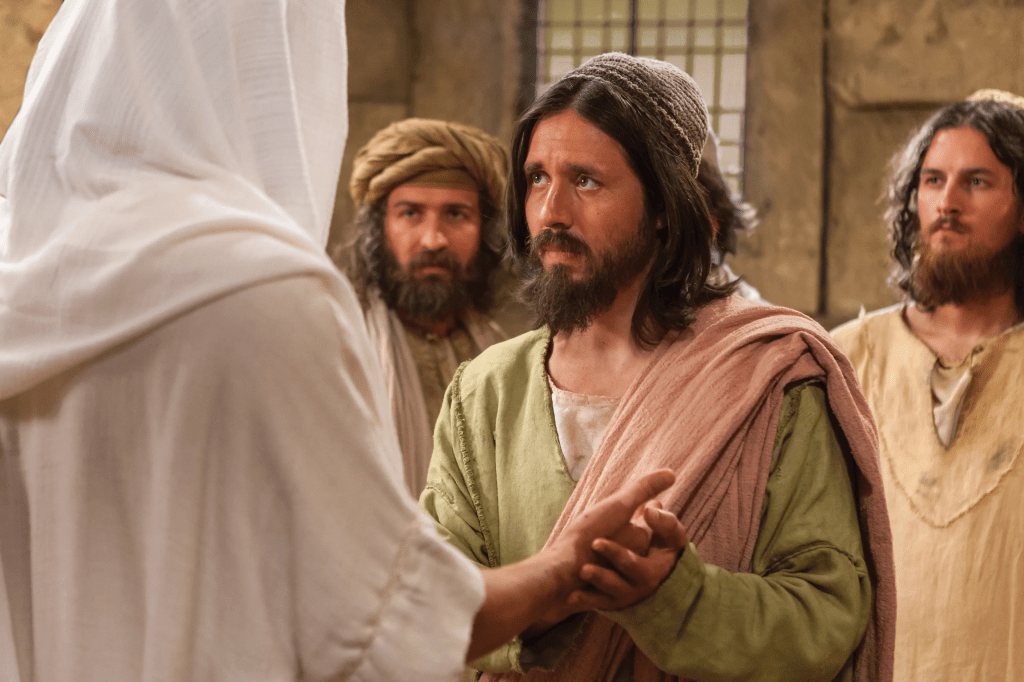
The Gospel of Matthew: The Last Three Hours on the Cross. My God, My God. Part 2.

45 Now from the sixth hour there was darkness over all the land until the ninth hour. 46 And about the ninth hour Jesus cried out with a loud voice, saying, “Eli, Eli, lema sabachthani?” that is, “My God, my God, why have you forsaken me?” (Matthew 27:45–46 ESV)

33 And when the sixth hour had come, there was darkness over the whole land until the ninth hour. 34 And at the ninth hour Jesus cried with a loud voice, “Eloi, Eloi, lema sabachthani?” which means, “My God, my God, why have you forsaken me?” (Mark 15:33–34 ESV)

44It was now about the sixth hour, and there was darkness over the whole land until the ninth hour, 45 while the sun’s light failed.” Luke 23:44-45a ESV)

In our study of the Gospel of Matthew’s record of the Passion Week of the Lord Jesus Christ, it is necessary, and insightful, to examine all four Gospel accounts. This discipline provides us understanding of all the events and encounters which took place during those hours.

The Synoptic Gospels, Matthew, Mark and Luke, all record the phenomenon of darkness over all the land during Jesus’ crucifixion. It was a darkness over all the earth. No place exempted. This occurred from the sixth hour until the ninth hour. According to Jewish time, this would have been from Noon until 3:00 P.M.

Curiously, only Matthew and Mark recount Jesus’ most significant cry from the cross; “Eli, Eli, lema sabachthani?” The following thoughts are by Dr. Sinclair Ferguson from his message “Actions that Speak Louder than Words—Almost.”  

Around three o’clock in the afternoon the Savior who is, incidentally, in the process of being asphyxiated —you didn’t die by the wounds of crucifixion, you died by the asphyxiation which your position hanging on the cross inevitably brought upon you. And here is this striking statement of a man in the process of asphyxiation, as he cries out, “My God, my God, why have you forsaken me?”

Of course these are the words of the 22nd Psalm at the beginning. And it’s a Psalm that you should read right through to the end because it ends in triumph. This is not a cry of Jesus abandoning trust in God. This is a cry of Jesus expressing the fact that he is going through an experience of God forsakenness that will be an experience from which he emerges in triumph. This is not a cry of doubt. This is a cry of desolation. Issuing from a heart of faith. Otherwise why turn to the 22nd Psalm?

But in many ways it’s the explanation of the darkness. Isn’t it? That the light of the world is now in unapproachable darkness. That the light of the world is now in what he himself had called in a striking expression — the outer darkness. And we understand, I think, don’t we, particularly if we have lived in any rural place, that there is darkness and there is outer darkness. There is a darkness that falls on Columbia, but it’s not really dark. You drive into Columbia when Columbia is shrouded in darkness and you will see as in every city that strange aura of light which means that the darkness cannot really and finally and fully penetrate into this city.

But if you come from some rural place, far from a city, you know there is a darkness in which you cannot see your hand when it is placed up against your eyes. There is a deep darkness. And this is what’s happening to Jesus. He is actually going into deep darkness where he can see absolutely nothing. He is going, as I sometimes say, into that one sphere in which the 23rd Psalm ceases to function. He is not able to say here, “I will fear no evil for you are with me and your rod and your staff they comfort me.” He is not able to say, “Even though I walk through the valley of the shadow of death, I know I will never feel utterly alone.” And perhaps more significantly he is going to the place where the benediction doesn’t work. That great benediction of Aaron and the priests. As they came forth and raised their hands and blessed the people. “The Lord bless you and keep you. The Lord make his face to shine upon you. The Lord lift up his countenance upon you and give you peace.”

How many times within the temple had Jesus heard that benediction pronounced and now the benediction wasn’t working. Because the peace had gone. The light of the countenance of God was not to be seen. And so there’s something very striking here because, in fact, this is the deep darkness that became penetrable to Abraham only because he saw the light of God’s presence passing through the darkness, and saying, “If it takes this curse to fall upon me, I will keep my promise of salvation.” Or as the New Testament itself rather puts it, “Even if it means that curse falling upon the Son of my love, I will keep my saving promise.” That’s why he cries out, “My God, why am I forsaken?” Or as Paul puts it, alluding to both this event and the experience of Abraham, “he became accursed for us in order that the blessing that was promised through Abraham might come.” (Galatians 3:14).

His robes for mine, O wonderful exchange
Clothed in my sin, Christ suffered ‘neath God’s rage
Draped in His righteousness, I’m justified
In Christ I live, for in my place He died.

Chorus

I cling to Christ and marvel at the cost
Jesus forsaken, God estranged from God
Bought by such love, my life is not my own
My praise, my all, shall be for Christ alone.

His robes for mine, O wonderful exchange
Clothed in my sin, Christ suffered ‘neath God’s rage
Draped in His righteousness, I’m justified
In Christ I live, for in my place He died.

His robes for mine, what cause have I for dread?                                                                                  God’s daunting law, Christ mastered in my stead                                                                              Faultless, I stand with righteous works not mine
Saved by my Lord’s vicarious death and life.

His robes for mine, God’s justice is appeased.
Jesus is crushed, and thus the Father’s pleased
Christ drank God’s wrath on sin, then cried, “‘Tis done!”
Sin’s wage is paid, propitiation won.

His robes for mine, such anguish none can know
Christ, God’s beloved, condemned as though His foe.
He, as though I, accursed and left alone
I, as though He, embraced and welcomed home.

Soli deo Gloria!

Source: Musixmatch

Songwriters: Chris Anderson / Greg David Habegger

His Robes for Mine lyrics © Church Works Worship

The Gospel of Matthew: The Last Three Hours on the Cross. My God, My God.

45 Now from the sixth hour there was darkness over all the land until the ninth hour. 46 And about the ninth hour Jesus cried out with a loud voice, saying, “Eli, Eli, lema sabachthani?” that is, “My God, my God, why have you forsaken me?” (Matthew 27:45–46 ESV)

33 And when the sixth hour had come, there was darkness over the whole land until the ninth hour. 34 And at the ninth hour Jesus cried with a loud voice, “Eloi, Eloi, lema sabachthani?” which means, “My God, my God, why have you forsaken me?” (Mark 15:33–34 ESV)

44It was now about the sixth hour, and there was darkness over the whole land until the ninth hour, 45 while the sun’s light failed.” Luke 23:44-45a ESV)

In our study of the Gospel of Matthew’s record of the Passion Week of the Lord Jesus Christ, it is necessary, and insightful, to examine all four Gospel accounts. This discipline provides us understanding of all the events and encounters which took place during those hours.

The Synoptic Gospels, Matthew, Mark and Luke, all record the phenomenon of darkness over all the land during Jesus’ crucifixion. It was a darkness over all the earth. No place exempted. This occurred from the sixth hour until the ninth hour. According to Jewish time, this would have been from Noon until 3:00 P.M.

Curiously, only Matthew and Mark recount Jesus’ most significant cry from the cross; “Eli, Eli, lema sabachthani?” The phrase “Jesus cried out” (ἀναβοάω; anaboao) means to actively scream or shout aloud with an unusually loud volume. This was an unpleasant shout and not an expression of joy. It was a cry of deep agony and despair. It occurred at the ninth hour, or 3:00 P.M.

“The link between the darkness and the cry is very close: the first is a symbol of the agonizing content of the second. This, then, is the fourth word from the cross, the very first one reported by Matthew and Mark. It issued from the mouth of the Savior shortly before he breathed his last,” explain Dr. William Hendriksen.

The words “Eli, Eli, lema sabachthani” are a combination of Hebrew and
Aramaic. “Eli” is Hebrew, the rest Aramaic. The statement is a direct fulfillment of Psalm 22:1. Jesus Christ experienced God the Father’s abandonment from the outpouring of divine wrath (Romans 1:18). That’s the reason for the Lord’s agonizing and loud cry. Notice, Jesus did not cry “Father” but “My God, My God.” This expressed His understanding of the abandonment. The eternal fellowship between God the Father and God the Son was interrupted on behalf of sinners. . 

The word “forsaken” (σαβαχθάνι; sabachthani) means to abandon and leave behind. It is a refusal to care for someone in pain and suffering. In this instance, it was God the Father’s refusal to hold back His divine wrath upon the Son of God in the place of sinners (2 Cor. 5:21).

“In the Gospels what happened between twelve o’clock and three o’clock is a blank. All we know is that during these three hours of intense darkness Jesus suffered indescribable agonies. He was being “made sin” for us (2 Cor. 5:21), “a curse” (Gal. 3:13). He was being “wounded for our transgressions and bruised for our iniquities.” Jehovah was laying on him “the iniquity of us all,” etc. (Isa. 53),” states Dr. Hendriksen.

“God’s condemnation of our sin in the flesh of Jesus (Rom. 8:3) was signified by the physical pain our Lord endured on the cross. At the same time the Romans were nailing Jesus to the cross, the Father was pouring His wrath upon Christ. Yet we cannot limit Jesus’ experience of His Father’s wrath to bodily pain. Our Savior also suffered spiritually as God punished the sin of His people in His Son, as Matthew 27:46 reveals. In fact, the physical suffering of crucifixion was nothing compared to the God-forsakenness Jesus experienced,” explains Dr. R. C. Sproul.

“Reckoning the sin of His children to Christ on the cross (2 Cor. 5:21), the Father cursed Jesus in our place (Gal. 3:10–14). After centuries of passing over His people’s transgressions (Rom. 3:21–26), God satisfied His wrath, pouring upon Jesus His unmitigated anger over the sins of His elect. In Jesus’ offering up of Himself as a substitute, the Father lays upon Him all the curses of His covenant with Israel (Deut. 28:15–68Isa. 53Rom. 5:12–21).”

“Our holy Creator would compromise His character if He forgave us without removing our sin and demanding that the curses of His covenant be fulfilled. His faithfulness to that covenant requires that we be punished for rejecting Him (Prov. 16:5), but God condemned our sin in Christ, and therefore His pardon of us does not violate His faithfulness. John Calvin writes, concludes Dr. Sproul.

Soli deo Gloria!

The Gospel of Matthew: The Last Three Hours on the Cross. Darkness.

“Now from the sixth hour there was darkness over all the land until the ninth hour.” (Matthew 27:45 (ESV)

And when the sixth hour had come, there was darkness over the whole land until the ninth hour.” (Mark 15:33 (ESV)

44It was now about the sixth hour, and there was darkness over the whole land until the ninth hour, 45 while the sun’s light failed.” Luke 23:44-45a ESV)

In our study of the Gospel of Matthew’s record of the Passion Week of the Lord Jesus Christ, it is necessary, and insightful, to examine all four Gospel accounts. This discipline provides us understanding of all the events and encounters which took place during those hours.

The Synoptic Gospels, Matthew, Mark and Luke, all record the phenomenon of darkness over all the land during Jesus’ crucifixion. It was a darkness over all the earth. No place exempted. This occurred from the sixth hour until the ninth hour. According to Jewish time, this would have been from Noon until 3:00 P.M.

What caused of this darkness? Some attribute it to an eclipse of the sun. However, this could not have been possible because the Jews used a lunar calendar with Passover always occurring during the full moon. This made an eclipse impossible.   

Rather, this was a supernatural darkness. God announced to the shepherds the incarnation of the Son of God with His glorious light (Luke 2:9). John the apostle spoke of Jesus as “the light of men (John 1:4, 9). Jesus declared He was the light of the world (John 8:12; 9:5; 12:35-36). What a contrast between Jesus’ birth and His death.

The Scriptures offer no definitive explanation for the darkness. However, it would seem it was a visual display of God the Father’s judicial and righteous wrath poured out upon the Son of God; Jesus Christ. The judgment of God is directly associated with darkness (Matt. 8:12; 22:13; 25:30; 2 Peter 2:4; Jude 6).

“The darkness meant judgment, the judgment of God upon our sins, his wrath as it were burning itself out in the very heart of Jesus, so that he, as our Substitute, suffered most intense agony, indescribable woe, terrible isolation or forsakenness. Hell came to Calvary that day, and the Savior descended into it and bore its horrors in our stead,” explains Dr. William Hendriksen.

“How do we know that this answer is correct? Note the following: Frist, darkness in Scripture is very often a symbol of judgment. See Isa. 5:30; 60:2; Joel 2:30, 31; Amos 5:18, 20; Zeph. 1:14–18; Matt. 24:29, 30; Acts 2:20; 2 Peter 2:17; Rev. 6:12–17. Second, with a view to his impending death the Savior had himself stated that he was giving and was about to give his life as “a ransom for many” (Matt. 20:28; 26:28; Mark 10:45),” concludes Dr. Hendriksen.

“The darkness was intended to arouse the people to consider the astonishing design of God in the death Christ. For if they were not altogether hardened, an unusual change in the order of nature must have made a deep impression on their senses, so as to look forward to an approaching renewal of the world. Yet is was a terrific spectacle which was exhibited to them, that they might tremble at the judgment of God. It was an astonishing display of the wrath of God that He did not spare even His only begotten Son and was not appeased in any other way than by that price of expiation,” states John Calvin.

Soli deo Gloria!

The Gospel of Matthew: The First Three Hours on the Cross. Mary and John.  

25 but standing by the cross of Jesus were his mother and his mother’s sister, Mary the wife of Clopas, and Mary Magdalene. 26 When Jesus saw his mother and the disciple whom he loved standing nearby, he said to his mother, “Woman, behold, your son!” 27 Then he said to the disciple, “Behold, your mother!” And from that hour the disciple took her to his own home.” (John 19:25–27 (ESV)

In our study of the Gospel of Matthew’s record of the Passion Week of the Lord Jesus Christ, it is necessary, and insightful, to examine all four Gospel accounts. This discipline provides us understanding of all the events and encounters which took place during those hours.

We continue to examine what occurred during the first three hours of Jesus’ crucifixion. Today’s focus is Jesus’ concern for His mother Mary as He hung on the cross.  

Perhaps one of the lesser known truths of Jesus’ incarnation was the prophetic statement by Simeon (Luke 2:22-35). Simeon was a righteous and devout man upon whom was the Holy Spirit. He was waiting for the Messiah, the consolation of Israel (Isaiah 25:9; 40:1-2; 66:1-11). Upon seeing the young baby Jesus, Simeon was filled with praise to God (Luke 2:28-32).

Simeon also blessed Mary and Joseph and said to Mary,34Behold, this child is appointed for the fall and rising of many in Israel, and for a sign that is opposed 35(and a sword will pierce through your own soul also), so that thoughts from many hearts may be revealed,” (Luke 2:34-35 ESV). The reference to a sword predicted Mary would experience great grief as she watched her son Jesus die in agony on the cross.

John mentioned several women at the scene at Golgotha. These include Mary His mother, Jesus’ aunt, Mary the wife of Clopas, and Mary Magdalene. “Although the exact number of women mentioned here is questioned, John probably refers to four women rather than three, i.e., two by name and two without naming them,” explains Dr. John MacArthur.

  • “His mother” (Mary).
  • “His mother’s sister” (probably Salome [Mark 15:40], the sister of Mary and mother of James and John, the sons of Zebedee [Matt. 27:56–57Mark 15:40]). This means James and John were Jesus’ cousins.
  • “Mary the wife of Clopas” (the mother of James the younger and Joses—Matt. 27:56).
  • Mary Magdalene (“Magdalene” signifies “Magdala” a village on the west shore of Galilee, 2 or 3 miles north of Tiberias). Jesus healed Mary of demon possession (Luke 8:2–3). Mary Magdalene would be prominent in the resurrection account (see John 20:1–18.

“Why just these four are mentioned here in 19:25 has not been revealed. It is not improbable that they stood in closer relation to the Lord than other women. Thus, for example, the mother of Jesus is mentioned, and also the mother of the sons of Zebedee (who were disciples of Jesus, belonging to the inner three). A comparison between Matthew’s list and that of Mark would seem to indicate that the name of the mother of James and John was Salome,” explains Dr. William Hendriksen.

Jesus said to Mary ““Woman, behold, your son!” It was kind for Jesus to say “woman” to Mary and not mother. To say the latter would have driven the metaphorical sword even deeper into her heart and soul. When Jesus said “behold your son” He referenced John, who alone stood nearby.

By saying, “Woman, look! Your son!” Jesus is committing Mary to the care of John, who, as has been shown (see 19:25), may well have been her own nephew, the son of her sister Salome. It seems that John had a lodging in Jerusalem (so did Peter; see on 20:2), though his real home was in Galilee. The question might be raised, “But why was not Mary committed to the care of one of her other children?” The answer is: probably because they as yet had not received him by a living faith (see on 7:5). And besides, who could be expected to take better care of Mary than the disciple whom Jesus loved? To that disciple Jesus said, “Look! Your mother!” John immediately understood, and from that hour took her to his own home,” states Dr. Hendriksen.

Soli deo Gloria!

The Gospel of Matthew: The First Three Hours on the Cross. A Robber Repents. Part 3.

39 One of the criminals who were hanged railed at him, saying, and “Are you not the Christ? Save yourself and us!” 40 But the other rebuked him, saying, “Do you not fear God, since you are under the same sentence of condemnation? 41 And we indeed justly, for we are receiving the due reward of our deeds; but this man has done nothing wrong.” 42 And he said, “Jesus, remember me when you come into your kingdom.” 43 And he said to him, “Truly, I say to you, today you will be with me in paradise.” (Luke 23:39–43 (ESV)

In our study of the Gospel of Matthew’s record of the Passion Week of the Lord Jesus Christ, it is necessary, and insightful, to examine all four Gospel accounts. This discipline provides us understanding of all the events and encounters which took place during those hours.

We continue to examine what occurred during the first three hours of Jesus’ crucifixion. Today’s focus is the one robber who repented of his sin and Jesus’ promise of paradise. The following is the second excerpt from Pastor J.C. Ryle’s article Christ and the Two Thieves.

John Charles Ryle (10 May 1816 – 10 June 1900) was an English evangelical Anglican bishop. He was the first Anglican bishop of Liverpool, England.

III. The third lesson you are meant to learn from these verses is this,—the Spirit always leads saved souls in one way.

This is a point that deserves particular attention, and is often overlooked. Men look at the broad fact that the penitent thief was saved when he was dying, and they look no further.

They do not consider the evidences this thief left behind him. They do not observe the abundant proof he gave of the work of the Spirit in his heart. And these proofs I wish to trace out. I wish to show you that the Spirit always works in one way, and that whether He converts a man in an hour, as He did the penitent thief,—or whether by slow degrees, as he does others, the steps by which He leads souls to heaven are always the same.

IV. You are meant, in the next place, to learn from these verses, that believers in Christ when they die, are with the Lord.

This you may gather from our Lord’s words to the penitent thief: “This day shalt thou be with Me in paradise.” And you have an expression very like it in the Epistle to the Philippians, where Paul says he has a desire to “depart and be with Christ.” (Phil.1:23).

Believers after death are “with Christ.” That answers many a difficult question, which otherwise might puzzle man’s busy, restless mind. The abode of dead saints, their joys, their feelings, and their happiness, all seems met by this simple expression,—they are with Christ.

I cannot enter into full explanations about the state of departed believers. It is a high and deep subject, such as man’s mind can neither grasp nor fathom. I know their happiness falls short of what it will be when their bodies are raised again, and Jesus returns to earth. Yet I know also they enjoy a blessed rest,—a rest from labor,—a rest from sorrow,—a rest from pain,—and a rest from sin. But it does not follow because I cannot explain these things, that I am not persuaded they are far happier than they ever were on earth. I see their happiness in this very passage, “They are with Christ,” and when I see that I see enough.

V. The last thing you are meant to learn from these verses is this,—the eternal portion of every man’s soul is close to him.

“To-day,” says our Lord to the penitent thief, “to-day shalt thou be with Me in paradise.” He names no distant period,—He does not talk of his entering into a state of happiness as a thing “far away.” He speaks of to-day: “this very day, in which thou art hanging on the cross.”

Reader, how near that seems! How awfully near that word brings our everlasting dwelling-place. Happiness or misery,—sorrow or joy,—the presence of Christ, or the company of devils,—all are close to us. “There is but a step,” says David, “between me and death.” There is but a step, we may say, between ourselves and either paradise or hell.

We none of us realize this as we ought to do. It is high time to shake off the dreamy state of mind in which we live on this matter. We are apt to talk and think, even about believers, as if death was a long journey,—as if the dying saint had embarked on a long voyage. It is all wrong, very wrong. Their harbour and their home is close by, and they have entered it.

Reader, the day that believers die they are in paradise. Their battle is fought;—their strife is over. They have passed through that gloomy valley we must one day tread;—they have gone over that dark river we must one day cross. They have drank that last bitter cup which sin has mingled for man. They have reached that place where sorrow and sighing are no more. Surely we should not wish them back again. We should not weep for them, but for ourselves.

We are warring still, but they are at peace. We are labouring, but they are at rest. We are watching, but they are sleeping. We are wearing our spiritual armour, but they have for ever put it off. We are still at sea, but they are safe in harbour. We have tears, but they have joys. We are strangers and pilgrims, but as for them they are at home. Surely, better are the dead in Christ than the living. Surely, the very hour the poor saint dies, he is at once higher and happier than the highest upon earth.

Soli deo Gloria!

The Gospel of Matthew: The First Three Hours on the Cross. A Robber Repents. Part 2.

39 One of the criminals who were hanged railed at him, saying, and “Are you not the Christ? Save yourself and us!” 40 But the other rebuked him, saying, “Do you not fear God, since you are under the same sentence of condemnation? 41 And we indeed justly, for we are receiving the due reward of our deeds; but this man has done nothing wrong.” 42 And he said, “Jesus, remember me when you come into your kingdom.” 43 And he said to him, “Truly, I say to you, today you will be with me in paradise.” (Luke 23:39–43 (ESV)

In our study of the Gospel of Matthew’s record of the Passion Week of the Lord Jesus Christ, it is necessary, and insightful, to examine all four Gospel accounts. This discipline provides us understanding of all the events and encounters which took place during those hours.

We continue to examine what occurred during the first three hours of Jesus’ crucifixion. Today’s focus is the one robber who repented of his sin and Jesus’ promise of paradise. The following is an excerpt from Pastor J.C. Ryle’s article Christ and the Two Thieves.

John Charles Ryle (10 May 1816 – 10 June 1900) was an English evangelical Anglican bishop. He was the first Anglican bishop of Liverpool, England.

You know these verses, I suppose. It would be strange indeed if you did not. Few passages in the New Testament are more familiar to men’s ears.

And it is right and good that these verses should be well known. They have comforted many troubled minds. They have brought peace to many uneasy consciences. They have been a healing balm to many wounded hearts. They have been a medicine to many sin-sick souls. They have smoothed down not a few dying pillows. Wherever the Gospel of Christ is preached, they will always be honored, loved, and had in remembrance.

I. First of all, you are meant to learn from these verses, Christ’s power and willingness to save sinners.

This is the main doctrine to be gathered from the history of the penitent thief. It teaches you that which ought to be music in the ears of all who hear it,—it teaches you that Jesus Christ is mighty to save.

I ask you if any man’s case could look more hopeless and desperate, than that of this penitent thief once did?

He was a wicked man,—a malefactor,—a thief, if not a murderer. We know this, for such only were crucified. He was suffering a just punishment for breaking the laws. And as he had lived wicked, so he seemed determined to die wicked,—for when he first was crucified, he railed on our Lord.

And he was a dying man. He hung there, nailed to a cross, from which he was never to come down alive. He had no longer power to stir hand or foot. His hours were numbered. The grave was ready for him. There was but a step between him and death.

If ever there was a soul hovering on the brink of hell, it was the soul of this thief. If ever there was a case that seemed lost, gone, and past recovery, it was his. If ever there was a child of Adam whom the devil made sure of as his own, it was this man.

But see now what happened. He ceased to rail and blaspheme, as he had done at the first. He began to speak in another manner altogether. He turned to our blessed Lord in prayer. He prayed Jesus to “remember him when He came into His kingdom.” He asked that his soul might be cared for, his sins pardoned, and himself thought of in another world. Truly this was a wonderful change.

And then mark what kind of answer he received. Some would have said he was too wicked a man to be saved. But it was not so. Some would have fancied it was too late: the door was shut, and there was no room for mercy. But it proved not too late at all. The Lord Jesus returned him an immediate answer,—spoke kindly to him,—assured him he should be with Him that day in Paradise: pardoned him completely,—cleansed him thoroughly from his sins,—received him graciously,—justified him freely,—raised him from the gates of hell,—gave him a title to glory. Of all the multitude of saved souls, none ever received so glorious an assurance of his own salvation, as did this penitent thief. Go over the whole list, from Genesis to Revelation, and you will find none who had such words spoken to them as these: “To-day shalt thou be with Me in Paradise.”

Reader, the Lord Jesus never gave so complete a proof of His power and will to save, as He did upon this occasion. In the day when He seemed most weak, He showed that He was a strong deliverer. In the hour when His body was racked with pain, He showed that he could feel tenderly for others. At the time when He Himself was dying, He conferred on a sinner eternal life.

II. The second lesson you are meant to learn from this passage is this,—if some are saved in the very hour of death, others are not.

This is a truth that never ought to he passed over, and I dare not leave it unnoticed. It is a truth that stands out plainly in the sad end of the other malefactor, and is only too often forgotten.

What became of the other thief who was crucified? Why did he not turn from his sin, and call upon the Lord? Why did he remain hardened and impenitent? Why was he not saved? It is useless to try to answer such questions. Let us be content to take the fact as we find it, and see what it is meant to teach us.

We have no right whatever to say this thief was a worse man than his companion. There is nothing to prove it. Both plainly were wicked men. Both were receiving the due reward of their deeds. Both hung by the side of our Lord Jesus Christ. Both heard Him pray for His murderers. Both saw Rim suffer patiently. But while one repented, the other remained hardened. While one began to pray, the other went on railing. While one was converted in his last hours, the other died a bad man as he had lived. While one was taken to paradise, the other went to his own place, the place of the devil and his angels.

Now these things are written for our warning.

There is warning, as well as comfort in these verses, and that very solemn warning too.

They tell me loudly, that though some may repent and be converted on their death-beds, it does not at all follow that all will. A death-bed is not always a saving time.

They tell me loudly that two men may have the same opportunities of getting good for their souls,—may be placed in the same position, see the same things, and hear the same things; and yet only one shall take advantage of them, repent, believe, and be saved.

They tell me, above all, that repentance and faith are the gifts of God, and are not in a man’s own power; and that if any one flatters himself he can repent at his own time, choose his own season, seek the Lord when he pleases, and, like the penitent thief, be saved at the very last,—he may find at length he is greatly deceived.

And it is good and profitable to bear this in mind. There is an immense amount of delusion in the world on this very subject. I see many allowing life to slip away, all unprepared to die. I see many allowing that they ought to repent, but always putting off their own repentance. And I believe one grand reason is, that most men suppose they can turn to God just when they like. They wrest the parable of the laborer in the vineyard, which speaks of the eleventh hour, and use it as it never was meant to be used. They dwell on the pleasant part of the verses I am now considering, and forget the rest. They talk of the thief that went to paradise, and was saved, and forget the one who died as he had lived, and was lost.

More to come. Soli deo Gloria!

The Gospel of Matthew: The First Three Hours on the Cross. A Robber Repents.  

39 One of the criminals who were hanged railed at him, saying, and “Are you not the Christ? Save yourself and us!” 40 But the other rebuked him, saying, “Do you not fear God, since you are under the same sentence of condemnation? 41 And we indeed justly, for we are receiving the due reward of our deeds; but this man has done nothing wrong.” 42 And he said, “Jesus, remember me when you come into your kingdom.” 43 And he said to him, “Truly, I say to you, today you will be with me in paradise.” (Luke 23:39–43 (ESV)

In our study of the Gospel of Matthew’s record of the Passion Week of the Lord Jesus Christ, it is necessary, and insightful, to examine all four Gospel accounts. This discipline provides us understanding of all the events and encounters which took place during those hours.

We continue to examine what occurred during the first three hours of Jesus’ crucifixion. Today’s focus is the one robber who repented of his sin and Jesus’ promise of paradise.  

The two criminals crucified with Jesus were on either side of the Lord. All four Gospels acknowledge this (Matt. 27:38; Mark 15:27; Luke 23:33; John 19:18). However, Luke is the only author who recorded the incident of the repentant robber.

“There was one man for whom the day started as the worst day in his life, but ended not only as the last day, but as the best day. In the morning, he had been dragged along with two others from his prison cell and forced to carry the instrument of his own crucifixion. From around midday, he began to experience the agony of crucifixion, a torturous form of execution that actually led the great Roman orator, Cicero, to say the very word should be absent from the lips of a Roman citizen,” explains Dr. Sinclair Ferguson.

The biblical text identified both men as criminals (κακοῦργος; kakourgos). They were lawbreakers, wrongdoers and evil workers. In other words, they both were career criminals. They lived a life of crime and now they would die in payment for their crimes. They symbolized all sinners who God declares guilty of transgressing His law and who are worthy of death (Gen. 2:15-17; Isaiah 53:5; Rom. 6:23; James 1:15).

Both men mocked Jesus along with the crowd (Matt. 27:44; Mark 15:32). Luke recorded one of the criminals saying, “Are you not the Christ? Save yourself and us!” Luke used the word railed (βλασφημέω; blasphemeo) to describe the one criminal continually reviling and blaspheming the Lord. He was not repentant of his sins. He was not sorry for his transgressions. He only wanted deliverance from the consequences of his sin; which was death.

It was at this point in the narrative Luke introduced a stark contrast. The other criminal, rather than rebuking Jesus as he previously had, actively rebuked (ἐπιτιμάω; epitimao) the other criminal. He expressed strong disproval in what the other criminal said to Jesus. He said, “Do you not fear God, since you are under the same sentence of condemnation? 41 And we indeed justly, for we are receiving the due reward of our deeds; but this man has done nothing wrong.”

The second man acknowledged the sinner he was and the just condemnation he deserved. He also acknowledged someone else; Jesus.  He understood Jesus was different. He did not deserve to be crucified. Then the second criminal said, “Jesus, remember me when you come into your kingdom.” The Holy Spirit began a work of regeneration within the heart and soul of a man who was a heartless and soulless criminal; (John 3:1-8; 6:35-44;Titus 3:1-5).

Jesus replied, ““Truly, I say to you, today you will be with me in paradise.” Paradise (παράδεισος; paradeisos) is the dwelling place of the righteous dead in a condition of blessedness. While the criminal was not righteous, the Lord declared him righteous. The criminal received the imputed righteousness of Jesus Christ (Rom 3:21-26). He was justified and now had peace with God even as he hung on a cross (Rom. 5:1).

“He addresses the One to whom he has now surrendered his heart as Jesus, that is, Savior. See Luke 1:31; 2:21. And, as Gabriel had done (Luke 1:31–33), with that name Jesus the penitent immediately associates royal rule. The angel had said to Mary, “You shall give him the name Jesus.… And the Lord God will give him the throne of his father David. He will reign over the house of Jacob forever, and his kingdom [or royal rule] will never end,” explains Dr. William Hendriksen.

“About that eschatological coming Jesus had spoken again and again. See, for example, the following passages: Matt. 16:27; 19:28; 24:27, 30; 25:31–46; 26:64; Luke 17:22–37; 21:27, 36; 22:29, 30. If the penitent had heard anything about Jesus at all—and his prayer is hard to explain if he had not—he must have heard about his predictions in connection with the glorious Return at the end of the age.”

“The man is asking Jesus, therefore, to be remembered by him at that time. He does not ask for any place of honor. He knows very well that such a place is not for him. But he casts himself entirely upon the Savior’s grace, asking only to be remembered; that is, of course, to be remembered for good,” concludes Dr. Hendriksen.

“That Friday began as the worst day of his life. It was the last day of his life, but it was the best day of his life because the Lord Jesus said to him, “Today, you will be with me in paradise” (Luke 23:43),” states Dr. Sinclair Ferguson.

“It wasn’t an easy road that brought him to Jesus. It was strewn with his own sin and failure. But at last, he was brought near to Jesus to recognize Him as Savior and King, to turn to Him, to cast himself on His mercy, and to find forgiveness and eternal life. And now he’s with Jesus in paradise. That’s what made this Friday “Good Friday” for him, and it’s the only thing that can make it good for us too.”

Have you received this gift of righteousness?  Have you experienced your good conversion day (Psalm 118:24)?

Soli deo Gloria!

The Gospel of Matthew: The First Three Hours on the Cross. The Mockers.

38 Then two robbers were crucified with him, one on the right and one on the left. 39 And those who passed by derided him, wagging their heads 40 and saying, “You who would destroy the temple and rebuild it in three days, save yourself! If you are the Son of God, come down from the cross.” 41 So also the chief priests, with the scribes and elders, mocked him, saying, 42 “He saved others; he cannot save himself. He is the King of Israel; let him come down now from the cross, and we will believe in him. 43 He trusts in God; let God deliver him now, if he desires him. For he said, ‘I am the Son of God.’ ” 44 And the robbers who were crucified with him also reviled him in the same way.” (Matthew 27:38–44 (ESV)

27 And with him they crucified two robbers, one on his right and one on his left. 29 And those who passed by derided him, wagging their heads and saying, “Aha! You who would destroy the temple and rebuild it in three days, 30 save yourself, and come down from the cross!” 31 So also the chief priests with the scribes mocked him to one another, saying, “He saved others; he cannot save himself. 32 Let the Christ, the King of Israel, come down now from the cross that we may see and believe.” Those who were crucified with him also reviled him.” (Mark 15:27–32 (ESV)

35 And the people stood by, watching, but the rulers scoffed at him, saying, “He saved others; let him save himself, if he is the Christ of God, his Chosen One!” 36 The soldiers also mocked him, coming up and offering him sour wine.” (Luke 23:35–36 (ESV)

In our study of the Gospel of Matthew’s record of the Passion Week of the Lord Jesus Christ, it is necessary, and insightful, to examine all four Gospel accounts. This discipline provides us understanding of all the events and encounters which took place during those hours.

We continue to examine what occurred during the first three hours of Jesus’ crucifixion. Today’s focus is the mocking crowd surrounding the scene at Golgotha.

Matthew, Mark and Luke mentioned the mocking of the Lord Jesus by the passersby’s, the chief priests, the scribes, the elders, the Roman soldiers and the two robbers crucified with Him. There were three specific statements of scorn directed to, and about, Jesus by the various people groups.

First, the passersby’s said, ““You who would destroy the temple and rebuild it in three days, save yourself! If you are the Son of God, come down from the cross.” This statement was in reference to when Jesus cleansed the temple of livestock and the moneychangers, early in His ministry (John 2:13-17). In response, the Jews asked Him what sign would He show for doing these things (John 2:18). Jesus replied, “Destroy this temple, and in three days I will raise it up” (John 2:19). The Jews thought Jesus referred to the Jerusalem temple but Jesus spoke of the temple of His resurrected body (John 2:20-22).

Second, the religious leaders said to themselves, “He saved others; he cannot save himself. Let the Christ, the King of Israel, come down now from the cross that we may see and believe.” It is hard to imagine after all the miracles Jesus performed throughout His three year ministry that the Jewish leaders would believe in Christ if He did come off the cross. They would have continued to disbelieve and dismiss the evidence before them of Christ’s deity (Matthew 16:1-4). .

Third, Matthew recorded the religious leaders also saying, “He trusts in God; let God deliver him now, if he desires him. For he said, ‘I am the Son of God.’ ” (See John 5:18).

Fourth, Luke recorded the Roman soldiers joined in the mockery and blasphemy of the Lord.

Finally, the two robbers joined in the clamoring and reviled the Lord. To revile (ὀνειδίζω; oneidizo) means to mock insult and reprimand. The robbers did this actively and continually.

“Scornfully they exclaim that the way for the crucified One to prove his claim to being the Son of God will be for him to descend from the cross. They imply that it is weakness that keeps him there. Actually, however, it was strength, the strength of his love for sinners,” explains Dr. William Hendriksen.

“In the midst of it all Jesus remains silent. He offers not one word of rebuke. Peter puts it beautifully when he says, “who, while being reviled, did not revile in return; while suffering, never threatened, but continued to entrust himself to him who judges righteously; who himself bore our sins in his body on the cross, that we might die to sin and live to righteousness; for by his wounds you were healed” (1 Peter 2:23, 24).”

However, the scene would soon change. Within the providence of God the Father, He would give one of the robbers as a gift to God the Son (Luke 23:39-43; John 6:37). This is what we will examine when next we meet.

Do not be frustrated when people mock, scorn, revile and reject you because of your faith in Christ. As unbelievers treated the Master, they will similarly treat His disciples (John 15:18-25). Rather, count it all joy (James 1:2-4).

Soli deo Gloria!