“For now, we live, if you are standing fast in the Lord.” (1 Thessalonians 3:8 (ESV)
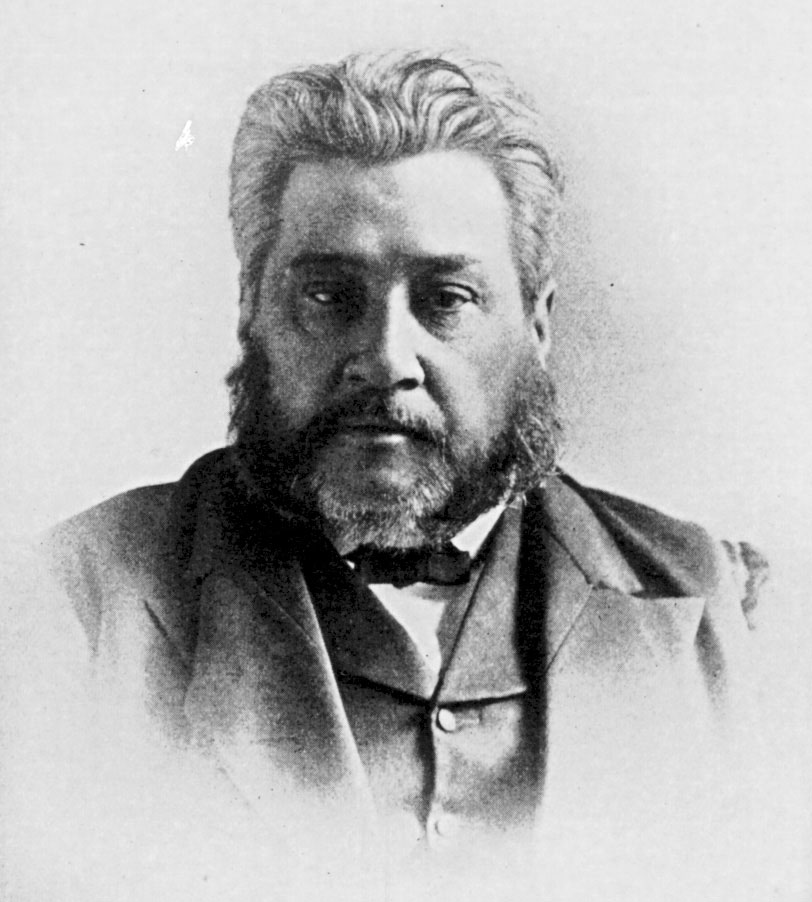
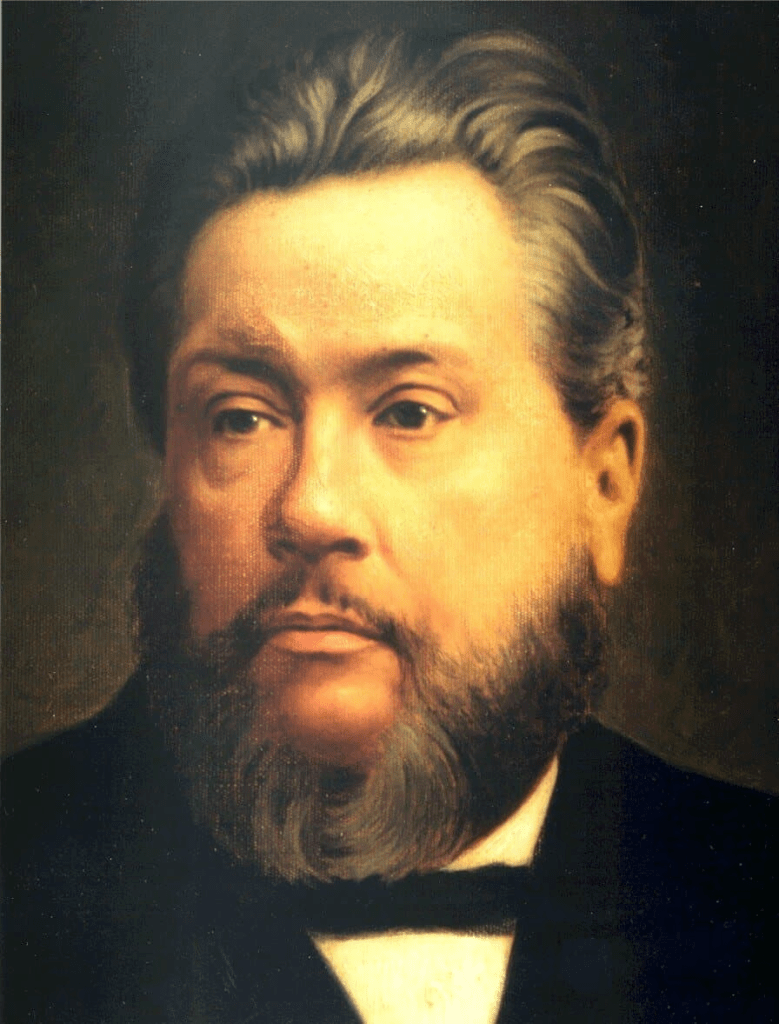
The following is an excerpt from I Thessalonians 3:8 by Pastor Charles H. Spurgeon. He entitled his message Renewed Strength.
It is a matter of life and death to us that you should be rooted, grounded, and settled. Notice first, that some are not in the Lord. Secondly, some appear to be in the Lord, but they are not standing fast. And thirdly, that some in the Lord stand fast in the Lord and these are our life— “Now we live, if you stand fast in the Lord.”
First, SOME ARE NOT IN THE LORD AT ALL. A solid mass of infidelity and godlessness hems us in.
“Our heart is heavy because this great city is determined to shut its eyes to the Light of God. There are streets upon streets in which none attend the House of God and we have it on credible information that in certain districts if one man in a street is seen to go regularly to a place of worship, his neighbors mark him as a singular being. The home-born Londoner of the working classes, as a rule, has no care for a place of worship. If I were living in the country, I think I would be content with but half a wage sooner than to come and dwell in this ungodly place!”
“Our members try to bring up their children in God’s fear, but they are often compelled to quit their homes because of the filthy conduct of those who defile our streets. Yet this is not my present theme. Our greater sorrow is that there are many who hear the Gospel and are not in the Lord! We are not sorry that they should come to hear the Word of God— would to God that all Christ-less souls would hear of Christ! But we are sorry that they have come month after month, year after year, and have received no saving benefit. I still meet, here and there, with those who tell me, “I used to hear you in Park Street and Exeter Hall,” and yet I gather from them that they are undecided. I have small hope for them if 30 years of ministry have not brought them to Christ!”
“At any rate, these many years add to the dreadful probability that they will continue to make the Word of God to be unto themselves a savor of death unto death. If I could pick out of this audience, tonight, by Infallible guidance, one man or one woman and could point to that person and say, “Such a one will certainly go down to Hell to endure the everlasting wrath of God”—and if you knew that I was speaking like a Prophet from God and that it was certainly so—you would turn round and look with deepest grief upon that doomed soul! You would shudder to be sitting in the same pew! And yet though, thank God, we may not speak with that certainty, the probability grows so great as almost to amount to a certainty concerning those upon whom entreaties have been wasted, upon whom expostulations have been wasted, by whom invitations have been refused, that they will continue to harden their hearts until at last they sink into the place where mercy never enters!”
“Ah, Lord, these are heavy tidings and Your saints feel them! I know I am speaking to many who deeply sympathize with me when I say that the thought of this is a worm that makes our joys decay. I mean the thought that some of you contribute to God’s work and are, in many points, excellent—and yet you lack the one thing necessary—and after having joined with God’s people in outward acts of devotion you will be driven from His Presence forever! O Infinite Mercy, grant that it may not be so, but may these men and women, even now, be led to believe in Jesus and be saved! We die when we think of those who are not in the Lord at all! How it would revive us if we could see them saved!”
“If there is a deadening influence about the thought that some few among us are not converted, think of what the effect must be upon a minister’s mind if he shall have labored long and seen no fruit. There may be instances in which a man has been faithful, but not successful—places where, for a time, the dew falls not and the softening influences of the Spirit are not given. Then the soil breaks the plowshare and the weary ox is ready to faint. I began to preach while yet a youth, scarcely 16 years of age, but before I had preached half a dozen times I saw persons affected by those sermons. I pined to find some heart that had looked to Jesus while I had preached Him—and I have photographed upon my memory, at this very moment, a very humble clay-walled cottage which seemed to me to be a sacred spot, for I was told by a venerable deacon that it was the house of a poor woman who had sought and found the Savior through my ministry.”
“I did not let the week conclude till I had seen her, for I hungered for the joy of meeting with one whom I had brought to Christ! If I found one soul converted, I took heart and looked for more. Brothers, are you working for Jesus? Then you know what it is to feel the shadow of death when you do not win a soul! Does it not seem hard to be knocking for Christ against a door that never opens, but has fresh bolts put on it to keep it closed? Be not ashamed of yourself because you feel distressed—it proves your capacity for being used. By-and-by God will bless you and then you will understand the text, “Now we live.” You will find that your pulse is quickened, your heart’s blood warmed—you will be filled with a more Divine life as you rise nearer to the dignity of a savior of men and taste the unspeakable joys for which Christ laid down His life!”
May the Lord’s truth and grace be found here. Have a blessed day in the Lord.
“For now, we live, if you are standing fast in the Lord.” (1 Thessalonians 3:8 (ESV)
The following is an excerpt from I Thessalonians 3:8 by Pastor Charles H. Spurgeon. He entitled his message Renewed Strength.
“MINISTERS who are really sent of God greatly rejoice in the spiritual prosperity of their people. If they see God’s Word prosper, they prosper. If the Church of God is blessed, they are blessed. Their life is wrapped up in the spiritual life of their people. Never is the servant of God so full of delight as when he sees that the Holy Spirit is visiting his hearers, making them to know the Lord, and confirming them in that heavenly knowledge.”
“On the other hand, if God does not bless the word of His servants, it is like death to them! To be preaching and to have no blessing makes them heavy of heart—the chariot wheels are taken off and they drag heavily along—they seem to have no power nor liberty. They get depressed and they go back to their Master with this complaint, “Who has believed our report? And to whom has the arm of the Lord been revealed?”
“He revives and cheers them—and they come back to their service—but if they do not see a manifest blessing resting upon the people, they cry and sigh and are like dying men. If the Lord willed to do so, He might have made robots to preach and these would only need to be wound up and allowed to run down again! They would have known no feelings of joy or of sorrow and would have been invulnerable to the arrows of grief. We have heard of the Iron Duke. Iron preachers would have been enduring instruments and would never have been laid aside by mental depression.”
“But the sympathy of the preacher is God’s great instrument for blessing the hearer! If you read a sermon in a book it is good, but if you hear it preached fresh from the man’s heart, it is far more effective. There is a living fellow-feeling about it, and that is the power which God has, in all ages, been pleased to use—the power of a spirit which He has made sensitive with affection— so sensitive that it rises to joy when its affectionate purpose is accomplished and sinks to depths of grief when that purpose fails.”
“This, I take it, is what the Apostle means when he says, “Now we live, if you stand fast in the Lord.” The people can make the pastor happy beyond expression by their being rich in Grace and happy in Christ! But they can make him miserable beyond all description if they are either unstable or insincere. Dearly Beloved, I have often rejoiced in God as I have seen the work of the Spirit among you. It is no small joy that for many years we have never been without an increase to the Church. With few exceptions we have never gathered at our monthly communions without receiving a considerable number into our membership.”
“During these years some have turned back, to our great sorrow, and some have flagged, to our solemn grief. But others have persistently carried on the work of God and have developed gifts and graces which have made them qualified for larger spheres. At this day those at home come behind in no gifts and those abroad do not forget the hallowed training of Zion. In every part of the earth some are engaged in holy service who have gone out from this Church.”
“For all this, our heart must be grateful. But these are evil times. These are times, the like of which I have not seen before, in which the foundations are removed and “what shall the righteous do?” The winds are out. The tackling’s are loosed. The mariners reel to and fro! Everything seems to be drifting. Men know not where they are!”
“Half the professing Christians of the present day do not know their heads from their heels and the half that do know seem inclined to take to their heels and run rather than stand steadfast in the faith and wait till evil days are over! It is time that we spoke to you concerning steadfastness—that you be not like idle boys that leap hedges and ditches after every nest that silly birds may choose to make—but that you keep to the King’s Highway of holiness and truth and hold fast to the doctrines and the practices which are taught us in the Word of God. I say to you by this discourse, “Now we live, if you stand fast in the Lord.”
“It is a matter of life and death to us that you should be rooted, grounded, and settled. Notice first, that some are not in the Lord. Secondly, some appear to be in the Lord, but they are not standing fast. And thirdly, that some in the Lord stand fast in the Lord and these are our life— “Now we live, if you stand fast in the Lord.”
May the Lord’s truth and grace be found here. Have a blessed day in the Lord.
6 But now that Timothy has come to us from you, and has brought us the good news of your faith and love and reported that you always remember us kindly and long to see us, as we long to see you— 7 for this reason, brothers, in all our distress and affliction we have been comforted about you through your faith. 8 For now we live, if you are standing fast in the Lord.” (1 Thessalonians 3:6–8 (ESV)
The Apostle Paul was concerned whether or not the Thessalonians were continually living for Christ (3:1-5). Paul’s comfort regarding them came because of Timothy’s good report of their faith and love. The apostle was also blessed by their prayers of kindness and their longing to see him and Silas. The deep affection was mutual.
“Romans 12:15 features this command from the Apostle Paul: “Rejoice with those who rejoice, weep with those who weep.” With these words, Paul exhorts us not to regard ourselves as mere individuals with respect to our relationship to Christ. That is, we must not view ourselves as connected to Jesus but disconnected from others who likewise trust in the Savior. We must understand ourselves as so closely related to other believers that what saddens them saddens us and what fills them with joy fills us with joy also,” explains Dr. R. C. Sproul.
“We are to understand ourselves in this way because we are in fact connected to other Christians in this way. Today’s passage provides evidence of this truth. Paul reports on the update Timothy gave him regarding the spiritual state of the Thessalonians, explaining how news of their perseverance in the faith comforted him, even bringing the Apostle and his companions life (1 Thess. 3:6–8). This is possible only because of the union Christians have with one another as one body in Christ. We are “members one of another” (Rom. 12:5), and our welfare is in some mysterious way inseparable from the welfare of our brothers and sisters in the Lord.”
I recently called a friend of mine who’s grandson had tragically died. What could I say? The words exchanged between us were few. The emotions exchanged were deep and sorrowful. The love and concern Paul felt for these first century believers is the love and concern I have for my friend and his family. This is the love we are to have for one another (I Cor. 13:1-8; I John 4:7-11).
Southern Gospel composer Lanny Wolfe expressed it well in his song God’s Family.
Verse One We’re part of the family that’s been born again Part of the family whose love knows no end. For Jesus has saved us and made us His own. Now we’re part of the family that’s on its way home
Chorus: And sometimes we laugh together, sometimes we cry Sometimes we share together heartaches and sighs. Sometimes we dream together of how it will be When we all get to Heaven, God’s family.
Verse Two: When a brother meets sorrow, we all feel his grief. And when he’s passed through the valley, we all feel relief. Together in sunshine, together in rain, Together in victory through His precious name.
Verse Three: And though some go before us, we’ll all meet again, Just inside the city when we enter in. There’ll be no more parting, with Jesus we’ll be, Together forever, God’s family.
Unconverted sinners need Christ. So also do believers in Christ need Christ and fellow believers in Christ. We need each other while we, and others, face the distresses and afflictions of life in this fallen world. It is when fellow believers in Christ stand firm in their faith, then our faith stands firm.
“Timothy brought news of the faith and love of the Thessalonians (1 Thess. 3:6). This refers to their continuing trust in Christ and the fruit of this trust in their love for God and for one another. Timothy’s update assured Paul that the gospel was bearing fruit among the Thessalonians, for faith and love are of the essence of salvation—faith because it alone connects us to Jesus, and love because it is proof of that faith and thus of our connection to the Lord (Rom. 4:5; James 2:14–26),” states Dr. Sproul.
John Calvin comments: “In these two words [Paul] comprehends briefly the entire sum of true piety. Hence all that aim at this twofold mark during their whole life are beyond all risk of erring.”
Continue to stand fast in your faith. Remember those in your life who stood firm and fast in the faith and helped you to do the same. Realize someone, you may not even know who, is watching you. They’re encouraged by you. They’re strengthened in their walk of faith because of you. They’re praying for you and thanking God for you. We need Christ and we need each other.
May the Lord’s truth and grace be found here. Have a blessed day in the Lord.
6 But now that Timothy has come to us from you, and has brought us the good news of your faith and love and reported that you always remember us kindly and long to see us, as we long to see you— 7 for this reason, brothers, in all our distress and affliction we have been comforted about you through your faith. 8 For now we live, if you are standing fast in the Lord.” (1 Thessalonians 3:6–8 (ESV)
Often at His Word Today, the subject of faith is explored. You have read many times the succinct phrase explaining the doctrine of justification. Justification, God’s declaration the sinner is righteous before Him, is by grace alone, through faith alone, in the person and work of Jesus Christ alone, according to Scripture alone for the glory of God alone.
In April 1996, the Alliance of Confessing Evangelicals conducted its first meeting of evangelical scholars. They comprised The Cambridge Declaration. The document “is a call to the evangelical church to turn away from the worldly methods it has come to embrace, and to recover the Biblical doctrines of the Reformation. The Cambridge Declaration explains the importance of regaining adherence to the five “Solas” of the Reformation.”
The five affirmations of the “solas” of the Reformation are as follows:
Thesis One: Sola Scriptura.
We reaffirm the inerrant Scripture to be the sole source of written divine revelation, which alone can bind the conscience. The Bible alone teaches all that is necessary for our salvation from sin and is the standard by which all Christian behavior must be measured. We deny that any creed, council or individual may bind a Christian’s conscience, that the Holy Spirit speaks independently of or contrary to what is set forth in the Bible, or that personal spiritual experience can ever be a vehicle of revelation.
Thesis Two: Solus Christus.
We reaffirm that our salvation is accomplished by the mediatorial work of the historical Christ alone. His sinless life and substitutionary atonement alone are sufficient for our justification and reconciliation to the Father. We deny that the gospel is preached if Christ’s substitutionary work is not declared and faith in Christ and his work is not solicited.
Thesis Three: Sola Gratia.
We reaffirm that in salvation we are rescued from God’s wrath by his grace alone. It is the supernatural work of the Holy Spirit that brings us to Christ by releasing us from our bondage to sin and raising us from spiritual death to spiritual life.
We deny that salvation is in any sense a human work. Human methods, techniques or strategies by themselves cannot accomplish this transformation. Faith is not produced by our un-regenerated human nature.
Thesis Four: Sola Fide.
We reaffirm that justification is by grace alone through faith alone because of Christ alone. In justification Christ’s righteousness is imputed to us as the only possible satisfaction of God’s perfect justice. We deny that justification rests on any merit to be found in us, or upon the grounds of an infusion of Christ’s righteousness in us, or that an institution claiming to be a church that denies or condemns sola fide can be recognized as a legitimate church.
Thesis Five: Soli Deo Gloria.
We reaffirm that because salvation is of God and has been accomplished by God, it is for God’s glory and that we must glorify him always. We must live our entire lives before the face of God, under the authority of God and for his glory alone.
We deny that we can properly glorify God if our worship is confused with entertainment, if we neglect either Law or Gospel in our preaching, or if self-improvement, self-esteem or self-fulfillment are allowed to become alternatives to the gospel.
In today’s biblical text from I Thessalonians, the Apostle Paul again affirmed the faith of the Thessalonian believers in Christ. The faith of these followers of Christ is found throughout this epistle (1:3; 3:2, 5-7, 10). True, saving faith is a trust in, a dependence upon, a commitment to, and a worship of Jesus Christ as Savior and Lord.
“The faithfulness of the evangelical church in the past contrasts sharply with its unfaithfulness in the present. Earlier in this century, evangelical churches sustained a remarkable missionary endeavor, and built many religious institutions to serve the cause of biblical truth and Christ’s kingdom. That was a time when Christian behavior and expectations were markedly different from those in the culture. Today they often are not. The evangelical world today is losing its biblical fidelity, moral compass and missionary zeal,” explained Dr. James Montgomery Boice in the declaration.
“We repent of our worldliness. We have been influenced by the “gospels” of our secular culture, which are no gospels. We have weakened the church by our own lack of serious repentance, our blindness to the sins in ourselves which we see so clearly in others, and our inexcusable failure to adequately tell others about God’s saving work in Jesus Christ.”
Dr. Boice concluded, “We also earnestly call back erring professing evangelicals who have deviated from God’s Word in the matters discussed in this Declaration. This includes those who declare that there is hope of eternal life apart from explicit faith in Jesus Christ, who claim that those who reject Christ in this life will be annihilated rather than endure the just judgment of God through eternal suffering, or who claim that evangelicals and Roman Catholics are one in Jesus Christ even where the biblical doctrine of justification is not believed.”
Arguably, the call today is for the 21st century church to resemble the 1st century Thessalonian church. This was a church known for their faith and love and the comfort such faith brought to other struggling believers. May our faith in Christ be spoken of similarly.
May the Lord’s truth and grace be found here. Have a blessed day in the Lord.
4 For when we were with you, we kept telling you beforehand that we were to suffer affliction, just as it has come to pass, and just as you know. 5 For this reason, when I could bear it no longer, I sent to learn about your faith, for fear that somehow the tempter had tempted you and our labor would be in vain.” (1 Thessalonians 3:4–5 (ESV)
A biblical pastor does not tell his congregation what they “want” to hear from his wisdom. Rather, the biblical pastor tells his congregation what they “need” to hear from God’s Word. In other words, the biblical pastor is not audience driven but obedience driven. He proclaims to the congregation what God’s Word says, what it means and how it may be applied in their lives.
When writing to his young protégé Timothy when he was pastoring the church in Ephesus, the Apostle wrote the following in his second letter to his beloved son in the faith.
“I charge you in the presence of God and of Christ Jesus, who is to judge the living and the dead, and by his appearing and his kingdom: 2 preach the word; be ready in season and out of season; reprove, rebuke, and exhort, with complete patience and teaching. 3 For the time is coming when people will not endure sound teaching, but having itching ears they will accumulate for themselves teachers to suit their own passions, 4 and will turn away from listening to the truth and wander off into myths. 5 As for you, always be sober-minded, endure suffering, do the work of an evangelist, fulfill your ministry.” (2 Timothy 4:1–5 (ESV)
Paul was consistent. What he wrote to Timothy he also communicated to the Thessalonians. It was the same encouraging message from the same biblical God of truth.
Paul wanted the Thessalonians to understand that believers in Christ are destined to suffer afflictions for their faith in Christ. To suffer affliction (θλίβεσθαι; thlibesthai) means to encounter distress or oppression. It also means to press down hard upon an object. Affliction carries the concept of being pressed down into a narrow confinement. Oppression for their faith in Christ occurred in the church’s past and in its present circumstances.
It was with this knowledge of their past and present distress, the Apostle Paul personally wanted to know their spiritual and physical well-being. He could bear it no longer not knowing, he sent Timothy to establish and exhort them ((I Thess. 3:2).
“Paul had told them to expect him to suffer as he had already suffered before his Thessalonian experience (2:14–16; Acts 13–14). During (Acts 17:1–9) and following (Acts 17:10–18:11) his time at Thessalonica, Paul also knew tribulation,” explains Dr. John MacArthur.
One commentator explains, “When I was young, I worked at a steel plant. My responsibility was to check the temperatures on these engines that would come in these big blocks of steel. They would have to be heated so that they could be rolled out into what were called “slabs,” in preparation for rolling them out into metal that would be used in automobiles. We had to watch the temperature closely because if it got too hot it would melt, but if the steel remained too cool it would ruin the roller when we tried to roll it through the mill. There was a balance that needed to be kept.”
“This is similar to how God applies pressure to us. We need enough pressure (heat) to make us pliable, but if there is not enough, we remain hard and brittle. But God is in control. He knows where to set the pressure gages for each of us. Sometimes we may think that we are melting, but then we are reminded that He is in total control, and He knows how much pressure we need.”
“God’s testing makes us pliable. It isn’t something strange that is happening to us. It seems that sometimes believers think they are being punished if they are experiencing trials in their life. But that is not necessarily the case. God has a plan that is preparing us for glory, and that includes ” afflictions.” Not only that, but Paul said he had warned them “in advance.”
1 Peter 4:12 says, “Beloved, do not be surprised at the fiery ordeal among you, which comes upon you for your testing, as though some strange thing were happening to you.” Peter says we are not to be surprised at our “fiery ordeal.”
Finally, Paul was also concerned Satan had tempted the Thessalonian believers to sin thereby making Paul’s, Silas’ and Timothy’s ministry useless.
“Satan had already been characterized as a hinderer (2:18) and now as a tempter in the sense of trying/testing for the purpose of causing failure (cf. Matt. 4:3; 1 Cor. 7:5; James 1:12–18). Paul was not ignorant of Satan’s schemes (2 Cor. 2:11; 11:23) nor vulnerable to his methods (Eph. 6:11), so Paul took action to counterattack Satan’s expected maneuver and to assure that all his efforts were not useless (cf. 1 Thess. 2:1),” concludes Dr. MacArthur.
This is a wakeup call for believers in Christ. Christians need to be willing to do whatever is necessary-working, strengthening, encouraging, or whatever else in order to help other believers become strong in their faith in Christ.
May the Lord’s truth and grace be found here. Have a blessed day in the Lord.
“Therefore, when we could bear it no longer, we were willing to be left behind at Athens alone, 2 and we sent Timothy, our brother and God’s coworker in the gospel of Christ, to establish and exhort you in your faith, 3 that no one be moved by these afflictions. For you yourselves know that we are destined for this.” (1 Thessalonians 3:1–3 (ESV)
“Leadership is not about titles, positions or flowcharts. It’s about one life influencing another.” John C. Maxwell.
“A call to leadership in the church is a call to a life of willing sacrifice and service.” Paul David Tripp
“Leaders are trusted when their lives are in alignment with their convictions.” R. Albert Moeller
“Jesus defined leadership as service, and His definition applies whether a leader works in secular or church organizations. The true leader is concerned primarily with the welfare of others, not with is own comfort or prestige. He shows sympathy for the problems of others, but his sympathy fortifies and stimulates; it does not soften and make weak. A spiritual leader will always direct the confidence of others to the Lord. He sees in each emergency a new opportunity for helpfulness.” J. Oswald Sanders
Paul, Silas and Timothy were servant leaders; each of them. Take notice of the personal pronoun “we” in today’s text. They were a team, looking out for each other and for other believers in Christ. They cared more for the eternal comfort of other believers than themselves (Matthew 23:11-12).
These three men evidenced servant leadership by being willing to be left alone in Athens so the Thessalonian believers would not be alone where they lived. The church needed mentoring and discipling. The three leaders could not bear (στέγοντες; stegontes) or endure any longer the thought of these young believers lacking spiritual teachers and mentors.
Therefore, Timothy came back to the Thessalonians, not for the purpose of gain but rather to establish and exhort these believers in their faith. This was especially imperative because of the afflictions the church was experiencing.
Paul called Timothy a brother and God’s co-worker (συνεργὸν; synergos) of the gospel. This young man belonged to God alone. Timothy was faithful (Phil. 4:3). He was committed, dependable, trustworthy and honorable. Paul had no reservation in sending his young protégé back to the Thessalonians.
“Paul was in Athens when he sent Timothy to the Thessalonians, Timothy and Silas having joined him there after they made a stop in Berea (1 Thess. 3:1–2; see Acts 17:10–15). In any case, Paul’s choice to send Timothy is noteworthy because it reveals the Apostle’s tremendous love for the Thessalonians. Paul refers to Timothy as his “brother and God’s coworker in the gospel of Christ” (1 Thess. 3:2). This reference indicates that Timothy was particularly important and useful to Paul, as is confirmed by other passages in Paul’s epistles (e.g., 2 Tim. 1:2). Paul’s love and concern for the Thessalonians was so great that he was willing to part with one of his key co-laborers to make sure that the Thessalonians would be exhorted and established in the faith (1 Thess. 3:1–2),” explains Dr. R. C. Sproul.
“Timothy is called a brother (cf. 2 Cor. 1:1; Col. 1:1), that is, a fellow-believer, one who by sovereign grace belongs to the family of God in Christ. He is our brother, the word our being probably inclusive: brother of the Thessalonian believers as well as of the missionaries,” explains Dr. William Hendriksen.
Timothy had the responsibility of establishing and exhorting the Thessalonian believers in their faith in Christ. To establish (στηρίξαι; sterizo) means to strengthen and to make firm. To exhort (παρακαλέσαι; parakalesai) means to urge and encourage. The Christian life begins at conversion but conversion is only the beginning. What follows is strengthening from God’s Word and encouragement from God’s people. This important discipleship cannot be neglected or ignored.
The importance of mature believers strengthening and encouraging younger believers in Christ is especially significant when those who are immature face trials and afflictions for their faith in Christ. This was what was occurring in Thessalonica. Paul did not want these young disciples to be moved by their afflictions.
To be moved (σαίνεσθαι; sainesthai) means to be shaken in one’s belief and faith in Christ. Afflictions (θλίψεσιν; thlipsesin) refers to suffering and persecution. Timothy’s ministry of establishing and encouraging the Thessalonian church in the faith was crucial because of the persecution they experienced for their faith. They needed to know suffering afflictions was their destiny as believers (John 15:18-25; James 1:1-5; I Peter 1:1-9).
“One of the things Paul sent Timothy to do as part of his ministry to the Thessalonians was to remind them that believers have been ordained by God to face affliction (1 Thess. 3:2–3). The Thessalonians were facing many trials and persecutions, and Paul knew that they would be tempted to renounce their faith to escape them. A reminder that suffering was one of the things they signed up for when they committed themselves to Christ would be an encouragement for them to persevere. But Paul also includes himself in this, saying that “we” were appointed for suffering, and he thus set himself implicitly before them as an example to be followed. As the Thessalonians saw Paul their pastor persevering in suffering, they would be inspired to do likewise,” concludes Dr. Sproul.
John Calvin comments: “We are . . . stimulated by the examples of those by whom we were instructed in the faith, as is stated in the end of the Epistle to the Hebrews (Heb. 13:7). Paul, accordingly, means that they ought to be fortified by his example, so as not to give way under their afflictions.”
Who has established and exhorted you in your walk of faith in Christ? How have they strengthened and encouraged you while in the midst of your afflictions? Have you thanked the Lord, and them, for their ministry? Today would be a good day to do so.
May the Lord’s truth and grace be found here. Have a blessed day in the Lord.
Praying, the Lord’s Prayer, the 10 Commandments, and the Creed. A Letter to His Barber, Master Peter Beskendorf, Spring 1535
I will tell you as best I can what I do personally when I pray. May our dear Lord grant to you and to everybody to do it better than I! Amen.
First, when I feel that I have become cool and joyless in prayer because of other tasks or thoughts (for the flesh and the devil always impede and obstruct prayer), I take my little psalter, hurry to my room, or, if it be the day and hour for it, to the church where a congregation is assembled and, as time permits, I say quietly to myself and word-for-word the Ten Commandments, the Creed, and, if I have time, some words of Christ or of Paul, or some psalms, just as a child might do.
It is a good thing to let prayer be the first business of the morning and the last at night. Guard yourself carefully against those false, deluding ideas which tell you, “Wait a little while. I will pray in an hour; first I must attend to this or that.” Such thoughts get you away from prayer into other affairs which so hold your attention and involve you that nothing comes of prayer for that day.
It may well be that you may have some tasks which are as good or better than prayer, especially in an emergency. There is a saying ascribed to St. Jerome that everything a believer does is prayer and a proverb, “He who works faithfully prays twice.”
This can be said because a believer fears and honors God in his work and remembers the commandment not to wrong anyone, or to try to steal, defraud, or cheat. Such thoughts and such faith undoubtedly transform his work into prayer and a sacrifice of praise.
On the other hand, it is also true that the work of an unbeliever is outright cursing and so he who works faithlessly curses twice. While he does his work his thoughts are occupied with a neglect of God and violation of his law, how to take advantage of his neighbor, how to steal from him and defraud him.
What else can such thoughts be but out and out curses against God and man, which makes one’s work and effort a double curse by which a man curses himself. In the end they are beggars and bunglers. It is of such continual prayer that Christ says in Luke 11, “Pray without ceasing,” because one must unceasingly guard against sin and wrongdoing, something one cannot do unless one fears God and keeps his commandment in mind, as Psalm 1 says, “Blessed is he who meditates upon his Law Day and night.”
Yet we must be careful not to break the habit of true prayer and imagine other works to be necessary which, after all, are nothing of the kind. Thus, at the end we become lax and lazy, cool and listless toward prayer. The devil who besets us is not lazy or careless, and our flesh is too ready and eager to sin and is disinclined to the spirit of prayer.
When your heart has been warmed by such recitation to yourself and is intent upon the matter, kneel or stand with your hands folded and your eyes toward heaven and speak or think as briefly as you can:
O Heavenly Father, dear God, I am a poor unworthy sinner. I do not deserve to raise my eyes or hands toward thee or to pray. But because thou hast commanded us all to pray and hast promised to hear us and through thy dear Son Jesus Christ hast taught us both how and what to pray, I come to thee in obedience to thy word, trusting in thy gracious promise. I pray in the name of my Lord Jesus Christ together with all thy saints and Christians on earth as he has taught us: Our Father who art, etc., through the whole prayer, word for word. Amen.
May the Lord’s truth and grace by found here. Have a blessed Lord’s Day.
“To fill up their sins always; for the wrath is come upon them to the uttermost.” — 1 Thessalonians 2:16.
There will be reprinted for the next several days classic sermons from I Thessalonians 2. Today, Jonathan Edwards (1703-1758) message from I Thessalonians 2:16 is featured. It is entitled When the Wicked Shall Have Filled Up the Measure of Their Sin, Wrath Will Come Upon Them to the Uttermost.
Subject: When those that continue in sin have filled up the measure of their sins, then wrath will come upon them to the uttermost.
APPLICATION
The use I would make of this doctrine is, of warning to natural men, to rest no longer in sin, and to make haste to flee from it. The things which have been said, under this doctrine, may well be awakening, awful considerations to you. It is awful to consider whose wrath it is that abides upon you, and of what wrath you are in danger. It is impossible to express the misery of a natural condition. It is like being in Sodom, with a dreadful storm of fire and brimstone hanging over it, just ready to break forth, and to be poured down upon it. The clouds of divine vengeance are full, and just ready to burst. Here let those who yet continue in sin, in this town, consider particularly,
1. Under what great means and advantages you continue in sin. God is now favoring us with very great and extraordinary means and advantages, in that we have such extraordinary tokens of the presence of God among us. His Spirit is so remarkably poured out, and multitudes of all ages, and all sorts, are converted and brought home to Christ. God appears among us in the most extraordinary manner, perhaps, that ever he did in New England. The children of Israel saw many mighty works of God, when he brought them out of Egypt. But we at this day see works mightier, and of a more glorious nature.
We who live under such light, have had loud calls; but now above all. Now is a day of salvation. The fountain hath been set open among us in an extraordinary manner, and hath stood open for a considerable time. Yet you continue in sin, and the calls that you have hitherto had have not brought you to be washed in it. What extraordinary advantages have you lately enjoyed to stir you up! How hath everything in the town, of late, been of tendency! Those things which used to be the greatest hindrances have been removed. You have not the ill examples of immoral persons to be a temptation to you.
There is not now that vain worldly talk, and ill company, to divert you, and to be a hindrance to you, which there used to be. Now you have multitudes of good examples set before you. There are many now all around you, who, instead of diverting and hindering you, are earnestly desirous of your salvation, and willing to do all that they can to move you to flee to Christ. They have a thirsting desire for it. The chief talk in the town has of late been about the things of religion, and has been such as hath tended to promote, and not to hinder, your souls’ good. Everything all around you hath tended to stir you up; and will you yet continue in sin?
Some of you have continued in sin till you are far advanced in life. You were warned when you were children; and some of you had awakenings then. However, the time went away. You became men and women; and then you stirred up again, you had the strivings of God’s Spirit. And some of you have fixed the times when you would make thorough work of seeking salvation. Some of you perhaps determined to do it when you should be married and settled in the world; others when you should have finished such a business, and when your circumstances should be so and so altered. Now these times have come, and are past; yet you continue in sin.
Many of you have had remarkable warnings of providence. Some of you have been warned by the deaths of near relations. You have stood by, and seen others die and go into eternity; yet this hath not been effectual. Some of you have been near death yourselves, have been brought nigh the grave in sore sickness, and were full of your promises how you would behave yourselves, if it should please God to spare your lives. Some of you have very narrowly escaped death by dangerous accidents; but God was pleased to spare you, to give you a further space to repent; yet you continue in sin.
Some of you have seen times of remarkable outpourings of the Spirit of God, in this town, in times past; but it had no good effect on you. You had the strivings of the Spirit of God too, as well as others. God did not so pass by your door, but that he came and knocked; yet you stood it out. Now God hath come again in a more remarkable manner than ever before, and hath been pouring out his Spirit for some months, in its most gracious influence; yet you remain in sin until now. In the beginning of this awakening, you were warned to flee from wrath and to forsake your sins. You were told what a wide door there was open, what an accepted time it was, and were urged to press into the kingdom of God. And many did press in; they forsook their sins, and believed in Christ. But you, when you had seen it, repented not, that you might believe him.
Then you were warned again, and still others have been pressing and thronging into the kingdom of God. Many have fled for refuge, and have laid hold on Christ; yet you continue in sin and unbelief. You have seen multitudes of all sorts, of all ages, young and old, flocking to Christ, and many of about your age and your circumstances. But you still are in the same miserable condition in which you used to be. You have seen persons daily flocking to Christ, as doves to their windows. God hath not only poured out his Spirit on this town, but also on other towns around us, and they are flocking in there, as well as here. This blessing spreads further and further; many, far and near, seem to be setting their faces Zionward. Yet you who live here, where this work first began, continue behind still; you have no lot or portion in this matter.
2. How dreadful the wrath of God is, when it is executed to the uttermost. To make you in some measure sensible of that, I desire you to consider whose wrath it is. The wrath of a king is the roaring of a lion; but this is the wrath of Jehovah, the Lord God Omnipotent. Let us consider, what can we rationally think of it? How dreadful must be the wrath of such a Being, when it comes upon a person to the uttermost, without any pity, or moderation, or merciful circumstances! What must be the uttermost of his wrath, who made heaven and earth by the word of his power; who spoke, and it was done, who commanded, and it stood fast! What must his wrath be, who commanded the sun, and it rises not, and sealed up the stars!
What must his wrath be, who shakes the earth out of its place, and causes the pillars of heaven to tremble! What must his wrath be, who rebukes the sea, and maketh it dry, who removes the mountains out of their places, and overturns them in his anger! What must his wrath be, whose majesty is so awful, that no man could live in the sight of it! What must the wrath of such a Being be, when it comes to the uttermost, when he makes his majesty appear and shine bright in the misery of wicked men! And what is a worm of the dust before the fury and under the weight of this wrath, which the stoutest devils cannot bear, but utterly sink, and are crushed under it. — Consider how dreadful the wrath of God is sometimes in this world, only in a little taste or view of it. Sometimes, when God only enlightens conscience, to have some sense of his wrath, it causes the stout-hearted to cry out. Nature is ready to sink under it, when indeed it is but a little glimpse of divine wrath that is seen. This hath been observed in many cases. But if a slight taste and apprehension of wrath be so dreadful and intolerable, what must it be, when it comes upon persons to the uttermost! When a few drops or little sprinkling of wrath is so distressing and overbearing to the soul, how must it be when God opens the flood-gates, and lets the mighty deluge of his wrath come pouring down upon men’s guilty heads, and brings in all his waves and billows upon their souls! How little of God’s wrath will sink them! Psa. 2:12, “When his wrath is kindled but a little, blessed are all they that put their trust in him.”
3. Consider, you know not what wrath God may be about to execute upon wicked men in this world. Wrath may, in some sense, be coming upon them, in the present life, to the uttermost, for ought we know. When it is said of the Jews, “The wrath is come upon them to the uttermost,” respect is had, not only to the execution of divine wrath on that people in hell, but that terrible destruction of Judea and Jerusalem, which was then near approaching, by the Romans. We know not but the wrath is now coming, in some peculiarly awful manner, on the wicked world. God seems, by the things which he is doing among us, to be coming forth for some great thing. The work which hath been lately wrought among us is no ordinary thing. He doth not work in his usual way, but in a way very extraordinary; and it is probable, that it is a forerunner of some very great revolution. We must not pretend to say what is in the womb of providence, or what is in the book of God’s secret decrees; yet we may and ought to discern the signs of these times.
Though God be now about to do glorious things for his church and people, yet it is probable that they will be accompanied with dreadful things to his enemies. It is the manner of God, when he brings about any glorious revolution for his people, at the same time to execute very awful judgments on his enemies, Deu. 32:43, “Rejoice, O ye nations, with his people: for he will avenge the blood of his servants, and will render vengeance to his adversaries, and will be merciful unto his land, and to his people.” Isa. 3:10, 11, “Say ye to the righteous, it shall be well with him: for they shall eat the fruit of their doings. Woe unto the wicked, it shall be ill with him: for the reward of his hands shall be given him.” Isa. 65:13, 14, “Therefore thus saith the Lord God, Behold, my servants shall eat, but ye shall be hungry: behold, my servants shall drink, but ye shall be thirsty: behold, my servants shall rejoice, but ye shall be ashamed: behold, my servants shall sing for joy of heart, but ye shall cry for sorrow of heart, and shall howl for vexation of spirit.”
We find in Scripture, that where glorious times are prophesied to God’s people, there are at the same time awful judgments foretold to his enemies. What God is now about to do, we know not. But this we may know, that there will be no safety to any but those who are in the ark. — Therefore, it behooves all to haste and flee for their lives, to get into a safe condition, to get into Christ. Then they need not fear, though the earth be removed, and the mountains carried into the midst of the sea; though the waters thereof roar and be troubled; though the mountains shake with the swelling thereof: for God will be their refuge and strength; they need not be afraid of evil tidings; their hearts may be fixed, trusting in the Lord.
The only hope of escaping the wrath of God is to repent of one’s sin and receive by God-given faith alone Jesus Christ as Savior and Lord (Eph. 2:1-10). May the Lord’s truth and grace be found here.
“To fill up their sins always; for the wrath is come upon them to the uttermost.” — 1 Thessalonians 2:16.
There will be reprinted for the next several days classic sermons from I Thessalonians 2. Today, Jonathan Edwards (1703-1758) message from I Thessalonians 2:16 is featured. It is entitled When the Wicked Shall Have Filled Up the Measure of Their Sin, Wrath Will Come Upon Them to the Uttermost.
Subject: When those that continue in sin have filled up the measure of their sins, then wrath will come upon them to the uttermost.
God never stirs up all his wrath against wicked men while in this world. But when once wicked men shall have filled up the measure of their sins, then wrath will come upon them to the uttermost; and that in the following respects:
1. Wrath will come upon them without any restraint or moderation in the degree of it. God doth always lay, as it were, a restraint upon himself. He doth not stir up his wrath. He stays his rough wind in the day of his east wind. He let’s not his arm light down on wicked men with its full weight. But when sinners shall have filled up the measure of their sins, there will be no caution, no restraint. His rough wind will not be stayed nor moderated. The wrath of God will be poured out like fire. He will come forth, not only in anger, but in the fierceness of his anger; he will execute wrath with power, so as to show what his wrath is, and make his power known. There will be nothing to alleviate his wrath. His heavy wrath will lie on them, without anything to lighten the burden, or to keep off, in any measure, the full weight of it from pressing the soul. — His eye will not spare, neither will he regard the sinner’s cries and lamentations, however loud and bitter. Then shall wicked men know that God is the Lord. They shall know how great that majesty is which they have despised, and how dreadful that threatened wrath is which they have so little regarded. Then shall come on wicked men that punishment which they deserve. God will exact of them the uttermost farthing. Their iniquities are marked before him; they are all written in his book. And in the future world he will reckon with them, and they must pay all the debt. Their sins are laid up in store with God. They are sealed up among his treasures; and them he will recompense, even recompense into their bosoms. The consummate degree of punishment will not be executed till the day of judgment. But the wicked are sealed over to this consummate punishment immediately after death; they are cast into hell, and there bound in chains of darkness to the judgment of the great day; and they know that the highest degree of punishment is coming upon them. Final wrath will be executed without any mixture. All mercy [and] all enjoyments will be taken away. God sometimes expresses his wrath in this world. But here good things and evil are mixed together. In the future there will be only evil things.
2. Wrath will then be executed without any merciful circumstances. The judgments which God executes on ungodly men in this world are attended with many merciful circumstances. There is much patience and long-suffering, together with judgment. Judgments are joined with continuance of opportunity to seek mercy. But in hell there will be no more exercises of divine patience. The judgments which God exercises on ungodly men in this world are warnings to them to avoid greater punishments. But the wrath which will come upon them, when they shall have filled up the measure of their sin, will not be of the nature of warnings. Indeed, they will be effectually awakened, and made thoroughly sensible, by what they shall suffer. Yet their being awakened and made sensible will do them no good. Many a wicked man hath suffered very awful things from God in this world, which have been a means of saving good. But that wrath which sinners shall suffer after death will be no way for their good. God will have no merciful design in it. Neither will it be possible that they should get any good by that or by anything else.
3. Wrath will be so executed, as to perfect the work to which wrath tends, viz. utterly to undo the subject of it. Wrath is often so executed in this life, as greatly to distress persons, and bring them into great calamity. Yet not so as to complete the ruin of those who suffer it. But in another world, it will be so executed, as to finish their destruction, and render them utterly and perfectly undone. It will take away all comfort, all hope, and all support. The soul will be, as it were, utterly crushed; the wrath will be wholly intolerable. It must sink, and will utterly sink, and will have no more strength to keep itself from sinking than a worm would have to keep itself from being crushed under the weight of a mountain. The wrath will be so great, so mighty and powerful, as wholly to abolish all manner of welfare, Mat. 21:44, “But on whomsoever it shall fall, it will grind him to powder.”
4. When persons shall have filled up the measure of their sin, that wrath will come upon them which is eternal. Though men may suffer very terrible and awful judgments in this world, yet those judgments have an end. They may be long continued, yet they commonly admit of relief. Temporal distresses and sorrows have intermissions and respite, and commonly by degrees abate and wear off. But the wrath that shall be executed, when the measure of sin shall have been filled up, will have no end. Thus, it will be to the uttermost as to its duration. It will be of so long continuance, that it will be impossible it should be longer. Nothing can be longer than eternity.
5. When persons shall have filled up the measure of their sin, then wrath will come upon them to the uttermost of what is threatened. Sin is an infinite evil; and the punishment which God hath threatened against it is very dreadful. The threatening’s of God against the workers of iniquity are very awful; but these threatening’s are never fully accomplished in this world. However dreadful things some men may suffer in this life, yet God never fully executes his threatening’s for so much as one sin, till they have filled up the whole measure. The threatening’s of the law are never answered by anything that any man suffers here. The most awful judgment in this life doth not answer God’s threatening’s, either in degree, or in circumstances, or in duration. If the greatest sufferings that ever are endured in this life should be eternal, it would not answer the threatening. Indeed, temporal judgments belong to the threatening’s of the law; but these are not answered by them; they are but foretastes of the punishment. “The wages of sin is death.” No expression of wrath that are suffered before men have filled up the measure of their sin are its full wages. But then, God will reckon with them, and will recompense into their bosoms the full deserved sum.
The only hope of escaping the wrath of God is to repent of one’s sin and receive by God-given faith alone Jesus Christ as Savior and Lord (Eph. 2:1-10). May the Lord’s truth and grace be found here.
“To fill up their sins always; for the wrath is come upon them to the uttermost.” — 1 Thessalonians 2:16.
There will be reprinted for the next several days classic sermons from I Thessalonians 2. Today, Jonathan Edwards (1703-1758) message from I Thessalonians 2:16 is featured. It is entitled When the Wicked Shall Have Filled Up the Measure of Their Sin, Wrath Will Come Upon Them to the Uttermost.
Subject: When those that continue in sin have filled up the measure of their sins, then wrath will come upon them to the uttermost.
PROPOSITION II. While men continue in sin, they are filling the measure set them. This is the work in which they spend their whole lives. They begin in their childhood; and if they live to grow old in sin, they still go on with this work. It is the work with which every day is filled up. They may alter their business in other respects. They may sometimes be about one thing and sometimes about another, but they never change from this work of filling up the measure of their sins. Whatever they put their hands to, they are still employed in this work.
This is the first thing that they set themselves about when they awake in the morning, and the last thing they do at night. They are all the while treasuring up wrath against the day of wrath, and the revelation of the righteous judgment of God. It is a gross mistake of some natural men, who think that when they read and pray, they do not add to their sins. But on the contrary, [they] think they diminish their guilt by these exercises. They think, that instead of adding to their sins, they do something to satisfy for their past offenses. But instead of that, they do but add to the measure by their best prayers, and by those services with which they themselves are most pleased.
PROPOSITION III. When once the measure of their sins is filled up, then wrath will come upon them to the uttermost. God will then wait no longer upon them. Wicked men think that God is altogether such a one as themselves, because, when they commit such wickedness, he keeps silence. “Because judgment against an evil work is not executed speedily, therefore the heart of the children of men is fully set in them to do evil.” But when once they shall have filled up the measure of their sins, judgment will be executed; God will not bear with them any longer.
Now is the day of grace, and the day of patience, which they spend in filling up their sins. But when their sins shall be full, then will come the day of wrath, the day of the fierce anger of God. — God often executes his wrath on ungodly men, in a less degree, in this world. He sometimes brings afflictions upon them, and that in wrath. Sometimes he expresses his wrath in very sore judgments. Sometimes he appears in a terrible manner, not only outwardly, but also in the inward expressions of it on their consciences. Some, before they died, have had the wrath of God inflicted on their souls in degrees that have been intolerable.
But these things are only forerunners of their punishment, only slight foretastes of wrath. God never stirs up all his wrath against wicked men while in this world. But when once wicked men shall have filled up the measure of their sins, then wrath will come upon them to the uttermost; and that in the following respects: (To be continued).
The only hope of escaping the wrath of God is to repent of one’s sin and receive by God-given faith alone Jesus Christ as Savior and Lord (Eph. 2:1-10). May the Lord’s truth and grace be found here.








 His Word Today