5 Do you not remember that when I was still with you, I told you these things? 6 And you know what is restraining him now so that he may be revealed in his time.” (2 Thessalonians 2:5–6 (ESV)
The Apostle Paul continued to instruct the Thessalonians concerning the Day of the Lord (2 Thess. 2:1-4). He reminded them of what he previously taught (I Thess. 4:13-5:11). He did not want them to forget this important information. Neither does the Lord want us to forget this important revelation. Let’s conduct a brief summary of what we have learned in 2 Thess. 2:1-4.
The Apostle Paul taught Jesus had not yet returned when he wrote this second epistle. In fact, he said the Lord would not return until two things have happened. First, there would be a great rebellion or apostasy. Second, the “man of lawlessness” must take his seat “in the temple of God” and set himself against every “so-called god or object of worship.” This man, the Antichrist (I John 4:1-6). will set up himself as the only being to be worshiped in all of creation.
“Figuring out the identities of the rebellion and the man of lawlessness is not easy. Some have suggested that Paul refers to the great rebellion of the Jews against their Messiah, Jesus, culminating in the revolt against Rome that ended with the defilement and destruction of the temple. This interpretation fits well with what we know of the first-century setting, for the Roman emperors claimed to be deities worthy of worship, allowing for virtually any of them to be identified as the man of lawlessness,” explains Dr. R. C. Sproul.
“Others have suggested that Paul speaks of a great apostasy of professing Christians who reject Christ when the final Antichrist reveals himself and demands worship. Perhaps it is best to say that these two views are not necessarily opposed to one another. It very well could be that a Roman emperor is in view in 2 Thessalonians 2 but that he is a type or foreshadowing of the Antichrist who is yet to come but who must come before Jesus consummates His kingdom.”
In today’s text, Paul said something, or someone, was restraining the man of lawlessness. The verb restraining (κατέχον; katechon) is a present, active participle. It means to hold back and hinder. It refers to preventing someone from doing something. In the immediate context, this restraining prevents the Antichrist from taking his seat in the temple of God and setting himself to be God. This restraining will continue until the Lord purposes to reveal (ἀποκαλυφθῆναι; apokalyphthenai) or make fully known this rebellious individual.
“Who or what is restraining the satanically empowered movement against God’s law and is postponing the revelation of the man of sin? Some say it is the Roman Empire. But the empire has long vanished and “the holder back” is not yet revealed. Another suggestion is that this is Satan, but it is difficult to see why he would hold back sin. Others suggest that human governments are holding back sin and the revealing of the Antichrist. But human governments will not end prior to the Antichrist’s unveiling. Nor do all governments restrain sin; many encourage it!” The Holy Spirit of God is the only Person with sufficient (supernatural) power to do this restraining. How does He do it? Through Christians, whom He indwells and through whom He works in society to hold back the swelling tide of lawless living.” [1]
May we seek to be the salt and light God has called each believer in Christ to restrain moral corruption and to be a light of God’s holiness (Matt. 5:13-16). May the Lord’s truth and grace be found here.
Soli deo Gloria!
[1] Thomas L. Constable, “2 Thessalonians,” in The Bible Knowledge Commentary: An Exposition of the Scriptures, ed. J. F. Walvoord and R. B. Zuck, vol. 2 (Wheaton, IL: Victor Books, 1985), 719.
3 Let no one deceive you in any way. For that day will not come, unless the rebellion comes first, and the man of lawlessness is revealed, the son of destruction, 4 who opposes and exalts himself against every so-called god or object of worship, so that he takes his seat in the temple of God, proclaiming himself to be God.” (2 Thessalonians 2:3–4 (ESV)
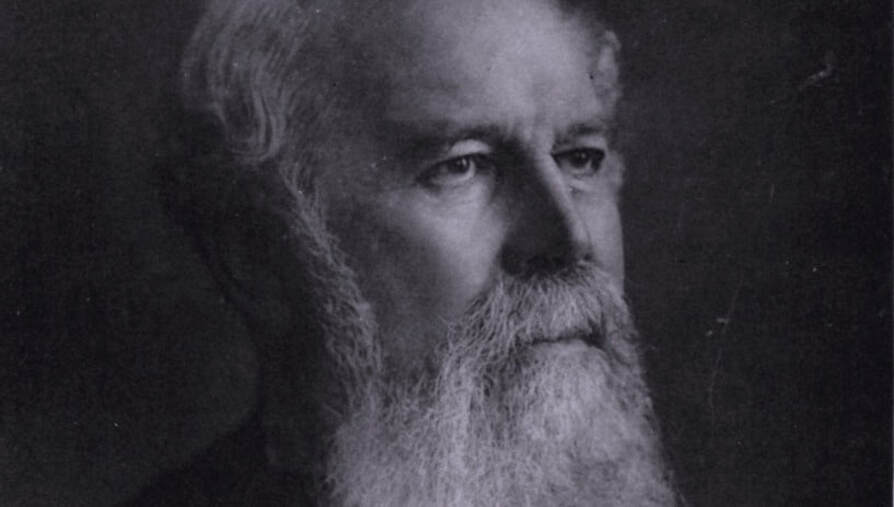
William Hendriksen (18 November 1900 – 12 January 1982) was a New Testament scholar and writer of Bible commentaries. Hendriksen was an ordained minister in the Christian Reformed Church and served as Professor of New Testament at Calvin Theological Seminary from 1942 to 1952. He was pastor of First Christian Reformed Church of Byron Center, MI from 1952 to 1961.
The following article is taken from Dr. Hendriksen’s commentary from 2 Thessalonians. The topic concerns the man of lawlessness, the son of destruction. While there are many misconceptions concerning the man of lawlessness, Dr. Hendriksen draws his conclusions from the biblical canon.
It can now be positively stated that the apostle’s use of the concept is capable of being traced to a canonical book. It is, indeed, true, as conservatives have always maintained, that many of the features in Paul’s description of the great and final prince of wickedness are derived from the book of Daniel:
(1) “The man of lawlessness,” cf. Dan. 7:25; 8:25.
(2) “the son of perdition,” cf. Dan. 8:26.
(3) “the one who opposes,” cf. Dan. 7:25
(4) “and exalts himself against everything (that is) called God or worshiped,” cf. Dan. 7:8, 20, 25; 8:4, 10, 11.
(5) “so that he seats himself in the temple of God, proclaiming himself to be God,” cf. Dan. 8:9–14.
This is not surprising, for “the little horn” of Dan. 7, the one which came up after the ten horns, is the antichrist, and “the little horn” of Dan. 8, the one which came up out of one of the four notable horns, is Antiochus Epiphanes, antichrist’s most notorious forerunner, the one who desecrated Jerusalem’s temple by erecting a pagan altar over the altar of burnt-offering, and by sacrificing upon it (which was an “appalling horror” in the estimation of every true believer).
Moreover, in Matt. 24:15 (cf. Mark 13:14) “the desolating abomination” (“appalling horror”) of which Jesus speaks is derived from Dan. 11:31; 12:11 (probably not directly from 9:27). History, in a sense, repeats itself. Better: prophecy attains multiple fulfilment. The underlying thought is ever the same. God’s city and sanctuary are desecrated, whether by Antiochus Epiphanes and his sacrilegious offerings (Dan. 8:9–14; cf. “Gog” in Ezek. 38, 39), by Roman armies with their idolatrous standards (Luke 21:20; Mark 13:14); or finally by the antichrist himself.
Now with respect to the final antichrist as pictured by Paul, our present passage (2 Thess. 2:3b, 4) states the following:
He is “the man of lawlessness” (a Semitism), that is, the man in whom opposition to God’s law will as it were be embodied, the very personification of rebellion against God’s ordinances.
He is also “the son of perdition” (another Semitism), the final Judas, see N.T.C. on John 17:12. Cf. David’s remark to Nathan, “The man who has done this is a son of death” (i.e., must certainly die); and cf. also Matt. 23:15: “a son of hell.” The man of lawlessness is pictured here as the utterly lost one, designated unto perdition. Contrast “sons of light” in 1 Thess. 5:5.
Furthermore, he is described as “the one who opposes.” This word (ἀντίκειμαι, here ὁ ἀντικείμενος) is found eight times in the New Testament (Luke 13:17; 21:15; 1 Cor. 16:9; Gal. 5:17; Phil. 1:28; 2 Thess. 2:4; 1 Tim. 1:10; 1 Tim. 5:14). It is used both as a verb (finite) and as a participial substantive (so here). The man of sin is the adversary of God, of God’s law, of God’s people, etc. As such he immediately reminds one of his master, Satan, who is “the great adversary.”
In very close connection with this opposing activity stands the fact that this adversary who will appear in the end-time “exalts himself against everything (that is) called God or worshiped.” In his reckless audacity and ferocious insolence, he uplifts himself (ὑπεραιρόμενος) not only against the only true God who has revealed himself in Jesus Christ and against all so-called gods, but also against all sacred objects, against whatever stands in connection with religious cults. The reference is probably to such objects as temples, places set aside for divine worship, altars, religious statues. He rages against them all.
He recognizes only one god (he would spell it with a capital: God), namely, himself! Hence, he seats himself in the sanctuary (the term ναός in its primary sense, in distinction from ἱερόν, generally refers to the shrine itself rather than to the entire building-complex) of God, that is, in the church (see 1 Cor. 3:16; 6:19; 2 Cor. 6:16; Eph. 2:21; and see N.T.C. on 2:19–22), for the term ναός is here clearly used metaphorically. He arrogates to himself authority over God’s true people. Of course, they will not recognize this violent usurper, and will refuse to render homage to him.
The result will be great tribulation for them (Matt. 24:15, 21, 22, 29). “Standing where he ought not” he proclaims or publicly declares himself to be God. In the Greek of that day and age the verb (ἀποδείκνυμι) is used of proclaiming an appointment to public office. Thus, we are told, “The expectation and hope of the world, Nero, has been declared (ἀποδέδεικται) Emperor” (M.M., p. 60), a quotation which also illustrates emperor-worship. But even Antiochus Epiphanes, that is, “Antiochus (the) Illustrious (God)” or “Antiochus (the) God who reveals himself,” demanding divine homage but not altogether ignoring Zeus, was not as blasphemous as the final man of lawlessness will be, for the latter will recognize only one deity, namely, himself, will seat himself (will not merely deposit his image) in God’s shrine, and will demand divine adoration for himself alone.
It is instructive to note that the explanation which I have given with respect to the “man of sin” passage is in line with that which was favored by the earliest ecclesiastical writers. These understood it as being a prophecy with reference to a definite person who would live on earth at the close of history and would be utterly discomfited by Christ at his return. The church should never have departed from this interpretation.[1]
May the Lord’s truth and grace be found here. Have a blessed day in the Lord.
Soli deo Gloria!
[1] William Hendriksen and Simon J. Kistemaker, Exposition of I-II Thessalonians, vol. 3, New Testament Commentary (Grand Rapids: Baker Book House, 1953–2001), 176–178.
3 Let no one deceive you in any way. For that day will not come, unless the rebellion comes first, and the man of lawlessness is revealed, the son of destruction, 4 who opposes and exalts himself against every so-called god or object of worship, so that he takes his seat in the temple of God, proclaiming himself to be God.” (2 Thessalonians 2:3–4 (ESV)
The Apostle Paul, along with Silas and Timothy discovered there was confusion among the Thessalonian believers concerning the return of the Lord Jesus Christ. This was a doctrine Paul previously examined in his first letter to this particular church (I Thiess. 4:13-5:11). There was also speculation another spirit, a spoken word or even another letter supposedly from the three missionaries taught the day of the Lord had already occurred (2 Thess. 2:1-2). This was upsetting, not only to Paul and his companions, but also to the believers.
Therefore, Paul did not want any believer in Christ deceived in any way. Paul stated two events must first occur prior to the day of the Lord. What are these two particular occurrences? First, an event known as the rebellion. Second, the revealing of the man of lawlessness. Let’s examine both.
What is the rebellion? It was previously notedthe Rebellion (ἀποστασία; apostasia) refers to an abandonment, revolt and/or an insurrection. This literally means a “falling away” or “apostasy.” The apostle probably referred to a falling away by many within the church or even a worldwide defection from God (I Tim. 4:1-2; 2 Tim. 3:1-9; Jude 17-19). Coupled with the definite article “the” this is not just a general apostasy or falling away from the truth. Rather, Paul referred to a particular and specific worldwide event. John Calvin comments that the Apostle “predicts a certain general revolt of the visible Church.”
Following the rebellion there would be the revealing of the man of lawlessness, the son of destruction. To whom was Paul referring?
The man of lawlessness (ἄνθρωπος ἀνομίας; anthropos anomias) is a particular man who lives lawlessly. He behaves with a “complete disregard for the laws or regulations of a society.”[1]He is a lawbreaker (Matt. 13:41). See also Matt .7:23; 23:28; 24:12; Rom. 4:7; 6:19; 2 Cor. 6:14; 2 Th 2:7; Titus 2:14; Heb. 1:9; 10:17; 1 John 3:4.
The text also refers to him as the son of destruction (υἱὸς ἀπωλείας; huios aploeias). This individual will also be one solely identified and possessing a desire to ruin and destroy; particularly believers in Christ. How does the Apostle Paul describe this individual? He mentioned three distinctive characteristics or behaviors.
First, he is one “who opposes and exalts himself against every so-called god or object of worship.”
Second, he does this “so that he takes his seat in the temple of God.” The phrase takes his seat (καθίσαι; kathisai) refers to a position of authority. Particularly, it may refer in this context to having authority of the Law of Moses. This position is located in the temple of God (ναὸν θεοῦ; naon theou). The temple of God is the Lord’s dwelling place where Yahweh is worshipped. This must refer to the Temple in Jerusalem.
Third, this results in him “proclaiming himself to be God.” Proclaiming (ἀποδεικνύντα; apodeiknynta) is a present, active, masculine, singular participle. This individual will publicly attest or declare himself to be God. The question is when does this man and his blasphemous behavior occur?
It seems clear enough that Paul refers to the one identified elsewhere as “antichrist” (1 John 2:18). Paul, then, may be talking about one final leader of religious rebellion against God and Christ who will appear before the return of Jesus. We cannot be sure of this, however, because much of Paul’s language echoes Daniel 11 and the prophecy of the prince who will defile the Jerusalem temple. So, the Apostle could be talking about a figure who would try to install himself in the Jerusalem temple sometime before Jesus returns. If so, this could be a reference to the Roman general Titus’ defiling of the temple before its destruction in AD 70. But whoever this man of lawlessness is, he clearly is opposed to all that God loves,” explains Dr. R. C. Sproul.
“This probably refers to a literal temple, but some suggest that it is a figurative reference to his occupying the most holy place in human worship, which rightfully belongs only to God. The early church fathers and several good modern-day commentators accept the literal view. This man is also called the “beast coming out of the sea” (Rev. 13:1–10), “a scarlet beast” (17:3), and simply “the beast” (17:8, 16; 19:19–20; 20:10). He is the Antichrist (1 John 2:18), a pseudo-Christ hostile to the Savior. He will be a real human being, not a principle or a system or a succession of individuals. Such a person has not yet been spotlighted on the stage of human history.[2]
Regardless of whether Paul spoke of a near fulfillment in 70 AD or whether there is one final rebellion coming before Jesus returns, the “spirit of antichrist” has been in the church since the first century (1 John 4:1-3). Therefore, believers in Christ must not think opposition to the Lord will exist only at the last day. At the present time, there are some who try to infiltrate the visible church and lead it astray. These are they who follow the spirit of antichrist and must be confronted and opposed. Truth matters.
May the Lord’s truth and grace be found here. Have a blessed day in the Lord.
[2] Thomas L. Constable, “2 Thessalonians,” in The Bible Knowledge Commentary: An Exposition of the Scriptures, ed. J. F. Walvoord and R. B. Zuck, vol. 2 (Wheaton, IL: Victor Books, 1985), 718.
3 Let no one deceive you in any way. For that day will not come, unless the rebellion comes first, and the man of lawlessness is revealed, the son of destruction, 4 who opposes and exalts himself against every so-called god or object of worship, so that he takes his seat in the temple of God, proclaiming himself to be God.” (2 Thessalonians 2:3–4 (ESV)
The Apostle Paul, along with Silas and Timothy discovered there was confusion among the Thessalonian believers concerning the return of the Lord Jesus Christ. This was a doctrine Paul previously examined in his first letter to this particular church (I Thiess. 4:13-5:11). There was also speculation another spirit, a spoken word or even another letter supposedly from the three missionaries taught the day of the Lord had already occurred (2 Thess. 2:1-2). This was upsetting, not only to Paul and his companions, but also to the believers.
Therefore, Paul did not want any believer in Christ deceived in any way. Paul stated two events must first occur prior to the day of the Lord. What are these two particular occurrences? First, an event known as the rebellion. Second, the revealing of the man of lawlessness. Let’s examine both.
What is the rebellion? It was previously notedthe Rebellion (ἀποστασία; apostasia) refers to an abandonment, revolt and/or an insurrection. This literally means a “falling away” or “apostasy.” The apostle probably referred to a falling away by many within the church or even a worldwide defection from God (I Tim. 4:1-2; 2 Tim. 3:1-9; Jude 17-19). Coupled with the definite article “the” this is not just a general apostasy or falling away from the truth. Rather, Paul referred to a particular and specific worldwide event. John Calvin comments that the Apostle “predicts a certain general revolt of the visible Church.”
However, there should not be speculation these were, or are, true believers in Jesus Christ who will depart from the Faith. Rather, these are professing believers who the Holy Spirit had not truly regenerated resulting in true repentance and faith in Christ; conversion. The Apostle John referred to these individuals in his first epistle (1 John 2:18–23).
Regardless of whether there is one final rebellion coming before Jesus returns, the “spirit of antichrist” has been in the church since the first century (1 John 4:1-3). Therefore, believers in Christ must not think opposition to the Lord will exist only at the last day. At the present time, there are some who try to infiltrate the visible church and lead it astray. These are they who follow the spirit of antichrist and must be confronted and opposed. Truth matters.
Secondly, following the rebellion there would be the revealing of the man of lawlessness, the son of destruction. To whom was Paul referring?
The man of lawlessness (ἄνθρωπος ἀνομίας; anthropos anomias) is a particular man who lives lawlessly. He behaves with a “complete disregard for the laws or regulations of a society.”[1]He is a lawbreaker (Matt. 13:41). See also Matt .7:23; 23:28; 24:12; Rom. 4:7; 6:19; 2 Cor. 6:14; 2 Th 2:7; Titus 2:14; Heb. 1:9; 10:17; 1 John 3:4.
The text also refers to him as the son of destruction (υἱὸς ἀπωλείας; huios aploeias). This individual will also be one solely identified and possessing a desire to ruin and destroy.
“The imagery used here derives especially from Jesus, however (cf. Mt 24:15), who took it from Daniel (Dan. 7:25; 8:11; 9:26–27; 11:31, 36; cf. 2 Chron. 33:7; Ezek 8:3). Some scholars who have examined the prophecies carefully have concluded that Daniel 11 describes the abomination caused by Antiochus Epiphanes; yet the “end” seems to come at that time (12:1), about two centuries before Jesus. Like the promise of the land to Abraham’s descendants, deferred repeatedly during the period of the judges, between David and Josiah, and afterward due to Israel’s disobedience, this text might be an example of deferred eschatology. If one counts the period of Daniel 9:24–27, however, the anointed prince (whom some held to be the Messiah) was to be “cut off” around the year that Jesus died; the destruction of the city followed forty years later, again indicating a delay of at least forty years. Evangelical interpreters differ as to whether (1) a specific future tribulation remains (perhaps 2 Thess. 2:8–9), (2) the Jewish war in a.d. 66–70 fulfilled it completely (cf. Matt. 24:15–21), (3) the whole course of history constitutes this period (cf. comments on Revelation, especially chap. 12) or (4) the language is reused in different ways, all of which are true,” explains commentator Craig Keener.[2]
Dr. William Hendriksen states, “The movement of apostasy will soon have a leader, namely, “the man of lawlessness” (ὁ ἄνθρωπος τῆς ἀνομίας). This is probably the best reading, though there is also rather strong support for the reading “the man of sin” (ἄνθρωπος τῆς ἁμαρτίας). In view of the fact that “sin is lawlessness” (1 John 3:4), this makes no essential difference. It is important to note, in this connection, that just like the apostasy will not be merely passive but active (not merely a falling away from but also a rebellion against God and his Christ), so also the man of lawlessness will be an active and aggressive transgressor. He is not called “lawless” because he never heard God’s law, but because he openly defies it!”[3]
We will examine more about this individual when next we meet. May the Lord’s truth and grace be found here. Have a blessed day in the Lord.
[3] William Hendriksen and Simon J. Kistemaker, Exposition of I-II Thessalonians, vol. 3, New Testament Commentary (Grand Rapids: Baker Book House, 1953–2001), 170.
3 Let no one deceive you in any way. For that day will not come, unless the rebellion comes first, and the man of lawlessness is revealed, the son of destruction, 4 who opposes and exalts himself against every so-called god or object of worship, so that he takes his seat in the temple of God, proclaiming himself to be God.” (2 Thessalonians 2:3–4 (ESV)
The Apostle Paul, along with Silas and Timothy discovered there was confusion among the Thessalonian believers concerning the return of the Lord Jesus Christ. This was a doctrine Paul previously examined in his first letter to this particular church (I Thiess. 4:13-5:11). There was also speculation another spirit, a spoken word or even another letter supposedly from the three missionaries taught the day of the Lord had already occurred (2 Thess. 2:1-2). This was upsetting, not only to Paul and his companions, but also to the believers.
Therefore, Paul did not want any believer in Christ deceived in any way. To deceive (ἐξαπατήσῃ; exapatese) is an active verb concerning a future possibility. It refers to being misled and cheated from the truth and led into error. False teachers seek to do this in any way (μηδένα τρόπον; medena tropon) they can. Since the Garden of Eden (Gen. 3:1-5), deceivers have always posed the question
“Has God said?”
Having discovered that there was some confusion in the first-century Thessalonian church regarding whether the return of Christ and the final resurrection had already happened or were beginning to happen, Paul wrote 2 Thessalonians to correct the misunderstanding (2:1–2). His argument, we will see, is based on the fact that several things must happen before the end comes, and these things had not yet occurred when he wrote 2 Thessalonians. In today’s passage, he begins to outline the events that will precede the Lord’s return,” explains one commentator.
Paul stated two events must first occur prior to the day of the Lord. What are these two particular occurrences? First, an event known as the rebellion. Second, the revealing of the man of lawlessness. Let’s examine both.
What is the rebellion? Rebellion (ἀποστασία; apostasia) refers to an abandonment, revolt and/or an insurrection. This literally means a “falling away” or “apostasy.” Dr. R. C. Sproul writes, “This might refer to a falling away of many within the church (I Tim. 4:1-2; 2 Tim. 3:1-9; Jude 17-19), to an apostasy of the Jewish people, or a worldwide rebellion against God.” Coupled with the definite article “the” this is not just a general apostasy or falling away from the truth. Rather, Paul referred to a particular and specific worldwide event. John Calvin comments that the Apostle “predicts a certain general revolt of the visible Church.”
“The fact that the day of the Lord would be preceded by the apostasy (falling away, rebellion)—an apostasy about which the readers had received previous instruction (see on verse 5)—had been clearly predicted by the Lord while he was still on earth (Matt. 24:10–13). During the old dispensation the predicted final apostasy had been foreshadowed again and again by defection of Israel from the living God. A most striking instance of apostasy occurred during the reign of that cruel and wicked forerunner of the Antichrist, namely, Antiochus Epiphanes (who ruled from 175–164 b.c.). He was determined to wipe out the religion of Israel root and branch,” explains Dr. William Hendriksen.[1]
“What the apostle Paul is now saying, here in 2 Thess. 2:3, amount to this: Just like the first coming of Christ was preceded by a period of apostasy, so also the second coming will not occur until a similar apostasy has taken place. In this case, however, the apostasy will be a falling away from (yes, and open rebellion against) the God who climaxed his love by a deed of infinite sacrifice in the interest of sinners, namely, the giving of his only-begotten Son”[2]
“It will be a defection on the part of those who have been reached by the gospel (cf. 1 Peter 4:17; Ezek. 9:6), and it will be on a large scale: “many shall stumble … many false prophets shall arise and shall lead many astray … the love of many shall wax cold” (Matt. 24:10–13). The use of the term apostasy here in 2 Thess. 2:3 without an accompanying adjective, points to the fact that, by and large, the visible Church will forsake the true faith” [3]
However, there should not be speculation these were, or are, true believers in Jesus Christ who will depart from the Faith. Rather, these are professing believers who the Holy Spirit had not truly regenerated resulting in true repentance and faith in Christ; conversion.
The Apostle John referred to these individuals in his first epistle. 1 John 2:18–23 (ESV) says, “18 Children, it is the last hour, and as you have heard that antichrist is coming, so now many antichrists have come. Therefore, we know that it is the last hour. 19 They went out from us, but they were not of us; for if they had been of us, they would have continued with us. But they went out, that it might become plain that they all are not of us. 20 But you have been anointed by the Holy One, and you all have knowledge. 21 I write to you, not because you do not know the truth, but because you know it, and because no lie is of the truth. 22 Who is the liar but he who denies that Jesus is the Christ? This is the antichrist, he who denies the Father and the Son. 23 No one who denies the Son has the Father. Whoever confesses the Son has the Father also.”
Regardless of whether there is one final rebellion coming before Jesus returns, the “spirit of antichrist” has been in the church since the first century. John warned about this in 1 John 4:3. Therefore, believers in Christ must not think opposition to the Lord will exist only at the last day. At the present time, there are some who try to infiltrate the visible church and lead it astray. These are they who follow the spirit of antichrist and must be confronted and opposed. Truth matters.
May the Lord’s truth and grace be found here. Have a blessed day in the Lord.
Soli deo Gloria!
[1] William Hendriksen and Simon J. Kistemaker, Exposition of I-II Thessalonians, vol. 3, New Testament Commentary (Grand Rapids: Baker Book House, 1953–2001), 169.
Each Lord’s Day, I will be sharing with you a series of weekly and topical devotionals entitled A Word Fitly Spoken. The title is taken from Proverbs 25:11 which says, “A word fitly spoken is like apples of gold in a setting of silver.”
Proverbs 25 is a from King Solomon. The word proverb means “to be like.” Therefore, a proverb is a collection of sayings, using both metaphors and similes, in order to articulate profound, biblical truths. The overall theme and purpose of Proverbs in general, and Proverb 25:11 in particular, is summarized in Proverbs 1:1-7.
1The proverbs of Solomon, son of David, king of Israel: 2 To know wisdom and instruction, to understand words of insight, 3 to receive instruction in wise dealing, in righteousness, justice, and equity; 4 to give prudence to the simple, knowledge and discretion to the youth— 5 Let the wise hear and increase in learning, and the one who understands obtain guidance, 6 to understand a proverb and a saying, the words of the wise and their riddles. 7 The fear of the Lord is the beginning of knowledge; fools despise wisdom and instruction. (Proverbs 1:1–7 (ESV)
The Holy Spirit inspired Solomon, and others, in this collection of short, pithy sayings (2 Tim. 3:16-17; 2 Peter 1:20-21). Since the Book of Proverbs is categorized as wisdom literature, the ultimate purpose of a proverb is the acquisition of wisdom by the reader. Wisdom is the practical application of biblical truth. This overall goal is set forth in vs. 2. Specific reasons and particular recipients of wisdom are found in vs. 3-4. The y include:
To know wisdom. Vs. 2.
To know instruction. Vs. 2.
To understand words of insight. Vs. 2.
To receive instruction in wise dealing. Vs. 3.
To receive instruction in righteousness. Vs. 3.
To receive instruction in justice. Vs. 3.
To receive instruction in equity. Vs. 3.
To give prudence to the simple. Vs. 4.
To give knowledge and discretion to the youth. Vs. 4.
In Proverbs 25:11, Solomon placed great importance upon an individual’s words being “fitly spoken.” In the Hebrew language, fitly means proper or appropriate. A wise individual’s communication should be suitable. This refers to the time, occasion, and manner of what an individual says. In other words, it is not only important to know what to say but also how, when, why, where and to whom to say it.
The king says communicating in such a wise way is indirectly compared to golden apples in a decorative setting of silver. Appropriate and wise speech is compared to a work of art.
“This kind of proverbial comparison simply places two or more things side by side. (cf. vs. 18), leaving the reader to work out the nature of the comparison. The importance of well-chosen words, a common wisdom theme, is highlighted by their comparison with objects of fine craftsmanship,” explains Dr. R. C. Sproul.
“An appropriate and properly timed word (cf. 15:23; 24:26)—which sometimes may be a rebuke —can be attractive and valuable, like gold apples set against a silver sculpture or carving, or like a gold earring or other ornament,” states one commentator in the Bible Knowledge Commentary.
It is with this understanding from Proverbs 25:11, we will be considering, meditating upon and applying the biblical doctrine and theme of the holiness of God. This series concerning God’s holiness, and consequently the believers’, will examine what the biblical text says about the holiness of God, what the biblical text means and how this truth may be applied in our lives.
The loss of the traditional vision of God as holy is now manifested everywhere in the evangelical world. It is the key to understanding why sin and grace have become such empty terms. What depth or meaning, P.T. Forsyth asked, can these terms have except in relation to the holiness of God? Divorced from the holiness of God, sin is merely self-defeating behavior or a breach in etiquette. Divorced from the holiness of God, grace is merely empty rhetoric, pious window dressing for the modern technique by which sinners work out their own salvation. Divorced from the holiness of God, our gospel becomes indistinguishable from any of a host of alternative self-help doctrines. Divorced from the holiness of God, our public morality is reduced to little more than an accumulation of trade-offs between competing private interests. Divorced from the holiness of God, our worship becomes mere entertainment. The holiness of God is the [foundation of reality]. Sin is defiance of God’s holiness, the Cross is the outworking and victory of God’s holiness, and faith is the recognition of God’s holiness. Knowing that God is holy is therefore the key to knowing life as it truly is, knowing Christ as he truly is, knowing why he came, and knowing how life will end. — David Wells – No Place for Truth, Whatever Happened to Evangelical Theology
I encourage you to begin reading, and even memorize, the following verses from the Apostle Peter, and inspired by the Holy Spirit. I pray the text will be not only our launching pad in this study, but also remain our goal throughout our life and ministry.
13 Therefore, preparing your minds for action, and being sober-minded, set your hope fully on the grace that will be brought to you at the revelation of Jesus Christ. 14 As obedient children, do not be conformed to the passions of your former ignorance, 15 but as he who called you is holy, you also be holy in all your conduct, 16 since it is written, “You shall be holy, for I am holy.” (1 Peter 1:13–16 (ESV)
May the Lord’s truth and grace be found here. Have a blessed Lord’s Day.
“Now concerning the coming of our Lord Jesus Christ and our being gathered together to him,” (2 Thessalonians 2:1 (ESV)
John Charles (J.C.) Ryle (10 May 1816 – 10 June 1900) was an English evangelical Anglican bishop. He was the first Anglicanbishop of Liverpool. Ryle was a strong critic of ritualism. He was a writer, pastor and an evangelical preacher. The following article, entitled The Great Gathering, first appeared in 1878.
In closing, let me offer the following APPLICATIONS.
(1) I ask you a plain question. Do not turn away from it and refuse to look it in the face. Shall you be gathered by the angels into God’s home when the Lord returns — or shall you be left behind?
One thing, at any rate, is very certain — there will only be two groups of mankind at the last great day: those who are on the right hand of Christ — and those who are on the left; those who are counted righteous — and those who are wicked; those who are safe in the ark — and those who are outside; those who are gathered like wheat into God’s barn — and those who are left behind like tares to be burned.
Now, what will your portion be?
Perhaps you do not know yet. You cannot say. You are not sure. You hope the best. You trust it will be all right at last — but you won’t undertake to give an opinion. Well! I only hope you will never rest until you do know. The Bible will tell you plainly who are they that will be gathered. Your own heart, if you deal honestly, will tell you whether you are one of the numbers. Rest not, rest not, until you know!
How men can stand the partings and separations of this life — if they have no hope of anything better? How they can bear to say “good-bye” to sons and daughters, and launch them on the troublesome waves of this world — if they have no expectation of a safe “gathering” in Christ at last? How they can part with beloved members of their families, and let them journey forth to the other side of the globe, not knowing if they shall ever meet happily in this life or a life to come? How all this can be, completely baffles my understanding! I can only suppose that the many never think, never consider, never look forward. Once let a man begin to think — and he will never be satisfied until he has found Christ and is safe.
(2) I offer you a plain means of testing your own soul’s condition, if you want to know if you will be gathered into God’s home. Ask yourself what kind of gatherings you like best here upon earth? Ask yourself whether you really love the assembling together of God’s people?
How could that man enjoy the meeting of true Christians in Heaven — who takes no pleasure in meeting true Christians on earth? How can that heart which is wholly set on balls, and races, and feasts, and amusements, and worldly parties — and thinks Christian worship a weariness — how can such a heart be in tune for the company of saints, and saints alone? The thing is impossible. It cannot be.
Never, never let it be forgotten, that our tastes on earth are sure evidence of the state of our hearts; and the state of our hearts here on earth, is a sure indication of our eternal home hereafter. Heaven is a prepared place for a prepared people. He who hopes to be gathered with saints in Heaven, while he only loves the gathering of sinners on earth — is deceiving himself. If he lives and dies in that state of mind, he will find at last that it would have been better if he had never been born!
(3) If you are a true Christian, I exhort you to be often looking forward. Your best things are yet to come! Your redemption draws near! The night is far spent — the day is at hand. Yet in a little while, and He whom you love and believe on, will come, and will not tarry. When He comes, He will bring His dead saints with Him and change His living ones. Look forward! There is a “gathering together” yet to come!
The morning after a shipwreck is a sorrowful time. The joy of half-drowned survivors, who have safely reached the land — is often sadly marred by the recollection of shipmates who have sunk to rise no more. There will be no such sorrow when believers gather together round the throne of the Lamb. Not one of the ship’s company shall be found absent! “Some on boards, and some on broken pieces of the ship — all will get safe to shore at last.” (Acts 27:44.) The great waters and raging waves shall swallow none of God’s elect! When the sun rises — they shall be seen all safe, and “gathered together.”
Even the day after a great victory is a sorrowful time. The triumphant feelings of the conquerors are often mingled with bitter regrets for those who fell in action, and died on the field. The list of “killed, wounded, and missing,” breaks many a heart, fills many a home with mourning, and brings many a grey head sorrowing to the grave! The great Duke of Wellington often said, “there was but one thing worse than a victory — and that was a defeat.” But thanks be to God, there will be no such sorrow in Heaven! The soldiers of the great Captain of our salvation shall all answer to their names at last! The muster-roll shall be as complete after the battle — as it was before! Not one believer shall be “missing” in the great “gathering together.”
Does Christmas, for instance, bring with it sorrowful feelings and painful associations? Do tears rise unbidden in your eyes when you mark the empty places around the fireside? Do grave thoughts come sweeping over your mind, even in the midst of your children’s mirth — when you recollect the dear old faces and much-loved voices of some who sleep in the churchyard? Well, look up and look forward! The time is short. The world is growing old. The coming of the Lord draws near! There is yet to be a meeting without parting, and a gathering without separation. Those believers whom you laid in the grave with many tears are in good keeping — you will yet see them again with joy. Look up! I say once more. Lay hold by faith on the “coming of our Lord Jesus Christ, and our gathering together unto Him.” Believe it, think of it, rest on it. It is all true!
Do you feel lonely and desolate as every December comes round? Do you find few to pray with, few to praise with, few to open your heart to, few to exchange experience with? Do you learn increasingly, that Heaven is becoming every year fuller — and earth emptier?
Well, it is an old story. You are only drinking a cup which myriads have drunk before. Look up and look forward. The lonely time will soon be past and over — you will have company enough by and by. “When you wake up after your Lord’s likeness — you shall be satisfied.” (Psalm 17:15.) Yet in a little while and you shall see a congregation that shall never break up, and a Sabbath that shall never end. “The coming of our Lord Jesus Christ, and our gathering together unto Him,” shall make amends for all!
“Therefore comfort one another with these words!” 1 Thessalonians 4:18
Will you be part of the gathering together of the saints when Jesus Christ returns in power might and glory? God commands sinners, by the Holy Spirit (John 3:1-8; Titus 3:1-5), to repent of their sins and to receive salvation by grace alone, through faith alone in the person and work of Jesus Christ alone (John 12:1-12; Acts 2:32-38; Romans 3:21-26; Eph. 2:1-10).
May the Lord’s truth and grace be found here. Have a blessed day in the Lord.
“Now concerning the coming of our Lord Jesus Christ and our being gathered together to him,” (2 Thessalonians 2:1 (ESV)
John Charles (J.C.) Ryle (10 May 1816 – 10 June 1900) was an English evangelical Anglican bishop. He was the first Anglicanbishop of Liverpool. Ryle was a strong critic of ritualism. He was a writer, pastor and an evangelical preacher. The following article, entitled The Great Gathering, first appeared in 1878.
WHY is this “gathering together” of true Christians a thing to be desired? Let us try to get an answer to that question.
Paul evidently thought that the gathering at the last day was a cheering object which Christians ought to keep before their eyes. He classes it with that second coming of our Lord, which he says elsewhere, believers love and long for. He exalts it in the distant horizon as one of those “good things to come,” which should animate the faith of every pilgrim in the narrow way. Not only, he seems to say, will each servant of God have rest, and a kingdom, and a crown — he will also have besides a happy “gathering together.” Now, where is the peculiar blessedness of this gathering? Why is it a thing that we ought to look forward to with joy, and expect with pleasure? Let us see.
(1) For one thing, the “gathering together” of all true Christians will be a state of things totally unlike their present condition. To be scattered, and not gathered, seems the rule of man’s existence now. Of all the millions who are annually born into the world, how few continue together until they die! Children who draw their first breath under the same roof, and play by the same fireside — are sure to be separated as they grow up, and to draw their last breath far distant from one another.
The same law applies to the people of God. They are spread abroad like salt, one in one place and one in another, and never allowed to continue long side by side. It is doubtless good for the world, that it is so. A town would be a very dark place at night, if all the lighted candles were crowded together into one room. But as good as it is for the world — it is no small trial to believers. Many a day they feel desolate and alone; many a day they long for a little more communion with their brethren, and a little more companionship with those who love the Lord! Well, they may look forward with hope and comfort. The hour is coming when they shall have no lack of companions. Let them lift up their heads and rejoice. There will be a “gathering together” by and by!
(2) For another thing, the gathering together of all true Christians will be an assembly entirely of one mind. There are no such assemblies now. Mixture, hypocrisy, and false profession — creep in everywhere. Wherever there is wheat — there are sure to be tares. Wherever there are good fish — there are sure to be bad. Wherever there are wise virgins — there are sure to be foolish. There is no such thing as a perfect church now. There is a Judas Iscariot at every communion table — and a Demas in every Apostolic company! And wherever the “sons of God” come together — Satan is sure to appear among them. (Job 1:6.)
But all this shall come to an end one day. Our Lord shall at length present to the Father a perfect church, “having neither spot nor wrinkle, nor any such thing.” (Ephesians 5:27.) How glorious such a Church will be!
To meet with half-a-dozen believers together now is a rare event in a Christian’s year, and one that cheers him like a sunshiny day in winter — it makes him feel his heart burn within him, as the disciples felt on the way to Emmaus. But how much more joyful will it be to meet a “multitude that no man can number!”
To find too, that all we meet are at last of one opinion and one judgment, and see eye to eye — to discover that all our miserable controversies are buried forever, and that Calvinists no longer hate Arminians, nor Arminians Calvinists; Churchmen no longer quarrel with Dissenters, nor Dissenters with Churchmen; to join a company of Christians in which there is neither jarring, squabbling, nor discord, every man’s graces fully developed, and every man’s besetting sins dropped off like leaves in Autumn — all this will be happiness indeed! No wonder that Paul bids us to look forward.
(3) For another thing, the gathering together of true Christians will be a meeting at which none shall be absent. The weakest lamb shall not be left behind in the wilderness. We shall once more see our beloved friends and relatives who fell asleep in Christ, and left us in sorrow and tears — better, brighter, more beautiful, more pleasant than ever we found them on earth! We shall hold communion with all the saints of God who have fought the good fight before us, from the beginning of the world to the end. Patriarchs and Prophets, Apostles and Fathers, Martyrs and Missionaries, Reformers and Puritans — all the host of God’s elect shall be there.
If to read their words and works has been pleasant — how much better shall it be to see them! If to hear of them, and be stirred by their example, has been useful — how much more delightful to talk with them, and ask them questions! To sit down with Abraham, Isaac, and Jacob, and hear how they kept the faith without any Bible; to converse with Moses, and Samuel, and David, and Isaiah, and Daniel, and hear how they could believe in a Christ yet to come; to converse with Peter, and Paul, and Lazarus, and Mary, and Martha, and listen to their wondrous tale of what their Master did for them — all this will be sweet indeed! No wonder that Paul bids us to look forward.
(4) In the last place, the gathering of all true Christians shall be a meeting without a parting. There are no such meetings now. We seem to live in an endless hurry, and can hardly sit down and take breath — before we are off again. “Good-bye!” treads on the heels of “Hello!”
The cares of this world, the necessary duties of life, the demands of our families, the work of our various stations and callings — all these things appear to eat up our days, and to make it impossible to have long quiet times of communion with God’s people. But, blessed be God — it shall not always be so. The hour comes, and shall soon be here, when “good-bye” and “farewell” shall be words that are laid aside and buried forever!
When we meet in a world where the former things have passed away, where there is . . .no more sin, no more sorrow, no more poverty, no more work of body or work of brains, no more need of anxiety for families, no more sickness, no more pain, no more old age, no more death, no more change —when we meet in that endless state of being, calm, and restful, and unhurried — who can tell what the bliss and blessedness will be? I cannot wonder that Paul bids us look up and look forward.
I lay these things before all who read this paper, and ask their serious attention to them. If I know anything of a Christian’s experience, I am sure they contain food for reflection. This, at least, I say confidently: the man who sees nothing much in the second coming of Christ and the public “gathering” of Christ’s people — nothing happy, nothing joyful, nothing pleasant, nothing desirable — such a man may well doubt whether he himself is a true Christian and has got any grace at all!
Will you be part of the gathering together of the saints when Jesus Christ returns in power might and glory? God commands sinners, by the Holy Spirit (John 3:1-8; Titus 3:1-5), to repent of their sins and to receive salvation by grace alone, through faith alone in the person and work of Jesus Christ alone (John 12:1-12; Acts 2:32-38; Romans 3:21-26; Eph. 2:1-10).
May the Lord’s truth and grace be found here. Have a blessed day in the Lord.
“Now concerning the coming of our Lord Jesus Christ and our being gathered together to him,” (2 Thessalonians 2:1 (ESV)
John Charles (J.C.) Ryle (10 May 1816 – 10 June 1900) was an English evangelical Anglican bishop. He was the first Anglicanbishop of Liverpool. Ryle was a strong critic of ritualism. He was a writer, pastor and an evangelical preacher. The following article, entitled The Great Gathering, first appeared in 1878.
The MANNER of this “gathering together” is plainly revealed in Scripture. The dead saints shall all be raised, and the living saints shall all be changed. It is written, “The sea gave up the dead that were in it, and death and Hades gave up the dead that were in them.” “The dead in Christ shall rise first. Those who are alive and remain shall be caught up together with them in the clouds, to meet the Lord in the air.” “We shall not all sleep — but we shall all be changed, in a moment, in the twinkling of an eye, at the last trumpet; for the trumpet shall sound, and the dead shall be raised incorruptible, and we shall be changed!” (Revelation 20:13; 1 Thessalonians 4:16, 17; 1 Corinthians 15:51, 52.) And then, when every member of Christ is found, and not one left behind, when soul and body, those old companions, are once more reunited — then shall be the grand “gathering together.”
The OBJECT of this “gathering together” is as clearly revealed in Scripture as its manner. It is partly for the final reward of Christ’s people — that their complete justification from all guilt may be declared to all creation; that they may receive the “unfading crown of glory,” and the “kingdom prepared before the foundation of the world;” that they may be admitted publicly into the joy of their Lord.
(a) This gathering will be a great one. ALL children of God who have ever lived, from Abel the first saint down to the last born in the day that our Lord comes — all of every age, and nation, and church, and people, and tongue — all shall be assembled together. Not one shall be overlooked or forgotten. The weakest and feeblest shall not be left behind. Now, when “scattered,” true Christians seem a little flock; then, when “gathered,” they shall be found a multitude which no man can number.
(b) This gathering will be a wonderful one. The saints from distant lands, who never saw each other in the flesh, and could not understand each other’s speech if they met — shall all be brought together in one harmonious company. The dwellers in Australia shall find they are as near Heaven, and as soon there, as the dwellers in England. The believers who died five thousand years ago, and whose bones are mere dust — shall find their bodies raised and renewed as quickly as those who are alive when the trumpet sounds. Above all, miracles of grace will be revealed. We shall see some in Heaven, who we never expected would have been saved at all. The confusion of tongues shall at length be reversed, and done away. The assembled multitude will cry with one heart and in one language, “What has God wrought!” (Num. 23:23.)
(c) This gathering shall be a humbling one. It shall make an end of bigotry and narrow-mindedness forever. The Christians of one denomination shall find themselves side by side with those of another denomination. If they would not tolerate them on earth — they will be obliged to tolerate them in Heaven. Churchmen and Dissenters, who will neither pray together nor worship together now, will discover to their shame, that they must praise together hereafter to all eternity! The very people who will not receive us at their ordinances now, and keep us back from their Table — will be obliged to acknowledge us before our Master’s face, and to let us sit down by their side. Never, will the world have seen such a complete overthrow of sectarianism, party-spirit, unbrotherliness, religious jealousy, and religious pride! At last, we shall all be completely “clothed with humility.” (1 Peter 5:5.)
This mighty, wonderful “gathering together,” is the gathering which ought to be often in men’s thoughts. It deserves consideration — it demands attention. Gatherings of other kinds are incessantly occupying our minds, political gatherings, scientific gatherings, gatherings for pleasure, gatherings for gain. But the hour comes, and will soon be here, when gatherings of this kind will be completely forgotten! One thought alone will swallow up men’s minds — that thought will be, “Shall I be gathered with Christ’s people into a place of safety and honor — or be left behind to everlasting woe?” Let us take care that we are not left behind!
Will you be part of the gathering together of the saints when Jesus Christ returns in power might and glory? God commands sinners, by the Holy Spirit (John 3:1-8; Titus 3:1-5), to repent of their sins and to receive salvation by grace alone, through faith alone in the person and work of Jesus Christ alone (John 12:1-12; Acts 2:32-38; Romans 3:21-26; Eph. 2:1-10).
May the Lord’s truth and grace be found here. Have a blessed day in the Lord.
“Now concerning the coming of our Lord Jesus Christ and our being gathered together to him,” (2 Thessalonians 2:1 (ESV)
John Charles (J.C.) Ryle (10 May 1816 – 10 June 1900) was an English evangelical Anglican bishop. He was the first Anglicanbishop of Liverpool. Ryle was a strong critic of ritualism. He was a writer, pastor and an evangelical preacher. The following article, entitled The Great Gathering, first appeared in 1878.
The text which heads this page contains an expression which deserves no common attention. That expression is, “Our gathering together.”
“Our gathering together!” Those three words touch a note which ought to find a response in every part of the world. Man is by nature a social being — he does not like to be alone. Go where you will on earth, people generally like meeting together, and seeing one another’s faces. It is the exception, and not the rule — to find children of Adam who do not like “gathering together.”
For example, Christmas is peculiarly a time when English people “gather together.” It is the season when family meetings have become almost a national institution. In town and in country, among rich and among poor, from the palace to the workhouse — Christmas cheer and Christmas gatherings are proverbial things. It is the one time in the year with many, for seeing their friends at all.
Sons snatch a few days from London business to run down and see their parents; brothers get leave of absence from the desk to spend a week with their sisters; friends accept long-standing invitations, and contrive to pay a visit to their friends; boys rush home from school, and glory in the warmth and comfort of the old house. Business for a little space comes to a standstill — the weary wheels of incessant labor seem almost to cease revolving for a few hours. In short, there is a general spirit of “gathering together.” Happy is the land where such a state of things exists! Long may it last in England, and never may it end! Poor and shallow is that philosophy which sneers at Christmas gatherings. Cold and hard is that religion which pretends to frown at them, and denounces them as wicked.
Family affection lies at the very roots of well-ordered society. It is one of the few good things which have survived the fall, and prevent men and women from being mere devils! It is the secret oil on the wheels of our social system which keeps the whole machine going, and without which neither steam nor fire would avail. Anything which helps to keep up family affection and brotherly love is a positive good to a country. May the Christmas day never arrive in England when there are no family meetings and no gatherings together!
But earthly gatherings after all have something about them that is sad and sorrowful. The happiest parties sometimes contain uncongenial members — the merriest meetings are only for a very short time. Moreover, as years roll on, the hand of death makes painful gaps in the family circle. Even in the midst of Christmas merriment, we cannot help remembering those who have passed away. The longer we live — the more we feel to stand alone. The old faces will rise before the eyes of our minds, and the old voices will sound in our ears, even in the midst of holiday mirth and laughter. People do not talk much on such things; but there are few that do not feel them. We need not intrude our inmost thoughts on others, and especially when all around us are bright and happy. But there are not many, I suspect, who reach middle age, who would not admit, if they spoke the truth — that there are sorrowful things inseparably mixed up with a Christmas party. In short, there is no unmixed pleasure about any earthly “gathering.”
But is there no better “gathering” yet to come? Is there no bright prospect in our horizon, of an assembly which shall far outshine the assemblies of Christmas and New Year, an assembly in which there shall be joy without sorrow, and mirth without tears? I thank God that I can give a plain answer to these questions; and to give it is the simple object of this paper. I ask my readers to give me their attention for a few minutes, and I will soon show them what I mean.
There is a “gathering together” of true Christians which is to come. What is it, and when shall it be? The gathering I speak of, shall take place at the end of the world, in the day when Christ returns to earth the second time. As surely as He came the first time — so surely shall He come the second time. In the clouds of Heaven He went away — and in the clouds of Heaven He shall return. Visibly, in the body, He went away — and visibly, in the body, He will return. And the very first thing that Christ will do, will be to “gather together” His people. “He shall send His angels with a great sound of a trumpet, and they shall gather together His elect from the four winds, from one end of Heaven to the other.” (Matthew 24:31.)
The MANNER of this “gathering together” is plainly revealed in Scripture. The dead saints shall all be raised, and the living saints shall all be changed. It is written, “The sea gave up the dead that were in it, and death and Hades gave up the dead that were in them.” “The dead in Christ shall rise first. Those who are alive and remain shall be caught up together with them in the clouds, to meet the Lord in the air.” “We shall not all sleep — but we shall all be changed, in a moment, in the twinkling of an eye, at the last trumpet; for the trumpet shall sound, and the dead shall be raised incorruptible, and we shall be changed!” (Revelation 20:13; 1 Thessalonians 4:16, 17; 1 Corinthians 15:51, 52.) And then, when every member of Christ is found, and not one left behind, when soul and body, those old companions, are once more reunited — then shall be the grand “gathering together.”
The OBJECT of this “gathering together” is as clearly revealed in Scripture as its manner. It is partly for the final reward of Christ’s people — that their complete justification from all guilt may be declared to all creation; that they may receive the “unfading crown of glory,” and the “kingdom prepared before the foundation of the world;” that they may be admitted publicly into the joy of their Lord.
Will you be part of the gathering together of the saints when Jesus Christ returns in power might and glory? God commands sinners, by the Holy Spirit (John 3:1-8; Titus 3:1-5), to repent of their sins and to receive salvation by grace alone, through faith alone in the person and work of Jesus Christ alone (John 12:1-12; Acts 2:32-38; Romans 3:21-26; Eph. 2:1-10).
May the Lord’s truth and grace be found here. Have a blessed day in the Lord.










 His Word Today