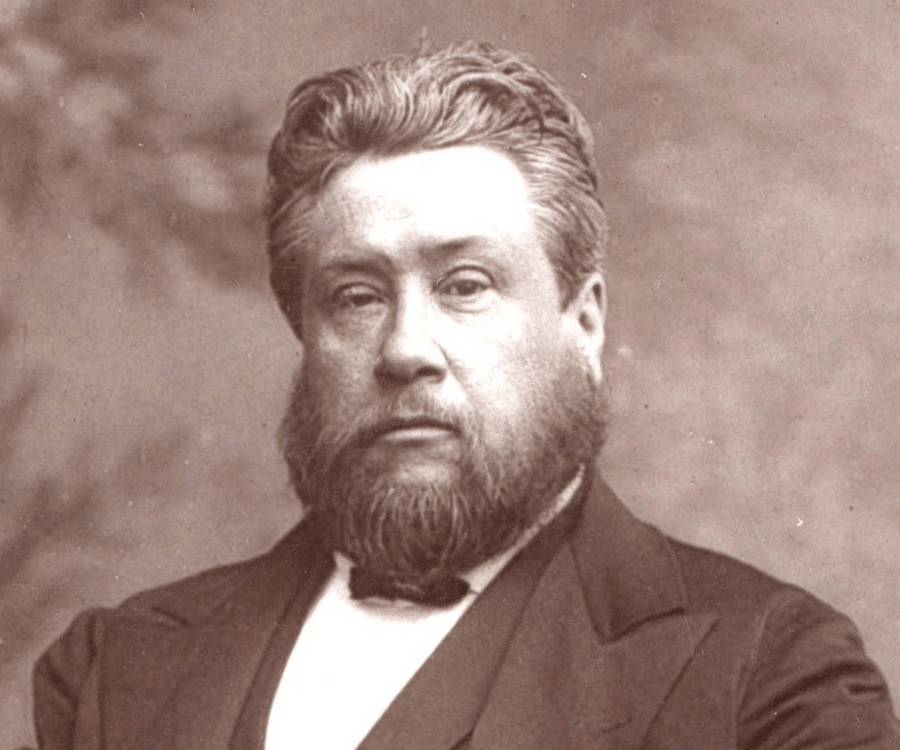
The Book of Colossians: Epaphras.   

12 Epaphras, who is one of you, a servant of Christ Jesus, greets you, always struggling on your behalf in his prayers, that you may stand mature and fully assured in all the will of God. 13 For I bear him witness that he has worked hard for you and for those in Laodicea and in Hierapolis.” (Colossians 4:12–13 (ESV)

 At the end of the Apostle Paul’s New Testament Epistles, he often included final greetings. These remarks usually mentioned fellow servants of Christ who ministered to him and alongside him. They may be identified as superstar-less servants. For the next several weeks, we’ll discover some insights from Paul about his many companions. Today, it is Epaphras.  

Epaphras was a coworker with the apostle Paul. God used Epaphras, a native of Colossae, to plant a church there, as well as the cities of Laodicea and Hierapolis. Through him Paul learned of the church’s progress and therefore wrote his letter to the Colossians.

Paul had high regard for Epaphras. This was evidenced by the apostle’s description of his comrade as a “beloved fellow servant,” and a “faithful minister of Christ” (Col 1:7). He also called Epaphras a “servant of Christ” (4:12), a title of high praise Paul bestowed only on one other person; Timothy (Phil. 1:1).

Epaphras was in prison with Paul at this time and present when Paul wrote to Philemon (Phlm 1:23). Today’s text says Epaphras’ prayers for the Colossians focused on their biblical maturity and full assurance on the will of God.  

“Epaphras, the evangelist-pastor who first brought the gospel to Colossae, is mentioned also in today’s passage as one who sent his greetings to the Colossian church when Paul wrote his epistle to the believers in that city (Col. 4:12–13; see 1:3–8). Colossians 4:13 mentions his hard work in Laodicea and Hierapolis, two cities that were located near Colossae. This tells us that Epaphras was something of a regional evangelist in that part of Asia Minor,” explains Dr. R. C. Sproul.

“Even though Epaphras was not present with the church at Colossae when Paul wrote, he continued to struggle or strive on behalf of the Colossian believers in his prayers. This would have been encouraging to the Colossians, reminding them of how much they prospered on account of the prayers of other believers, especially their shepherds.”

John Calvin notes how Paul admonished “the Colossians not to look upon the prayers of their pastor as useless, but, on the contrary, to reckon that they would afford them no small assistance.”

“Today, the prayers of our pastors and elders should be among the things that we treasure the most, for their labors on their knees do more good for us than we can imagine,” concludes Dr. Sproul.

May the Lord’s truth and grace be found here. Have a blessed Lord’s Day.

Soli deo Gloria!   

I Thessalonians: No Surprises.  

While people are saying, “There is peace and security,” then sudden destruction will come upon them as labor pains come upon a pregnant woman, and they will not escape. But you are not in darkness, brothers, for that day to surprise you like a thief. For you are all children of light, children of the day. We are not of the night or of the darkness.” (1 Thessalonians 5:3–5 (ESV)

As previously studied, prior to the coming of Jesus Christ the unconverted will continually presume their lives to be one of peace (Εἰρήνη; Eirene) and security (ἀσφάλεια; asphaleia). Peace refers to tranquility and freedom from worry. Security means safety and certainty. The unsaved will consistently ignore the Scriptures’ warning of the Day of the Lord.

Seeking personal peace and affluence, the unconverted will experience sudden (αἰφνίδιος; aiphnidios) or immediate destruction (ὄλεθρος; olethros) or ruin. This will personally come upon each one of them. The suddenness of this event the Apostle Paul compared to an expectant mother’s labor pains. Finally, this ultimate destruction and judgment of sin is one of which there is no escape (ἐκφύγωσιν; ekphygosin) or avoidance.

The only hope for any sinner is found exclusively in the person and work of Jesus Christ. By grace alone, through faith alone in Christ alone, the born again and repentant sinner trusts in the substitutionary atoning death of Christ and His bodily resurrection for their deliverance from the penalty, power and eventual presence of sin (Rom. 3:21-26; Eph. 2:1-9). God commands each sinner to repent of their sin and trust cognitively, emotionally and volitionally in Jesus Christ as Savior and Lord to receive His imputed righteousness as their own (Rom 4; 5:1-10; 2 Cor. 5:21).

But what about believers in Christ? Will the Day of the Lord be a surprise to us who God justified by grace alone, through faith alone, in Christ alone? The Apostle Paul wrote this would not be the case. Why?

The Day of the Lord will not surprise believers because we are presently, actively and collectively no longer in darkness. Darkness (σκότει; skotei) in this immediate context refers to the evil world, the abode of evil spirits, and the gloominess of hell. Paul spoke of this spiritual, lost condition of the unbeliever when writing to the Corinthian church.  

“And even if our gospel is veiled, it is veiled to those who are perishing. In their case the god of this world has blinded the minds of the unbelievers, to keep them from seeing the light of the gospel of the glory of Christ, who is the image of God. For what we proclaim is not ourselves, but Jesus Christ as Lord, with ourselves as your servants for Jesus’ sake. For God, who said, “Let light shine out of darkness,” has shone in our hearts to give the light of the knowledge of the glory of God in the face of Jesus Christ.” (2 Corinthians 4:3–6 (ESV)

“Paul pictures people apart from the miracle of this new creation as blind – not blind to physical things, but blind to the glory of Christ. This blindness is part of the deadness all of us were in until God gave us life,” states Dr. John Piper.  

Consequently, because believers are no long in darkness the Day of the Lord will not surprise us like the arrival of a thief in the night. To surprise (καταλάβῃ; katalabe) means to suddenly attack, seize and overpower.

What Paul desires is that the readers, instead of being filled with vain curiosity or getting all excited, shall be prepared. He again uses the term of affectionate address, brothers (see on 1:4). These brothers form a sharp antithesis with the people of the world,” explains Dr. William Hendriksen.

“The latter are in darkness, surrounded by it and embedded in it. The darkness has penetrated their hearts and minds, their whole being. This is the darkness of sin and unbelief. It is on account of this darkness that unbelievers are not sober and watchful (hence, not prepared). It is because of this that they lack faith, love, and hope. The day is, of course, the day of Christ’s return unto judgment, as is clear from the entire preceding context, beginning at Ch. 4:13. That day, here personified, will seize unbelievers, catching them unprepared, just as a thief seizes the owner of the house. Believers, however, are not in darkness. They are not seized, for they are prepared.”

Are you prepared to meet the Lord Jesus Christ when He comes again? He is coming soon (Rev. 22:12, 20). Are you ready to meet Him as your Savior and Lord? If not, then you will face Him as your Judge.

May the Lord’s truth and grace be found here. Have a blessed day in the Lord.

Soli deo Gloria!

I Thessalonians: Sudden Destruction.  

While people are saying, “There is peace and security,” then sudden destruction will come upon them as labor pains come upon a pregnant woman, and they will not escape. But you are not in darkness, brothers, for that day to surprise you like a thief. For you are all children of light, children of the day. We are not of the night or of the darkness.” (1 Thessalonians 5:3–5 (ESV)

Prior to the coming of Jesus Christ, the unconverted will continually presume their lives to be one of peace (Εἰρήνη; Eirene) and security (ἀσφάλεια; asphaleia). Peace refers to tranquility and freedom from worry. Security means safety and certainty. The unsaved will consistently ignore the Scriptures warning of the Day of the Lord.

Given all the warning passages in Scripture concerning the Day of the Lord, why is it the unconverted will be taken by surprise by its occurring, like a thief who comes in the night (I Thess. 5:1-2)? The unconverted carelessly live as if their peace and security in this fallen world will never change. Jesus, in His Olivet Discourse, provided an insight into this situation parallel to the Apostles Paul and Peter.

36 “But concerning that day and hour no one knows, not even the angels of heaven, nor the Son, but the Father only. 37 For as were the days of Noah, so will be the coming of the Son of Man. 38 For as in those days before the flood they were eating and drinking, marrying and giving in marriage, until the day when Noah entered the ark, 39 and they were unaware until the flood came and swept them all away, so will be the coming of the Son of Man,” (Matthew 24:36–39 (ESV).

18 For the wrath of God is revealed from heaven against all ungodliness and unrighteousness of men, who by their unrighteousness suppress the truth. 19 For what can be known about God is plain to them, because God has shown it to them. 20 For his invisible attributes, namely, his eternal power and divine nature, have been clearly perceived, ever since the creation of the world, in the things that have been made. So they are without excuse. 21 For although they knew God, they did not honor him as God or give thanks to him, but they became futile in their thinking, and their foolish hearts were darkened.” (Romans 1:18–21 (ESV)

“This is now the second letter that I am writing to you, beloved. In both of them I am stirring up your sincere mind by way of reminder, that you should remember the predictions of the holy prophets and the commandment of the Lord and Savior through your apostles, knowing this first of all, that scoffers will come in the last days with scoffing, following their own sinful desires. They will say, “Where is the promise of his coming? For ever since the fathers fell asleep, all things are continuing as they were from the beginning of creation.” For they deliberately overlook this fact, that the heavens existed long ago, and the earth was formed out of water and through water by the word of God, and that by means of these the world that then existed was deluged with water and perished. But by the same word the heavens and earth that now exist are stored up for fire, being kept until the day of judgment and destruction of the ungodly.” (2 Peter 3:1–7 (ESV)

These biblical references do not speak just of the original fall, or of some generation in history, but of any period, including our own, when individuals knew the truth and revelation of God and deliberately turned away from it. The unconverted reject God, refuse to thank Him, and pursue false gods of their own making to worship in place of Him.

Seeking personal peace and affluence, the unconverted will experience sudden (αἰφνίδιος; aiphnidios) or immediate destruction (ὄλεθρος; olethros) or ruin. This will personally come upon each one of them. The suddenness of this event the Apostle Paul compares to an expectant mother’s labor pains. Finally, this ultimate destruction and judgment of sin is one of which there is no escape (ἐκφύγωσιν; ekphygosin) or avoidance.

“Note the combination of suddenness and unpreparedness. Note also the striking sentence-order, retained in our translation, making both the adjective sudden and the noun destruction very emphatic. The world in general will be eating and drinking, buying and selling, building and planting, marrying and giving into marriage, when Jesus comes again. Of course, in themselves not any of these things is wicked. What could be wrong with receiving physical nourishment, carrying on commerce and industry, being engaged in agriculture, or planning a wedding? By means of these things God can even be glorified (1 Cor. 10:31),” states Dr. William Hendriksen.  

“But when the soul becomes entirely wrapped up in them, so that they become ends in themselves, and so that the higher, spiritual needs are neglected, they are a curse and no longer a blessing. “All for the body and its enjoyments, nothing for the soul,” was the slogan of the wicked contemporaries of Noah and of Lot; and that too will be the outstanding characteristic of the human race in the evil days to come (Cf. Ezek. 13:10; Amos 6:1; Matt. 24:37–44; Luke 17:26–30).”

“Meanwhile, like the artist on top of the ocean-rock, painting the beauty of the village upon the shore, and so completely absorbed in his painting that he sees no danger and pays no attention to the returning tide, though the waves lash higher and higher against the pedestal of his very temporary throne, so also these foolish and wicked people, fascinated with earthly charms, will not realize that judgment is creeping in upon them, coming closer and closer, until very suddenly it overtakes them, catching them wholly unprepared,” continues Dr. Hendriksen.

“They will be saying “Peace and Safety.” Some will even ridicule the very idea of Christ’s return (cf. 2 Peter 3:1–10). However, they will by no means escape, no more than the pregnant woman who is seized by a very sharp and sudden birth-pang while she is helpless. Cf. Ex. 15:14; Is. 13:8; Jer. 4:31; 6:24; 13:21; 22:23; 49:24; 50:43; Hos. 13:13; Mic. 4:9, 10; see also Matt. 24:8; Mark 13:8). The desperate attempt of the wicked to escape is also vividly portrayed in Rev. 6:12–17. No one escapes.”

The only hope for any sinner is found exclusively in the person and work of Jesus Christ. By grace alone, through faith alone in Christ alone, the born again and repentant sinner trusts in the substitutionary atoning death of Christ and His bodily resurrection for their deliverance from the penalty, power and eventual presence of sin (Rom. 3:21-26; Eph. 2:1-9). Have you trusted cognitively, emotionally and volitionally in Jesus Christ as Savior and Lord and received His imputed righteousness as your own?

May the Lord’s truth and grace be found here. Have a blessed day in the Lord.

Soli deo Gloria!

I Thessalonians: A Thief in the Night.

“Now concerning the times and the seasons, brothers, you have no need to have anything written to you. For you yourselves are fully aware that the day of the Lord will come like a thief in the night.” (1 Thessalonians 5:1–2 (ESV)

“While the prophets do not clearly distinguish a twofold coming of Christ, the Lord Himself and the apostles make it abundantly clear that the first coming will be followed by a second. Jesus referred to His return more than once towards the end of His public ministry (Matt. 24:30; 25:19,31; 26:64; John 14:3). At the time of His ascension, angels pointed to His future return (Acts 1:11). Moreover, the apostles speak of it in numerous passages (Acts 3:20,21; Phil. 3:20; I Thess. 4:15,16; II Thess. 1:7,10; Tit. 2:13; Heb. 9:28,” explains Dr. Louis Berkhof.

“Several terms are used to denote this great event, of which the following are the most important: (1) Apocalupsis (unveiling), which points to the removal of that which now obstructs our vision of Christ (I Cor. 1:7; II Thess. 1:7; I Pet. 1:7,13; 4:13); (2) Epiphania (appearance, manifestation), a term referring to Christ’s coming forth out of a hidden background with the rich blessings of salvation (II Thess. 2:8; I Tim. 6:14; II Tim. 4:1,8; Tit. 2:13); and (3) Parousia (lit. presence), which points to the coming that precedes the presence or results in the presence, (Matt. 24:3,27,37; I Cor. 15:23; I Thess. 2:19; 3:13; 4:15; 5:23; II Thess. 2:1-9; Jas. 5:7,8; II Pet. 1:16; 3:4,12; I John 2:28).”

Another term the Scriptures use in referring to the coming of Christ is “the Day of the Lord.” Dr. John MacArthur writes, “The OT prophets used “day of the Lord” to describe near historical judgments (see Isa. 13:6–22Ezek. 30:2–19Joel 1:15Amos 5:18–20Zeph. 1:14–18) or far eschatological divine judgments ( Joel 2:30–32; 3:14Zech. 14:1Mal. 4:1, 5). It is also referred to as the “day of vengeance.” The NT calls it a day of “wrath,” day of “visitation,” and “the great day of God the Almighty” (Rev. 16:14). These are terrifying judgments from God (cf. Joel 2:30–312 Thess. 1:7–10) for the overwhelming sinfulness of the world.” .

The Apostle Paul’s reference to the Day of the Lord in today’s text is one of four New Testament (NT) references of the same period of God’s divine judgment upon the unconverted. The other three are as follows.

  • Acts 2:17–21 (ESV) – 2“ ‘And in the last days it shall be, God declares, that I will pour out my Spirit on all flesh, and your sons and your daughters shall prophesy, and your young men shall see visions, and your old men shall dream dreams; 18 even on my male servants and female servants in those days I will pour out my Spirit, and they shall prophesy. 19 And I will show wonders in the heavens above and signs on the earth below, blood, and fire, and vapor of smoke; 20 the sun shall be turned to darkness and the moon to blood, before the day of the Lord comes, the great and magnificent day. 21 And it shall come to pass that everyone who calls upon the name of the Lord shall be saved.”
  • 2 Thessalonians 2:1–2 (ESV) – “Now concerning the coming of our Lord Jesus Christ and our being gathered together to him, we ask you, brothers, not to be quickly shaken in mind or alarmed, either by a spirit or a spoken word, or a letter seeming to be from us, to the effect that the day of the Lord has come.”
  •  2 Peter 3:10 (ESV) – “But the day of the Lord will come like a thief, and then the heavens will pass away with a roar, and the heavenly bodies will be burned up and dissolved, and the earth and the works that are done on it will be exposed.” 

In all NT references to the Day of the Lord, the apostles Peter and Paul both indicated the event’s certainty. The Day of the Lord will come. It is only a question of when, and not if.  

The Day of the Lord should be differentiated from the Day of Christ, the “Day of Christ” or “the Day of the Lord Jesus.” These phrases are unique to the Apostle Paul’s epistles (1 Corinthians 1.83.135.52 Corinthians 1.14Philippians 1.6102.162 Timothy 1.184.8).

While there is some scholarly disagreement among evangelicals as to the exact meaning and nature of the Day of Christ, Scripture refers to it as being (1) for the Church (the Body of Christ); (2) a day of blessing and reward; (3) a heavenly hope; and (4) eagerly anticipated. In contrast, the Day of the Lord is (1) for all who have rejected Christ; (2) a day of judgment; (3) a time of earthly despair; and (4) is feared and dreaded.

Paul adds one more characteristic from today’s text. The Day of the Lord will come as a “thief in the night.” This phrase, found only in today’s text, never refers to the rapture of the church. Rather, it is used of Christ’s coming in judgment at a particular point in time. Like a thief who comes unexpectedly, without warning, and is dreaded, so also will be the Day of the Lord.

I know believers in Christ who become frightened and alarmed with the political and military conflicts in this world. This is especially true when these conflicts involve national Israel. How should believers react and respond to ongoing wars and rumors of wars in anticipation of the coming of the Lord?

“As Christians, we look forward to the return of Jesus with great anticipation, the day when our Prince will come and will set aright all of those things which are unjust and out of kilter in this world. We long for that day as a time of vindication, a time of healing for the nations, a time of the final realization of the fullness of our salvation,” explains Dr. R. C. Sproul.

“But what if our faith is a hypocritical faith? What if it’s not real? What will happen to us on that day? You see, when the New Testament speaks of the return of Christ, it speaks of it in two different dimensions. On the one hand, it is the day of final salvation for the people of God. On the other hand, it will be the day of final judgment, where God’s long-suffering and patience with wickedness will come to an end. And so, it will be a two-edged sword, won’t it? For those who are saved, it will be the time of exquisite delight. For those who are not, it will be the ultimate time of judgment and doom. What will it be for you?”

Dr. Sproul asks an excellent question. What is your answer? May the Lord’s truth and grace be found here. Have a God-honoring day in the Lord.

Soli deo Gloria!

I Thessalonians: The Day of the Lord.

“Now concerning the times and the seasons, brothers, you have no need to have anything written to you. For you yourselves are fully aware that the day of the Lord will come like a thief in the night.” (1 Thessalonians 5:1–2 (ESV)

Even though today’s featured biblical text begins a new chapter, there were no chapter divisions when the Apostle Paul wrote this first letter to the Thessalonian believers. Therefore, what the apostle stated in I Thessalonians 5:1-11 is within the narrative and literary context of 4:13-18. Paul continued his treatise on Eschatology, the doctrine of last things, and the events leading up to the coming (Parousia) of Jesus Christ.

There have been numerous attempts by well-meaning, and perhaps others with ulterior motives, to specifically predict the timing of the “rapture” of the church. These declarations not only pertain to the nature of the rapture, but also the exact moment of the Lord’s Parousia. Paul dismissed these attempts, both within his current historical context and in the future as needless.

The apostle wrote, “Now concerning the times and the seasons, brothers, you have no need to have anything written to you.” Paul’s reference to times and seasons had nothing to do with the weather, but rather the events surrounding and preceding Christ’s return. He in effect said there was no point in making predictions and having speculations about Jesus’ second coming. All attempts to do so may sell books and excite individuals to follow prophetic teachers and self-appointed eschatological experts, but this will be to no avail. Why?

Paul answered this question by writing, “For you yourselves are fully aware that the day of the Lord will come like a thief in the night.” To be fully aware (οἴδατε; oidate) means to be historically, presently, actively and collectively knowledgeable and understanding of a truth. The truth these believers, and all such followers of Christ, are knowledgeable of is the nature of the Day of the Lord.

The Day of the Lord refers to the moment of Jesus Christ’s return. This event was well known from the Old Testament (OT) Scriptures (Joel 2; Amos 5; Zephaniah 1; Malachi 4). The Apostle Peter referred to it in his Day of Pentecost sermon (Acts 2:14-36).

The Day of the Lord is associated with God’s holy and righteous judgment of rewards and punishment (Acts 17:31; Rom. 2:1-16; 2 Cor. 1:14; 2 Peter 3:10-13). For believers in Christ, this day of judgment has already occurred by Christ’s substitutionary death on the cross (Rom. 3:21-26; Heb. 2:17; 9:27-28; I John 2:1-2; 4 :7-10). For unbelievers, the day of judgment of God’s holy wrath is coming (Rom. 1:18-23).

“It would seem that in addition to worry with respect to a possible disadvantage which departed believers might suffer at Christ’s return (4:13–18), there was also curiosity with respect to the exact time when this great event would take place. “How long” do the readers still have to wait? “Just when” is the Lord going to arrive? It was for them a question of times or duration-periods (χρόνοι) and appropriate seasons (καιροί).,” states Dr. William Hendriksen.

“With an obvious reference to: a. a saying of the Lord spoken when he was about to ascend to heaven (“It is not for you to know duration-periods and appropriate seasons,” Acts 1:7); b. the truth, also clearly revealed by the Lord, that no man knows the day and the hour of the coming of the Son of man (Matt. 24:36), which, accordingly, will be as a thief in the night (cf. Matt. 24:43); and c. the fact that these facts had previously been made clear to the readers, Paul informs them—affectionately addressing them as “brothers” (see on 1:4)—“You have no need that anything be written to you.” Cf. 4:9.”

What Paul did confirm was the Day of the Lord would be like a thief in the night. What characteristics does a thief have with the Lord’s soon return? It is this question we will address when next we meet.

John Calvin comments, “Believers do not desire to know more than they are permitted to learn in God’s school. “

“One of the hardest things to do as a believer is to not try to figure out what God has not revealed. But when it comes to the timing of the end, we must not try to figure out exactly when Jesus will return. That is a matter God will not reveal before it happens, so let us not err by prying into what He has left hidden from us,” explains Dr. R. C. Sproul.

May the Lord’s truth and grace be found here. Have a blessed day in the Lord.

Soli deo Gloria!  

I Thessalonians: The Millennial Maze.

17 Then we who are alive, who are left, will be caught up together with them in the clouds to meet the Lord in the air, and so we will always be with the Lord. 18 Therefore encourage one another with these words.” (1 Thessalonians 4:17–18 (ESV)

Questions concerning the exact timing and nature of the “rapture” of believers in Christ at the coming (Parousia) of the Lord continues to this day. Primarily, this discussion is an intermural debate among Christians. It remains one of many subjects the Scriptures provide inferential information, but not exaltedness.

Integrated with the rapture question are equally discussed debates as to the nature and characteristic of the Millennial reign of Jesus Christ. The Millennium is compared to a maze in which there is no exist.

Providing some much-needed wisdom is Dr. Keith A. Mathison. He is professor of systematic theology at Reformation Bible College in Sanford, Fla. He served as an associate editor of the Reformation Study Bible and previously served as associate editor of Tabletalk magazine. The following essay by Dr. Mathison is entitled The Millennial Maze.

“I once heard someone define the millennium as a thousand-year period of time during which Christians fight over the proper interpretation of the book of Revelation. While amusing, that definition is obviously incorrect. Christians have been fighting over the proper interpretation of the book of Revelation for two thousand years. In all seriousness, however, all of the fighting has led some Christians to adopt despairingly a position they call pan-millennialism (we don’t know which view of the millennium is correct, but we know it will all pan out in the end).”

“The word millennium refers to the “thousand years” mentioned in Revelation 20. Because this chapter is found in one of the most difficult books of the New Testament, its proper interpretation is disputed. As a result, there are four main views of the millennium held within the church today: historic premillennialism, dispensational premillennialism, amillennialism, and postmillennialism. The prefixes pre- and post- before the word millennium have to do with the timing of the second coming of Christ in relationship to the millennium itself. The term premillennialism refers to the belief that the Second Coming will occur before the millennium.

The term postmillennialism refers to the belief that the second coming will occur after the millennium. Strictly speaking, amillennialism is a version of postmillennialism in this sense because amillennial’s believe Christ’s second coming will occur after the millennium. There are other differences that distinguish amillennial’s from postmillennialists. An understanding of what proponents of each of these views have taught historically provides a helpful context for current discussions of Revelation 20.

Historic Premillennialism

Historic premillennialism teaches that at the end of the present age, there will be the great tribulation followed by the second coming of Christ. At Christ’s coming, the Antichrist will be judged, the righteous will be resurrected, Satan will be bound, and Christ will establish His reign on earth, which will last for a thousand years and be a time of unprecedented blessing for the church. At the end of the millennium, Satan will be released and he will instigate a rebellion, which will be quickly crushed. The unrighteous will at this point be raised for judgment, after which the eternal state will begin.

Historic premillennialism has had its proponents in the church from at least the second century AD onward. It was taught, for example, by Irenaeus (140– 203) and Justin Martyr (100–165), and may have been taught in the late first century by Papias (80–155). Some within the Reformed tradition, such as James Montgomery Boice, have taught this view. The most notable proponent of historic premillennialism in the twentieth century was George Eldon Ladd, whose commentary on the book of Revelation argues strongly for this position.

Dispensational Premillennialism

Dispensational premillennialism offers the most complex chronology of the end times. According to dispensationalism, the current church age will end with the rapture of the church, which, along with the appearance of the Antichrist, marks the beginning of the seven-year great tribulation on earth. The tribulation will end with the battle of Armageddon, in the midst of which Christ will return to destroy His enemies.

The nations will then be gathered for judgment. Those who supported Israel will enter into Christ’s millennial kingdom, and the rest will be cast into Hades to await the last judgment. Christ will sit on the throne of David and rule the world from Jerusalem. Israel will be given the place of honor among the nations again. The temple will have been rebuilt and the temple sacrifices will be reinstituted as memorial sacrifices.

At the end of the millennium, Satan will be released and lead unbelievers in rebellion against Christ and the New Jerusalem. The rebellion will be crushed by fire from heaven, and Satan will be cast into the lake of fire. The wicked will be brought before the Great White Throne, judged, and cast into the lake of fire, and at this point the eternal state will commence.

Despite the remaining disagreements, we can rejoice that we all agree that Jesus is risen and that He has been given all authority in heaven and on earth.

The dispensationalist version of premillennialism originated in the nineteenth century within the Brethren Movement. Its distinctives first appear in the writings of John Nelson Darby (1800–1882).

Dispensational premillennialism caught on rapidly in the United States through the Bible Conference Movement. It was popularized by C.I. Scofield in the notes to his reference Bible and was systematized by Lewis Sperry Chafer, the founder of Dallas Theological Seminary and the author of an eight-volume dispensational systematic theology text. In the twentieth century, this view was taught on a more scholarly level by men such as John Walvoord, Charles Ryrie, and J. Dwight Pentecost, and it was popularized by authors such as Hal Lindsey and Tim LaHaye.

Postmillennialism

Postmillennialism teaches that the “thousand years” of Revelation 20 occur prior to the second coming of Christ. Until recently, most postmillennialists taught that the millennium would be the last thousand years of the present age. Today, many postmillennialists teach that the millennial age is the entire period of time between Christ’s first and second advents. As we will see, this means that contemporary versions of postmillennialism are very close in many ways to contemporary amillennialism.

The main difference between the two is not so much the timing of the millennium as the nature of the millennium. In general, postmillennialism teaches that in the present age, the Holy Spirit will draw unprecedented multitudes to Christ through the faithful preaching of the gospel. Among the multitudes who will be converted are the ethnic Israelites who have thus far rejected the Messiah. At the end of the present age, Christ will return, there will be a general resurrection of the just and the unjust, and the final judgment will take place.

Postmillennialism was widely held among the Puritans. It was also the dominant view among Reformed theologians of the eighteenth and nineteenth centuries. It was taught, for example, by men such as Jonathan Edwards, Charles Hodge, James Henley Thornwell, A.A. Hodge, and B.B. Warfield.

Because liberals adopted a humanistic version of this eschatology, postmillennialism suffered a decline in the twentieth century, but it has seen a resurgence in the last twenty to thirty years. Books supporting this view have been published by men such as Loraine Boettner, J. Marcellus Kik, Kenneth Gentry, John Jefferson Davis, and myself.

Amillennialism

Amillennialism sees Revelation 20 as a description of the reign of Christ with the saints throughout the entire present age. Some amillennial’s emphasize the reign of Christ with the saints in heaven, while others teach that this reign is also connected with the church militant here on earth.

Amillennialists tend to argue that the growth of Christ’s kingdom has few if any visible manifestations. The focus is more on the suffering that Christ has indicated the church will undergo. According to amillennialism, the present millennial age, which is characterized by suffering, will be followed by the second coming of Christ, the general resurrection, the last judgment, and the new heavens and new earth.

Amillennialism also has its origin in the early church. Augustine (354–430) taught a version of amillennialism that influenced the church throughout the Middle Ages and into the Reformation. Within the Reformed tradition, the contemporary version of amillennialism began to distinguish itself from older forms of postmillennialism in the late nineteenth and early twentieth century.

The nineteenth-century theologian Herman Bavinck, for example, was a staunch proponent of amillennialism. In the twentieth century, the view has been taught by Reformed theologians such as Geerhardus Vos, Louis Berkhof, Anthony Hoekema, Cornelis Venema, Kim Riddlebarger, and Sam Storms. Some contemporary amillennialists do not like the term amillennialism because the prefix a- literally means “no,” so amillennialism literally means “no millennium.” One amillennialist, Jay Adams, has suggested the term “realized millennialism” instead.

Conclusion

Those versions of postmillennialism that recognize the millennium to be symbolic of the entire present age differ in only a few respects from amillennialism. Historic premillennialists, such as George Ladd, who understand that the kingdom of Christ has already been inaugurated in connection with the events of Christ’s first advent are closer than they may realize to these forms of postmillennialism and amillennialism.

All of us should take the time to understand the views of those with whom we differ and understand the biblical arguments they use. We may not agree yet. There is much more exegetical work to be done before any hope of consensus is possible, but the work being done by biblical and systematic theologians should encourage us. Despite the remaining disagreements, we can rejoice that we all agree that Jesus is risen and that He has been given all authority in heaven and on earth.

May the Lord’s truth and grace be found here. Have a blessed day in the Lord.

Soli deo Gloria!

I Thessalonians: The Rapture Question.

17 Then we who are alive, who are left, will be caught up together with them in the clouds to meet the Lord in the air, and so we will always be with the Lord. 18 Therefore encourage one another with these words.” (1 Thessalonians 4:17–18 (ESV)

Questions concerning the exact timing and nature of the “rapture” of believers in Christ at the coming (Parousia) of the Lord continues to this day. Primarily, this discussion is an intermural debate among Christians. It remains one of many subjects the Scriptures provide inferential information, but not exaltedness.

However, there are some who take the issue, as to the characteristics and timing of the rapture, to the next level. They indicate any disagreement with their proposed view of the rapture, whatever it may be, amounts to error or heresy. This creates no small amount of contentiousness and discontentedness within the church.

How are believers in Christ to approach this discussion, especially when individuals take a hardline as to their particular perspective concerning the rapture in particular and New Testament prophecy in general?  To begin with, it is helpful to know the church has held several differing views of the rapture throughout history. In fact, the most popular view is the most recent.

Believers in Christ are in union with Christ by grace alone, through faith alone, in the person and work of Jesus Christ alone (Rom. 3:21-26). United to Him, we have died, we are raised, and we have ascended in the Spirit to heaven and are seated with Him in His rule (Ephesians 2:1-10). This is already true of the individual’s soul, and it will someday be true of the physical body (I John 3:1-2). The future ascension of the saints into heaven is spoken of in 1 Thessalonians 4:17.

However, this verse has been primarily used to teach the doctrine called “the Rapture,” which is less than 200 years old. To understand it, we first of all have to look at four perspectives of understanding New Testament prophecy.

Today, we examine the four primary ways of interpreting New Testament prophecy in general, and the Book of Revelation in particular. Regardless of which of the four views you hold, there must be fundamental agreement regarding justification by grace alone, through faith alone, in the person and work of Jesus Christ alone.   

The first perspective is called Preterism. Preterism says that most of the predictions in the New Testament concerning the return of Christ find their explicit fulfillment in the destruction of Jerusalem in A.D. 70 and in the fall of Rome. The preterist says that the principles still apply, but the events are past.

Preterists interpret the Book of Daniel to events from the seventh century BC until the first century AD. Preterists interpret the prophecies of the Book of Revelation, as well as Christ’s predictions within the Olivet Discourse (Matt. 24-2­5), as events in the first century AD. Preterism teaches Ancient Israel finds its continual fulfillment in the church since the destruction of Jerusalem in AD 70.

Preterists see the destruction of Jerusalem as being allegorically portrayed in the Book of Revelation. The term preterism comes from the Latin praeter, which is a prefix referring to something being ‘past’ or ‘beyond’. Preterism teaches that either all (full preterism) or a majority (partial preterism) of the Olivet Discourse came to pass by AD 70. Preterists appeal to the visions contained in Revelation as historical because they will be occurring “soon” because “the time is near” (Rev. 1:1-3; 22:6-10).

Historically, preterists and non-preterists have generally agreed that the Jesuit Luis de Alcasar (1554–1613) wrote the first systematic preterist exposition of prophecy Vestigatio arcani sensus in Apocalypsi. This was published during the Roman Catholic Counter-Reformation (1545-1563).

Historicism, once the most common view, says New Testament prophecy predicts all the major events of the church age. Historicists see the fall of Rome, the tyranny of the popes, the advance of Islam, and the rise of the Enlightenment all predicted in the book of Revelation (6:1-18:24). This European-centered interpretation has largely been abandoned  since Christianity has spread well beyond Europe.

Idealism says the visions and prophecies contained in the New Testament, and in the Book of Revelation, represent trends and forces in the historical and ongoing battle between good and evil.

Futurism, which is currently in favor in most churches, says that most New Testament prophecy concerns events immediately prior to the final return of Jesus Christ to the earth. For most futurists, the Great Tribulation of Matthew 24-25, and the Book of Revelation, does not refer to the fall of Jerusalem or to the continuing problems of the church in all ages. Rather, it is a period just prior to Christ’s return, seven years in length.

The futurist doctrine says that Christ will “rapture” His saints from the earth before the outbreak of this seven-year tribulation, or at least before the last three-and-a-half years (Mid-Tribulation Rapture View). Adherents teach Christ will not let His people go through these events. The problem with this popular opinion is not only that 1 Thessalonians 4:13-18 says nothing about such a tribulation as the context for the ascension of the saints, but also the fact that many Christians have suffered horribly in the past without being “raptured.”

Many biblical scholars, and interpreters of Scripture, hold to a combination of all four viewpoints. They maintain the imagery in the Book of Revelation can apply not only to Preterism but also to a Historicism, Idealism and Futurism interpretation.

Linked with the rapture question, is how it relates to the biblical doctrine of the Millennium? Will the rapture occur before or after the millennial reign of Jesus Christ? Is the church currently experiencing the millennial reign of Christ? These questions are considered when next we meet.   

Application point. Where is your faith? In what, of whom, is your trust, commitment, dependence and worship focused? Is it on the person and work of our Lord Jesus Christ? Or, is it in a hope, or wish, you will be “raptured” out of suffering and tribulation?

Believers in Christ must remain faithful in the eternal plan and purpose of God. He who began a good work in you will be faithful to complete until the day of Jesus Christ (Rom. 5:1-10; Eph. 2:10; Phil. 1:1-6; I Peter 1:1-9).

May the Lord’s truth and grace be found here. Have a blessed day in the Lord.

Soli deo Gloria!

The Book of Colossians: A Few More Godly Men.   

10 Aristarchus my fellow prisoner greets you, and Mark the cousin of Barnabas (concerning whom you have received instructions—if he comes to you, welcome him), 11 and Jesus who is called Justus. These are the only men of the circumcision among my fellow workers for the kingdom of God, and they have been a comfort to me.” (Colossians 4:10–11 (ESV)

At the end of the Apostle Paul’s New Testament Epistles, he often included final greetings. These remarks usually mentioned fellow servants of Christ who ministered to him and alongside him. They may be identified as superstar-less servants. For the next several weeks, we’ll discover some insights from Paul about his many companions. Today, it is a trio of individuals: Aristarchus, Mark and Justus who were fellow Jews, workers for the Gospel and the kingdom of God.

Aristarchus was a Jewish Macedonian from Thessalonica. He is first mentioned as one of those seized by an angry mob in Ephesus (Acts 19:29). Later he accompanied Paul on the return trip to Jerusalem from his third missionary journey (Acts 20:4). He also travelled with Paul to Rome to face Caesar (Acts 27:1–2). Paul described him as a coworker (Phlm 1:24) and fellow prisoner from whom he received great comfort (Col 4:10–11). Tradition says that Aristarchus was martyred in Rome under Nero.

Mark was known as the evangelist. His first name was John and his surname was Mark” (Acts 12:12, 25). Mark (Marcus, Col. 4:10, etc.) was his Roman name, which gradually superseded his Jewish name John. He is called John (Acts 13:5, 13), and Mark (Acts 15:39, 2 Tim. 4:11).

Mark’s mother’s name was Mary. She apparently was a woman of some means and influence. Mark was probably born in Jerusalem, where his mother lived (Acts 12:12). There is no information about Mark’s father.

Mark was a cousin of Barnabas (Col. 4:10).

“It was in his mother’s house that Peter found “many gathered together praying” when he was released from prison; and it is probable that it was here that he was converted by Peter, who calls him his “son” (1 Pet. 5:13),” states one commentator.

It is likely the “young man” spoken of in Mark 14:51-52 was Mark himself. He is first specifically mentioned in Acts 12:25. He went with Paul and Barnabas on their first missionary journey (about A.D. 47) as their “minister,” but for some reason returned home when they reached Perga in Pamphylia (Acts 12:25; 13:13). Three years later a “sharp contention” arose between Paul and Barnabas (15:36–40), because Paul would not take Mark with them on a second mission’s trip.

However, Mark reconciled with Paul, for he was with him in his first imprisonment at Rome (Col. 4:10; Philemon 1:24). At a later time, Mark was with Peter in Babylon or Rome (1 Pet. 5:13). Mark was also with Timothy in Ephesus when Paul wrote him during his second imprisonment (2 Tim. 4:11). Paul wrote Mark was useful to him for ministry.

Thirdly, Paul mentioned Justus, also known as Jesus. He was Jewish. We also know Paul called him a fellow worker and a comfort, as were the other two men.

“Justus is included among only three Jews who are said to have assisted Paul as “fellow workers for the kingdom of God” (Colossians 4:11). But Paul is quick to point out that he, together with Aristarchus and Mark, were “a comfort” to him. Although Paul was courageous and willing to endure whatever suffering came his way, he was susceptible to discouragement and depression and disillusionment like the rest of us. These men comforted him! They spoke truth to his soul. They reminded him daily of God’s faithfulness and goodness and the heavenly reward that lay ahead. Such people Paul praises,” explains commentator and author Sam Storms.  

Dr. William Hendriksen states, “It must not escape our attention that the apostle’s statement with reference to these three men as the only Jewish-Christian fellow-workers who had been a comfort to him implies deep disappointment with other people of his own race. Paul was painfully aware of his estrangement from his own people (Rom. 9:1–5). And he was not insensitive to the fact that the Judaists (Jews who confessed Jesus but over-emphasized the law) regarded him with suspicion (Acts 15:1, 2, 24; 21:20, 21; Gal. 2:12; Phil. 3:21). It cannot be wrong to regard Phil. 1:14–17; 2:20, 21; 2 Tim. 4:16 as shedding further light on the apostle’s feelings anent this matter. All the more, therefore, does he appreciate the co-operation he is receiving from Aristarchus, Mark, and Jesus Justus!”

May people view us as fellow-workers and a comfort. Have a blessed day in the Lord.

Soli deo Gloria!

I Thessalonians: Not My Final Home.

The following devotional is by Pastor and author Paul David Tripp. He entitled it Not My Final Home.

Read a sad message about a church I love, had to say to myself again, “This is not my final home.”

Family brokenness and division tears at the heart, had to reach out for this truth, “This is not my final home.”

Temptation seems to be around every corner, need to pause and consider, “This is not my final home.”

Another trusted leader crashes and burns, had to remind myself, “This is not my final home.”

Watching culture’s descent into insanity, comfort myself with one thing, “This is not my final home.”

See faithfulness give way to compromise, I say with those who’ve gone before me, “This is not my final home.”

The presence and power of remaining sin exposed again, had to reflect on my destiny, “This is not my final home.”

Weariness with the struggle gives way to eternity’s longing, rejoicing another time that, “This is not my final home.”

Creation all around seems to groan under the curse’s pain, no hope without knowing, “This is not my final home.”

When evil seems to prosper and good suffers, I cannot let myself forget, “This is not my final home.”

When the war for the heart seems unrelenting, my strength is found in remembering, “This is not my final home.”

When the world offers nothing that gives life, I look up and remember, “This is not my final home.”

The bright promise at the heart of the gospel of Jesus, in him my future is secured, “This is not my final home.”

Every human being will only ever find one place of rest, one location of final fulfillment. There and there alone will the journey end, the war be over, and our hearts be given the rest they always wanted but never fully had.

We will no longer be haunted by ghosts of “what ifs” and “if onlys.” We will not wish for what others have or lament what we have missed. We will no longer try to satisfy spiritual hunger with physical food.

We will be freed from trying to calm internal restlessness with things that cause us trouble and only deepen our longing. We will know what we have never known before, and we will celebrate that knowledge forever.

When that time comes, we will get it right. We will be completely full, never to hunger again. We will experience what we have longed for at times and in ways that we didn’t even know we were longing.

We will be happy—no, not with the temporary physical, emotional, relational, or situational happiness that fades like morning fog. We will be happy in a deeply contented happiness of heart, a kind of joyful contentment of soul unlike anything we have ever known before.

It is impossible to characterize how deep and expansive our delight in him will be. It is hard to find words that do justice to how completely satisfied we will be. Our hearts will finally have what they have always searched for, and our celebration will never end.

“The Spirit and the Bride say, ‘Come.’ And let the one who hears say, ‘Come.’ And let the one who is thirsty come; let the one who desires take the water of life without price […] He who testifies to these things says, ‘Surely I am coming soon.’ Amen. Come, Lord Jesus!” (Revelation 22:17, 20)

A Prayer for Today: God, when I see the world around me and observe my own sinful heart, I grieve and need to be reminded of the fact that this is not my final home. Thank you for rescuing me and giving me the bright promise that in Jesus, my future is secured for all eternity. As I walk through this life, help me to rest in that promise and believe that it will one day be fulfilled. I long for that day, but until then, may I walk in faithfulness as a Spirit-filled follower of Christ. In his name I pray, amen.

May the Lord’s truth and grace be found here. Have a blessed day in the Lord.

Soli deo Gloria!

I Thessalonians: Caught Up.

17 Then we who are alive, who are left, will be caught up together with them in the clouds to meet the Lord in the air, and so we will always be with the Lord. 18 Therefore encourage one another with these words.” (1 Thessalonians 4:17–18 (ESV)

I Thessalonians 4:13-5:11 addresses the doctrine of eschatology; the doctrine of the last things. The word eschatology comes from a combination of Greek words meaning “the study of last things.” This doctrine includes physical death, the intermediate state, the afterlife, judgment, the millennium, heaven, and hell.

Eschatology also refers to the time of Jesus’ second coming. The Apostle Paul continued to affirm the orderliness of the return of Christ, and the homegoing of believers in Christ, which he began in I Thessalonians 4:15-16.

The bodily resurrection of believers in Christ who are physically dead occurs first at the coming (Parousia) of Jesus Christ. All believers in Christ who are still alive at the Parousia of Christ will be caught up (ἁρπαγησόμεθα; harpagesometha), snatched or taken away by the Lord.

The Apostle Paul emphasized that this event involves all living believers “together” (ἅμα; hama) or at the same time. They will join the resurrected saints in the clouds to meet the Lord in the air.

Paul invoked the personal pronoun “we” to include himself, Silas and Timothy regarding those alive and left following the resurrection of the those who were dead in Christ. This was because at the time he wrote this, he was still physically alive in Christ on the earth. This would change when he physically died (2 Tim. 4:6-8). He would then become part of the first category of believers (I Thess. 4:16), as is the case for all saints who physically die before the Parousia of the Lord Jesus Christ.

Paul added a significant promise at the end of today’s featured text; “…and so we will always be with the Lord.” All believers in Christ will remain with the Lord Jesus Christ for all eternity.

This echoes the Apostle John’s words from his first epistle. “See what kind of love the Father has given to us, that we should be called children of God; and so we are. The reason why the world does not know us is that it did not know him. Beloved, we are God’s children now, and what we will be has not yet appeared; but we know that when he appears we shall be like him, because we shall see him as he is.” (1 John 3:1–2 (ESV)

The apostle then added a significant command; “Therefore encourage one another with these words.” To encourage (παρακαλεῖτε; paralaleite) means to presently actively, collectively and obediently earnestly exhort and comfort fellow believers with the truth of the Lord’s Parousia. This command is for all believers in Christ throughout history. 

“In 1 Thessalonians 4:13–18, Paul makes reference to what has come to be known as the rapture of the church, the catching up of believers to meet Christ in the air. Since the middle of the nineteenth century, the subject of the rapture has received particularly close attention in evangelical circles. Often, the discussion revolves around the timing of the rapture and the rest of the events of the second coming of Jesus, with Christians debating whether the rapture comes before, during, or after the tribulation,” explains Dr. R. C. Sproul.

“The debate over the rapture remains an ‘intramural debate’ between true Christian believers; however, let us note that 1 Thessalonians 4:13–18 does not seem to endorse many popular views in evangelicalism.”

“From a straightforward reading of the passage, it seems that the rapture and the final resurrection will take place at roughly the same time. In fact, if anything happens first, it is the resurrection and not the rapture. Paul says that first the dead will rise, and then those who are alive will join them to meet Christ in the air (vv. 16–17). There is no intervening period between the rapture and the final judgment revealed in this passage,” continues Dr. Sproul.

“Paul’s focus is not on the timing of these final events. Whatever view one takes on the relationship of the rapture to the resurrection, the Apostle tells us that we will not be able to date the end. As he says, “The day of the Lord will come like a thief in the night” (5:1–2). Just as we cannot predict when a thief will break in and steal from us, we cannot know the day or hour of Christ’s return to judge creation. Jesus Himself tells us as much, and we dare not speculate where God is silent (Mark 13:32–37).”

“We do not know precisely when Christ will return, but we know that the “day of the Lord”—the final judgment (Ezek. 30:1–3Zech. 14)—and the destruction of the wicked will come as “labor pains come upon a pregnant woman” (1 Thess. 5:3). The sense here is the suddenness and inevitability of the Parousia or coming of Jesus. Likewise, the Lord’s return must happen, but we do not know when.”

“Yet, 1 Thessalonians 5:3 says that impenitent sinners will be caught off guard when Jesus comes. Their lives will be going on as normal—they will think that they are enjoying peace and security. But that will prove to be an illusion when Christ returns as Judge,” concludes Dr. Sproul.

May the Lord’s truth and grace be found here. Have a blessed day in the Lord.

Soli deo Gloria!