
Ephesians 6:17: The Helmet and the Sword (Podcast #73).

Growing in the Grace & Knowledge of Jesus Christ

8 “And if your hand or your foot causes you to sin, cut it off and throw it away. It is better for you to enter life crippled or lame than with two hands or two feet to be thrown into the eternal fire. 9 And if your eye causes you to sin, tear it out and throw it away. It is better for you to enter life with one eye than with two eyes to be thrown into the hell of fire.” (Matthew 18:8–9 (ESV)
“We must think nothing too dear to part with, for the keeping of a good conscience.” – Puritan Matthew Henry
Immediately following Jesus’ Oracle of Woe against the fallen world (Matt. 18:7), He continued to counsel His disciples (Matt. 18:1-6) concerning the drastic measures required for believers in Christ to resist temptation.
We must remember the Bible is literature containing various genres and utilizing various figures of speech. Today’s text displays the figure of speech called hyperbole. It is exaggeration. Jesus previously used this style of communication in Matthew 5:27-30.
27 “You have heard that it was said, ‘You shall not commit adultery.’ 28 But I say to you that everyone who looks at a woman with lustful intent has already committed adultery with her in his heart. 29 If your right eye causes you to sin, tear it out and throw it away. For it is better that you lose one of your members than that your whole body be thrown into hell. 30 And if your right hand causes you to sin, cut it off and throw it away. For it is better that you lose one of your members than that your whole body go into hell.” (Matthew 5:27–30 (ESV)
Jesus emphasized the extreme measures believers in Christ must take when encountering the world, the flesh and the devil. There can be no compromise or accommodation when it concerns holiness. We must resist temptations: when, where, by whom, and how they come.
“What was earlier said about lust in the Sermon on the Mount is now applied more broadly to all manner of sins. Graphically, Jesus tells us it is better to enter the kingdom of heaven without a hand or foot than to keep what inclines us towards wickedness and find our whole bodies in hell (18:8–9),” explains Dr. R. C. Sproul.
“Again, as we said in our study of Matthew 5, Jesus does not commend self-mutilation here. It is possible to cut off a limb and still lose the battle with transgression. Instead, Christ is using a powerful analogy to encourage us to cut off sin before it overcomes us. Depending on our situation, this may mean moving to another town, taking another job, or making some other righteous, but difficult, life change, if that is what it takes to escape the wickedness in our lives.”
“Refraining from speaking privately with a certain person might be what keeps you from gossiping; throwing away your computer may be the right course of action if you struggle with looking at pornography. Whatever it takes, all of us must do what is needed to flee sin and temptation,” states Dr. John MacArthur.
My prayer is that when we face temptations that threaten to undo us, we will do all we can to resist and refrain from any submission to sin. A momentary lapse in righteous judgment can result in a lifetime of regret. Have a God honoring day.
Soli deo Gloria!

“Woe to the world for temptations to sin! For it is necessary that temptations come, but woe to the one by whom the temptation comes!” (Matthew 18:7 (ESV)
The Old Testament Jewish prophet had the responsibility of heralding God’s appointed and anointed announcement or oracle. The prophet of God could not, and would not, alter, change or replace God’s sovereign revelation. The oracle took two distinct forms.
First, there was an oracle of Weal, or blessing. This message of God’s favor began with the word “blessed” (Leviticus 26; Deuteronomy 27-28). It was an oracle of joy and happiness due to one’s obedience before God.
Second, there was an oracle of Woe, or judgment. The prophet announced this because of the people’s sin and disobedience (Leviticus 26; Deuteronomy 27-28; Isaiah 6:1-7).
Matthew recorded Jesus’ oracle of blessing (Matthew 5:1-12). Today’s text begins with an oracle of woe.
Jesus proclaimed woe (οὐαί; ouai), grief and distress upon the world (κόσμος; kosmos). This would refer to the fallen, wicked and disobedient world system of thought, words and behavior. Why did Jesus proclaim this woe?
His reason was because of the world’s efforts to tempt believers in Christ to sin. The phrase temptation to sin (σκάνδαλον; skandalon) means to create a snare, a stumbling-block, or a cause to sin against God. We derive our English word “scandal” from this Greek word.
Jesus also stated, “For it is necessary that temptations come.” The Lord meant that the fallen world is evil. Occasions for temptation are unavoidable. However, believers in Christ must not make excuses for treating such temptations lightly.
1 Corinthians 10:13 (ESV) says, “No temptation has overtaken you that is not common to man. God is faithful, and he will not let you be tempted beyond your ability, but with the temptation he will also provide the way of escape, that you may be able to endure it.”
Jesus then expressed a second “woe” within the text. He said, “Woe to the one by whom the temptation comes!” Temptations will come in this world. Yet, do not be the one that causes people to stumble into sinful choices.
“It is expected that those in the world will cause Christians to be offended, stumble, and sin, and they will be judged for it. But it should not be that fellow believers lead others into sin, directly or indirectly. One would be better off dead (Cf. Rom. 14:13, 19, 21; 15:2; 1 Cor. 8:13),” explains Dr. John MacArthur.
Have you been tempted to sin? Of course, you have. We all have. The Bible affirms this truth. However, consider the results of giving in to those temptations. Your decision may result in sinning against another Christian, their family and the church family; with devastating consequences. The consequences of one unguarded moment could result in a lifetime of regret (2 Samuel 11-12).
Remember, guard your heart (Proverbs 4:20-27). Have a blessed day in the Lord.
Soli deo Gloria!
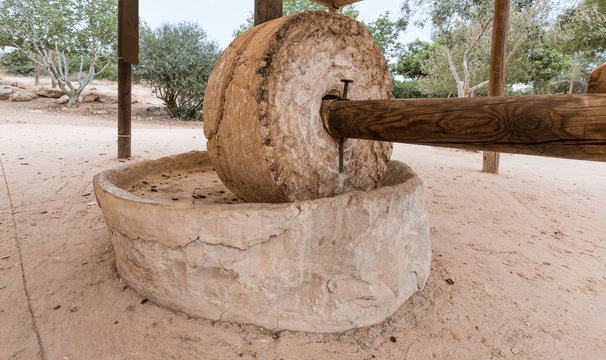
5 “Whoever receives one such child in my name receives me, 6 but whoever causes one of these little ones who believe in me to sin, it would be better for him to have a great millstone fastened around his neck and to be drowned in the depth of the sea.” (Matthew 18:5–6 (ESV)
In the midst of Jesus’ statements to His disciples as to who was the greatest in the kingdom of heaven (Matt. 18:1-4), He explained that those God looked upon as great were those who were humble. Self-exaltation was not the path to greatness. Humility was.
The Lord then issued a dire warning. “But whoever causes one of these little ones who believe in me to sin, it would be better for him to have a great millstone fastened around his neck and to be drowned in the depth of the sea.” What principles can we derive from this text?
First, it is not wise to cause believers in Christ, no matter their age, to sin. To cause (σκανδαλίζω; skandalizo) means to offend, to cease to believe, or to sin. It is an active effort to influence a Christian to renounce their trust, commitment, dependence and worship of Christ.
Second, Jesus gave an illustration as to the consequences of such behavior. “It would be better for him to have a great millstone fastened around his neck and to be drowned in the depth of the sea.”
A millstone was a device used for grinding grain. A millstone could weigh, depending on its size, up to ¾ ton; approximately 1,500 pounds.
“Grinding grain using a millstone was common labor often reserved for women, the lower class, and slaves (Exodus 11:5). It provided the basic livelihood for many. As a means of safeguarding the security of the poor, Deut. 24:6 forbids lenders from holding a millstone as collateral,” explains the Lexham Bible Dictionary.
However, the Bible contains several metaphorical usages of a millstone.
1. The ever-present sound of millstones grinding grain symbolized the most basic economic activity. Absence of the sound signified the cessation of daily activity and the destruction of a nation (Jer. 25:10; Rev. 18:22).
2. In Ecclesiastes, the silence from millstones symbolizes the loss of hearing caused by old age (Eccl. 12:4).
3. Isaiah used the idea of royalty reduced to using a millstone as a metaphor for the destruction of Babylon (Isa 47:2). During the siege of Jerusalem, young men—the epitome of vigor—would be reduced to the menial labor of grinding what little grain was available (Lam. 5:13).
Jesus said that anyone who caused a believer in Christ to sin, it would be better to be cast into the depths of the sea with a millstone tied around their neck.
“So horrible is the fate of those who lead others into sin or who do all they can to demolish the faith of others in the church that it would be better to be drowned than to make another stumble (Matt. 18:6). Let us honor Jesus with our words and deeds that we might never cause crises of faith in others,” explains Dr. R. C. Sproul.
“Leading others into sin can be done in ways that do not involve false teaching. Failure to provide adequate pastoral care, for example, can make us unable to see trouble in the lives of others, leading us to overlook the need to rescue a sheep in danger of going astray. To one degree or another, Jesus has made each believer accountable to every other believer. We honor the Lord who bought us when we care for one another.”
People are watching you. They’re observing your faith. They watch what you do and hear what you say. Let us resolve to never cause anyone to stumble in their walk of faith (Rom. 14:13-19).
Soli deo Gloria!

“At that time the disciples came to Jesus, saying, “Who is the greatest in the kingdom of heaven?” 2 And calling to him a child, he put him in the midst of them 3 and said, “Truly, I say to you, unless you turn and become like children, you will never enter the kingdom of heaven. 4 Whoever humbles himself like this child is the greatest in the kingdom of heaven.” (Matthew 18:1–4 (ESV)
How do you measure greatness? What is meant by greatness?
Growing up in the 1960’s and 70’s, there was one particular athlete that became known, by his own admission, to be the greatest athlete ever. I’m speaking of boxer Muhammed Ali. He said, “ It’s hard to be humble when you’re as great as I am.”
“As you can probably tell, there seems to be a theme among the quotes of Muhammad Ali. His self-belief and confidence truly were unmatched. His breathtaking speed and reflexes allowed him to beautifully master the sweet science. Hitting and not getting hit was what Ali did best, this allowed him to have an air of invincibility throughout a huge portion of his career.” – Geezers Boxing
How does the Bible define greatness? How did Jesus? Today’s text provides answers to those questions.
The disciples asked Jesus, ““Who is the greatest in the kingdom of heaven?” The word greatest (μέγας; megas) literally means loud, surprising and important. It is interesting to see that the disciple view of greatness is not so different from our own day and age. People associate greatness with how loud you are regarding your self-importance. Ali was loud. So are many other athletes in their respective sports. Rare is the successful athlete, musician, actor, politician, etc. who is humble.
2 And calling to him a child, he put him in the midst of them 3 and said, “Truly, I say to you, unless you turn and become like children, you will never enter the kingdom of heaven. 4 Whoever humbles himself like this child is the greatest in the kingdom of heaven.”
“Our Savior’s answer refutes the ungodly attitude of the disciples. Greatness, He says, belongs only to those who humble themselves like a child (18:2–4). Jesus is not saying that children are naturally humble; experience teaches us otherwise. He is emphasizing the objective reality of childhood. Children rely almost entirely on adults to survive, and they have not lived long enough to claim lasting success or merit for themselves. Christians must cast off dreams of power or status and like a child admit their ultimate dependence on God for all things. Rather than seek status in the eyes of men, they should rely more and more on the Father,” explains Dr. R. C. Sproul.
John Calvin says the humble person “neither claims any personal merit in the sight of God, nor proudly despises brethren, or aims at being thought superior to them, but reckons it enough that he is one of the members of Christ, and desires nothing more than that the Head alone should be exalted.”
Philippians 2:1–4 (ESV) says, “So if there is any encouragement in Christ, any comfort from love, any participation in the Spirit, any affection and sympathy, 2 complete my joy by being of the same mind, having the same love, being in full accord and of one mind. 3 Do nothing from selfish ambition or conceit, but in humility count others more significant than yourselves. 4 Let each of you look not only to his own interests, but also to the interests of others.”
There are many historical figures who proclaimed their greatness, only to face the inevitably humiliation of death. Jesus Christ is the only one who conquered death and is exalted as Lord, to the glory of God the Father (Phil. 2:5-11). May we, as His humble servants, exalt Him as the greatest.
Soli deo Gloria!

24 When they came to Capernaum, the collectors of the two-drachma tax went up to Peter and said, “Does your teacher not pay the tax?” 25 He said, “Yes.” And when he came into the house, Jesus spoke to him first, saying, “What do you think, Simon? From whom do kings of the earth take toll or tax? From their sons or from others?” 26 And when he said, “From others,” Jesus said to him, “Then the sons are free. 27 However, not to give offense to them, go to the sea and cast a hook and take the first fish that comes up, and when you open its mouth you will find a shekel. Take that and give it to them for me and for yourself.” (Matthew 17:24–27 (ESV)
The context of today’s text concerns Jesus and His disciples traveling in the region of Galilee. Specifically, they came to Capernaum. Capernaum was a familiar site for Jesus and His ministry (Matt. 4:13; 9:1-2; 11:23-24). It was here that Jesus began to preach repentance, healed a paralytic, and condemned its inhabitants for their unbelief.
It was also that collectors of the two-drachma tax challenged Jesus and the disciples concerning whether Jesus paid the tax. Peter responded that Jesus did not pay the tax. What exactly was the two-drachma tax and why did Jesus not pay it?
“The two-drachma tax was a half-shekel tax (equivalent to about two days’ wages) collected annually from every male over twenty. It was for the upkeep of the temple (Ex. 30:13–14; 2 Chron. 24:9). As kings did not tax their own sons, technically, Jesus, as God’s son, was exempt from the tax (Matt. 17:26). But to avoid offense, he paid on behalf of himself and Peter (v. 27). Cf. Rom. 13:1–7; Titus 3:1; 1 Pet. 2:13–17,” explains Dr. John MacArthur.
As Dr. MacArthur explained, Jesus did not pay the tax because the king’s sons were exempt. Therefore, because Jesus was the Son of God He was not obligated to pay the tax. However, in order to not offend anyone, He miraculously provided a shekel for Peter to contribute on behalf of them both.
“Jesus, who has come not only to ‘fulfill all righteousness (Matt 3:15) but also to fulfill the Law and the Prophets (Matt. 5:17) complies with the law’s requirements in order to avoid giving offense,” explains Dr. R. C. Sproul. “The Apostle Paul advised (Rom. 14:13-21) and practiced (Acts 16:3; 21:26) similar continued observance of some ritual requirements of the OT Law to remove obstacles to his ministry among the Jews (I Cor. 9:19-23).”
How may you be inoffensive with fellow believers in Christ today? Pray the Lord will provide you discernment in the grey areas of life and living for Christ.
Soli deo Gloria!
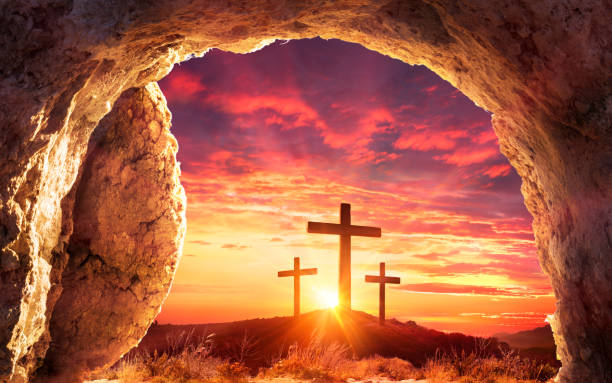
22 “As they were gathering in Galilee, Jesus said to them, “The Son of Man is about to be delivered into the hands of men, 23 and they will kill him, and he will be raised on the third day.” And they were greatly distressed.” (Matthew 17:22–23 (ESV)
Jesus and the disciples gathered in Galilee. As they were, Jesus took the opportunity to tell His disciples of His purpose. “The Son of Man is about to be delivered into the hands of men, 23 and they will kill him, and he will be raised on the third day.”
Today’s text is the second time Matthew recorded Jesus informing His disciples about His impending death and resurrection (Matt. 16:21-23). Why was it necessary for Jesus to continually remind His followers of His destiny?
The answer is simple. Jesus needed to remind His disciples because they needed reminding. They chose to forget, or reject, the uncomfortable truth of Jesus’ imminent crucifixion. See Mark 9:30-32; Luke 9:43-45.
Jesus’ death on the cross did not fit the disciples’ first century paradigm of who the Messiah would be and what He would do. They believed Messiah would conquer Rome. They presumed Him to be a political deliverer. Instead, Jesus came to conquer sin, death, hell and Satan. He came to bring an eternal deliverance.
While it is truth Jesus spoke of His death, He also spoke of His resurrection. The disciples’ reaction was one of great distress. They focused on what they understood; death. They did not focus upon what they did not fully understand; a bodily resurrection from the dead. It was beyond their comprehension.
“Again the Lord reminded the disciples that He was to be betrayed and wicked men would kill Him. One could never say that death took Jesus by surprise. He was in control of His life and no one took it from Him (John 10:11, 15, 17–18). He also told the disciples that death would not be the end for Him. Again He said He would rise on the third day. Unlike before (Matt. 16:21–23) this announcement of His death was not met by any recorded opposition from the disciples. But they were filled with grief over the Lord’s words. One wonders if they heard the complete message or simply the part about His death,” explains commentator Louis Barbieri.
“Even with a second mention of his resurrection, the disciples were still grieved. Their grief masked their inability to accept and understand Jesus’ mission as a suffering Savior and their own mission to follow in his footsteps. Peter could not accept Jesus’ death in Matthew 16:21–23. In Matthew 20:17–19, the only recorded response to Jesus’ third passion prediction was the disciples’ quarrel about who would be the greatest in the kingdom (Matt. 20:20–27). They had replaced acceptance of Jesus’ death with a self-centered striving for status,” states the Tyndale Concise Bible Commentary.
We must strive to understand all that God reveals to us in His Word.
Soli deo Gloria!

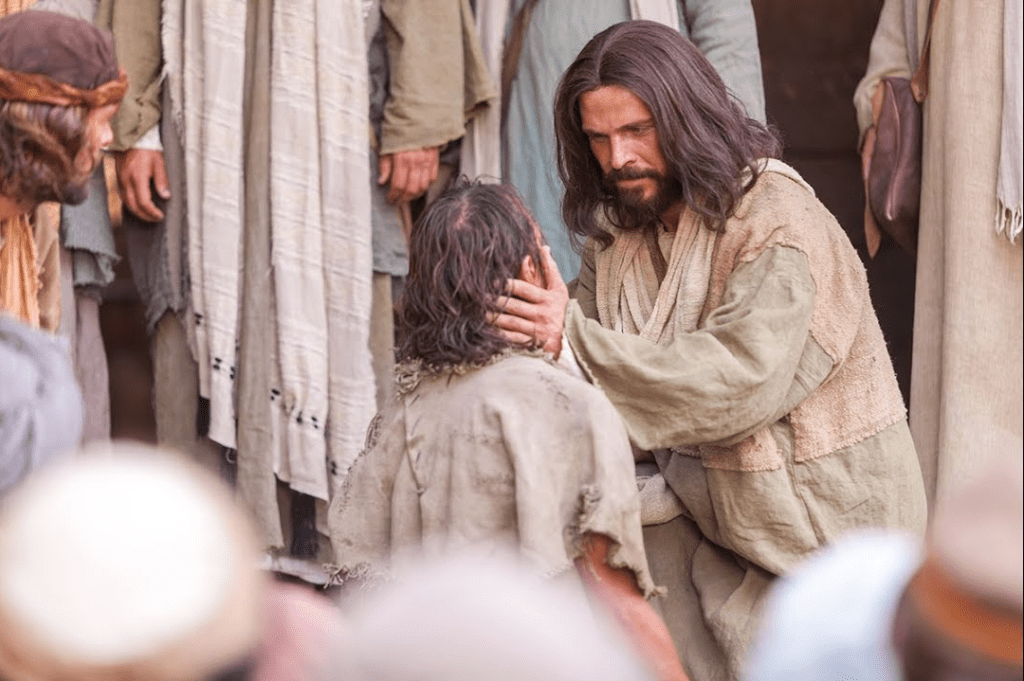
14 “And when they came to the crowd, a man came up to him and, kneeling before him, 15 said, “Lord, have mercy on my son, for he has seizures and he suffers terribly. For often he falls into the fire, and often into the water. 16 And I brought him to your disciples, and they could not heal him.” 17 And Jesus answered, “O faithless and twisted generation, how long am I to be with you? How long am I to bear with you? Bring him here to me.” 18 And Jesus rebuked the demon, and it came out of him, and the boy was healed instantly. 19 Then the disciples came to Jesus privately and said, “Why could we not cast it out?” 20 He said to them, “Because of your little faith. For truly, I say to you, if you have faith like a grain of mustard seed, you will say to this mountain, ‘Move from here to there,’ and it will move, and nothing will be impossible for you.” (Matthew 17:14–21 (ESV)
This is not the first time Jesus has encountered demon possession (Matt. 8:28-34). In this particular instance, the boy experienced seizures (σεληνιάζομαι; seleniazomai). This may refer to epileptic seizures. As a result, the boy would uncontrollably fall into either fire or water. The Gospel of Mark mentioned the boy’s foaming at the mouth (Mark 9:18, 20). He was a danger to himself.
“The boy’s father uses a term that is literally translated ‘moonstruck’ that sums up a complex of symptoms without diagnosing whether the cause was psychological or spiritual. In his case, the boy’s uncontrollable bodily movements are attributable to a demon which Jesus casts out,” explains Dr. R. C. Sproul.
The boy’s father came to Jesus, kneeled in worship, and pleaded with Him to have mercy on his son. The father asked Jesus to show kindness to his boy who was in serious need of healing. The father was not expressing entitlement from the Lord but rather undeserved kindness.
The father had previously come to the disciples, but they could not heal the boy. Jesus commanded they bring the boy to Him as He also corrected the disciples for their lack of faith. The statement, “O faithless and twisted generation, how long am I to be with you? How long am I to bear with you?” Jesus directed to His disciples.
Jesus rebuked the demon and it immediately came out of the boy. Jesus omnisciently knew the boy’s true problem was spiritual; demonic possession. Jesus displayed His presence, person and power as incarnate God.
However, the disciples were puzzled. Why hadn’t they been able to heal the boy and cast out the demon? Jesus’ response was concise and direct. He said, “Because of your little faith.” Jesus did not mean that they did not have any faith, but rather their faith was in the wrong object; themselves. They were not depending upon the Lord to heal, but rather themselves to heal. Their misguided perspective resulted in failure.
There are many who serve the Lord, but do not depend upon the Lord in their service. They elevate self to worshipful status, rejecting and rebuking those who do not follow. They seek fans and followers. They pursue their own kingdom. Their faith is centered upon an idol; themselves and their plans. Humility is a foreign concept.
Jesus continued by saying, “For truly, I say to you, if you have faith like a grain of mustard seed, you will say to this mountain, ‘Move from here to there,’ and it will move, and nothing will be impossible for you.”
“Removing mountains” was a Jewish figure of speech for that which was incomparably difficult (mountains were thought to be the most stable of all things; cf. Ps 46:2; Is 54:10); mustard seeds were used to define a proverbially small quantity. Jesus is thus telling the disciples that nothing God asks them to do will be impossible if they trust him. (Cf. Zech. 4:7.),” explains commentator Craig Keener.
Consider these lyrics written several decades ago. The song is entitled Steeple Song by Don Francisco.
I don’t care how many buses you own
Or the size of your sanctuary
Doesn’t matter how steep
Your steeple is, if it’s sittin’ on a cemetery.
I don’t care if you pave your parking lot
Or put pads upon your pews
What good is a picture perfect stage
If you’re missin’ all the cues.
I don’t care if your pastor is super powered
And your program’s always new
What you need is love and truth
And men are gonna come to you.
It doesn’t matter if you know the Bible
If it’s all just in your head
But the thing I need to ask you
Is have you done the things I said?
Do you love your wife?
For her and for and for your children
Are you layin’ down your life?
What about the others?
Are you livin’ as a servant
To your sisters and your brothers?
Do you make the poor man beg you for a bone?
Do the widow and the orphan cry alone?
I don’t care if you pray for miracles
I don’t care if you speak with tongues
I don’t care if you’ve said you love Me
In every song you’ve sung.
It doesn’t matter if your sacrifice of praise
Is loud enough to raise the dead
The thing I need to ask you
Is have you done the things I said?
Do you love your wife?
With all you’ve got inside you
Are you layin’ down your life?
What about the others?
Are you livin’ as a servant
To your sisters and your brothers?
Do you make the poor man beg you for a bone?
Do the widow and the orphan cry alone?
Lord, we were your prisoner
But we did not come to you
When was it that we saw you sick
That we didn’t follow through.
Every time you turned your head
And pretended not to see
When you did it not to the least of these
You did it not to Me.
Steeple Song by Don Francisco.
Soli deo Gloria!

9 “And as they were coming down the mountain, Jesus commanded them, “Tell no one the vision, until the Son of Man is raised from the dead.” 10 And the disciples asked him, “Then why do the scribes say that first Elijah must come?” 11 He answered, “Elijah does come, and he will restore all things. 12 But I tell you that Elijah has already come, and they did not recognize him, but did to him whatever they pleased. So also the Son of Man will certainly suffer at their hands.” 13 Then the disciples understood that he was speaking to them of John the Baptist.” (Matthew 17:9–13 (ESV)
Jesus’ command to Peter, James and John was emphatic. He did not want them to tell anyone the vision they had seen until after His resurrection (Matt. 17:1-8). The reason for this directive was because Jesus did not want them to reveal His identity as Messiah to those solely desiring a political deliverer.
The disciples then asked a follow-up question. It is likely this reference to the disciples refers to Peter, James and John. They asked, “Then why do the scribes say that first Elijah must come?” They wanted to know how the prophesy, from Malachi 4:4-6, fit with Jesus’ claim to be the One, True Messiah. Did not the prophet state that Elijah would literally return prior to the coming of the Messiah?
Jesus explained that Elijah had returned in the person and work of John the Baptist. John was the fulfillment of Malachi’s prophecy. Therefore, the suffering Jesus predicted He would experience would be fulfilled (Matt. 16:21-23).
“Jesus pointed out that the real fulfilment of that prophecy had already taken place in the preaching, and the suffering, of John the Baptist. So the theme of necessary suffering, which they may have hoped had now been cancelled out by the vision of glory, is reasserted, for Jesus as well as for John,” explains Richard France in the New Bible Commentary.
“Since both John the Baptist and the Son of Man (Jesus Christ) did not fit common expectations, they were not recognized but rather rejected and ultimately killed,” states Dr. R.C. Sproul.
Matthew then inserts a commentary indicating the disciples understood Jesus was speaking of John the Baptist. They finally understood the meaning of Malachi’s prophecy and how is was fulfilled.
“The Jewish leaders had failed to recognize John the Baptist (though the disciples did, 17:13). John came in the spirit and power of Elijah—and the Jewish leaders had killed him. The Messiah was going to “suffer” similarly,” explains Dr. John MacArthur.
We must always pursue a biblical understanding of the person and work of Jesus Christ. Our expectations of the Lord, what He has done, is doing and will do, must coincide with the Scriptures.
Soli deo Gloria!

