
Habakkuk 2:12-20 (Podcast #8).

Growing in the Grace & Knowledge of Jesus Christ

16 So the last will be first, and the first last.” (Matthew 20:16 ESV)
6”Having gifts that differ according to the grace given to us, let us use them: if prophecy, in proportion to our faith; 7 if service, in our serving; the one who teaches, in his teaching; 8 the one who exhorts, in his exhortation; the one who contributes, in generosity; the one who leads, with zeal; the one who does acts of mercy, with cheerfulness.” (Romans 12:6–8 (ESV)
The importance of the Parable of Laborers in the Vineyard concerns our perspective in serving the Lord. Believers in Christ must not evaluate the status of service as the world does. In the Lord’s kingdom, the servants who God called last into service may have equal, if not greater, status than those God called first.
The church tends to elevate some individuals to an exalted status. This may be based upon their longevity in ministry, or their influence, reputation, talent or even charisma. Conversely, others who serve in relative obscurity are dismissed as insignificant. This may be done not by explicit words, but in attitude and action by other individuals.
Consider those invited to speak at a pastors’ conference. Who are they? Are they pastors of large churches or leaders of influential organizations? Or, are they pastors who labor alone in small urban, or rural, churches and para-church ministries? You know the answer to these questions as well as I do. Is the church community subtly suggesting to these obscure servants they are not as important or as influential as those of greater notoriety and reputation? May all of us who have ears to hear, let us hear.
“The Lord is not obligated to give anyone grace, let alone the same grace to all people. As the master in his treatment of the laborers was not unjust, God is never unjust. People get what He has promised them. Yet some people get more than others, and since the Lord owes us nothing but wrath, we may never complain about our portion.” — Dr. R. C. Sproul.
“Christ, wishes to show by this parable how it actually is in the kingdom of heaven, or in Christendom upon the earth; that God here directs and works wonderfully by making the first last and the last first. And all is spoken to humble those who are great that they should trust in nothing but the goodness and mercy of God. And on the other hand that those who are nothing should not despair, but trust in the goodness of God just as the others do.” – Martin Luther
“This parable is nothing else than a confirmation of the preceding sentence; “the last shall be first” (Matt. 19:30). It now remains to see in what manner it ought to be applied. Christ does not argue either about the equality of the heaven glory, or about the future condition of the godly. He only declares that those who were first in point of time have no right to boast or to insult others; because the Lord, whenever He pleases, may call those whom He appeared for a time to disregard, and make them equal, or even superior, to the first.” –John Calvin
“This parable has nothing to do with salvation. The denarius (penny), a day’s wages in that time, does not represent salvation, for nobody works for his salvation. Nor is the parable talking about rewards, for we are not all going to receive the same reward. “And every man shall receive his own reward according to his own labor” (1 Cor. 3:8). The parable is emphasizing a right attitude in service. We should not serve Him because we want to receive an expected reward, and we should not insist on knowing what we will get. God is infinitely generous and gracious and will always give us better than we deserve.” – Warren Wiersbe
“In this parable Jesus is not condemning his audience. He is not taking back anything of the promise found in 19:28, 29. It is exactly in the way of sanctification (2 Thess. 2:13), which includes also heeding this admonition, that the promise of Matt. 19:28, 29 is fulfilled, as are also all the other promises. But neither is he erasing 19:30. On the contrary, he is confirming it in a form suitable to the present parable, so that the reference to the last who become first is now mentioned first, for it was exactly the generosity extended to the last that had aroused the envy of the complainants.” – Dr. William Hendriksen
May we serve, blossom and produce fruit in the vineyard God has sovereignly placed us (Colossians 1:3-6). Have a blessed day in the Lord.
Soli deo Gloria!
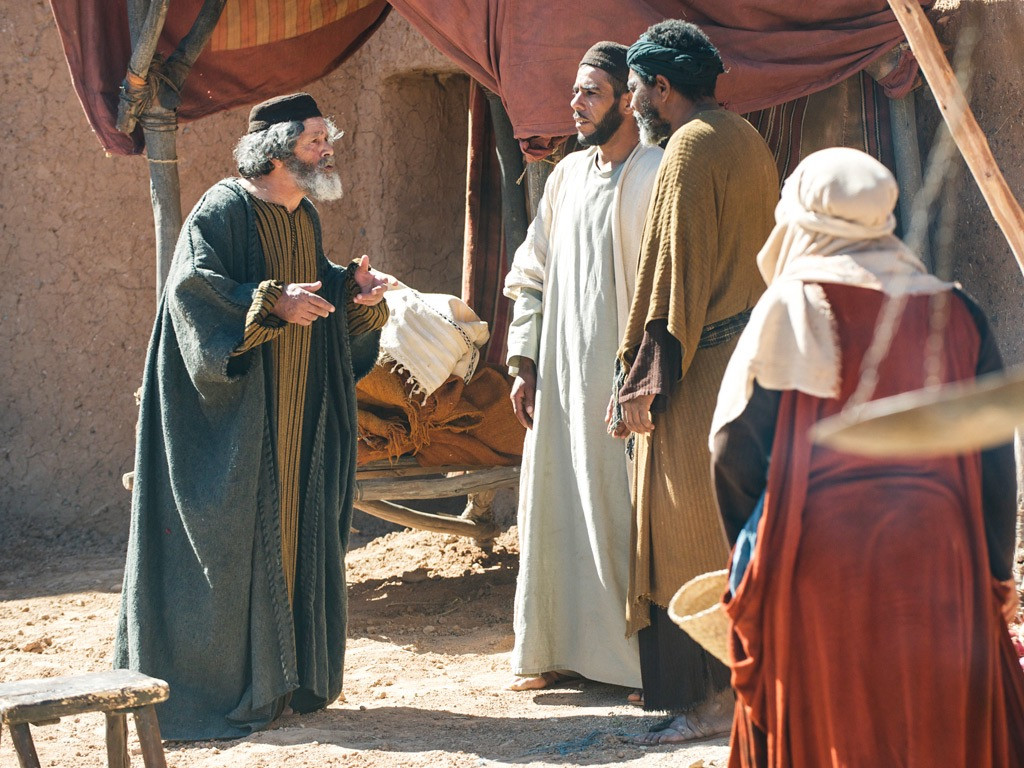
13 But he replied to one of them, ‘Friend, I am doing you no wrong. Did you not agree with me for a denarius? 14 Take what belongs to you and go. I choose to give to this last worker as I give to you. 15 Am I not allowed to do what I choose with what belongs to me? Or do you begrudge my generosity?’ 16 So the last will be first, and the first last.” (Matthew 20:13–16 ESV)
Jesus taught this parable to His disciples (Matt.19:23-30). He compared God’s eternal rule and reign in heaven, and citizenship therein, to a master and his laborers. This master went out (ἐξέρχομαι; exerchomai) or initiated an act of hiring laborers or workers for his vineyard.
The master and the laborers agreed to a denarius a day. A denarius (δηνάριον; denarion) was a common laborer’s wage for one long day’s work (Matt. 20:2, 9; Mark 14:5; Luke 10:35; 20:24; John 6:7; Rev 6:6). Upon this mutual agreement, the master sent the laborers into his vineyard (Matt. 20:1-2).
At the third hour of the day (9:00 am), the master went to the marketplace (agora). This was the location where the unemployed generally gathered perhaps hoping someone would hire them for the day. The master chose to do so promising to pay them what was right. The unemployed workers agreed and went to the vineyard (20:3-4).
The master went back to the marketplace and continued to hire more workers. He did so at the sixth hour (Noon), the ninth hour (3:00 pm), and even at the eleventh hour (5:00 pm). He sent all of them to the vineyard presumably promising to pay them what was right (20:5-7).
Quitting time arrives at the twelfth hour (6:00 pm). When this evening hour came, the master instructed his foreman to call all the laborers. This was so the foreman can pay them their day’s wages. God’s Law required a prompt, daily compensation of day laborers (Lev. 19:13; Deut. 24:14-15; James 5:4). Each laborer received a denarius.
The laborers the master initially hired at the beginning of the day mistakenly thought they would receive more. However, they also received the agreed upon denarius (Matt. 20:8-10). They became upset. Even though they received their agreed upon wages, they were not happy. They grumbled at the master of the house. To grumble (γογγύζω; gongyzo) means to mummer and complain.
The master replied to the initial laborers he did nothing wrong. He paid them the agreed upon wage of a denarius. The master stated it was his prerogative to give the same wage to the last workers as to the first. He questioned the workers as to whether they begrudged his generosity.
The master of the vineyard addressed the dissatisfied laborers. He exposed their hypocrisy, and perhaps our own, when God’s grace is properly understood in the last being first and the first last.
“The laborers who complained made the error of thinking that the master had no inherent right to determine how he would allot his resources. Jesus’ point is that like the master, God has the right to determine how much grace He will give to people. The Lord is not obligated to give anyone grace, let alone the same grace to all people. As the master in his treatment of the laborers was not unjust, God is never unjust. People get what He has promised them. Yet some people get more than others, and since the Lord owes us nothing but wrath, we may never complain about our portion,” explains Dr. R. C. Sproul.
“The “point” or main lesson of the parable is therefore this: Do not be among the first who become last. This may be subdivided as follows: a. Avoid falling prey to the work-for-wages spirit with respect to matters spiritual (besides 20:2, 13 see also the context, 19:16, 22, and what was said in connection with 19:27). b. Do not fail to recognize God’s sovereignty, his right to distribute favors as he pleases (in addition to 20:14b, 15a see again the context, 20:23). c. Be far removed from envy (see not only 15b but also the general context, 18:1; 20:20–28). Was not each disciple’s yearning to be the greatest a next-door neighbor to gruesome soul-destructive envy,” states Dr. William Hendriksen.
Repent for any envy or complaining you may have towards individuals receiving God’s grace who you believe are unworthy of such an act by God. Of course they’re unworthy. So were we. If you think otherwise, you do not understand the nature of your sin and the greatness of God’s grace.
Soli deo Gloria!

11 “And on receiving it they grumbled at the master of the house, 12 saying, ‘These last worked only one hour, and you have made them equal to us who have borne the burden of the day and the scorching heat.’ (Matthew 20:11–12 ESV)
Jesus taught this parable to His disciples (Matt.19:23-30). He compared God’s eternal rule and reign in heaven, and citizenship therein, to a master and his laborers. This master went out (ἐξέρχομαι; exerchomai) or initiated an act of hiring laborers or workers for his vineyard.
The master and the laborers agreed to a denarius a day. A denarius (δηνάριον; denarion) was a common laborer’s wage for one long day’s work (Matt. 20:2, 9; Mark 14:5; Luke 10:35; 20:24; John 6:7; Rev 6:6). Upon this mutual agreement, the master sent the laborers into his vineyard (Matt. 20:1-2).
At the third hour of the day (9:00 am), the master went to the marketplace (agora). This was the location where the unemployed generally gathered perhaps hoping someone would hire them for the day. The master chose to do so promising to pay them what was right. The unemployed workers agreed and went to the vineyard (20:3-4).
The master went back to the marketplace and continued to hire more workers. He did so at the sixth hour (Noon), the ninth hour (3:00 pm), and even at the eleventh hour (5:00 pm). He sent all of them to the vineyard presumably promising to pay them what was right (20:5-7).
Quitting time arrives at the twelfth hour (6:00 pm). When this evening hour came, the master instructed his foreman to call all the laborers. This was so the foreman can pay them their day’s wages. God’s Law required a prompt, daily compensation of day laborers (Lev. 19:13; Deut. 24:14-15; James 5:4).
The master instructed his foreman to pay the laborers hired last first, and sequentially the other laborers until the laborers hired first were paid last. The foreman did as his master directed him. Each laborer received a denarius.
The laborers the master initially hired at the beginning of the day mistakenly thought they would receive more. However, they also received the agreed upon denarius (Matt. 20:8-10). They became upset. Even though they received their agreed upon wages, they were not happy. They grumbled at the master of the house. To grumble (γογγύζω; gongyzo) means to mummer and complain.
In this context, the verb refers to a persistent complaining and discontent. The biblical text tells us why. The complaining workers continually said to the master, “These last worked only one hour, and you have made them equal to us who have borne the burden of the day and the scorching heat.”
“The nature of their grumbling showed what kind of men they were. They did not say, “You have put us on a par with the late-comers,” but “you have put them on a par with us.” In other words, they were not only dissatisfied with what they themselves had received; they were also—perhaps especially—envious of what had been given to the others! They talk about the “arduous toil” and the “sweltering—or scorching—heat” which they have borne,” explains Dr. William Hendriksen.
“The main reason for their sullen dissatisfaction is that others, though last, were made to be first, and that they themselves, the first, had been made last. But for this dissatisfaction they were themselves to blame, their sin being a triple one: a. the mercantile spirit that had marked them from the very beginning; b. their failure to recognize the rights of the owner; and c. loathsome envy.”
As with all of Jesus’ parables, there is more here than meets the eye. Jesus was not just teaching a story about economics and labor relations. He was instructing His disciples (Matt. 19:23) about the nature of God’s saving grace and to not begrudge the Lord for His saving grace.
The master of the vineyard addressed the dissatisfied laborers. He exposed their, and perhaps our own, threefold root of unhappiness when God’s grace is properly understood in the last being first and the first last.
We will study the master’s response when next we meet. Until then, repent for any envy or complaining you may have towards individuals receiving God’s grace who you believe are unworthy of such an act by God. Of course they’re unworthy. So were we. If you think otherwise, you do not understand the nature of your sin and the greatness of God’s grace.
Soli deo Gloria!
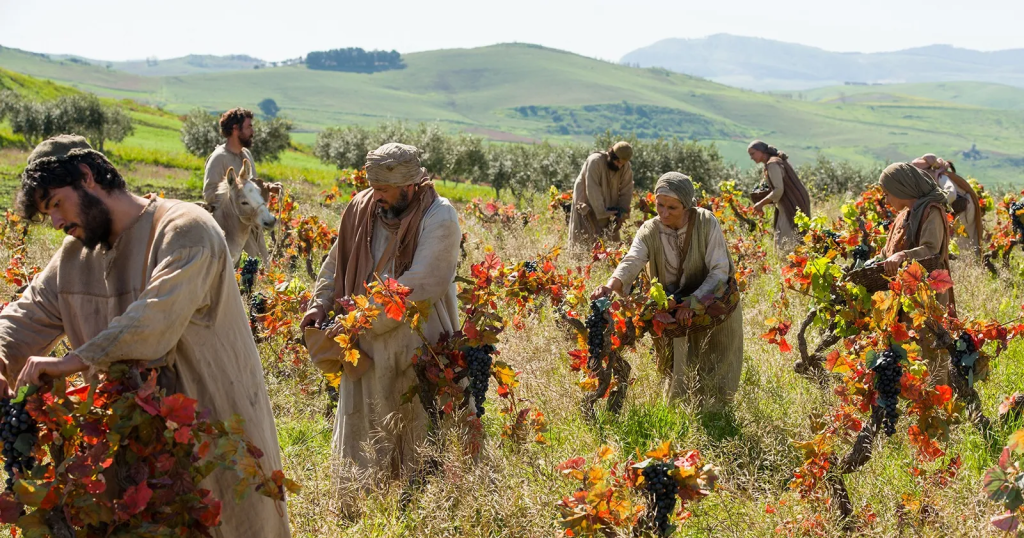
8 “And when evening came, the owner of the vineyard said to his foreman, ‘Call the laborers and pay them their wages, beginning with the last, up to the first.’ 9 And when those hired about the eleventh hour came, each of them received a denarius. 10 Now when those hired first came, they thought they would receive more, but each of them also received a denarius.” (Matthew 20:8–10 ESV)
Jesus taught this parable to His disciples (Matt.19:23-30). He compared God’s eternal rule and reign in heaven, and citizenship therein, to a master and his laborers. This master went out (ἐξέρχομαι; exerchomai) or initiated an act of hiring laborers or workers for his vineyard.
The master and the laborers agreed to a denarius a day. A denarius (δηνάριον; denarion) was a common laborer’s wage for one long day’s work (Matt. 20:2, 9; Mark 14:5; Luke 10:35; 20:24; John 6:7; Rev 6:6). Upon this mutual agreement, the master sent the laborers into his vineyard.
At the third hour of the day (9:00 am), the master went to the marketplace (agora). This was the location where the unemployed generally gathered perhaps hoping someone would hire them for the day. The master chose to do so promising to pay them what was right. The unemployed workers agreed and went to the vineyard.
The master went back to the marketplace and continued to hire more workers. He did so at the sixth hour (Noon), the ninth hour (3:00 pm), and even at the eleventh hour (5:00 pm). He sent all of them to the vineyard presumably promising to pay them what was right.
Quitting time arrives at the twelfth hour (6:00 pm). When this evening hour comes, the master instructed his foreman to call all the laborers. This was so the foreman can pay them their day’s wages. God’s Law required a prompt, daily compensation of day laborers (Lev. 19:13; Deut. 24:14-15; James 5:4).
“When evening had come!” Here the real meaning, the one main lesson, begins to come through; for this evening of the day indisputably points to the evening of the world’s and of the church’s history, the great day of the final judgment and of the manifestation of God’s kingdom in all its glory,” explains Dr. William Hendriksen.
Additionally, the master instructed his foreman to pay the laborers hired last first, and sequentially the other laborers until the laborers hired first were paid last. The foreman did as his master directed him. Each laborer received a denarius. The laborers the master initially hired at the beginning of the day mistakenly thought they would receive more. However, they also received the agreed upon denarius.
“Wages were generally paid when the working day was done (see Lev. 19:13; Deut. 24:15). What is strange, though, is that the foreman is told that when he calls the workers to pay them he must first pay those who had started to work last of all, at 5 P.M.; next, those who had begun at 3 o’clock, and so on until he finally paid those who had started first. Clearly this surprising order is in harmony with the rule laid down in verse 20:16 (cf. 19:30): the last are going to be first, and the first last. Besides, those who had come first must be given an opportunity to see what happened at the close of the day to those who had come later. Had the far more usual rule “first come first served” been applied, those first-comers would have taken their money and gone home before seeing what happened to the others,” states Dr. Hendriksen.
What was the response by the workers who labored throughout the twelve hour day and who received the same wage as those who worked less than they? We will examine Jesus’ poignant principle of His parable when next we meet. Have a blessed day in the Lord.
Soli deo Gloria!

3 And going out about the third hour he saw others standing idle in the marketplace, 4 and to them he said, ‘You go into the vineyard too, and whatever is right I will give you.’ 5 So they went. Going out again about the sixth hour and the ninth hour, he did the same. 6 And about the eleventh hour he went out and found others standing. And he said to them, ‘Why do you stand here idle all day?’ 7 They said to him, ‘Because no one has hired us.’ He said to them, ‘You go into the vineyard too.’ (Matthew 20:3–7 ESV)
Today’s text is not a parable about worker’s rights or the inequity of employee’s wages. Rather, it is an illustration concerning God’s grace and mercy to sinners. Grace is God giving sinners what they do not deserve; salvation. Mercy is God not giving sinners what they do deserve; judgment.
The object lesson of laborers in a vineyard was a common, cultural concept in first century Israel. It remains so today. Israel has an agricultural or agrarian economy. In fact, Israel symbolized a vineyard (Psalm 80:8-13; Isaiah 3:14; 5:1-7). The story focuses on common laborers in a field and how this illustrates the kingdom of heaven.
Jesus taught this parable to His disciples (Matt.19:23-30). He compared God’s eternal rule and reign in heaven, and citizenship therein, to a master and his laborers. This master went out (ἐξέρχομαι; exerchomai) or initiated an act. This act occurred early in the morning; perhaps even before the breaking of dawn. What he planned was to hire laborers or workers for his vineyard.
“Grapes were one of the most valuable commodities in ancient Israel because they could be transformed into fine wines. So important were the vineyards that the prophets often describe the salvation of God’s people as including the restoration of the vineyards of the Promised Land (for example, Amos 9:14). Vinedressers and vineyard owners know, however, that the profitability of their vineyard depends on harvesting the grapes at just the right time. Wait too long, and the wine produced from the grapes will not be as good and will not command as high a price as it could. Consequently, when the time of harvest comes, vineyard owners often employ many day laborers in addition to their regular staff so that all of the grapes can be picked before it is too late. That is the setting of today’s passage, wherein the master of the house must find “laborers for his vineyard” (Matt. 20:1),” states Dr. R. C. Sproul.
The master and the laborers agreed to a denarius a day. A denarius (δηνάριον; denarion) was a common laborer’s wage for one long day’s work (Matt. 20:2, 9; Mark 14:5; Luke 10:35; 20:24; John 6:7; Rev 6:6). Upon this mutual agreement, the master sent the laborers into his vineyard.
At the third hour of the day (9:00 am), the master went to the marketplace (agora). This was the location where the unemployed generally gathered perhaps hoping someone would hire them for the day. The master chose to do so promising to pay them what was right. The unemployed workers agreed and went to the vineyard.
The master went back to the marketplace and continued to hire more workers. He did so at the sixth hour (Noon), the ninth hour (3:00 pm), and even at the eleventh hour (5:00 pm). He sent all of them to the vineyard presumably promising to pay them what was right.
“What a gracious man this estate-owner is. It is clear that he is interested not only in his vineyard but also in the unemployed. He hires them when they, and everyone else, must have thought that for such men as these all hope of working in the vineyard on that day was baseless. What a strange thing to hire men at 5 o’clock P.M., for one hour’s work! There is no bargaining. Gladly the men accept the invitation to enter the vineyard. Have they not made plain to the owner that the only reason for their standing about in the market-place, doing nothing, was that nobody had hired them,” explains Dr. William Hendriksen.
What will happen at quitting time? This will be our subject when next we meet. Have a blessed day in the Lord.
Soli deo Gloria!

“For the kingdom of heaven is like a master of a house who went out early in the morning to hire laborers for his vineyard. 2 After agreeing with the laborers for a denarius a day, he sent them into his vineyard.” (Matthew 20:1–2 (ESV)
Today’s text is not a parable about worker’s rights or the inequity of employee’s wages. Rather, it is an illustration concerning God’s grace and mercy to sinners. Grace is God giving sinners what they do not deserve; salvation. Mercy is God not giving sinners what they do deserve; judgment.
“The very use of “for” as well as the modified repetition of 19:30 in 20:16 show that the parable that begins here is meant as an elucidation of the immediately preceding rule: “But many that are first shall be last, and (many) last first.” One might say, “There should have been no chapter division between 19:30 and 20:1,” explains Dr. William Hendriksen.
The object lesson of laborers in a vineyard was a common, cultural concept in first century Israel. It remains so today. Israel has an agricultural or agrarian economy. In fact, Israel symbolized a vineyard (Psalm 80:8-13; Isaiah 3:14; 5:1-7). The story focuses on common laborers in a field and how this illustrates the kingdom of heaven.
Jesus taught this parable to His disciples (Matt.19:23-30). He compared God’s eternal rule and reign in heaven, and citizenship therein, to a master and his laborers. The master of the house (οἰκοδεσπότης; oikodespotes) refers to one who owns and manages a household consisting of family, servants and slaves. The despot comes from this Greek word. The master possesses complete authority and control. He is like a benevolent dictator.
“When Jesus says, “the kingdom of heaven is like an owner of an estate …” he means something like this, “What happens when the reign of God in its final phase—see on 4:23; 13:43—is unfolded, on judgment day, may be compared to what took place, in the following story-illustration, between an owner of an estate and his employees, when the latter at day’s end received their ‘reward’ for the work they had accomplished,” states Dr. Hendriksen.
This master went out (ἐξέρχομαι; exerchomai) or initiated an act. This act occurred early in the morning; perhaps even before the breaking of dawn. What he planned was to hire laborers or workers for his vineyard. A vineyard (ἀμπελών; ampelon) is an orchard of grapevines; either in a garden or a field. We may correctly conclude this house lord was a wealthy man; having a vineyard and having the money to hire laborers to work his vineyard.
The master and the laborers agreed to a denarius a day. A denarius (δηνάριον; denarion) was a common laborer’s wage for one long day’s work (Matt. 20:2, 9; Mark 14:5; Luke 10:35; 20:24; John 6:7; Rev 6:6). Upon this mutual agreement, the master sent the laborers into his vineyard.
“One point, however, is clear: these men who consent to go into the vineyard and to do the work that is required of them are definitely working for wages, not also for the joy of working at such a good place for such a noble owner and for such a worthy purpose. The one and only thing mentioned with reference to these laborers in verse 2 is that the estate-owner “came to an agreement” (cf. 18:19), made a wage contract, with them! So, imbued with this mercenary spirit, these men go off to work in the vineyard,” concludes Dr. Hendriksen.
More to come. Have a blessed day in the Lord.
Soli deo Gloria!


“And the Word became flesh and dwelt among us, and we have seen his glory, glory as of the only Son from the Father, full of grace and truth.” (John 1:14 ESV)
“Let not your hearts be troubled. Believe in God; believe also in me. 2 In my Father’s house are many rooms. If it were not so, would I have told you that I go to prepare a place for you? 3 And if I go and prepare a place for you, I will come again and will take you to myself, that where I am you may be also. 4 And you know the way to where I am going.” 5 Thomas said to him, “Lord, we do not know where you are going. How can we know the way?” 6 Jesus said to him, “I am the way, and the truth, and the life. No one comes to the Father except through me.” (John 14:1–6 ESV)
Whether respectively it was the Apostle John describing the Lord Jesus Christ, or it was Jesus’ own self-description, the importance of the Lord being the embodiment and source of truth is emphasized. Truth (ἀλήθεια; aletheia) is what corresponds to reality. Truth is trustworthy because it explains reality. Truth tells us the way things really are. Who Jesus was/is and what He taught is truth; therefore reality. However, there are those who disagree with these statements.
“Christianity is just one version of God – all the other religions where God doesn’t sacrifice himself for mankind and people have to earn their way to heaven by their own works have something to say too. I know I keep contradicting myself but I’ll ignore that and point out how the Bible is full of contradictions. I want genuine truth without Jesus,” states deconstructionist Marty Sampson.
Each of these conclusions by Mr. Sampson must be addressed and not dismissed. There must be a defense for what evangelicals believe and why we believe it.
First, Mr. Sampson states Christianity is just one version of God. Truthfully, only biblical Christianity, in both the Old and New Testaments, reveals the One, True God. This is because all other religions foster a human-centered works righteousness system where sinners save themselves. Only the Scriptures reveal a salvation by God’s sovereign grace alone, through God-given faith alone in the person and work of Jesus Christ alone for the eternal glory of God alone. All messages of religious human achievement at self-salvation is heresy.
21 “But now the righteousness of God has been manifested apart from the law, although the Law and the Prophets bear witness to it— 22 the righteousness of God through faith in Jesus Christ for all who believe. For there is no distinction: 23 for all have sinned and fall short of the glory of God, 24 and are justified by his grace as a gift, through the redemption that is in Christ Jesus, 25 whom God put forward as a propitiation by his blood, to be received by faith. This was to show God’s righteousness, because in his divine forbearance he had passed over former sins. 26 It was to show his righteousness at the present time, so that he might be just and the justifier of the one who has faith in Jesus.” (Romans 3:21–26 (ESV)
6 “I am astonished that you are so quickly deserting him who called you in the grace of Christ and are turning to a different gospel— 7 not that there is another one, but there are some who trouble you and want to distort the gospel of Christ. 8 But even if we or an angel from heaven should preach to you a gospel contrary to the one we preached to you, let him be accursed. 9 As we have said before, so now I say again: If anyone is preaching to you a gospel contrary to the one you received, let him be accursed. 10 For am I now seeking the approval of man, or of God? Or am I trying to please man? If I were still trying to please man, I would not be a servant of Christ.” (Galatians 1:6–10 ESV)
15 “We ourselves are Jews by birth and not Gentile sinners; 16 yet we know that a person is not justified by works of the law but through faith in Jesus Christ, so we also have believed in Christ Jesus, in order to be justified by faith in Christ and not by works of the law, because by works of the law no one will be justified.” (Galatians 2:15–16 ESV)
Second. Mr. Sampson continues to say “all the other religions where God doesn’t sacrifice himself for mankind and people have to earn their way to heaven by their own works have something to say too.” What these religious systems say are either moralistic, therapeutic deistic slogans, which border on the incoherent, or lies. They reject the doctrine of grace and the need for a penal, substitutionary atonement. Take note of what Jesus said on the Sermon on the Mount.
13 “Enter by the narrow gate. For the gate is wide and the way is easy that leads to destruction, and those who enter by it are many. 14 For the gate is narrow and the way is hard that leads to life, and those who find it are few.” (Matthew 7:13–14 ESV)
Proverbs 14:12 (ESV) says, “There is a way that seems right to a man, but its end is the way to death.”
“Jesus declared that he is the way to God because he is the truth of God (John 1:14) and the life of God (1:4; 3:15; 11:25). In John 14:6, the exclusiveness of Jesus as the only approach to the Father is emphatic. Only one way, not many ways, exist to God, i.e., Jesus Christ (10:7–9; cf. Matt. 7:13–14; Luke 13:24; Acts 4:12),” explains Dr. John MacArthur.
Finally, Mr. Sampson claims the Bible is full of contradictions. It would be ethical for him to support this general statement with at least one, specific example. However, as with many others who make such a claim, examples are not forthcoming, or are easily explained and refuted.
The Bible’s consistent message, from cover to cover, is as follows: (1) There is One, True God who exists; (2) Humankind are sinners by nature and behavior; (3) Salvation, and deliverance, from the penalty, power and eventual presence of sin exists; and (4) The only deliverer willing and able to save sinners from their sins is the Lord Jesus Christ. God calls sinners to repentance and faith in Jesus Christ. This is the of the truth, the Gospel (Colossians 1:3-5).
Praying for Mr. Sampson and his need for repentance and faith in Jesus Christ. I write this, not because I’m better than he is, but because I was at one time just as skeptical as he is of the church and the Gospel. He needs God’s grace alone in Christ alone by God-given faith alone. Praying for this miracle.
Soli deo Gloria!

“And you were dead in the trespasses and sins 2 in which you once walked, following the course of this world, following the prince of the power of the air, the spirit that is now at work in the sons of disobedience— 3 among whom we all once lived in the passions of our flesh, carrying out the desires of the body and the mind, and were by nature children of wrath, like the rest of mankind.” (Ephesians 2:1–3 ESV)
“I mean what kind of God requires that we actually go out and tell people about Jesus so that they are rescued from Hell? They should just all go to heaven without repentance that would create such a perfect place.”
The previous quote concerns two biblical doctrines: the nature of God and the nature of humankind. Why does God command His disciples to go and tell people about their need for salvation? Why are people needing to hear from God’s disciples about their need of salvation? The questions, and their respective answers, are intertwined.
Preciously, we biblically examined the nature and character of God. Today we biblically examine the nature and character of humankind.
God created man directly and immediately in His image and likeness. God created man free of sin with a rational nature, intelligence, volition, self-determination, and moral responsibility to God (Gen. 2:7, 15–25; James 3:9).
God created man to glorify God, enjoy God’s fellowship, live his life in the will of God, and by this accomplish God’s purpose for man in the world (Gen. 26-31; Isa. 43:1-7; Col. 1:16; Rev. 4:11). However, Adam’s sin of disobedience to the revealed will and word of God resulted in a loss of innocence.
“Adam incurred the penalty of spiritual and physical death; became subject to the wrath of God; and became inherently corrupt and utterly incapable of choosing or doing that which is acceptable to God apart from divine grace. With no recuperative powers to enable him to recover himself, man is hopelessly lost. Man’s salvation is thereby wholly of God’s grace through the redemptive work of our Lord Jesus Christ (Gen. 2:16–17; 3:1–19; John 3:36; Rom. 3:23; 5:12-21; 6:23; 1 Cor. 2:14; Eph. 2:1–3; 1 Tim. 2:13–14; 1 John 1:8),” explains Dr. John MacArthur.
All individuals were in Adam. Therefore, humankind possesses a nature corrupted by Adam’s sin. This fallen, sinful nature is transmitted to all individuals of all ages; Jesus Christ being the only exception because of His virgin conception and birth. All men are thus sinners by nature, by choice, and by divine declaration (Ps. 14:1–3; Jer. 17:9; Rom. 3:9–18, 23; 5:10–12). The only hope sinners have is the Gospel of Jesus Christ.
Romans 3:21–26 (ESV) – “21 But now the righteousness of God has been manifested apart from the law, although the Law and the Prophets bear witness to it— 22 the righteousness of God through faith in Jesus Christ for all who believe. For there is no distinction: 23 for all have sinned and fall short of the glory of God, 24 and are justified by his grace as a gift, through the redemption that is in Christ Jesus, 25 whom God put forward as a propitiation by his blood, to be received by faith. This was to show God’s righteousness, because in his divine forbearance he had passed over former sins. 26 It was to show his righteousness at the present time, so that he might be just and the justifier of the one who has faith in Jesus.”
Ephesians 2:5–10 (ESV) – “5 even when we were dead in our trespasses, made us alive together with Christ—by grace you have been saved— 6 and raised us up with him and seated us with him in the heavenly places in Christ Jesus, 7 so that in the coming ages he might show the immeasurable riches of his grace in kindness toward us in Christ Jesus. 8 For by grace you have been saved through faith. And this is not your own doing; it is the gift of God, 9 not a result of works, so that no one may boast. 10 For we are his workmanship, created in Christ Jesus for good works, which God prepared beforehand, that we should walk in them.”
Colossians 1:3–7 (ESV) – “3 We always thank God, the Father of our Lord Jesus Christ, when we pray for you, 4 since we heard of your faith in Christ Jesus and of the love that you have for all the saints, 5 because of the hope laid up for you in heaven. Of this you have heard before in the word of the truth, the gospel, 6 which has come to you, as indeed in the whole world it is bearing fruit and increasing—as it also does among you, since the day you heard it and understood the grace of God in truth, 7 just as you learned it from Epaphras our beloved fellow servant. He is a faithful minister of Christ on your behalf.”
This is the truth God command believers in Christ to share with those condemned in their sin (Matthew 28:16-20; Romans 10:11-17). Sinners need the credited righteousness of Jesus Christ. This righteousness is available by grace alone, through faith alone, and in the person and work of Jesus Christ alone, according to Scripture alone to the glory of God alone.
Soli deo Gloria!

