The Gospel of Matthew: Broken Legs; A Pierced Side.  

31 Since it was the day of Preparation, and so that the bodies would not remain on the cross on the Sabbath (for that Sabbath was a high day), the Jews asked Pilate that their legs might be broken and that they might be taken away. 32 So the soldiers came and broke the legs of the first, and of the other who had been crucified with him. 33 But when they came to Jesus and saw that he was already dead, they did not break his legs. 34 But one of the soldiers pierced his side with a spear, and at once there came out blood and water. 35 He who saw it has borne witness—his testimony is true, and he knows that he is telling the truth—that you also may believe. 36 For these things took place that the Scripture might be fulfilled: “Not one of his bones will be broken.” 37 And again another Scripture says, “They will look on him whom they have pierced.” (John 19:31–37 (ESV)

In our study of the Gospel of Matthew’s record of the Passion Week of the Lord Jesus Christ, it is necessary, and insightful, to examine all four Gospel accounts. This discipline provides us understanding of all the events and encounters which took place during those hours.

There is a lot of information surrounding the burial of Jesus Christ following His death on the cross. All four Gospels provide insight into this historical moment. The Gospel of John in particular gives a glimpse into an event immediately following Jesus’ death. It demonstrates the fulfillment of Old Testament prophecies concerning the Lord; even to the minutest detail.

John mentioned Jesus’ death occurred on the Day of Preparation. This would be the day before the Sabbath and also the beginning of Passover that year. This is why John called this Sabbath a high day. It also proves Jesus died on a Friday because the Sabbath was always on a Saturday.

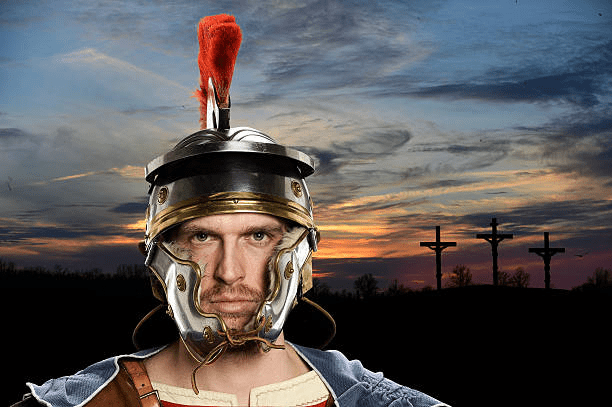
In order for the bodies to not remain on the crosses during the Sabbath, the soldiers would break the legs of the condemned. This would prevent them from pushing up their bodies with their legs, while on the cross, in order to breathe. Without being able to exhale and inhale, the crucified individual would suffocate and die. This was an assured manner of hastening death.

Not having the authority to do so, the Jews asked Pontius Pilate for the criminal’s legs to be broken for this purpose. Pilate agreed to the request and had the Roman soldiers break the three men’s legs. They did so to the criminals on either side of Jesus. When they came to the Lord, they saw He was already dead so they did not break His legs. However, to ensure Jesus was truly dead, one of the soldiers pierced the Lord’s side with a spear. Blood and water flowed out from the wound indicating the spear pierced Jesus’ heart.

“Though the Romans had no problem leaving crucified victims hanging on crosses long after they died (allowing their corpses to rot or be eaten by birds), the Jewish leaders insisted that Jesus’ body be taken down. The Mosaic Law stipulated that a person hanged on a tree should not remain there overnight (Deut. 21:22–23). They would have been especially wary of this in light of the Passover celebration. In order to hasten death for certain reasons, soldiers would break the legs of the victim with an iron mallet. Doing so inhibited the dying man’s ability to push up with his legs in order to breathe. Death by asphyxiation soon followed,” explains Dr. John MacArthur.

“The soldier’s stabbing of Jesus’ side caused significant penetration because of the sudden flow of blood and water. Either the spear pierced Jesus’ heart or the chest cavity was pierced at the bottom. In either event, John mentioned the outflow of “blood and water” to emphasize that Jesus was unquestionably dead.”

John provided a commentary concerning this event. He stated. “35 He who saw it has borne witness—his testimony is true, and he knows that he is telling the truth—that you also may believe. 36 For these things took place that the Scripture might be fulfilled: “Not one of his bones will be broken.” 37 And again another Scripture says, “They will look on him whom they have pierced.” John testified he was an eyewitness to this event (v. 26; 13:23; 20:2; 21:7, 20; cf. 1 John 1:1–4). The Old Testament Scriptures John referred to were Exodus 12:46, Numbers 9:12, Psalm 34:20, and Zechariah 12:10.  

“John quoted from either Ex. 12:46 or Num. 9:12, since both stipulate that the bones of the Passover lamb must not be broken. Since the NT portrays Jesus as the Passover Lamb that takes away the sins of the world (John 1:29; cf. 1 Cor. 5:71 Pet. 1:19), these verses have special typologically prophetic significance for him. The quote in John 19:37 comes from Zech. 12:10. The anguish and contrition of the Jews in the Zechariah passage, because of their wounding of God’s Shepherd, is typologically prophetic of the time of the coming of the Son of God, Messiah, when at his return, Israel shall mourn for the rejection and killing of their King (cf. Rev. 1:7),” concludes Dr. MacArthur.

Not even seemingly insignificant details were overlooked concerning Jesus’ death on the cross. The Gospels are true and accurate.

Soli deo Gloria!
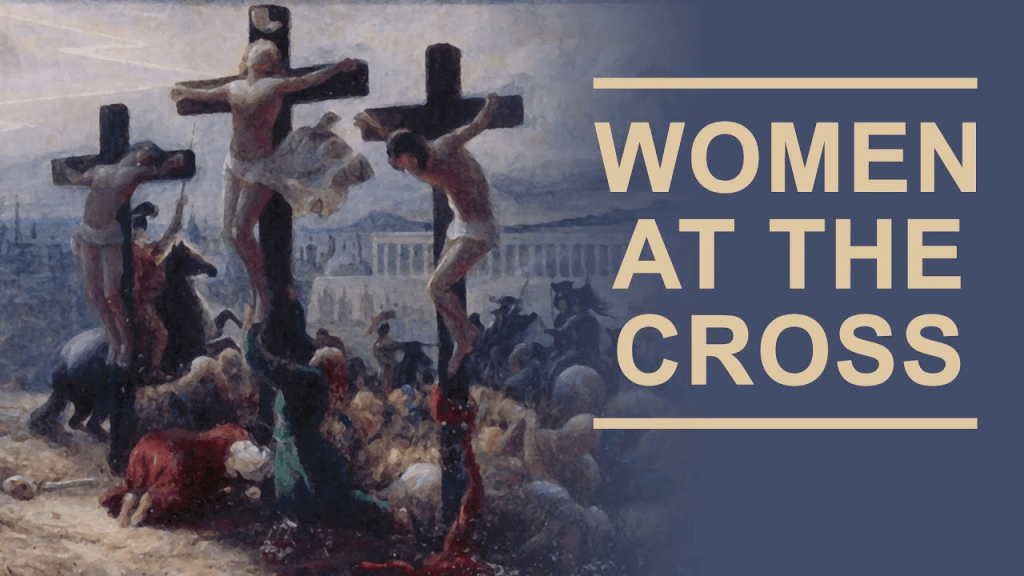
The Gospel of Matthew: The Women at the Cross.

55 There were also many women there, looking on from a distance, who had followed Jesus from Galilee, ministering to him, 56 among whom were Mary Magdalene and Mary the mother of James and Joseph and the mother of the sons of Zebedee.” (Matthew 27:55–56 (ESV)

40 There were also women looking on from a distance, among whom were Mary Magdalene, and Mary the mother of James the younger and of Joses, and Salome. 41 When he was in Galilee, they followed him and ministered to him, and there were also many other women who came up with him to Jerusalem.” (Mark 15:40–41 (ESV)

48 And all the crowds that had assembled for this spectacle, when they saw what had taken place, returned home beating their breasts. 49 And all his acquaintances and the women who had followed him from Galilee stood at a distance watching these things.” (Luke 23:48–49 (ESV)

“But standing by the cross of Jesus were his mother and his mother’s sister, Mary the wife of Clopas, and Mary Magdalene.” (John 19:25 ESV)

In our study of the Gospel of Matthew’s record of the Passion Week of the Lord Jesus Christ, it is necessary, and insightful, to examine all four Gospel accounts. This discipline provides us understanding of all the events and encounters which took place during those hours.

We saw the response by the Roman Centurion and the soldiers to Jesus’ death. What about the others in attendance? How did they react to the Lord’s demise?

Luke recorded the crowds who were there for the spectacle went back to their homes beating their breasts. They were striking themselves in remorse and regret; not only for what they had seen but also what they had done in mocking the Lord.

Luke also mentioned Jesus’ acquaintances (γνωστός; gnostos). These were men who knew Jesus, but who may, or may not, have been sincere disciples.

Finally, all four Gospels mentioned the many women in attendance. Some were close to the Lord; physically at the scene of His death and relationally during His life. All of them followed Jesus since the earliest days of His ministry in Galilee.

The women included the following: Mary Magdalene, Mary the mother of James and Joseph (Joses) who was also the wife of Clopas, and Salome, who was the wife of Zebedee and the mother of James and John. There was also Mary, the mother of Jesus who also was Salome’s sister.

“One other group of Christ’s followers remained near Him at the end—the faithful women who had loved and served Jesus during His ministry. Mark tells us that many women were there when Jesus died, including “Mary Magdalene, Mary the mother of James the younger and of Joseph, and Salome” (Mark 14:40–41),” states Dr. R. C. Sproul.

“Mary Magdalene, of course, was our Lord’s most well-known female disciple, from whom He had driven seven demons. Many scholars believe the other Mary was Jesus’ mother (6:3). Salome was the mother of Zebedee’s sons James and John (Matt. 4:21; 27:56). Their mention is significant, for women were not often regarded very highly in first-century culture and would not have been expected to have the kind of courageous faith that enabled them to stay near Jesus when the men ran away. John Calvin notes that Mark mentions the women as a reproof of the male disciples. Those whom He called and would commission as Apostles were less faithful than those who would not receive the Apostolic office.”

Dr. William Hendriksen states, “Notable women were these, and this for at least three reasons: (1) With the exception of John none of the other disciples who belonged to the group of twelve is reported to have been present at Calvary, but these women were present! They displayed rare courage; (2) We are distinctly told they were women who had followed Jesus from Galilee and had been in the habit of ministering to his needs. They had given evidence of hearts filled with love and sympathy; and (3) Being witnesses of Christ’s death, burial, and resurrection appearance, they were qualified witnesses of facts of redemption on which, under God, the church depends for its faith.”

These women were faithful to the Lord; even in His death. Are you prepared to stand firm for Jesus no matter the cost? Pray that the Lord would strengthen you to be faithful to Him. If you have denied Christ, repent and return to Him this day.

Soli deo Gloria!

The Gospel of Matthew: Events Following Jesus’ Death. The Centurion Speaks.

“When the centurion and those who were with him, keeping watch over Jesus, saw the earthquake and what took place, they were filled with awe and said, “Truly this was the Son of God!” (Matthew 27:54 (ESV)

And when the centurion, who stood facing him, saw that in this way he breathed his last, he said, “Truly this man was the Son of God!” (Mark 15:39 (ESV)

Now when the centurion saw what had taken place, he praised God, saying, “Certainly this man was innocent!” (Luke 23:47 (ESV)

In our study of the Gospel of Matthew’s record of the Passion Week of the Lord Jesus Christ, it is necessary, and insightful, to examine all four Gospel accounts. This discipline provides us understanding of all the events and encounters which took place during those hours.

“Given the emphasis in Matthew’s gospel on how Jesus fulfills the old covenant (Matt. 5:17; 12:15–21; 26:47–56), it is hard to miss the significance of the hour of His death. Our Savior dies at the ninth hour (27:45–50) — three o’clock p.m. — the same hour at which the daily sacrifices begin in the Jerusalem temple. By this we see that Christ fulfills all of the old covenant sacrifices. After His atonement, there is no need to offer up the blood of bulls and goats; sin has been dealt with and the temple rituals therefore pass away (Heb. 10:1–18),” states Dr. R. C. Sproul.

Today’s texts reveal another striking irony. The Jewish religious leaders and people gathered around the crucifixion scene mock and reject Jesus’ person and work. However, not only is one of the criminals brought to saving faith in Jesus (Luke 23:39-43), but arguably the centurion in charge of the execution.

A centurion (ἑκατοντάρχης; hekatontarchos) was a commander of 100 men in the Roman army. There were generally six centurions in each cohort 600) and ten cohorts in a legion (6,000). Each legion had six tribunes to whom its centurions were subordinate (Acts 22:26).

“The office of centurion was normally the highest one within reach of the ordinary soldier. A centurion had many duties besides maintaining discipline among the ranks. He had to oversee executions for capital offenses (Matt. 27:54; Mark 15:39, 44–45; Luke 23:47),” explains the Tyndale Bible Dictionary.

There are six centurions mentioned in the New Testament. These include the following.

  • A centurion at Capernaum pleaded for the life of his dying servant because he believed that diseases would obey Jesus just as his soldiers obeyed him (Matt. 8:5–13; Luke 7:2–10).
  • A centurion in Caesarea named Cornelius was converted to Christ through the testimony of the apostle Peter, whose reluctance to share the gospel with Gentiles had been broken down by a vision from God (Acts 10).
  • A centurion in Acts 22:25–26 helped save the apostle Paul from a scourging when he reminded his tribune that the accused was a Roman citizen.
  • Another centurion helped save Paul from a Jewish plot to murder him (Acts 23:17–22).
  • A centurion named Julius was assigned to guard Paul on his journey from Caesarea to Rome (Acts 27:1). When their ship broke up in a storm, Julius prevented the soldiers from killing all the prisoners on board, including Paul (vv 42–43).

Foremost for today’ study was the centurion in charge of the squad that executed Jesus. All three Synoptic Gospels record his confession of the person of the Lord Jesus Christ. All three note the centurion’s initial statement “truly” (ἀληθῶς; alethos) or “certainly” (ὄντως; ontos). This mean he understood who Jesus really was.

Matthew includes the other soldiers also being filled (σφόδρα; sphodra) with awe (φοβέω; phobeo). This great number of men, and their leader, were greatly frightened and worshipful of the Lord. Luke records the centurion praised (δοξάζω; doxazo) the One, True God. This was significant.

“Ironically, many Jewish leaders will not believe even after these signs (Matt. 27:62–66; 28:11–15). To the soldiers guarding Jesus, however, these supernatural events prove they have killed a divine man (27:54). This may not be saving faith, but it does reveal that their hearts are not so hard as to miss the obvious,” states Dr. Sproul.

“The centurion was the one who uttered the words of confession, but he evidently spoke for his men as well. Their fear speaks of an awareness of their sin and the word ‘truly’ suggests a certainty and conviction that bespeaks of genuine faith. These men represent an answer to Jesus’ prayer in Luke 23:34. Their response contrasts sharply with the mocking taunts of Matt. 27:39-44,” comments Dr. John MacArthur.  

Soli deo Gloria!

The Gospel of Matthew: Events Following Jesus’ Death. The Tombs Opened.

51 And behold, the curtain of the temple was torn in two, from top to bottom. And the earth shook, and the rocks were split. 52 The tombs also were opened. And many bodies of the saints who had fallen asleep were raised, 53 and coming out of the tombs after his resurrection they went into the holy city and appeared to many.” (Matthew 27:51–53 (ESV)

In our study of the Gospel of Matthew’s record of the Passion Week of the Lord Jesus Christ, it is necessary, and insightful, to examine all four Gospel accounts. This discipline provides us understanding of all the events and encounters which took place during those hours.

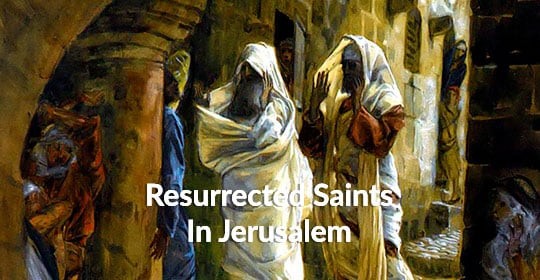
Matthew alone mentioned this miracle of the opened tombs. Who were these resurrected people?

To begin with, the earth shook at the moment of Jesus’ death. This occurred as the temple curtain was torn. It was a great earthquake. The earth violently trembled so that rocks were split in half, torn apart and divided. As this occurred, the tombs were opened. Graves were literally opened, and the dead were raised to life.

The text calls them saints. Saints (ἅγιος; hagios) refers to God’s people. They were set apart ones who were holy and dedicated to the Lord. This title refers to all believers in Jesus Christ (Rom. 1:7; I Cor. 1:1-2; 2 Cor. 1:1; Eph. 1:1; Phil. 1 :1; Col. 1:1).

These saints had fallen asleep (κοιμάω; koimao). This is another way saying they had physically died. However, they were raised (ἐγείρω; egeiro) or brought to physical life. God caused them to live again.

Matthew added these resurrected saints did not come out of their tombs until after the resurrection of Christ. When they did, they came into Jerusalem and appeared to many people. Dr. William Hendriksen shares the following insights.

“First, this was a real resurrection, not an appearance of corpses.”

“Secondly, it occurred at the very moment of Christ’s death and, together with the other signs, pointed to the significance of that death.”

“Thirdly, it is true that the original can be construed in either of two ways, depending on how we parse the phrase “after his [Christ’s] resurrection”; whether we conceive the sense to be “having left their tombs after his resurrection,” or “after his resurrection they went.…” But is it reasonable to believe that these saints, with glorious resurrection bodies, remained in the darkness and corruption of the tombs from Friday afternoon until Sunday morning? The meaning is, in all probability, that these saints were raised and left their tombs at the moment of Christ’s death. Not until after Christ’s resurrection did they enter Jerusalem and did they appear to many. Where they were from the moment when they left their graves until they appeared to many in what is still called “the holy city” (!) is not explained, just as also the whereabouts of Jesus during the intervals between his post-resurrection appearances is nowhere indicated.”

“Fourthly, everything seems to point to the fact that these saints did not again die. It must be that after they appeared to many for some small period of time, God took them—now body and soul—to himself in heaven, where their souls had been previously.”

“Finally, this sign, too, like those described in verse 51, 52a, is prophetic. It shows that Christ’s death guarantees our glorious resurrection at Christ’s return.”

“Today’s passage reports that the earthquake also opens several tombs, from which appear many resurrected saints after our Lord rises from the dead (vv. 52–53). We do not know their identities, but these holy ones clearly died before Jesus inaugurated the new covenant and are raised only after He is resurrected. By this we see that the only way believers, whether they live under the old covenant or the new, can find final salvation (resurrected life in a new heavens and earth, Rev. 20:1–6; 21) is through Christ’s death and resurrection. Scripture does not say whether the people of Matthew 27:52 die again or ascend to heaven. In any case, their resurrection is a sign that Jesus’ death has inaugurated the last days, for this raising to life is the signal event of judgment day (Dan. 12:1–2),” explains Dr. R. C. Sproul.

“The resurrection of others,” John Calvin says, “also makes evident that Jesus died and rose again not only for Himself, but also to restore life to His people.”

Soli deo Gloria!  

The Gospel of Matthew: I Am with You Always Revisited.

16 Now the eleven disciples went to Galilee, to the mountain to which Jesus had directed them. 17 And when they saw him they worshiped him, but some doubted. 18 And Jesus came and said to them, “All authority in heaven and on earth has been given to me. 19 Go therefore and make disciples of all nations, baptizing them in the name of the Father and of the Son and of the Holy Spirit, 20 teaching them to observe all that I have commanded you. And behold, I am with you always, to the end of the age.” (Matthew 28:16–20 (ESV)

The following excerpt is by Dr. Gerrit Scott Dawson is pastor of First Presbyterian Church, Baton Rouge, La., and author of Jesus Ascended: The Meaning of Christ’s Continuing Incarnation. The article was published in the April 2014 issue of Tabletalk magazine.

Jesus would soon return to heaven while His disciples went out into the world in gospel mission. But they were not going their separate ways. Jesus and His brothers could not be parted by the distance between the world and the heavenly realms. How can this be?

Jesus’ missional instructions can well be translated, “baptizing them into the name of the Father and of the Son and of the Holy Spirit” (28:19). That gives an important insight into conversion and the sealing sign of baptism. Our lives get relocated when we are joined to Jesus by the Spirit through faith. We are launched into Jesus. So now our lives are “hidden with Christ in God” (Col. 3:3). Paul writes dynamically of this reality when he says the Father “has delivered us from the domain of darkness and transferred us to the kingdom of his beloved Son” (1:13).

It’s as if God sent a moving truck to take us out of a dank, evil, broken neighborhood of sin into the spacious streets of freedom in Christ. Peter describes it as God’s “calling us out of darkness into his marvelous light” (1 Peter 2:9). Jesus Himself stated this change of life-address even more mystically: “In that day you will know that I am in my Father, and you in me, and I in you” (John 14:20). These verses give some texture to the phrase Paul uses so often: we are now in Christ.

Jesus is with us always because Jesus is where I live. Believers are forever joined to Him. Jesus returned to heaven and spiritually took us along. What a mystery: “Even when we were dead in our trespasses, [God] made us alive together with Christ . . . and raised us with him and seated us with him in the heavenly places in Christ Jesus” (Eph 2:5–6). Yes, this is a spiritual reality now, as my body quite obviously is still here on the ground. One day, of course, the union will be completed as we receive our resurrection bodies that we might always be in immediate communion with Jesus and one another.

Meanwhile, while we are on earth, Jesus stays with us through His Spirit whom He sends to us. Paul writes, “God’s love has been poured into our hearts through the Holy Spirit who has been given to us” (Rom. 5:5). The Spirit is the personal presence of Jesus “housed” in us. By the Spirit, the Father and Son make a home in us (John 14:23). Christians, both individually and corporately as the church, are a dwelling in which the eternal exchange of love between the Triune persons gets lived out. The Holy Spirit in us keeps us joined to Jesus, who has taken His resurrection body into heaven. He ever lifts us up to see that our true life is located there, in Christ.

The biblical understanding of Jesus’ being with us is very different from any idea that Jesus’ presence just gives a helpful boost to the life I’m trying to make for myself. “I am with you always” does not mean I have a miniature Jesus tucked inside me for inspiration amid my ambitions or for comfort when things don’t go my way. Rather, my little life is taken up into the greatness of Jesus. He is with us most profoundly because by the Spirit we are in Christ. My purpose in life, then, is directed by His mission for His people.

So, I am propelled out of my cozy home where I’d like to stay while Jesus comforts me. He sends me to the cranky neighbor to witness to him with the awareness that Jesus loves him as much as He loves me. “I am with you as you love him in Me.”

Jesus goes with me from my relatively safe street to the sharp neighborhood filled with angry discards. “Pitch a tent there,” He whispers, “as I took up a tent of flesh in a broken world.” That might mean beginning a school, a sports camp, or a clinic in His name.

Right where I don’t want to go, Jesus already is there. He even sends me to engage the people who will scoff at mention of His name. I’d like to avoid them, to keep away from controversy. But the Lord who continues to mix it up in the world He is reclaiming reminds me: “You are in Me, and I am sending My gospel into the world. So you can trust that I am with you as you go into those tricky conversations.”

Jesus is with us always, first and most profoundly because His Spirit has taken us up into His life and, therefore, His mission.

Soli deo Gloria!

The Gospel of Matthew: I Am with You Always Revisited.

16 Now the eleven disciples went to Galilee, to the mountain to which Jesus had directed them. 17 And when they saw him they worshiped him, but some doubted. 18 And Jesus came and said to them, “All authority in heaven and on earth has been given to me. 19 Go therefore and make disciples of all nations, baptizing them in the name of the Father and of the Son and of the Holy Spirit, 20 teaching them to observe all that I have commanded you. And behold, I am with you always, to the end of the age.” (Matthew 28:16–20 (ESV)

The following excerpt is by Dr. Gerrit Scott Dawson is pastor of First Presbyterian Church, Baton Rouge, La., and author of Jesus Ascended: The Meaning of Christ’s Continuing Incarnation. The article was published in the April 2014 issue of Tabletalk magazine.

Jesus would soon return to heaven while His disciples went out into the world in gospel mission. But they were not going their separate ways. Jesus and His brothers could not be parted by the distance between the world and the heavenly realms. How can this be?

Jesus’ missional instructions can well be translated, “baptizing them into the name of the Father and of the Son and of the Holy Spirit” (28:19). That gives an important insight into conversion and the sealing sign of baptism. Our lives get relocated when we are joined to Jesus by the Spirit through faith. We are launched into Jesus. So now our lives are “hidden with Christ in God” (Col. 3:3). Paul writes dynamically of this reality when he says the Father “has delivered us from the domain of darkness and transferred us to the kingdom of his beloved Son” (1:13).

It’s as if God sent a moving truck to take us out of a dank, evil, broken neighborhood of sin into the spacious streets of freedom in Christ. Peter describes it as God’s “calling us out of darkness into his marvelous light” (1 Peter 2:9). Jesus Himself stated this change of life-address even more mystically: “In that day you will know that I am in my Father, and you in me, and I in you” (John 14:20). These verses give some texture to the phrase Paul uses so often: we are now in Christ.

Jesus is with us always because Jesus is where I live. Believers are forever joined to Him. Jesus returned to heaven and spiritually took us along. What a mystery: “Even when we were dead in our trespasses, [God] made us alive together with Christ . . . and raised us with him and seated us with him in the heavenly places in Christ Jesus” (Eph 2:5–6). Yes, this is a spiritual reality now, as my body quite obviously is still here on the ground. One day, of course, the union will be completed as we receive our resurrection bodies that we might always be in immediate communion with Jesus and one another.

Meanwhile, while we are on earth, Jesus stays with us through His Spirit whom He sends to us. Paul writes, “God’s love has been poured into our hearts through the Holy Spirit who has been given to us” (Rom. 5:5). The Spirit is the personal presence of Jesus “housed” in us. By the Spirit, the Father and Son make a home in us (John 14:23). Christians, both individually and corporately as the church, are a dwelling in which the eternal exchange of love between the Triune persons gets lived out. The Holy Spirit in us keeps us joined to Jesus, who has taken His resurrection body into heaven. He ever lifts us up to see that our true life is located there, in Christ.

The biblical understanding of Jesus’ being with us is very different from any idea that Jesus’ presence just gives a helpful boost to the life I’m trying to make for myself. “I am with you always” does not mean I have a miniature Jesus tucked inside me for inspiration amid my ambitions or for comfort when things don’t go my way. Rather, my little life is taken up into the greatness of Jesus. He is with us most profoundly because by the Spirit we are in Christ. My purpose in life, then, is directed by His mission for His people.

So, I am propelled out of my cozy home where I’d like to stay while Jesus comforts me. He sends me to the cranky neighbor to witness to him with the awareness that Jesus loves him as much as He loves me. “I am with you as you love him in Me.”

Jesus goes with me from my relatively safe street to the sharp neighborhood filled with angry discards. “Pitch a tent there,” He whispers, “as I took up a tent of flesh in a broken world.” That might mean beginning a school, a sports camp, or a clinic in His name.

Right where I don’t want to go, Jesus already is there. He even sends me to engage the people who will scoff at mention of His name. I’d like to avoid them, to keep away from controversy. But the Lord who continues to mix it up in the world He is reclaiming reminds me: “You are in Me, and I am sending My gospel into the world. So you can trust that I am with you as you go into those tricky conversations.”

Jesus is with us always, first and most profoundly because His Spirit has taken us up into His life and, therefore, His mission.

Soli deo Gloria!

The Gospel of Matthew: The Temple Curtain is Torn in Two. Part 2.

And behold, the curtain of the temple was torn in two, from top to bottom. And the earth shook, and the rocks were split.” (Matthew 27:51 ESV)

And the curtain of the temple was torn in two, from top to bottom.” (Mark 15:38 ESV)

And the curtain of the temple was torn in two.” (Luke 23:45 (ESV)

In our study of the Gospel of Matthew’s record of the Passion Week of the Lord Jesus Christ, it is necessary, and insightful, to examine all four Gospel accounts. This discipline provides us understanding of all the events and encounters which took place during those days and hours.

Matthew, Mark and Luke alone recorded the events immediately following the Lord Jesus Christ’s death on the cross. Regarding those events, they mentioned the moment the tearing in half of the temple curtain,

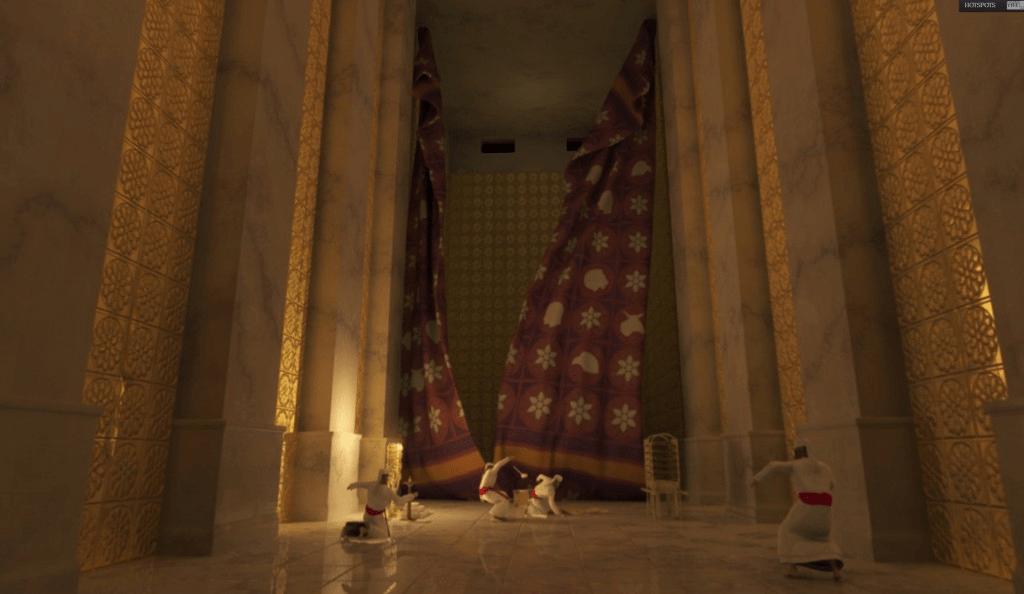
The curtain separated the two inner chambers, or rooms, in the temple. These were the Holy Place and the Holy of Holies. Contained in the Holy Place were three pieces of furniture: the Table of Shewbread, the Golden Lampstand and the Golden Altar of Incense. Contained within the Holy of Holies was the Ark of the Covenant.

Separating the Holy Place from the Holy of Holies was the curtain. Exodus 26:31-35 describes the curtain in detail.

31 “And you shall make a veil of blue and purple and scarlet yarns and fine twined linen. It shall be made with cherubim skillfully worked into it. 32 And you shall hang it on four pillars of acacia overlaid with gold, with hooks of gold, on four bases of silver. 33 And you shall hang the veil from the clasps, and bring the ark of the testimony in there within the veil. And the veil shall separate for you the Holy Place from the Most Holy. 34 You shall put the mercy seat on the ark of the testimony in the Most Holy Place. 35 And you shall set the table outside the veil, and the lampstand on the south side of the tabernacle opposite the table, and you shall put the table on the north side.” (Exodus 26:31–35 (ESV)

What was the significance of the curtain? What was also the significance of the curtain being torn in two at the death of Jesus Christ? Dr. Benjamin Shaw, professor of Old Testament at Reformation Bible College in Sanford, Fla., answers these questions.

“When Moses was given the law on Mount Sinai, that law included instructions for building the tabernacle. Included were directions for making a curtain or veil (Ex. 26:30–35). The purpose of this curtain was to divide between the Holy Place and the Most Holy Place. In the Holy Place were the lampstand, the table for the bread of the presence, and the altar of incense. In the Most Holy Place was the Ark of the Covenant, covered by the mercy seat, on which were two cherubim guarding the presence of God. This was the place where God made His presence visible and from where He spoke to Moses.”

“The veil that divided the Holy Place from the Most Holy Place was embroidered with cherubim, representing the cherubim to the east of Eden, keeping mankind away from the presence of God. But a change took place. The absolute prohibition on entering God’s presence now became not so absolute. The door into the presence of God that had been so firmly slammed shut at Eden now opened a crack. It was a very small crack, to be sure, but it was a real crack. Now the high priest, once a year, accompanied by the billowing smoke of incense and the blood of sacrifices, could enter the Most Holy Place (Lev. 16). He could enter the place of God’s presence.”

“The people would have known about this if they were properly instructed. The law was to be read before the people every seven years (Deut. 31:9–13). The Levites would have mentioned such things in their instructional work among the people. But for most, the change would have seemed negligible. After all, it only affected the high priest, and only once a year. In addition, as more generations passed, there was no further change in the statutes to indicate that any new development could be expected. When the temple was built, a new veil embroidered with cherubim and setting apart the Most Holy Place was made (2 Chron. 3:14). In addition, the walls of the temple were adorned with cherubim. Except for the high priest, once a year, there was no entering the presence of God.”

“But the prophetic era hinted that further change would come. Isaiah 25:7 says, “And he will swallow up on this mountain the covering that is cast over all peoples, the veil that is spread over all nations.” The word “covering” is not the same as the word “veil.” However, the connection with the holy mountain of the Lord and the eager expectation of the people for the coming of the Lord at least hint at a further change, a very significant change.”

“Again, a period of silence ensued. Then, at the very end of Jesus’ ministry, at the very point of His death, the curtain of the temple was torn in two from top to bottom. This testimony is included in all three of the Synoptic Gospels (Matthew, Mark, and Luke). Something strange, marvelous, and wonderful happened. The way into God’s presence was once again opened. The Synoptic Gospels present the fact, while the author of Hebrews explains what happened.”

“First, we read that Jesus Himself has gone in behind the veil, the curtain (Heb. 6:19). He has entered as our High Priest. As the High Priest in the tabernacle and the temple, Jesus entered the Most Holy Place. However, it was not just the representative Most Holy Place of the temple—it was the true Most Holy Pace in heaven. There He has gone to anchor our hope.”

“Further, Jesus did not enter the Most Holy Place temporarily, as did the high priests of the Old Testament period. Instead, He entered once for all (Heb. 9:11–12). That is, He entered once for all for His people, and He entered permanently, never to exit.”

“Finally, the author of Hebrews tells us that we, too, enter the Most Holy Place by the blood of Jesus (Heb. 10:19–20). We are also told that the curtain represented the body of Christ. With the shedding of His blood, that curtain was torn. The way into the presence of God has been restored. The guarding cherubim with the flashing sword have been removed. What was lost in Adam has been regained in Christ.”

Soli Deo Gloria.

The Gospel of Matthew: Events Following Jesus’ Death. The Temple Curtain is Torn in Two.  

And behold, the curtain of the temple was torn in two, from top to bottom. And the earth shook, and the rocks were split.” (Matthew 27:51 ESV)

And the curtain of the temple was torn in two, from top to bottom.” (Mark 15:38 ESV)

“And the curtain of the temple was torn in two.” (Luke 23:45 ESV)

In our study of the Gospel of Matthew’s record of the Passion Week of the Lord Jesus Christ, it is necessary, and insightful, to examine all four Gospel accounts. This discipline provides us understanding of all the events and encounters which took place during those hours.

Matthew, Mark and Luke alone recorded the events immediately following the Lord Jesus Christ’s death on the cross. Regarding those events, only Matthew and Mark mentioned the moment the curtain of the temple was torn in two.

The temple curtain separated the two inner chambers, or rooms, in the temple. These were the Holy Place and the Holy of Holies. Contained in the Holy Place were three pieces of furniture: the Table of Showbread, the Golden Lampstand and the Golden Altar of Incense.

The Table of Showbread was where the Bread of the Presence was placed (Ex 25:23–30). “The term “showbread” (kjv “shewbread”) referred to the arrangement of the twelve loaves of bread in rows on the table (1 Chr. 9:32; 23:29; 28:16; 2 Chr. 2:4; 13:11; 29:18). They symbolized an “offering of food” to the Lord. The twelve loaves were changed weekly on the Sabbath day.

Jesus said “I am the Bread of Life” (John 6). As God the Father’s Anointed One, Jesus provides for the needs of others; spiritually and physically (Heb. 1:1-3).

The Golden Lampstand was an ornate golden menorah. On either side, three branches came out from the main central stem, and seven lamps could be lighted in the flower-shaped holders. While the lampstand provided light for the priests to conduct their duties, it symbolized much more.

“Jewish lamps were part of the religious symbolism of the home, probably dating back to the prohibition against lighting a fire on the Sabbath (Ex. 35:3). References to light abound in Scripture. We read of the eye as a lamp (Matt. 6:22–23; Luke 11:33–36) and of Christ as the Light of the World (John 8:12; 9:1-5). We are warned to pay attention to teaching as to a light shining in the dark (Prv. 6:23; 2 Pt 1:19). Both God and the spirit of man are symbolized as lamps (2 Sam. 22:29; Prv. 20:27), while in Proverbs 13:9 “lamp” is synonymous with the essence of life itself. Lamps, with or without stands, were also part of the Jewish ritual of death, mourning, and burial,” explains the Tyndale Bible Dictionary.

The Golden Altar of Incense was the third and final article of furniture in the Holy Place. It represented the prayers of God’s people constantly ascending before the Lord. In the tabernacle/temple. Incense could only be offered by the priests, who thus served as mediators between the people and God, symbolically bringing their prayers into the presence of the Most High (Luke 1:1-9). The Altar of Incense symbolized Jesus Christ as the only mediator between God the Father and humankind (I Tim. 2:5).  

“Many of the furnishings of the tabernacle had a functional purpose. The lampstand gave light in an otherwise dark enclosure, while the table provided a place on which to put the showbread. Meanwhile, the incense altar served the practical purpose of pleasantly scenting the air. These items were in many respects ordinary pieces of furniture, albeit made out of pure gold and richly ornamented as befitted the furniture of a king,” explains Dr. Iain Duguid, professor of Old Testament at Westminster Theological Seminary in Philadelphia, PA.

“All of the senses were ministered to by the daily priestly ritual: sight, smell, and taste were addressed through the lampstand, the incense altar, and the table of showbread, while hearing was ministered to by the bells on the high priest’s garments. The whole affair was designed as a rich multisensory experience for God—not because He has senses like ours, but as an acknowledgment of the goodness of each of the diverse senses He has given us. Only the very best of everything could possibly be good enough to offer to the Creator of the universe.”

The curtain separated the Holy Place from the Holy of Holies. Contained within the Holy of Holies was the Ark of the Covenant. These specific items are the focus of our next article of study.

Take time today to thank God for the senses He has given us. May our senses praise Him and not used as instruments of sin against Him.

Soli deo Gloria!

The Gospel of Matthew: The Last Three Hours on the Cross. The Assurance of His Confidence.  

And Jesus cried out again with a loud voice and yielded up his spirit.” (Matthew 27:50 (ESV)

And Jesus uttered a loud cry and breathed his last.” (Mark 15:37 (ESV)

 Then Jesus, calling out with a loud voice, said, “Father, into your hands I commit my spirit!” And having said this he breathed his last.” (Luke 23:46 (ESV)

In our study of the Gospel of Matthew’s record of the Passion Week of the Lord Jesus Christ, it is necessary, and insightful, to examine all four Gospel accounts. This discipline provides us understanding of all the events and encounters which took place during those hours.

The following excerpt is by the 16th century Protestant reformer, theologian and pastor, John Calvin. It is taken from his commentary from the Gospels.

“He (Jesus) declared that, though He was fiercely attacked by violent temptations, still His faith was unshaken and always kept its ground unvanquished. For there could not have been a more splendid triumph than when Christ boldly expresses His assurance that God is the faithful guardian of His soul, which all imagined to be lost.”

But instead of speaking to the deaf, He betook Himself directly to God and committed to His bosom the assurance of His confidence. He wished, indeed, that men should hear what He said; but though it might be of no avail to men, He was satisfied with having God alone as His witness.”

“There is not a stronger or more decided testimony of faith than when a pious man – perceiving Himself attacked on every hand, so that he finds no consolation on the part of men, despises the madness of the whole world, discharges His sorrows and cares into the bosom of God and rests in the hope of His promises.”

“Let us now remember that it was not in reference to Himself alone that Christ committed His soul to the Father, but that He included, as it were, in one bundle all the souls of those who believe in Him, that they may be preserved along with His own. By this prayer He obtained authority to save all souls, so that not only does the heavenly Father, for His sake, deign to take them into His custody, but giving up the authority into His hands, commits them to Him to be protected. Everyone, when he comes to die, following this example, shall believe in Christ, will not breathe his soul at random into the air, but will resort to a faithful guardian who keeps in safety whatever has been delivered to Him by the Father.”

“The cry shows also the intensity of the feeling; for there can be no doubt that Christ, out of the sharpness of the temptations by which He was beset, not without painful and strenuous effort, broke into this cry. And yet He likewise intended, by His loud and piercing exclamation, to assure us that His soul would be safe and uninjured by death in order that we, supported by the same confidence, may cheerfully depart from the frail hovel of our flesh.”  

Soli deo Gloria!