The Gospel of Matthew: Jesus and Thomas.

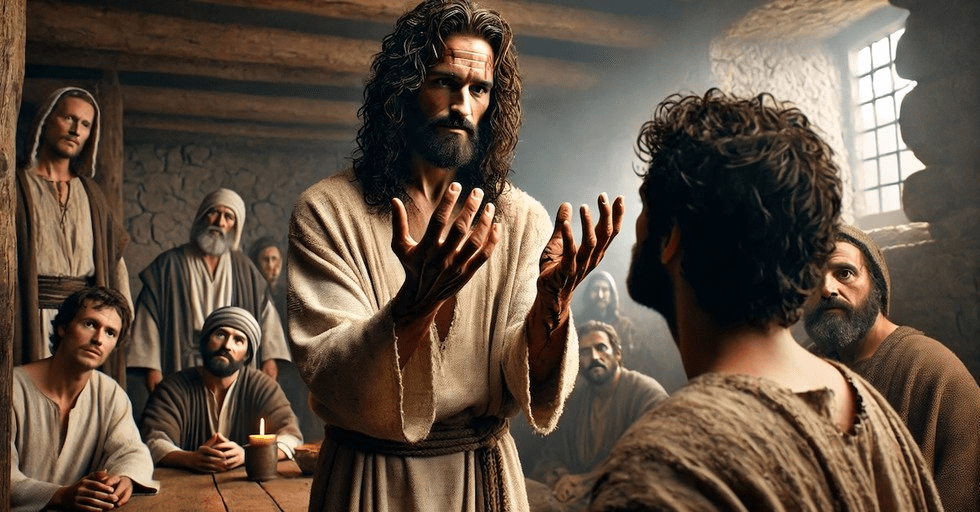
24 Now Thomas, one of the twelve, called the Twin, was not with them when Jesus came. 25 So the other disciples told him, “We have seen the Lord.” But he said to them, “Unless I see in his hands the mark of the nails, and place my finger into the mark of the nails, and place my hand into his side, I will never believe.”

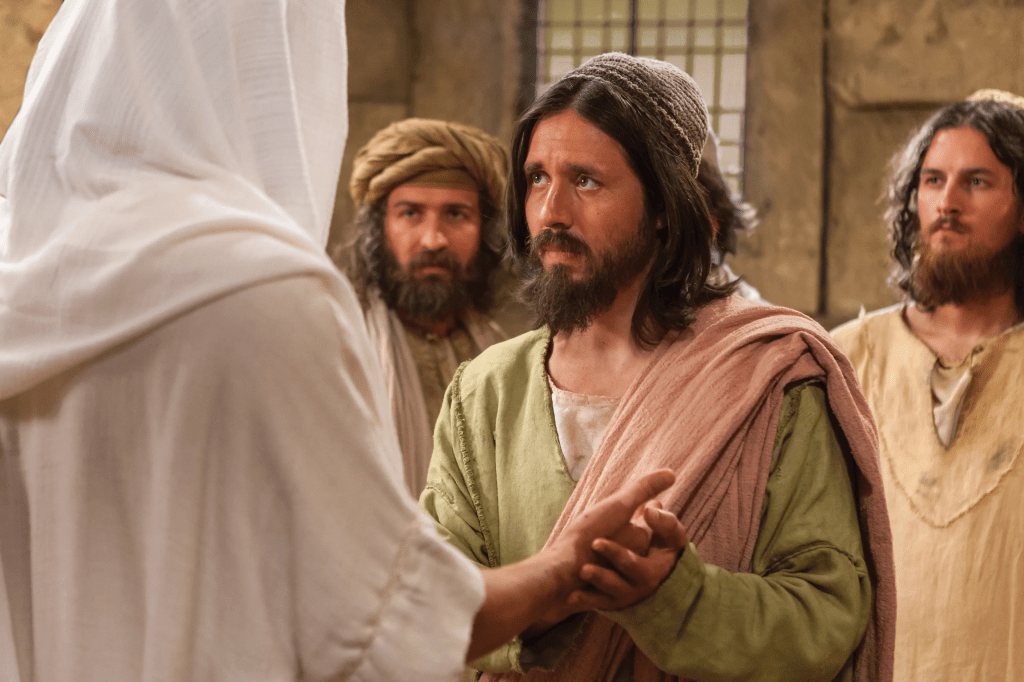
26 Eight days later, his disciples were inside again, and Thomas was with them. Although the doors were locked, Jesus came and stood among them and said, “Peace be with you.” 27 Then he said to Thomas, “Put your finger here, and see my hands; and put out your hand, and place it in my side. Do not disbelieve, but believe.” 28 Thomas answered him, “My Lord and my God!” 29 Jesus said to him, “Have you believed because you have seen me? Blessed are those who have not seen and yet have believed.” (John 20:24–29 (ESV)

All four Gospels parallel each other concerning the events on Resurrection Sunday. The Holy Spirit specifically inspired the writers to provide particular information not found in the other Gospels. While each writer provides selective, insightful information, they do not contradict each other in telling the wonderful news that Jesus Christ is alive. Such is the case with today’s text from the Apostle John regarding Jesus’ appearance to Thomas and the ten other apostles.  

Seeing is believing. This familiar expression means you need to see something before you can accept it as truth. This statement addresses the idea of one way humans know what they know. This is the science of Epistemology.

“Epistemology analyzes the ways in which human beings are able to acquire knowledge. Great debates rage over whether humans learn primarily through the mind—the rational approach to knowledge – or through the five senses of sight, sound, taste, touch and smell—the empirical approach,” explains Dr. R. C. Sproul.

“Even within Christian circles, the debate goes on as to whether reason or the senses is primary. As Christians, however, we should all agree Christianity is based ultimately on knowledge that comes to us from God Himself. Holding to that conviction is vitally important for our determination of truth, because knowledge that comes from God is far superior to anything we can deduce from an analysis of our situation, from introspection, or from observation of the world around us.”  

Thomas experienced a crisis of faith based on how he deduced truth. Thomas was an empiricist. His approach to knowing truth, or what was real, was based on his senses; especially as it related to the death of Jesus Christ. His senses told him Jesus was dead. No rational argument or persuasion by his fellow disciples could dissuade him from what he had seen, heard, tasted, touched, and smelled concerning Jesus’ crucifixion and burial.

Thomas summarized his empiricist approach to truth when he said, “Unless I see in his hands the mark of the nails, and place my finger into the mark of the nails, and place my hand into his side, I will never believe.” Much like Christian, in John Bunyan’s classic allegory Pilgrim’s Progress, Thomas was a self-imposed prisoner in his personal Doubting Castle.

Eight days later, the disciples and all eleven apostles, including Thomas, were gathered inside their locked residence. Jesus appeared and again said, “Peace be with you.” Jesus then said to Thomas, “Put your finger here, and see my hands; and put out your hand, and place it in my side. Do not disbelieve, but believe.”

Jesus approached Thomas at his empiricist level. The Lord commanded His apostle to touch and see the marks of His crucified body. Jesus then commanded Thomas to no longer personally disbelieve but believe. Thomas responded, based on the empirical evidence, “My Lord and my God!”

While Thomas’ declaration of worship was in spirit and truth (John 4:24), Jesus did not allow Thomas, or believers today, to rest their faith in Christ solely upon empirical evidence as a determiner of truth. Jesus said, “Have you believed because you have seen me? Blessed are those who have not seen and yet have believed.” Jesus lauded a rational response to God’s revelation rather than resting on one senses on empirical evidence.

“Jesus responded to Thomas with a blessing on those who would believe in His resurrection without seeing Jesus’ physical, resurrected body (v. 29). This was probably not a rebuke of Thomas for needing evidence to believe. More likely, Jesus was signaling that those who believe in Him without seeing His physical, resurrected body are just as blessed as Thomas and the other disciples who did see it. We who believe in Jesus based on the Apostolic testimony are not lesser disciples than those who saw Him in the flesh,” concludes Dr. Sproul.

The Apostle Peter would echo this perspective when he wrote to the elect exiles in his first epistle. These were believers in Christ who encountered various trials.  Peter wrote, Though you have not seen him, you love him. Though you do not now see him, you believe in him and rejoice with joy that is inexpressible and filled with glory, obtaining the outcome of your faith, the salvation of your souls,” (1 Peter 1:8–9 ESV).

Believers in Christ are to know what God has revealed of Himself in creation and in the Scriptures. It is important to not only know what we believe but also why we believe it. However, our faith in Christ must be rooted in the character of God who reveals Himself to His creation.

Soli deo Gloria!

.
The Gospel of Matthew: Jesus Appears to the Ten Apostles. Part 2.

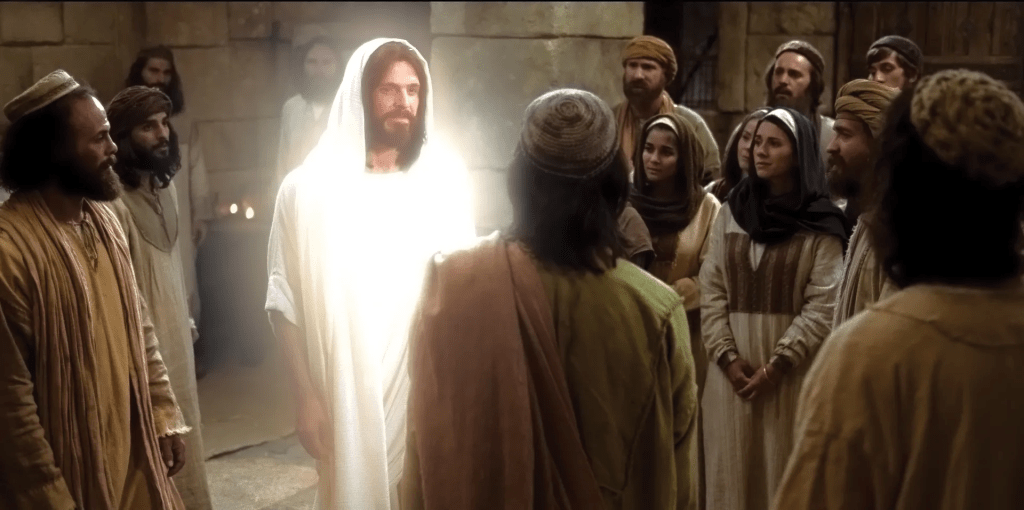
36 As they were talking about these things, Jesus himself stood among them, and said to them, “Peace to you!” 37 But they were startled and frightened and thought they saw a spirit. 38 And he said to them, “Why are you troubled, and why do doubts arise in your hearts? 39 See my hands and my feet, that it is I myself. Touch me, and see. For a spirit does not have flesh and bones as you see that I have.” 40 And when he had said this, he showed them his hands and his feet. 41 And while they still disbelieved for joy and were marveling, he said to them, “Have you anything here to eat?” 42 They gave him a piece of broiled fish, 43 and he took it and ate before them.” (Luke 24:36–43 (ESV)

19 On the evening of that day, the first day of the week, the doors being locked where the disciples were for fear of the Jews, Jesus came and stood among them and said to them, “Peace be with you.” 20 When he had said this, he showed them his hands and his side. Then the disciples were glad when they saw the Lord. 21 Jesus said to them again, “Peace be with you. As the Father has sent me, even so I am sending you.” 22 And when he had said this, he breathed on them and said to them, “Receive the Holy Spirit. 23 If you forgive the sins of any, they are forgiven them; if you withhold forgiveness from any, it is withheld.” (John 20:19–23 (ESV)

All four Gospels parallel each other concerning the events on Resurrection Sunday. The Holy Spirit specifically inspired the writers to provide particular information not found in the other Gospels. While each writer provides selective, insightful information, they do not contradict each other in telling the wonderful news that Jesus Christ is alive. Such is the case with today’s text from Luke and the Apostle John regarding Jesus’ appearance to ten of His apostles.  

It was the same evening in which Jesus dined with the Emmaus Disciples (Luke24:28-32). John explains the doors of the place where the disciples in Jerusalem were staying were locked. The reason was the disciples feared the Jewish religious leaders. Perhaps they were concerned they would also face crucifixion. This is one evidence the disciples were not expecting Jesus’ resurrection. What they would soon encounter and experience would not be the result of their earnest wish Jesus’ death would be undone. The apostles knew Jesus died and their perspective was He would remain dead. They were without hope.

Suddenly, Jesus stood and was among them. This was a miraculous and instantaneous appearance. No locked doors prevented Him from being in their midst.

He said, “Peace” (εἰρήνη; Eirene) the Greek word meaning tranquility and freedom from worry. This parallels the Jewish word Shalom.

What was the disciples’ immediate response? Luke states, “But they were startled and frightened and thought they saw a spirit.”(Luke 24:37).They thought they were seeing a ghost or perhaps an evil spirit.  Jesus said, “Why are you troubled, and why do doubts arise in your hearts?” (Luke 24:38). The disciples were not moving and uncertain as to who, or what, they were seeing.

Jesus then showed them His hands and feet. He told them to touch Him and see that He was not a ghost. “Touch me, and see. For a spirit does not have flesh and bones as you see that I have.” (Luke 24:39-40). The Apostle John states Jesus showed His disciples the crucifixion scars in His hands and side (John 20:20). The disciples saw Jesus was truly alive from the dead and not a phantom or a figment of their own imagination.

“The disciples disbelieved for joy and continued for a while in this state. Psychologically this is understandable. We should bear in mind that only (what we would call) “day before yesterday” their hearts had been pierced with a feeling of utter hopelessness. When Jesus breathed his last the situation seemed to be irreparably desperate. It was the end. Jesus was gone. He was dead. And now to believe that he was standing here in their very midst, alive and well, was almost impossible. Was what they were looking at a ghost? One moment they would say to themselves, “This must be Jesus. How wonderful.” The next moment they would say, “It is just too good to be true. It must be a ghost,” explains Dr. William Hendriksen.

While the disciples still could not believe what they were seeing because they were so joyful, Jesus said, ““Have you anything here to eat?” There is no indication Jesus had to eat in His glorified state but only that He could eat; and eat He did (Luke 24:43).

Jesus spoke again and said, “Peace be with you. As the Father has sent me, even so I am sending you.” 22 And when he had said this, he breathed on them and said to them, “Receive the Holy Spirit. 23 If you forgive the sins of any, they are forgiven them; if you withhold forgiveness from any, it is withheld.” (John 20:21-23).

“The gift is essential for the performance of the task given to the disciples (Luke 24:48-49; Acts 1:8). This occasion is a foreshadowing, an enacted prophecy, of the fullness of the Spirit to be bestowed on the church at Pentecost (Acts 1:4-5; 2:1-11),” states Dr. R.C. Sproul.

“The apostles, as the founders of the church and acting for it, receive the authority to declare God’s judgment on sins and the means of forgiveness of sins; faith in Jesus (Matt. 16:19; 18:18-20). Fundamentally, this declaration is made in the preaching of the Gospel,” concludes Dr. Sproul.

What a fellowship and divine joy it must have been for the disciples to once again be with Jesus. However, one disciple was conspicuously absent; Thomas. It is his encounter with the risen Lord we will examine next.

Have you had a joyful encounter with Jesus through the preaching of the Word of God and worshiping the Lord in spirit and in truth (John 4:24)? May the Lord give us expectant hearts when we gather to worship; individually and collectively each Lord’s Day.

May the Lord’s truth and grace be found here.

The Gospel of Matthew: Jesus Appears to the Ten Apostles.   

36 As they were talking about these things, Jesus himself stood among them, and said to them, “Peace to you!” 37 But they were startled and frightened and thought they saw a spirit. 38 And he said to them, “Why are you troubled, and why do doubts arise in your hearts? 39 See my hands and my feet, that it is I myself. Touch me, and see. For a spirit does not have flesh and bones as you see that I have.” 40 And when he had said this, he showed them his hands and his feet. 41 And while they still disbelieved for joy and were marveling, he said to them, “Have you anything here to eat?” 42 They gave him a piece of broiled fish, 43 and he took it and ate before them.” (Luke 24:36–43 (ESV)

19 On the evening of that day, the first day of the week, the doors being locked where the disciples were for fear of the Jews, Jesus came and stood among them and said to them, “Peace be with you.” 20 When he had said this, he showed them his hands and his side. Then the disciples were glad when they saw the Lord. 21 Jesus said to them again, “Peace be with you. As the Father has sent me, even so I am sending you.” 22 And when he had said this, he breathed on them and said to them, “Receive the Holy Spirit. 23 If you forgive the sins of any, they are forgiven them; if you withhold forgiveness from any, it is withheld.” (John 20:19–23 (ESV)

All four Gospels parallel each other concerning the events on Resurrection Sunday. The Holy Spirit specifically inspired one of two of the writers to provide particular information not found in the other Gospels. While each writer provides selective, insightful information, they do not contradict each other in telling the wonderful news that Jesus Christ is alive. Such is the case with today’s text from Luke and the Apostle John regarding Jesus’ appearance to ten of His apostles.  

It was the same evening in which Jesus dined with the Emmaus Disciples (Luke24:28-32). Clopas and his companion traveled back to Jerusalem from Emmaus to tell their fellow disciples Jesus was alive (Luke 24:33-35).  It was a Sunday evening; the first day of the week.

John explains the doors of the place where the disciples in Jerusalem were staying were locked. The reason was the disciples feared the Jewish religious leaders. Perhaps they were concerned they would also face crucifixion. This is one evidence the disciples were not expecting Jesus’ resurrection. What they would soon encounter and experience would not be the result of their earnest wish Jesus’ death would be undone. The apostles knew Jesus died and their perspective was He would remain dead. They were without hope.

Suddenly, Jesus stood and was among them. This was a miraculous and instantaneous appearance. No locked doors prevented Him from being in their midst. He said, “Peace” (εἰρήνη; Eirene) the Greek word meaning tranquility and freedom from worry. This parallels the Jewish word Shalom. However, this word takes on greater significance when viewed in light of Jesus’ substitutionary atonement and bodily resurrection. By grace alone, through faith alone in the person and work of Jesus Christ alone, God the Father justifies sinners and declares them righteous in His sight (Romans 5:1).

“It is Easter Sunday, late in the evening. Ten of the apostles, the men from Emmaus, and perhaps others, are gathered in a house somewhere in Jerusalem. For fear of the Jews the doors are locked (John 20:19). All of a sudden Jesus is standing right in their midst. How he entered we do not know. All we know is that the resurrection body must have certain properties which do not pertain to “the body of humiliation,” explains Dr. William Hendriksen. On this see also 1 Cor. 15:35–38.

“Not only is the Risen Lord standing here, right among them, but he also, to put them at rest, says, “Peace (be) with you.” When these words flow from his lips they must not be interpreted as a mere “How do you do?” The reference is to the peace which Jesus had obtained for all his people by his death on the cross.” See Eph. 2:14–18; Phil. 4:7.

What was the disciples’ immediate response? Luke states, “But they were startled and frightened and thought they saw a spirit.”(Luke 24:37).They thought they were seeing a ghost or perhaps an evil spirit.  Jesus said, “Why are you troubled, and why do doubts arise in your hearts?” (Luke 24:38). The disciples were not moving and uncertain as to who, or what, they were seeing.

“One might ask, “But how can it be explained that the men from Emmaus were so startled and frightened, since only a few hours ago they had been conversing with Jesus?The sudden character of the appearance, and the fact that no one had seen Jesus enter the room—all at once, there he was, as if he had materialized out of thin air—may well account for these reactions on the part of the disciples,” concludes Dr. Hendriksen.

Perhaps this scene may be compared to when families are shocked and dumbfounded when a military family member makes an unexpected reunion appearance following their deployment. Initially, there is wonder and disbelief and then overwhelming tears of joy. What we are seeing in today’s study is the initial astonishment, in which joy would soon follow.

May the Lord’s truth and grace be found here.

Soli deo Gloria!

The Gospel of Matthew: Our Burning Hearts.

32 They said to each other, “Did not our hearts burn within us while he talked to us on the road, while he opened to us the Scriptures?” 33 And they rose that same hour and returned to Jerusalem. And they found the eleven and those who were with them gathered together, 34 saying, “The Lord has risen indeed, and has appeared to Simon!” 35 Then they told what had happened on the road, and how he was known to them in the breaking of the bread.” (Luke 24:32–35 (ESV)

All four Gospels parallel each other concerning the events on Resurrection Sunday. The Holy Spirit specifically inspired one of two of the writers to provide particular information not found in the other Gospels. While each writer provides selective, insightful information, they do not contradict each other in telling the wonderful news that Jesus Christ is alive. Such is the case with today’s text from Luke regarding Jesus’ appearance to the so-called Emmaus Disciples.

Significant was Jesus’ disclosure and disappearance from the Emmaus Disciples (Luke 24:30-31). Equally significant was their response in the time they spent with the Lord on the road. “Did not our hearts burn within us while he talked to us on the road, while he opened to us the Scriptures?”

The word hearts (καρδία; kardia) refers to an individual’s mind, emotions and will. In other words, it signifies the soul of humankind. The word burn (καίω; kaio) in the literary context is a present passive participle meaning a sense of fervent and intense faith and joy.

Their exclamation is understandable. They reflect on the manner in which their hearts had been warmed, their spirits illumined, their hope revived when the man who was now no longer a stranger had explained to them that which before they had never understood. Also, now they know that the women had been right after all. Far from talking nonsense, they had spoken the truth. And how kind, how absolutely wonderful was it that the Christ had singled them out for receiving the privilege of having the Scriptures opened to them, so that they now understood as they had never understood before,” explains Dr. William Hendriksen.

This experience was a direct result of the words Jesus spoke to them from the Old Testament Scriptures. It was as if every word Jesus spoke resonated within both of the disciples’ minds, emotions and will. They had a divine encounter with the One, True God. Jesus preached the Word of God to them (2 Timothy 4:1-5). Our response as believers in Christ should be the same when our pastor preaches the Word of God. It is the same truth and the same revelation, which should elicit in us the same burning faith and joy.

Luke then recorded the ensuing events when the Emmaus Disciples left their village and returned to Jerusalem. “33 And they rose that same hour and returned to Jerusalem. And they found the eleven and those who were with them gathered together, 34 saying, “The Lord has risen indeed, and has appeared to Simon!” 35 Then they told what had happened on the road, and how he was known to them in the breaking of the bread.”  

The great news was spreading like a wildfire in a dry cornfield. Jesus was alive!

“So filled are these two men with joy that they must needs tell others. Have they already walked seven miles? Then seven more miles. Was it dark and dangerous? All of that means nothing now. This news is so electrifying and reassuring that the other disciples must know about it. Not tomorrow but tonight,” states Dr. Hendriksen.

“Note the drama of the situation. We picture it as follows: The two men, having completed their seven-mile trip—was it about 9 o’clock by now?—arrive at the door of the room in which The Eleven (and probably others with them) are gathered. When the door opens, they are ready to shout the news. But before they even get a chance they hear the blessed tiding, “The Lord has risen indeed and has appeared to Simon.” Cf. 1 Cor. 15:5. Finally, they too get a chance to tell their story. What an asking and answering of questions! What ecstasy! What a foretaste of “joy unspeakable and full of glory.”

“A new beginning! Light in the darkness! Life conquering death! The Lord is risen indeed! Here all changes. The Cross, the very instrument of despair, becomes an object of glory. The resurrection of Jesus Christ from the dead is the source of a living hope. Listen to the message of exuberant joy, praise, and thanksgiving,” concludes Dr. Hendriksen.

Meditate today upon these words from Peter. “Blessed be the God and Father of our Lord Jesus Christ! According to his great mercy, he has caused us to be born again to a living hope through the resurrection of Jesus Christ from the dead,” (1 Peter 1:3 (ESV)

Soli deo Gloria!  

The Gospel of Matthew: Calvin’s Comments.

28 So they drew near to the village to which they were going. He acted as if he were going farther, 29 but they urged him strongly, saying, “Stay with us, for it is toward evening and the day is now far spent.” So he went in to stay with them. 30 When he was at table with them, he took the bread and blessed and broke it and gave it to them. 31 And their eyes were opened, and they recognized him. And he vanished from their sight.” (Luke 24:28–31 ESV)

John Calvin (1509-1564) was a theologian, author, pastor/teacher and biblical commentator. The following is an excerpt from his commentary of Luke’s Gospel and today’s text.

“There is no reason for supposing, as some commentators have done, that this was a different place from Emmaus; for the journey was not so long as to make it necessary for them to take rest for the night at a nearer lodging. We know that seven thousand paces–even though a person were to walk slowly for his own gratification–would be accomplished in four hours at the utmost; and, therefore, I have no doubt that Christ had now reached Emmaus.”

“Now as to the question, Can insincerity apply to him who is the eternal truth of God? I answer, that the Son of God was under no obligation to make all his designs known. Still, as insincerity of any kind is a sort of falsehood, the difficulty is not yet removed; more especially as this example is adduced by many to prove that they are at liberty to tell lies. But I reply, that Christ might without falsehood have pretended what is here mentioned, in the same manner that he gave himself out to be a stranger passing along the road; for there was the same reason for both.”

“A somewhat more ingenious solution is given by Augustine, (in his work addressed To Consentius, Book II., chap. 13, and in the book of Questions on the Gospels, chap. 51,) for he chooses to enumerate this kind of feigning among tropes and figures, and afterwards among parables and fables. For my own part, I am satisfied with this single consideration, that as Christ for the time threw a veil over the eyes of those with whom he was conversing, so that he had assumed a different character, and was regarded by them as all ordinary stranger, so, when he appeared for the time to intend to go farther, it was not through pretending an thing else than what he had resolved to do, but because he wished to conceal the manner of his departure; for none will deny that he did go farther, since he had then withdrawn from human society.”

“So then by this feigning he did not deceive his disciples, but held them for a little in suspense, till the proper time should arrive for making himself known. It is, therefore, highly improper to attempt to make Christ an advocate of falsehood; and we are no more at liberty to plead his example for feigning anything, than to endeavor to equal his divine power in shutting the eyes of men. Our safest course is to adhere to the rule which has been laid down to us, to speak with truth and simplicity; not that our Lord himself ever departed from the law of his Father, but because, without confining himself to the letter of the commandments, he kept by the true meaning of the law; but we, on account of the weakness of our senses, need to be restrained in a different manner.”

“Augustine, and the greater part of other commentators along with him, have thought that Christ gave the bread, not as an ordinary meal, but as the sacred symbol of his body. And, indeed, it might be said with some plausibility, that the Lord was at length recognized in the spiritual mirror of the Lord’s Supper; for the disciples did not know him, when they beheld him with the bodily eyes. But as this conjecture rests on no probable grounds, I choose rather to view the words of Luke as meaning that Christ, in taking the bread, gave thanks according to his custom. But it appears that he employed his peculiar and ordinary form of prayer, to which he knew that the disciples had been habitually accustomed, that, warned by this sign, they might arouse their senses. In the meantime, let us learn by the example of our Master, whenever we eat bread, to offer thanksgiving to the Author of life, — an action which will distinguish us from irreligious men.”

May the Lord’s truth and grace be found here.

Soli deo Gloria!

The Gospel of Matthew: Blessed Fellowship.

28 So they drew near to the village to which they were going. He acted as if he were going farther, 29 but they urged him strongly, saying, “Stay with us, for it is toward evening and the day is now far spent.” So he went in to stay with them. 30 When he was at table with them, he took the bread and blessed and broke it and gave it to them. 31 And their eyes were opened, and they recognized him. And he vanished from their sight.” (Luke 24:28–31 ESV)

All four Gospels parallel each other concerning the events on Resurrection Sunday. The Holy Spirit specifically inspired one of two of the writers to provide particular information not found in the other Gospels. While each writer provides selective, insightful information, they do not contradict each other in telling the wonderful news that Jesus Christ is alive. Such is the case with today’s text from Luke regarding Jesus’ appearance to the so-called Emmaus Disciples.

There are times in our lives when we do not want fellowship with a friend or family member to end. Growing up, Christmas Day was always an exciting and enjoyable holiday. Sure, there were presents under our tree and a Christmas breakfast my dad prepared for our family to enjoy. However, the high point of the day was when we drove to my grandmother’s house for a large family gathering including aunts, uncles, and cousins. We ate, laughed, played games and overall just enjoyed being together. I hated to hear the inevitable announcement that it was time to leave and go home. This was a fifteen year tradition for me, concluding when my grandmother died. Those fifteen Christmas Days continue to resonate deep within my memory.

I wonder if the Emmaus Disciples felt the same way as they walked with Jesus. Upon reaching their destination, Jesus appeared to want to leave them. However, Clopas and his friend did not want this to happen. They strongly urged Jesus to stay with them. They reasoned it was evening and He should remain in their village with them until morning. Jesus complied.

As they began to have dinner, a time of great fellowship, Jesus took the bread, blessed and broke it and gave it to them. At that moment, their eyes were opened and they finally recognized it was the risen Jesus who was with them. He then immediately vanished from their sight.

“How was it that in the breaking of the bread they suddenly recognized him? Did they see the marks of the nails in his hands? Was it the manner in which he broke the bread and gave it to them that opened their eyes? Or was it the way he spoke to his Father that refreshed their memories? Whatever may be the answer, the body of his resurrection now possessed qualities enabling him to appear at will and also, as here, to vanish at will. So, almost before they fully realized what had happened, he was gone,” states Dr. William Hendriksen.   

“They had been sovereignly kept from recognizing him until this point (cf. v. 16). His resurrection body was glorified, and altered from its previous appearance (see John’s description in Rev. 1:13–16), and this surely explains why even Mary did not recognize him at first (cf. John 20:14–16). But in this case, God actively intervened to keep them from recognizing him until it was time for him to depart,” explains Dr. John MacArthur. 

“His resurrection body, though real and tangible (John 20:27)—and even capable of ingesting earthly food (Luke 24:42–43)—nonetheless possessed certain properties that indicate it was glorified, altered in a mysterious way (cf. 1 Cor. 15:35–54Phil. 3:21). Christ could appear and disappear bodily, as seen in this text. His body could pass through solid objects—such as the grave clothes or the walls and doors of a closed room (John 20:19, 26). He could apparently travel great distances in a moment, for by the time these disciples returned to Jerusalem, Christ had already appeared to Peter (Luke 24:34). The fact that he ascended into heaven bodily demonstrated that his resurrection body was already fit for heaven. Yet it was his body, the same one that was missing from the tomb, even retaining identifying features such as the nail wounds (John 20:25–27). He was no ghost or phantom.”

What wonderful fellowship awaits us when we eternally are in the presence of our Lord Jesus Christ.

Soli deo Gloria!

The Gospel of Matthew: Look to Christ, not Circumstances.

25 And he said to them, “O foolish ones, and slow of heart to believe all that the prophets have spoken! 26 Was it not necessary that the Christ should suffer these things and enter into his glory?” 27 And beginning with Moses and all the Prophets, he interpreted to them in all the Scriptures the things concerning himself.” (Luke 24:25–27 (ESV)

All four Gospels parallel each other concerning the events on Resurrection Sunday. The Holy Spirit specifically inspired one of two of the writers to provide particular information not found in the other Gospels. While each writer provides selective, insightful information, they do not contradict each other in telling the wonderful news that Jesus Christ is alive. Such is the case with today’s text from Luke regarding Jesus’ appearance to the so-called Emmaus Disciples.

I have some friends who belong to a particular people group. They are godly men, committed to the Scriptures and actively involved in our local church in Indiana; and for some, their churches in Michigan and Florida. They are retired from their professions and careers, but try not to be sedentary, or inactive, in the late autumn of their years. They have their hobbies and interests. All have daily routines. By the way, they also share one more thing in common; they are all widowers.

Their days are filled with precious memories of youthful exuberance, true love, holidays, birthdays, budgets, raising kids, and expectant dreams of leisure retirement living at the lake or ocean with their lifelong companion. Their days are also filled with longing for what they once had, but also fear and apprehension for new responsibilities they now have.

Holidays are particularly painful reminders of what can never be again. Their children have grown and live far away with only an occasional phone call to break up the monotony. A house which once seemed so small, loud and full now feels so large, quiet and empty. The resulting depression of focusing on their earthly circumstances is only broken by a holy resolve to focus on the Lord Jesus Christ and their expectant heavenly home.

It is all too easy to pay attention to one’s circumstances; especially in the pain, sorrow and trials of life and living in this fallen world. My friends understand this truth in ways I as yet cannot, but in a way the Emmaus Disciples could to some extent. We do not know if these two men were widowers, or even if they were married. However, we do know they were grieving the death and subsequent loss of their Teacher: Jesus Christ. All hope seemed lost. All their dreams seem shattered.

It was then Jesus broke the spell of their despair by saying, “O foolish ones, and slow of heart to believe all that the prophets have spoken! Was it not necessary that the Christ should suffer these things and enter into his glory?” Jesus focused their attention away from their seemingly hopeless circumstances and upon the Holy Scriptures. Luke recorded, “And beginning with Moses and all the Prophets, he interpreted to them in all the Scriptures the things concerning himself.”

“The emphasis is on two words: everything and necessary. The trouble with the Jewish religious leaders of Jesus’ day was that, on the whole, in reading the Old Testament they saw only the glory and victory of the Messiah, not the fact that the path to these blessings was one of suffering. At times they would even go so far as to apply to the Messiah the references (in Isa. 52:13–53:12) to the Servant’s glory, but to apply to Israel the references to the Servant’s suffering,” explains Dr. William Hendriksen.

“Now there was no excuse for this. It must be borne in mind that the people of Jesus’ day not only had the Old Testament. They also had in their midst the Lord Jesus Christ, who was constantly interpreting it for them, by what he was, what he did, and what he taught.”

“That for the Messiah it is the way of suffering that leads to glory is basically already pointed out in Gen. 3:15 (in the process of bruising Satan’s head, Messiah’s own heel will be bruised). Another Old Testament passage clearly teaching the same lesson—that for the Messiah it is the path of suffering that leads to glory—is Ps. 118; see especially verse 22, with reference to the rejected stone, which becomes the cornerstone. And did not Jesus also interpret this figure as having reference to himself? (See Matt. 21:42; Mark 12:10; Luke 20:17).”

“Then there is Isaiah 53 (or 52:13–53:12). Jesus himself stated in so many words that this prophecy referred to him (Luke 22:37). In fact, even some of the words spoken from the cross were quotations (sometimes modified) and interpretations of phrases taken from the Old Testament. All this should suffice to prove that the two men who were on their way to Emmaus deserved to be called “foolish” or “dull” for failing to believe that for Christ the way to glory was and had to be through suffering,” concludes Dr. Hendriksen.

My friends grieve the death of their beloved wives. Yet, they do not grieve as those without hope (I Thess. 4:13). Their hope, or confident expectation, in God’s promises is rooted in the person and work of Jesus Christ (Col. 1:27). It is this hope Jesus encouraged the Emmaus Disciples to understand. It is a hope my friends understand. It is a hope I pray I will understand.

May the Lord’s truth and His graced be found here.

The Gospel of Matthew: All Hope is Gone.

22 Moreover, some women of our company amazed us. They were at the tomb early in the morning, 23 and when they did not find his body, they came back saying that they had even seen a vision of angels, who said that he was alive. 24 Some of those who were with us went to the tomb and found it just as the women had said, but him they did not see.” (Luke 24:22–24 (ESV)

All four Gospels parallel each other concerning the events on Resurrection Sunday. The Holy Spirit specifically inspired one of two of the writers to provide particular information not found in the other Gospels. While each writer provides selective, insightful information, they do not contradict each other in telling the wonderful news that Jesus Christ is alive. Such is the case with today’s text from Luke regarding Jesus’ appearance to the so-called Emmaus Disciples.

Continuing our study concerning the Emmaus Disciples and their encounter with Jesus, the Lord engaged the men in conversation as they walked together. Following their initial comments concerning Jesus and His ministry, unaware they were speaking with the Lord, the two men commented further.

They told the Lord about the women and their amazing news of the empty tomb (Luke 24:1-11). The men related the announcement of Jesus’ missing body, the appearance of angels and the glorious saying that Jesus was alive.

“This shows that the report of the women to The Eleven had already been spreading. There must have been a rather close relationship between the inner and the wider circle of disciples. And no wonder, when the news was so startling. It was too exciting not to be told,” explains Dr. William Hendriksen.

The Emmaus men then spoke of how some of the other went to see the burial site for themselves. While discovering the tomb empty they did not see the Lord.

“The two men were probably thinking of Peter and John, for they were the ones who had gone to the tomb and had found everything exactly as the women had reported, but had not seen the Risen Savior. See John 20:1–10. So now Cleopas and his companion are bewildered. They don’t know what to make of it.”

“These two friends of Jesus are returning to Emmaus. It is springtime. Yet they hear not the singing of birds. They see not the awakening of Nature. With lagging feet, under leaden skies, they continue on their way home … home from a funeral! A dear one has been buried. Jesus of Nazareth. “Yes, stranger, we hoped that he was the One who would redeem Israel.” “We hoped [past tense] but now all hope is gone,” concludes Dr. Hendriksen.

The two Emmaus Disciples are soon to have a glorious awakening from the Lord Himself. What about you? Have you received the divine awakening by the Holy Spirit concerning the Gospel of the person and work of Jesus Christ?

Soli deo Gloria!

The Gospel of Matthew: A Flicker of Hope.

17 And he said to them, “What is this conversation that you are holding with each other as you walk?” And they stood still, looking sad. 18 Then one of them, named Cleopas, answered him, “Are you the only visitor to Jerusalem who does not know the things that have happened there in these days?” 19 And he said to them, “What things?” And they said to him, “Concerning Jesus of Nazareth, a man who was a prophet mighty in deed and word before God and all the people, 20 and how our chief priests and rulers delivered him up to be condemned to death, and crucified him. 21 But we had hoped that he was the one to redeem Israel. Yes, and besides all this, it is now the third day since these things happened.” (Luke 24:17–21 (ESV)

All four Gospels parallel each other concerning the events on Resurrection Sunday. The Holy Spirit specifically inspired one of two of the writers to provide particular information not found in the other Gospels. While each writer provides selective, insightful information, they do not contradict each other in telling the wonderful news that Jesus Christ is alive. Such is the case with today’s text from Luke regarding Jesus’ appearance to the so-called Emmaus Disciples.

Continuing our study concerning the Emmaus Disciples and their encounter with Jesus, the Lord engaged the men in conversation as they walked together. He asked them, “What is this conversation that you are holding with each other as you walk?” Jesus’ question was designed to elicit a response beyond a yes or no answer. Luke adds the following comment about the disciples: “They stood still, looking sad.”  

“The unrecognized “intruder” now asked them a question. During His public ministry Jesus had often used this method of approach (6:3, 9; 8:30; 9:18; 18:40, 41; 20:3, 4, 41–44; 22:35, etc.). He did not ask because He lacked knowledge. He asked to arouse interest, so that He would have an opportunity to explain what those questioned needed to know,” explains Dr. William Hendriksen.

One of the disciples, Clopas, answered, “Are you the only visitor to Jerusalem who does not know the things that have happened there in these days?” The tone of Clopas’ response to the Lord contained a degree of incredulity, disbelief and amazement. He cannot fathom how anyone could be ignorant of Jesus’ crucifixion. How ironic Clopas is unaware the very person he speaks about is the one to whom he is speaking.

“When the two men heard this question, they stood still, as if the question, if not even highly improper, certainly was very unexpected. They looked sad, for the happenings of the last few days had filled their hearts and minds with sorrow and a feeling of disappointment,” continues Dr. Hendriksen.

“Probably after an embarrassing pause one of the two men started to answer. His name was Cleopas, but there is not any good reason to identify him with the Clopas of John 19:25. His answer was in the form of a counter-question. He wanted to know whether the intruder was the only stranger in, or visitor to, Jerusalem who had managed to remain completely uninformed about matters that were on everybody’s lips.”

Jesus then wanted Clopas to tell Him what things had happened. Both disciples responded by saying, ““Concerning Jesus of Nazareth, a man who was a prophet mighty in deed and word before God and all the people, 20 and how our chief priests and rulers delivered him up to be condemned to death, and crucified him.”

“The two men placed the main blame exactly where it belonged, namely, on the chief priests and rulers of the Jews. This is not anti-Semitism. It is simply a true reflection of historical fact. To be sure, both the Jewish leaders and the Romans were guilty, but the chief responsibility and therefore also the heavier guilt rested on the Jews (see John 19:11),” says Dr. Hendriksen.

The men then added, “But we had hoped that He was the one to redeem Israel.” What did they mean by this statement?

“There are those who interpret this to mean: “We were hoping that he was the one who would bring about the redemption of Israel by the payment of a ransom of blood; that is, by his death.” It may well be doubted, however, that these men—note how Jesus describes them in verse 25—were so far advanced in their theology. Besides, words have histories. The basic meaning “deliverance through the payment of a ransom” does not necessarily remain the only meaning. Probably the most favorable construction we can place on the words of Cleopas and his companion is this: “We were hoping that he was the one who, in some way, would deliver Israel from its woes, both spiritual and political,” concludes Dr. Hendriksen.

One more comment is made by the two men in today’s text. “Yes, and besides all this, it is now the third day since these things happened.” There may have been a glimmer of hope in these words. The Emmaus Disciples would soon realize their flicker of hope would give way to a blaze of reality.

Soli deo Gloria!