The Gospel of Matthew: The Parable of the Tenants. Part One.

33 “Hear another parable. There was a master of a house who planted a vineyard and put a fence around it and dug a winepress in it and built a tower and leased it to tenants, and went into another country (Matthew 21:33 (ESV)

Today’s text continues within the context of Jesus teaching the Jewish religious leaders (Matt. 21:23-27). Jesus is speaking to the chief priests and the scribes. This same setting will continue through Matthew 23:39. The Parable of Two Sons is the first of three Jesus gave to His opponents at this time. It is followed by The Parable of the Tenants (Matt. 21:33-46) and The Parable of the Wedding Feast (Matthew 22:1-14). For the next several days, we will examine the Parable of the Tenants.

Today’s text begins with the phase “Hear another parable.” This is a command from the Lord. Such an order would not have been well received by the Jewish religious leaders. They were used to giving commands, not receiving them.

Jesus told a story about a master of a house (οἰκοδεσπότης; oikodespotes). The English word despot, meaning an autocrat and authoritarian, comes from this Greek word.

The master was a man of means and merchandise. This is supported by the Lord’s ongoing depiction of him. Several items should be noted.

First, the master planted a vineyard. The grammar indicates he did so alone. He took the initiative and actively planted a vineyard on a parcel of his own land. It must be emphasized from the outset the vineyard belonged to the master.

Second, he put a fence around his vineyard. A fence (φραγμός; phragmos) is a hedge or a partition. It may have been an erected stone wall. There are, to this day, many large stones in the Galilean area of Israel ideal for such a wall. This would have provided protection from predators and a boundary discouraging thieves.

Third, the master dug a winepress in the vineyard (ληνός’ lenos) “It consisted of two vats or receptacles, (1) a trough (Heb. gath, Gr. lenos) into which the grapes were thrown and where they were trodden upon and bruised (Isa. 16:10; Lam. 1:15; Joel 3:13); and (2) a trough or vat (Heb. yekebh, Gr. hypolenion) into which the juice ran from the trough above the gath (Neh. 13:15; Job 24:11; Isa. 63:2, 3; Hag. 2:16; Joel 2:24),” explains a commentator in the Easton’s Bible Dictionary.

Fourth, the man built a tower (πύργος; prygos). There were several towers in Judea at this time (Luke 13:4). They were used for observation and defense against enemies.

Fifth, the master leased the vineyard to tenant farmers. He hired them to work the land while he traveled to another country. The master retained ownership of the land even though tenant farmers worked the land and harvested the crop. This practice remains common among landowners today.

“During the first century AD, the agricultural system of Galilee featured landowners who did not supervise the care of their vineyards directly. Instead, these landowners hired tenant farmers to tend their vines on their behalf,” explains Dr. R. C. Sproul.

“Jesus’ parable also borrows imagery from the prophets that is key to understanding His teaching. Isaiah 5:1–7 describes Israel as the special vineyard God planted, so we see a correspondence in Matthew 21:33-39; Mark 12:1–9 between the vineyard and the old covenant community and between the owner of the vineyard and the Lord.”  

The stage is set. Act 1 is complete. What will happened in Act 2? We’ll discover the answer to this question when next we meet. Have a blessed day in the Lord.

Soli deo Gloria! 

The Gospel of Matthew: A Parable of Two Sons.  

28 “What do you think? A man had two sons. And he went to the first and said, ‘Son, go and work in the vineyard today.’ 29 And he answered, ‘I will not,’ but afterward he changed his mind and went. 30 And he went to the other son and said the same. And he answered, ‘I go, sir,’ but did not go. 31 Which of the two did the will of his father?” They said, “The first.” Jesus said to them, “Truly, I say to you, the tax collectors and the prostitutes go into the kingdom of God before you. 32 For John came to you in the way of righteousness, and you did not believe him, but the tax collectors and the prostitutes believed him. And even when you saw it, you did not afterward change your minds and believe him.” (Matthew 21:28–32 (ESV)

Today’s text continues within the context of Jesus teaching the Jewish religious leaders (Matt. 21:23-27). The phrase “What do you think?” validates this interpretation. Jesus is speaking to the chief priests and the scribes. This same setting will continue through Matthew 23:39. The Parable of Two Sons is the first of three Jesus gave to His opponents at this time. It is followed by The Parable of the Tenants (Matt. 21:33-46) and The Parable of the Wedding Feast (Matthew 22:1-14).

The parable concerns a man with two sons. It is similar to the well-known Parable of the Prodigal Son (Luke 15:11-32). The father, presumably Jewish, went to his first son, presumably the eldest and most significant. He said to him, “Son, go and work in the vineyard today.” Jesus gives no particular age for the son. The parable’s presumption is the son was of a suitable age to do the hard labor required to work in the family’s vineyard.

This was not a father’s request for his son to work, but rather a command. This is what the father directed his son to do, and what the son was expected to do. However, in defiance to his father, the eldest son initially refused to obey his father’s command. He said, “I will not.” The son gave no reason for his refusal. However, he later changed his mind and went to work the vineyard.

“The lad’s answer, “I will not,” or “I won’t,” “I don’t want to,” also has a modern ring. Children have not changed much over the centuries. Happily, however, that even applies to the boy’s further reaction: subsequently “he repented and went.” For one reason or another he regretted his earlier flat refusal. He rues his blunt, negative reply and goes to work,” explains Dr. William Hendriksen.

Jesus then said, “And he went to the other son and said the same. And he answered, ‘I go, sir,’ but did not go.” The second son, probably the younger of the two, initially agreed but ultimately disobeyed his father by both lying to him and not working for him in the vineyard. It is also interesting to note this son addressed his father as sir, or lord. While this is a title of respect, it is lacking in familial love and affection.

Having set the stage, Jesus then asked the religious leaders a question. “Which of the two did the will of his father?” They said, “The first.” This was the correct and obvious answer. Ultimately obedience, even when initially rejected, determines whether an individual does the will of a father.  Jesus then brought forth the parable’s application.

“Truly, I say to you, the tax collectors and the prostitutes go into the kingdom of God before you. 32 For John came to you in the way of righteousness, and you did not believe him, but the tax collectors and the prostitutes believed him. And even when you saw it, you did not afterward change your minds and believe him.”

Even though the tax collectors and prostitutes initially rejected John the Baptist’s message and God’s law, they ultimately repented of their sin. They returned to the Lord as a direct result of John’s preaching and teaching. The religious leaders, in contrast, did the exact opposite. Professing devotion to God’s law, they ultimately rejected it by rejecting both John and Jesus. The former group would enter the kingdom of God, while the latter group would not.

“Though this parable of the Two Sons, found only in Matthew, is perhaps not as well-known as many of the others, it is by no means less important. In fact, a more important lesson than the one taught here is scarcely imaginable. That lesson is, of course, this: the doing of the will of God is the one thing needful. Is not that the teaching of both the Old and the New (Testaments)? See 1 Sam. 15:22; Ps. 25:4; 27:11; 86:11; 119; 143:10; Isa. 2:3; Matt. 7:21–27; 28:20; John 15:14; Acts 5:29. And the will of God is that men should everywhere be converted and acknowledge Jesus Christ as Lord and Savior, to the glory of God Triune (Matt. 3:2; 4:17; 11:28–30; John 3:16, 36; 1 Cor. 10:31; 2 Cor. 10:5). As for the Mediator’s own relation to the will of his Sender, did he not say, “My food is to do the will of the One who sent me, and to accomplish his work” (John 4:34),” concludes Dr. Hendriksen.

Remember, obedience is the very best way to show that you believe. Have a blessed day in the Lord.

Soli deo Gloria!
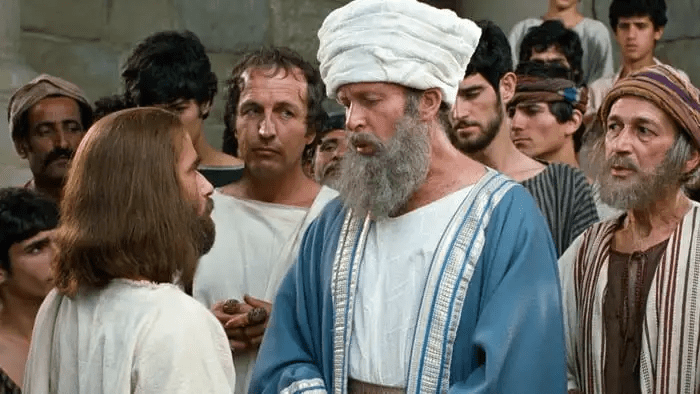
The Gospel of Matthew: Jesus Answers His Enemies.

23 And when he entered the temple, the chief priests and the elders of the people came up to him as he was teaching, and said, “By what authority are you doing these things, and who gave you this authority?” 24 Jesus answered them, “I also will ask you one question, and if you tell me the answer, then I also will tell you by what authority I do these things. 25 The baptism of John, from where did it come? From heaven or from man?” And they discussed it among themselves, saying, “If we say, ‘From heaven,’ he will say to us, ‘Why then did you not believe him?’ 26 But if we say, ‘From man,’ we are afraid of the crowd, for they all hold that John was a prophet.” 27 So they answered Jesus, “We do not know.” And he said to them, “Neither will I tell you by what authority I do these things.” (Matthew 21:23–27 (ESV)

Following Jesus’ cursing of the fruitless fig tree, and His subsequent explanation this represented His judgment upon the fruitless Jewish religious leaders, these same fruitless religious leaders engaged in an acrimonious discussion with the Lord.

Jesus entered the temple and began teaching. Luke recorded Jesus was proclaiming the Gospel (Luke 20:1). The chief priests, the elders and the scribes (Mark 11:27; Luke 20:1) of the Jews approached Jesus and accusingly said, “By what authority are you doing these things, and who gave you this authority?” The religious leaders were not only referring to Jesus teaching, but also His cleansing of the temple (Matt. 21:12-13) and perhaps His triumphant entry into Jerusalem (21:1-11). They did not approve of Jesus doing “these things” and demanded the Lord justify His actions and show His credentials. In their minds, He was guilty of blasphemous sin.

The religious leader’s opposition to the Gospel was conspicuous. Instead of being God’s heralds, and spiritual shepherds of the Lord’s flock, they were His enemies. They followed in the footsteps of their ancestors (Ezekiel 34). They opposed Jesus, but could not deny His miraculous work and authoritative teaching.

In responding to the religious leaders, Jesus asked them a question. He said “I also will ask you one question, and if you tell me the answer, then I also will tell you by what authority I do these things. 25 The baptism of John, from where did it come? From heaven or from man?”

Matthew recorded the religious leaders’ discussion among themselves to Jesus’ statement. “And they discussed it among themselves, saying, “If we say, ‘From heaven,’ he will say to us, ‘Why then did you not believe him?’ 26 But if we say, ‘From man,’ we are afraid of the crowd, for they all hold that John was a prophet.”

“By means of Christ’s question his enemies had been driven into a corner. Obviously they did not want to answer, “The baptism of John had a heavenly source,” for they knew very well that the reply would be, “Why, then, did you not believe him?” On the other hand, were they to come out with what was probably that which most of them believed, or at least wanted to believe, namely, that the baptism of John was from men, the general public—perhaps especially the crowds of pilgrims that had come from Galilee—would become definitely hostile toward them, and might even stone them (Luke 20:6),” states Dr. William Hendriksen.

Therefore, the Jewish leaders said, ““We do not know.” Jesus answered, ““Neither will I tell you by what authority I do these things.”

“Jesus answers with a question of His own, a common practice in rabbinic debate. Using a synecdoche, a figure of speech in which a part (in this case, baptism) is used to represent the whole (John’s ministry), Christ asks His opponents about the authority behind John the Baptist (vv. 24–25). If they call John a prophet, they condemn themselves for not heeding him or Jesus, whom John heralded. But to say John’s authority is from men is to face the crowd’s anger. These cowards do not commit themselves either way (vv. 25–27),” explains Dr. R. C. Sproul.

Dr. John MacArthur writes, “Jesus exposes their own lack of any authority to examine Him. And since they have no standing, Christ has no need to answer them (Matt. 21:27).”

“When we, like the scribes and priests in today’s passage, refuse to submit to the evidence in front of us, we are left with no right to expect further revelation of the truth. Obedience today is the prerequisite for fuller knowledge of the things of God tomorrow,” concludes Dr. Sproul.

Soli deo Gloria!

The Gospel of Matthew: The Dead Fig Trees Speak.

23 And when he entered the temple, the chief priests and the elders of the people came up to him as he was teaching, and said, “By what authority are you doing these things, and who gave you this authority?” 24 Jesus answered them, “I also will ask you one question, and if you tell me the answer, then I also will tell you by what authority I do these things. 25 The baptism of John, from where did it come? From heaven or from man?” And they discussed it among themselves, saying, “If we say, ‘From heaven,’ he will say to us, ‘Why then did you not believe him?’ 26 But if we say, ‘From man,’ we are afraid of the crowd, for they all hold that John was a prophet.” 27 So they answered Jesus, “We do not know.” And he said to them, “Neither will I tell you by what authority I do these things.” (Matthew 21:23–27 (ESV)

Following Jesus’ cursing of the fruitless fig tree, and His subsequent explanation this represented His judgment upon the fruitless Jewish religious leaders, these same fruitless religious leaders engaged in an acrimonious discussion with the Lord.

Jesus entered the temple and began teaching. Luke recorded Jesus was proclaiming the Gospel (Luke 20:1). The chief priests, the elders and the scribes (Mark 11:27; Luke 20:1) of the Jews approached Jesus and accusingly said, “By what authority are you doing these things, and who gave you this authority?” The religious leaders were not only referring to Jesus teaching, but also His cleansing of the temple (Matt. 21:12-13) and perhaps His triumphant entry into Jerusalem (21:1-11). They did not approve of Jesus doing “these things” and demanded the Lord justify His actions and show His credentials. In their minds, He was guilty of blasphemous sin.

“Their question is clear. They want to know by what authority Jesus was doing these things, that is, who had given him this right. They were saying, “Show us your credentials!” It was an attempt to embarrass Jesus. If he admitted that he had no credentials the people could be expected to lose respect for him. On the other hand, if he considered himself authorized to do the things he had been doing, was he not arrogating to himself rights that belonged only to God? Could he not then be accused of being guilty of blasphemous behavior? By not assaulting him directly, for example by having him arrested, they reveal that they are afraid of him because of his following,” explains Dr. William Hendriksen.

The religious leader’s opposition to the Gospel was conspicuous. Instead of being God’s heralds, and spiritual shepherds of the Lord’s flock, they were His enemies. They followed in the footsteps of their ancestors (Ezekiel 34). They opposed Jesus, but could not deny His miraculous work and authoritative teaching.

“They were forced to acknowledge that he had some source of indisputable authority. His miracles were too obvious and too numerous to be fraudulent. Even his teaching was with such force and clarity that it was obvious to all that there was authority in his words (see Matt. 7:29),” states Dr. John MacArthur.

Fruitless spiritual leaders existed then and they exist today. The true test of any pastor, teacher, theologian or evangelist is whether they hold to the truth of God’s Word. Scripture remains the indisputable standard by which to evaluate and discern truth from error.

Soli deo Gloria!

The Gospel of Matthew: Things Unseen.

20 When the disciples saw it, they marveled, saying, “How did the fig tree wither at once?” 21 And Jesus answered them, “Truly, I say to you, if you have faith and do not doubt, you will not only do what has been done to the fig tree, but even if you say to this mountain, ‘Be taken up and thrown into the sea,’ it will happen. 22 And whatever you ask in prayer, you will receive, if you have faith.” (Matthew 21:20–22 (ESV)

2 Corinthians 4:17–18 (ESV) says, “17 For this light momentary affliction is preparing for us an eternal weight of glory beyond all comparison, 18 as we look not to the things that are seen but to the things that are unseen. For the things that are seen are transient, but the things that are unseen are eternal”  

“Endurance is based on a person’s ability to look beyond the physical to the spiritual, beyond the present to the future, and beyond the visible to the invisible. Believers must look past what is temporary—what is perishing (i.e., the things of the world). Pursuing God, Christ, the Holy Spirit, and the souls of men should consume the believer,” explains Dr. John MacArthur.

What has 2 Corinthians 4:17-18 to do with Matthew’s account of Jesus’ cursing of the barren fig tree?  In a word, much!

The disciples did not ask Jesus why He cursed the fig tree. Rather, they asked how the tree immediately withered. Jesus was more concerned with the why, rather than the how.

The fig tree represented the false but seen religion of the Jewish leaders. They appeared righteous, and most everyone saw them as such. However, Jesus looked beyond the seen to the unseen. He knew they bore no righteous fruit (Matt. 7:15-20; John 15:1-11; Gal. 5:16-24). True righteousness is not about the seen, but rather the godly qualities of the unseen Lord of the universe. This is the mark of true and saving faith.

This was why the mountain to which Jesus referred, the temple mount, would figuratively be thrown into the sea. The righteousness the temple represented, the person and work of Jesus Christ, was obscured by the visible trappings of crass merchandise, materialism and greed. It had become like a barren fig tree. This was why Jesus cleansed the temple (Matt. 21:12-13).

“As Jesus returned to Jerusalem, He saw the temple mount. That mountain must be moved, not physically, but spiritually. Faith alone can move the mountain where dead religion flourishes. Jesus cursed a fig tree that represented Israel’s show-without substance temple. They could hurl that into the sea, if they would pray in faith,” explains Dr. R. C. Sproul.

The disciples’’ prayer of trust in, dependence upon, commitment to and a worship of Jesus Christ would be answered on the Day of Pentecost (Acts 2:1-41). Such a prayer continues to be answered today by the Lord when given by His disciples on behalf of the lost. Even when believers in Christ suffer persecution for heralding the good news of the Gospel, we look past the seen to the unseen.

“Let’s not misconstrue the phrase “whatever you ask in prayer” (21:21–22). The Lord hears lawful prayers. The best prayer is for living faith, and dead religion is a great obstacle to it. So disciples should pray in faith that God would remove that obstacle. Indeed God did remove that mountain, so the church could grow,” concludes Dr. Sproul.

Who do you know who is trapped in the throngs of dead religion? Pray the Lord would move this mountain, for His glory and according to His will.

Soli deo Gloria!

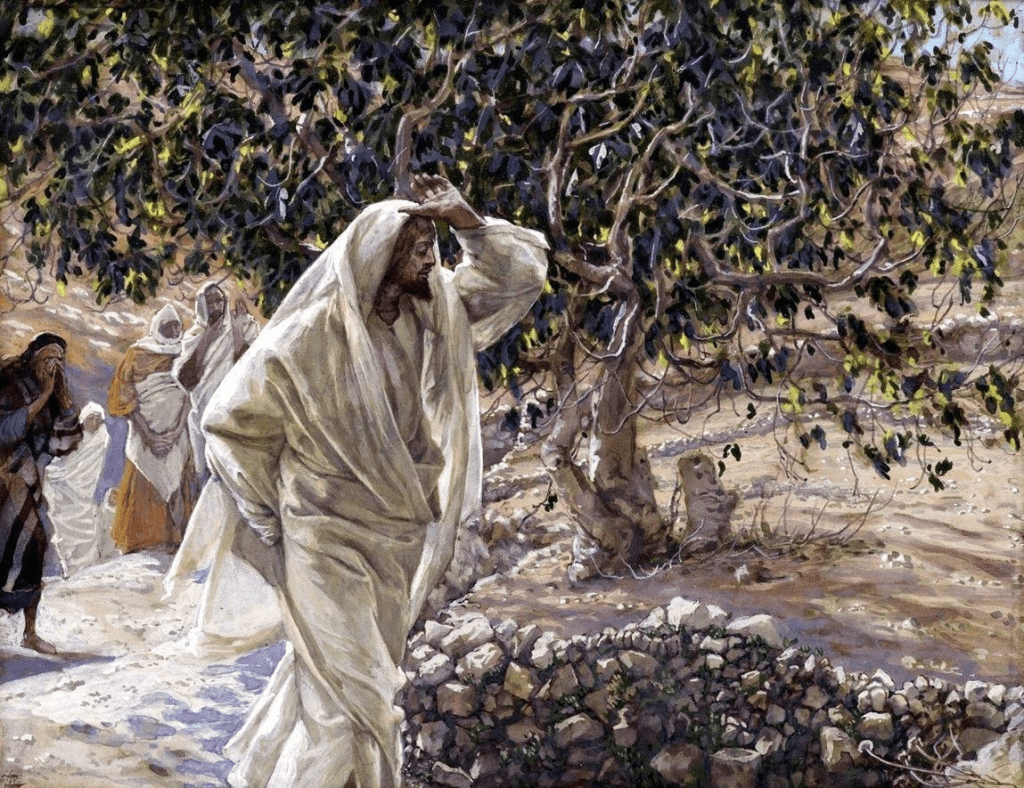
The Gospel of Matthew: The Cursed Fig Tree.

18 In the morning, as he was returning to the city, he became hungry. 19 And seeing a fig tree by the wayside, he went to it and found nothing on it but only leaves. And he said to it, “May no fruit ever come from you again!” And the fig tree withered at once. (Matthew 21:18–19 (ESV)

The Scriptures contain many object lessons of doctrinal truth. Many are direct and easy to understand. Others are more obscure. Today’s text falls into the latter category.

Following the previous day’s events, Jesus returned to Jerusalem from the village of Bethany (Matt. 21:17). Matthew records Jesus was hungry. This was an evidence of Jesus’ humanity. As a man, He needed food while on earth as we do (Luke 24:36-43; John 21:9-14).

It was at this moment the Lord saw a fig tree by the road to the capital city, He went to it, presumably to pick some figs and have something to eat. However, He found there was nothing on the tree except leaves. He then said to the tree, “May no fruit ever come from you again! And the fig tree withered at once.” This was another example of Jesus’ authority over His creation (Matt. 8:23-27).

“Jerusalem was full of visitors during Passover season. By this time of year fig trees near the Mount of Olives would have leaves, but only green fruit with an unpleasant taste appeared this early; edible figs appeared around early June. Often the green fruit would fall off, leaving only leaves,” explains commentator Craig Keener.

Was Jesus upset and angry at the fruitless tree? Was this a display of frustration by the Lord? If so, does this mean becoming frustrated is justified when things don’t happen the way we want? Does the fig tree illustrate believers in Christ? Will the Lord curse us when, or if, we become fruitless in our spiritual walk?

“It is impossible to believe that the curse which the Lord pronounced upon this tree was an act of punishing it, as if the tree as such was responsible for not bearing fruit, and as if, for this reason, Jesus was angry with it. The real explanation lies deeper. The pretentious but barren tree was a fit emblem of Israel. See Luke 13:6–9 (cf. Isa. 5),” explains Dr. William Hendriksen.

“The pretentious fig tree had its counterpart in the temple where on this very day (Monday), as has already been noted, a lively business was being transacted so that sacrifices might be made, while at the same time the priests were plotting to put to death the very One apart from whom these offerings had no meaning whatever. Plenty of leaves but no fruit. Bustling religious (?) activity, but no sincerity and truth. In cursing the fig tree and in cleansing the temple Jesus performed two symbolic and prophetic acts, with one meaning. He was predicting the downfall of unfruitful Israel. Not that he was “through with the Jews,” but that in the place of Israel an international and everlasting kingdom would be established, a nation bringing forth not just leaves but fruits, and gathered from both Jews and Gentiles.”

The doctrine of fruit bearing is a consistent theme throughout the New Testament. It is the mark of a true believer in Jesus Christ. The lack of spiritual fruit does not reveal an individual has lost their salvation in Christ. Rather, it proves they never possessed salvation.

Matthew 3:4–8 (ESV) – “Now John wore a garment of camel’s hair and a leather belt around his waist, and his food was locusts and wild honey. Then Jerusalem and all Judea and all the region about the Jordan were going out to him, and they were baptized by him in the river Jordan, confessing their sins. But when he saw many of the Pharisees and Sadducees coming to his baptism, he said to them, “You brood of vipers! Who warned you to flee from the wrath to come? Bear fruit in keeping with repentance.”

Matthew 7:15–20 (ESV) – 15 Beware of false prophets, who come to you in sheep’s clothing but inwardly are ravenous wolves. 16 You will recognize them by their fruits. Are grapes gathered from thornbushes, or figs from thistles? 17 So, every healthy tree bears good fruit, but the diseased tree bears bad fruit. 18 A healthy tree cannot bear bad fruit, nor can a diseased tree bear good fruit. 19 Every tree that does not bear good fruit is cut down and thrown into the fire. 20 Thus you will recognize them by their fruits.”

John 15:1–8 (ESV) – “I am the true vine, and my Father is the vinedresser. Every branch in me that does not bear fruit he takes away, and every branch that does bear fruit he prunes, that it may bear more fruit. Already you are clean because of the word that I have spoken to you. Abide in me, and I in you. As the branch cannot bear fruit by itself, unless it abides in the vine, neither can you, unless you abide in me. I am the vine; you are the branches. Whoever abides in me and I in him, he it is that bears much fruit, for apart from me you can do nothing. If anyone does not abide in me he is thrown away like a branch and withers; and the branches are gathered, thrown into the fire, and burned. If you abide in me, and my words abide in you, ask whatever you wish, and it will be done for you. By this my Father is glorified, that you bear much fruit and so prove to be my disciples.”

Galatians 5:22–23 (ESV) – 22 But the fruit of the Spirit is love, joy, peace, patience, kindness, goodness, faithfulness, 23 gentleness, self-control; against such things there is no law.”

May the fruit of the Spirit within us be seen be others today. Have a blessed day in the Lord.

Soli deo Gloria!

The Gospel of Matthew: From the Mouths of Children.

14 And the blind and the lame came to him in the temple, and he healed them. 15 But when the chief priests and the scribes saw the wonderful things that he did, and the children crying out in the temple, “Hosanna to the Son of David!” they were indignant, 16 and they said to him, “Do you hear what these are saying?” And Jesus said to them, “Yes; have you never read, “‘Out of the mouth of infants and nursing babies you have prepared praise’?” 17 And leaving them, he went out of the city to Bethany and lodged there.” (Matthew 21:14–17 (ESV)

Immediately following Jesus cleansing the temple, the blind and the lame came to Him while He was in the temple court. This would refer to the area known as the Court of the Gentiles. Jesus healed these people of their maladies. It was a joyous moment. Children began crying out in the temple the same words the people said while Jesus entered Jerusalem; “Hosanna to the Son of David!”

“What a scene! While some people are expelled, others are welcomed. Jesus has not changed any. He is still the Good Shepherd. So, when the blind and the lame come to him right here, in the temple, his eyes, a moment ago flashing with the fire of holy indignation, fill with tender compassion. He did not say, “Come back some other time. I am not now in the mood for healing you.” On the contrary, the Great Physician is standing there in the midst of overturned tables, scattered coins, and knocked down benches, manifesting his healing power and marvelous compassion to those in need. None of those who came to him went away disappointed,” comments Dr. William Hendriksen.

Contrasting the joy of the healed and the praise of the children, were the indignant chief priests and scribes. To be indignant (ἠγανάκτησαν; eganaktesan) means to be angry. The religious leaders were passionately and actively incensed at the wonderful things happening in the temple. This was in stark contrast to their own graft and greed in the same location (Matt. 21:12-13).

They said to Jesus, ““Do you hear what these are saying?” You can sense the tone of their indignant words to the Lord. The religious leaders angrily condemn the compassion of the Lord and the praise of the children. They don’t want the infirm in the temple. They don’t want children in the temple. Finally, they don’t want Jesus in the temple. They embody the words of Isaiah the prophet: “Woe to those who call evil good and good evil, who put darkness for light and light for darkness, who put bitter for sweet and sweet for bitter!” (Isaiah 5:20 ESV)

And Jesus said to them, “Yes; have you never read, “‘Out of the mouth of infants and nursing babies you have prepared praise’?” 17 And leaving them, he went out of the city to Bethany and lodged there.” The Lord quoted from Psalm 8:2 in showing how the presumed weakness of children silenced the presumed strength of the religious leaders.

“What irked them at this particular moment was the following combination of facts: a. the cleansing of the temple; b. the miracles performed on the blind and the lame; and last but not least, c. the shouting of the children, repeating yesterday’s joyful outburst by their parents, etc., “Hosanna to the Son of David.” Was not this blasphemy? And that right here in the temple! That they, these very enemies of Jesus, were themselves guilty of blasphemy because of the desecration of the temple which they had allowed and to some extent even encouraged, and because of the murderous design in their hearts against him, they did not acknowledge. But these children must be stopped! What they are doing is terrible, and even more reprehensible is the fact that Jesus is allowing this to continue,” explains Dr. Hendriksen.

Following this exchange, Jesus left the temple and went to the city of Bethany. This was a small village 1.5 miles east of Jerusalem. It was here where Jesus stayed.

Matthew Henry writes, “Proud men cannot bear that honor should be done to any but to themselves, and are uneasy at nothing more than at the just praises of deserving men.”

Soli deo Gloria!

The Gospel of Matthew: Praise from the Sick and Weak.

14 And the blind and the lame came to him in the temple, and he healed them. 15 But when the chief priests and the scribes saw the wonderful things that he did, and the children crying out in the temple, “Hosanna to the Son of David!” they were indignant, 16 and they said to him, “Do you hear what these are saying?” And Jesus said to them, “Yes; have you never read, “‘Out of the mouth of infants and nursing babies you have prepared praise’?” 17 And leaving them, he went out of the city to Bethany and lodged there.” (Matthew 21:14–17 (ESV)

Immediately following Jesus cleansing the temple, the blind and the lame came to Him while He was in the temple court. This would refer to the area known as the Court of the Gentiles. Jesus healed these people of their maladies. It was a joyous moment. Children began crying out in the temple the same words the people said while Jesus entered Jerusalem; “Hosanna to the Son of David!”

“What a scene! While some people are expelled, others are welcomed. Jesus has not changed any. He is still the Good Shepherd. So, when the blind and the lame come to him right here, in the temple, his eyes, a moment ago flashing with the fire of holy indignation, fill with tender compassion. He did not say, “Come back some other time. I am not now in the mood for healing you.” On the contrary, the Great Physician is standing there in the midst of overturned tables, scattered coins, and knocked down benches, manifesting his healing power and marvelous compassion to those in need. None of those who came to him went away disappointed,” comments Dr. William Hendriksen.

Contrasting the joy of the healed and the praise of the children, were the indignant chief priests and scribes. To be indignant (ἠγανάκτησαν; eganaktesan) means to be angry. The religious leaders were passionately and actively incensed at the wonderful things happening in the temple. This was in stark contrast to their own graft and greed in the same location (Matt. 21:12-13).

They said to Jesus, ““Do you hear what these are saying?” You can sense the tone of their indignant words to the Lord. The religious leaders angrily condemn the compassion of the Lord and the praise of the children. They don’t want the infirm in the temple. They don’t want children in the temple. Finally, they don’t want Jesus in the temple. They embody the words of Isaiah the prophet: “Woe to those who call evil good and good evil, who put darkness for light and light for darkness, who put bitter for sweet and sweet for bitter!” (Isaiah 5:20 ESV)

And Jesus said to them, “Yes; have you never read, “‘Out of the mouth of infants and nursing babies you have prepared praise’?” 17 And leaving them, he went out of the city to Bethany and lodged there.” The Lord quoted from Psalm 8:2 in showing how the presumed weakness of children silenced the presumed strength of the religious leaders.

“What irked them at this particular moment was the following combination of facts: a. the cleansing of the temple; b. the miracles performed on the blind and the lame; and last but not least, c. the shouting of the children, repeating yesterday’s joyful outburst by their parents, etc., “Hosanna to the Son of David.” Was not this blasphemy? And that right here in the temple! That they, these very enemies of Jesus, were themselves guilty of blasphemy because of the desecration of the temple which they had allowed and to some extent even encouraged, and because of the murderous design in their hearts against him, they did not acknowledge. But these children must be stopped! What they are doing is terrible, and even more reprehensible is the fact that Jesus is allowing this to continue,” explains Dr. Hendriksen.

Following this exchange, Jesus left the temple and went to the city of Bethany. This was a small village 1.5 miles east of Jerusalem. It was here where Jesus stayed.

Matthew Henry writes, “Proud men cannot bear that honor should be done to any but to themselves, and are uneasy at nothing more than at the just praises of deserving men.”

Soli deo Gloria!

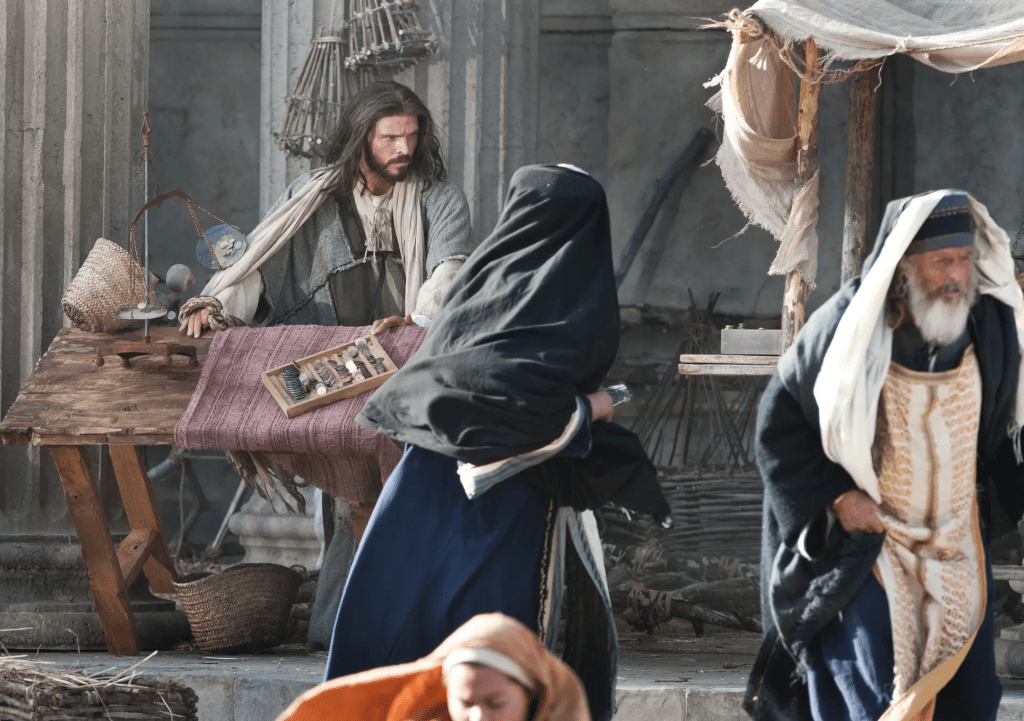
The Gospel of Matthew: Jesus Cleanses the Temple.

12 And Jesus entered the temple and drove out all who sold and bought in the temple, and he overturned the tables of the money-changers and the seats of those who sold pigeons. 13 He said to them, “It is written, ‘My house shall be called a house of prayer,’ but you make it a den of robbers.” (Matthew 21:12–13 ESV)

Jewish expectations of Messiah’s arrival were huge after Jesus came into Jerusalem on a donkey (Matt. 21:1–11). The people expected the Lord to begin driving out Rome from Israel. His next action contributed to this idea.

Matthew recounts Jesus cleansing the Jerusalem Temple a second time. John 2:13-22 records an earlier cleansing in the Lord’s ministry. Both incidents depict a public purging of the crass commercialism associated with the worship of God by the Jewish religious leaders.

Herod the Great (72 BC – 4 BC) administrated many building projects in Israel when he served as a vassal king for the Roman government. Of all his constructions, none were greater than the temple in Jerusalem. This was located at what is now called the Temple Mount; an area of approximately thirty-five acres.

Only the Jewish priests could enter the temple itself. It was surrounded by three courts: (1) Jewish men could enter the court closest to the temple. (2) Both Jewish men and women could occupy the next court. (3) The Court of the Gentiles, located furthest from the temple structure, was the closest any non-Jew could get to the sanctuary.

“From around the world, first-century Jews came to the temple at Passover to sacrifice to the Lord (Ex. 12:1–28Lev. 23:4–8). It was impractical to bring sacrificial animals long distances; so, they were available in Jerusalem — for a price,” explains Dr. R. C. Sproul.

Jesus drove out those who not only sold but also bought in the temple area. He then overturned the tables of the moneychangers and those who sold pigeons. When He did so, He quoted Isaiah 56:7 and Jeremiah 7:11 in referring to what the temple should be, a house of prayer, in contrast to what it became, a den of robbers.

“He regarded both merchants and customers guilty of desecrating the temple. Items being bought and sold included “pigeons” and other animals for sacrifice (cf. John 2:14). Currency-exchange agents, present in droves, were needed because Roman coins and other forms of currency were deemed unacceptable for temple offerings. Evidently, both merchants and money-changers were charging such excessive rates that the temple marketplace took on the atmosphere of a thieves’ den (Matt. 21:13). This kind of commerce took place in the court of the Gentiles, a large area covering several acres on the temple mount,” states Dr. John MacArthur.

I wonder how this compares to the commercialization of Christianity by religious marketers? Often in the mail, I receive a magazine containing all sorts of mementoes, figurines, wall-hangings, bookmarks, t-shirts, sweatshirts, hoodies and hats advertising all manner of so-called Christian slogans. All are available for a price. It’s troubling to see the Gospel so closely associated with American capitalism.

“Our Redeemer’s cleansing of the temple at the very least illustrates how concerned He is with the purity of worship. Our corporate praise and prayer is something that is always in need of reformation, for it is easy for anti-Christian practices to slip in unnoticed. Consider the importance of pure worship from a devoted heart and make it your aim to show reverence and awe when you praise the Lord alongside His people,” concludes Dr. Sproul.

Soli deo Gloria!