The Gospel of Matthew: Paying Taxes to Caesar.

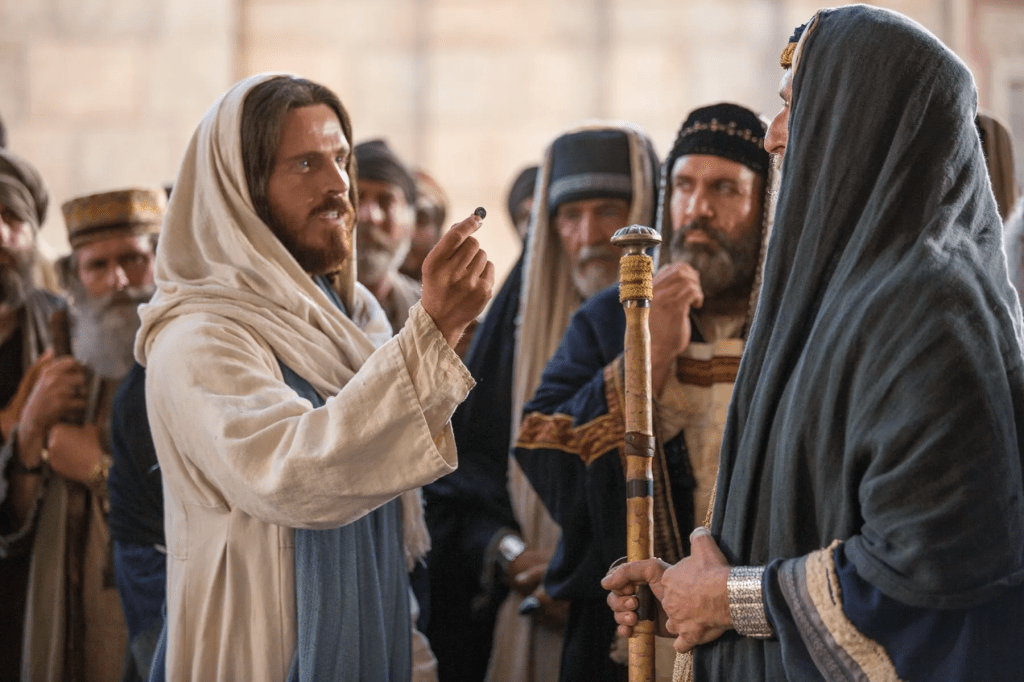
15 Then the Pharisees went and plotted how to entangle him in his words. 16 And they sent their disciples to him, along with the Herodians, saying, “Teacher, we know that you are true and teach the way of God truthfully, and you do not care about anyone’s opinion, for you are not swayed by appearances. 17 Tell us, then, what you think. Is it lawful to pay taxes to Caesar, or not?” (Matthew 22:15–17 ESV)

Jesus did not just have opposition from the Jewish priests and scribes (Matt. 21:23), but also from the Pharisees and the Herodians. It is wise to review exactly who these people groups were.

The Pharisees were a conservative religious sect originating during the intertestamental period between the prophet Malachi and the beginning of the New Testament. The Pharisees were extremely influential among the common people of Israel. We have previously seen, in Matthew 15:1-9, the Pharisees equated human and oral traditions equal in authority to the Word of God.

In contrast, the Herodians were a political group rather than religious. They had affiliations with the Herod’s but also associated with the Sadducees. The Herodians were the aristocrats of Israel.

Both groups sought to entangle Jesus in what He said. To entangle (παγιδεύσωσιν; pagideusosin) means to entrap or to catch off guard. Therefore, the Pharisees sent their disciples, along with the Herodians, to use Jesus’ words against Him. They do so by asking Jesus a question.

“Teacher, we know that you are true and teach the way of God truthfully, and you do not care about anyone’s opinion, for you are not swayed by appearances.Tell us, then, what you think. Is it lawful to pay taxes to Caesar, or not?”

“What a strange combination: a. Pharisees, who were—or made believe that they were—very concerned about keeping God’s law, and b. partisans of the Herod family, who cared very little about the divine commandments. These two groups unite against Jesus,” states Dr. William Hendriksen.

You have to wonder if they really believed their opening statement to the Lord or were simply flattering Him. If they understood Jesus was true and taught the way of God truthfully, then why would they want to entrap and kill Him? Ironically, they sought to destroy the Lord because He was true and spoke truth, while they were liars and followers of the devil (John 8). Nevertheless, they asked Jesus whether it was appropriate to pay taxes to Caesar; the Roman government.

“Pompey, a famous general during the last years of the Roman republic, brought the territory of Palestine under Rome’s control in 63 BC when his support allowed one side in a Jewish civil war to gain victory. From that point on, Israel ceased to be an independent kingdom and was ruled by client kings — like Herod the Great — who were loyal to the Caesar. In 6 AD, Rome began to rule directly that part of Palestine known as Judea through governors, or procurators. With this rule came also a yearly poll tax of one denarius, the normal daily wage, which was levied on every adult from puberty to age sixty-five. Most Jews loathed the poll tax because it symbolized Rome’s control of Judea,” explains Dr. R. C. Sproul.

No one likes to pay taxes. What is true now was true within the historical context of today’s text. What is equally true, then and now, is people will ask all sorts of questions to deflect from the one core question that needs to asked and answered. The core question is “What must I do to be saved” (Acts 16:30)? The answer, then and now, is “Believe in the Lord Jesus and you will be saved” (Acts 16:31).

More to come.

Soli deo Gloria!
The Gospel of Matthew: The Wedding Crasher.  

11 “But when the king came in to look at the guests, he saw there a man who had no wedding garment. 12 And he said to him, ‘Friend, how did you get in here without a wedding garment?’ And he was speechless. 13 Then the king said to the attendants, ‘Bind him hand and foot and cast him into the outer darkness. In that place there will be weeping and gnashing of teeth.’ 14 For many are called, but few are chosen.” (Matthew 22:11–14 (ESV)

As today’s text reveals, Jesus was not quite done with The Parable of the Wedding Feast. There remained an epilogue. An epilogue is a conclusion or a postscript. In other words, Jesus had more to say in His object lesson to the Jewish religious leaders (Matt. 21:23).

After the wedding hall was filled with invited guests (Matt. 22:10), the king came to look at the guests. Remember, these people were not the ones originally invited and who refused to attend (22:1-8). Rather, they were strangers who the king’s servants found on the roads and invited at the monarch’s request. Some were bad and some were good.

When the king arrived, he saw a man who had no wedding garment. He asked the individual, “‘Friend, how did you get in here without a wedding garment?’ The man in question remained speechless. What was the significance of wedding guests wearing wedding garments?

“When the first invitees turn down their summons to the king’s feast, others, bad and good, come to the table (Matt. 22:10). Does this mean that God’s banquet will include the profoundly wicked who finally trusted Christ as well as those who, though upright by human standards, saw their lack of perfection and served Jesus? Or, are the “bad” guests those who profess faith falsely, the poor fish who in Matthew 13:47–50 dwell among the good until the end,” asks Dr. R. C. Sproul?

“The first interpretation is certainly biblical, but the concluding verses of the parable of the tenants (22:11–14) favor the latter option. Ancient kings often provided the proper attire to the guests at their feasts,” as Dr. John MacArthur notes. “This second group of invitees has need of appropriate clothing, for they are found on the street unprepared to attend a wedding banquet. Therefore, the ejected man’s “lack of a proper garment indicates that he has purposely rejected the king’s own gracious provision.”

Jesus then stated what the king decided to do. ‘Bind him hand and foot and cast him into the outer darkness. In that place there will be weeping and gnashing of teeth.’ 14 For many are called, but few are chosen.”

“The call spoken of here is sometimes referred to as the “general call” (or the “external” call)—a summons to repentance and faith that is inherent in the gospel message. This call extends to all who hear the gospel. “Many” hear it; “few” respond (see the many-few comparison in 7:13–14).,” explains Dr. MacArthur.

“Those who respond are the “chosen,” the elect. In the Pauline writings, the word “call” usually refers to God’s irresistible calling extended to the elect alone (Rom. 8:30)—known as the “effectual call” (or the “internal” call). The effectual call is the supernatural drawing of God that Jesus speaks of in John 6:44. Here a general call is in view, and this call extends to all who hear the gospel—this call is the great “whoever will” of the gospel (cf. Rev. 22:17). Here, then, is the proper balance between human responsibility and divine sovereignty: the “called” who reject the invitation do so willingly, and therefore their exclusion from the kingdom is perfectly just. The “chosen” enter the kingdom only because of the grace of God in choosing and drawing them.”

“This parable teaches us about justification — God’s crediting of His Son’s perfect righteousness to our record through faith alone (Rom. 3:21–26). Yet justifying faith is active, demonstrating itself in good deeds (James 2:14–26; WCF, 11.2). We must distinguish justification, the only way we can stand before the Creator, from sanctification — our working out of salvation by serving others and becoming more like Jesus (Phil. 2:12–13). Still, justification and sanctification are inseparable, and we cannot have one without the other,” states Dr. Sproul. See Zachariah 3:1-5; 2 Cor. 5:21.

Have you received the imputed righteousness of Christ (Romans 3:21-26; 4:1-25)? Are you dressed in His righteousness alone, faultless to stand before the throne? Are you evidencing this righteousness by a holy life?

My hope is built on nothing less
Than Jesus’ blood and righteousness
I dare not trust the sweetest frame
But wholly lean on Jesus’ Name.

On Christ the solid Rock I stand
All other ground is sinking sand
All other ground is sinking sand.

When darkness seems to hide His face
I rest on His unchanging grace
In every high and stormy gale
My anchor holds within the veil.

On Christ the solid Rock I stand
All other ground is sinking sand
All other ground is sinking sand.

His oath, His covenant, His blood
Support me in the whelming flood
When all around my soul gives way
He then is all my Hope and Stay.

On Christ the solid Rock I stand
All other ground is sinking sand
All other ground is sinking sand.

When He shall come with trumpet sound
Oh may I then in Him be found
Dressed in His righteousness alone
Faultless to stand before the throne.

On Christ the solid Rock I stand
All other ground is sinking sand
All other ground is sinking sand.

Soli deo Gloria!

The Gospel of Matthew: The Parable of the Wedding Feast. Part 2.

But they paid no attention and went off, one to his farm, another to his business, while the rest seized his servants, treated them shamefully, and killed them. The king was angry, and he sent his troops and destroyed those murderers and burned their city. Then he said to his servants, ‘The wedding feast is ready, but those invited were not worthy. Go therefore to the main roads and invite to the wedding feast as many as you find.’ 10 And those servants went out into the roads and gathered all whom they found, both bad and good. So the wedding hall was filled with guests.” Matthew 22:5–10 (ESV)

No one wants to be ignored. No one likes being rejected. “I shut down after being ignored, rejected, dismissed, or insulted. I don’t even speak. I just immediately shut down and go mute. It’s so weird,” writes one individual.

Imagine you sent invitations to your daughter’s upcoming wedding. You provide them ample time to plan to attend. It is understandable some people may have scheduling conflicts and are unable to come. They send you their regrets. This happens all the time.

However, how would you feel if everyone on your guest list of family and friends ignored the invitation and did not even respond but went about their busy lives? Not only would this affect your plans and preparation for the wedding and reception, but you would be deeply hurt. I wonder how your daughter would feel.

Jesus said a king gave a wedding feast for his son, the prince. He sent his servants to call the invited guests to attend. However, they would not come. He sent even more servants to announce to the invitees the feast was ready. All the king wanted was for his invited guests to come and enjoy the celebration (Matt. 22:1-4).

Yet they would not come. Today’s text says they paid no attention. They did not respond. They neglected, disregarded and ignored not only the invitation but the good and gracious king. Some went about their lives and businesses. Others reacted by seizing the king’s servants, mistreating them and killing them. Such behavior is totally reprehensible.

The king became angry and took appropriate action. He sent his troops, destroyed the murderers and burned their city. By this time, it should be clear the king is none other than the LORD God. His servants are His prophets, priests, and godly rulers like David. The invited guests who not only reject the servants, but ultimately the King, is Israel.

“The fact that persecution of God’s messengers had already occurred, was actually taking place, and was going to be the order of the day also during the years immediately following is clear from several passages. What had been the reaction of many, especially of the leaders, to John the Baptist? See Matt. 3:7–9; 11:18, 19; 21:25. What was—and was going to be—their attitude to Jesus?” states Dr. William Hendriksen. See Matt. 12:24; 16:21; 20:18; 21:38, 39; 27:20, 22; John 1:5–11; 5:18; 6:66. And to the disciples?” See Matt. 10:16, 22, 25; John 16:33; Acts 4:3; 7:58–60; 8:1; 12:1–3.

“It appears that the invited guests had a city of their own. It is clear that the reference is to Jerusalem. Its destruction (a.d. 70) is here clearly predicted. See also 21:40–43; 23:37, 38; 24:1, 2, 15 ff; Luke 19:41–44. As to the fulfilment, Jerusalem was taken by Titus, son of the emperor Vespasian (a.d. 69–79). The temple was destroyed. It is believed that more than a million Jews, who had crowded into the city, perished. As a political unit Israel ceased to exist. As a nation specially favored by the Lord it had reached the end of the road even long before the beginning of the Jewish War.”

However, Jesus was not finished with His parable. He concluded by saying the king then did the unexpected. He said to his servants, “The wedding feast is ready, but those invited were not worthy. Go therefore to the main roads and invite to the wedding feast as many as you find.”

The servants did what their king commanded. They went out into the roads and gathered all they found, both bad and good. So the wedding hall was filled with guests.

“God, the king in today’s passage, sends His servants the prophets to call His people to come to a feast for His Son (vv. 2–3). Actually, the servants go first to those who once told the king they would be at the party. Two invitations customarily went forth for parties in the ancient Near East. The first one did not list the time and place of the event, it only demanded a response of “Yes, I am coming” or “I cannot make it.” A second invitation then finalized the day and hour. At Sinai, the Almighty invited the Israelites to His banquet (the first invite), and they accepted without knowing when it would be (Ex. 24:1–11). Yet when God sent prophets to announce the day of the Lord and the messianic feast (the second invitation), many Israelites turned down the party (Luke 19:41–44),” explains Dr. R. C. Sproul.

“So the Lord calls on those who have received no invitation — those outside God’s covenant with Israel (vv. 9–10). These foreigners accept the invitation gladly and join those Israelites who are true to Yahweh at the Lamb’s marriage feast (Rev. 19:6–10).”

Have you received your invitation to the wedding feast? What is your response to the King of kings and Lord of lords and His gracious invitation to receive eternal life from Him alone by grace alone, through faith alone, in the person and work of Jesus Christ alone? The invitation is sent. How will you respond?

Soli deo Gloria!

The Gospel of Matthew: The Parable of the Wedding Feast.

And again Jesus spoke to them in parables, saying, “The kingdom of heaven may be compared to a king who gave a wedding feast for his son, and sent his servants to call those who were invited to the wedding feast, but they would not come. Again he sent other servants, saying, ‘Tell those who are invited, “See, I have prepared my dinner, my oxen and my fat calves have been slaughtered, and everything is ready. Come to the wedding feast. But they paid no attention.”  (Matthew 22:1–5a (ESV)

“An understanding of parables is essential if one is to understand the teaching of Jesus, since the parables make up approximately 35 percent of his recorded sayings. At no point are the vitality, relevance, and appropriateness of his teaching so clear as they are in his parables. While the parable form is not unique to Jesus, he was certainly a master at using parables as a way of teaching. The parables are not merely illustrations for Jesus’ preaching; they are the preaching, at least to a great extent. Nor are they simple stories; they have been truly described as both “works of art” and “weapons of warfare.” –Tyndale bible Dictionary

The Oxford Dictionary defines a parable as “a simple story used to illustrate a moral or spiritual lesson, as told by Jesus in the Gospels.”

For the third time in the same context and to the same audience, Jesus taught a parable. The first was about two sons (Matt. 21:28-32). The second was about ungodly tenants of a vineyard (21:33-46). This third one concerned a wedding feast a king gave for his son. Jesus compared the kingdom of heaven to such an event.

A wedding feast in the ancient Jewish culture was a major event. It was often a weeklong celebration. Additionally, today’s text states this was a royal wedding feast.

“In parables rabbis often compared God to a king, whose son represented Israel; the setting was also often a wedding feast for the son. Wedding feasts were frequently large gatherings; a very wealthy person could invite an entire city to one. Coming to a wedding feast required some commitment of valuable time on the part of guests (Jewish hearers would assume a feast lasting seven days, and a king would expect his guests to remain throughout the feast); this commitment would be difficult for peasants working the land. But the honor of being invited by a king—and the terror of displeasing him—would have motivated intelligent invitees to attend. The invited guests may have been aristocratic landowners anyway (22:5), who had the leisure for such activities,” explains commentator Craig Keener.

Appropriately, the king sent his servants announcing the wedding feat for his son to all the invitees. This was, as is the case today, a preliminary invitation announcing the date, time and place for the celebration. This gave ample time for the invited guests to plan to attend. Such an invitation would be a great honor.

It was at this point the story significantly shifts. Jesus said the invited guests would not come. No reasons were given. Seemingly, no apologies were made. Imagine how you would feel if you invited family and friends to your child’s wedding and no one said they were coming. It would be devastating. You would be hurt.

Dismissing any embarrassment, the king invited his wedding guests a second time saying, “See, I have prepared my dinner, my oxen and my fat calves have been slaughtered, and everything is ready. Come to the wedding feast. But they paid no attention.”

Who wouldn’t want to attend the wedding and the accompanying feast and festivities. It would be a weeklong holiday. It would how honor to the king and appreciation for his gracious invitation. It’s not as if the bridal party were lacking for wedding gifts. They were a royal couple. No expense was spared.

“These verses strongly remind one of the parable of The Wicked Tenants. In both parables the patience and persistence shown by the Sender is stressed,” explains Dr. William Hendriksen.

“This marvelous longsuffering of “the king,” in the present parable, reveals itself in the fact that a. he first issues a “call” or general invitation; b. then he sends servants earnestly summoning the invited ones to come; and c. when the latter are unwilling to come he sends other servants, instructing them to present an even more urgent, moving appeal: all things are now ready, and there is no lack of food: butchered steers and fatted cattle.”

“According to God’s plan (Matt.13:10–17), impenitent sinners harden their hearts further as they listen to the story about the wedding feast in Matthew 22:1–10 (v. 15), but those who have open ears hear again the grace revealed in Christ’s teaching about the expansion of God’s kingdom,” explains Dr. R. C. Sproul.

Soli deo Gloria!

The Gospel of Matthew: The Parable of the Tenants. Conclusion.

43 Therefore I tell you, the kingdom of God will be taken away from you and given to a people producing its fruits. 44 And the one who falls on this stone will be broken to pieces; and when it falls on anyone, it will crush him.”  45 When the chief priests and the Pharisees heard his parables, they perceived that he was speaking about them. 46 And although they were seeking to arrest him, they feared the crowds, because they held him to be a prophet.” (Matthew 21:43–46 (ESV)

Following His initial question to the religious leaders (Matt. 21:40-42), Jesus brings the full weight of the parables’ application to bear. It was a statement of judgment, blessing and promised truth. 

The judgment was the chief priests and the elders would lost the kingdom of God (Matt. 21:23). They would experience the reality of the Lord’s judgment. Their self-righteousness would be seen for what it was; filthy rags (Isaiah 64:6).

The blessing was the Lord would give the kingdom to a people producing fruits of true conversion (Gal. 5:16-26). These kingdom citizens would not only be Jews but also Gentiles. In other words, the Lord would create the church (Eph. 2:11-22).

The promise was the kingdom would not be moved or overthrown by the self-righteousness of a man-made works-based salvation. The kingdom would be a like a gigantic stone.

“Christ is “a stone to strike and a rock to stumble over” to unbelievers (Isa. 8:141 Pet. 2:9). And the prophet Daniel pictured him as a great stone “cut from a mountain by no human hand,” which falls on the kingdoms of the world and crushes them (Dan. 2:44–45). Whether a ceramic vessel “falls on” a rock, or the rock “falls” on the vessel, the result is the same. The saying suggests that both enmity and apathy are wrong responses to Christ, and those guilty of either are in danger of judgment,” explains Dr. John MacArthur.

Matthew recorded the enmity of the religious leaders towards Jesus. They understood He was speaking about them. Their wanted to arrest Jesus. Being cowards, they refrained because they were afraid of the people who regarded Jesus a prophet of God.

“In fulfillment of Psalm 118:22, the rejected Son is the “cornerstone” — the stone at the corner that joins two walls together. By combining the prophecies of Isaiah 8:14 and Daniel 2:34, 44, Jesus claims to be, as the founder of God’s kingdom on earth, the Lord over all earthly kingdoms. As the “stone,” He will crush all opposition to the kingdom of God. (Matt. 21:42–44),” states Dr. R. C. Sproul.

Psalm 2 (ESV) – “Why do the nations rage and the peoples plot in vain? The kings of the earth set themselves, and the rulers take counsel together, against the Lord and against his Anointed, saying, “Let us burst their bonds apart and cast away their cords from us.” He who sits in the heavens laughs; the Lord holds them in derision. Then he will speak to them in his wrath, and terrify them in his fury, saying, “As for me, I have set my King on Zion, my holy hill.” 7I will tell of the decree: The Lord said to me, “You are my Son; today I have begotten you. Ask of me, and I will make the nations your heritage, and the ends of the earth your possession. You shall break them with a rod of iron and dash them in pieces like a potter’s vessel.” 10 Now therefore, O kings, be wise; be warned, O rulers of the earth. 11 Serve the Lord with fear, and rejoice with trembling. 12 Kiss the Son, lest he be angry, and you perish in the way, for his wrath is quickly kindled. Blessed are all who take refuge in him.”

Soli deo Gloria! 

The Gospel of Matthew: The Parable of the Tenants. Conclusion.

43 Therefore I tell you, the kingdom of God will be taken away from you and given to a people producing its fruits. 44 And the one who falls on this stone will be broken to pieces; and when it falls on anyone, it will crush him.”  45 When the chief priests and the Pharisees heard his parables, they perceived that he was speaking about them. 46 And although they were seeking to arrest him, they feared the crowds, because they held him to be a prophet.” (Matthew 21:43–46 (ESV)

Following His initial question to the religious leaders (Matt. 21:40-42), Jesus brings the full weight of the parables’ application to bear. It was a statement of judgment, blessing and promised truth. 

The judgment was the chief priests and the elders would lost the kingdom of God (Matt. 21:23). They would experience the reality of the Lord’s judgment. Their self-righteousness would be seen for what it was; filthy rags (Isaiah 64:6).

The blessing was the Lord would give the kingdom to a people producing fruits of true conversion (Gal. 5:16-26). These kingdom citizens would not only be Jews but also Gentiles. In other words, the Lord would create the church (Eph. 2:11-22).

The promise was the kingdom would not be moved or overthrown by the self-righteousness of a man-made works-based salvation. The kingdom would be a like a gigantic stone.

“Christ is “a stone to strike and a rock to stumble over” to unbelievers (Isa. 8:141 Pet. 2:9). And the prophet Daniel pictured him as a great stone “cut from a mountain by no human hand,” which falls on the kingdoms of the world and crushes them (Dan. 2:44–45). Whether a ceramic vessel “falls on” a rock, or the rock “falls” on the vessel, the result is the same. The saying suggests that both enmity and apathy are wrong responses to Christ, and those guilty of either are in danger of judgment,” explains Dr. John MacArthur.

Matthew recorded the enmity of the religious leaders towards Jesus. They understood He was speaking about them. Their wanted to arrest Jesus. Being cowards, they refrained because they were afraid of the people who regarded Jesus a prophet of God.

“In fulfillment of Psalm 118:22, the rejected Son is the “cornerstone” — the stone at the corner that joins two walls together. By combining the prophecies of Isaiah 8:14 and Daniel 2:34, 44, Jesus claims to be, as the founder of God’s kingdom on earth, the Lord over all earthly kingdoms. As the “stone,” He will crush all opposition to the kingdom of God. (Matt. 21:42–44),” states Dr. R. C. Sproul.

Psalm 2 (ESV) – “Why do the nations rage and the peoples plot in vain? The kings of the earth set themselves, and the rulers take counsel together, against the Lord and against his Anointed, saying, “Let us burst their bonds apart and cast away their cords from us.” He who sits in the heavens laughs; the Lord holds them in derision. Then he will speak to them in his wrath, and terrify them in his fury, saying, “As for me, I have set my King on Zion, my holy hill.” 7I will tell of the decree: The Lord said to me, “You are my Son; today I have begotten you. Ask of me, and I will make the nations your heritage, and the ends of the earth your possession. You shall break them with a rod of iron and dash them in pieces like a potter’s vessel.” 10 Now therefore, O kings, be wise; be warned, O rulers of the earth. 11 Serve the Lord with fear, and rejoice with trembling. 12 Kiss the Son, lest he be angry, and you perish in the way, for his wrath is quickly kindled. Blessed are all who take refuge in him.”

Soli deo Gloria! 

The Gospel of Matthew: The Parable of the Tenants. Part Three.

40 When therefore the owner of the vineyard comes, what will he do to those tenants?” 41 They said to him, “He will put those wretches to a miserable death and let out the vineyard to other tenants who will give him the fruits in their seasons.” 42 Jesus said to them, “Have you never read in the Scriptures: “ ‘The stone that the builders rejected has become the cornerstone; this was the Lord’s doing, and it is marvelous in our eyes’?” (Matthew 21:40-42 ESV)

Following His parabolic teaching, Jesus then asked the Jewish religious leaders a question: “When therefore the owner of the vineyard comes, what will he do to those tenants?” The answer seemed to be obvious but the Lord wanted the chief priests and the elders of the people to verbalize their response.

They said to Jesus, ““He will put those wretches to a miserable death and let out the vineyard to other tenants who will give him the fruits in their seasons.” The religious leaders’ response two-fold.

First, they wanted the master of the house who owned the vineyard to punish the tenants with a miserable and severe death. No punishment would be unjust. Second, they reasoned the master should then lease the vineyard to other tenants who would provide him with the justifiable first fruits of the harvest.

“In typical rabbinical fashion, Jesus led His hearers to finish the story themselves. They no doubt were highly pleased with this unusual opportunity to parade their self-righteousness before Jesus. They rightly assessed the proper ending of the parable, that the irate owner would first severely punish the wicked growers and then replace them with others who were reliable. They were completely unaware that, as they fed their pride on Jesus’ baited question, they sprang the trap of their own condemnation,” explains Dr. John MacArthur.

Jesus, referencing Psalm 118:22-23, said, “Have you never read in the Scriptures: ‘The stone that the builders rejected has become the cornerstone; this was the Lord’s doing, and it is marvelous in our eyes’?”

“Clearly, the parable is based on Isaiah 5:1–7; thus, the vineyard of Matthew 21:33 is the old covenant community. Jesus does not say that the vineyard is uprooted; rather, the vineyard’s tenants, those responsible for its upkeep and care, are judged (v. 43). These wicked tenants are ethnic Israelites, but not every ethnic Israelite. Furthermore, the new tenants are not of Gentile stock alone. Jews like the twelve disciples are also included,” explains Dr. R. C. Sproul.

“God displaces the first tenants because of their abject failure. By grace alone the Almighty redeemed His people from Egypt (Ex. 20:1–2) and gave them all they needed to bear fruit for His kingdom (Matt. 21:33) — to be a light unto the world (Isa. 42:6). Under the old covenant many failed at this task, especially the religious leaders; even worse, they persecuted those servants (the prophets) who exhorted Israel to fulfill her call (Matt. 21:34–36). But God will be patient until they go past the point of no return and murder His Son (vv. 37–39). By this dreadful deed the evil tenants will earn their own destruction (vv. 40–41).”

This passage is a somber warning for confessing, and professing, believers in Christ. Salvation is by God’s sovereign grace alone, through faith alone in the person and work of Jesus Christ alone. The biblical evidence of true conversion is spiritual fruit (Gal. 5:16-26). The absence of such fruit, no matter one’s position and place in the world, reveals spiritual deadness (Eph. 2:1-3). Be diligent to make your calling and election sure (2 Peter 1:3-11).

Soli deo Gloria!

The Gospel of Matthew: The Parable of the Tenants. Part Two.

33 “Hear another parable. There was a master of a house who planted a vineyard and put a fence around it and dug a winepress in it and built a tower and leased it to tenants, and went into another country. 34 When the season for fruit drew near, he sent his servants to the tenants to get his fruit. 35 And the tenants took his servants and beat one, killed another, and stoned another. 36 Again he sent other servants, more than the first. And they did the same to them. 37 Finally he sent his son to them, saying, ‘They will respect my son.’ 38 But when the tenants saw the son, they said to themselves, ‘This is the heir. Come, let us kill him and have his inheritance.’ 39 And they took him and threw him out of the vineyard and killed him.” (Matthew 21:33–39 (ESV)

“As we have seen thus far, Jesus has harsh words for the Jewish leaders, based largely upon their failure to see their need of repentance (Matt. 9:9–13; 21:28–32). The parable of the tenants recorded in Matthew 21:33–46 reveals a further reason for our Lord’s condemnation of the scribes and elders in their unwillingness to bear fruit for the Creator and thus draw the nations unto Him,” explains Dr. R. C. Sproul.

Today’s text begins with the phrase “Hear another parable.” This was a command from the Lord. Such an order would not have been well received by the Jewish religious leaders. They were used to giving commands, not receiving them.

Jesus told a story about a master of a house (οἰκοδεσπότης; oikodespotes). The English word despot, meaning an autocrat and authoritarian, comes from this Greek word. The master was a man of means and merchandise. This is supported by the Lord’s ongoing depiction of him. Several items should be noted.

First, the master planted a vineyard. Second, he put a fence around his vineyard. This would have provided protection from predators and a boundary discouraging thieves. Third, the master dug a winepress in the vineyard (ληνός’ lenos) Fourth, the man built a tower (πύργος; prygos). Towers were used for observation and defense against enemies. Fifth, the master leased the vineyard to tenant farmers. He hired them to work the land while he traveled to another country. The master retained ownership of the land even though tenant farmers worked the land and harvested the crop. This practice remains common among landowners today.

The stage was set. Jesus completed Act 1 of the story. Act 2 begins with the harvest.

When the season for fruit drew near.”  Jesus did not provide any other time frame, but His listeners would have known several years would have passed. Many wineries indicate it takes up to three years for newly planted vineyards to yield usable grapes.

“Making wine is a long, slow process. It can take a full three years to get from the initial planting of a brand-new grapevine through the first harvest, and the first vintage might not be bottled for another two years after that. But when terroir and winemaking skill combine, the finished product is worth the wait,” explains the Winecooler Direct Website.

Following this extended period from planting to harvest, the master of the house “sent his servants to the tenants to get his fruit.” However, the tenant farmers the master hired to work the vineyard did not respond well to the master’s servants. “The tenants took his servants and beat one, killed another, and stoned another.”

Following a further indefinite period of time, the master sent more servants to collect the harvest. In doing so, the master displayed unusual patience. “Again he sent other servants, more than the first. And they did the same to them.”

“The tenants proved to be wicked men, scoundrels, dishonest and cruel. When the servants asked for the portion of the grape-harvest to which the owner had a legal claim, they were refused,” explains Dr. William Hendriksen.

Finally, instead of retaliation the master sent his son. He reasoned “They will respect my son.” However, the tenants did nothing of the kind. “But when the tenants saw the son, they said to themselves, ‘This is the heir. Come, let us kill him and have his inheritance.’ And they took him and threw him out of the vineyard and killed him.”

“It might be argued that at this point the story goes way beyond the boundaries of reason, that in the ordinary course of life no proprietor whose rights had been so rudely trampled upon would have been generous enough to give the criminals still another chance, and certainly that he would not have delivered over his own dear son to the whims and wiles of those who had bludgeoned his servants. This must be granted. But then, it should be borne in mind that this is a parable. Moreover, as will be shown later (see verse 42), it is a parable depicting sin most unreasonable and love incomprehensible! Considered in this light, the story is one of the most beautiful and touching ever told,” states Dr. Hendriksen.

We will examine the conclusion of the parable, and its application, when next we meet. Until then, give thanks to the Lord today for His incomprehensible love in contrast to our most unreasonable sin.

Soli deo Gloria!