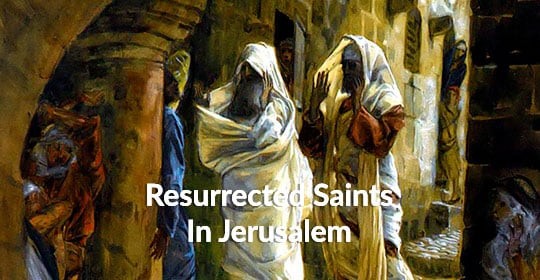
The Gospel of Matthew: Events Following Jesus’ Death. The Tombs Opened.

51 And behold, the curtain of the temple was torn in two, from top to bottom. And the earth shook, and the rocks were split. 52 The tombs also were opened. And many bodies of the saints who had fallen asleep were raised, 53 and coming out of the tombs after his resurrection they went into the holy city and appeared to many.” (Matthew 27:51–53 (ESV)

In our study of the Gospel of Matthew’s record of the Passion Week of the Lord Jesus Christ, it is necessary, and insightful, to examine all four Gospel accounts. This discipline provides us understanding of all the events and encounters which took place during those hours.

Matthew alone mentioned this miracle of the opened tombs. Who were these resurrected people?

To begin with, the earth shook at the moment of Jesus’ death. This occurred as the temple curtain was torn. It was a great earthquake. The earth violently trembled so that rocks were split in half, torn apart and divided. As this occurred, the tombs were opened. Graves were literally opened, and the dead were raised to life.

The text calls them saints. Saints (ἅγιος; hagios) refers to God’s people. They were set apart ones who were holy and dedicated to the Lord. This title refers to all believers in Jesus Christ (Rom. 1:7; I Cor. 1:1-2; 2 Cor. 1:1; Eph. 1:1; Phil. 1 :1; Col. 1:1).

These saints had fallen asleep (κοιμάω; koimao). This is another way saying they had physically died. However, they were raised (ἐγείρω; egeiro) or brought to physical life. God caused them to live again.

Matthew added these resurrected saints did not come out of their tombs until after the resurrection of Christ. When they did, they came into Jerusalem and appeared to many people. Dr. William Hendriksen shares the following insights.

“First, this was a real resurrection, not an appearance of corpses.”

“Secondly, it occurred at the very moment of Christ’s death and, together with the other signs, pointed to the significance of that death.”

“Thirdly, it is true that the original can be construed in either of two ways, depending on how we parse the phrase “after his [Christ’s] resurrection”; whether we conceive the sense to be “having left their tombs after his resurrection,” or “after his resurrection they went.…” But is it reasonable to believe that these saints, with glorious resurrection bodies, remained in the darkness and corruption of the tombs from Friday afternoon until Sunday morning? The meaning is, in all probability, that these saints were raised and left their tombs at the moment of Christ’s death. Not until after Christ’s resurrection did they enter Jerusalem and did they appear to many. Where they were from the moment when they left their graves until they appeared to many in what is still called “the holy city” (!) is not explained, just as also the whereabouts of Jesus during the intervals between his post-resurrection appearances is nowhere indicated.”

“Fourthly, everything seems to point to the fact that these saints did not again die. It must be that after they appeared to many for some small period of time, God took them—now body and soul—to himself in heaven, where their souls had been previously.”

“Finally, this sign, too, like those described in verse 51, 52a, is prophetic. It shows that Christ’s death guarantees our glorious resurrection at Christ’s return.”

“Today’s passage reports that the earthquake also opens several tombs, from which appear many resurrected saints after our Lord rises from the dead (vv. 52–53). We do not know their identities, but these holy ones clearly died before Jesus inaugurated the new covenant and are raised only after He is resurrected. By this we see that the only way believers, whether they live under the old covenant or the new, can find final salvation (resurrected life in a new heavens and earth, Rev. 20:1–6; 21) is through Christ’s death and resurrection. Scripture does not say whether the people of Matthew 27:52 die again or ascend to heaven. In any case, their resurrection is a sign that Jesus’ death has inaugurated the last days, for this raising to life is the signal event of judgment day (Dan. 12:1–2),” explains Dr. R. C. Sproul.

“The resurrection of others,” John Calvin says, “also makes evident that Jesus died and rose again not only for Himself, but also to restore life to His people.”

Soli deo Gloria!  

The Gospel of Matthew: I Am with You Always Revisited.

16 Now the eleven disciples went to Galilee, to the mountain to which Jesus had directed them. 17 And when they saw him they worshiped him, but some doubted. 18 And Jesus came and said to them, “All authority in heaven and on earth has been given to me. 19 Go therefore and make disciples of all nations, baptizing them in the name of the Father and of the Son and of the Holy Spirit, 20 teaching them to observe all that I have commanded you. And behold, I am with you always, to the end of the age.” (Matthew 28:16–20 (ESV)

The following excerpt is by Dr. Gerrit Scott Dawson is pastor of First Presbyterian Church, Baton Rouge, La., and author of Jesus Ascended: The Meaning of Christ’s Continuing Incarnation. The article was published in the April 2014 issue of Tabletalk magazine.

Jesus would soon return to heaven while His disciples went out into the world in gospel mission. But they were not going their separate ways. Jesus and His brothers could not be parted by the distance between the world and the heavenly realms. How can this be?

Jesus’ missional instructions can well be translated, “baptizing them into the name of the Father and of the Son and of the Holy Spirit” (28:19). That gives an important insight into conversion and the sealing sign of baptism. Our lives get relocated when we are joined to Jesus by the Spirit through faith. We are launched into Jesus. So now our lives are “hidden with Christ in God” (Col. 3:3). Paul writes dynamically of this reality when he says the Father “has delivered us from the domain of darkness and transferred us to the kingdom of his beloved Son” (1:13).

It’s as if God sent a moving truck to take us out of a dank, evil, broken neighborhood of sin into the spacious streets of freedom in Christ. Peter describes it as God’s “calling us out of darkness into his marvelous light” (1 Peter 2:9). Jesus Himself stated this change of life-address even more mystically: “In that day you will know that I am in my Father, and you in me, and I in you” (John 14:20). These verses give some texture to the phrase Paul uses so often: we are now in Christ.

Jesus is with us always because Jesus is where I live. Believers are forever joined to Him. Jesus returned to heaven and spiritually took us along. What a mystery: “Even when we were dead in our trespasses, [God] made us alive together with Christ . . . and raised us with him and seated us with him in the heavenly places in Christ Jesus” (Eph 2:5–6). Yes, this is a spiritual reality now, as my body quite obviously is still here on the ground. One day, of course, the union will be completed as we receive our resurrection bodies that we might always be in immediate communion with Jesus and one another.

Meanwhile, while we are on earth, Jesus stays with us through His Spirit whom He sends to us. Paul writes, “God’s love has been poured into our hearts through the Holy Spirit who has been given to us” (Rom. 5:5). The Spirit is the personal presence of Jesus “housed” in us. By the Spirit, the Father and Son make a home in us (John 14:23). Christians, both individually and corporately as the church, are a dwelling in which the eternal exchange of love between the Triune persons gets lived out. The Holy Spirit in us keeps us joined to Jesus, who has taken His resurrection body into heaven. He ever lifts us up to see that our true life is located there, in Christ.

The biblical understanding of Jesus’ being with us is very different from any idea that Jesus’ presence just gives a helpful boost to the life I’m trying to make for myself. “I am with you always” does not mean I have a miniature Jesus tucked inside me for inspiration amid my ambitions or for comfort when things don’t go my way. Rather, my little life is taken up into the greatness of Jesus. He is with us most profoundly because by the Spirit we are in Christ. My purpose in life, then, is directed by His mission for His people.

So, I am propelled out of my cozy home where I’d like to stay while Jesus comforts me. He sends me to the cranky neighbor to witness to him with the awareness that Jesus loves him as much as He loves me. “I am with you as you love him in Me.”

Jesus goes with me from my relatively safe street to the sharp neighborhood filled with angry discards. “Pitch a tent there,” He whispers, “as I took up a tent of flesh in a broken world.” That might mean beginning a school, a sports camp, or a clinic in His name.

Right where I don’t want to go, Jesus already is there. He even sends me to engage the people who will scoff at mention of His name. I’d like to avoid them, to keep away from controversy. But the Lord who continues to mix it up in the world He is reclaiming reminds me: “You are in Me, and I am sending My gospel into the world. So you can trust that I am with you as you go into those tricky conversations.”

Jesus is with us always, first and most profoundly because His Spirit has taken us up into His life and, therefore, His mission.

Soli deo Gloria!

The Gospel of Matthew: I Am with You Always Revisited.

16 Now the eleven disciples went to Galilee, to the mountain to which Jesus had directed them. 17 And when they saw him they worshiped him, but some doubted. 18 And Jesus came and said to them, “All authority in heaven and on earth has been given to me. 19 Go therefore and make disciples of all nations, baptizing them in the name of the Father and of the Son and of the Holy Spirit, 20 teaching them to observe all that I have commanded you. And behold, I am with you always, to the end of the age.” (Matthew 28:16–20 (ESV)

The following excerpt is by Dr. Gerrit Scott Dawson is pastor of First Presbyterian Church, Baton Rouge, La., and author of Jesus Ascended: The Meaning of Christ’s Continuing Incarnation. The article was published in the April 2014 issue of Tabletalk magazine.

Jesus would soon return to heaven while His disciples went out into the world in gospel mission. But they were not going their separate ways. Jesus and His brothers could not be parted by the distance between the world and the heavenly realms. How can this be?

Jesus’ missional instructions can well be translated, “baptizing them into the name of the Father and of the Son and of the Holy Spirit” (28:19). That gives an important insight into conversion and the sealing sign of baptism. Our lives get relocated when we are joined to Jesus by the Spirit through faith. We are launched into Jesus. So now our lives are “hidden with Christ in God” (Col. 3:3). Paul writes dynamically of this reality when he says the Father “has delivered us from the domain of darkness and transferred us to the kingdom of his beloved Son” (1:13).

It’s as if God sent a moving truck to take us out of a dank, evil, broken neighborhood of sin into the spacious streets of freedom in Christ. Peter describes it as God’s “calling us out of darkness into his marvelous light” (1 Peter 2:9). Jesus Himself stated this change of life-address even more mystically: “In that day you will know that I am in my Father, and you in me, and I in you” (John 14:20). These verses give some texture to the phrase Paul uses so often: we are now in Christ.

Jesus is with us always because Jesus is where I live. Believers are forever joined to Him. Jesus returned to heaven and spiritually took us along. What a mystery: “Even when we were dead in our trespasses, [God] made us alive together with Christ . . . and raised us with him and seated us with him in the heavenly places in Christ Jesus” (Eph 2:5–6). Yes, this is a spiritual reality now, as my body quite obviously is still here on the ground. One day, of course, the union will be completed as we receive our resurrection bodies that we might always be in immediate communion with Jesus and one another.

Meanwhile, while we are on earth, Jesus stays with us through His Spirit whom He sends to us. Paul writes, “God’s love has been poured into our hearts through the Holy Spirit who has been given to us” (Rom. 5:5). The Spirit is the personal presence of Jesus “housed” in us. By the Spirit, the Father and Son make a home in us (John 14:23). Christians, both individually and corporately as the church, are a dwelling in which the eternal exchange of love between the Triune persons gets lived out. The Holy Spirit in us keeps us joined to Jesus, who has taken His resurrection body into heaven. He ever lifts us up to see that our true life is located there, in Christ.

The biblical understanding of Jesus’ being with us is very different from any idea that Jesus’ presence just gives a helpful boost to the life I’m trying to make for myself. “I am with you always” does not mean I have a miniature Jesus tucked inside me for inspiration amid my ambitions or for comfort when things don’t go my way. Rather, my little life is taken up into the greatness of Jesus. He is with us most profoundly because by the Spirit we are in Christ. My purpose in life, then, is directed by His mission for His people.

So, I am propelled out of my cozy home where I’d like to stay while Jesus comforts me. He sends me to the cranky neighbor to witness to him with the awareness that Jesus loves him as much as He loves me. “I am with you as you love him in Me.”

Jesus goes with me from my relatively safe street to the sharp neighborhood filled with angry discards. “Pitch a tent there,” He whispers, “as I took up a tent of flesh in a broken world.” That might mean beginning a school, a sports camp, or a clinic in His name.

Right where I don’t want to go, Jesus already is there. He even sends me to engage the people who will scoff at mention of His name. I’d like to avoid them, to keep away from controversy. But the Lord who continues to mix it up in the world He is reclaiming reminds me: “You are in Me, and I am sending My gospel into the world. So you can trust that I am with you as you go into those tricky conversations.”

Jesus is with us always, first and most profoundly because His Spirit has taken us up into His life and, therefore, His mission.

Soli deo Gloria!

The Gospel of Matthew: The Temple Curtain is Torn in Two. Part 2.

And behold, the curtain of the temple was torn in two, from top to bottom. And the earth shook, and the rocks were split.” (Matthew 27:51 ESV)

And the curtain of the temple was torn in two, from top to bottom.” (Mark 15:38 ESV)

And the curtain of the temple was torn in two.” (Luke 23:45 (ESV)

In our study of the Gospel of Matthew’s record of the Passion Week of the Lord Jesus Christ, it is necessary, and insightful, to examine all four Gospel accounts. This discipline provides us understanding of all the events and encounters which took place during those days and hours.

Matthew, Mark and Luke alone recorded the events immediately following the Lord Jesus Christ’s death on the cross. Regarding those events, they mentioned the moment the tearing in half of the temple curtain,

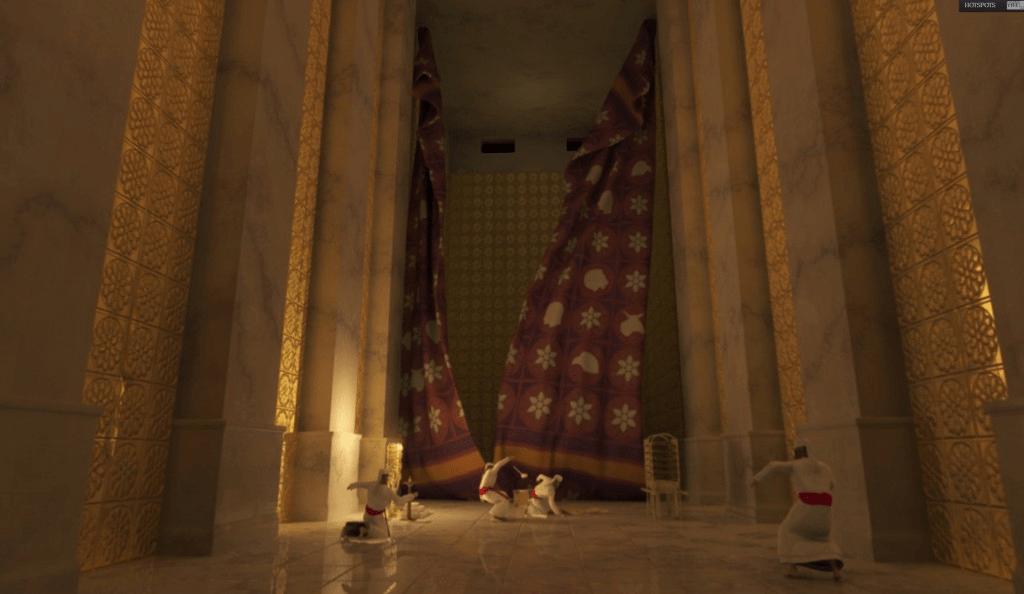
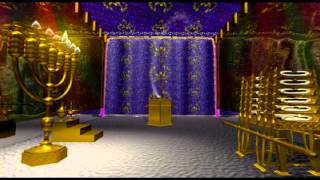
The curtain separated the two inner chambers, or rooms, in the temple. These were the Holy Place and the Holy of Holies. Contained in the Holy Place were three pieces of furniture: the Table of Shewbread, the Golden Lampstand and the Golden Altar of Incense. Contained within the Holy of Holies was the Ark of the Covenant.

Separating the Holy Place from the Holy of Holies was the curtain. Exodus 26:31-35 describes the curtain in detail.

31 “And you shall make a veil of blue and purple and scarlet yarns and fine twined linen. It shall be made with cherubim skillfully worked into it. 32 And you shall hang it on four pillars of acacia overlaid with gold, with hooks of gold, on four bases of silver. 33 And you shall hang the veil from the clasps, and bring the ark of the testimony in there within the veil. And the veil shall separate for you the Holy Place from the Most Holy. 34 You shall put the mercy seat on the ark of the testimony in the Most Holy Place. 35 And you shall set the table outside the veil, and the lampstand on the south side of the tabernacle opposite the table, and you shall put the table on the north side.” (Exodus 26:31–35 (ESV)

What was the significance of the curtain? What was also the significance of the curtain being torn in two at the death of Jesus Christ? Dr. Benjamin Shaw, professor of Old Testament at Reformation Bible College in Sanford, Fla., answers these questions.

“When Moses was given the law on Mount Sinai, that law included instructions for building the tabernacle. Included were directions for making a curtain or veil (Ex. 26:30–35). The purpose of this curtain was to divide between the Holy Place and the Most Holy Place. In the Holy Place were the lampstand, the table for the bread of the presence, and the altar of incense. In the Most Holy Place was the Ark of the Covenant, covered by the mercy seat, on which were two cherubim guarding the presence of God. This was the place where God made His presence visible and from where He spoke to Moses.”

“The veil that divided the Holy Place from the Most Holy Place was embroidered with cherubim, representing the cherubim to the east of Eden, keeping mankind away from the presence of God. But a change took place. The absolute prohibition on entering God’s presence now became not so absolute. The door into the presence of God that had been so firmly slammed shut at Eden now opened a crack. It was a very small crack, to be sure, but it was a real crack. Now the high priest, once a year, accompanied by the billowing smoke of incense and the blood of sacrifices, could enter the Most Holy Place (Lev. 16). He could enter the place of God’s presence.”

“The people would have known about this if they were properly instructed. The law was to be read before the people every seven years (Deut. 31:9–13). The Levites would have mentioned such things in their instructional work among the people. But for most, the change would have seemed negligible. After all, it only affected the high priest, and only once a year. In addition, as more generations passed, there was no further change in the statutes to indicate that any new development could be expected. When the temple was built, a new veil embroidered with cherubim and setting apart the Most Holy Place was made (2 Chron. 3:14). In addition, the walls of the temple were adorned with cherubim. Except for the high priest, once a year, there was no entering the presence of God.”

“But the prophetic era hinted that further change would come. Isaiah 25:7 says, “And he will swallow up on this mountain the covering that is cast over all peoples, the veil that is spread over all nations.” The word “covering” is not the same as the word “veil.” However, the connection with the holy mountain of the Lord and the eager expectation of the people for the coming of the Lord at least hint at a further change, a very significant change.”

“Again, a period of silence ensued. Then, at the very end of Jesus’ ministry, at the very point of His death, the curtain of the temple was torn in two from top to bottom. This testimony is included in all three of the Synoptic Gospels (Matthew, Mark, and Luke). Something strange, marvelous, and wonderful happened. The way into God’s presence was once again opened. The Synoptic Gospels present the fact, while the author of Hebrews explains what happened.”

“First, we read that Jesus Himself has gone in behind the veil, the curtain (Heb. 6:19). He has entered as our High Priest. As the High Priest in the tabernacle and the temple, Jesus entered the Most Holy Place. However, it was not just the representative Most Holy Place of the temple—it was the true Most Holy Pace in heaven. There He has gone to anchor our hope.”

“Further, Jesus did not enter the Most Holy Place temporarily, as did the high priests of the Old Testament period. Instead, He entered once for all (Heb. 9:11–12). That is, He entered once for all for His people, and He entered permanently, never to exit.”

“Finally, the author of Hebrews tells us that we, too, enter the Most Holy Place by the blood of Jesus (Heb. 10:19–20). We are also told that the curtain represented the body of Christ. With the shedding of His blood, that curtain was torn. The way into the presence of God has been restored. The guarding cherubim with the flashing sword have been removed. What was lost in Adam has been regained in Christ.”

Soli Deo Gloria.

The Gospel of Matthew: Events Following Jesus’ Death. The Temple Curtain is Torn in Two.  

And behold, the curtain of the temple was torn in two, from top to bottom. And the earth shook, and the rocks were split.” (Matthew 27:51 ESV)

And the curtain of the temple was torn in two, from top to bottom.” (Mark 15:38 ESV)

“And the curtain of the temple was torn in two.” (Luke 23:45 ESV)

In our study of the Gospel of Matthew’s record of the Passion Week of the Lord Jesus Christ, it is necessary, and insightful, to examine all four Gospel accounts. This discipline provides us understanding of all the events and encounters which took place during those hours.

Matthew, Mark and Luke alone recorded the events immediately following the Lord Jesus Christ’s death on the cross. Regarding those events, only Matthew and Mark mentioned the moment the curtain of the temple was torn in two.

The temple curtain separated the two inner chambers, or rooms, in the temple. These were the Holy Place and the Holy of Holies. Contained in the Holy Place were three pieces of furniture: the Table of Showbread, the Golden Lampstand and the Golden Altar of Incense.

The Table of Showbread was where the Bread of the Presence was placed (Ex 25:23–30). “The term “showbread” (kjv “shewbread”) referred to the arrangement of the twelve loaves of bread in rows on the table (1 Chr. 9:32; 23:29; 28:16; 2 Chr. 2:4; 13:11; 29:18). They symbolized an “offering of food” to the Lord. The twelve loaves were changed weekly on the Sabbath day.

Jesus said “I am the Bread of Life” (John 6). As God the Father’s Anointed One, Jesus provides for the needs of others; spiritually and physically (Heb. 1:1-3).

The Golden Lampstand was an ornate golden menorah. On either side, three branches came out from the main central stem, and seven lamps could be lighted in the flower-shaped holders. While the lampstand provided light for the priests to conduct their duties, it symbolized much more.

“Jewish lamps were part of the religious symbolism of the home, probably dating back to the prohibition against lighting a fire on the Sabbath (Ex. 35:3). References to light abound in Scripture. We read of the eye as a lamp (Matt. 6:22–23; Luke 11:33–36) and of Christ as the Light of the World (John 8:12; 9:1-5). We are warned to pay attention to teaching as to a light shining in the dark (Prv. 6:23; 2 Pt 1:19). Both God and the spirit of man are symbolized as lamps (2 Sam. 22:29; Prv. 20:27), while in Proverbs 13:9 “lamp” is synonymous with the essence of life itself. Lamps, with or without stands, were also part of the Jewish ritual of death, mourning, and burial,” explains the Tyndale Bible Dictionary.

The Golden Altar of Incense was the third and final article of furniture in the Holy Place. It represented the prayers of God’s people constantly ascending before the Lord. In the tabernacle/temple. Incense could only be offered by the priests, who thus served as mediators between the people and God, symbolically bringing their prayers into the presence of the Most High (Luke 1:1-9). The Altar of Incense symbolized Jesus Christ as the only mediator between God the Father and humankind (I Tim. 2:5).  

“Many of the furnishings of the tabernacle had a functional purpose. The lampstand gave light in an otherwise dark enclosure, while the table provided a place on which to put the showbread. Meanwhile, the incense altar served the practical purpose of pleasantly scenting the air. These items were in many respects ordinary pieces of furniture, albeit made out of pure gold and richly ornamented as befitted the furniture of a king,” explains Dr. Iain Duguid, professor of Old Testament at Westminster Theological Seminary in Philadelphia, PA.

“All of the senses were ministered to by the daily priestly ritual: sight, smell, and taste were addressed through the lampstand, the incense altar, and the table of showbread, while hearing was ministered to by the bells on the high priest’s garments. The whole affair was designed as a rich multisensory experience for God—not because He has senses like ours, but as an acknowledgment of the goodness of each of the diverse senses He has given us. Only the very best of everything could possibly be good enough to offer to the Creator of the universe.”

The curtain separated the Holy Place from the Holy of Holies. Contained within the Holy of Holies was the Ark of the Covenant. These specific items are the focus of our next article of study.

Take time today to thank God for the senses He has given us. May our senses praise Him and not used as instruments of sin against Him.

Soli deo Gloria!

The Gospel of Matthew: The Last Three Hours on the Cross. The Assurance of His Confidence.  

And Jesus cried out again with a loud voice and yielded up his spirit.” (Matthew 27:50 (ESV)

And Jesus uttered a loud cry and breathed his last.” (Mark 15:37 (ESV)

 Then Jesus, calling out with a loud voice, said, “Father, into your hands I commit my spirit!” And having said this he breathed his last.” (Luke 23:46 (ESV)

In our study of the Gospel of Matthew’s record of the Passion Week of the Lord Jesus Christ, it is necessary, and insightful, to examine all four Gospel accounts. This discipline provides us understanding of all the events and encounters which took place during those hours.

The following excerpt is by the 16th century Protestant reformer, theologian and pastor, John Calvin. It is taken from his commentary from the Gospels.

“He (Jesus) declared that, though He was fiercely attacked by violent temptations, still His faith was unshaken and always kept its ground unvanquished. For there could not have been a more splendid triumph than when Christ boldly expresses His assurance that God is the faithful guardian of His soul, which all imagined to be lost.”

But instead of speaking to the deaf, He betook Himself directly to God and committed to His bosom the assurance of His confidence. He wished, indeed, that men should hear what He said; but though it might be of no avail to men, He was satisfied with having God alone as His witness.”

“There is not a stronger or more decided testimony of faith than when a pious man – perceiving Himself attacked on every hand, so that he finds no consolation on the part of men, despises the madness of the whole world, discharges His sorrows and cares into the bosom of God and rests in the hope of His promises.”

“Let us now remember that it was not in reference to Himself alone that Christ committed His soul to the Father, but that He included, as it were, in one bundle all the souls of those who believe in Him, that they may be preserved along with His own. By this prayer He obtained authority to save all souls, so that not only does the heavenly Father, for His sake, deign to take them into His custody, but giving up the authority into His hands, commits them to Him to be protected. Everyone, when he comes to die, following this example, shall believe in Christ, will not breathe his soul at random into the air, but will resort to a faithful guardian who keeps in safety whatever has been delivered to Him by the Father.”

“The cry shows also the intensity of the feeling; for there can be no doubt that Christ, out of the sharpness of the temptations by which He was beset, not without painful and strenuous effort, broke into this cry. And yet He likewise intended, by His loud and piercing exclamation, to assure us that His soul would be safe and uninjured by death in order that we, supported by the same confidence, may cheerfully depart from the frail hovel of our flesh.”  

Soli deo Gloria!

The Gospel of Matthew: The Last Three Hours on the Cross. Father, into Your Hands.   

“And Jesus cried out again with a loud voice and yielded up his spirit.” (Matthew 27:50 (ESV)

“And Jesus uttered a loud cry and breathed his last.” (Mark 15:37 (ESV)

Then Jesus, calling out with a loud voice, said, “Father, into your hands I commit my spirit!” And having said this he breathed his last.” (Luke 23:46 (ESV)

In our study of the Gospel of Matthew’s record of the Passion Week of the Lord Jesus Christ, it is necessary, and insightful, to examine all four Gospel accounts. This discipline provides us understanding of all the events and encounters which took place during those hours.

Luke alone recorded the last words the Lord Jesus spoke while on the cross. It is a statement of conclusion and consolation. The Lord’s work on the cross is complete. He has borne the wrath of God towards sinners as a Lamb (John 1:29) and a good Shepherd (John 10:14-18). He became the sinners’ vicarious substitute (2 Cor. 5:21).

“Father.” Jesus’ voice is loud, large and great. He once again refers to God as His Father (πατήρ; pater). Invoked is the idea of one who is beloved and loving. There is an eternal intimacy evident in this one word; between the first and second persons of the Godhead.

“Into your hands.” The phrase (εἰς σύ χείρ; eis sy cheir) refers to being held in the power and possession of God the Father. The agony of forsakenness and wrath gives way to intimate fellowship and comfort.

“I commit my spirit.” To commit (παρατίθημι; paratithemi) means to set before and to place before God. What Jesus placed before God the Father was His spirit or soul. Physical death was imminent. For Jesus’ soul to be absent from His body at death was to come into the presence of God the Father Almighty.

“This quotes Ps. 31:5, and the manner of his death accords with John 10:18. Normally victims of crucifixion died much slower deaths. He, being in control, simply yielded up his soul (John 10:18; 19:30), committing it to God. Thus he “offered himself without blemish to God” (Heb. 9:14),” explains Dr. John MacArthur.

Following His statement, Jesus breathed His last. In other words, He physically died. He died at a particular point in time and space. His death, as His birth and life, was a historical event. It truly happened.

“The final word, by means of which the Savior, making use of the phraseology of Ps. 31:5, entrusts his soul to the care of his Father is beautiful because of: (a) what it retains of Ps. 31:5; (b) what it adds; and (c) what it omits,” explain Dr. William Hendriksen.

“It retains “I commend my spirit.” This is significant, for it indicates that the Savior died the only kind of death that was able to satisfy the justice of God and to save man. It had to be a voluntary sacrifice. The very fact that Jesus uttered this word with a loud voice also shows that he willingly, voluntarily laid down his life (John 10:11, 15).”

“It adds the significant word Father, not found in the psalm. The importance of this word at this point has already been indicated.”

“It omits the clause that immediately follows in the psalm, namely, “Thou hast redeemed me.” In the case of Christ, the Sinless One, no such redemption was necessary nor even possible.”

“’And when he had said this, he breathed his last,’ show the “calm restfulness” (Geldenhuys) in the mind and heart of Jesus at the moment when his soul parted from this earth. Having fully accomplished the work the Father gave him to do (John 17:4), he enjoyed to the full “the peace of God that surpasses all understanding” (Phil. 4:7),” concludes Dr. Hendriksen.

Soli deo Gloria!

The Gospel of Matthew: The Last Three Hours on the Cross. It is Finished! Part 2.   

And Jesus cried out again with a loud voice and yielded up his spirit.” (Matthew 27:50 (ESV)

And Jesus uttered a loud cry and breathed his last.” (Mark 15:37 (ESV)

When Jesus had received the sour wine, he said, “It is finished,” and he bowed his head and gave up his spirit.” (John 19:30 ESV)

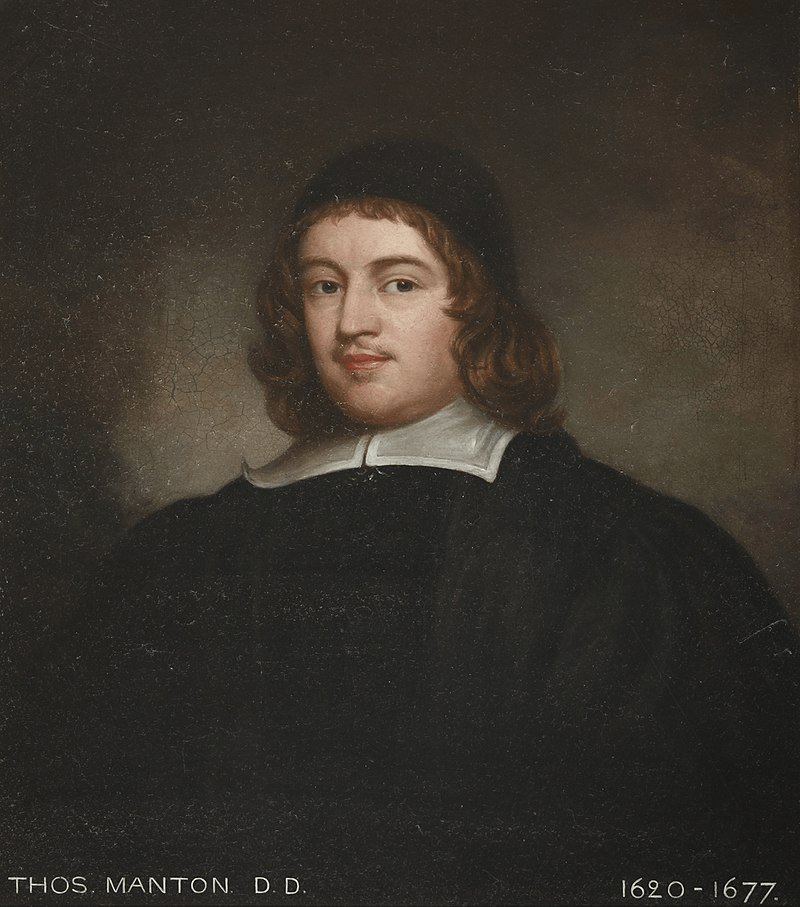
Thomas Manton (1620–1677) was an English Puritan clergyman. He was a clerk to the Westminster Assembly and a chaplain to Oliver Cromwell. The following excerpt is from his message entitled It is Finished – John 19:30.

When Christ stood in our stead, no comfort was granted to him but what was devised to augment his grief. When his strength was dried up like a potsherd, and his tongue cleaved to his jaws, ‘They gave him vinegar to drink,’ when he was providing for us a cup of blessings, a torrent and a river of pleasure, of which we might drink: ver. 30, ‘When he had received the vinegar, he said, It is finished; and he bowed the head, and gave up the ghost.’ When he had received it, that is, tasted it, for they put it into his mouth with a sponge on the top of a reed, then he said, ‘It is finished;’ that is, as much as was necessary for his humiliation, God’s glory, and man’s salvation; as much as was decreed, as much as was foretold.

And he said, ‘It is finished,’ because he was now upon the last work, death, which was coming upon him; and therefore folded it in the expression with what is past, ‘It is finished,’ because the last act was at hand: Matt. 26:28, ‘This is my blood of the new testament, which is shed;’ that is, which is about to be shed: John 17:4, ‘I have finished the work thou gave me to do.’ All the sufferings were now completed at death, which he was to suffer for our sins. In what sense it is said, ‘It is finished”?

All the scripture prophecies which spoke of Christ’s death and sufferings were now fulfilled and accomplished.

That the substance of the types were accomplished in him, as that of the brazen serpent, the paschal lamb, the daily and yearly sacrifices, the offering of Isaac; all which prefigured that Christ should die for the sins of the world. 

All was finished that was necessary to make him a fit pattern of patience to us; for he had borne the extremity of his enemies’ malice, all that man or devils could by the permission of God execute upon him; for he said, Luke 22:53, ‘This is your hour, and the power of darkness.’ Yea, he had drunk up the cup which the Father had put into his hands, to the very dregs. One end of Christ’s death was to give us an example: 1 Peter 2:21, ‘Christ also suffered for us, leaving us an example, that we should follow his steps.’ Now here is a full copy and pattern of the right way of suffering for all his own to imitate.

All was fulfilled which God determined to be done for the expiation of sin; so that no more ransom is to be paid; our debt is satisfied; divine justice hath no more demand to us; sin, Satan, and death are spoiled and disarmed, and way is made for our salvation to be owned, as coming from Christ alone,

In regard of Christ himself, all the necessary acts of his mediation were now past. Death was just at hand, and was comprised in the expression; his lying in the grave was but the continuation of his abasement, till the time of his exaltation should come. But in the way of satisfying justice he had no more to do; whatever was done afterwards was by way of reward, not to satisfy justice, but to satisfy the world of the dignity of his person. He was to rise from the dead, and ascend into glory; that is, for our more abundant comfort. His resurrection was his solemn acquittance; our surety was let out of prison: 

From the greatness of the punishment imposed upon Christ; for if he suffered all the punishments due to us, it cannot be that anything more should be done to pacify God; all is finished. Now Christ omitted none of those things which divine justice required: he ‘fulfilled all righteousness,’ Mat. 3:15; ‘Was obedient to death, even the death of the cross,’ Phil. 2:8. Yea, and suffered all those things which the law did put upon sinners, either as to loss or sense, as to desertion or as to the curse; and therefore he is said, ‘To bear our griefs, and carry our sorrows, and to be wounded for our transgressions, and to be bruised for our iniquities,’ Isa. 53:4, 5; ‘To be made a curse for us,’ Gal. 3:15; ‘To be made sin for us,’ 2 Cor. 5:21. God spared him not, but put him to grief, not out of hatred to his Son, but love to our salvation. Hence those agonies of Christ, and prayers, and tears, and strong cries.

Soli deo Gloria!

The Gospel of Matthew: The Last Three Hours on the Cross. It is Finished!   

And Jesus cried out again with a loud voice and yielded up his spirit.” (Matthew 27:50 (ESV)

And Jesus uttered a loud cry and breathed his last.” (Mark 15:37 (ESV)

When Jesus had received the sour wine, he said, “It is finished,” and he bowed his head and gave up his spirit.” (John 19:30 ESV)

In our study of the Gospel of Matthew’s record of the Passion Week of the Lord Jesus Christ, it is necessary, and insightful, to examine all four Gospel accounts. This discipline provides understanding of all the events and encounters which took place during those moments, hours and days.

A spoken or written word can help or hurt. It can bring comfort and encouragement or sorrow and despair. A spoken or written word makes, or breaks, a promise. One spoken or written word at a specific moment in time and space can bring war or peace.

As William Shakespeare said, “Words, words, words.” This was Hamlet’s reply to Polonius’ question, ‘What do you read, my lord?’ (Shakespeare, 1603). By repeating the word three times, Hamlet suggested that what he was reading was meaningless.

The Word of God, whether spoken or written, is not meaningless. Scripture is God’s breathed (2 Timothy 3:16). It is His revelation of who He is and what He has done, doing and will do (Psalm 1; 19; 119; 2 Peter 1:20-21).

Scripture compares itself to a sword which pierces (Hebrews 4:12-13), a mirror that reveals (James 1:23), a seed that reproduces (I Peter 1:23), milk which nourishes (I Peter 2:2), a lamp that shines (Psalm 119:105), a fire that consumes (Jeremiah 23:29a), and a hammer that shatters (Jeremiah 23:29b).

The spoken word Jesus said, and written in today’s texts, is a word of triumph. In English, it is the phrase “It is finished.” In Greek, it is one word; Tetelestai. It is spoken and written in the perfect tense; meaning a past completed action with continuing results. It is a word of accomplishment done on the sinners’ behalf by none other than God Himself; Jesus Christ. Tetelestai means completed, consummated and accomplished.

“Papyri receipts for taxes have been recovered with the word tetelestai written across them, meaning “paid in full.” This word on Jesus’ lips was significant. When He said, “It is finished” (not “I am finished”), He meant His redemptive work was completed. He had been made sin for people (2 Cor. 5:21) and had suffered the penalty of God’s justice which sin deserved,” states Edwin A Blum in the Bible Knowledge Commentary.

After receiving the sour wine, Jesus announced, “It is finished,” and surrendered His spirit to death (John 19:30). This is consonant with our Lord’s statement earlier in John’s gospel that He would lay down His life and that no one would take it from Him against His will (10:17–18). After all, Jesus did not surrender His spirit to death until He had determined that His work was finished. Also, in declaring that His work was finished, Jesus indicated that nothing more has to be done for our salvation. He has fully paid for our sin, and there is nothing we need to or can add to His work on our behalf,” writes Dr. R. C. Sproul.

“Having received the vinegar Jesus said, “It is finished” (or consummated). As Jesus saw it, the entire work of redemption (both active and passive obedience, fulfilling the law and bearing its curse) had been brought to completion. And if someone should object that the burial had not yet taken place and that this too (as well as the repose in the tomb until the moment of the resurrection) was part of Christ’s humiliation, the answer would be very simple: in the mind of Christ the burial is so certain that he can speak as if that too had already been accomplished,” explains Dr. William Hendriksen.

Oh, to see the dawn of the darkest day
Christ on the road to Calvary
Tried by sinful men, torn and beaten, then
Nailed to a cross of wood.

This, the power of the cross
Christ became sin for us
Took the blame, bore the wrath
We stand forgiven at the cross.

Oh, to see the pain written on Your face
Bearing the awesome weight of sin
Ev’ry bitter thought, ev’ry evil deed
Crowning Your bloodstained brow.

This, the power of the cross
Christ became sin for us
Took the blame, bore the wrath
We stand forgiven at the cross.

Now the daylight flees, now the ground beneath
Quakes as its Maker bows His head
Curtain torn in two, dead are raised to life
Finished the vict’ry cry.

This, the power of the cross
Christ became sin for us
Took the blame, bore the wrath
We stand forgiven at the cross.

Oh, to see my name written in the wounds
For through Your suffering I am free
Death is crushed to death, life is mine to live
Won through Your selfless love.

This, the power of the cross
Son of God, slain for us
What a love, what a cost
We stand forgiven at the cross.

Songwriters: Keith Getty / Stuart Townend

Soli deo Gloria!