The Gospel of Matthew: The Great Commission: Go and Make Disciples! 

16 Now the eleven disciples went to Galilee, to the mountain to which Jesus had directed them. 17 And when they saw him they worshiped him, but some doubted. 18 And Jesus came and said to them, “All authority in heaven and on earth has been given to me. 19 Go therefore and make disciples of all nations, baptizing them in the name of the Father and of the Son and of the Holy Spirit, 20 teaching them to observe all that I have commanded you. And behold, I am with you always, to the end of the age.” (Matthew 28:16–20 (ESV)

What are the major components of the Lord’s Great Commission to His disciples? What right does Jesus have to command His followers to obey this commission? What promise is included in this commission? These questions are to be considered and answered in the next several days. 

To begin with, what right did Jesus have to give a commission in the first place? Jesus provided the answer when He said, “All authority in heaven and on earth has been given to me.” Authority (ἐξουσία; exousia) means the authority to rule. Jesus said He was in control, or in charge. This biblical truth is set forth in Psalm 2 and 110. See also Cf. Dan. 7:14; Matt. 16:28; 24:30; 26:64. This Great Claim forms the basis for the Great Commission.

Jesus then said, “Go therefore and make disciples of all nations.” On the surface, this phrase seems simplistic. However, a closer look reveals a deeper and more significant meaning. 

The word “Go” (πορεύομαι; poreuomai) is a plural passive participle. It is not a command, but a statement of a present reality for Jesus’ disciples. It is an action the Lord is accomplishing upon the disciples. The word means in this context, “Since I have you going based upon my authority in heaven and earth.” 

“Go” also implies that the disciples—and this holds for God’s children in general—must not concentrate all their thought on “coming” to church. They must also “go” to bring the precious tidings to others. Of course, they cannot “go” unless they have first of all “come,” and unless they keep coming as well as going. They cannot give unless they are willing to receive,” explains Dr. William Hendriksen. 

The word “therefore” (οὖν; oun) refers to a consequence or conclusion. In other words, it invokes a consequential effect from a preceding cause. In this context, the aforementioned cause is the authority of Jesus Christ. Since Jesus possesses all authority in heaven and on earth, this results in a corresponding conclusion or effect; the disciples going. 

“This has already been explained in connection with “The Great Claim.” Briefly it means: Go, a. because your Lord has so ordered; b. because he has promised to impart all the needed strength; and c. because he is worthy of the homage, faith, and obedience of all men,” continues Dr. Hendriksen. 

The phrase “make disciples” is the direct command. “Make disciples” (μαθητεύω; matheteuo) is an aorist active imperative verb. Jesus’ followers, then and now, are to actively and obediently be available for the Lord to cause people to be converted to the Gospel. In other words, Jesus’ disciples are to urge sinners to repent of their sins and place their God given faith in the person and work of Jesus Christ and be converted. 

The scope of this command is not obscure. The Lord directed His disciples to make disciples of all nations. This means all peoples, tribes, languages and cultures. This command remains in force. 

“It seems like such a simple command. “Go therefore and make disciples of all nations” (Matt. 28:19). But who exactly is supposed to go? Some have claimed that Jesus’ command to go and make disciples was only for the original Apostles and that the Great Commission was subsequently fulfilled by those Apostles. But such an enormous task would have been impossible for just eleven men to complete. And Jesus’ promise to be with them “to the end of the age” implies that the validity of this commission would extend beyond the Apostles’ lifetimes. If that’s so, the church has inherited this commission from the Apostles. And it is the church’s responsibility to obey the command of Christ until He comes again,” concludes Rev. Karl Dahlfred, adjunct professor of missions and church history at Bangkok Bible Seminary in Bangkok, Thailand, and assistant to the general manager for Overseas Missionary Fellowship Publishers in Thailand.

May each disciple of the Lord Jesus Christ be obedient and faithful to His command to go therefore and make disciples of all nations. 

Soli deo Gloria! 

The Gospel of Matthew: The Components of the Great Commission.

16 Now the eleven disciples went to Galilee, to the mountain to which Jesus had directed them. 17 And when they saw him they worshiped him, but some doubted. 18 And Jesus came and said to them, “All authority in heaven and on earth has been given to me. 19 Go therefore and make disciples of all nations, baptizing them in the name of the Father and of the Son and of the Holy Spirit, 20 teaching them to observe all that I have commanded you. And behold, I am with you always, to the end of the age.” (Matthew 28:16–20 (ESV)

What are the major components of the Lord’s Great Commission to His disciples? What right does Jesus have to command His followers to obey this commission? What promise is included in this commission? These questions are to be considered and answered in the next several days.

To begin with, what right did Jesus have to give a commission in the first place? Jesus provided the answer when He said, “All authority in heaven and on earth has been given to me.” Authority (ἐξουσία; exousia) means the authority to rule. Jesus said He was in control, or in charge. This biblical truth is set forth in Psalm 2 and 110. See also Cf. Dan. 7:14; Matt. 16:28; 24:30; 26:64. This Great Claim forms the basis for the Great Commission.

“Authority is the right to rule, to command, to govern. The Greek word exousia, which is translated as the English word authority in Matthew 28:18–20, literally means “that which arises out of being.” It is the right to rule that arises out of the present conditions (state of being) or relation in which one finds himself. A father has the right to rule by virtue of the God-ordained relation that the father has with his child. Jesus has the right to rule by virtue of His present state of being, or condition, as the victor over sin, death, and hell,” states one commentator.

“Thus, before the Lord Jesus commissioned His disciples, He asserted His authority to do so. Here is the claim of universal and unlimited authority. We should note first the source of His authority: He received it from His Father. In His state of humiliation (His earthly life prior to His resurrection), He possessed authority, but He voluntarily limited the exercise of it. However, He would at times assert it with great power.”

“Jesus is here claiming all power and right to exercise it. When he says, “To me has been given” we naturally interpret this to mean that he is referring to a gift he has received as Resurrected Mediator. One might add: “as a reward upon his accomplished mediatorial work, the atonement which he rendered.” But did he not make a somewhat similar claim long before his death and resurrection? See 11:27. Not only this, but did he not, even during the days of his humiliation, exercise power over every sickness, including leprosy, and over hunger, demons, winds and waves, human hearts, death even? Did he not prove this on many occasions? True, but there is, nevertheless, an important difference,” explains Dr. William Hendriksen. “It is the investiture of the risen Christ with such unrestricted, universal sovereignty, that Jesus now claims and which, especially within a few days, that is after his ascension to heaven, he is beginning to exercise. That is the reward upon his labors (Eph. 1:19–23; Phil. 2:9, 10; Rev. 5).

Why did Jesus make this claim at this moment? He did this so when His apostles would proclaim the gospel throughout the world, they would remember this truth every moment of every day in order to lean on Him. This is the teaching of passages such as John 16:33; Acts 26:16–18; Phil. 4:13; and Rev. 1:9–20.

“These apostles, and those that follow afterward, must demand that everyone, in every sphere of life, shall joyfully acknowledge Jesus as “Lord of lords and king of kings” (Rev. 17:14). “The Great Claim” is therefore a fitting introduction to the Great Commission,” concludes Dr. Henriksen.

Note the authority Jesus possesses is total; “All authority in heaven and earth.”  Jesus’ right to rule is comprehensive. It is all-powerful.

Note also the extent of His authority. It is unlimited. His authority is not restricted by jurisdiction or geography. He has received from the Father all authority, without limitations or restrictions. We know this is the case because Jesus adds the clarifying phrase “in heaven and on earth”—everywhere in the universe in which any authority could be exercised. He is given all authority in the spiritual and material realms, in the heavens and on the earth. There is no place in this universe over which He has not been given authority. His authority penetrates every realm and sphere of influence,” comments one pastor.

This Great Claim precedes the Great Commission.

Soli deo Gloria!

The Gospel of Matthew: Commentary Concerning the Great Commission.

16 Now the eleven disciples went to Galilee, to the mountain to which Jesus had directed them. 17 And when they saw him they worshiped him, but some doubted. 18 And Jesus came and said to them, “All authority in heaven and on earth has been given to me. 19 Go therefore and make disciples of all nations, baptizing them in the name of the Father and of the Son and of the Holy Spirit, 20 teaching them to observe all that I have commanded you. And behold, I am with you always, to the end of the age.” (Matthew 28:16–20 (ESV)

The following excerpts are from biblical scholars, pastors and theologians concerning the Great Commission contained in Matthew 28:19-20. I appreciate these insights. I pray you will also.

“Christians typically think of the Great Commission as a mandate for evangelism. It is that, of course, but as Jesus describes the task, it has nothing to do with the kind of quick-and-dirty soul-winning schemes Christians today tend to associate with evangelism. Jesus’ stress was on teaching. In the Greek text, “go” is not even the main verb. A literal translation would be, “Having gone, then, disciple all nations.” The charge is then immediately restated in a way that makes the didactic aspect of our Lord’s instructions unmistakable: “Teaching them to observe all things, whatever I commanded you. It’s quite an expansive task, extending to “all nations,” requiring mastery of all Christ’s teaching and commandments, and enduring “to the end of the age.” Given the mission’s immense scope, Jesus’ marching orders must apply to every believer in every era.” – Dr. John MacArthur.

“Teach all nations. Here Christ, by removing the distinction, makes the Gentiles equal to the Jews, and admits both, indiscriminately to a participation in the covenant. Such is also the import of the term: go out; for the prophets under the law had limits assigned to them, but now, the wall of partition having been broken down, (Ephesians 2:14,) the Lord commands the ministers of the gospel to go to a distance, in order to spread the doctrine of salvation in every part of the world. For though, as we have lately suggested, the right of the first-born at the very commencement of the gospel, remained among the Jews, still the inheritance of life was common to the Gentiles. Thus was fulfilled that prediction of Isaiah, (49:6,) and others of a similar nature, that Christ was given for a light of the Gentiles, that he might be the salvation of God to the end of the earth.” – John Calvin

“When I teach on the Great Commission, I often begin by asking my students, “What is Jesus’ primary emphasis in the Great Commission?” Typically, most students reply, “evangelism.” I then ask them to read the Great Commission from Matthew 28:18–20, after which I ask my question a second time. The students quickly see that although the Great Commission includes a call to evangelism, it doesn’t actually contain the word evangelism. What the students observe through more careful study of the Great Commission is that Jesus’ primary emphasis is on making disciples. Making disciples certainly includes evangelism but is by no means limited to evangelism. The sort of disciple-making to which Jesus commissions the church involves much more, including baptizing and teaching. Simply put, if we have only evangelized a people or a nation, we have not been obedient to the fullness of the Great Commission. In addition to evangelism, Jesus provided us with specific instructions that we are to baptize “in the name of the Father, and of the Son, and of the Holy Spirit,” and that we are to teach people “to observe all that I have commanded you.” Dr. Burk Parsons

“I know, in your Bibles Mark, Luke and John come after the Great Commission, but what comes next after the Great Commission chronologically in your Bibles is the Book of Acts. And for many, many years — for almost 2,000 years — Christians have called the Book of Acts the Acts of the Apostles, and I’m not going to quibble with that title, because it does certainly talk about what the various apostles did. But one Christian has said ‘You know, the Book of Acts really ought to be called The Acts of the Risen Lord Jesus Christ and the Sovereign Holy Spirit, for the Glory of the Father, with Whom the Often Stumbling and Bumbling Apostles were Used as Divine Instruments for the Bringing in of Men and Women and Boys and Girls from all the Nations; because, really, the Book of Acts is about what Jesus continues to do, reigning and ruling from the right hand — what the Holy Spirit continues to do, even when the apostles aren’t doing what they’re supposed to be doing. You see, that’s the way we need to understand the Great Commission. Yes, we are to be faithful, but ultimately Jesus is not coming to help us in our task of the Great Commission: He is inviting us to join Him in His great work of bringing the nations into the white hot enjoyment of the glory of His love and grace. And we need to remember that. We need to have that encouragement, because it’s daunting when you think of the task that’s before us: four or five billion human beings that aren’t bowing the knee to Jesus Christ.”—Dr. J. Ligon Duncan

“That mandate — to go and make disciples of all the peoples of the world — is as valid today as the promise that supports it: “Behold, I am with you always, to the end of the age.” If the promise is valid today, then the mandate is valid today. And the promise is valid because it’s good, Jesus said, “to the end of the age.” So until Jesus returns the promise holds that he will be with us. And that promise is the basis of the mandate, and so the mandate holds today. Jesus is commanding us — commanding Bethlehem — “Go make disciples of all nations.” – John Piper

Soli deo Gloria!

The Gospel of Matthew: The Great Commission. Part 2.

16 Now the eleven disciples went to Galilee, to the mountain to which Jesus had directed them. 17 And when they saw him they worshiped him, but some doubted. 18 And Jesus came and said to them, “All authority in heaven and on earth has been given to me. 19 Go therefore and make disciples of all nations, baptizing them in the name of the Father and of the Son and of the Holy Spirit, 20 teaching them to observe all that I have commanded you. And behold, I am with you always, to the end of the age.” (Matthew 28:16–20 (ESV)

14 Afterward he appeared to the eleven themselves as they were reclining at table, and he rebuked them for their unbelief and hardness of heart, because they had not believed those who saw him after he had risen. 15 And he said to them, “Go into all the world and proclaim the gospel to the whole creation. 16 Whoever believes and is baptized will be saved, but whoever does not believe will be condemned. 17 And these signs will accompany those who believe: in my name they will cast out demons; they will speak in new tongues; 18 they will pick up serpents with their hands; and if they drink any deadly poison, it will not hurt them; they will lay their hands on the sick, and they will recover.” (Mark 16:14–18 (ESV)

44 Then he said to them, “These are my words that I spoke to you while I was still with you, that everything written about me in the Law of Moses and the Prophets and the Psalms must be fulfilled.” 45 Then he opened their minds to understand the Scriptures, 46 and said to them, “Thus it is written, that the Christ should suffer and on the third day rise from the dead, 47 and that repentance for the forgiveness of sins should be proclaimed in his name to all nations, beginning from Jerusalem. 48 You are witnesses of these things. 49 And behold, I am sending the promise of my Father upon you. But stay in the city until you are clothed with power from on high.” (Luke 24:44–49 (ESV)

All four Gospels parallel each other concerning the events on Resurrection Sunday. The Holy Spirit specifically inspired the writers to provide particular information not found in the other Gospels. While each writer provides selective, insightful information, they do not contradict each other in telling the wonderful news that Jesus Christ is alive. Such is the case with today’s text from the Synoptic Gospels: Matthew, Mark and Luke concerning what theologians call The Great Commission.

Luke records Jesus saying, “44These are my words that I spoke to you while I was still with you, that everything written about me in the Law of Moses and the Prophets and the Psalms must be fulfilled.” 45 Then he opened their minds to understand the Scriptures,” (Luke 24:44-45).

What specifically did Jesus want His disciples to understand and opened their minds to comprehend? The Holy Spirit does not leave us guessing.

46 …“Thus it is written, that the Christ should suffer and on the third day rise from the dead, 47 and that repentance for the forgiveness of sins should be proclaimed in his name to all nations, beginning from Jerusalem.” (Luke 24:46–47 (ESV)

Jesus affirmed the sinner’s salvation from the penalty, power and the eventual presence of sin was by grace alone, through faith alone in the person and work of Him (Jesus Christ) alone. This truth of His substitutionary death, burial and resurrection was/is to be believed and proclaimed to all people.  The truth, and the message, of the Gospel has not changed in two millennia. It must not change.

16 For I am not ashamed of the gospel, for it is the power of God for salvation to everyone who believes, to the Jew first and also to the Greek. 17 For in it the righteousness of God is revealed from faith for faith, as it is written, “The righteous shall live by faith.” (Romans 1:16–17 (ESV)

21 But now the righteousness of God has been manifested apart from the law, although the Law and the Prophets bear witness to it— 22 the righteousness of God through faith in Jesus Christ for all who believe. For there is no distinction: 23 for all have sinned and fall short of the glory of God, 24 and are justified by his grace as a gift, through the redemption that is in Christ Jesus, 25 whom God put forward as a propitiation by his blood, to be received by faith. This was to show God’s righteousness, because in his divine forbearance he had passed over former sins. 26 It was to show his righteousness at the present time, so that he might be just and the justifier of the one who has faith in Jesus.” (Romans 3:21–26 (ESV)

Jesus commanded His disciples to go and tell this wonderful news. Matthew records these familiar words. “19 Go therefore and make disciples of all nations, baptizing them in the name of the Father and of the Son and of the Holy Spirit, 20 teaching them to observe all that I have commanded you. And behold, I am with you always, to the end of the age,” (Matt. 28:19-20)

“It is very clear from the story of the non-Jewish wise men (Matt. 2:1–12), who came to worship the newborn King, and from such other passages as 8:11, 12; 15:28; 21:43; 22:8–10, that from the very beginning the evangelization of the world was included in the purpose of God. See also John 3:16; 10:16. Matthew too, as has been pointed out, had nothing less than this in mind. But as was stated in connection with 10:5, “In God’s plan it was from Jerusalem that the gospel must spread out among the nations.” Cf. Acts 1:8. Therefore the divinely instituted order was, “To the Jew first, and also to the Greek” (Rom. 1:16). The time to make earnest preparations for the propagation of the gospel throughout the world had now arrived,” explains Dr. William Hendriksen.

This commission will be the particular focus of our time together in the days to come. May the Lord’s truth and grace be yours this day, and always.

Soli deo Gloria!

The Gospel of Matthew: The Great Commission.

16 Now the eleven disciples went to Galilee, to the mountain to which Jesus had directed them. 17 And when they saw him they worshiped him, but some doubted. 18 And Jesus came and said to them, “All authority in heaven and on earth has been given to me. 19 Go therefore and make disciples of all nations, baptizing them in the name of the Father and of the Son and of the Holy Spirit, 20 teaching them to observe all that I have commanded you. And behold, I am with you always, to the end of the age.” (Matthew 28:16–20 (ESV)

14 Afterward he appeared to the eleven themselves as they were reclining at table, and he rebuked them for their unbelief and hardness of heart, because they had not believed those who saw him after he had risen. 15 And he said to them, “Go into all the world and proclaim the gospel to the whole creation. 16 Whoever believes and is baptized will be saved, but whoever does not believe will be condemned. 17 And these signs will accompany those who believe: in my name they will cast out demons; they will speak in new tongues; 18 they will pick up serpents with their hands; and if they drink any deadly poison, it will not hurt them; they will lay their hands on the sick, and they will recover.” (Mark 16:14–18 (ESV)

44 Then he said to them, “These are my words that I spoke to you while I was still with you, that everything written about me in the Law of Moses and the Prophets and the Psalms must be fulfilled.” 45 Then he opened their minds to understand the Scriptures, 46 and said to them, “Thus it is written, that the Christ should suffer and on the third day rise from the dead, 47 and that repentance for the forgiveness of sins should be proclaimed in his name to all nations, beginning from Jerusalem. 48 You are witnesses of these things. 49 And behold, I am sending the promise of my Father upon you. But stay in the city until you are clothed with power from on high.” (Luke 24:44–49 (ESV)

All four Gospels parallel each other concerning the events on Resurrection Sunday. The Holy Spirit specifically inspired the writers to provide particular information not found in the other Gospels. While each writer provides selective, insightful information, they do not contradict each other in telling the wonderful news that Jesus Christ is alive. Such is the case with today’s text from the Synoptic Gospels: Matthew, Mark and Luke concerning what is referred to as The Great Commission.

It will take several days to unpack everything in these biblical texts. No problem! Better to approach these verses slow and sure instead of rushing to complete the series and miss important truths.

What is a commission? It is directive, a command, an instruction or an assignment. Jesus was poised to issue a commission to His disciples; then and now. The location of Jesus’ commission to His disciples immediately following His resurrection was in the region of Galilee on a mountain (Matt. 28:16). Mark records this gathering occurred during dinner (Mark 16:14). It was at this occasion, the disciples worshiped the Lord and He accepted their worship.

However, even in the presence of the Lord some of the disciples doubted (Matt. 28:17). “The fact that some doubted strongly suggests that more than the eleven were present. It is likely that Christ arranged this meeting in Galilee because that was where most of His followers were. This seems the most likely location for the massive gathering of disciples Paul describes in I Cor. 15:6,” explains Dr. John MacArthur.

Mark records that during dinner Jesus, “rebuked them for their unbelief and hardness of heart, because they had not believed those who saw him after he had risen,” (Mark 16:14). To rebuke (ὀνειδίζω; oneifizo) means to reprimand and reproach individuals who should be blamed for a wrongdoing. Jesus rebuked the eleven, and presumably others, for their unbelief and hardness of heart. This was because the apostles did not believe the women’s report concerning His resurrection (Luke 24:10-11).

Luke further records Jesus saying, “44These are my words that I spoke to you while I was still with you, that everything written about me in the Law of Moses and the Prophets and the Psalms must be fulfilled.” 45 Then he opened their minds to understand the Scriptures,” (Luke 24:44-45).

Jesus affirmed the entire Old Testament (OT) canon prophesied His personhood and ministry. The Law, the historical, the poetical and the prophetical portions of the OT spoke of the fulfillment of the person and work of Jesus Christ.

What did Luke mean when he wrote Jesus opened the disciples’ minds to understand the Scriptures? “He (Jesus) undoubtedly taught them from the Old Testament (OT), as He had on the Road to Emmaus. But the gist of the expression also seems to convey a supernatural opening of their minds to receive the truths He unfolded. Whereas their understanding was once dull (Luke 9:45), they finally saw clearly (Psalms 119:18; Isaiah 29:18-19; 23 Cor. 3:14-16),” comments Dr. MacArthur.

More to come. May the Lord’s truth and grace be yours this day, and always.

Soli deo Gloria!

The Gospel of Matthew: Jesus and Thomas.

24 Now Thomas, one of the twelve, called the Twin, was not with them when Jesus came. 25 So the other disciples told him, “We have seen the Lord.” But he said to them, “Unless I see in his hands the mark of the nails, and place my finger into the mark of the nails, and place my hand into his side, I will never believe.”

26 Eight days later, his disciples were inside again, and Thomas was with them. Although the doors were locked, Jesus came and stood among them and said, “Peace be with you.” 27 Then he said to Thomas, “Put your finger here, and see my hands; and put out your hand, and place it in my side. Do not disbelieve, but believe.” 28 Thomas answered him, “My Lord and my God!” 29 Jesus said to him, “Have you believed because you have seen me? Blessed are those who have not seen and yet have believed.” (John 20:24–29 (ESV)

All four Gospels parallel each other concerning the events on Resurrection Sunday. The Holy Spirit specifically inspired the writers to provide particular information not found in the other Gospels. While each writer provides selective, insightful information, they do not contradict each other in telling the wonderful news that Jesus Christ is alive. Such is the case with today’s text from the Apostle John regarding Jesus’ appearance to Thomas and the ten other apostles.  

Seeing is believing. This familiar expression means you need to see something before you can accept it as truth. This statement addresses the idea of one way humans know what they know. This is the science of Epistemology.

“Epistemology analyzes the ways in which human beings are able to acquire knowledge. Great debates rage over whether humans learn primarily through the mind—the rational approach to knowledge – or through the five senses of sight, sound, taste, touch and smell—the empirical approach,” explains Dr. R. C. Sproul.

“Even within Christian circles, the debate goes on as to whether reason or the senses is primary. As Christians, however, we should all agree Christianity is based ultimately on knowledge that comes to us from God Himself. Holding to that conviction is vitally important for our determination of truth, because knowledge that comes from God is far superior to anything we can deduce from an analysis of our situation, from introspection, or from observation of the world around us.”  

Thomas experienced a crisis of faith based on how he deduced truth. Thomas was an empiricist. His approach to knowing truth, or what was real, was based on his senses; especially as it related to the death of Jesus Christ. His senses told him Jesus was dead. No rational argument or persuasion by his fellow disciples could dissuade him from what he had seen, heard, tasted, touched, and smelled concerning Jesus’ crucifixion and burial.

Thomas summarized his empiricist approach to truth when he said, “Unless I see in his hands the mark of the nails, and place my finger into the mark of the nails, and place my hand into his side, I will never believe.” Much like Christian, in John Bunyan’s classic allegory Pilgrim’s Progress, Thomas was a self-imposed prisoner in his personal Doubting Castle.

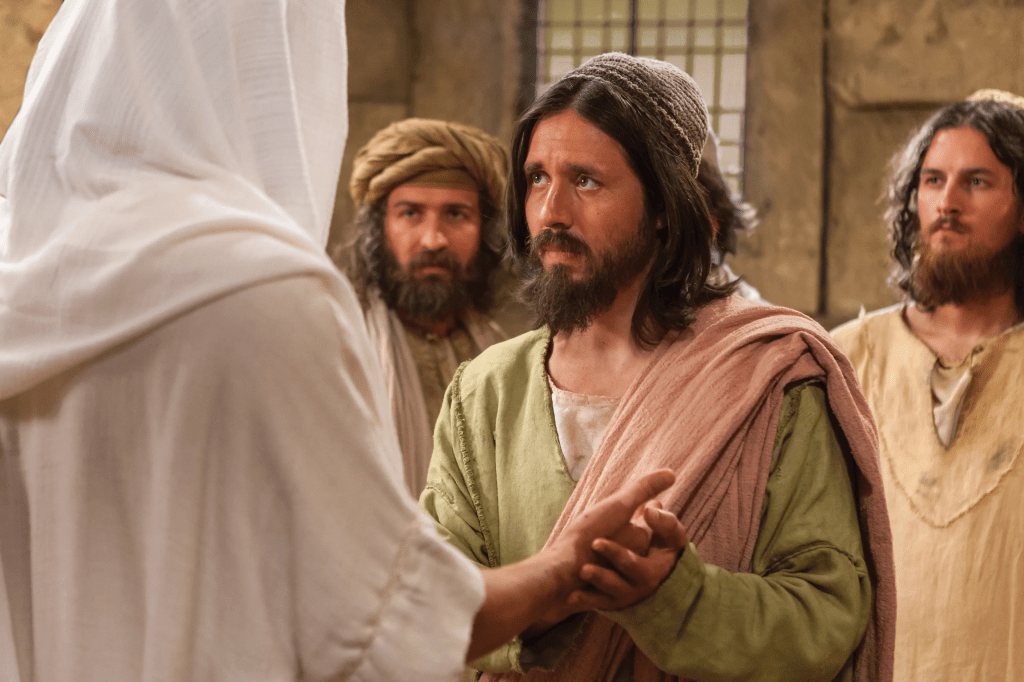
Eight days later, the disciples and all eleven apostles, including Thomas, were gathered inside their locked residence. Jesus appeared and again said, “Peace be with you.” Jesus then said to Thomas, “Put your finger here, and see my hands; and put out your hand, and place it in my side. Do not disbelieve, but believe.”

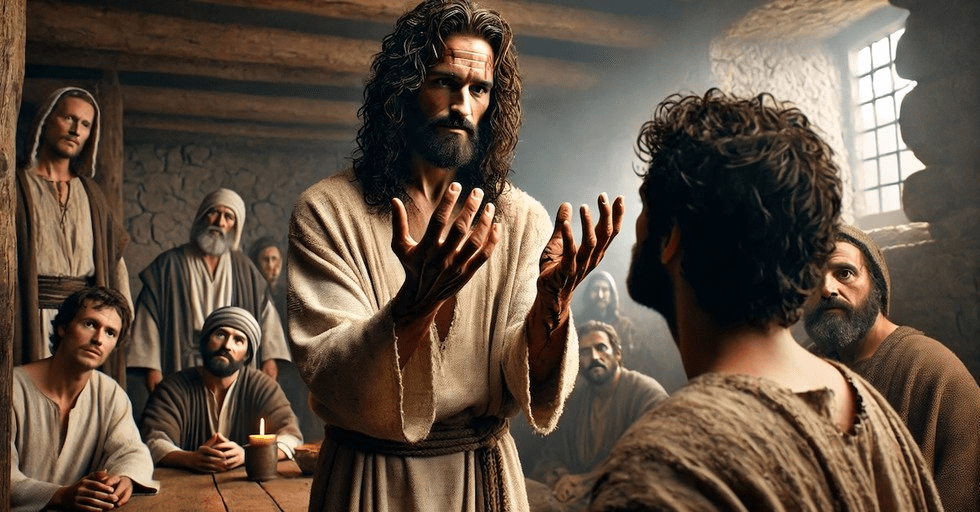
Jesus approached Thomas at his empiricist level. The Lord commanded His apostle to touch and see the marks of His crucified body. Jesus then commanded Thomas to no longer personally disbelieve but believe. Thomas responded, based on the empirical evidence, “My Lord and my God!”

While Thomas’ declaration of worship was in spirit and truth (John 4:24), Jesus did not allow Thomas, or believers today, to rest their faith in Christ solely upon empirical evidence as a determiner of truth. Jesus said, “Have you believed because you have seen me? Blessed are those who have not seen and yet have believed.” Jesus lauded a rational response to God’s revelation rather than resting on one senses on empirical evidence.

“Jesus responded to Thomas with a blessing on those who would believe in His resurrection without seeing Jesus’ physical, resurrected body (v. 29). This was probably not a rebuke of Thomas for needing evidence to believe. More likely, Jesus was signaling that those who believe in Him without seeing His physical, resurrected body are just as blessed as Thomas and the other disciples who did see it. We who believe in Jesus based on the Apostolic testimony are not lesser disciples than those who saw Him in the flesh,” concludes Dr. Sproul.

The Apostle Peter would echo this perspective when he wrote to the elect exiles in his first epistle. These were believers in Christ who encountered various trials.  Peter wrote, Though you have not seen him, you love him. Though you do not now see him, you believe in him and rejoice with joy that is inexpressible and filled with glory, obtaining the outcome of your faith, the salvation of your souls,” (1 Peter 1:8–9 ESV).

Believers in Christ are to know what God has revealed of Himself in creation and in the Scriptures. It is important to not only know what we believe but also why we believe it. However, our faith in Christ must be rooted in the character of God who reveals Himself to His creation.

Soli deo Gloria!

.

The Gospel of Matthew: Jesus Appears to the Ten Apostles. Part 2.

36 As they were talking about these things, Jesus himself stood among them, and said to them, “Peace to you!” 37 But they were startled and frightened and thought they saw a spirit. 38 And he said to them, “Why are you troubled, and why do doubts arise in your hearts? 39 See my hands and my feet, that it is I myself. Touch me, and see. For a spirit does not have flesh and bones as you see that I have.” 40 And when he had said this, he showed them his hands and his feet. 41 And while they still disbelieved for joy and were marveling, he said to them, “Have you anything here to eat?” 42 They gave him a piece of broiled fish, 43 and he took it and ate before them.” (Luke 24:36–43 (ESV)

19 On the evening of that day, the first day of the week, the doors being locked where the disciples were for fear of the Jews, Jesus came and stood among them and said to them, “Peace be with you.” 20 When he had said this, he showed them his hands and his side. Then the disciples were glad when they saw the Lord. 21 Jesus said to them again, “Peace be with you. As the Father has sent me, even so I am sending you.” 22 And when he had said this, he breathed on them and said to them, “Receive the Holy Spirit. 23 If you forgive the sins of any, they are forgiven them; if you withhold forgiveness from any, it is withheld.” (John 20:19–23 (ESV)

All four Gospels parallel each other concerning the events on Resurrection Sunday. The Holy Spirit specifically inspired the writers to provide particular information not found in the other Gospels. While each writer provides selective, insightful information, they do not contradict each other in telling the wonderful news that Jesus Christ is alive. Such is the case with today’s text from Luke and the Apostle John regarding Jesus’ appearance to ten of His apostles.  

It was the same evening in which Jesus dined with the Emmaus Disciples (Luke24:28-32). John explains the doors of the place where the disciples in Jerusalem were staying were locked. The reason was the disciples feared the Jewish religious leaders. Perhaps they were concerned they would also face crucifixion. This is one evidence the disciples were not expecting Jesus’ resurrection. What they would soon encounter and experience would not be the result of their earnest wish Jesus’ death would be undone. The apostles knew Jesus died and their perspective was He would remain dead. They were without hope.

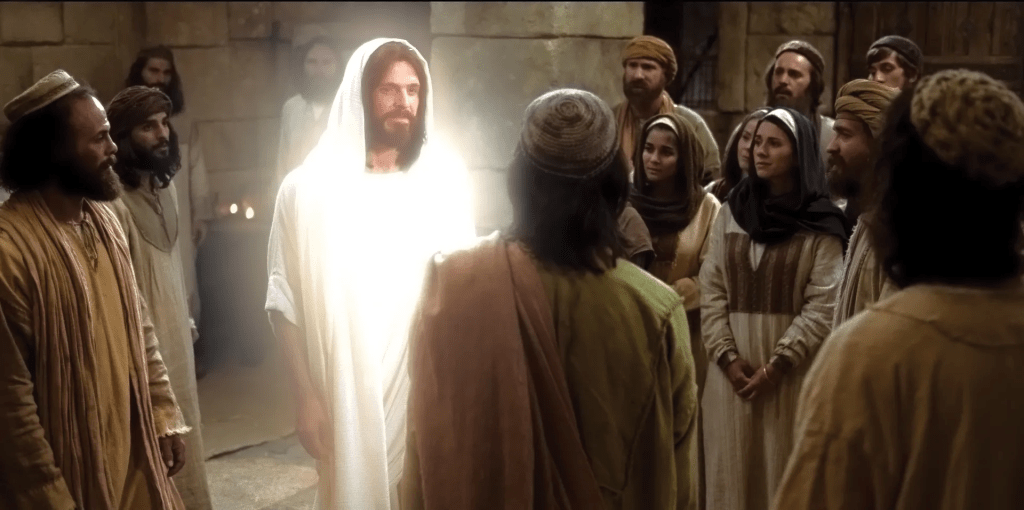
Suddenly, Jesus stood and was among them. This was a miraculous and instantaneous appearance. No locked doors prevented Him from being in their midst.

He said, “Peace” (εἰρήνη; Eirene) the Greek word meaning tranquility and freedom from worry. This parallels the Jewish word Shalom.

What was the disciples’ immediate response? Luke states, “But they were startled and frightened and thought they saw a spirit.”(Luke 24:37).They thought they were seeing a ghost or perhaps an evil spirit.  Jesus said, “Why are you troubled, and why do doubts arise in your hearts?” (Luke 24:38). The disciples were not moving and uncertain as to who, or what, they were seeing.

Jesus then showed them His hands and feet. He told them to touch Him and see that He was not a ghost. “Touch me, and see. For a spirit does not have flesh and bones as you see that I have.” (Luke 24:39-40). The Apostle John states Jesus showed His disciples the crucifixion scars in His hands and side (John 20:20). The disciples saw Jesus was truly alive from the dead and not a phantom or a figment of their own imagination.

“The disciples disbelieved for joy and continued for a while in this state. Psychologically this is understandable. We should bear in mind that only (what we would call) “day before yesterday” their hearts had been pierced with a feeling of utter hopelessness. When Jesus breathed his last the situation seemed to be irreparably desperate. It was the end. Jesus was gone. He was dead. And now to believe that he was standing here in their very midst, alive and well, was almost impossible. Was what they were looking at a ghost? One moment they would say to themselves, “This must be Jesus. How wonderful.” The next moment they would say, “It is just too good to be true. It must be a ghost,” explains Dr. William Hendriksen.

While the disciples still could not believe what they were seeing because they were so joyful, Jesus said, ““Have you anything here to eat?” There is no indication Jesus had to eat in His glorified state but only that He could eat; and eat He did (Luke 24:43).

Jesus spoke again and said, “Peace be with you. As the Father has sent me, even so I am sending you.” 22 And when he had said this, he breathed on them and said to them, “Receive the Holy Spirit. 23 If you forgive the sins of any, they are forgiven them; if you withhold forgiveness from any, it is withheld.” (John 20:21-23).

“The gift is essential for the performance of the task given to the disciples (Luke 24:48-49; Acts 1:8). This occasion is a foreshadowing, an enacted prophecy, of the fullness of the Spirit to be bestowed on the church at Pentecost (Acts 1:4-5; 2:1-11),” states Dr. R.C. Sproul.

“The apostles, as the founders of the church and acting for it, receive the authority to declare God’s judgment on sins and the means of forgiveness of sins; faith in Jesus (Matt. 16:19; 18:18-20). Fundamentally, this declaration is made in the preaching of the Gospel,” concludes Dr. Sproul.

What a fellowship and divine joy it must have been for the disciples to once again be with Jesus. However, one disciple was conspicuously absent; Thomas. It is his encounter with the risen Lord we will examine next.

Have you had a joyful encounter with Jesus through the preaching of the Word of God and worshiping the Lord in spirit and in truth (John 4:24)? May the Lord give us expectant hearts when we gather to worship; individually and collectively each Lord’s Day.

May the Lord’s truth and grace be found here.

The Gospel of Matthew: Jesus Appears to the Ten Apostles.   

36 As they were talking about these things, Jesus himself stood among them, and said to them, “Peace to you!” 37 But they were startled and frightened and thought they saw a spirit. 38 And he said to them, “Why are you troubled, and why do doubts arise in your hearts? 39 See my hands and my feet, that it is I myself. Touch me, and see. For a spirit does not have flesh and bones as you see that I have.” 40 And when he had said this, he showed them his hands and his feet. 41 And while they still disbelieved for joy and were marveling, he said to them, “Have you anything here to eat?” 42 They gave him a piece of broiled fish, 43 and he took it and ate before them.” (Luke 24:36–43 (ESV)

19 On the evening of that day, the first day of the week, the doors being locked where the disciples were for fear of the Jews, Jesus came and stood among them and said to them, “Peace be with you.” 20 When he had said this, he showed them his hands and his side. Then the disciples were glad when they saw the Lord. 21 Jesus said to them again, “Peace be with you. As the Father has sent me, even so I am sending you.” 22 And when he had said this, he breathed on them and said to them, “Receive the Holy Spirit. 23 If you forgive the sins of any, they are forgiven them; if you withhold forgiveness from any, it is withheld.” (John 20:19–23 (ESV)

All four Gospels parallel each other concerning the events on Resurrection Sunday. The Holy Spirit specifically inspired one of two of the writers to provide particular information not found in the other Gospels. While each writer provides selective, insightful information, they do not contradict each other in telling the wonderful news that Jesus Christ is alive. Such is the case with today’s text from Luke and the Apostle John regarding Jesus’ appearance to ten of His apostles.  

It was the same evening in which Jesus dined with the Emmaus Disciples (Luke24:28-32). Clopas and his companion traveled back to Jerusalem from Emmaus to tell their fellow disciples Jesus was alive (Luke 24:33-35).  It was a Sunday evening; the first day of the week.

John explains the doors of the place where the disciples in Jerusalem were staying were locked. The reason was the disciples feared the Jewish religious leaders. Perhaps they were concerned they would also face crucifixion. This is one evidence the disciples were not expecting Jesus’ resurrection. What they would soon encounter and experience would not be the result of their earnest wish Jesus’ death would be undone. The apostles knew Jesus died and their perspective was He would remain dead. They were without hope.

Suddenly, Jesus stood and was among them. This was a miraculous and instantaneous appearance. No locked doors prevented Him from being in their midst. He said, “Peace” (εἰρήνη; Eirene) the Greek word meaning tranquility and freedom from worry. This parallels the Jewish word Shalom. However, this word takes on greater significance when viewed in light of Jesus’ substitutionary atonement and bodily resurrection. By grace alone, through faith alone in the person and work of Jesus Christ alone, God the Father justifies sinners and declares them righteous in His sight (Romans 5:1).

“It is Easter Sunday, late in the evening. Ten of the apostles, the men from Emmaus, and perhaps others, are gathered in a house somewhere in Jerusalem. For fear of the Jews the doors are locked (John 20:19). All of a sudden Jesus is standing right in their midst. How he entered we do not know. All we know is that the resurrection body must have certain properties which do not pertain to “the body of humiliation,” explains Dr. William Hendriksen. On this see also 1 Cor. 15:35–38.

“Not only is the Risen Lord standing here, right among them, but he also, to put them at rest, says, “Peace (be) with you.” When these words flow from his lips they must not be interpreted as a mere “How do you do?” The reference is to the peace which Jesus had obtained for all his people by his death on the cross.” See Eph. 2:14–18; Phil. 4:7.

What was the disciples’ immediate response? Luke states, “But they were startled and frightened and thought they saw a spirit.”(Luke 24:37).They thought they were seeing a ghost or perhaps an evil spirit.  Jesus said, “Why are you troubled, and why do doubts arise in your hearts?” (Luke 24:38). The disciples were not moving and uncertain as to who, or what, they were seeing.

“One might ask, “But how can it be explained that the men from Emmaus were so startled and frightened, since only a few hours ago they had been conversing with Jesus?The sudden character of the appearance, and the fact that no one had seen Jesus enter the room—all at once, there he was, as if he had materialized out of thin air—may well account for these reactions on the part of the disciples,” concludes Dr. Hendriksen.

Perhaps this scene may be compared to when families are shocked and dumbfounded when a military family member makes an unexpected reunion appearance following their deployment. Initially, there is wonder and disbelief and then overwhelming tears of joy. What we are seeing in today’s study is the initial astonishment, in which joy would soon follow.

May the Lord’s truth and grace be found here.

Soli deo Gloria!

The Gospel of Matthew: Our Burning Hearts.

32 They said to each other, “Did not our hearts burn within us while he talked to us on the road, while he opened to us the Scriptures?” 33 And they rose that same hour and returned to Jerusalem. And they found the eleven and those who were with them gathered together, 34 saying, “The Lord has risen indeed, and has appeared to Simon!” 35 Then they told what had happened on the road, and how he was known to them in the breaking of the bread.” (Luke 24:32–35 (ESV)

All four Gospels parallel each other concerning the events on Resurrection Sunday. The Holy Spirit specifically inspired one of two of the writers to provide particular information not found in the other Gospels. While each writer provides selective, insightful information, they do not contradict each other in telling the wonderful news that Jesus Christ is alive. Such is the case with today’s text from Luke regarding Jesus’ appearance to the so-called Emmaus Disciples.

Significant was Jesus’ disclosure and disappearance from the Emmaus Disciples (Luke 24:30-31). Equally significant was their response in the time they spent with the Lord on the road. “Did not our hearts burn within us while he talked to us on the road, while he opened to us the Scriptures?”

The word hearts (καρδία; kardia) refers to an individual’s mind, emotions and will. In other words, it signifies the soul of humankind. The word burn (καίω; kaio) in the literary context is a present passive participle meaning a sense of fervent and intense faith and joy.

Their exclamation is understandable. They reflect on the manner in which their hearts had been warmed, their spirits illumined, their hope revived when the man who was now no longer a stranger had explained to them that which before they had never understood. Also, now they know that the women had been right after all. Far from talking nonsense, they had spoken the truth. And how kind, how absolutely wonderful was it that the Christ had singled them out for receiving the privilege of having the Scriptures opened to them, so that they now understood as they had never understood before,” explains Dr. William Hendriksen.

This experience was a direct result of the words Jesus spoke to them from the Old Testament Scriptures. It was as if every word Jesus spoke resonated within both of the disciples’ minds, emotions and will. They had a divine encounter with the One, True God. Jesus preached the Word of God to them (2 Timothy 4:1-5). Our response as believers in Christ should be the same when our pastor preaches the Word of God. It is the same truth and the same revelation, which should elicit in us the same burning faith and joy.

Luke then recorded the ensuing events when the Emmaus Disciples left their village and returned to Jerusalem. “33 And they rose that same hour and returned to Jerusalem. And they found the eleven and those who were with them gathered together, 34 saying, “The Lord has risen indeed, and has appeared to Simon!” 35 Then they told what had happened on the road, and how he was known to them in the breaking of the bread.”  

The great news was spreading like a wildfire in a dry cornfield. Jesus was alive!

“So filled are these two men with joy that they must needs tell others. Have they already walked seven miles? Then seven more miles. Was it dark and dangerous? All of that means nothing now. This news is so electrifying and reassuring that the other disciples must know about it. Not tomorrow but tonight,” states Dr. Hendriksen.

“Note the drama of the situation. We picture it as follows: The two men, having completed their seven-mile trip—was it about 9 o’clock by now?—arrive at the door of the room in which The Eleven (and probably others with them) are gathered. When the door opens, they are ready to shout the news. But before they even get a chance they hear the blessed tiding, “The Lord has risen indeed and has appeared to Simon.” Cf. 1 Cor. 15:5. Finally, they too get a chance to tell their story. What an asking and answering of questions! What ecstasy! What a foretaste of “joy unspeakable and full of glory.”

“A new beginning! Light in the darkness! Life conquering death! The Lord is risen indeed! Here all changes. The Cross, the very instrument of despair, becomes an object of glory. The resurrection of Jesus Christ from the dead is the source of a living hope. Listen to the message of exuberant joy, praise, and thanksgiving,” concludes Dr. Hendriksen.

Meditate today upon these words from Peter. “Blessed be the God and Father of our Lord Jesus Christ! According to his great mercy, he has caused us to be born again to a living hope through the resurrection of Jesus Christ from the dead,” (1 Peter 1:3 (ESV)

Soli deo Gloria!