
The Epistle of Jude. Pride of the Apostates. Part 2.

“These are grumblers, malcontents, following their own sinful desires; they are loud-mouthed boasters, showing favoritism to gain advantage.” (Jude 16 (ESV)

Jude has spent a considerable amount of time, and so have we, to understand the character and behavior of apostates. In today’s text. Jude focused his attention on the prideful speech of false teachers. It’s not so much what apostates do that Jude has in mind, but rather what they are, which is displayed by what they do. Apostates are grumblers, malcontents, and loud-mouth boasters.

Grumblers (γογγυσταί; gongystai) and malcontents (μεμψίμοιροι; mempsimoiroi) are complainers. They constantly find fault with other people, and especially other believers in Christ. These individuals complain about other’s faults, but see no flaws in themselves.

I remember an individual who once belonged to the church where I serve as an elder. She left the church and began attending another. Since then, she has left the second church and now attends a different one. In each case, she found something, or someone, to complain about, which prompted her to leave to find an alternative congregation. I wonder how long it will be before she leaves her current church for still another. It is a sad situation, but all too true for many who display the character and behavior of apostates.

Apostates travel to other churches because they are presently, personally and collectively following (πορευόμενοι; poreuomenoi) their own lusts and desires (ἐπιθυμίας; epithymias). The move from one place, or church, to another. They never remain in one location for long.

False teachers are also loud-mouthed boasters (ὑπέρογκα; hyperonka). They are individuals who are bombastic, pompous, haughty and boastful. They are braggards. They are puffed up and swollen with a personal sense of their own importance (2 Peter 2:18).

“Ancient moralists repeatedly condemned flattery and advocated forthright speech; politicians commonly used flattery to win people over with speeches, and flattery was a necessity for subordinates of many emperors to survive. Jude had already addressed both their lusts (vv. 6–8b) and arrogant speech (vv. 8c–10),” explains commentator Craig Keener.

Apostates are individuals “showing favoritism to gain advantage.” The phrase “showing favoritism” is not only a noun (πρόσωπα; prosopa), but Jude also used the verb form (θαυμάζοντες; thaumazontes). Apostates are flatterers who flatter to gain an advantage (ὠφελείας; opheleias), benefit or profit.

“These godless men are showing partiality to gain profits for themselves. The Greek has the expression to admire faces; it is best translated as “flatter.” This expression is actually a Hebrew idiom translated into Greek; it conveys the meaning to show partiality for the sake of material benefits. But in the Old Testament God instructed the Israelites, “Do not show partiality to the poor or favoritism to the great, but judge your neighbor fairly” (Lev. 19:15; also compare Deut. 16:19; James 2:1–9). The apostates speak arrogant words to God and flattering words to the rich. With their arrogance they flout God’s honor and with their flattery they deceive their fellow men,” states Dr. Simon J. Kistemaker.

“In today’s passage, Jude refers to some of the other doctrines practiced and preached by the false teachers, which doctrines we must still oppose today. We have already spoken of the “sinful desires” evident in the wanton immorality of these teachers. But Jude also speaks of these men as being “grumblers” and “malcontents,” referring not to their disparaging of church authority (though they did this) but to their antinomian denial of God’s law. The sin of loud-mouthed boasting is similar; these teachers spoke arrogantly about God, just as their lifestyles revealed their lack of true faith,” explains Dr. R. C. Sproul.

“Showing favoritism to gain advantage” is likely a reference to their greed. These teachers probably exploited the poor or favored the rich in order to gain influence. Such favoritism is blatantly anti-Christian (James 2:1–13), and thus Jude condemns it.”

Although you may not be an apostate, you might have some of the same character traits. Jude said they are murmurers and complainers (vs. 16). Complaining is easy to do; about other people and about God. What about following your desires and not discerning whether they are glorifying God or not? What about flattery? You may say things in order to get what you want. For example, you may pile on the charm when you want something from your parents, or your spouse, or your boss and once you get what you want, you once again become a grumbler.

This week, when you are faced with obstacles or the bad attitudes of those at work or at school, or at home, refuse to complain and murmur. Address the situation, and the person, and commit to not complain to someone else about the individual in question. How should believers in Christ speak?

29 Let no corrupting talk come out of your mouths, but only such as is good for building up, as fits the occasion, that it may give grace to those who hear.”  (Ephesians 4:29 (ESV)

14 Do all things without grumbling or disputing, 15 that you may be blameless and innocent, children of God without blemish in the midst of a crooked and twisted generation, among whom you shine as lights in the world.” (Philippians 2:14–15 (ESV)

Does this mean I cannot complain, grumble and murmur about the weather? Just asking. Have a blessed day in the Lord.  

Soli deo Gloria!
The Epistle of Jude. Pride of the Apostates.

“These are grumblers, malcontents, following their own sinful desires; they are loud-mouthed boasters, showing favoritism to gain advantage.” (Jude 16 (ESV)

Jude has spent a considerable amount of time, and so have we, to understand the character and behavior of apostates. In today’s text. Jude focused his attention on the prideful speech of false teachers. It’s not so much what apostates do that Jude has in mind, but rather what they are, which is displayed by what they do. Apostates are grumblers, malcontents, and loud-mouth boasters.

Scripture has much to say about pride. Pride is self-exultation, arrogance, or self-promotion.

  • Proverbs 16:18 (ESV) – “Pride goes before destruction, and a haughty spirit before a fall.
  • Matthew 23:12 (ESV) – “Whoever exalts himself will be humbled, and whoever humbles himself will be exalted.”
  • Romans 12:16 (ESV) –Live in harmony with one another. Do not be haughty, but associate with the lowly. Never be wise in your own sight.” 

Foundational to all Jude wrote regarding the apostate is their attitude of pride. It fuels apostates in everything they do and speak. Pride is the reason the apostate rejects God, and has a life filled with rebellion and perversion.

Pride prevents the apostate from seeing life as it really is. Rather, prideful apostates see life as they want to see it and everything and everyone are expected to meet their needs and wants.

Recently, a city council approved to make their municipality a sanctuary for trans and “gender-diverse” people. Among those who spoke out in favor of the resolution was a pastor of a local progressive church. The cleric, identified as a disabled, cisgender lesbian, sported a clerical collar as she told council members that if Jesus were at the meeting, He would be “dressed in full drag.”

“The Jesus I know would be dressed in full drag and serving face, or handsome as a trans man, or wrapped in the garb of a non-binary person who knows one gender is way too small to capture their gloriousness,” The pastor claimed, “The Jesus I know would be at this mic with a trembling voice and a shaking body and tears that will not be held back crying, ‘make this city safe for my child.’”

Defectors from the true, biblical faith in Christ as Savior and Lord shroud their prideful language by invoking such phrases as, “The Jesus I know,” or “The God I worship.”  They invoke their own authority rather than the authority of Scripture.

9Or do you not know that the unrighteous will not inherit the kingdom of God? Do not be deceived: neither the sexually immoral, nor idolaters, nor adulterers, nor men who practice homosexuality, 10 nor thieves, nor the greedy, nor drunkards, nor revilers, nor swindlers will inherit the kingdom of God. 11 And such were some of you. But you were washed, you were sanctified, you were justified in the name of the Lord Jesus Christ and by the Spirit of our God.” (1 Corinthians 6:9–11 (ESV)

“If then you have been raised with Christ, seek the things that are above, where Christ is, seated at the right hand of God. Set your minds on things that are above, not on things that are on earth. For you have died, and your life is hidden with Christ in God. When Christ who is your life appears, then you also will appear with him in glory. Put to death therefore what is earthly in you: sexual immorality, impurity, passion, evil desire, and covetousness, which is idolatry. On account of these the wrath of God is coming. In these you too once walked, when you were living in them. But now you must put them all away: anger, wrath, malice, slander, and obscene talk from your mouth.” (Colossians 3:1–8 (ESV)

“Finally, then, brothers, we ask and urge you in the Lord Jesus, that as you received from us how you ought to walk and to please God, just as you are doing, that you do so more and more. For you know what instructions we gave you through the Lord Jesus. For this is the will of God, your sanctification: that you abstain from sexual immorality; that each one of you know how to control his own body in holiness and honor, not in the passion of lust like the Gentiles who do not know God; that no one transgress and wrong his brother in this matter, because the Lord is an avenger in all these things, as we told you beforehand and solemnly warned you. For God has not called us for impurity, but in holiness. Therefore whoever disregards this, disregards not man but God, who gives his Holy Spirit to you.” (1 Thessalonians 4:1–8 (ESV)

“In unflinching terms Jude clearly identified the apostates, while at the same time exposing their character in order to warn believers of their true nature and their final destiny. He was laying the groundwork to call his readers to action against these ungodly men and their practices,” comments Dr. Edward C. Pentecost.

Pray for those who are snared in the traps of apostasy. Remember, such were some of us. May the Lord’s truth and grace be found here.

Soli deo Gloria!

The Epistle of Jude. To Execute Judgment.

14 It was also about these that Enoch, the seventh from Adam, prophesied, saying, “Behold, the Lord comes with ten thousands of his holy ones, 15 to execute judgment on all and to convict all the ungodly of all their deeds of ungodliness that they have committed in such an ungodly way, and of all the harsh things that ungodly sinners have spoken against him.” (Jude 14–15 (ESV)

What will the Lord Jesus Christ do when He comes again with ten thousand of His holy ones? What does this have to do with the present problem of apostates and the ancient prophecy of Enoch? Jude immediately provided the answer in vs. 15 of his epistle.

The Lord Jesus will execute judgment (ποιῆσαι κρίσιν; poiesai krisin). This means the Lord Christ will carry out, or accomplish, his verdict of condemnation upon all apostates and false teachers. Jesus came to save, and not judge, the lost at His first coming (John 3:17-21). Jesus will come to judge, and not save, the lost at His second coming (2 Peter 3:1-10; Rev. 19:1-2, 20-21; 20:1-15).

The Lord will also convict (ἐλέγξαι; elenxai) and actively expose and rebuke all the ungodly (ἀσεβεῖς; asebeis). The ungodly are the wicked who have no regard for the Lord God (Rom.1:18-32). Jude used the word ungodly three times: as an adjective, verb and noun. He did so for emphasis.

John Newton poetically described the Lord’s return, and the plight of the ungodly, in the following manner.

At His call the dead awaken,                                                                                  Rise to life from earth and sea;                                                                                       All the powers of nature, shaken                                                                                      By His looks, prepare to flee.                                                                                      Careless sinner,                                                                                                          What will then become of thee?

Jude states the Lord will judge the ungodly apostates because of their deeds and their words. Their wickedness is at the core of their being. Their behavior and words give evidence of who they truly are. In other words, apostates behave and speak the way they do because of who they are internally (Eph.2:1-3). They do not become false teachers because of their behavior and speech. Their behavior and speech display they are false teachers.  

“As Jude develops his letter, he explains his earlier comment about God’s condemnation of godless men (v. 4). Thus, he discloses that these men live immorally, spurn authority, and “slander celestial beings” (vv. 8, 10). He reveals that they find fault, boast, brag, and flatter (v. 16); they scoff at divine revelation and willfully “follow their own ungodly desires” (v. 18). Applying the prophecy of Enoch, Jude indicates that these men will be convicted because of the evil acts they have committed and the harsh words they have spoken against the Lord,” states Dr. Simon J. Kistemaker.

“All ungodly persons will be judged and all their ungodly deeds and all their hard words will be held as evidence against them in a court of law (see Mal. 3:13; Matt. 12:36). The writer’s emphasis on the terms all and ungodly is designed to call the attention of these godless men to the seriousness of their sin. They deliberately taunt God, dishonor him, and scorn his Word. In the Greek Jude placed the two words ungodly sinners last in the sentence for special emphasis. A literal translation of these words reveals the climax of the sentence: “sinners, godless persons.”

“Enoch’s prophecy pointed to the glorious return of Christ to the earth with thousands upon thousands of His angels (holy ones) (Matt. 24:30; 2 Thes. 1:10), when His purpose will be to judge everyone (2 Thes. 1:7–10) and to convict all the ungodly with unanswerable evidence that their actions, manners, and words have been ungodly (asebeis, “irreverent”; cf. Jude 4). Jude’s fourfold use of this word ungodly reinforces his description of their nature. Rather than being true spiritual leaders, they had spoken harsh words (cf. “speak abusively” in v. 10) against Jesus Christ whom they denied,” explains Dr. Edward C. Pentecost.

My hope is built on nothing less
Than Jesus’ blood and righteousness
I dare not trust the sweetest frame
But wholly lean on Jesus’ name.

When darkness veils His lovely face
I’ll rest on His unchanging grace
In every high and stormy day
My anchor holds within the veil.

His oath, His covenant, His blood
Support me in the whelming flood
When all around my soul gives way
He then is all my hope and stay.

When He shall come with trumpet sound
Oh, may I then in Him be found
Dressed in His righteousness alone
Faultless to stand before the throne.

On Christ the solid rock I stand
All other ground is sinking sand
All other ground is sinking sand.

May the Lord’s truth and grace be found here. Have a blessed day in the Lord.

Soli deo Gloria!
The Epistle of Jude. Enoch.

It was also about these that Enoch, the seventh from Adam, prophesied, saying, “Behold, the Lord comes with ten thousands of his holy ones,” (Jude 14 (ESV)

What do the Scriptures tell us about the Old Testament character known as Enoch? Who was this individual and why did Jude refer to him when writing about the danger of apostates and apostasy?

Following the genealogy of Gen. 5:1–141 Chron. 1:1–3; Luke  3:37; Heb. 11:5, Enoch was the seventh in the line of Adam. Because Enoch “walked with God,” he was taken directly to heaven without dying (cf. Gen. 5:24Heb. 11:5). The Bible mentions only one other individual who enjoyed such an intimate relationship with the LORD described as walking with God; Noah (Gen. 6:9). The Scriptures also mention only one other individual being taken to heaven alive like Enoch; Elijah (2 Kings 2:1-12). Enoch was the father of Methuselah and the great grandfather of Noah (Gen. 5:21-31). Jude wrote that Enoch prophesied the Lord Jesus would come with ten thousand of his holy ones.

“Enoch, before the flood, prophesied about Christ’s second coming in judgment (cf. 1 Thess. 3:13). “Holy ones” can refer to either angels or believers. Since both angels (Matt. 24:31; 25:31Mark 8:382 Thess. 1:7) and believers (Col. 3:41 Thess. 3:13Rev. 19:14) will accompany Christ, it may refer to both (cf. Zech. 14:5), but the focus on judgment in Jude 15 seems to favor angels, who are often seen in judgment action. While believers will have a role of judging during the Lord’s earthly kingdom (see note on 1 Cor. 6:2) and will return when Christ comes to judge (Rev. 19:14), angels are the executioners of God at the second coming of Christ (see Matt. 13:39–41, 49–50; 24:29–31; 25:312 Thess. 1:7–10),” explains Dr. John MacArthur.

Jude’s reference to Enoch’s prophesy presents one of the interpretative challenges in properly understanding this epistle. It also resulted in Jude being one the New Testament books disputed for its inclusion into the biblical canon. The question centered upon authenticity.

The period of time between the Old and New Testaments, known as the 400 silent years, contained a great amount of international upheaval. The Judean Maccabean revolt (around 164 BC) concluded with the overthrow of Antiochus IV’s tyranny and defilement of the temple in Jerusalem. Israel subsequently enjoyed a century of independence from foreign rule. This continued until 63 BC when the Roman general Pompey made Israel a part of the Roman empire.

“Though prophets were silent during the intertestamental period, the Jews continued to produce many religious works. These works came to be known as the deuterocanonical books, and many of them, such as 1 and 2 Maccabees, are included in the canon of the Roman Catholic Church. However, many other works were produced at this time and were never recognized as inspired, even though they may have been used as devotional aids by some Jews,” explains Dr. R. C. Sproul.

“One of these is known as the Testament of Moses and is the likely source for Jude’s description of the fight over Moses’ body in verse 9 of his epistle. Jude’s reliance on an uninspired source immediately raises concerns for us. These concerns are only compounded by today’s passage. In verses 14–15, Jude quotes 1 Enoch, a pseudepigraphal (falsely attributed) work written between the third and first centuries BC. This book is based on the enigmatic “Enoch” of Genesis 5:18–24, and was a favorite of the Dead Sea sect.”

Did Jude consider the aforementioned works inspired? Many in the early church rejected Jude as canonical because of his use of these sources.

“The majority of those who questioned Jude did so on the basis of its reference to the Pseudepigraphal Book of Enoch (vv.14-15; cf. Enoch 1:9), and probably also to the Assumption of Moses (vs.9).” explains Dr. Norman Geisler.

“However, the explanation that has most commended it is that Jude’s citation of Enoch does not demand approval of the work as a whole, but extends only to those portions that he (Jude) utilizes for his purpose. This situation is not materially different from Paul’s references to pagan poets (Acts 17:28; I Cor. 15:33; Titus 1:12).”

“Because there are no doctrinal issues discussed, the challenges of this letter have to do with interpretation in the normal process of discerning the meaning of the text. Jude does quote from non-canonical, pseudepigraphal (i.e., the actual author was not the one named in its title) sources such as 1 Enoch (v. 14) and the Assumption of Moses (v. 9) to support his points. Was this acceptable? Since Jude was writing under the inspiration of the Holy Spirit (2 Tim. 3:162 Pet. 1:20–21) and included material that was accurate and true in its affirmations, he did no differently than Paul (cf. Acts 17:281 Cor. 15:33Titus 1:12),” states Dr. MacArthur.  

All truth is God’s truth. Believers in Christ can be certain the Holy Spirit inspired Jude’s epistle (2 Tim. 3:16-17; 2 Peter 1:20-21).

Soli deo Gloria!

The Epistle of Jude. The Ultimate Destination.  

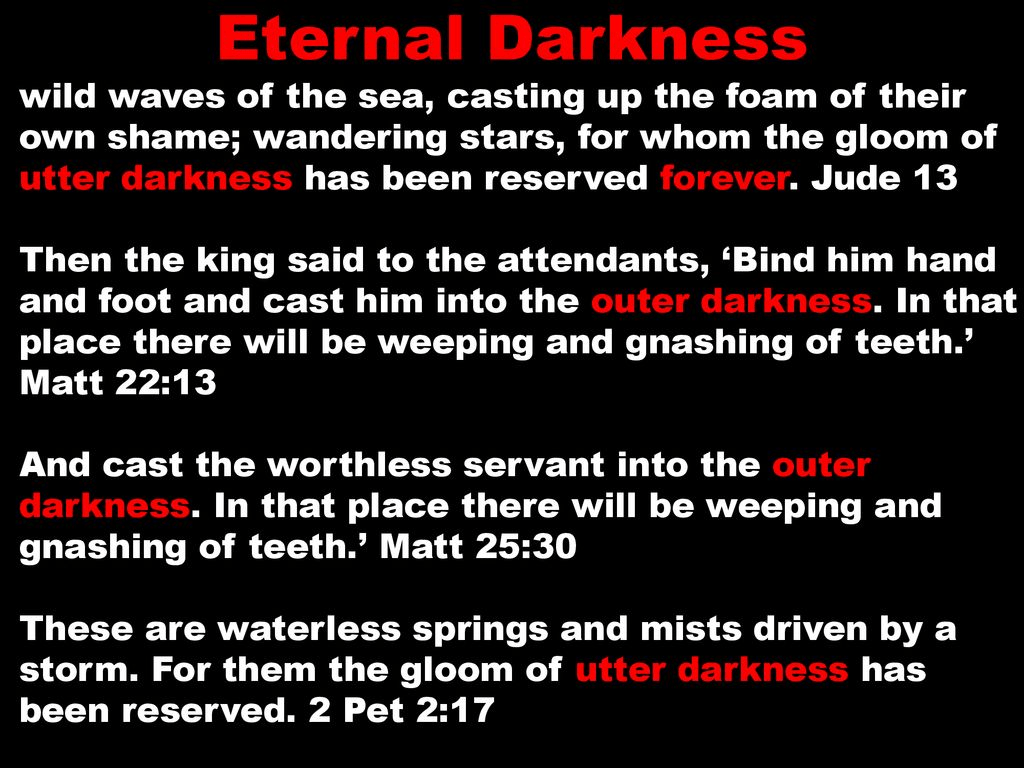
12 These are hidden reefs at your love feasts, as they feast with you without fear, shepherds feeding themselves; waterless clouds, swept along by winds; fruitless trees in late autumn, twice dead, uprooted; 13 wild waves of the sea, casting up the foam of their own shame; wandering stars, for whom the gloom of utter darkness has been reserved forever.” (Jude 12–13 (ESV)\

Jude used metaphors (direct comparisons) to illustrate the danger of apostates. The Holy Spirit organized Jude’s thoughts into two sets of triads (2 Tim. 3:16-17; 2 Peter 1:20-21),

First, apostates are “hidden reefs at your love feasts, as they feast with you without fear;” Second, Jude compared apostates to “shepherds feeding themselves.” Third, Jude called them “waterless clouds, swept along by winds.”  Fourth, Jude also called them “fruitless trees in late autumn, twice dead, uprooted.” Fifth, apostates are “wild waves of the sea, casting up the foam of their own shame.” Finally, false teachers are “wandering stars.”

In each of Jude’s illustrations, he depicted apostates as untrustworthy and untruthful. What is trustworthy is their ultimate destination and damnation. Jude wrote, “, for whom the gloom of utter darkness has been reserved forever.”

Gloom (ζόφος; zophos) refers to darkness, blackness and the gloominess of hell. Utter darkness (σκότους; skotous) is the evil world and the dwelling place of demons or evil spirits. It is this destination and destiny God has reserved (τετήρηται; teteretai) or retained for all apostates.

The Lord Jesus echoed this in His Sermon on the Mount. He made it abundantly clear the destination of false teachers or apostates.

21 “Not everyone who says to me, ‘Lord, Lord,’ will enter the kingdom of heaven, but the one who does the will of my Father who is in heaven. 22 On that day many will say to me, ‘Lord, Lord, did we not prophesy in your name, and cast out demons in your name, and do many mighty works in your name?’ 23 And then will I declare to them, ‘I never knew you; depart from me, you workers of lawlessness.’ (Matthew 7:21–23 (ESV)

“Jude is no longer speaking about the wandering stars but is applying the last line of verse 13 to the godless men whom God has consigned to hell. Notice the resemblance of their destiny to that of the fallen angels whom God has placed in dark dungeons. “These [angels] he has kept in darkness, bound with everlasting chains for judgment on the great Day” (v. 6),” explains commentator Simon J. Kistemaker.

“Jude qualifies the term darkness with the word blackest, which also occurs in the parallel passage, “Blackest darkness is reserved for them” (2 Peter 2:17). That is, these wicked men will spend eternity in utter darkness. They exist without hope in absolute oblivion.”

“Of these four metaphors, the last one reveals the ultimate destiny of the false prophets who pretend to be guiding lights but instead are wandering stars. Jude employs the passive voice in the clause “for whom blackest darkness has been reserved forever.” With the passive he indicates that God himself has placed the godless men, together with the fallen angels (v. 6), in everlasting darkness,” concludes Kistemaker.

“Jude 12–13 speaks of the way these teachers feasted on Jude’s audience — most likely a reference to the unbridled greed that would have motivated their teaching. His comparisons of the teachers to “waterless clouds” and “fruitless trees” demonstrate that despite their claims to the contrary, these men offered nothing of value to the church. Significantly, Jude calls these teachers “twice dead” (v. 12), referring to their eventual, physical death and eternal spiritual death. This death, experienced forever in the “gloom of utter darkness,” is reserved for all who pervert the grace of God (v. 13),” states Dr. R. C. Sproul.

The ultimate destiny of these so-called “lights” is utter darkness. How ironic. Let us resolve to be the salt and light God has called all believers in Christ to be (Matt. 5:13-16). May the Lord’s truth and grace be found here.

Soli deo Gloria!

The Epistle of Jude. Comparisons to Nature. Part Two.

12 These are hidden reefs at your love feasts, as they feast with you without fear, shepherds feeding themselves; waterless clouds, swept along by winds; fruitless trees in late autumn, twice dead, uprooted; 13 wild waves of the sea, casting up the foam of their own shame; wandering stars, for whom the gloom of utter darkness has been reserved forever.” (Jude 12–13 (ESV)\

Jude used metaphors (direct comparisons) to illustrate the danger of apostates. The Holy Spirit organized Jude’s thoughts into two sets of triads (2 Tim. 3:16-17; 2 Peter 1:20-21),

First, apostates are “hidden reefs at your love feasts, as they feast with you without fear;” Much like hidden reefs near the shore that can endanger a ship, the apostates were hidden false teachers threatening to sink a church in its devotion to the Lord. Their danger was unseen but no less dangerous (vs.4).  

The love feasts (ἀγάπαις; agapais) were the church’s fellowship meals, which may have included observing The Lord’ s Supper. The false teachers participated in these meals fearlessly and irreverently towards the LORD.

Second, Jude compared apostates to shepherds feeding themselves. Shepherds feeding (ποιμαίνοντες; poimainontes) refers to false teachers presently, actively and collectively protecting and nourishing themselves and not the church.  They behave this way because they do not love God or care for the people. False teachers do not feed, lead, or protect believers in Christ. Rather, they are enemies of Christ and His church. False shepherds, or false teachers, are not new. They have always posed a problem for the people of God (Jer. 50:6-7; Ezek. 34:1-10).

Third, Jude called them waterless clouds, swept along by winds; Apostates are masses of vapor in the sky, promising, but not providing, much needed rain. Instead, they are swept along by winds. Apostates have no substance or stability. They promise truth but deliver nothing but lies. Once they do, they move on to the next church.

Fourth, Jude also called them “fruitless trees in late autumn, twice dead, uprooted.” In the midst of two sets of triads, Jude provides a secondary triad regarding fruitless trees (δένδρα ἄκαρπα; dendra akarpa), which are unproductive and barren.

Their fruitlessness occurs in late autumn (φθινοπωρινὰ; phthinoporina) or just before winter. They are twice dead (δὶς ἀποθανόντα; dis apthanonta) referring to physical and eternal, spiritual death. Finally, they are uprooted (ἐκριζωθέντα; ekrizothenta) meaning they have no roots or attachment to the soil. In effect, apostates are not rooted or connected to Jesus Christ (John 15:1-11; Eph. 3:14-19). They are unconverted.

“Apostates hold out the claim of providing a spiritual feast, but instead deliver famine (cf. Luke 13:6–9). Doubly dead trees will never yield fruit and, regardless of what they say, will always be barren because they are uprooted. Cf. Matt. 7:17–20,” explains Dr. John MacArthur.

“Jude 12–13 speaks of the way these teachers feasted on Jude’s audience — most likely a reference to the unbridled greed that would have motivated their teaching. His comparisons of the teachers to “waterless clouds” and “fruitless trees” demonstrate that despite their claims to the contrary, these men offered nothing of value to the church. Significantly, Jude calls these teachers “twice dead” (v. 12), referring to their eventual, physical death and eternal spiritual death. This death, experienced forever in the “gloom of utter darkness,” is reserved for all who pervert the grace of God (v. 13),” comments Dr. R.C. Sproul

Fifth, apostates are “wild waves of the sea, casting up the foam of their own shame.” Wild waves (κύματα ἄγρια; kymata agria) are stormy, violent swells of water. They are savage, fierce and uncontrollable.

From September thru April, it’s storm season on the Northwest coast of the United States. Seas become a foamy churn as powerful waves crash against the shore. Driftwood and logs, carried in by high tides, pile up along the Northwest’s wild winter beaches. Winds roar like a freight train through the coastal rainforest, blast coastal shores and blow sheets of sand and rain horizontally along the beach.

The only trees along the shoreline tough enough to stand up to the powerful blasts of winter storms, the giant Sitka spruce, become artistically shaped by winds which commonly exceed 75 miles per hour. Torrents of rain can turn the day dark as streams and rivers swell and rush to the sea. Rainfall on the Northwest coast often exceeds ten inches per month during the winter, much of it during these drenching storms.

This picture of the sea depicts the wicked whose evil hearts impel them to engage in shameful acts that affect the people who surround them. The evil they commit is forceful, untamed, unpredictable, and involves many an unwary bystander. They bring an element of fear. As a person protects themselves from the spray of the waves, so the believer ought to shun the words and deeds of the wicked.

The Prophet Isaiah wrote, 20 But the wicked are like the tossing sea; for it cannot be quiet, and its waters toss up mire and dirt. 21 There is no peace,” says my God, “for the wicked.” (Isaiah 57:20–21 (ESV)

Casting up the foam (ἐπαφρίζοντα; epaphrizonta) is a present, active plural participle. This means the present, active and collective teachings and behavior of apostates eventually rise to the surface to be seen. The phrase of their own shame (αἰσχύνας; aischynas) refers to the leftover residue of the apostate’s shameful behavior.

In some languages the type of foam which would be referred to in Jude 13 is called ‘the saliva of the waves’ or ‘the whiteness of the waves.’ Since foaming at the mouth is also regarded as a sign of anger, it is possible to speak in some languages of the foam of the waves as being ‘the anger of the waves.’ In other languages one may speak simply of ‘the whiteness of the waves,” states Greek scholars Louw and Nida.

Finally, false teachers are “wandering stars.” Wandering stars (ἀστέρες πλανῆται; asteres planetai) refers to those who lead astray and possess aimless conduct; like a man staggering because he had too much to drink. Apostates lead others into aimless idolatry.

The first seafarers kept in sight of land. To do so was the first trick of navigation; follow the coast. To find an old fishing ground or the way through a shoal, one could line up landmarks, such as a near rock against a distant point on land. Doing that in two directions at once gave a more or less precise geometric location on the surface of the sea. The Greeks even learned to navigate from one island to the next in their archipelago, a Greek word meaning “preëminent sea.” They may have followed clouds (which form over land) or odors (which can carry far out to sea).

But what if land were nowhere nearby? The Phoenicians looked to the heavens. The sun moving across the commonly cloudless Mediterranean sky gave them their direction and quarter. The quarters we know today as east and west the Phoenicians knew as Asu (sunrise) and Ereb (sunset), labels that live today in the names Asia and Europe. At night, they steered by the stars. At any one time in the year at any one point on the globe, the sun and stars are found above the horizon at certain fixed “heights” — a distance that mariners can measure with as simple an instrument as one’s fingers, laid horizontally atop one another and held at arm’s length. The philosopher Thales of Miletus, as the Alexandrian poet Kalli machos recorded, taught Ionian sailors to navigate by the Little Bear constellation fully 600 years before the birth of Christ.  

In each of Jude’s illustrations, apostates are untrustworthy. What is trustworthy is their ultimate destination and damnation. We will consider this when next we meet.

Soli deo Gloria!

The Lord’s Day. Sincere Workers.

22 Bondservants, obey in everything those who are your earthly masters, not by way of eye-service, as people-pleasers, but with sincerity of heart, fearing the Lord.” (Colossians 3:22 (ESV)

Continuing our study in Paul’s Epistle to the Colossians, a new paragraph begins in Colossians 3:18-4:1. The truth of what believers “are” in Christ is to be balanced by how believers live for Christ. The theological truth of Jesus Christ as the only and all-sufficient Savior and Lord, and as sole source of the believers’ life, is now applied to specific groups and situations.

“Americans in the twenty-first century take it for granted that “all men are created equal,” but this idea has certainly not been affirmed throughout most of world history. In the first-century Roman Empire, people were anything but equal,” states Dr. R. C. Sproul.

“Male, property-owning citizens ranked highest in the social order, having rights not extended to their wives, children, or slaves. The male head of household determined whether or not infants born to the family would live or be left to die of exposure. Slaves were regarded as machines subject wholly to the will of the master of the house. Wives did not fare much better, and while it was not uncommon to find a first-century Roman husband who loved his wife, such love was not expected or demanded.”

What people groups does the Apostle Paul, and the Holy Spirit, have in mind? To begin with, Paul addressed wives and husbands (Col. 3:18-19). He then wrote about parents and their children (Col. 3:20-22). Thirdly, Paul considered the Christian responsibility of work (Col. 3:23-4:1). What initially applied to servants and masters in the first century, is applicable to employees and employers today.

The Apostle Paul began his instruction with the word “bondservants.” A bondservant (δοῦλοι; douloi) is another word for slave. These were men and women who were completely controlled by someone or something outside of themselves.

“Nowhere in Scripture is it stated that slavery as such is a divine ordinance, such as marriage (Gen. 1:18, 24), the family (Gen. 1:27, 28), the sabbath (Gen. 2:3), and human government (Gen. 9:6; Rom. 13:1). In and by itself it is not pleasing to God that one man should own another man. The fact, moreover, that Paul addresses slaves and their masters on a basis of equality is significant, and implies their spiritual equality before God,” explains Dr. William Hendriksen.

“The Roman world was full of slaves. It has been estimated that in Rome itself at one time about a third of the inhabitants belonged to this social class. They had become slaves as prisoners of war, or as convicts, or through debt, kidnaping, purchase, or birth from slave-parents.”

Paul instructed Christian bondservants to “obey in everything those who are your earthly master.” Ill will, laziness, dishonesty should no longer be associated with the believer in Christ who is a slave. Rather, initiative, industriousness, integrity and hard work should be the character and behavior of the Christian bondservant. The same should be said of Christian workers today, no matter what the job or vocation in which we labor.

Along with what Christian bondservants should do, the Apostle Paul countered balanced this with what believers should not do in the workplace. Christians are not to be guilty of eye-service (ὀφθαλμοδουλίαις; ophthalmodoulias) or calling attention to themselves. In other words, to work hard only to impress others in order to get a promotion.

Paul also used the word people pleasers (ἀνθρωπάρεσκοι; anthropareskoi) in referring to individuals seeking to please others rather than God. This should be not how the believer in Christ labors.

Rather, the Christian is to work with sincerity (ἁπλότητι; haplotti) or purity of heart (καρδίας;l kardias) or soul. The laborer’s intellect, emotions and will is to have a singleness of purpose; fearing the Lord. This means to have a present, personal and collective desire to reverence God in one’s work.

“In the master-slave relationship, Paul says that Christian slaves must not work “by way of eye-service, as people-pleasers, but with sincerity of heart, fearing the Lord” (Col. 3:22). Considering that many thought all slaves were lazy back then, working wholeheartedly demonstrated the power of the gospel to bring true transformation and not just to create hypocrites who only pretended to do what was right. Moreover, the injunction for the slave to fear the Lord put a limit on the slave master’s authority. The slave had but one ultimate master — Christ Himself — and when the master commanded the slave to do something that Jesus forbade, the slave had to disobey the master,” concludes Dr. Sproul.

The principles Paul wrote in today’s biblical text are applicable to employees today and the way we do our work. Believers in Christ should make the best employees, and they should embody efficiency, loyalty, hard work, and every other trait that good employers value.

May the Lord’s truth and grace be found here. Have a blessed day in the Lord.

Soli deo Gloria!

The Epistle of Jude. Comparisons to Nature. Part One.

12 These are hidden reefs at your love feasts, as they feast with you without fear, shepherds feeding themselves; waterless clouds, swept along by winds; fruitless trees in late autumn, twice dead, uprooted; 13 wild waves of the sea, casting up the foam of their own shame; wandering stars, for whom the gloom of utter darkness has been reserved forever.” (Jude 12–13 (ESV)

“In these two verses Jude resorts to using many figures from nature to portray his godless adversaries. His metaphors are eloquent, colorful, and pointed, and aid the reader in recognizing these men who are perverting God’s truth. Here is poetic description at its best,” explains Dr. Simon J. Kistemaker.

First, apostates are “hidden reefs at your love feasts, as they feast with you without fear;” Jude used a direct comparison to illustrate the danger of apostates.

Jude called them hidden reefs (σπιλάδες; spilades). These are rocks washed by the sea. To sailors, they represent an unseen and hidden danger to a ship and its crew. The Apostle Paul was well acquainted with nautical reefs. He possessed personal experience.

25 ‘Three times I was beaten with rods. Once I was stoned. Three times I was shipwrecked; a night and a day I was adrift at sea; 26 on frequent journeys, in danger from rivers, danger from robbers, danger from my own people, danger from Gentiles, danger in the city, danger in the wilderness, danger at sea, danger from false brothers;” (2 Corinthians 11:25–26 (ESV)

39 “Now when it was day, they did not recognize the land, but they noticed a bay with a beach, on which they planned if possible to run the ship ashore. 40 So they cast off the anchors and left them in the sea, at the same time loosening the ropes that tied the rudders. Then hoisting the foresail to the wind they made for the beach. 41 But striking a reef, they ran the vessel aground. The bow stuck and remained immovable, and the stern was being broken up by the surf.” (Acts 27:39–41 (ESV)

 Much like hidden reefs near the shore that can endanger a ship, the apostates were a hidden danger threatening to sink a church of its devotion to the Lord. Their danger was unseen but no less dangerous.

The love feasts (ἀγάπαις; agapais) were the church’s fellowship meals, which may have included observing The Lord’ s Supper. “The Last Supper was a full Passover meal, and the early church had continued the tradition of celebrating a meal (“the Lord’s Supper”) of which bread and wine were only a part. Communion as a full meal was also called a “love feast,” states commentator Craig Keener.

However, the apostates feast ( συνευωχούμενοι; syneuochoumenoi) without fear (ἀφόβως; aphobos). Apostates presently, personally, and collectively gather, rise up and set upon something, or someone, together. They do so fearlessly and irreverently of the LORD.

Secondly, Jude compared apostates to shepherds feeding themselves. Shepherds feeding (ποιμαίνοντες; poimainontes) refers to false teachers presently, actively and collectively protecting and nourishing themselves and not the church.  They behave this way because they do not love or care for the people. False teachers do not feed, lead, or protect believers in Christ. Rather, they are enemies of Christ and His church.

“In contrast to Western shepherds who drive their flocks from behind, Near Eastern shepherds lead their sheep, using their voice to prompt the sheep to follow. This draws a remarkable picture of the master/disciple relationship. NT spiritual leadership is always by example, i.e., a call to imitate conduct (cf. 1 Tim. 4:121 Pet. 5:1–3),” comments Dr. John MacArthur.  

False shepherds, or false teachers, are not new. They have always posed a problem for the people of God.

“My people have been lost sheep. Their shepherds have led them astray, turning them away on the mountains. From mountain to hill they have gone. They have forgotten their fold. All who found them have devoured them, and their enemies have said, ‘We are not guilty, for they have sinned against the Lord, their habitation of righteousness, the Lord, the hope of their fathers.” (Jeremiah 50:6–7 (ESV)

“The word of the Lord came to me: “Son of man, prophesy against the shepherds of Israel; prophesy, and say to them, even to the shepherds, Thus says the Lord God: Ah, shepherds of Israel who have been feeding yourselves! Should not shepherds feed the sheep? You eat the fat, you clothe yourselves with the wool, you slaughter the fat ones, but you do not feed the sheep. The weak you have not strengthened, the sick you have not healed, the injured you have not bound up, the strayed you have not brought back, the lost you have not sought, and with force and harshness you have ruled them. So they were scattered, because there was no shepherd, and they became food for all the wild beasts. My sheep were scattered; they wandered over all the mountains and on every high hill. My sheep were scattered over all the face of the earth, with none to search or seek for them. “Therefore, you shepherds, hear the word of the Lord: As I live, declares the Lord God, surely because my sheep have become a prey, and my sheep have become food for all the wild beasts, since there was no shepherd, and because my shepherds have not searched for my sheep, but the shepherds have fed themselves, and have not fed my sheep, therefore, you shepherds, hear the word of the Lord: 10 Thus says the Lord God, Behold, I am against the shepherds, and I will require my sheep at their hand and put a stop to their feeding the sheep. No longer shall the shepherds feed themselves. I will rescue my sheep from their mouths, that they may not be food for them.” (Ezekiel 34:1–10 (ESV)

Thirdly, Jude called them waterless clouds, swept along by winds; Waterless clouds (νεφέλαι ἄνυδροι; nephelai anydroi) are masses of vapor in the sky, promising, but not providing, much needed rain. Instead, they are swept along by winds. To be swept along (παραφερόμεναι; parapheromenai) means to be presently and passively carried away by the wind.  Apostates have no substance or stability. They promise truth but deliver nothing but lies.

“Apostates promise spiritual life but are empty clouds that bring the hope of rain, but actually deliver nothing but dryness and death (cf. Prov. 25:14). They preach a false gospel that leads only to hell,” concludes Dr. MacArthur.

May the Lord’s truth and grace be found here. Have a blessed day in the Lord.

Soli deo Gloria!
The Epistle of Jude. Running With the Wolves.  

Beloved, although I was very eager to write to you about our common salvation, I found it necessary to write appealing to you to contend for the faith that was once for all delivered to the saints.” (Jude 3 (ESV)

15 “Beware of false prophets, who come to you in sheep’s clothing but inwardly are ravenous wolves. 16 You will recognize them by their fruits. Are grapes gathered from thornbushes, or figs from thistles? 17 So, every healthy tree bears good fruit, but the diseased tree bears bad fruit. 18 A healthy tree cannot bear bad fruit, nor can a diseased tree bear good fruit. 19 Every tree that does not bear good fruit is cut down and thrown into the fire. 20 Thus you will recognize them by their fruits.” (Matthew 7:15–20 (ESV)

The following article is by Dr. James M. Boice who served as pastor of Tenth Presbyterian Church in Philadelphia, Pa. and was president of the Alliance of Confessing Evangelicals. His article is entitled Running with the Wolves. It was originally published in 2000.

For years I have spoken about what I consider to be worldliness of liberal churches, accusing them of four things: pursuing the world’s wisdom, embracing the world’s theology, following the world’s agenda, and employing the world’s methods. What has hit me like a thunderbolt in recent years is that what I have been saying about liberal churches now needs to be said about the evangelical churches as well, since many of them have become as liberal as the larger mainline denominations before them.

A few years ago, Professor Martin Marty, always a shrewd observer of the American church, said in a magazine interview that in his judgment evangelicals would be ‘the most worldly people in America’ by the end of the 20th century. Marty’s observations are not always right, in my opinion, but in this case, he was on target. Evangelicals have embraced worldliness in the same ways that it was embraced by the liberal churches. Like those liberals of past years, evangelicals today:

  1. Pursue the World’s Wisdom. Evangelicals are not heretics of course, at least not consciously. If they are asked whether the Bible is the authoritative and inerrant Word of God, most will answer affirmatively. But many have abandoned the Bible all the same because they do not think it is adequate for the challenges we face as we enter a new millennium. They do not think it is sufficient for wining people to Christ, so they turn to felt-need sermons, to entertainment, or to signs and wonders. They do not think the Scriptures are sufficient for achieving genuine Christian growth, so they turn to therapy groups or defer to Christian counseling. They do not think the Bible is sufficient for discovering the will of God for their lives, so they look for mystical signs or subjective feelings. They do not think it is sufficient for impacting the secular society that surrounds us, so they fund lobby groups in Washington or throw their efforts into electing increasingly larger numbers of ‘born again’ government officials.

2. Embrace the World’s Theology. Like the liberals before us, evangelicals use the Bible’s words but give them new meaning. Sin becomes ‘dysfunctional behavior.’ Salvation becomes ‘self-esteem’ or ‘wholeness.’ Faith becomes ‘possibility thinking.’  Jesus becomes more of an example for right living than our Savior from sin. People are told how to succeed in business, have happy marriages, and raise nice children, but not how to get right with an offended God.

3. Follow the World’s Agenda. The world’s major agenda is not hunger, racism, the redistribution of wealth, or ecology. The world’s major agenda is being happy, and happiness is achieving the maximum amount of personal peace and sufficient prosperity to enjoy it. But is that the bottom line of much evangelical preaching today? Being happy? Being content? Being satisfied? Francis Schaeffer saw it and called the evangelical church to repentance, but we are too self-satisfied to do that. Far be it from us to preach a Gospel that would expose our liberal-like sins and drive us to the Savior.

4. Employ the World’s Methods. Evangelicals have become like liberals in this area too. How else are we to explain the stress so many place on numerical growth and money? How else are we to explain that so many pastors’ tone down the hard edges of Bible truth in order to attract greater numbers to their services? How else are we explain that we support a National Association of Evangelicals lobby in Washington? How else are we to explain that we have created social-action groups to advance specific legislation?

Or consider evangelical rhetoric. Evangelicals speak of ‘taking back America,’ ‘fighting for the country’s soul,’ and ‘reclaiming the United States for Christ.’ How? By electing Christian presidents, congressmen and senators, lobbying for conservative judges, taking over power structures, and imposing our Christian standard of morality on the rest of the nation by law. Was America ever really a Christian nation? Was any nation? What about Augustine’s doctrine of the two cities that meant so much to the Reformers? Will any country ever be anything other than man’s city? And what about America’s soul? Is there really an American soul to be redeemed? Or fought over? When we fall into these patterns of religious behavior, do we merely duplicate what the liberals did before us?  

A recent column in the New Yorker magazine bemoaned what it called the ‘brave new audience-driven preaching’ of our day. The writer commented, “The preacher, instead of looking out upon the world, looks out upon public opinion, trying to find out what the public would like to hear. Then he tries his best to duplicate that and brings his finished product into a marketplace in which others are trying to do the same. The public, turning from our culture to find out about the world, discovers nothing but its own reflection. The unexamined world, meanwhile, drifts blindly into the future.”

How is liberalism in the church to be defeated? Only by the true Christian Gospel. And that can be recovered only through the sword of the Spirit which is the Word of God. If the Bible is neglected, liberalism will come in, because liberalism is merely men and women thinking as men and women think, always apart from revelation. Apart from receiving the voice of God in Scripture, we always minimize our sin, exalt our natural abilities, and invent endless plans for our own moral and political salvation. The Bible exposes our sin for what it is, reveals our utter incapacity for self-help, and throws us on the mercy of God who has revealed the sole way of salvation through faith in Jesus Christ.

Error will never be defeated by mere rhetoric or even by burning heretics at the stake. It is only by the sword of the Spirit that we are able to ‘demolish arguments and every pretension that sets itself up against the knowledge of God and…taking captive every thought to make it obedient to Christ’ (2 Cor. 10:5, NIV).

What Dr. Boice wrote about religious liberals and liberalism can be applied to apostates and apostasy. May the Lord’s truth and grace be found here.

Soli deo Gloria!

The Epistle of Jude. Woe to Apostates.

“Woe to them! For they walked in the way of Cain and abandoned themselves for the sake of gain to Balaam’s error and perished in Korah’s rebellion.” (Jude 11 (ESV)

“Since we are called to be alert to the threat of false teaching in our midst, for what should we be looking? Should we expect someone to stand up in the middle of a worship service and declare: “The church has had it all wrong for years and years. Let me tell you what the Bible really teaches.” Do we expect bold declarations that strike at the heart of the Bible’s teachings such as “God is not real” or “Jesus is not God”? If we expect that a sudden and dramatic falsehood will enter the church, we will not be looking in the right place. It is true that great falsehoods have been found in the church, but not typically in a sudden fashion. The enemy of our souls prefers a subtler approach, sowing doubts and twisting the truth to make falsehood acceptable. After all, the first attack on man was not, “How can you possibly believe that?” but, “Did God really say that?” –Pastor Fred Greco

“Another thing we need to remember is that false teaching does not always come into the church as a result of deliberate attempts to deceive Christians and trick them into denying the faith. Such tactics certainly are possible, for the New Testament does record instances of “the false brethren who had sneaked in to spy out our liberty which we have in Christ Jesus” (Gal. 2:4) and those who “crept in unnoticed . . . ungodly persons who turn the grace of our God into licentiousness and deny our only Master and Lord, Jesus Christ” (Jude 4). We should not be naive and ignore signs of such attacks. But more often, the danger of false teaching comes from other avenues. Three avenues to which we must be especially alert are the desire to find some new and interesting teaching or doctrine, an overreaction to other teaching errors in the church, and a desire to avoid criticism, particularly criticism from the world around us.”  

Regardless of the prevailing reasons for false teaching, the consequences are clear; judgment from God. Woe (οὐαὶ; ouai) refers to dishonor, horror and distress. God purposefully and righteously brings His wrath to bear upon all apostates.

Romans 1:18–21 (ESV) says, 18 For the wrath of God is revealed from heaven against all ungodliness and unrighteousness of men, who by their unrighteousness suppress the truth. 19 For what can be known about God is plain to them, because God has shown it to them. 20 For his invisible attributes, namely, his eternal power and divine nature, have been clearly perceived, ever since the creation of the world, in the things that have been made. So, they are without excuse. 21 For although they knew God, they did not honor him as God or give thanks to him, but they became futile in their thinking, and their foolish hearts were darkened.

“The lamentation Woe to them! (with variations) is a typical phrase that the Old Testament prophets uttered repeatedly to condemn persons or nations. Jesus uses the word woe to place a curse on Korazin and Bethsaida (Matt. 11:21), and he rebukes the Pharisees with a series of seven woes (Matt. 23). And Paul calls a woe upon himself should he fail to preach the gospel (1 Cor. 9:16). Likewise, Jude pronounces woes upon his godless contemporaries and tells them that they are heading for destruction. At the same time his words are a warning to his readers not to permit these godless men to lead them astray,” explains Dr. Simon J. Kistemaker.

Invoking his signature triad writing style, God’s judgment comes upon apostates because they resemble three false teachers from the Scriptures: Cain, Balaam and Korah. How did these three defect from the true faith? Dr. Edward C. Pentecost provides valuable commentary and insight.

“They have taken the way of Cain. This may mean either that they, like Cain, (a) disobediently devised their own ways of worship, (b) were envious of others, or (c) hated others with a murderous spirit (cf. 1 John 3:12).’

“They have rushed for profit into Balaam’s error. Balaam, under the guise of serving God, encouraged others to sin, while at the same time seeking to gain monetarily from their error (2 Peter 2:15–16; Num. 22:21–31). Similarly, the false leaders of Jude’s day, greedy for money, led others into sin without recognizing the danger of their actions.”

“They have been destroyed in Korah’s rebellion. Korah led a revolt against Moses and Aaron, not acknowledging that God had delegated authority to them (Num. 16). So, their rebellion was actually against God Himself. Likewise, the men of whom Jude spoke (perhaps local church leaders) rebelled against God’s authority and as a result would be destroyed suddenly. That destruction was so certain that Jude stated in the past tense that “they have been destroyed.”

I encourage you to evaluate the Bible teachers you support and listen to in order ascertain if they are false teachers. May the Lord’s grace and mercy be found here.

Soli deo Gloria!