
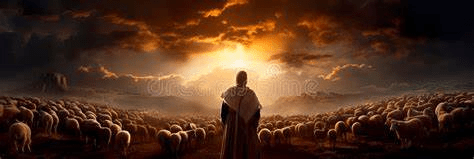
21 In the presence of God and of Christ Jesus and of the elect angels I charge you to keep these rules without prejudging, doing nothing from partiality.” (1 Timothy 5:21 (ESV)
Our study of I Timothy is focusing primarily on the subject of angels for the next few days. Since the Apostle Paul referred to elect angels in today’s featured text, it is wise for us to briefly examine what the Bible says about these created, heavenly beings.
Today’s concluding essay concerning angels is by John Piper. He is founder and teacher of Desiring God and chancellor of Bethlehem College and Seminary. For 33 years, he served as pastor of Bethlehem Baptist Church, Minneapolis, Minnesota. The essay is entitled The Surprising Role of Guardian Angels. He wrote this devotional in April, 2017.
What did Jesus mean in Matthew 18:10 when he said, “See that you do not despise one of these little ones. For I tell you that in heaven their angels always see the face of my Father who is in heaven”? He meant: Let the magnificence of every unimpressive Christian’s entourage of angels silence our scorn and awaken awe at the simplest children of God.
To see this, let’s clarify, first, who “these little ones” are.
Who Are “These Little Ones”?
“See that you do not despise one of these little ones.” They are true believers in Jesus, viewed from the standpoint of their childlike trust in God. They are the heaven-bound children of God. We know this because of the immediate and wider context of the Gospel of Matthew.
This section in Matthew 18 began with the disciples asking, “Who is the greatest in the kingdom of heaven?” (Matthew 18:1). Jesus answers, “Truly, I say to you, unless you turn and become like children, you will never enter the kingdom of heaven. Whoever humbles himself like this child is the greatest in the kingdom of heaven” (Matthew 18:3–4). In other words, the text is not about children. It is about those who become like children, and thus enter the kingdom of heaven. It’s about true disciples of Jesus.
This is confirmed in Matthew 18:6 where Jesus says, “Whoever causes one of these little ones who believe in me to sin, it would be better for him to have a great millstone fastened around his neck and to be drowned in the depth of the sea.” The “little ones” are those “who believe” in Jesus.
In the wider context, we see the same language with the same meaning. For example, in Matthew 10:42, Jesus says, “Whoever gives one of these little ones even a cup of cold water because he is a disciple, truly, I say to you, he will by no means lose his reward.” The “little ones” are “disciples.”
Similarly, in the famous, and often misquoted, picture of the final judgment in Matthew 25, Jesus says, “The King will answer them, ‘Truly, I say to you, as you did it to one of the least of these my brothers, you did it to me’” (Matthew 25:40; compare with Matthew 11:11). The “least of these” are the “brothers” of Jesus. The “brothers” of Jesus are those who do the will of God (Matthew 12:50), and those who do the will of God are those who “enter the kingdom of heaven” (Matthew 7:21).
Therefore, in Matthew 18:10, when Jesus refers to “these little ones” whose angels see the face of God, he is talking about his disciples — those who will enter the kingdom of heaven — not people in general. Whether humans in general have good or evil angels assigned to them (by God or the devil) is not addressed in the Bible as far as I can see. We would do well not to speculate about it. Such speculations appeal to untethered curiosities and can create distractions from vastly more sure and more important realities.
One Angel for Each Christian?
So, our question now is this: What does Jesus mean when he says that we should not despise his childlike followers? And how is it an argument for this, when he refers to “their angels” seeing God? “See that you do not despise one of these little ones. For (= because) I tell you that in heaven their angels always see the face of my Father who is in heaven.”
It is possible that “their angels” refers to a specific angel assigned to each disciple. There is one other text that some think points in this direction. When the praying believers in Acts 12 could not believe that Peter was knocking at the gate, since he was supposed to be in prison, they said, “It is his angel!” (Acts 12:15). That may or may not imply that all believers have an angel assigned to them. It may only imply that in that situation God had commissioned an angel to use Peter’s voice (Acts 12:14), and perhaps awaken even more urgent prayer for him.
It is even more difficult here in Matthew 18:10 to infer that each believer has an angel assigned to him. What it says is, “In heaven their angels always see the face of my Father who is in heaven.” The word “their” certainly implies that these angels have a special personal role to play in relation to Jesus’s disciples. But the plural “angels” may simply mean that all believers have numerous angels assigned to serve them, not just one.
Calvin’s Careful Observation
I think John Calvin’s careful observation about this text is exactly right:
The interpretation given to this passage by some commentators, as if God assigned to each believer his own angel, does not rest on solid grounds. For the words of Christ do not mean that a single angel is continually occupied with this or the other person; and such an idea is inconsistent with the whole doctrine of Scripture, which declares that the angels encamp around (Psalm 34:7) the godly, and that not one angel only, but many, have been commissioned to guard every one of the faithful. Away, then, with the fanciful notion of a good and evil angel, and let us rest satisfied with holding that the care of the whole Church is committed to angels, to assist each member as his necessities shall require. (Commentary on a Harmony of the Evangelists Matthew, Mark, and Luke, on Matthew 18:10)
More to come. Have a blessed day in the Lord.
Soli deo Gloria!
 His Word Today