
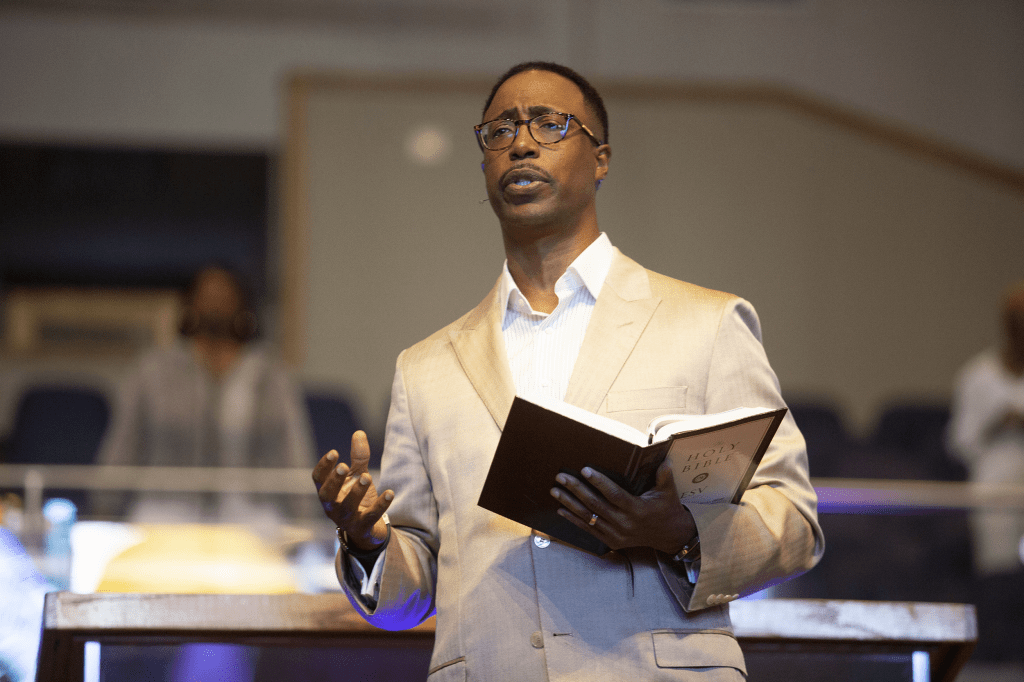
“Until I come, devote yourself to the public reading of Scripture, to exhortation, to teaching.” (1 Timothy 4:13 (ESV)
The Apostle Paul wanted his young protégé Timothy to know he was coming to visit him in Ephesus. The phrase until I come (ἔρχομαι; erchomai) is a present, middle, indicative verb. Paul said he would personally arrive in the city and visit the church and its young pastor.
“Until I come” is the correct translation, and harmonizes with 3:14 (“hoping to come to you shortly”). The idea is, “If and when I return, I will give you new instructions.” Perhaps Paul had in mind some other mission on which Timothy could then be sent,” explains Dr. William Hendriksen.[1]
“During the apostle’s absence, then, his representative is given instructions about his duty with respect to public worship in the entire district. He must see to it that in all the churches of Ephesus and surroundings three elements receive due prominence.”[2]
What are these three elements Paul mentioned to Timothy? They were to devote himself to the public reading of Scripture, to exhortation, and to teaching the Word of God.
First, devote yourself (πρόσεχε; proseche) is a present, active imperative verb. Timothy must continuously, actively and obediently apply himself to a certain action or behavior. The Greek text literally says to public reading (ἀναγνώσει; anagnosei). This refers to reading something out loud. The implicit idea is for Timothy to publicly read aloud the Scriptures. When the church gathers to worship.
“The public reading of Scripture (just as in the synagogue, Luke 4:16; Acts 13:15; 2 Cor. 3:14; but now not only the reading of law and prophets, but in addition portions of the growing New Testament, Col. 4:16; 1 Thess. 5:27; Rev. 1:3).[3]
Second, to exhortation. Exhortation (παρακλήσει; paraklesei) means encouragement, comfort and consolation. While this may be done with words, within the context Timothy is to encourage people from the Scriptures regarding doctrine and Christian living.
Third, to teaching. Teaching (διδασκαλίᾳ; didaskalia) refers to biblical instruction and the teaching of doctrine. This must be done in both formal, and informal, settings.
“It does make a difference what one believes! The attitude of heart is not everything. There are certain facts with respect to doctrine and morals which must be taught, and which one must accept and embrace, so that one’s life is founded upon them. So much is clear: if there be no pulpit-reading, exhorting, and teaching, divine worship is a misnomer. In the early church, when very few individuals owned private copies of the sacred writings, and all such material had to be copied by hand, one can imagine how important was the public reading of Scripture. But even today the careful selection, and clear and interpretive reading of an appropriate portion of Holy Writ is “the most important part of public worship.” And even today if the choir takes so much time that little is left for exhorting and teaching, something is wrong. Timothy, then, must continue to devote his attention to these important matters.”[4]
Are the worship services in your local church including the reading of Scripture, exhortation and biblical teaching? May the Lord’s truth and grace be found here. Have a blessed day in the Lord.
Soli deo Gloria!
[1] William Hendriksen and Simon J. Kistemaker, Exposition of the Pastoral Epistles, vol. 4, New Testament Commentary (Grand Rapids: Baker Book House, 1953–2001), 158.
[2] Ibid., 158.
[3] Ibid., 158.
[4] Ibid., 159.
 His Word Today