
“For to this end we toil and strive, because we have our hope set on the living God, who is the Savior of all people, especially of those who believe.” (1 Timothy 4:10 (ESV)
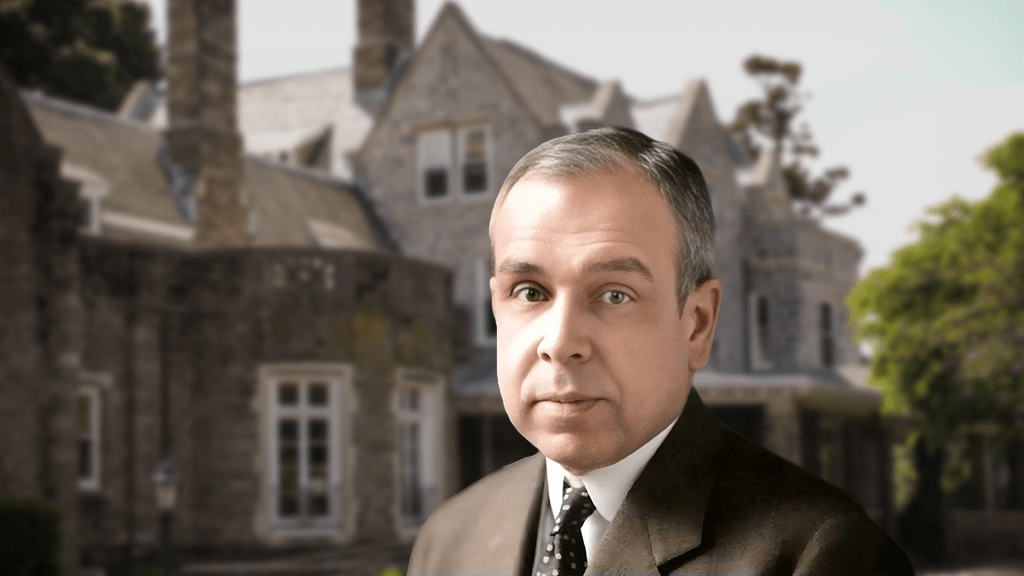
The following essay is by Pastor John Piper. He preached this message January 1, 2020. It is entitled He Took Up Arms Against Liberalism: J. Gresham Machen (1881-1937).
Liberalism: Another Religion
In the Presbyterian Church of Machen’s day, there were hundreds who would not deny the Confession of Faith, but by virtue of this modernistic spirit had given it up even though they’d signed it. One of the most jolting and penetrating statements of Machen on this issue is found in his book What Is Faith?
It makes very little difference how much or how little of the creeds of the Church the Modernist preacher affirms, or how much or how little of the Biblical teaching from which the creeds are derived. He might affirm every jot and tittle of the Westminster Confession, for example, and yet be separated by a great gulf from the Reformed Faith. It is not that part is denied and the rest affirmed; but all is denied, because all is affirmed merely as useful or symbolic and not as true. (What Is Faith? 34)
When Machen took on modernism, then, he took it on as a challenge to the whole of Christianity. His most important book in the debate was Christianity and Liberalism, published in 1923. The title almost says it all: Liberalism is not vying with Fundamentalism as a species of Christianity. The book is not entitled Fundamentalism and Liberalism. Instead, Liberalism is vying with Christianity as a separate religion. He wrote the blurb for the book:
Liberalism on the one hand and the religion of the historic church on the other are not two varieties of the same religion, but two distinct religions proceeding from altogether separate roots. (J. Gresham Machen, 342)
Modernism to Postmodernism
I don’t think the structure of the modernism of Machen’s day is too different from the postmodernism of our day. In some churches, the triumph of modernism is complete. It is still a menace at the door of all our churches and schools and agencies. One of our great protections will be the awareness of stories like Machen’s — the enemy he faced, the battle he fought, the weapons he used (and failed to use), the losses he sustained, the price he paid, and the triumphs he wrought.
For example, Machen’s life and thought issue a call for all of us to be honest, open, clear, straightforward, and guileless in our use of language. He challenges us, as does the apostle Paul (2 Corinthians 2:17; 4:2; Ephesians 4:25; 1 Thessalonians 2:3–4), to say what we mean and mean what we say, and to repudiate duplicity, trickery, sham, verbal manipulating, sidestepping, and evasion.
“All is denied, because all is affirmed merely as useful or symbolic and not as true.”
The dangers of the utilitarian uses of moral and religious language are still around in our day. It is not unusual, for example, to come across language similar to what I read in the Washington Times when I was first researching Machen’s life. The spokesman for the Human Rights Campaign Fund, the nation’s largest homosexual advocacy group, told the Times, “I personally think that most lesbian and gay Americans support traditional family and American values,” which he defined as “tolerance, concern, support, and a sense of community.”
This is an example of how words with moral connotations have been co-opted by special-interest groups to gain the moral high ground without moral content. They sound like values, but they are empty. “Tolerance” for what? All things? Which things? “Concern” for what? Expressed in what way? Redemptive opposition or sympathetic endorsement? “Support” for what? For the behavior that is destructive and wrong? Or for the person who admits the behavior is wrong and is struggling valiantly to overcome it? “Community” with what standards of unification? Common endorsements of behavior? Common vision of what is right and wrong? Common indifference to what is right and wrong?
In every case, the standards are not defined. All you have is words driven by a utilitarian view of language where honesty and truth are not paramount. Machen shows us that this is not new, and that it is destructive to the church and the cause of Christ — especially when pastors engage in such duplicity from the pulpit.
His Promise Never Fails
The overarching lesson to be learned from Machen’s life, however, is that God reigns over his church and over the world. His all-inclusive plan is always more hopeful than we think in the darkest hours of history, and it is always more intermixed with human sin and weakness than we can see in its brightest hours. This means that we should renounce all triumphalism in the bright seasons and renounce all despair in the dark seasons.
Our hope for the church and for the spread of the true gospel lies not ultimately in our strategies but in God. Even when the culture degenerates, and once-faithful institutions drift, as they did in Machen’s day, there is every hope that God will triumph. He writes,
That Church is still alive; an unbroken spiritual descent connects us with those whom Jesus commissioned. Times have changed in many respects, new problems must be faced and new difficulties overcome, but the same message must still be proclaimed to a lost world. Today we have need of all our faith; unbelief and error have perplexed us sore; strife and hatred have set the world aflame. There is only one hope, but that hope is sure. God has never deserted his church; his promise never fails. (J. Gresham Machen, 386)
May the Lord’s truth and grace be found here. Have a blessed day in the Lord.
Soli deo Gloria!
 His Word Today