
Great indeed, we confess, is the mystery of godliness: He was manifested in the flesh, vindicated by the Spirit, seen by angels, proclaimed among the nations, believed on in the world, taken up in glory.” (1 Timothy 3:16 (ESV)
Today’s text is an early church creedal confession, containing three couplets, by the Apostle Paul setting forth the person and work of Jesus Christ as the core truth of the Gospel. These were truths Paul’s young protégé, Timothy, needed to know and preach as the pastor of the church in Ephesus. These truths are what every evangelical pastor needs to know and preach to the congregations they shepherd.
Paul began this doctrinal discourse with the following introductory statement: “Great indeed, we confess, is the mystery of godliness:” As previously noted, these nine words contain an important perspective for the church; then and now. This brings us to the following six statements referring to Jesus Christ:
He was manifested in the flesh, vindicated by the Spirit,
seen by angels, proclaimed among the nations,
believed on in the world, taken up in glory.”
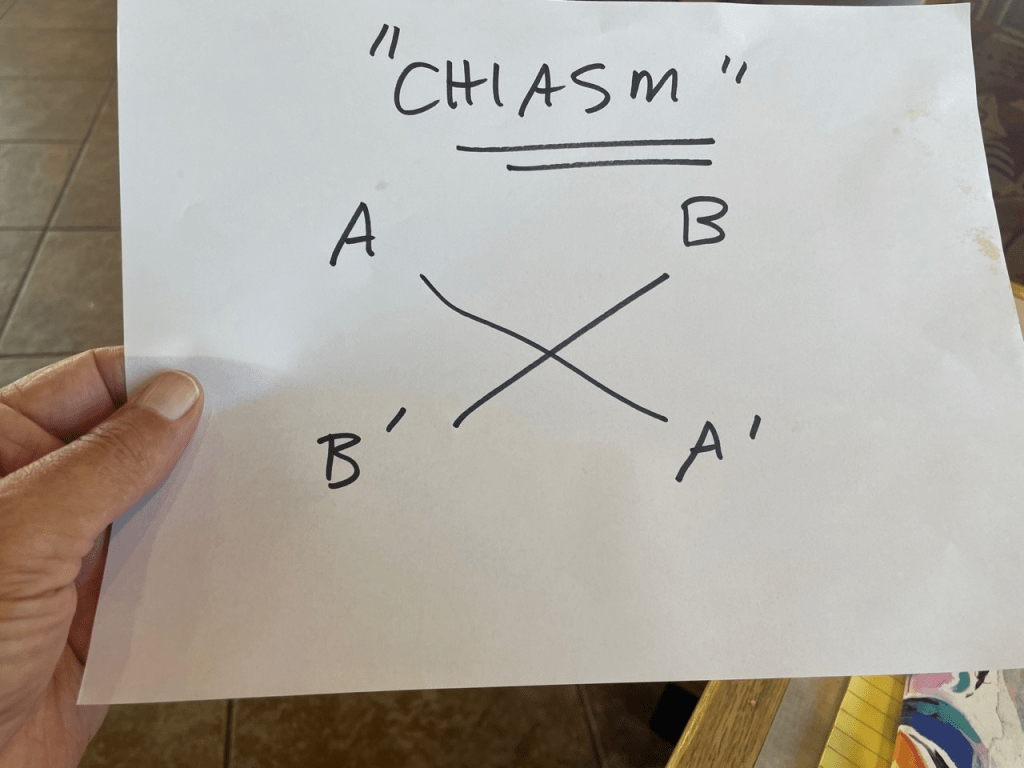
Paul used a literary structural format known as a Chiastic Arrangement. A chiasm is a literary device where the first part of a phrase or sentence is repeated in the second part, but in reverse order. The pattern is A-B, B-A, A-B. This format emphasizes contrast, balance and a central idea. Regarding this particular text from I Timothy, the chiastic pattern is as follows, reading them left to right. The A statements in the text parallel each other in their focus on the earthly, while the B statements focus on the heavenly.
He was manifested in the flesh, – A. vindicated by the Spirit, – B.
seen by angels, – B. proclaimed among the nations, – A.
believed on in the world, – A. taken up in glory. -B
“He was manifested in the flesh, vindicated by the Spirit, seen by angels, proclaimed among the nations, believed on in the world, taken up in glory” (1 Tim. 3:16). If you had been a follower of Christ in first-century Ephesus, you would have probably recited or sung those words. Those six phrases were recorded poetically by Paul as either a confession often repeated by Christians or as part of a hymn of praise sung about Jesus,” states one commentator.
Having seen how each of these statements relate to each other, what do they mean individually? It is imperative to study them individually in order to understand them collectively regarding the person and work of Jesus Christ.
He was manifested in the flesh. The personal pronoun he (Ὃς Hos) points us back to the subject found in I Tim. 3:13; Christ Jesus. It was the incarnate Son of God who was manifested (ἐφανερώθη; ephanerothe) or made visible. The manifestation took place when the second person of the Godhead came to earth in the flesh (ἐν σαρκί; en sarki) referring to Christ Jesus’ human nature and physical body.
Vindicated by the Spirit. Vindicated (ἐδικαιώθη; edikaiothe) means Christ was declared righteous and proven to be right. This declaration was done by the Holy Spirit (Acts 2:2-36).
Seen by angels. Seen (ὤφθη; ophthe) means to pay attention. The angels did this when Christ ascended (Acts 1:10-11) and witnessed the Lord’s vindication in the heavenly realm.
Proclaimed among the nations. Proclaimed (ἐκηρύχθη; ekerychthe) is from the word kerysso meaning to preach and announce. Nations (ἔθνεσιν; ethnesin) refers to Gentile peoples who were called pagans and the heathen. The apostles proclaimed the person and ministry of Jesus Christ to an international audience. So is the church today (Matt. 28:19-20).
Believed on in the world. The phrase believed on (ἐπιστεύθη; episteuthe) means to trust in, depend upon, commit to and worship Jesus Christ as Savior and Lord. The world (κόσμῳ; kosmo) refres to all kinds of people groups within the fallen world system which hates God (Eph. 2:1-3).
Taken up in glory. The statement taken up (ἀνελήμφθη; anelemphthe) means to be carried away into glory (δόξῃ; doxe) to receive honor, praise and splendor (John 17:1-5; Acts 7:56).
Jesus referred to His completed mission in His High Priestly Prayer. The Aposlte John wrote, “When Jesus had spoken these words, he lifted up his eyes to heaven, and said, “Father, the hour has come; glorify your Son that the Son may glorify you, 2 since you have given him authority over all flesh, to give eternal life to all whom you have given him. 3 And this is eternal life, that they know you, the only true God, and Jesus Christ whom you have sent. 4 I glorified you on earth, having accomplished the work that you gave me to do. 5 And now, Father, glorify me in your own presence with the glory that I had with you before the world existed.” (John 17:1–5 (ESV)
The Apostle Paul wrote to the Philippian believers, “5 Have this mind among yourselves, which is yours in Christ Jesus, 6 who, though he was in the form of God, did not count equality with God a thing to be grasped, 7 but emptied himself, by taking the form of a servant, being born in the likeness of men. 8 And being found in human form, he humbled himself by becoming obedient to the point of death, even death on a cross. 9 Therefore God has highly exalted him and bestowed on him the name that is above every name, 10 so that at the name of Jesus every knee should bow, in heaven and on earth and under the earth, 11 and every tongue confess that Jesus Christ is Lord, to the glory of God the Father.” (Philippians 2:5–11 (ESV)
“In the book of Revelation, Jesus is represented with many different symbols: the Lamb, the warrior King, the Lion of Judah. No matter the symbol or title, where do you find Him — where is He located? He is always on the throne, reigning and ruling. The book of Revelation was written to a persecuted and suffering church to remind her that Jesus was, right then, King of kings and Lord of lords. One of the major themes of the book of Revelation is: “Jesus reigns.”
“In His incarnation, the Son descended into gross humiliation. He left heaven for a hovel on earth. He came as a baby to a feed trough and was forced to flee to Egypt from a petty, paranoid king. He endured a farce of a trial and was crucified on a Roman cross (too ignominious for Roman citizens) while men mocked Him and spat on Him. Such a battle had never been fought previously nor has been since. So, when the King returned home, He received a name that was above every name, and all of heaven rang with praise. The Lion of Judah ascended and took the scroll, and heaven cried, “Worthy are you to take the scroll.” You can spend some time in Revelation 5 if you want to read about the triumphant homecoming in more detail. However, Paul only needed four words: “taken up in glory.”
May we seek to glorify the Lord Jesus Christ today. Have a blessed day in the Lord.
Soli deo Gloria!
 His Word Today