
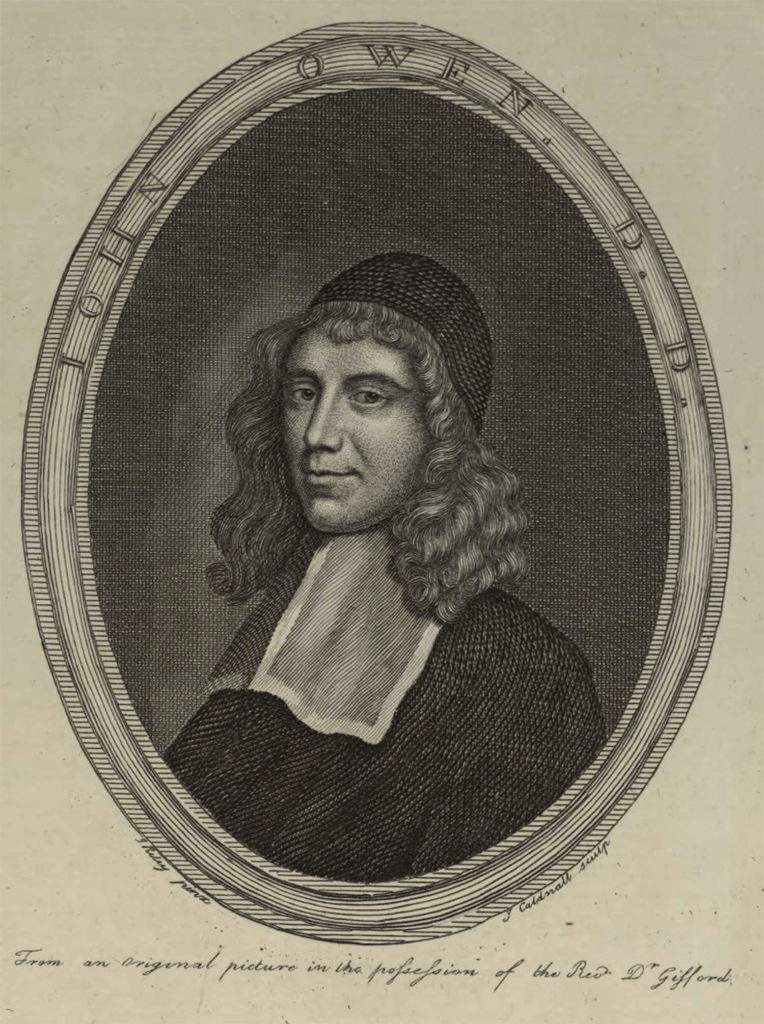
The following excerpted essay was written by English Puritan theologian John Owen (1616-1683). It is entitled The Special Duty of Pastor of Churches. The concerns and challenges he observed in the 17th century apply to pastors of churches in the 21st century.
The fifth task of the pastor, which belongs to their charge and their office, is to diligently labor for the conversion of souls to God. The ordinary means of conversion is left to the church, and the church’s duty it is to attend to it. Indeed, one of the principal ends of the institution and preservation of churches is the conversion of souls. When there are no more to be converted, there shall be no more church on the earth.
To enlarge the kingdom of Christ, to diffuse the light and savor of the gospel, to be subservient to the calling of the elect, and to gather all the sheep of Christ into his fold, are things that God designs by his churches in this world. Now, the principal and instrumental cause of all these things is the preaching of the word; and this is committed to the pastors of the churches. It is true, men may be (and often are) converted to God through the occasional dispensation of the word by those who are not called to office. For it is the gospel itself that is the “power of God for salvation,” (Rom 1.16) whoever it is administered by. It has been effectual to that end even in the necessary and occasional teaching of women. But frequently it is effective in the exercise of spiritual gifts by those who are not stated officers of the church, yet this does not hinder its dispensation (I Cor. 14:24; Phil. 1:14-18; I Peter 4:10-11).
But the administration of the glorious gospel of the blessed God, as to all its ends, is committed to the pastors of the church; and the first object of the preaching of the gospel is the conversion of the world, or its men. And this is true in the preaching of all those to whom that work is committed by Christ.
The work of the apostles and evangelists had this order in it: First, they were to make disciples of men by the preaching of the gospel for conversion; and this was their principal work, as Paul testifies (I Cor. 1:17). In this, they were gloriously instrumental in laying the foundation of the kingdom of Christ all over the world. The second part of their work was to teach those who were converted, and make disciples who would do and observe all that Christ commanded them. In the pursuit of this part of their commission, they gathered the disciples of Christ into churches under ordinary officers of their own. Although the work of these ordinary officers, pastors, and teachers is of the same nature as the apostles and evangelists, yet the method of it is changed in them.
For their first ordinary work is to conduct and teach all the disciples of Christ to do and observe all things appointed by him – that is, to preach and watch over the particular flocks to whom they are related. But they are not discharged by that from an interest in the other part of the work – in preaching the word for the conversion of souls.
They are not bound to the method of the apostles and evangelists; indeed, by virtue of their office, they are ordinarily excluded from it. After a man is called to be a pastor of a particular church, it is not his duty to leave that church, and go up and down to preach for the conversion of strangers. It is not, I say, ordinarily so. For many cases may occur in which the edification of any particular church should give way to the glory of Christ with respect to calling the members of the church universal. But in the discharge of the pastoral office, there are many occasions for preaching the word for the conversion of souls, such as:
- When any unconverted persons come into the church assemblies, and are worked on by the power of the word. We experience this every day. A man, preaching to one congregation, at the same time and in the same place, cannot preach with ministerial authority to those that are of the church to which he is related, and preach to the others only by virtue of a spiritual gift which he has received. No man can distinguish those in his own conscience – and there is no rule or reason for it.
Pastors, with respect to their whole office and all its duties, of which many can have only the church for their object, are ministers in office to the church; and so, they are ministers of the church. Yet they are also ministers of Christ; and it is by him, and not by the church, that the preaching of the gospel is committed to them. And it is so committed to them, by virtue of their office, that they are to use it for all its ends in Christ’s way and method – of which the conversion of sinners is one. No man can conceive of himself as having a double capacity while he is preaching to the same congregation, and no man’s experience can reach it.
- In occasional preaching in other places, to which a pastor of a church may be called and directed by divine providence. Although we have no concern in the figment of an indelible character accompanying sacred orders, we do not think that the pastoral office is such that a man must leave it behind him every time he goes from home; nor is it in his own power, or in the power of all men in the world, to divest him of it, unless he is dismissed or deposed from it by Christ himself, through the rule of his word.
Wherever a true minister preaches, he preaches as a minister; for as a minister, the administration of the gospel is committed to him as to all its ends, of which the chief end, as was said, is the conversion of souls. Indeed, it is of such weight that the convenience and edification of particular churches ought to give way to it.
When, therefore, there are great opportunities and providential calls to preach the gospel for the conversion of souls, and the harvest being so great that there are insufficient laborers for it, it is lawful, indeed, it is the duty of pastors of particular churches to leave their constant attendance on their pastoral charge in those churches, at least for a season, to apply themselves to the more public preaching of the word for the conversion of the souls of men. Nor will any particular church be unwilling, if it understands that the whole end of particular churches is but the edification of the church universal, and that their good and advantage is to give way to the glory of Christ in the whole. The good shepherd will leave the ninety and nine sheep, to seek after one that wanders; and we may certainly leave a few for a season, to seek after a great multitude of wanderers, when we are called to this by divine providence – and I could heartily wish that we might have a trial of it at this time.
The ministers who have been most celebrated, and deservedly so in the last ages, in this and in neighboring nations, have been such that God made their ministry eminently successful for the conversion of souls. To affirm that they did not do their work as ministers, by virtue of their ministerial office, is to throw away the crown and destroy the principal glory of the ministry. For my own part, if I did not think myself bound to preach as a minister, and as a minister authorized in all places and on all occasions, when I am called to it,
I think I would not preach much more in this world. Nor do I know at all what rule they walk by who continue constant public preaching for many years, and yet neither desire nor intend to be called to any pastoral office in the church. But I must not insist on the debate of these things here.
Pray for your pastor to be such a man of God and to faithfully continue in the work which God has called Him. May the Lord’s truth and grace be found here. Have a blessed day in the Lord.
Soli deo Gloria!
 His Word Today