
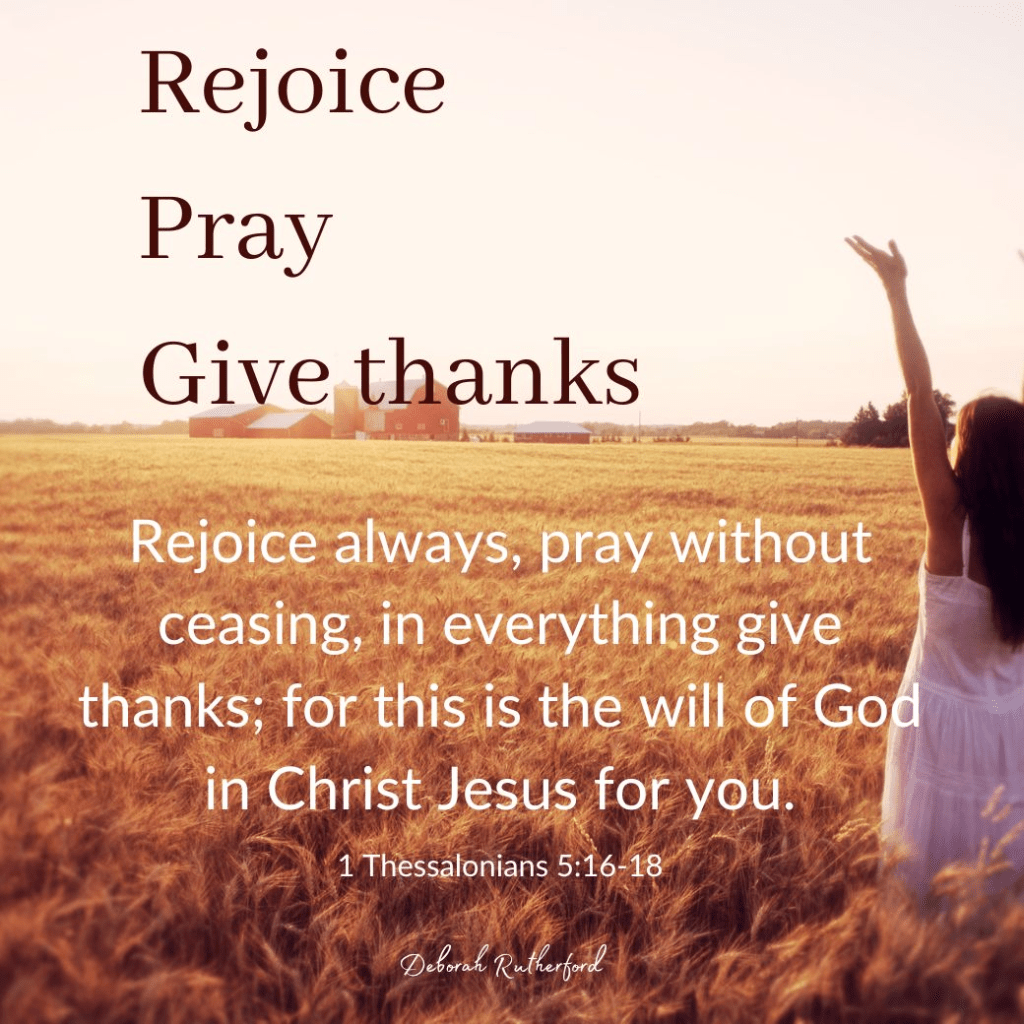
16 Rejoice always, 17 pray without ceasing, 18 give thanks in all circumstances; for this is the will of God in Christ Jesus for you.” (1 Thessalonians 5:16–18 (ESV)
The following article, Spiritual Exercises to Make You Strong, is by Dr. Daniel L. Akin. Dr. Akin is Vice President and Dean and Professor of Preaching at The Southern Baptist Theological Seminary. Dr. Akin has served as dean since 1996 and has also served on the faculty of Southeastern Seminary and Criswell College. He has an extensive speaking ministry and is the author of the forthcoming commentary on 1-3 John in the New American Commentary series.
Introduction
The human body is a remarkable creation of God (Ps 139:13-15). It consists of more than fifty trillion cells and its weight is about sixty percent water. It manufactures three hundred million new blood cells every day and it has a heart that beats seventy to eighty times per minute or one hundred thousand times every day. Over seventy years it pumps four hundred million liters of blood. The average adult breathes six to seven liters of air per minute (picture in your mind the liter diet Coke bottle), which is about ten thousand liters per day and 3,650,000 liters per year.
Other interesting facts include: There are about one hundred billion neurons (nerve cells) in the brain. We are born with twelve billion neurons that do not regenerate when they die. There are one hundred thou[1]sand miles of blood vessels in an adult—enough to circle the earth four times. The average human eye blinks about twenty thousand times every day. The human kidney filters seventeen hundred liters of blood every twenty-four hours. There is enough carbon in your body to fill nine hundred pencils. There are about seventy-five thousand hairs on your head. The strongest muscle in your body is the tongue!
Essential to the health and well-being of this gift from God are three important factors: 1) rest, 2) diet, and 3) exercise. I am especially interested in exercise. A quick survey of any basic text on anatomy or even a visit to your local encyclopedia yields some amazing discoveries about exercise and fitness. Did you know that for your body to be healthy and fine-tuned it needs 1) strength fitness, 2) endurance fitness, 3) anaerobic fitness, 4) speed fit[1]ness, 5) orthostatic fitness, and even 6) relaxation fitness? All of these are crucial to a healthy, fit and productive body. “The human body, like any living organism, must be used or it will lose its structure and function.”1 As the saying goes, “If you don’t use it, you lose it.”
What is true about physical life is also true about spiritual life. Our inner person, our spiritual being requires attention and exercise if it is going to be healthy and productive. To be fit and ready for service, trained and fine-tuned for efficient ministry, we must engage in spiritual exercise. There are certain disciplines we must adopt as our very own.
In 1 Thessalonians 5:16-22 the apostle Paul directs our attention to eight spiritual exercises that will make us strong for the Lord. In short yet powerful commands, we are challenged to live our lives in a very specific and intentional manner that will conform to the will of God (v. 18). Each of these eight exercises is in the form of an imperative. God is not asking us to consider these principles for possible adoption and implementation. On the contrary, it is His will that these activities become a vital part of who we are.
It is also interesting to note that the 81 verbs in each verse are in the present tense, calling for continuous action. Further, an adverbial modifier stands before the verb in each command. This placement puts an emphasis on these modifiers. Verses 16- 18 give particular attention to the inner life of the believer, while verses 19-22 focus more on the life of the Church as it gathers for corporate worship. Inwardly and outwardly, individually and corporately, Paul provides us potent exercises to enable us to be spiritually strong for the Lord.
Spiritual Exercises
Rejoice Consistently 5:16. The first challenge we receive is to rejoice constantly. Paul addresses the subject of joy over two dozen times in his letters. It is the dominant theme of Philippians where he tells us: “Rejoice in the Lord always. Again, I say rejoice” (4:4). In 2 Corinthians 6:10 he teaches that there is no contradiction in rejoicing when we sorrow. Nehemiah 8:10 reminds us that “the joy of the Lord is your strength.” Joy is a mark of one who has experienced God’s transforming grace through Jesus Christ.
The word “always” is a favorite of Paul’s in 1 Thessalonians. He uses it four other times (1:2; 2:16; 3:6; 4:17). It means “on every occasion” or “in every set of circumstances.” Joy is not the same as happiness. Joy is not based on the situation in which we find ourselves. Some situations are bad and painful. They hurt. Joy is based, rather, on the fact that we are in Christ and what we are experiencing is the will of God for us (v. 18). We can experience joy even when we sorrow.
On July 23-24, 1999 I participated in a men’s retreat at the beautiful Estes Park outside of Denver, Colorado. Much of our time was spent learning how to be better husbands and fathers. One gentleman, after our Saturday morning session, told me that his family had become even more precious to him in recent years because he had lost a son to kidney disease a number of years earlier. The son was only twenty-seven. Tears welled up in his eyes as he talked, but a gentle smile was also on his face as we reflected on the fact that this son, who had trusted Christ as Savior and Lord, no longer experienced the pain and severe limitations his disease had brought. For him Philippians 1:21 especially rang true, “For me to live is Christ, and to die is gain.” There was sorrow, but there was also joy.
Because we belong to Christ and He is working his purpose in and through us, we can possess genuine joy. We can be spiritually magnetic and infectious. We can bless rather than curse, encourage and not disappoint, give hope rather than despair. In life and especially in ministry, we must exercise our “joy muscles.” As they grow strong we develop an optimistic outlook, a sense of humor, a winsome spirit. There is a smile rather than a frown. People leave our presence more encouraged than when they first arrived.
More to come. May the Lord’s truth and grace be found here. Have a blessed day rejoicing consistently.
Soli deo Gloria!
 His Word Today