
11 …”and to aspire to live quietly, and to mind your own affairs, and to work with your hands, as we instructed you, 12 so that you may walk properly before outsiders and be dependent on no one.” (1 Thessalonians 4:11–12 (ESV)
The following message is by Pastor John Piper. He is founder and teacher of Desiring God and chancellor of Bethlehem College and Seminary. For 33 years, he served as pastor of Bethlehem Baptist Church, Minneapolis, Minnesota. He is author of more than 50 books, including Desiring God: Meditations of a Christian Hedonist and most recently Foundations for Lifelong Learning: Education in Serious Joy. His article is entitled Why God Wills Work.
The most fruitful question that I asked in preparing for this message is: How does a human being differ from a beaver? I was trying to get at the essence of what work is. Because what I want to do this morning is to help us see our work from God’s perspective. If we can discover how God conceives of work and why he wills it, then that huge portion of our lives that may seem so separate from religion and faith can be just as God-focused as our more religious acts.
To be a Christian means to bring all your life, including your work, into sync with God’s revealed will in Scripture. So, to help us do that I want to show from Scripture four reasons why God wills work.
To Glorify God and Increase Our Joy
First, God wills work because when we work in reliance on his power and according to his pattern of excellence, his glory is made known and our joy is increased. In Genesis 1:27, 28, it says, “So God created man in his own image, in the image of God he created him; male and female he created them. And God blessed them, and God said to them, ‘Be fruitful and multiply, and fill the earth and subdue it; and have dominion over the fish of the sea and over the birds of the air and over every living thing that moves upon the earth.'” Since our being created in God’s image leads directly to our privilege and duty to subdue the earth, I take it that human vocation involves exercising a subordinate lordship over creation by which we shape and control it for good purposes.
God takes man on as his deputy and endows him with God-like rights and capacities to subdue the world—to use it and shape it for good purposes. So, if you go all the way back, before the fall of man into sin, there are no negative connotations about work. According to Genesis 2:2, God himself rested from his work of creation. And the capstone of that work was a creature in his own image to carry on the work of ruling and using creation. At the heart of the meaning of work is creativity. If you are God, your work is to create out of nothing. If you are human, your work is to take what God has made and shape it and use it for good purposes.
But here is where the beaver comes in. A beaver subdues his surroundings and shapes a dam for a good purpose—a house. He no doubt enjoys his work; and even the diligence and skill of the beaver reflect the glory of God’s wisdom.
All things bright and beautiful,
All creatures great and small,
All things wise and wonderful,
The Lord God made them all.
God is glorified in them all. What is the difference between a human being at work and a beaver at work? Or for that matter, a bee, or a hummingbird? They work hard; they subdue their surroundings and shape them into beautiful structures that serve good purposes. The difference is that humans are morally self-conscious and make choices about their work on the basis of motives which may or may not honor God.
No beaver or bee or hummingbird consciously relies on God. No beaver ponders the divine pattern of order and beauty and makes a moral choice to pursue excellence because God is excellent. No beaver reflects on the purpose of his existence and consciously chooses to glorify his Maker by relying on him. But humans have all these potentials because we are created in God’s image.
When God commissions us to subdue the earth—to shape it and use it—he doesn’t mean, do it like a beaver. He means, do it like a human, a morally self-conscious person who is responsible to choose his proper destiny. When he sends us forth to work in his image, to be sure, our ditches are to be dug straight, our pipefittings are not to leak, our cabinet corners should be flush, our surgical incisions should be clean, our typing sharp and accurate, our meals nutritious and attractive, because God is a God of order and beauty and competence.
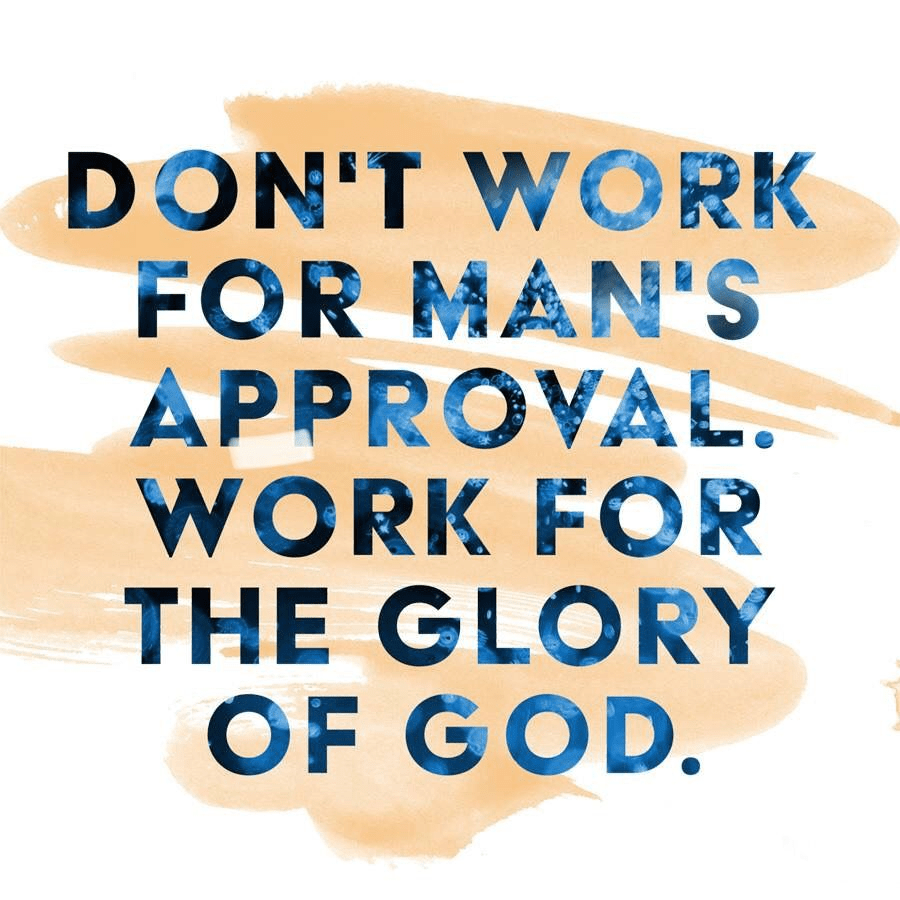
But cats are clean, and ants are industrious, and spiders produce orderly and beautiful works. Therefore, the essence of our work as humans must be that it is done in conscious reliance on God’s power, as a conscious quest of God’s pattern of excellence, and in deliberate pursuit of God’s glory. When you work like this—no matter what your vocation is—you can have a sweet sense of peace at the end of the day. I don’t think God has created us to be idle. Therefore, those who abandon creative productivity lose the joy of purposeful work.
Ecclesiastes 5:12 says, “Sweet is the sleep of a laborer, whether he eats little or much, but the surfeit of the rich will not let him sleep.” People who spend their lives mainly in idleness or frivolous leisure are rarely as happy as those who work. Most of the retired people at Bethlehem know this, and so have sought creative, useful, God-honoring ways to stay active and productive in God’s kingdom.
We should help each other in this, and with the whole problem of unemployment. It is not first an economic problem. It is first a theological problem. Human beings are created in the image of God and are endowed with traits of their creator that fit them for creative, useful, joyful work. Therefore, extensive idleness (when you have the ability to work) brings down the oppression of guilt and futility.
So, the first reason God wills work is that when we work in reliance on his power and according to his pattern of excellence, his glory is made known and our joy is increased.
More to come. Have a blessed day at work, wherever and whatever it may be. May the Lord be glorified in all we do (I Cor. 10:31).
Soli deo Gloria!
 His Word Today