
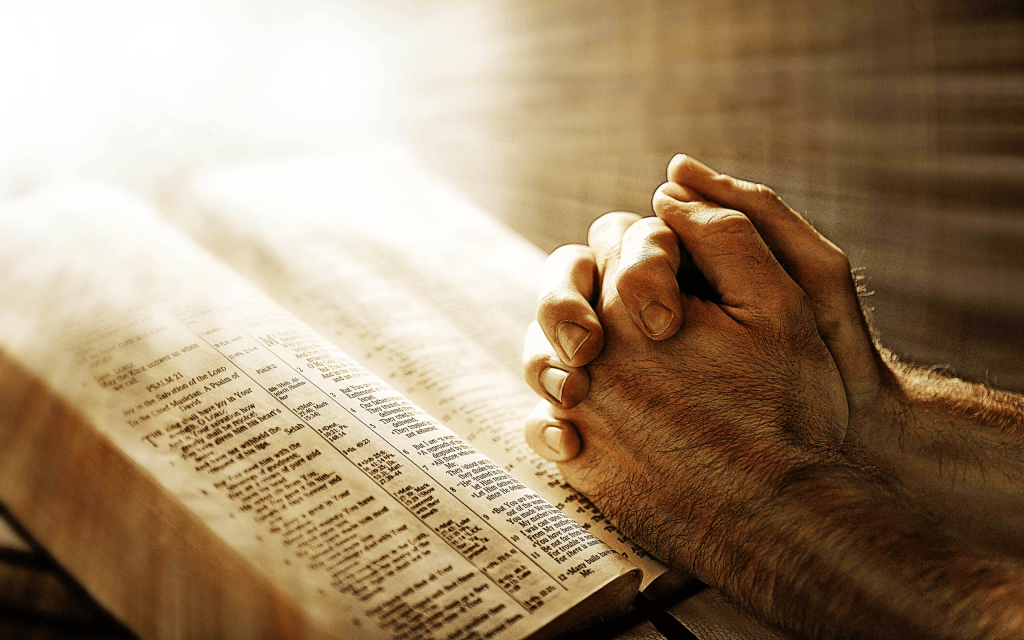
2 “Continue steadfastly in prayer, being watchful in it with thanksgiving. 3 At the same time, pray also for us, that God may open to us a door for the word, to declare the mystery of Christ, on account of which I am in prison— 4 that I may make it clear, which is how I ought to speak.” Colossians 4:2–4 (ESV)
The reading, studying and application of God’s Word, corporate along with individual worship, communion or fellowship with fellow believers and the sharing of the gospel to the lost are indispensable disciplines and responsibilities for each believer in Christ. Along with these is the discipline and practice of prayer. Since God speaks to the believer through His inerrant Word, then the believer speaks to God through the privilege of prayer.
“Our prayers may be awkward. Our attempts may be feeble. But since the power of prayer is in the One who hears it and not in the one who says it, our prayers do make a difference.” – Max Lucado
John Calvin proposed four indispensable rules for prayer.
1. The first rule is a heartfelt sense of reverence.
In prayer, we must be “disposed in mind and heart as befits those who enter conversation with God.” Our prayers should arise from “the bottom of our heart.” Calvin calls for a disciplined mind and heart, asserting that “the only persons who duly and properly gird themselves to pray are those who are so moved by God’s majesty that, freed from earthly cares and affections, they come to it.”
2. The second rule is a heartfelt sense of need and repentance.
We must “pray from a sincere sense of want and with penitence,” maintaining “the disposition of a beggar.” Calvin does not mean that believers should pray for every whim that arises in their hearts, but that they must pray penitently in accord with God’s will, keeping His glory in focus, yearning for every request “with sincere affection of heart, and at the same time desiring to obtain it from him.”
3. The third rule is a heartfelt sense of humility and trust in God.
True prayer requires that “we yield all confidence in ourselves and humbly plead for pardon,” trusting in God’s mercy alone for blessings both spiritual and temporal, always remembering that the smallest drop of faith is more powerful than unbelief. Any other approach to God will only promote pride, which will be lethal: “If we claim for ourselves anything, even the least bit,” we will be in grave danger of destroying ourselves in God’s presence.
4. The final rule is to have a heartfelt sense of confident hope.
The confidence that our prayers will be answered does not arise from ourselves, but through the Holy Spirit working in us. In believers’ lives, faith and hope conquer fear so that we are able to “ask in faith, nothing wavering” (James 1:6, KJV). This means that true prayer is confident of success, owing to Christ and the covenant, “for the blood of our Lord Jesus Christ seals the pact which God has concluded with us.” Believers thus approach God boldly and cheerfully because such “confidence is necessary in true invocation… which becomes the key that opens to us the gate of the kingdom of heaven.”
May the Lord’s truth and grace be found here. Have a blessed Lord’s Day.
Soli deo Gloria!
 His Word Today