
“And you, who were dead in your trespasses and the uncircumcision of your flesh, God made alive together with him, having forgiven us all our trespasses.” (Colossians 2:13 (ESV)
Our forgiveness of other’s sins is based upon God’s greater forgiveness of our sin. Since we love Him because He first loved us (I John 4:19), then it stands to reason we forgive others because He has first forgiven us (Matt. 6:14-15; Eph. 4:31-32). Today’s text indicates God the Father, through God the Son Jesus Christ, has forgiven us all our trespasses or sins: past, present and future. This raises the question of how does the Bible define and describe sin? The Scriptures define and describe sin in three primary ways.
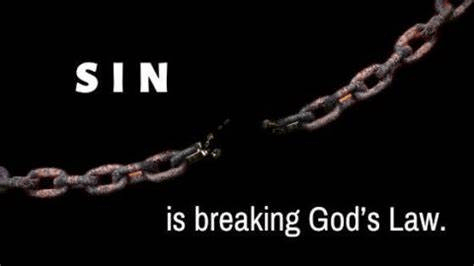
Frist, the Bible states sin is a crime. Sin is breaking God’s law and failure to do His will. The Scriptures use words like transgression, trespass, and iniquity. The Westminster Shorter Catechism asks, “What is sin?” The answer is, “Sin is any want of conformity to, or transgression of, the law of God.”
Because the Bible calls sin a crime, God becomes our holy and righteous judge. Therefore, the Lord must punish the criminal or He no longer is holy and righteous. However, in Jesus Christ the sinner has a willing and perfect substitute to receive just punishment for the sinner’s crimes against God. Consider the following biblical texts.
3 “He was despised and rejected by men, a man of sorrows and acquainted with grief; and as one from whom men hide their faces he was despised, and we esteemed him not. 4 Surely he has borne our griefs and carried our sorrows; yet we esteemed him stricken, smitten by God, and afflicted. 5 But he was pierced for our transgressions; he was crushed for our iniquities; upon him was the chastisement that brought us peace, and with his wounds we are healed. 6 All we like sheep have gone astray; we have turned—every one—to his own way; and the Lord has laid on him the iniquity of us all.” (Isaiah 53:3–6 (ESV)
21 “But now the righteousness of God has been manifested apart from the law, although the Law and the Prophets bear witness to it— 22 the righteousness of God through faith in Jesus Christ for all who believe. For there is no distinction: 23 for all have sinned and fall short of the glory of God, 24 and are justified by his grace as a gift, through the redemption that is in Christ Jesus, 25 whom God put forward as a propitiation by his blood, to be received by faith. This was to show God’s righteousness, because in his divine forbearance he had passed over former sins. 26 It was to show his righteousness at the present time, so that he might be just and the justifier of the one who has faith in Jesus.” (Romans 3:21–26 (ESV)
“1And you were dead in the trespasses and sins 2 in which you once walked, following the course of this world, following the prince of the power of the air, the spirit that is now at work in the sons of disobedience— 3 among whom we all once lived in the passions of our flesh, carrying out the desires of the body and the mind, and were by nature children of wrath, like the rest of mankind.” (Ephesians 2:1–3 (ESV)
“And you, who were dead in your trespasses and the uncircumcision of your flesh, God made alive together with him, having forgiven us all our trespasses,” (Colossians 2:13 (ESV)
“God is ultimately the Judge in all matters of justice. He is the ultimate standard of righteousness. His own character is the ultimate standard of justice. He functions personally as the Judge of heaven and earth. Christ in the drama of the atonement does not function as the Judge. He is elevated to the role of Judge at His ascension, however, and that is significant. By contrast, in His descent to this world, Christ comes under judgment, and His role here is as priest-victim. He comes to be judged in our behalf,” explains Dr. R. C. Sproul.
“There first must be a decision by the Governor of the universe that He will accept a substitutionary payment in order for my crime to be covered. The decision of God the Father to do so is one of sheer grace.”
“God demands that justice be done. The price must be paid He judges our crime. Our crime is punished. God does not negotiate His justice. Yet at the same time, our debt and the punishment for our crime are paid by a substitute. Thus, the cross shows both perfect justice and perfect mercy. Take away the substitution and you take away the grace of God. Take away the cross and you take away the justice and righteousness of God. In this transaction we see what Paul meant when he said that God is “just and the justifier of the one who has faith in Jesus” (Rom. 3:26),” concludes Dr. Sproul.
Remember, our forgiveness of other’s sins, or their crimes, is based upon God’s greater forgiveness of our sin as a crime. Since we love Him because He first loved us (I John 4:19), then it stands to reason we forgive others because He has first forgiven us (Matt. 6:14-15; Eph. 4:31-32).
Do you consciously understand your sin to be a crime against God? Are you in agreement with this assessment? Do you sense the prompting of the Holy Spirit to trust Jesus Christ alone as the only One who could, and did, pay for your sinful crimes?
May the Lord’s truth and grace be found here. Have a blessed day in the Lord.
Soli deo Gloria!
 His Word Today