
“In the year that King Uzziah died I saw the Lord sitting upon a throne, high and lifted up; and the train of his robe filled the temple. 2 Above him stood the seraphim. Each had six wings: with two he covered his face, and with two he covered his feet, and with two he flew. 3 And one called to another and said: “Holy, holy, holy is the Lord of hosts; the whole earth is full of his glory!” (Isaiah 6:1–3 (ESV)
Understanding the providence of God requires a prior understanding of the nature of the One, True God who is providential. Without this prior comprehension, the LORD’s providence can prompt fear, anger and resentment in even the most mature believer in Christ. Only by understanding who God is can we understand what God does and why He does it.
The Westminster Confession of Faith (1647) contains one of the most excellent summaries of the nature and character of God. The following is an excerpt from chapter 2 of the Confession. Corresponding biblical evidence is also included.
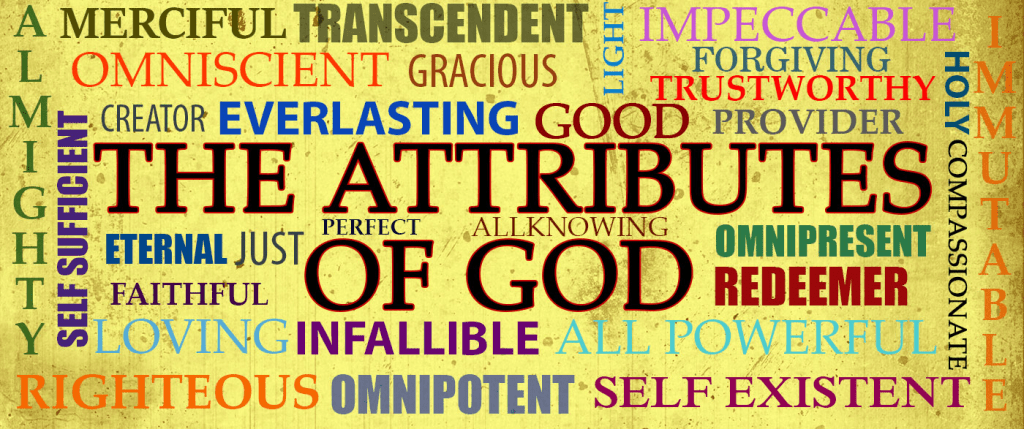
“There is only one living and true God (1), who is infinite in being and perfection (2), a completely pure spirit (3), invisible (4), without body, parts, or emotions (5), unchangeable (6), immensely vast (7), eternal (8), limitless (9), almighty (10), completely wise (11), completely holy (12), completely free (13), and completely absolute (14). He works everything according to the purpose of his own unchangeable and completely righteous will (15), for his own glory (16), He is completely loving (17), gracious, merciful, and long-suffering. He overflows with goodness and truth. He forgives wickedness, transgression, and sin (18), and rewards those who diligently seek him (19). His judgments are completely just and awesome (20), he hates all sin (21), and will not acquit the guilty (22).
Chapter 2 continues by saying…
“God has all life, glory, goodness, and blessedness in and of himself (23). He alone is all-sufficient in and unto himself, nor does he need any of his creations or derive any glory from them. Rather, he manifests his own glory in, by, unto, and on them (24). He is the only source of all being, by whom, through whom, and to whom everything exists (25). He has completely sovereign dominion over all things and does with, to, or for them whatever he pleases (26). Everything is revealed and completely open to him (27). His knowledge is infinite, infallible, and does not depend on any created being (28), so that to him nothing is conditional or uncertain (29). He is completely holy in all his purposes, works, and commands (30). To him is due whatever worship, service, or obedience he is pleased to require from angels, human beings, and all other creatures (31).
What are the practical implications when we understand the nature and character of God as it pertains to the providence of God? In other words, what is to be the response by the believer in Christ to these biblical truths? Dr Wayne Grudem offers the following considerations.
- Do Not Be Afraid, but Trust in God. “Jesus emphasizes the fact that our sovereign Lord watches over us and cares for us as his children. He says, “Look at the birds of the air: they neither sow nor reap nor gather into barns, and yet your heavenly Father feeds them. Are you not of more value than they? … Therefore, do not be anxious, saying, “What shall we eat?’ or “What shall we drink?’ or “What shall we wear?”’ (Matt. 6:26, 31). If God feeds the birds and clothes the grass of the field, he will take care of us. Similarly, Jesus says, “Are not two sparrows sold for a penny? And not one of them will fall to the ground without your Father’s will … Fear not, therefore; you are of more value than many sparrows” (Matt. 10:29–31). David was able to sleep in the midst of his enemies, because he knew that God’s providential control made him “dwell in safety,” and he could say, “In peace I will both lie down and sleep” (Ps. 4:8).
Many of the psalms encourage us to trust God and not to fear, because the LORD keeps and protects his people—for example, Psalm 91 (“He who dwells in the shelter of the Most High”) or Psalm 121 (“I lift up my eyes to the hills …”). Because of our confidence in God’s providential care, we need not fear any evil or harm, even if it does come to us—it can only come by God’s will and ultimately for our good. Thus, Peter can say that “now for a little while you may have to suffer various trials, so that the genuineness of your faith, more precious than gold … may redound to praise and glory and honor at the revelation of Jesus Christ” (1 Peter 1:6–7). In all of this we need not worry about the future but trust in God’s omnipotent care.”
- Be Thankful for All Good Things That Happen. “If we genuinely believe that all good things are caused by God, then our hearts will indeed be full when we say, “Bless the LORD, O my soul, and forget not all his benefits” (Ps. 103:2). We will thank him for our daily food (cf. Matt. 6:11; 1 Tim. 4:4–5); indeed, we will “give thanks in all circumstances” (1 Thess. 5:18).”
- There Is No Such Thing as “Luck” or “Chance.” “All things come to pass by God’s wise providence. This means that we should adopt a much more “personal” understanding of the universe and the events in it. The universe is not governed by impersonal fate or luck, but by a personal God. Nothing “just happens—we should see God’s hand in events throughout the day, causing all things to work together for good for those who love him. This confidence in God’s wise providence certainly does not equal superstition, for that is a belief in impersonal or demonic control of circumstances, or control by a capricious deity concerned for meaningless ritual rather than obedience and faith. A deepened appreciation for the doctrine of providence will not make us more superstitious; it will make us trust in God more and obey him more full.”
Soli deo Gloria!
______________________
1. Dt 6.4; 1 Cor 8.4,6; 1 Thess. 1.9; Jer. 10.10. 2. Job 11.7-9, 26.14; Jer. 23.24; Ps. 147.5, 1 Kgs. 8.27; Ps. 139. 3. John 4.24. 4. 1 Tim. 1.17. 5. Dt 4.15-16; John 4.24; Lk. 24.39; Acts 14.11,15. 6. Jas 1.1; Mal 3.6. 7. 1 Kgs 8.27, Jer. 23.23-24. 8. Ps 90.2, 1 Tm 1.17. 9. Ps 145.3, Rom 11.33. 10. Gen 17.1, Rev 4.8. 11. Rom 16.27. 12. Is 6.3, Rev 4.8. 13. Ps 115.3. 14. Ex 3. 14, Is 44.6, Acts 17.24-25. 15. Eph 1.11. 16. Prov. 16.4, Rom 11.36, Rev. 4.11. 17. 1 Jn 4.8-10, 16, John 3.16. 18. Ex 34.6-7. 19. Heb 11.6. 20. Neh. 9.32-33, Heb 10.28-31. 21. Ps 5.5-6, Heb 1.13. 22. Nahum 1.2-3, Ex 34.7. 23. John 5.26; Acts 7.2; Ps 119.68; 1 Tim 6.15; Rom 9.5. 24. Acts 17.24-25; Job 22.2,23; Ps 50.12, Is. 4.12-17. 25. Rom 11.36; Is 40.12-17. 26. Rev. 4.11, 1 Tim 6.15; Dan. 4.25, 35; Eph 1.11. 27. Heb 4.13. 28. Rom 11.33-34; Ps 147.5. 29. Acts 15.1; Ezek. 11.5; Is. 46.9-11; Prov. 15.3. 30. Ps 145.17; Rom 7.12. 31. Rev. 5.12-14, 7.11-12
 His Word Today