
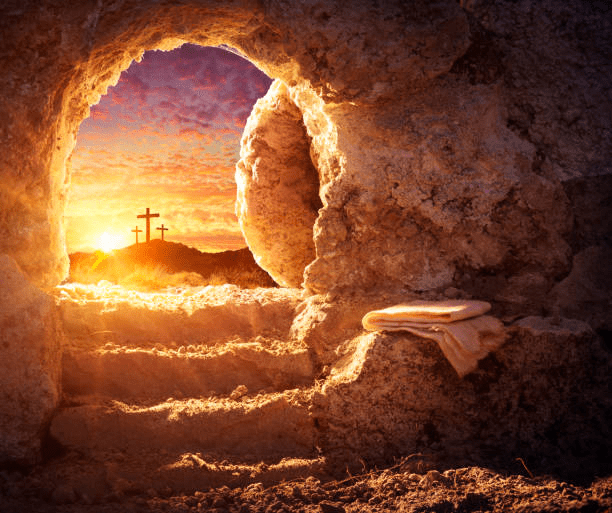
7 Then go quickly and tell his disciples that he has risen from the dead, and behold, he is going before you to Galilee; there you will see him. See, I have told you.” 8 So they departed quickly from the tomb with fear and great joy, and ran to tell his disciples.” (Matthew 28:7–8 (ESV)
7 But go, tell his disciples and Peter that he is going before you to Galilee. There you will see him, just as he told you.” 8 And they went out and fled from the tomb, for trembling and astonishment had seized them, and they said nothing to anyone, for they were afraid.” (Mark 16:7–8 (ESV)
8 And they remembered his words, 9 and returning from the tomb they told all these things to the eleven and to all the rest. 10 Now it was Mary Magdalene and Joanna and Mary the mother of James and the other women with them who told these things to the apostles, 11 but these words seemed to them an idle tale, and they did not believe them.” (Luke 24:8–11 (ESV)
All three Synoptic Gospels parallel each other concerning the events on Resurrection Sunday. While each writer provides selective, insightful information, they do not contradict each other in telling the wonderful news that Jesus Christ is alive.
The following devotional is from Pastor John Piper. This excerpt is taken from an Easter Sunday sermon he preached in 2004.
On what basis should we believe that Jesus was raised from the dead and is alive today, reigning as Son of God?
Christianity is built out of these truths: that God created the world; that he guides and sustains the world; that in his divine Son, Jesus Christ, he entered the world; that this Jesus Christ lived a perfect life and that he died for our sins on a particular day about 2,000 years ago, in a particular place just outside Jerusalem; and that God raised him from the dead the third day; and that he sent his followers throughout the world to make disciples of every nation; and that he ascended to heaven where he reigns at God’s right hand, and from which he will come again to establish his kingdom on the earth.
These are all objective, historical events, not just spiritual ideas or experiences. And if these events are false—if they did not happen or will not happen—then Christianity is false and no one should believe it.
So I pose the question at the outset: On what basis should we believe that Jesus Christ was raised from the dead, and is alive today reigning as the Son of God? Before going to our text in Matthew, I just want to point you toward five lines of evidence that you would want to follow in answering that question.
- The testimony of the apostle Paul. We have 13 letters from his pen. He was a contemporary of Jesus. He claimed to see the risen Christ. He spoke of others that he knew who saw him alive after his crucifixion, even 500 at once, many of whom were still alive when Paul was writing (1 Corinthians 15:5). This gives to Paul’s writings what is called “historical control,” which means that there is good reason to take seriously what he says because there were so many people around who could easily falsify his claims if they were not true.
- The empty tomb in Jerusalem where Jesus had been buried. This is relevant because the claim that Jesus was raised from the dead spread in a city that was hostile to that claim and would have done anything it could to squelch it if they could. The one thing they could have done was to produce the dead body of Jesus, but they could not (Acts 5:30-33).
- The courage of the disciples of Jesus and their willingness to lay down their lives to preach that Jesus was raised from the dead just weeks after they abandoned him out of fear and thought that they had been badly mistaken about his Messiahship (Luke 24:21). What had changed them from fearful to courageous so suddenly? And do men really risk their lives for what they know to be a fraud?
- The diverse testimony of Matthew, Mark, Luke, John, Peter, James, and the writer to the Hebrews. Here you need to get to know these men as witnesses, and see if they are credible. Give them a hearing and see if they do not win you over, and prove themselves to be more worthy of your confidence than the skeptics of our day.
- The ring of truth in the biblical vision of the world. Does not this whole story of God and creation and sin and Christ and salvation help make more sense out of more things in this world from beginning to end than any other vision of reality?
Five lines of evidence. I hope that you will pursue them. Your eternal life hangs on what you conclude from these.
Soli deo Gloria!
 His Word Today