The Gospel of Matthew: Two Blind Men.

29 And as they went out of Jericho, a great crowd followed him. 30 And behold, there were two blind men sitting by the roadside, and when they heard that Jesus was passing by, they cried out, “Lord, have mercy on us, Son of David!” 31 The crowd rebuked them, telling them to be silent, but they cried out all the more, “Lord, have mercy on us, Son of David!” 32 And stopping, Jesus called them and said, “What do you want me to do for you?” 33 They said to him, “Lord, let our eyes be opened.” 34 And Jesus in pity touched their eyes, and immediately they recovered their sight and followed him.” (Matthew 20:29–34 ESV)

In the early days of Jesus’ ministry, He healed two blind men (Matt. 9:27-31). At this time, John the Baptist, while in prison, sent his disciples to inquire if Jesus was the Christ. The Lord’s response in part was the blind received their sight (11:1-5).  

Once again, Matthew recorded the healing of two blind men. However, Mark and Luke indicate there was only one; Bartimaeus, the Son Timaeus (Mark 10:46-52; Luke 18:35-43). Is this a biblical contradiction? Many solutions are offered. The likely explanation is Mark and Luke refer to the more vocal and insistent of the two men Matthew mentioned.

The text indicates Jesus and His disciples left Jericho on their way to Jerusalem (Matt. 20:17-19). A great crowd followed them.

“Jesus will soon arrive in Jerusalem to complete His messianic work, for He has been in Jericho, located fifteen miles or so from the Holy City, about a day’s journey in first-century Judea. Leaving Jericho, Christ and His followers begin the ascent 3,000 feet up to Jerusalem, but they do not get very far before meeting two desperate men in need,” explains Dr. R. C. Sproul.

Two blind men sat by the roadside. Presumably this was to receive alms (money) from passersby. They heard Jesus was passing their way and began to passionately cry out, shout, and even scream “Lord, have mercy on us, Son of David!” While the crowd told them to be quiet, they cried out all the more intensely.

These blind men, one of whom is named Bartimaeus (Mark 10:46), beg Jesus to heal them, confessing Him as the “Son of David” (Matt. 20:30), a title loaded with messianic assumptions. Knowing that the Messiah is present gives them hope that He will fulfill His call to work miracles and give them sight (see Isa. 35),” states Dr. Sproul.

“Although the road from Jericho to Jerusalem was notorious for robbers, it was widely used, and larger companies (such as Jesus’) would face no threat. Jericho was one of the wealthiest cities of Judea and beggars there would not starve, but their vocation as beggars and dependents still marked them as poor and at the bottom of the socioeconomic scale—“nobodies” who were dependent on the pity of passersby. “Son of David” indicates that they acknowledge Jesus as Messiah. “Have mercy on us” could be a common cry for alms, though here they seek more,” explain commentator Craig Keener.

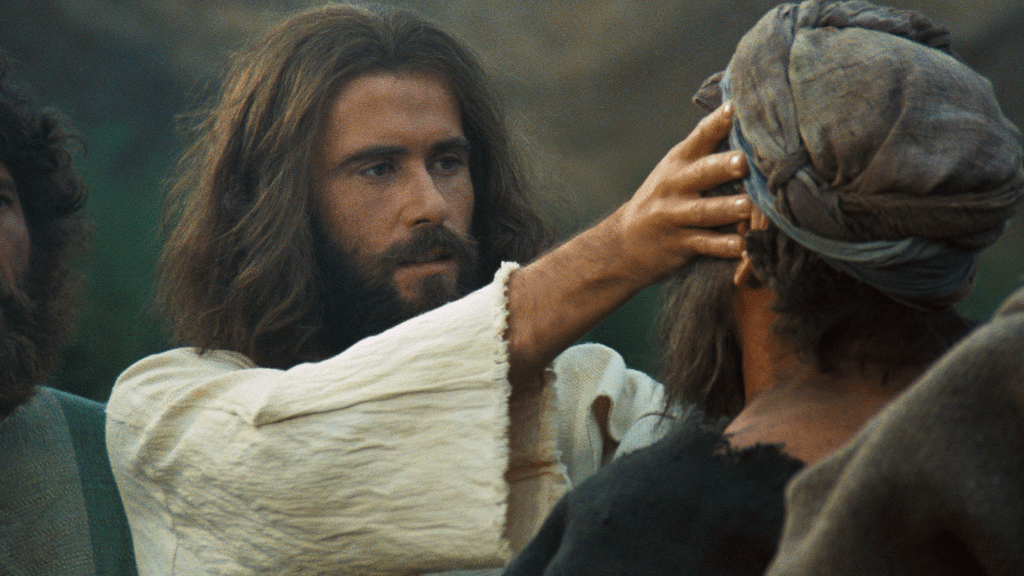
At that moment, Jesus stopped and asked them, “What do you want me to do for you?” They replied, “, “Lord, let our eyes be opened.” It was at that precise moment “Jesus in pity touched their eyes, and immediately they recovered their sight and followed him.”

Jesus graciously gave the two men physical sight. By following Jesus, the two men gratefully evidence spiritual sight.

Jesus was on His way to Jerusalem to accomplish the significant work God the Father had purposed for Him (John 17:1-5). However, He took the time to minister to two men who appeared to be insignificant.

“When we do the work of ministry it can be easy to get so caught up in the big plans and programs we have going that we miss the needs of certain individuals among us. As followers of Jesus, we must imitate His compassion and take the time to minister to hurting individuals even if it may sometimes get in the way of our own plans and purposes,” concludes Dr. Sproul.

What are you doing in your church to make sure people are shown compassion and are not forgotten? Have a blessed day of ministry.

Soli deo Gloria!
The Gospel of Matthew: Ransom Thoughts.   

28 even as the Son of Man came not to be served but to serve, and to give his life as a ransom for many.” (Matthew 20:28 (ESV)

“A “ransom” is a price paid to redeem a slave or a prisoner. Redemption does not involve a price paid to Satan. Rather, the ransom is offered to God—to satisfy his justice and wrath against sin. The price paid was Christ’s own life—as a blood atonement (cf. Lev. 17:11Heb. 9:22). This, then, is the meaning of the cross: Christ subjected himself to the divine punishment against sin on our behalf (cf. Isa. 53:4–5see note on 2 Cor. 5:21). Suffering the brunt of divine wrath in the place of sinners was the “cup” he spoke of having to drink (Matt. 20:22).” – Dr. John MacArthur

“Penal substitution—the suffering of Christ under the wrath of God in our place to pay the debt of sin we owe to our Creator—is the heart of the biblical doctrine of the atonement (Rom. 3:21–262 Cor. 5:211 Peter 2:24–25). Yet while penal substitution is essential to the gospel, it does not exhaust Scripture’s explanation of what Christ’s atonement accomplished. In today’s passage, for example, Jesus says that on the cross, He gave His life as a “ransom for many” (Matt. 20:20–28).” – Dr. R. C. Sproul

“The phrase “a ransom for many” is in all probability an echo of Isa. 53:11, as the entire surrounding phraseology would seem to indicate. Now in Isa. 53 the idea of substitution predominates: see verses 4, 5, 6, 8, and 12. See also Matt. 26:28. It is, of course, perfectly true that this ransom “in the place of” and “in exchange for” many immediately implies that benefit accrues to the many. The two ideas “in the place of” and “for the benefit of” blend into one. How can we even for a moment entertain the idea that a ransom “in the place of” many would not be for their benefit? Besides, the very context states in so many words that by means of this ransom the Son of man serves the many. He rescues them from the greatest possible bane, namely, the curse of God upon sin; and he bestows upon them the greatest possible boon, namely, the blessings of God for soul and body throughout all eternity.” (See Isa. 53:10; Rom. 4:25; 2 Cor. 5:20, 21; Titus 2:14; 1 Peter 1:18, 19). – Dr. William Hendriksen

“Never was there such an example of beneficence and usefulness as there was in the death of Christ, who gave his life a ransom for many. He lived as a servant, and went about doing good; but he died as a sacrifice, and in that he did the greatest good of all. He came into the world on purpose to give his life a ransom; it was first in his intention.” – Matthew Henry

“And to give His life a ransom for many. Christ mentioned His death, as we have said, in order to withdraw His disciples form the foolish imagination of an earthly kingdom. But it is a just and appropriate statement of its power and results when He declares that His life is the price of our redemption; when it follows that we obtain an undeserved reconciliation with God; the price of which is to be found nowhere else than in the death of Christ.” – John Calvin  

What fear can overtake my vision?
What doubt can overcome my faith?
What strife can silence all my singing?
Lord, Your wounds have paid my ransom.

What thief can steal my heart’s possession?
What pow’r can overwhelm my soul?
What shame can silence my confession?
Lord, Your wounds have paid my ransom.

And what unspeakable mercy has emptied heaven’s reserve?
And what Redeemer so worthy has covered sin with such love?
And what unsearchable riches, far beyond human words?
Lord, Your wounds have paid my ransom.

What lie can sever what is certain?
What storm can wash away my hope?
What threat of death can take my freedom?
Lord, Your wounds have paid my ransom.

And what unspeakable mercy has emptied heaven’s reserve?
And what Redeemer so worthy has covered sin with such love?
And what unsearchable riches, far beyond human words?
Lord, Your wounds have paid my ransom.

Jesus paid it all, all to Him I owe.
Lord, Your wounds have paid my ransom.


Music and Lyrics by Phil Madiera,
Cindy Morgan, and Cliff Duren

The Gospel of Matthew: To Serve.

28 even as the Son of Man came not to be served but to serve, and to give his life as a ransom for many.” (Matthew 20:28 (ESV)

“A true leader leads by example, never asking others to do something that the leader is unwilling to do himself. He does not seek leadership in order to have power and authority over others, he leads in order to do good for other people,” states Dr. R.C. Sproul.

Jesus explicitly expressed true servant leadership. He did so not only in what He taught but also in how He lived; and especially in how He died.

Today’s text concisely summarizes Jesus earthly ministry. He did not come to earth to be just a good, moral teacher. He did not come to earth to be a political leader. He did not come to earth to a non-violent revolutionary.

In fact, the Son of Man did not come to be served. The phrase Son of Man is a Messianic title Jesus used of Himself. It was a title of His deity, His earthly mission, and His glorious return.

“It does not refer merely to his human nature or humanity, as some church fathers or contemporary scholars believe. Rather, it reflects on the heavenly origin and divine dignity of Jesus, on the mystery of his manifestation in human form, and on his earthly mission that took him to the cross and then into glory,” explains the Tyndale Bible Dictionary.

If anyone deserved to be served it was Jesus. However, He said He did not come to earth to be served but rather to serve (Mark 10:45). To be served (διακονηθῆναι; diakonethenai) means to be taken care of by someone else. To serve (διακονῆσαι; diakonesai) means to be the person who does the caring.

“This has always rightly been regarded as one of the most precious of Christ’s sayings. Note “just as,” clearly indicating that Christ’s humiliation in the place of, and for the benefit of, his people, must be both their example and their motivation. He is “the Son of man,” the fulfilment of the prophecy of Dan. 7:14,” states Dr. William Hendriksen.

“In himself and from all eternity he is the all-glorious One. Yet he humbles himself. He becomes incarnate, and this not with the purpose of being served but of serving.”

Jesus’ ultimate service was giving His life as a ransom for many. Ransom (λύτρον; lytron) is the means by which a release or deliverance is possible. It is the price of release for someone under the control of another.

“The term refers to the price paid to deliver someone from slavery or imprisonment. The price of freedom from sin and condemnation is Jesus’ life, given for us (I Peter 1:18-19). Since the elect are ransomed from the wrath of God, the ransom was offered to God Himself. Jesus drinks the cup of God’s wrath (vs. 23) not for His own sins but as the means of ransoming many,” explains Dr. R. C. Sproul.

As one pastor explains, “Christians are servant-leaders because that is how their Master operates. He came to serve and give His life “as a ransom for many” (v. 28). Certainly, we cannot give our lives for others precisely as Jesus did since we cannot atone for sin. Yet we can imitate Christ’s service by not clutching tightly to any “rights” we think are ours, letting them go for the sake of another’s good. Like Jesus, we are able to see others as friends, not worthless subjects (John 15:13–15). We are not to think ourselves above “menial” tasks (13:1–17). Whatever it may look like in our lives, the only way to be great is to put the needs of others above our own.”

Soli deo Gloria!

The Gospel of Matthew: True Greatness.

24 And when the ten heard it, they were indignant at the two brothers. 25 But Jesus called them to him and said, “You know that the rulers of the Gentiles lord it over them, and their great ones exercise authority over them. 26 It shall not be so among you. But whoever would be great among you must be your servant, 27 and whoever would be first among you must be your slave,” Matthew 20:24–27 ESV)

Jesus’ response to James, John and the rest of the disciples was clear regarding greatness in the kingdom of heaven. It is the path of suffering. Jesus said to them, “You will drink my cup.” The metaphor of the “cup” represents not only the outpouring of God the Father’s wrath (Psalm 75:8; Isaiah 51:17, 22; Jeremiah 25:15-16), but also identification with Jesus Christ and His sufferings (Acts 9:4-5; Colossians 1:24; I Peter 2:21).   

“Charles Simeon was pastor of Trinity Church in Cambridge, England, for fifty-four years. But the members of the church opposed him and locked the pews of the church so that for the first ten years of his ministry, those who attended worship services would have to stand or sit in the aisles or along the back of the sanctuary. Yet Simeon faithfully ministered during that time to those who came,” explains Pastor Dr. William Barcley.

In his biography of Simeon, H.C.G. Moule records Simeon’s thoughts on enduring his ordeal and the outcome: “In this state I saw no remedy but faith and patience. . . . It was most painful indeed to see the church, with the exception of the aisles, almost forsaken; but I thought that if God would only give a double blessing to the congregation that did attend, there would on the whole be as much good done as if the congregation were doubled and the blessing limited to only half the amount. This comforted me many, many times, when without such a reflection, I should have sunk under my burden.”

There are those who suppose true greatness comes from unlimited power and position. These are individuals who are quick to speak of their hard work, their long hours of toil and exalted position and productivity. They want everyone to know how truly great they are. The want recognition and reward; much like James and John.

As expected, the remaining ten disciples were indignant at the two brothers. To be indignant (ἠγανάκτησαν; eganektesan) means to be angry at what is judged to be wrong. James and John’s fellow disciples believed the brother’s request was wrong. By His response, so did Jesus.

“You know that the rulers of the Gentiles lord it over them, and their great ones exercise authority over them. 26 It shall not be so among you. But whoever would be great among you must be your servant, 27 and whoever would be first among you must be your slave,”

“To seek one’s greatness and power, Jesus tells us, is at odds with kingdom values (Matt. 20:25–28). Gentiles lord their authority over one another, a reference to the Roman system where humility was a vice and might was always right. On the other hand, God’s children serve one another. Greatness is found in putting others first and in seeking the welfare of others above one’s own (see Phil. 2:1–11).” explains Dr. R. C. Sproul.

John Chrysostom comments, “Loving the first place is not fitting to us, even though it may be among the nations. Such a passion becomes a tyrant. It continually hinders even great men” (Homilies on the Gospel of Saint Matthew, 65.4). In the kingdom, the last are first and the first are last (Matt. 20:16).”

“A true leader leads by example, never asking others to do something that the leader is unwilling to do himself. He does not seek leadership in order to have power and authority over others, he leads in order to do good for other people,” states Dr. Sproul.

“Is the leadership function you perform, no matter how large or small it might be, characterized by such service?”  

Soli deo Gloria!

The Gospel of Matthew: You Will Drink My Cup.

23 He said to them, “You will drink my cup, but to sit at my right hand and at my left is not mine to grant, but it is for those for whom it has been prepared by my Father.” Matthew 20:23 (ESV)

Jesus’ response to James, John and the rest of the disciples was clear regarding greatness in the kingdom of heaven. It is the path of suffering. Jesus said to them, “You will drink my cup.” The metaphor of the “cup” represents not only the outpouring of God the Father’s wrath (Psalm 75:8; Isaiah 51:17, 22; Jeremiah 25:15-16), but also identification with Jesus Christ and His sufferings (Acts 9:4-5; Colossians 1:24; I Peter 2:21).   

The Apostle Paul expressed this understanding in his epistles.

Philippians 3:10 (ESV) – “ that I may know him and the power of his resurrection, and may share his sufferings, becoming like him in his death.”  

Colossians 1:24 (ESV) – Now I rejoice in my sufferings for your sake, and in my flesh I am filling up what is lacking in Christ’s afflictions for the sake of his body, that is, the church.”

2 Timothy 4:6–8 (ESV) – For I am already being poured out as a drink offering, and the time of my departure has come. I have fought the good fight, I have finished the race, I have kept the faith. Henceforth there is laid up for me the crown of righteousness, which the Lord, the righteous judge, will award to me on that day, and not only to me but also to all who have loved his appearing.”

So too did the Apostle Peter.

1 Peter 2:19–21 (ESV) – “19 For this is a gracious thing, when, mindful of God, one endures sorrows while suffering unjustly. 20 For what credit is it if, when you sin and are beaten for it, you endure? But if when you do good and suffer for it you endure, this is a gracious thing in the sight of God. 21 For to this you have been called, because Christ also suffered for you, leaving you an example, so that you might follow in his steps.”

1 Peter 4:12–19 (ESV) – 12 Beloved, do not be surprised at the fiery trial when it comes upon you to test you, as though something strange were happening to you. 13 But rejoice insofar as you share Christ’s sufferings, that you may also rejoice and be glad when his glory is revealed. 14 If you are insulted for the name of Christ, you are blessed, because the Spirit of glory and of God rests upon you. 15 But let none of you suffer as a murderer or a thief or an evildoer or as a meddler. 16 Yet if anyone suffers as a Christian, let him not be ashamed, but let him glorify God in that name. 17 For it is time for judgment to begin at the household of God; and if it begins with us, what will be the outcome for those who do not obey the gospel of God? 18 And ‘If the righteous is scarcely saved, what will become of the ungodly and the sinner?” 19 Therefore let those who suffer according to God’s will entrust their souls to a faithful Creator while doing good.”  

Let us not forget what James had to say.

James 1:2–5 (ESV) – Count it all joy, my brothers, when you meet trials of various kinds, for you know that the testing of your faith produces steadfastness. And let steadfastness have its full effect, that you may be perfect and complete, lacking in nothing. If any of you lacks wisdom, let him ask God, who gives generously to all without reproach, and it will be given him.”

Jesus then expressed His humble submission to God the Father. “…but to sit at my right hand and at my left is not mine to grant, but it is for those for whom it has been prepared by my Father.”

“In the mysteries of the Trinity, the Son is one with the Father in substance and equal to the Father in power and glory; yet He (the Son) willingly submits to the Father’s will and defers to the Father’s authority as the incarnate well-pleasing messianic Son, even in His exaltation (I Cor. 15:28),” explains Dr. R. C. Sproul.  

May each believer in Christ strive to be a humble servant and not for glory and position. May all glory belong to the Lord.

Soli deo Gloria!

The Gospel of Matthew: The Lord’s Response.

22 Jesus answered, “You do not know what you are asking. Are you able to drink the cup that I am to drink?” They said to him, “We are able.” 23 He said to them, “You will drink my cup, but to sit at my right hand and at my left is not mine to grant, but it is for those for whom it has been prepared by my Father.” (Matthew 20:22–23 ESV).

Matthew recorded Jesus’ disciple’s failure to comprehend the full meaning of His predicted death, burial and resurrection. Simon Peter passionately protested such a fate (16:21–23). The second prediction prompted the disciples to argue about who was the greatest among them (17:22–18:6). Note they did not argue which of them would suffer the most.  

At this time, the disciples should have known better. However as one commentator observes, “they are dense and display their ignorance again immediately after Jesus predicts His death for the third time (20:17–19).

Today’s overall text tells of a mom approaching Jesus on behalf of her two sons (Matt. 20:20-21). Matthew identified her has the mother of the sons of Zebedee. The sons would be James and John; two of the three closest disciples of Jesus (Matt. 17:1).

The issue at hand is what constitutes true greatness in the kingdom of heaven and in the church? Remember, the last will be first and the first last (Matt. 20:16). What was the Lord’s response?

Jesus said, “You do not know what you are asking.”  It appears by a surface reading of the Lord’s statement He was speaking to Salome; James and John’s mom. However, the personal pronoun “you” is plural. Jesus was not speaking to Salome, but rather to her boys; His disciples. He knew who was behind their mother’s request.

How ironic for James and John to request privilege and position when Jesus was speaking about a cross. While the Lord, who is all powerful, speaks of self-humiliation, the disciples, who are not all-powerful, display self-exaltation. This is the concept of the will to power, or a desire to be like God (Gen.3:1-6).

“The will to power (Germander Wille zur Macht) is a concept in the philosophy of Friedrich Nietzsche. The will to power describes what Nietzsche may have believed to be the main driving force in humans. However, the concept was never systematically defined in Nietzsche’s work, leaving its interpretation open to debate. Usage of the term by Nietzsche can be summarized as self-determination, the concept of actualizing one’s will onto one’s self or one’s surroundings, and coincides heavily with egoism,” explains one historian.  

Jesus then asked James and John, and perhaps the rest of His disciples, another question. “Are you able to drink the cup that I am to drink?” They said to him, “We are able.”

“In the Old Testament (OT) the ‘cup’ normally signifies the outpouring of God’s wrath (Psalm 75:8; Isaiah 51:17, 22; Jer. 25:15-16; Rev. 16:19; see Matt. 26:36-46; Luke 22:39-46; Mark 14:32-42). That the disciples will drink this cup means they will experience suffering, but note that Jesus calls it ‘my cup.’ Because Jesus drank the cup of God’s wrath, believers do not drink the wrath they deserve. In and through Christ’s suffering, they have already undergone judgment. They are now justified in Christ and heirs of His glory (Rom. 8:17). Yet their privilege is to be identified with Christ in His sufferings (Acts 9:4-5; Col. 1:24; 1 Peter 2:21),” explains Dr. R. C. Sproul.

“James and John, brothers who are uniquely close to Christ (17:1; 26:36–37), are the ones who grossly misunderstand what kingdom greatness really means. Their presumptuous request to sit on either side of Jesus in His kingdom — to have preeminent honor (Ps. 110:1) — is in keeping with their nature as “Sons of Thunder” (Mark 3:17), even though their mother speaks for them (Matt. 20:20–21). That they miss the point of what it means to be exalted before God is evident in our Lord’s reply when He tells them they do not know what they are asking (v. 22). Apparently, though it is futile to do so (10:38–39), James and John are seeking glory without suffering, a crown without the cross.”

 John Calvin comments, “None will be a partaker of the life and the kingdom of Christ who has not previously shared in his sufferings and death.”

But far be it from me to boast except in the cross of our Lord Jesus Christ, by which the world has been crucified to me, and I to the world.” (Galatians 6:14 ESV)

Soli deo Gloria!

The Gospel of Matthew: A Mother’s Request.

20 Then the mother of the sons of Zebedee came up to him with her sons, and kneeling before him she asked him for something. 21 And he said to her, “What do you want?” She said to him, “Say that these two sons of mine are to sit, one at your right hand and one at your left, in your kingdom.” (Matthew 20:20–21 (ESV)

Matthew recorded Jesus’ disciple’s failure to comprehend the full meaning of His predicted death, burial and resurrection. Simon Peter passionately protested such a fate (16:21–23). The second prediction prompted the disciples to argue about who was the greatest among them (17:22–18:6). Note they did not argue as to who of them would suffer the most.  

At this time, the disciples should have known better. However as one commentator observes, “they are dense and display their ignorance again immediately after Jesus predicts His death for the third time (20:17–19).

Today’s text tells of a mom approaching Jesus on behalf of her two sons. Matthew identified her has the mother of the sons of Zebedee. The sons would be James and John; two of the three closest disciples of Jesus (Matt. 17:1).

“Who was this “mother of the sons of Zebedee”? Why is she not simply called “Zebedee’s wife”? As to the last question, Zebedee, still definitely alive and active in 4:21 (cf. Mark 1:20), may have died. It is also possible that the designation results from the fact that this mother’s request concerns her sons, not her husband. We simply do not know. As to the first question, certainty is lacking here also. The theory that she was Salome, the sister of the Mary who was the mother of Jesus, and that she was accordingly an aunt of Jesus, so that James and John, her sons, were his cousins, can be called a reasonable inference from a comparison of three Gospel references (Matt. 27:56; Mark 15:40; and John 19:25),” states Dr. William Hendriksen.

The woman displayed an outward humility in kneeling before the Lord. However, you have to wonder if this was just a ploy to hide her true intentions in persuading Jesus to comply with her request. Who better to sit on either side of Jesus in His kingdom than his cousins James and John? Was this not how the world of kings and other dignitaries works? Do not a leader’s closest advisors and followers receive the prime positions of designated power? See Exod. 17:12; 2 Sam. 16:6; 1 Kings 22:19 (2 Chron. 18:18); Neh. 8:4.

“The indirect intercession of a motherly woman was often more effective than a man’s direct petition for himself, in both Jewish and Roman circles (see 2 Sam 14:2–20; 1 Kings 1:15–21; cf. 2 Sam 20:16–22). In this case, however, it does not work,” explains commentator Craig Keener.

The issue at hand is what constitutes true greatness in the kingdom of heaven and in the church? Remember, the last will be first and the first last (Matt. 20:16).

Soli deo Gloria!

The Gospel of Matthew: Jesus Foretells His Death a Third Time.

17 And as Jesus was going up to Jerusalem, he took the twelve disciples aside, and on the way he said to them, 18 “See, we are going up to Jerusalem. And the Son of Man will be delivered over to the chief priests and scribes, and they will condemn him to death 19 and deliver him over to the Gentiles to be mocked and flogged and crucified, and he will be raised on the third day.” (Matthew 20:17–19 (ESV)

Matthew records the third time Jesus predicted His trials, condemnation, mocking, flogging, crucifixion, but also His resurrection (Matt. 16:21; 17:22-23). This third prediction reveals more about the kind of death He would die than the previous two.

21 From that time Jesus began to show his disciples that he must go to Jerusalem and suffer many things from the elders and chief priests and scribes, and be killed, and on the third day be raised.” (Matthew 16:21 (ESV)

22 As they were gathering in Galilee, Jesus said to them, “The Son of Man is about to be delivered into the hands of men, 23 and they will kill him, and he will be raised on the third day.” And they were greatly distressed.” (Matthew 17:22–23 (ESV)

Jesus previously said He would suffer from the Jewish elders, chief priests and scribes and be delivered into the hands of men. He also clearly stated He would be killed, but He did not mention how He would die. However, Jesus also stated that He would be raised on the third day following His death.

In today’s text, Jesus again takes the initiative and tells His disciples what He would soon be experiencing in Jerusalem. He identified Himself as the Son of Man. This is a clear reference to Daniel 7:13-14. It is a title of deity.

Jesus stated the Jewish religious leaders (chief priests and scribes) would condemn Him to death. Jesus continued by saying that Jewish leaders would then hand Him over to the Gentiles (Romans) to be mocked, flogged and crucified. Crucifixion was the Roman government’s means of public execution of condemned criminals. Jesus also said, for the third time, He would be resurrected on the third day following His death.

The events Jesus described were not circumstances beyond either His, or God the Father’s, control and preordained plan. As the Apostle Peter would later preach on the Day of Pentecost, Jesus’ death, burial and resurrection were according to the definite plan and foreknowledge of God (Acts 2:21-24).

“Following the parable of the laborers in the vineyard, Jesus’ advance toward the cross progresses in earnest. He is drawing ever closer to Jerusalem and in today’s passage explicitly predicts His death and resurrection for the third time. Jesus has succeeded where His people failed, overcoming Satan’s temptations (Matt. 4:1–11), rightly understanding and teaching God’s law (chap. 5–7), and initiating the restoration of the cosmos (9:18–26; 12:9–14; 17:14–21). He has fully qualified Himself to be the true Israel and hence, the new Adam, whose perfect obedience will justify all those in Him (Isa. 53). All that remains for Christ to accomplish salvation is to endure the punishment David’s line deserved for leading God’s people astray (2 Sam. 7:1–17) and, in so doing, endure the curse Adam’s children deserve for violating the Father’s will (Gal. 3:10–14),” Explains Dr. R. C. Sproul.

While the crucifixion would certainly be bad news, Jesus also gave the good news of His resurrection (v. 19). Jesus gave this hopeful message, Puritan Matthew Henry comments, “to encourage his disciples, and comfort them, and to direct us, under all the sufferings of this present time to look at the things that are not seen, that are eternal, which will enable us to call the present afflictions light, and but for a moment.”

Soli deo Gloria!