
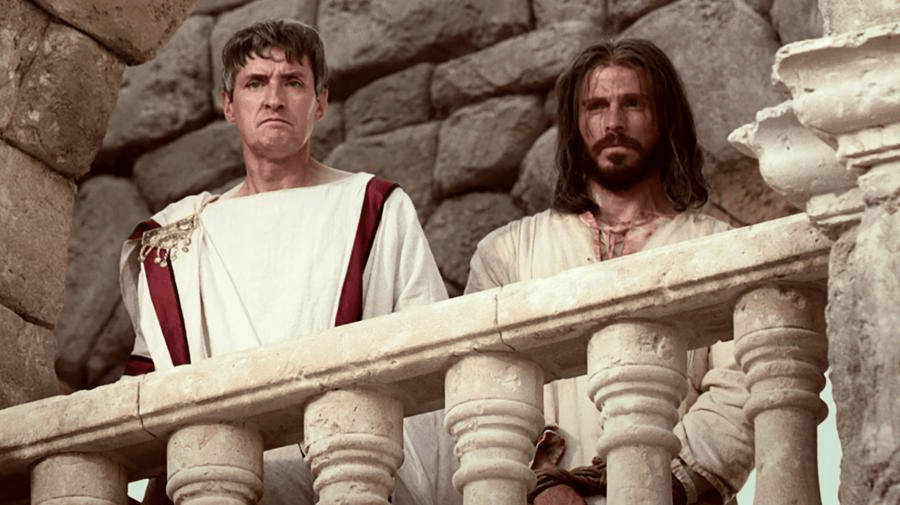
13 Pilate then called together the chief priests and the rulers and the people, 14 and said to them, “You brought me this man as one who was misleading the people. And after examining him before you, behold, I did not find this man guilty of any of your charges against him. 15 Neither did Herod, for he sent him back to us. Look, nothing deserving death has been done by him. 16 I will therefore punish and release him.” (Luke 23:13–16 (ESV)
As in our previous blog, our study of Jesus’ last week, culminating in His death, burial and resurrection, from the Gospel of Matthew chronologically takes us to Luke’s Gospel account. Today’s text from the beloved physician (Col. 4:14) places Jesus back before Pontius Pilate, after the Lord faced Herod Antipas (Luke 23:6-12).
After Herod sent Jesus back to Pilate (Luke 23:12), the Roman governor called to himself the chief priests, the rulers of the Jewish people and an untold number of Jewish citizens. He said, ““You brought me this man as one who was misleading the people. And after examining him before you, behold, I did not find this man guilty of any of your charges against him.” The false charges the Jewish leaders leveled against Jesus are found in Luke 23:1-2.
Pilate then said, “Neither did Herod, for he sent him back to us. Look, nothing deserving death has been done by him. 16 I will therefore punish and release him.” Pilate thus far displayed political savvy by not giving into the demands of the Sanhedrin to execute Jesus. However, he offered an expedient compromise. He proposed to punish Jesus, but then release Him. Presumably, Pilate hoped this would satisfy the blood lust of the Jewish leaders and the people.
“Ultimately, Pontius Pilate does not believe that Jesus wants to supplant the Caesar and destroy the Roman Empire as an Israelite king. Several factors explain why he finds no fault in Jesus (Matt. 27:11–23),” explains Dr. R. C. Sproul.
“First, whether through outside sources or his own intuition, Pilate sees that Caiaphas and the other leaders seek Jesus’ death out of envy, not the truth (v. 18). Secondly, his wife has had a nightmare about the events transpiring (v. 19) and sees involvement in the death of Jesus as disastrous for Pilate. Finally, the response of Jesus Himself to His accusers strongly refutes their accusations. John’s gospel tells us that at one point in the trial our Savior assures Pilate that His kingdom is “not of this world” (John 18:36) and therefore not interested in the violent overthrow of the Caesar. Coupled with this is Jesus’ appearance before Pilate bound and beaten, which likely convinces him that the Nazarene is no real threat to the Empire.”
“When Jesus had been returned to Pilate, the latter summoned not only the members of the Sanhedrin but also the people in general, for he wished to make a public announcement. The suggestion that “he included the people because he thought that in their presence the Sanhedrin would not have the courage to insist on crucifixion” is hard to prove or disprove,” states Dr. William Hendriksen.
“In connection with the charge that Jesus was a revolutionary, Pilate declares, “I have examined him in your presence.” This would indicate that Luke has been giving us only a summary of what had taken place, for in his account we read little (at the most verse 3) about such a public examination. Even Matt. 27:11–14; Mark 15:2–5 are probably mere summaries of that which had already occurred.”
However, the Jews would not be dissuaded. They wanted Jesus executed. This led to a unique exchange. It would be one particularly parallel to our own.
Soli deo Gloria!
 His Word Today