
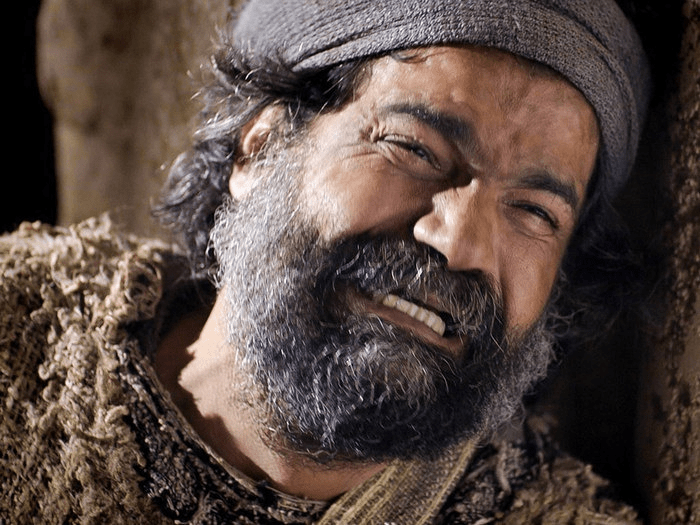
73 After a little while the bystanders came up and said to Peter, “Certainly you too are one of them, for your accent betrays you.” 74 Then he began to invoke a curse on himself and to swear, “I do not know the man.” And immediately the rooster crowed. 75 And Peter remembered the saying of Jesus, “Before the rooster crows, you will deny me three times.” And he went out and wept bitterly.” (Matthew 26:73–75 (ESV)
70 But again he denied it. And after a little while the bystanders again said to Peter, “Certainly you are one of them, for you are a Galilean.” 71 But he began to invoke a curse on himself and to swear, “I do not know this man of whom you speak.” 72 And immediately the rooster crowed a second time. And Peter remembered how Jesus had said to him, “Before the rooster crows twice, you will deny me three times.” And he broke down and wept.” (Mark 14:70–72 (ESV)
59 And after an interval of about an hour still another insisted, saying, “Certainly this man also was with him, for he too is a Galilean.” 60 But Peter said, “Man, I do not know what you are talking about.” And immediately, while he was still speaking, the rooster crowed. 61 And the Lord turned and looked at Peter. And Peter remembered the saying of the Lord, how he had said to him, “Before the rooster crows today, you will deny me three times.” 62 And he went out and wept bitterly.” (Luke 22:59–62 (ESV)
26 One of the servants of the high priest, a relative of the man whose ear Peter had cut off, asked, “Did I not see you in the garden with him?” 27 Peter again denied it, and at once a rooster crowed.” (John 18:26–27 (ESV)
Jesus had experienced two of His three religious trials. Simon Peter’s denial of Jesus also transpired in three trials, as Jesus predicted (Matt. 26:30-35). Therefore, it is wise to examine each denial in order of their occurrence. The purpose of this is not to just voyeuristically observe a historical event. Rather, it is also to identify the circumstances of this historical event and how it may apply in our own lives as believers in Christ.
Peter faced the testimony of three questioners like Jesus did (Caiaphas, two witnesses (Matt. 26:57–64, 69–74), but that is where the similarity ends. The Lord affirmed the truth throughout His hearing before the powerful and influential men. However, Peter denied the truth before weak and insignificant in that culture. Ultimately, Peter fulfilled Jesus’ prediction and denied the Lord three times. This was because Peter relied on his own power, not on the Spirit of God. Peter’s denial of Jesus became so intense Matthew recorded Peter “began to invoke a curse on himself and to swear, ‘I do not know this man of whom you speak’.”
John Calvin says that any man “who is not supported by the hand of God, will instantly fall by a slight gale or the rustling of a falling leaf.”
“He must have said something like, “May God do this or that to me if it be true that I am or ever was a disciple of Jesus.” He stands there invoking upon himself one curse after another. And the louder this Galilean talks, the more, without realizing it, he is saying to all those standing around, “I’m a liar,” explains Dr. William Hendriksen.
Grammatically, all four Gospel accounts display cause and effect. This means a preceding cause will result in its corresponding effect. Peter’s third denial of knowing Jesus, the preceding cause, resulted in the prophesied effect, the rooster crowed twice. This event was not a coincidence but rather was within the providence, purposeful sovereignty, of God.
However, another effect played out in this scene. Matthew, Mark and Luke all recorded Peter’s bitter weeping. Bitterly (πικρῶς; pikros) means to be swallowed up with grief so great as to be in despair and agony. This is sorrow so nasty it causes the individual to give up (2 Cor. 2:7).
“When Peter hears the crowing of the rooster, and sees Jesus looking at him, with eyes so full of pain, yet also of pardon, his memory of Christ’s warning prediction (26:34) is suddenly awakened. How it came about that Peter is at last permitted to leave the palace is not stated. Can it have been because now the attention of all the underlings, and perhaps of everybody else, is fixed upon Jesus? However that may be, Peter goes out and weeps as only Peter can weep: bitterly, profusely, meaningfully, his heart being filled with genuine sorrow for what he has done,” states Dr. Hendriksen.
“Yet hope remains for Peter. Though he has sinned greatly, his tears (26:75) and later restoration (John 21:15–19) show a repentant heart. No matter the depth of our sin, while we draw breath it is never too late to return to the Lord. He mercifully forgives all, without exception, who mourn their transgressions,” concludes Dr. R. C. Sproul.
Soli deo Gloria!
 His Word Today