
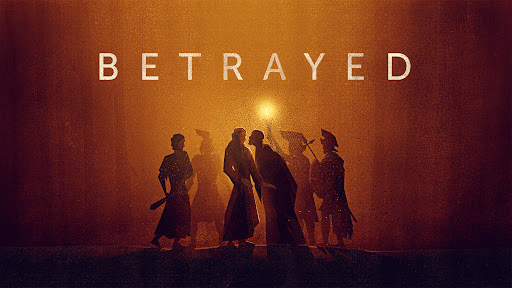
46 “Rise, let us be going; see, my betrayer is at hand.” 47 While he was still speaking, Judas came, one of the twelve, and with him a great crowd with swords and clubs, from the chief priests and the elders of the people.” (Matthew 26:46–47 ESV)
43 “And immediately, while he was still speaking, Judas came, one of the twelve, and with him a crowd with swords and clubs, from the chief priests and the scribes and the elders.” (Mark 14:43 (ESV)
47 “While he was still speaking, there came a crowd, and the man called Judas, one of the twelve, was leading them.” Luke 22:47a (ESV)
“When Jesus had spoken these words, he went out with his disciples across the brook Kidron, where there was a garden, which he and his disciples entered. 2 Now Judas, who betrayed him, also knew the place, for Jesus often met there with his disciples. 3 So Judas, having procured a band of soldiers and some officers from the chief priests and the Pharisees, went there with lanterns and torches and weapons.” (John 18:1–3 ESV)
All four Gospels record the account of Judas’ betrayal of Jesus. There are several observations which can be made concerning this treacherous event.
First, it was a personal betrayal because Judas was one of the twelve disciples. Second, it was public betrayal with Judas leading a great crowd containing officers from the chief priests and the Pharisees, scribes, elders, and a band of soldiers. Third, it was a potentially violent betrayal for the crowd had swords, clubs and weapons. Fourth, it was a covert betrayal because it happened at night evidenced by the crowd’s use of torches and lanterns. Jesus’ enemies did not want the public to know what they were doing; at least not yet.
“Because they are sent by prominent men of Jerusalem, the band that comes to arrest Jesus is probably the temple guard. They come prepared for armed resistance from one they suppose is a messianic revolutionary,” explains commentator Craig Keener.
“When Jesus had exposed Judas at the Passover supper, that traitor must have hurried off to the chief priests, etc., the men who had hired him. Was he afraid that once his treachery became known the alarm would spread and from everywhere friends of Jesus—think especially of the many from Galilee, now in the city—would gather in his defense? “Act quickly,” he must have told the Jewish authorities, preferably by night, when no crowds are around. Act tonight,” states Dr. William Hendriksen.
Judas’ hurried act of betrayal resulted in a lasting legacy of ignominy. However, it was all within the providence and sovereignty of God (Acts 2:22-23).
Take care to watch and pray so as to not enter into temptation by sins of commission or omission (Matt. 26:41; James 4:17).
Soli deo Gloria!
 His Word Today