
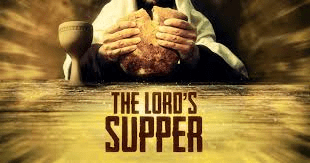
26 Now as they were eating, Jesus took bread, and after blessing it broke it and gave it to the disciples, and said, “Take, eat; this is my body.” 27 And he took a cup, and when he had given thanks he gave it to them, saying, “Drink of it, all of you, 28 for this is my blood of the covenant, which is poured out for many for the forgiveness of sins. 29 I tell you I will not drink again of this fruit of the vine until that day when I drink it new with you in my Father’s kingdom.” (Matthew 26:26–29 ESV)
22 And as they were eating, he took bread, and after blessing it broke it and gave it to them, and said, “Take; this is my body.” 23 And he took a cup, and when he had given thanks he gave it to them, and they all drank of it. 24 And he said to them, “This is my blood of the covenant, which is poured out for many. 25 Truly, I say to you, I will not drink again of the fruit of the vine until that day when I drink it new in the kingdom of God.” (Mark 14:22–25 ESV)
18 For I tell you that from now on I will not drink of the fruit of the vine until the kingdom of God comes.” 19 And he took bread, and when he had given thanks, he broke it and gave it to them, saying, “This is my body, which is given for you. Do this in remembrance of me.” 20 And likewise the cup after they had eaten, saying, “This cup that is poured out for you is the new covenant in my blood.” (Luke 22:18–20 ESV)
23 For I received from the Lord what I also delivered to you, that the Lord Jesus on the night when he was betrayed took bread, 24 and when he had given thanks, he broke it, and said, “This is my body, which is for you. Do this in remembrance of me.” 25 In the same way also he took the cup, after supper, saying, “This cup is the new covenant in my blood. Do this, as often as you drink it, in remembrance of me.” (1 Corinthians 11:23–25 ESV)
As the last week of the Lord Jesus Christ is studied, it is important to compare the New Testament Gospels and Epistles, their particular narratives and themes pertaining to the death, burial and resurrection of the Lord. Today’s focus concerns the celebration of the Passover Meal and the institution of what is referred to as The Lord’s Supper or Communion. This particular observance would symbolize the historical death, burial and resurrection of the Lord Jesus Christ. It is one of two ordinances in the church. The other is Believer’s Baptism.
“After predicting Judas’ betrayal (Matt. 26:20–25), Jesus and His disciples proceed with the Passover meal. It is a special moment indeed, for only close friends eat together in first-century Jewish culture. The forces conspiring against the Lord (vv. 1–5, 14–16) no doubt cast a pall over an otherwise delightful occasion, but the light of the resurrection will reveal even the bitter events to come as integral to the joy of final redemption they will help produce,” explains Dr. R. C. Sproul.
It is most likely Judas departed prior to the institution of the Lord’s Supper (John 13:31). From Matthew’s account, it was during the eating of the Passover Meal when Jesus took bread, blessed it, broke it and gave each disciple a portion of it. Jesus said, ““Take, eat; this is my body.” He then took a common cup filled with wine, gave thanks and said, ““Drink of it, all of you, 28 for this is my blood of the covenant, which is poured out for many for the forgiveness of sins.”
“At this point Passover passes over into the Lord’s Supper; for it was while, toward the close of the Passover meal, the men were all eating freely (see on verse 21) that Jesus instituted the new sacrament that was to replace the old. A few more hours and the old symbol, being bloody—for it required the slaying of the lamb—will have served its purpose forever, having reached its fulfilment in the blood shed on Calvary. It was time, therefore, that a new and unbloody symbol replace the old. Nevertheless, by historically linking Passover and Lord’s Supper so closely together Jesus also made clear that what was essential in the first was not lost in the second. Both point to him, the only and all-sufficient sacrifice for the sins of his people. Passover pointed forward to this; the Lord’s Supper points back to it,” states Dr. William Hendriksen.
Were the bread and the wine Jesus blessed and gave thanks for His actual body and blood? Some church traditions, and theologians, advocate this view, or a moderate interpretation of the same. In the days ahead, we will seek to come to a biblical understanding of what Jesus meant and how it applies to the church today when she observes the Lord’s Supper or Communion.
Soli deo Gloria!
.
 His Word Today