
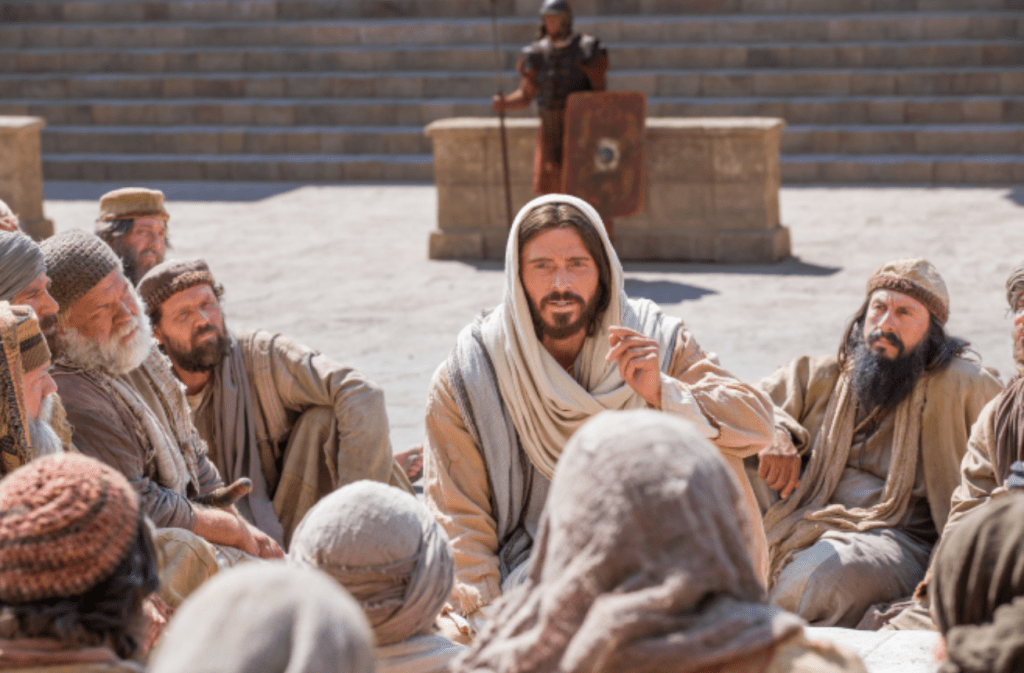
22 “Jesus answered, “You do not know what you are asking. Are you able to drink the cup that I am to drink?” They said to him, “We are able.” 23 He said to them, “You will drink my cup, but to sit at my right hand and at my left is not mine to grant, but it is for those for whom it has been prepared by my Father.” (Matthew 20:22–23 ESV).
Matthew recorded Jesus’ disciple’s failure to comprehend the full meaning of His predicted death, burial and resurrection. Simon Peter passionately protested such a fate (16:21–23). The second prediction prompted the disciples to argue about who was the greatest among them (17:22–18:6). Note they did not argue which of them would suffer the most.
At this time, the disciples should have known better. However as one commentator observes, “they are dense and display their ignorance again immediately after Jesus predicts His death for the third time (20:17–19).”
Today’s overall text tells of a mom approaching Jesus on behalf of her two sons (Matt. 20:20-21). Matthew identified her has the mother of the sons of Zebedee. The sons would be James and John; two of the three closest disciples of Jesus (Matt. 17:1).
The issue at hand is what constitutes true greatness in the kingdom of heaven and in the church? Remember, the last will be first and the first last (Matt. 20:16). What was the Lord’s response?
Jesus said, “You do not know what you are asking.” It appears by a surface reading of the Lord’s statement He was speaking to Salome; James and John’s mom. However, the personal pronoun “you” is plural. Jesus was not speaking to Salome, but rather to her boys; His disciples. He knew who was behind their mother’s request.
How ironic for James and John to request privilege and position when Jesus was speaking about a cross. While the Lord, who is all powerful, speaks of self-humiliation, the disciples, who are not all-powerful, display self-exaltation. This is the concept of the will to power, or a desire to be like God (Gen.3:1-6).
“The will to power (German: der Wille zur Macht) is a concept in the philosophy of Friedrich Nietzsche. The will to power describes what Nietzsche may have believed to be the main driving force in humans. However, the concept was never systematically defined in Nietzsche’s work, leaving its interpretation open to debate. Usage of the term by Nietzsche can be summarized as self-determination, the concept of actualizing one’s will onto one’s self or one’s surroundings, and coincides heavily with egoism,” explains one historian.
Jesus then asked James and John, and perhaps the rest of His disciples, another question. “Are you able to drink the cup that I am to drink?” They said to him, “We are able.”
“In the Old Testament (OT) the ‘cup’ normally signifies the outpouring of God’s wrath (Psalm 75:8; Isaiah 51:17, 22; Jer. 25:15-16; Rev. 16:19; see Matt. 26:36-46; Luke 22:39-46; Mark 14:32-42). That the disciples will drink this cup means they will experience suffering, but note that Jesus calls it ‘my cup.’ Because Jesus drank the cup of God’s wrath, believers do not drink the wrath they deserve. In and through Christ’s suffering, they have already undergone judgment. They are now justified in Christ and heirs of His glory (Rom. 8:17). Yet their privilege is to be identified with Christ in His sufferings (Acts 9:4-5; Col. 1:24; 1 Peter 2:21),” explains Dr. R. C. Sproul.
“James and John, brothers who are uniquely close to Christ (17:1; 26:36–37), are the ones who grossly misunderstand what kingdom greatness really means. Their presumptuous request to sit on either side of Jesus in His kingdom — to have preeminent honor (Ps. 110:1) — is in keeping with their nature as “Sons of Thunder” (Mark 3:17), even though their mother speaks for them (Matt. 20:20–21). That they miss the point of what it means to be exalted before God is evident in our Lord’s reply when He tells them they do not know what they are asking (v. 22). Apparently, though it is futile to do so (10:38–39), James and John are seeking glory without suffering, a crown without the cross.”
John Calvin comments, “None will be a partaker of the life and the kingdom of Christ who has not previously shared in his sufferings and death.”
“But far be it from me to boast except in the cross of our Lord Jesus Christ, by which the world has been crucified to me, and I to the world.” (Galatians 6:14 ESV)
Soli deo Gloria!
 His Word Today