
5 “Whoever receives one such child in my name receives me, 6 but whoever causes one of these little ones who believe in me to sin, it would be better for him to have a great millstone fastened around his neck and to be drowned in the depth of the sea.” (Matthew 18:5–6 (ESV)
In the midst of Jesus’ statements to His disciples as to who was the greatest in the kingdom of heaven (Matt. 18:1-4), He explained that those God looked upon as great were those who were humble. Self-exaltation was not the path to greatness. Humility was.
The Lord then issued a dire warning. “But whoever causes one of these little ones who believe in me to sin, it would be better for him to have a great millstone fastened around his neck and to be drowned in the depth of the sea.” What principles can we derive from this text?
First, it is not wise to cause believers in Christ, no matter their age, to sin. To cause (σκανδαλίζω; skandalizo) means to offend, to cease to believe, or to sin. It is an active effort to influence a Christian to renounce their trust, commitment, dependence and worship of Christ.
Second, Jesus gave an illustration as to the consequences of such behavior. “It would be better for him to have a great millstone fastened around his neck and to be drowned in the depth of the sea.”
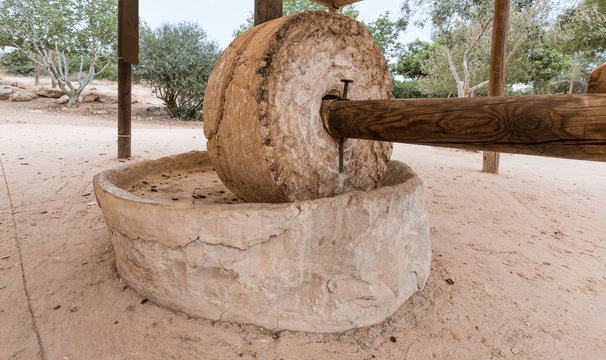
A millstone was a device used for grinding grain. A millstone could weigh, depending on its size, up to ¾ ton; approximately 1,500 pounds.
“Grinding grain using a millstone was common labor often reserved for women, the lower class, and slaves (Exodus 11:5). It provided the basic livelihood for many. As a means of safeguarding the security of the poor, Deut. 24:6 forbids lenders from holding a millstone as collateral,” explains the Lexham Bible Dictionary.
However, the Bible contains several metaphorical usages of a millstone.
1. The ever-present sound of millstones grinding grain symbolized the most basic economic activity. Absence of the sound signified the cessation of daily activity and the destruction of a nation (Jer. 25:10; Rev. 18:22).
2. In Ecclesiastes, the silence from millstones symbolizes the loss of hearing caused by old age (Eccl. 12:4).
3. Isaiah used the idea of royalty reduced to using a millstone as a metaphor for the destruction of Babylon (Isa 47:2). During the siege of Jerusalem, young men—the epitome of vigor—would be reduced to the menial labor of grinding what little grain was available (Lam. 5:13).
Jesus said that anyone who caused a believer in Christ to sin, it would be better to be cast into the depths of the sea with a millstone tied around their neck.
“So horrible is the fate of those who lead others into sin or who do all they can to demolish the faith of others in the church that it would be better to be drowned than to make another stumble (Matt. 18:6). Let us honor Jesus with our words and deeds that we might never cause crises of faith in others,” explains Dr. R. C. Sproul.
“Leading others into sin can be done in ways that do not involve false teaching. Failure to provide adequate pastoral care, for example, can make us unable to see trouble in the lives of others, leading us to overlook the need to rescue a sheep in danger of going astray. To one degree or another, Jesus has made each believer accountable to every other believer. We honor the Lord who bought us when we care for one another.”
People are watching you. They’re observing your faith. They watch what you do and hear what you say. Let us resolve to never cause anyone to stumble in their walk of faith (Rom. 14:13-19).
Soli deo Gloria!
 His Word Today