
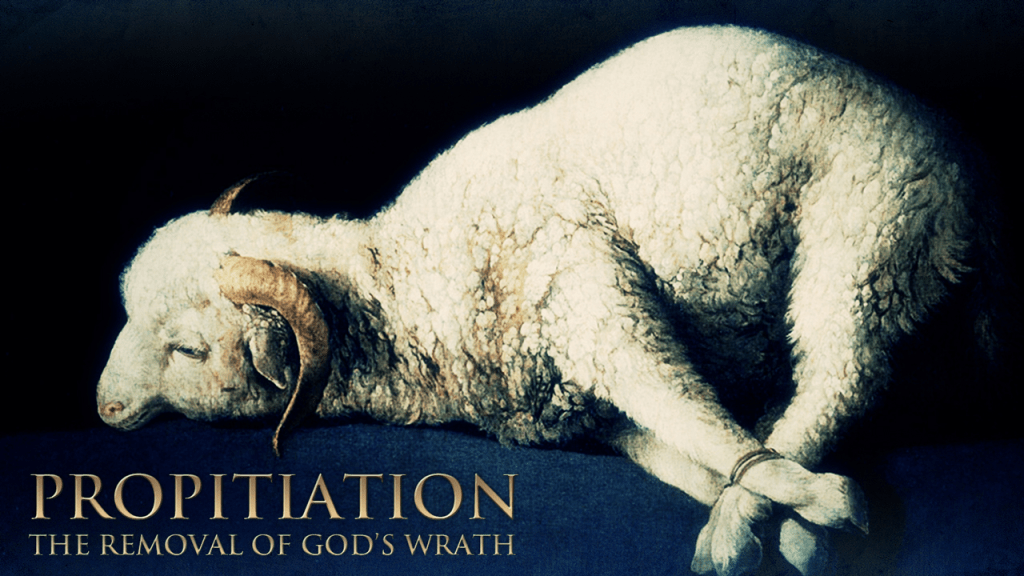
“To love and to be propitious are not convertible terms. It is false to suppose that the doctrine of propitiation regards propitiation as that which causes or constrains the divine love. It is loose thinking of a deplorable sort to claim that propitiation of the divine wrath does prejudice to or is incompatible with the fullest recognition that the atonement is the provision of the divine love.” – Dr. John Murray, Westminster Theological Seminary
In what New Testament texts do we find occurrences of the word Propitiation? Here is a list.
Romans 3:21–26 (ESV) – “21 But now the righteousness of God has been manifested apart from the law, although the Law and the Prophets bear witness to it— 22 the righteousness of God through faith in Jesus Christ for all who believe. For there is no distinction: 23 for all have sinned and fall short of the glory of God, 24 and are justified by his grace as a gift, through the redemption that is in Christ Jesus, 25 whom God put forward as a propitiation by his blood, to be received by faith. This was to show God’s righteousness, because in his divine forbearance he had passed over former sins. 26 It was to show his righteousness at the present time, so that he might be just and the justifier of the one who has faith in Jesus.
Hebrews 2:14–17 (ESV) – “14 Since therefore the children share in flesh and blood, he himself likewise partook of the same things, that through death he might destroy the one who has the power of death, that is, the devil, 15 and deliver all those who through fear of death were subject to lifelong slavery. 16 For surely it is not angels that he helps, but he helps the offspring of Abraham. 17 Therefore he had to be made like his brothers in every respect, so that he might become a merciful and faithful high priest in the service of God, to make propitiation for the sins of the people.
1 John 2:1–2 (ESV) – “My little children, I am writing these things to you so that you may not sin. But if anyone does sin, we have an advocate with the Father, Jesus Christ the righteous. 2 He is the propitiation for our sins, and not for ours only but also for the sins of the whole world.
John 4:7–10 (ESV) – “7 Beloved, let us love one another, for love is from God, and whoever loves has been born of God and knows God. 8 Anyone who does not love does not know God, because God is love. 9 In this the love of God was made manifest among us, that God sent his only Son into the world, so that we might live through him. 10 In this is love, not that we have loved God but that he loved us and sent his Son to be the propitiation for our sins.
What was the place on which propitiation was accomplished? It took place on the cross of Christ. This is the doctrine of penal, substitutionary atonement. See Luke 22:39-46; Romans 5:6-11; I Corinthians 1:18-31; I Corinthians 2:1-2; 2 Corinthians 5:17-21; Ephesians 2:13; Galatians 3:13-14; Colossians 2:13-15; Hebrews 9:11-14; Hebrews 10:1-14; I Peter 2:21-25.
“Propitiation is not a turning of the wrath of God into love. The propitiation of the divine wrath, effected in the expiatory work of Christ, is the provision of God’s eternal and unchangeable love, so that through the propitiation of his own wrath that love may realize its purpose in a way that is consonant with and to the glory of the dictates of his holiness. It is one thing to say that the wrathful God is made loving. That would be entirely false. It is another thing to say the wrathful God is loving. That is profoundly true. But it is also true that the wrath by which he is wrathful is propitiated through the cross. This propitiation is the fruit of the divine love that provided it. “Herein is love, not that we loved God, but that he loved us and sent his Son to be the propitiation for our sins” (I John 4:10). The propitiation is the ground upon which the divine love operates and the channel through which it flows in achieving its end,” explains Dr. Murray.
How is Jesus Christ’s propitiatory sacrifice applied to the sinner? It is by grace alone, through faith alone in the person and work of Jesus Christ alone. See Romans 1:16-17; Romans 3:21-26; Galatians 2:15-16; Galatians 3:10-14; Ephesians 2:1-9 Philippians 3:1-9; and Titus 3:1-5.
Soli deo Gloria!
 His Word Today